
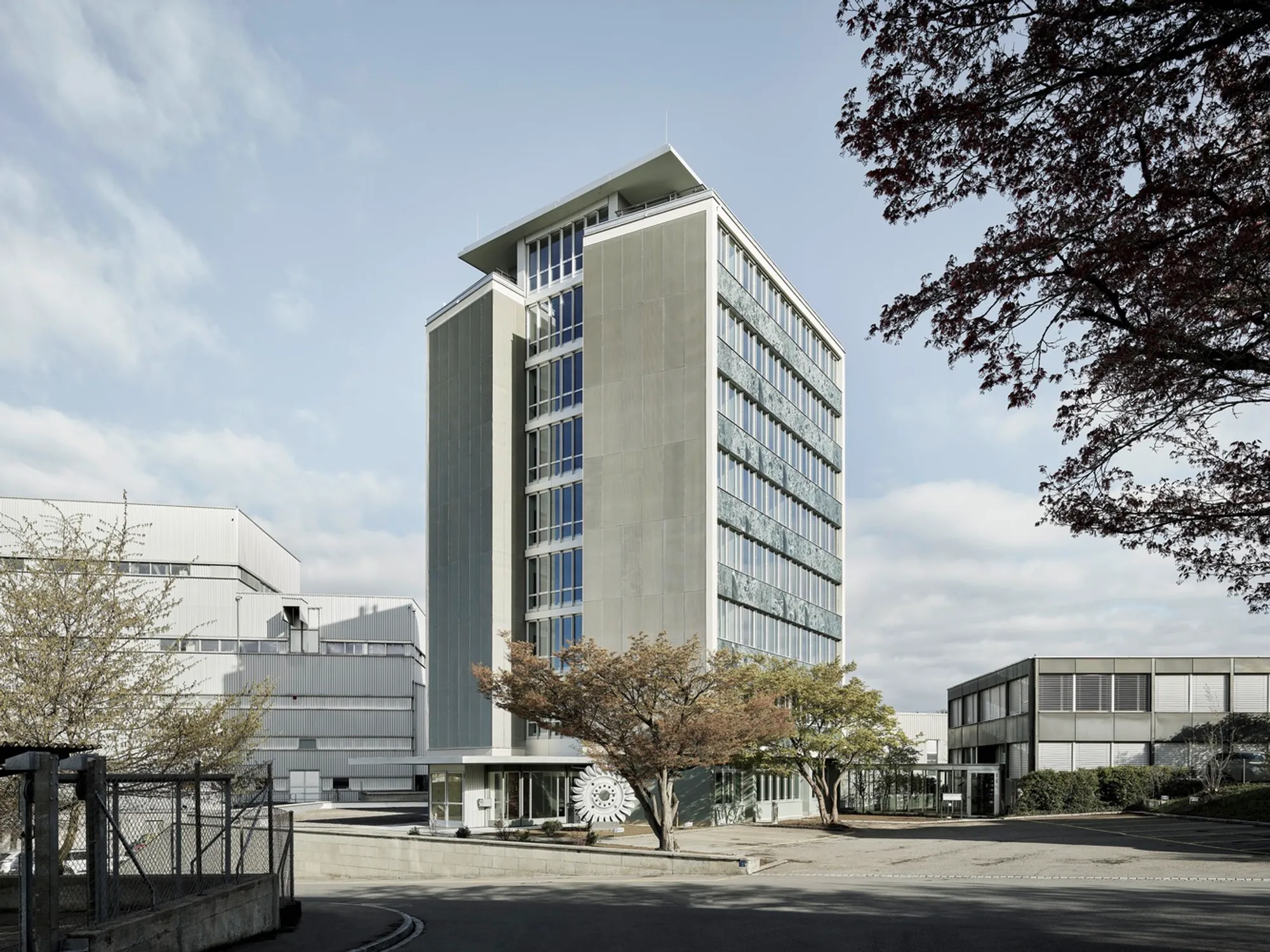
Verwaltungsgebäude Brugg Kabelwerke / Office Building by Tschudin Urech Bolt Architekten
Revitalized 1950s office building by Tschudin Urech Bolt Architekten blends heritage preservation with energy-efficient upgrades and modern workplace design.


Reviving a Modernist Legacy: Post-War Office Tower Reimagined
The Verwaltungsgebäude Brugg Kabelwerke, a mid-century modern office building originally constructed in 1956–57, has undergone a sensitive and energy-efficient refurbishment by Tschudin Urech Bolt Architekten. Situated in Windisch, Switzerland, the renovation preserves the architectural legacy of the post-war period while drastically improving environmental performance—transforming a once-asbestos-laden and thermally inefficient structure into a contemporary workplace that meets modern building standards.
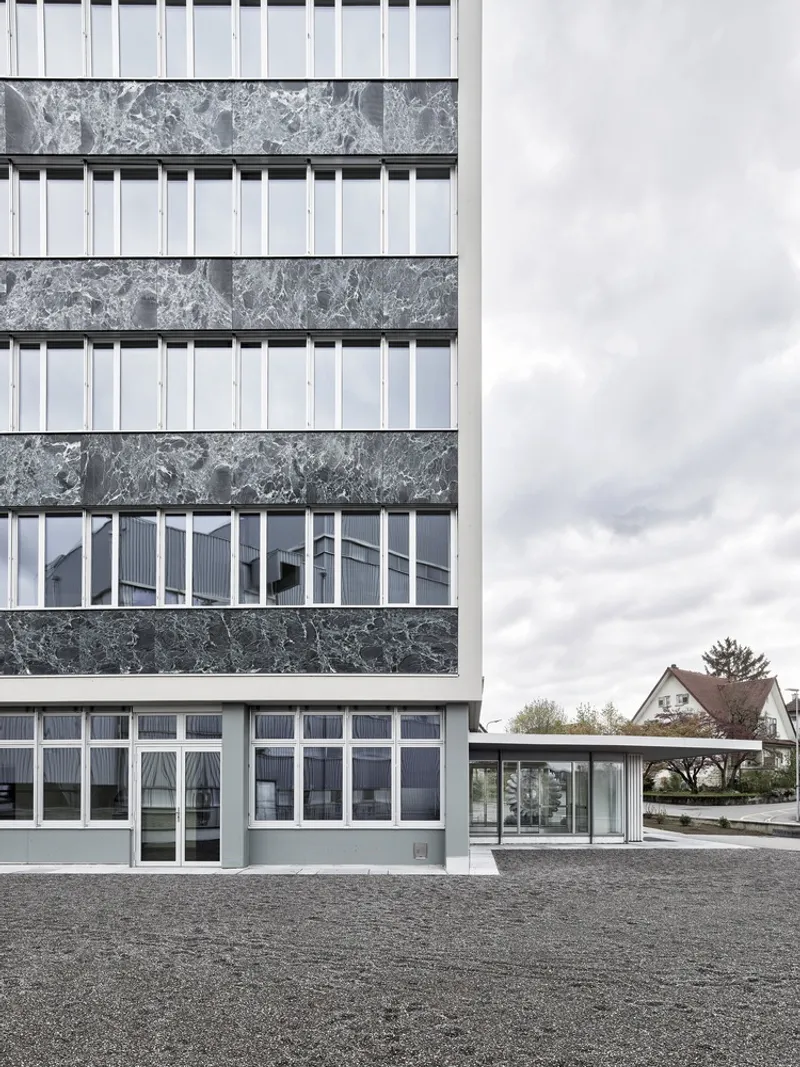
Preservation Through Precision: Balancing Heritage and Performance
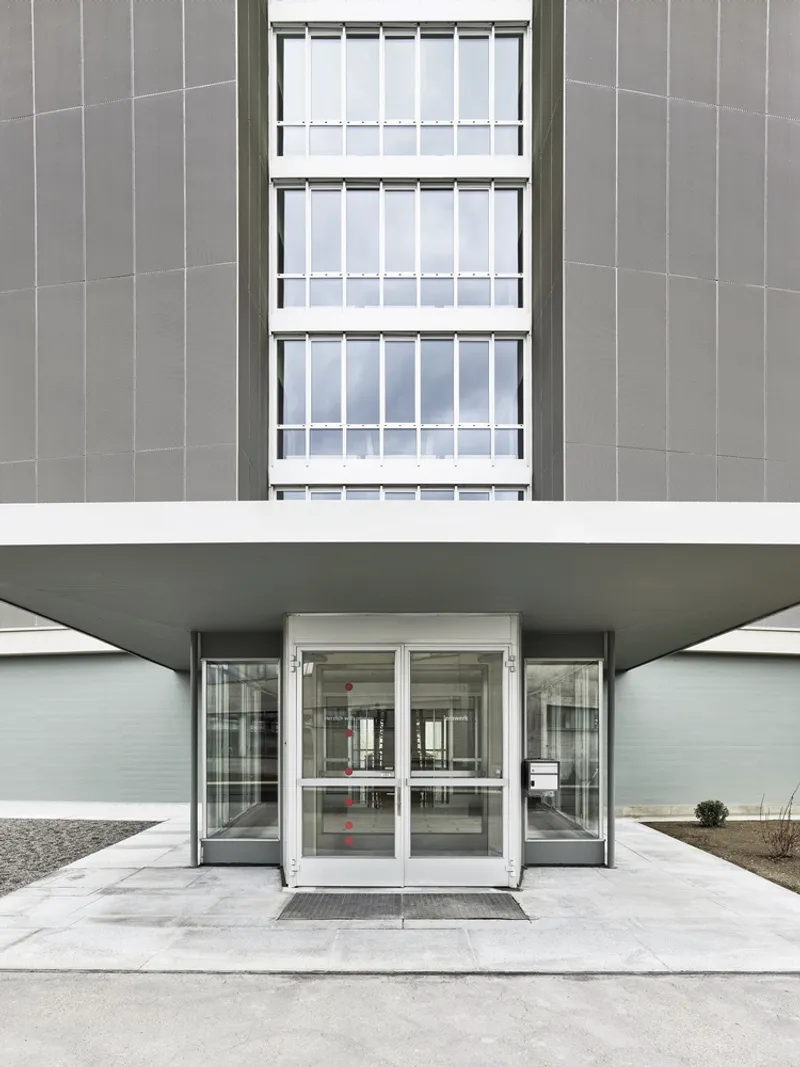
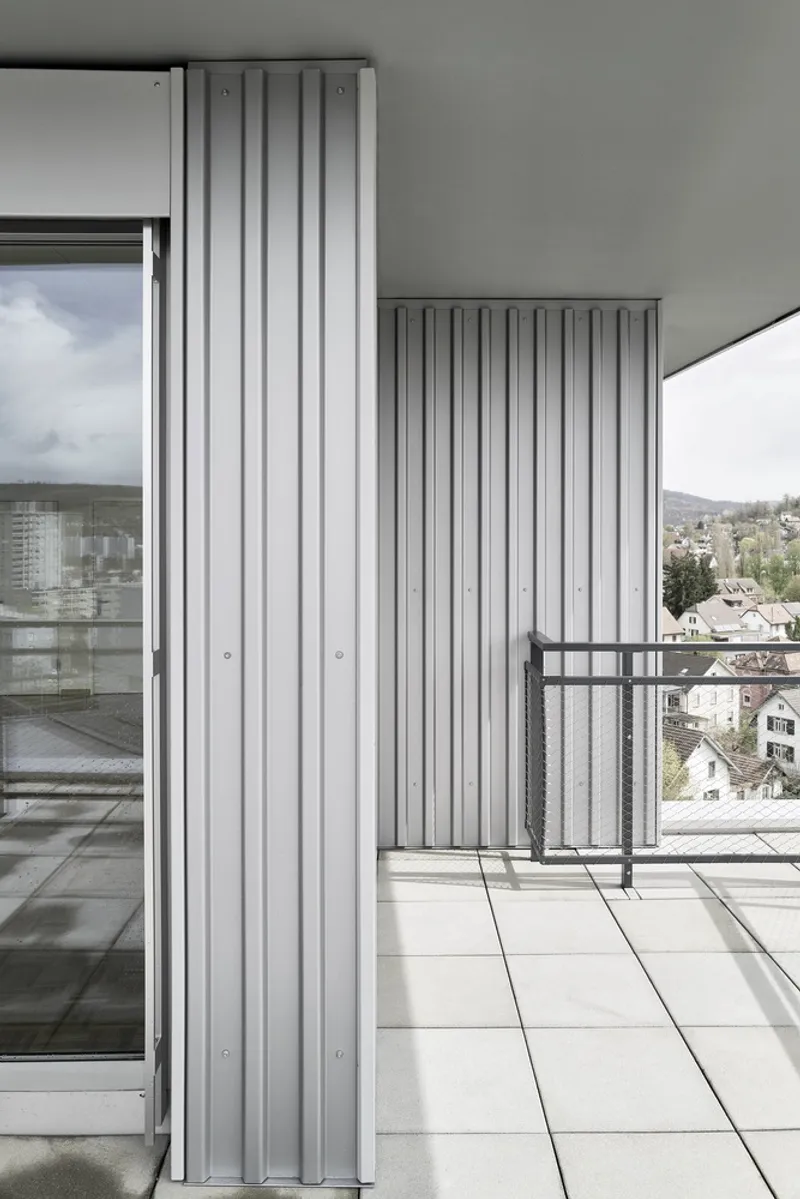
At the heart of this transformation was a deep respect for the original architecture, designed by Carl Froelich and Hans Kündig. Protected under municipal heritage laws, the building’s distinctive Verde Alpi marble façade, which gives it its timeless elegance, was retained. The renovation focused on subtle enhancements rather than sweeping changes, aiming to preserve architectural authenticity while upgrading building systems and materials.
The retrofit addressed serious asbestos contamination and a severely inefficient thermal envelope. Despite summer temperatures reaching 34°C inside, the design team resisted the temptation to demolish and rebuild. Instead, they pursued a path of adaptive reuse and material conservation, aligned with sustainable architecture principles.
Intelligent Energy Renovation: Custom Solutions for a Historic Fabric
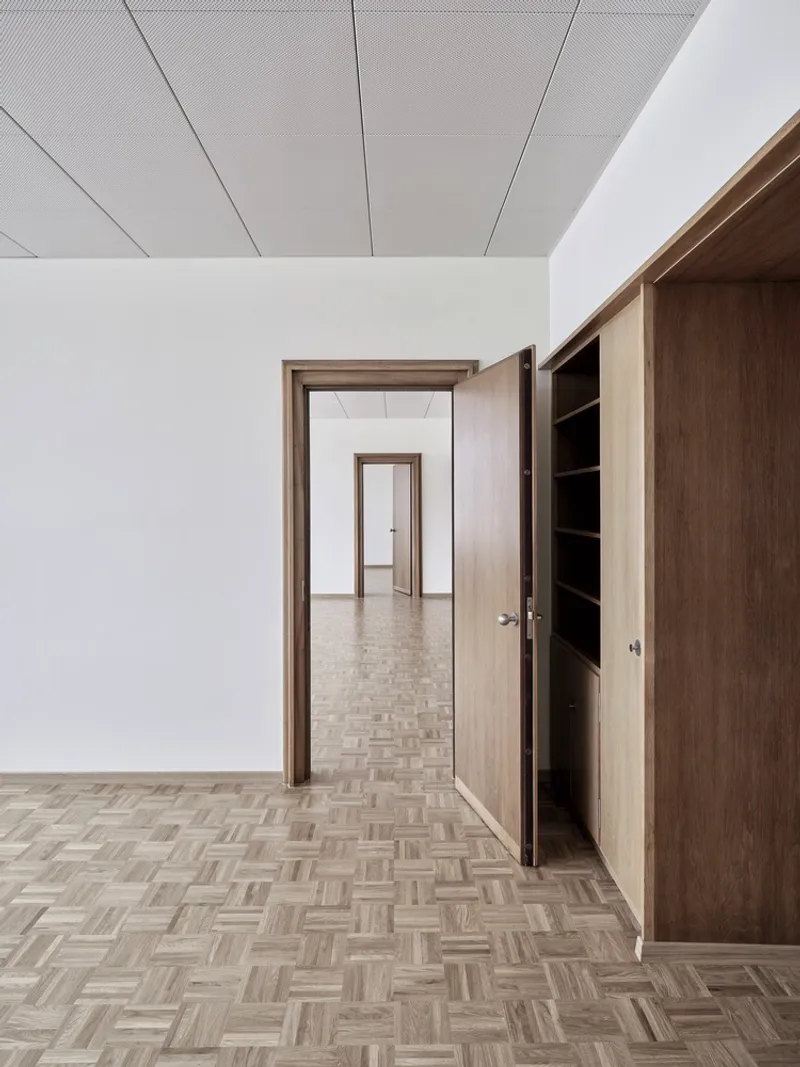
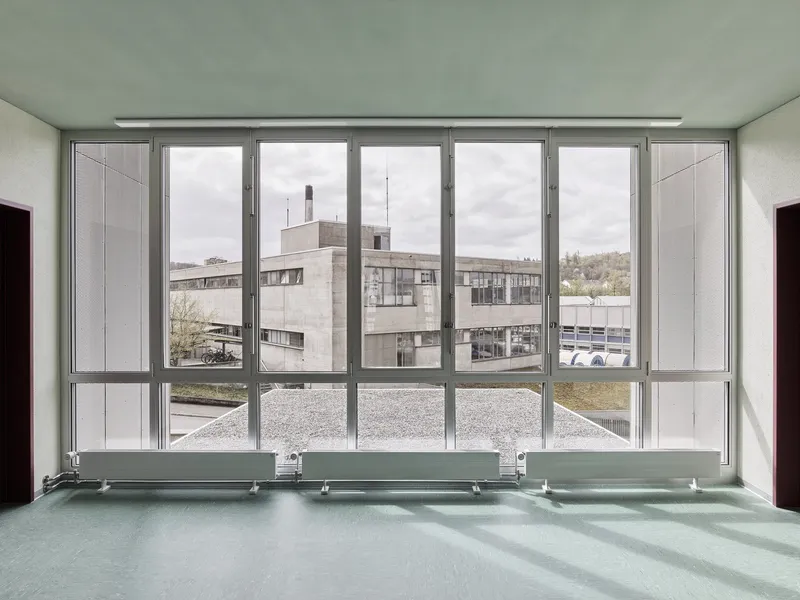
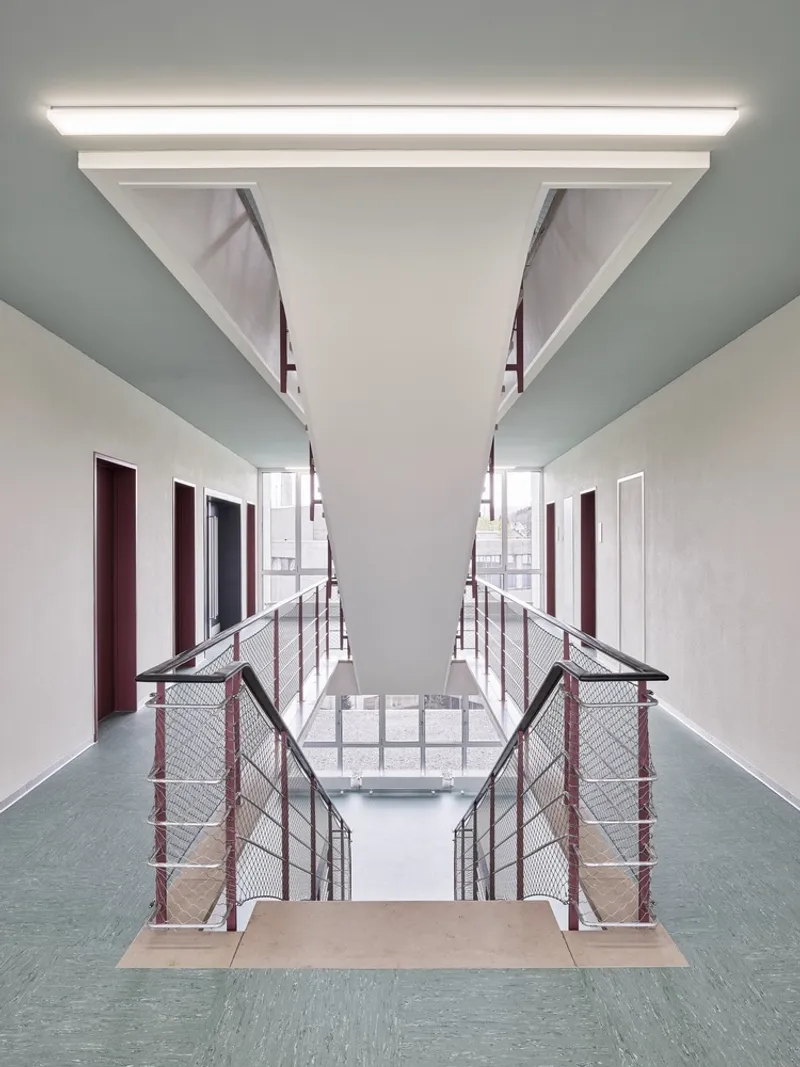
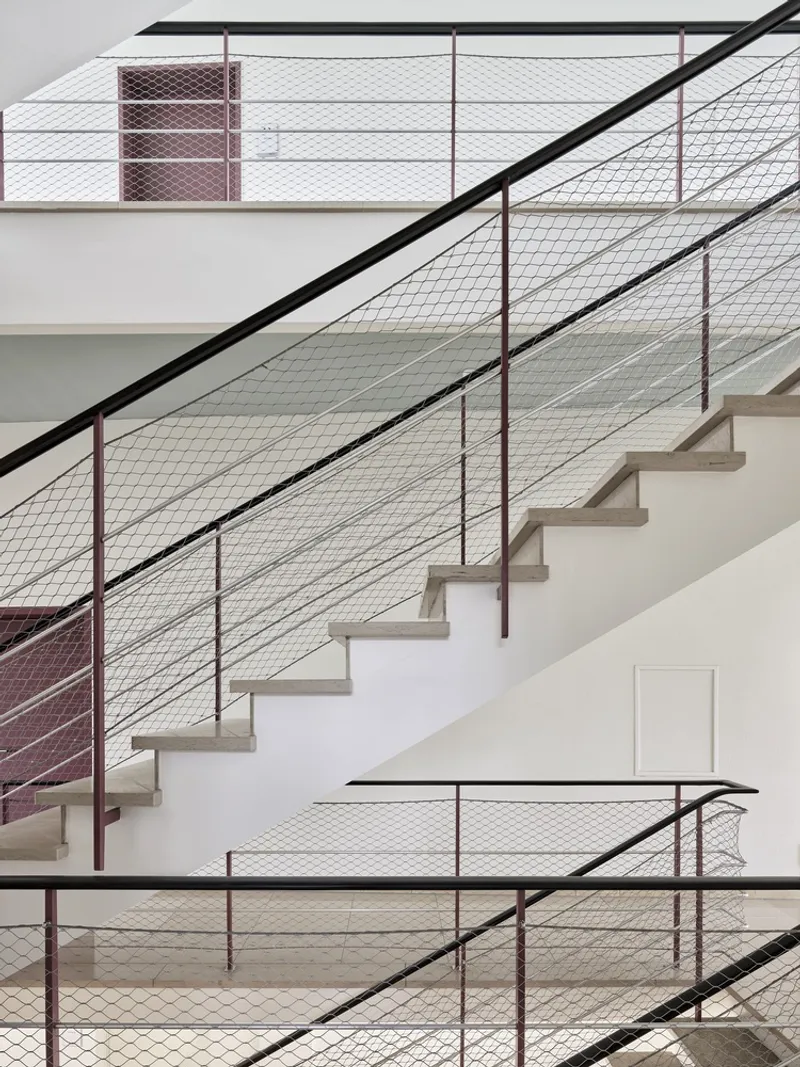
A key challenge was improving the energy efficiency without compromising the architectural language. The architects installed custom triple-glazed windows that mirrored the original design while significantly reducing thermal loss. Vacuum insulation beneath the floor slabs and internal insulation beneath the window bands replaced old radiator locations—boosting efficiency while maintaining the original proportions and finishes.
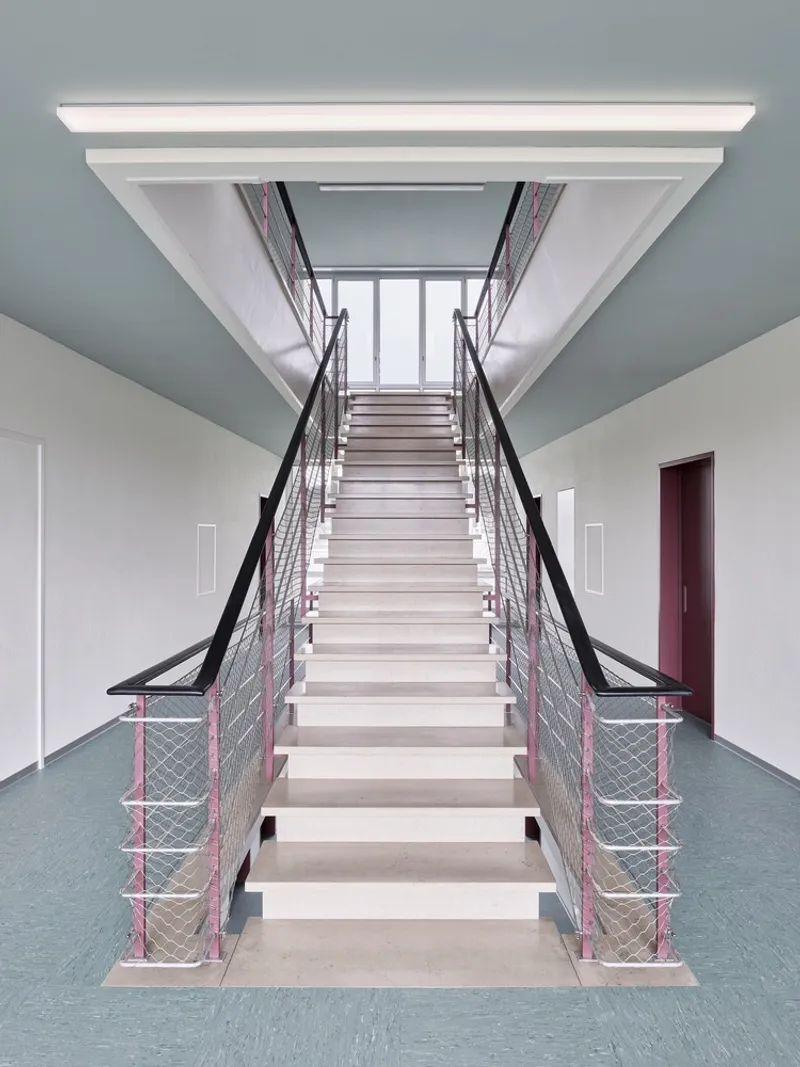
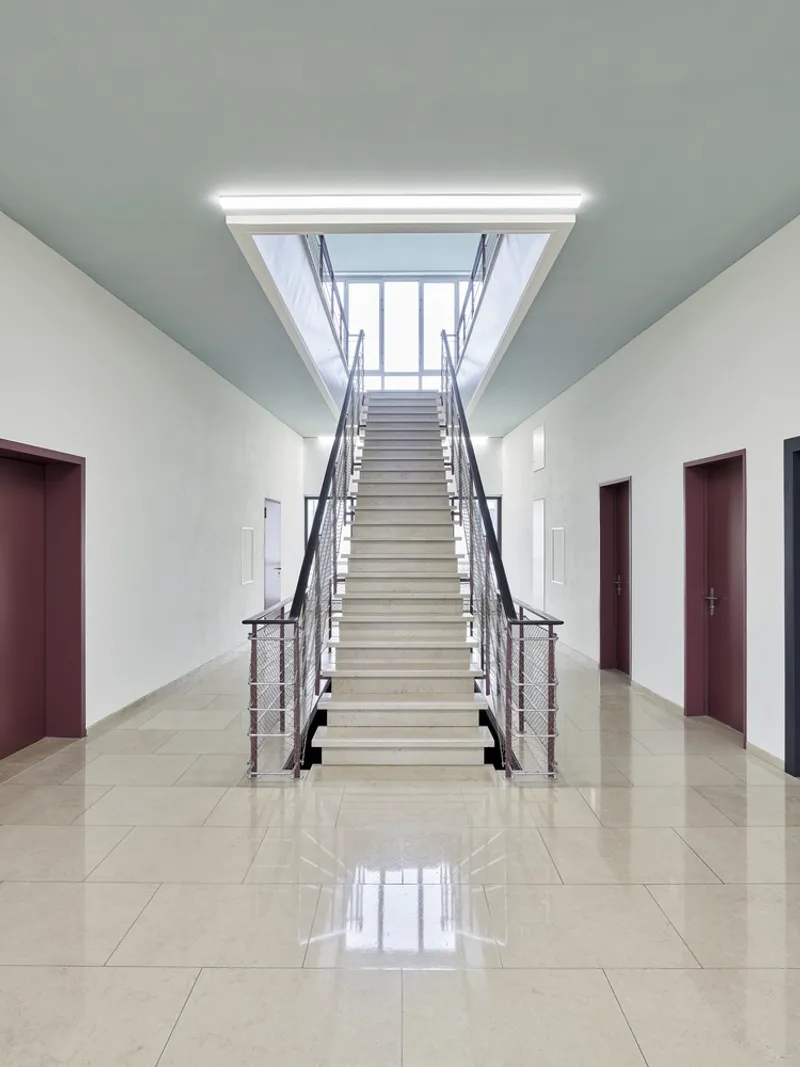
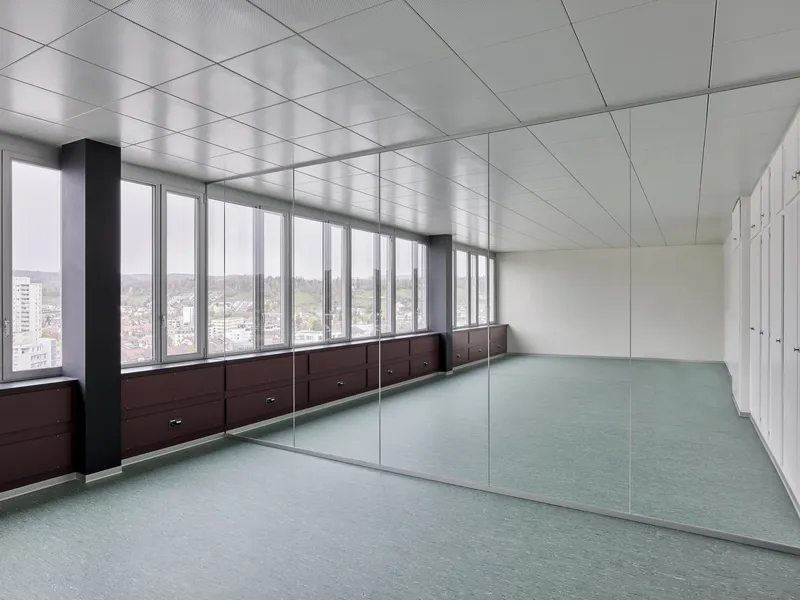
These discreet interventions allowed the building to retain its 1950s character, including features like the Zent-Frenger ceiling heating system, walnut wood finishes, and parquet flooring on the executive level. The design palette, comprising soft greens, reds, and beiges, revives the spirit of the post-war interior aesthetics.
Material Authenticity and Sustainable Reuse
Much of the building's embodied energy was preserved, thanks to the reuse of structural elements and selective replacement of contaminated materials with historically compatible alternatives. As Marco Tschudin of the architectural firm notes, aesthetic fidelity took precedence over achieving Minergie-P certification, yet the results speak for themselves: a 70% reduction in operational energy use was achieved, proving that historic buildings can meet 21st-century standards.
The building now features upgraded technical infrastructure hidden beneath its heritage skin—an achievement made possible by careful collaboration between architects, engineers, and a supportive client, BRUGG Immobilien AG, who prioritized long-term value over short-term savings.
Urban and Architectural Significance
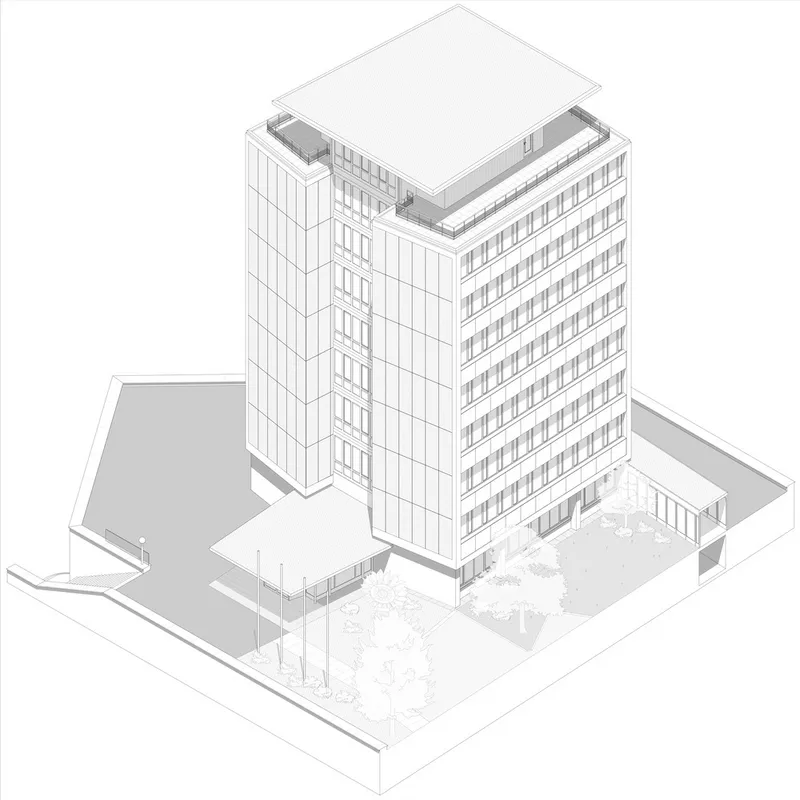
The high-rise silhouette remains a landmark visible from Brugg station, anchoring the company’s industrial campus. Originally designed as a two-corridor trapezoidal plan, the structure stood as a symbol of mid-century optimism and economic growth, housing over 350 employees of the Kabelwerke Brugg company during its peak. Today, it has been thoughtfully repurposed to extend that legacy into the future.
All Photographs are works of Kuster Frey



Popular Articles
Popular articles from the community


The Musturak Paradise: Senior Living Architecture for a Connected Future in Temara, Morocco
The Musturak Paradise reimagines senior living architecture in Temara via private homes, social spaces, culture, community, and shared care.

Co-life: Sustainable Architecture for Age-Friendly Community Living
Co-life reimagines sustainable architecture for seniors through courtyards, rammed earth, shared gardens, and spaces designed for belonging.

Lunar Spiral: Space Architecture Shaped by the Mathematics of the Universe
Lunar Spiral reimagines space architecture through Fibonacci geometry, lunar regolith, levitating habitats, and self-sustaining Moon living.

Hill & Cross Opera: Sculptural Opera House Architecture Shaped by Tallinn’s Landscape and Identity
Hill & Cross Opera reimagines opera house architecture in Tallinn through its sculptural hill, civic plaza, glass wave and a luminous cross.


Similar Reads
You might also enjoy these articles


Hodi-Mandai Geram
Project Function: Preservation and revitalization of the Intangible heritage and socio-spatial identity of the Hodi by Housing, Cultural Memory Center, Sacred Grove, landscape, local tourism economy


Olio Towers: A Mid-Rise for Performers That Fuses Housing, Rehearsal, and Stage
Located blocks from Houston's Theater District, this modular tower stacks living units around a central performance atrium.

Oasis: Modular Green Housing Carved into Dhaka's Urban Fabric
A shortlisted Plugin Housing entry reclaims unauthorized settlements in Dhaka with stepped concrete volumes, green roofs, and ventilation-driven design.

Black Hole: A Floating Megastructure for the Post-Physical Era
Emiliano Mazzarotto envisions a spherical, self-scaling arena where e-sports, digital hotels, and holographic stadiums replace traditional public space.
Explore Office Building Competitions
Discover active competitions in this discipline



Challenge to reimagine the Iron Throne


Photograph architecture without architects


Illustrate the lost glory of Angkor Wat - Render Challenge


Design challenge to reuse E-waste
Comments (0)
Please login or sign up to add comments
No comments yet. Be the first to comment!