

Viki Link: A Landmark in Sustainable Urban Bridge Architecture
A sustainable urban bridge architecture blending Viking heritage, green roofs, and cycling culture into Copenhagen’s modern skyline.


Viki Link is a visionary proposal in sustainable urban bridge architecture, redefining how infrastructure can function as both transportation and public space. Inspired by Denmark’s Viking heritage and contemporary Scandinavian design, the project transforms a conventional crossing into a dynamic civic landscape. Designed by Majid Aghazadeh, the bridge merges historical symbolism with modern engineering to create an urban landmark that connects culture, mobility, and nature.
Denmark, one of Europe’s oldest states, carries a rich architectural legacy rooted in Viking traditions. Viki Link reinterprets these origins through a contemporary lens, integrating green hills, timber-inspired forms, and flowing structural lines into a multifunctional bridge. The result is a sustainable urban bridge design that celebrates both past and future.
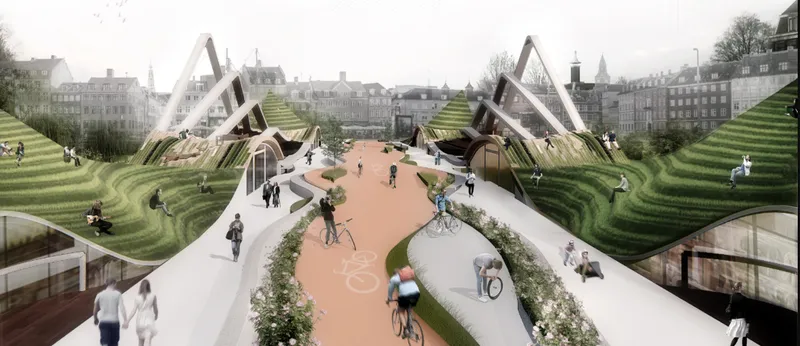
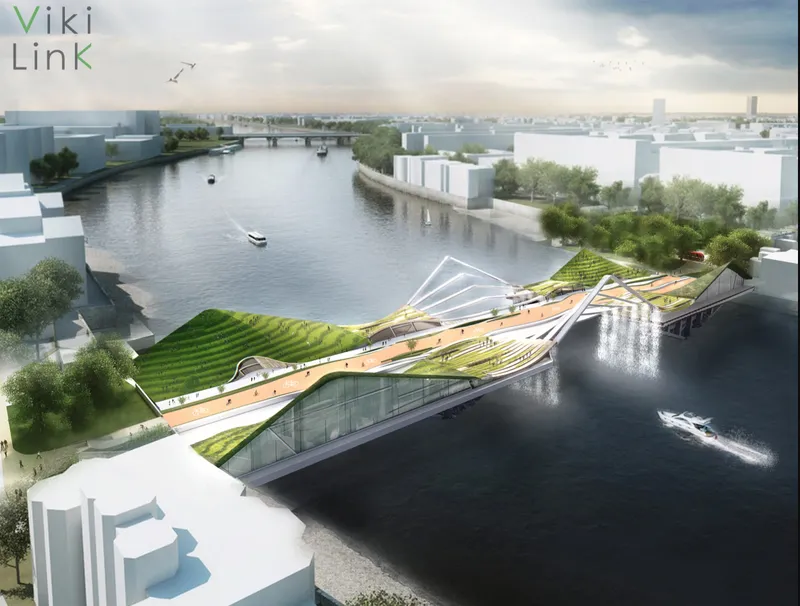
Concept: Bridging History and Modernity
The concept behind Viki Link centers on reconnecting modern urban life with the slower, more human rhythms of the past. Copenhagen is globally recognized for its cycling culture, yet modern transportation often prioritizes speed over experience. This project restores the joy of movement by placing cycling and pedestrian activity at the heart of the architectural composition.
The bridge’s sculptural green roofs resemble Viking longhouses and Denmark’s rolling landscapes. These elevated grassy forms are not merely aesthetic gestures; they create accessible public spaces, layered gathering zones, and panoramic viewpoints across the river. The design reflects a contemporary interpretation of Scandinavian architecture, where simplicity, nature, and functionality coexist.
Sustainable Urban Bridge Design Strategy
Viki Link exemplifies sustainable urban bridge architecture through multiple integrated systems:
1. Green Roof Infrastructure
The sloped, grass-covered surfaces provide insulation, manage rainwater runoff, and create biodiversity corridors across the river. These accessible green hills transform infrastructure into a park-like environment, reinforcing Copenhagen’s identity as a green city.
2. Multi-Level Public Space
Unlike traditional bridges, Viki Link functions as a small urban district. Cafés, retail areas, workshops, bicycle parking, information points, and gathering spaces are embedded within the structure. The layered spatial organization ensures active use throughout the day.
3. Cycling-Centered Planning
The central axis prioritizes cyclists, symbolizing Denmark’s commitment to sustainable mobility. Smooth, continuous paths encourage safe movement, while adjacent pedestrian zones provide leisurely circulation. This approach aligns with global best practices in sustainable urban design.
4. Openable Structural System
The bridge incorporates an opening mechanism that allows ships to pass while maintaining spatial continuity. When partially opened, the structure becomes a kinetic architectural feature, offering changing perspectives of the city and river.
Architectural Form and Identity
The architectural language of Viki Link draws from Viking geometry and Danish vernacular forms. Angular frames and sweeping structural arches create a recognizable silhouette along Copenhagen’s waterfront. From the riverside, the bridge appears as a monumental frame, an urban gateway celebrating cycling culture.
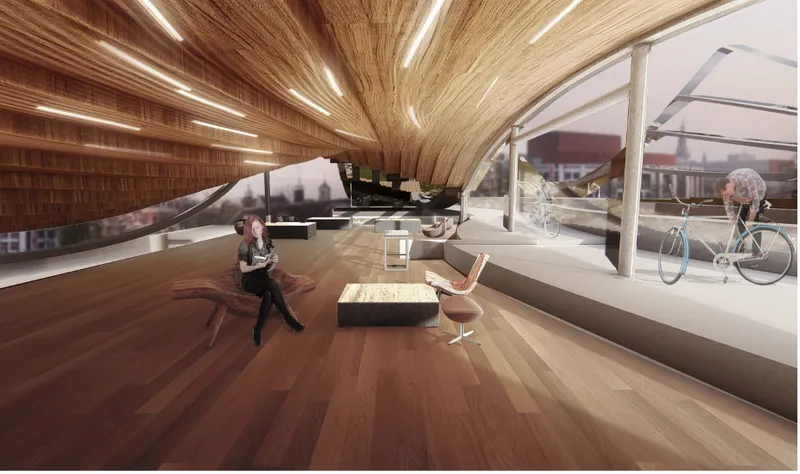
The interior spaces are warm and tactile, featuring timber-inspired surfaces and curved ceilings that evoke traditional Nordic craftsmanship. Natural light penetrates through generous openings, reinforcing the connection between interior and exterior environments.
By merging landscape architecture with bridge engineering, the project blurs the boundaries between building, infrastructure, and public park.
Urban Impact and Public Life
Sustainable urban bridge architecture is not only about environmental performance but also about social vitality. Viki Link transforms a point of transit into a destination. Visitors can rest on grassy slopes, enjoy river views, gather in cafés, or observe waterfalls integrated along the structural edges.
The design fosters community interaction across age groups and cultural backgrounds. By encouraging cycling and pedestrian movement, the bridge supports healthier lifestyles and reduces reliance on motor vehicles. It becomes a living public space rather than a mere crossing.
A Landmark for Copenhagen
Copenhagen’s flat terrain makes the dynamic, hill-like geometry of Viki Link especially striking. The elevated green peaks introduce topographical variation while maintaining contextual harmony with the surrounding cityscape. The structure acts as a symbolic bridge between Denmark’s historical identity and its forward-looking sustainability goals.
Through its integration of Viking-inspired forms, green infrastructure, and multifunctional programming, Viki Link stands as a compelling example of contemporary sustainable urban bridge architecture. It demonstrates how infrastructure can embody cultural memory while advancing modern environmental and social values.
Viki Link is more than a bridge: it is an architectural landscape, a cultural statement, and a sustainable mobility hub. By combining Scandinavian heritage with innovative urban bridge design strategies, Majid Aghazadeh proposes a landmark that redefines how cities can build for the future while honoring their past.
In an era where cities seek resilient and people-centered solutions, Viki Link illustrates the transformative potential of sustainable urban bridge architecture.
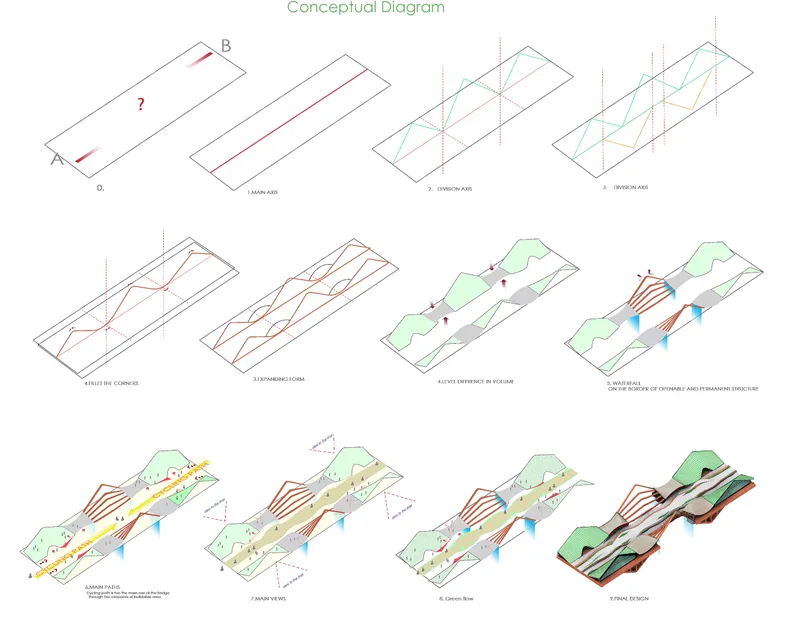



Popular Articles
Popular articles from the community


Conexión: Biophilic Design Reimagines High-Rise Living in Hong Kong
Conexión reimagines high-rise living in Hong Kong through biophilic design, green facades, shared spaces, daylight, water and nature within.

Co-Life: Senior Housing Design That Reconnects Older Adults With the City
Co-Life reimagines senior housing design through healing gardens, shared streets, workshops, and a sustainable community across generations.

The Ocean Hive: Sustainable Architecture for a Self-Sufficient Civilization at Sea
The Ocean Hive imagines sustainable architecture at sea, where modular habitats, algae, wave power and ocean waste sustain a growing colony.

Hill & Cross Opera: Sculptural Opera House Architecture Shaped by Tallinn’s Landscape and Identity
Hill & Cross Opera reimagines opera house architecture in Tallinn through its sculptural hill, civic plaza, glass wave and a luminous cross.

Similar Reads
You might also enjoy these articles

Eco Chapel: A Green Architecture Pavilion Designed in Symbiosis with the Forest
Eco Chapel uses green architecture to weave prayer, learning and reuse into a forest pavilion shaped by modular hexagonal canopies for life.
Kaffeebühnen: Coffee Shop Architecture Designed as a Civic Stage Between Vienna’s City and Park
Kaffeebühnen turns coffee shop architecture into a civic stage, linking Vienna’s park edge, urban life, warm timber yards, and coffee craft.
Healing Façade: Sustainable Architecture for Reforestation, Community, and Sacred Ecology in Ethiopia
Healing Façade reimagines sustainable architecture as a living wall that restores soil, catches water and renews Ethiopia's forest churches.


Urban Forest: A Vertical Ecosystem for 5,000 Workers in Singapore's Changi Business Park
Radially stacked pods and layered green decks turn a 7-acre plot into 47 acres of ecological workspace projected for 2040.

Comments (0)
Please login or sign up to add comments
No comments yet. Be the first to comment!