
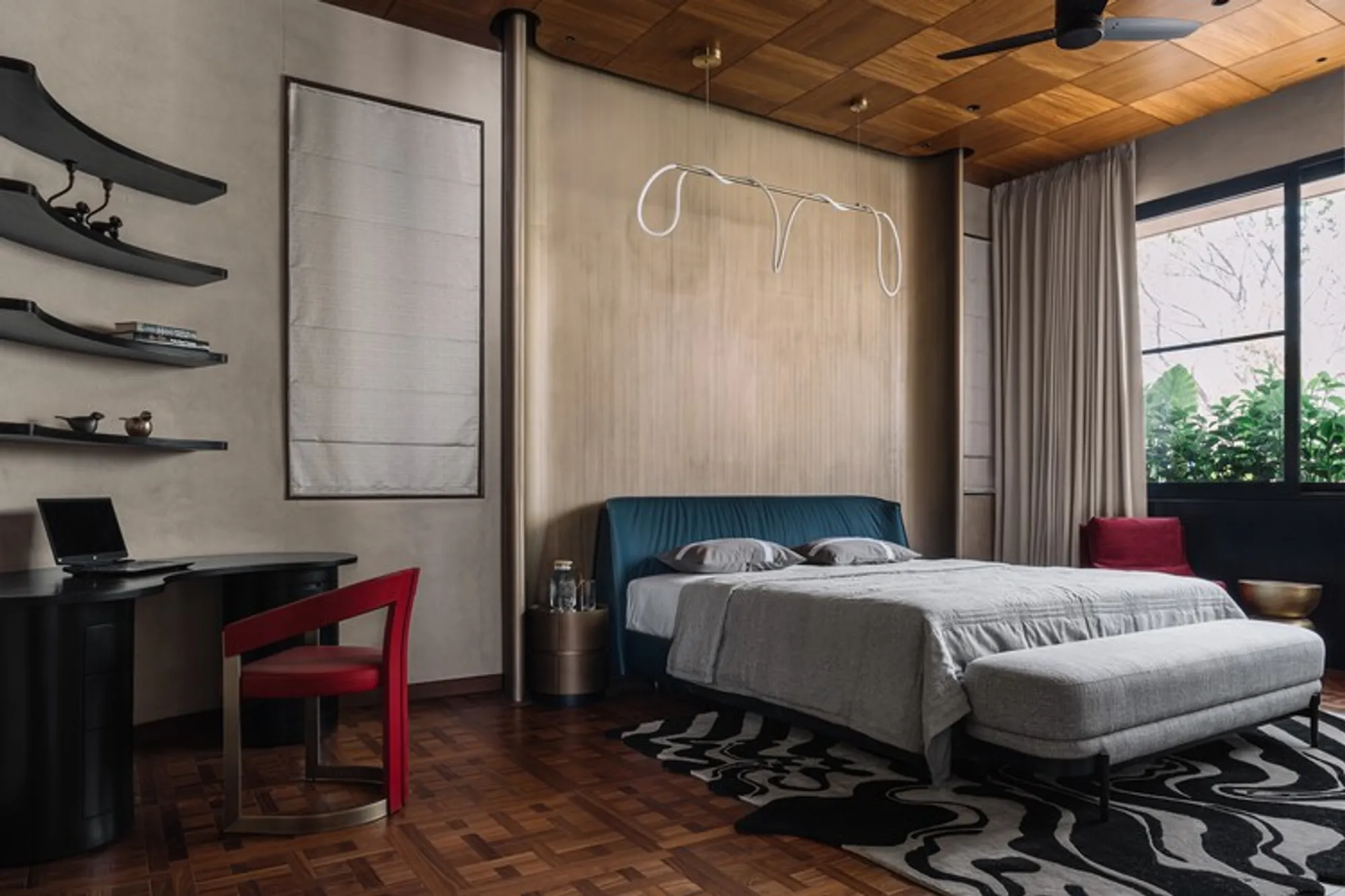
Villa 1374 by The Purple Ink Studio
A layered Bengaluru residence blending courtyards, landscape, and tactile materials to create a serene, connected home rooted in memory and nature.


Located in Bengaluru, Villa 1374 is a contemporary private residence that explores the relationship between architecture, landscape, and everyday living. Completed in 2024, the 15,800 ft² house is conceived as a layered composition of volumes, courtyards, and open spaces that respond sensitively to site, climate, and memory.
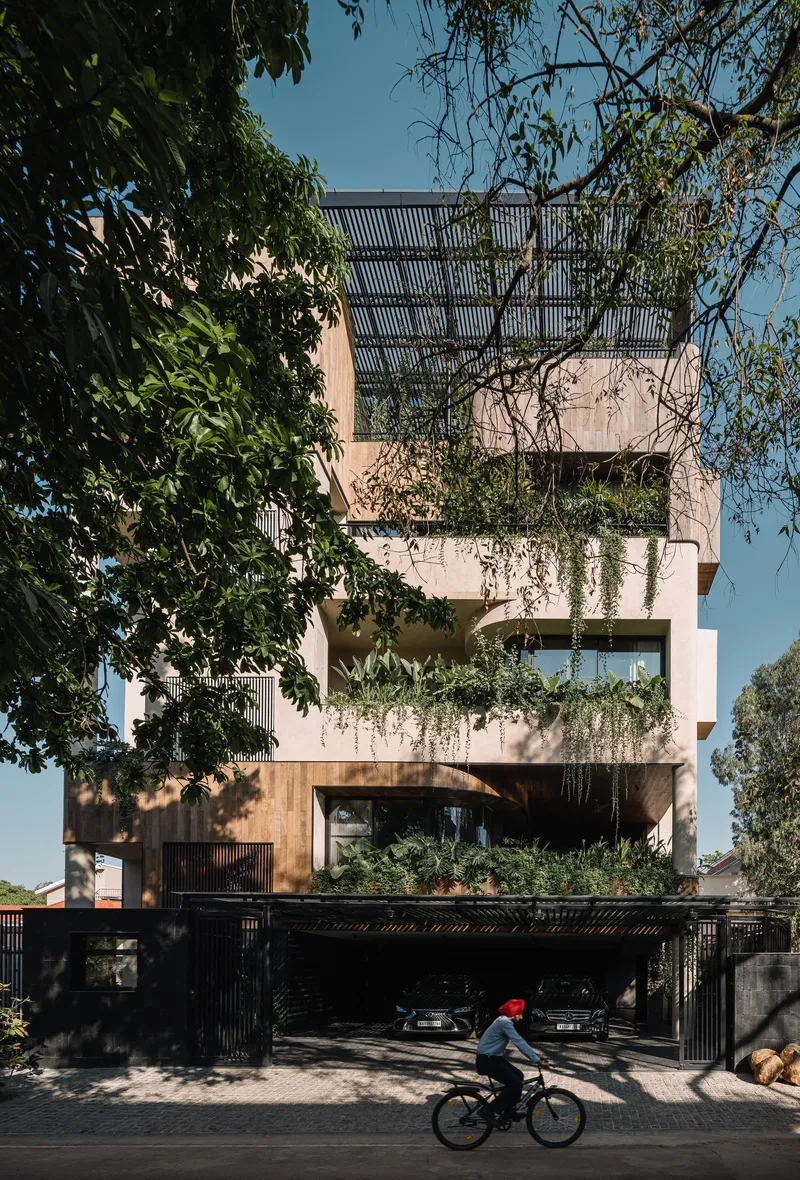
Designed by The Purple Ink Studio, the project reflects a philosophy rooted in contextual design, spatial fluidity, and emotional continuity. Rather than presenting itself as a singular object, the house unfolds gradually, revealing a carefully orchestrated sequence of built and unbuilt spaces.
Context and Site Response
Villa 1374 is located within a plotted residential development in northern Bengaluru, characterized by wide roads, organized infrastructure, and tree-lined streets. The surrounding landscape is defined by dense canopies that offer shade and a strong sense of enclosure.
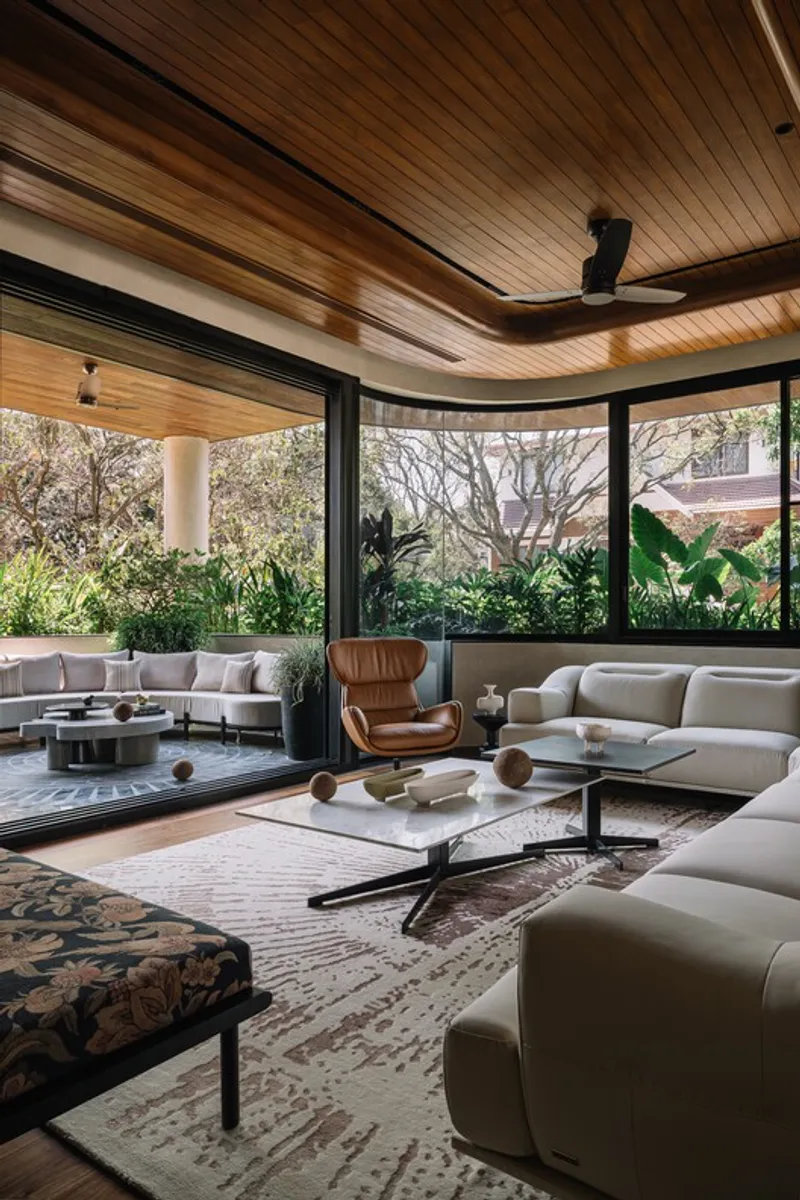
Adjacent to the site stood a cluster of mature trees that became a central reference for the design. Instead of treating them as external elements, the architects chose to “borrow” this landscape, allowing greenery to permeate the spatial narrative of the home. These trees extend visually and experientially into the house, shaping views, light conditions, and movement patterns.
This approach establishes an immediate connection between the residence and its environment, ensuring that nature remains a constant presence in daily life.
Architectural Concept: Stacked Volumes and Open Voids
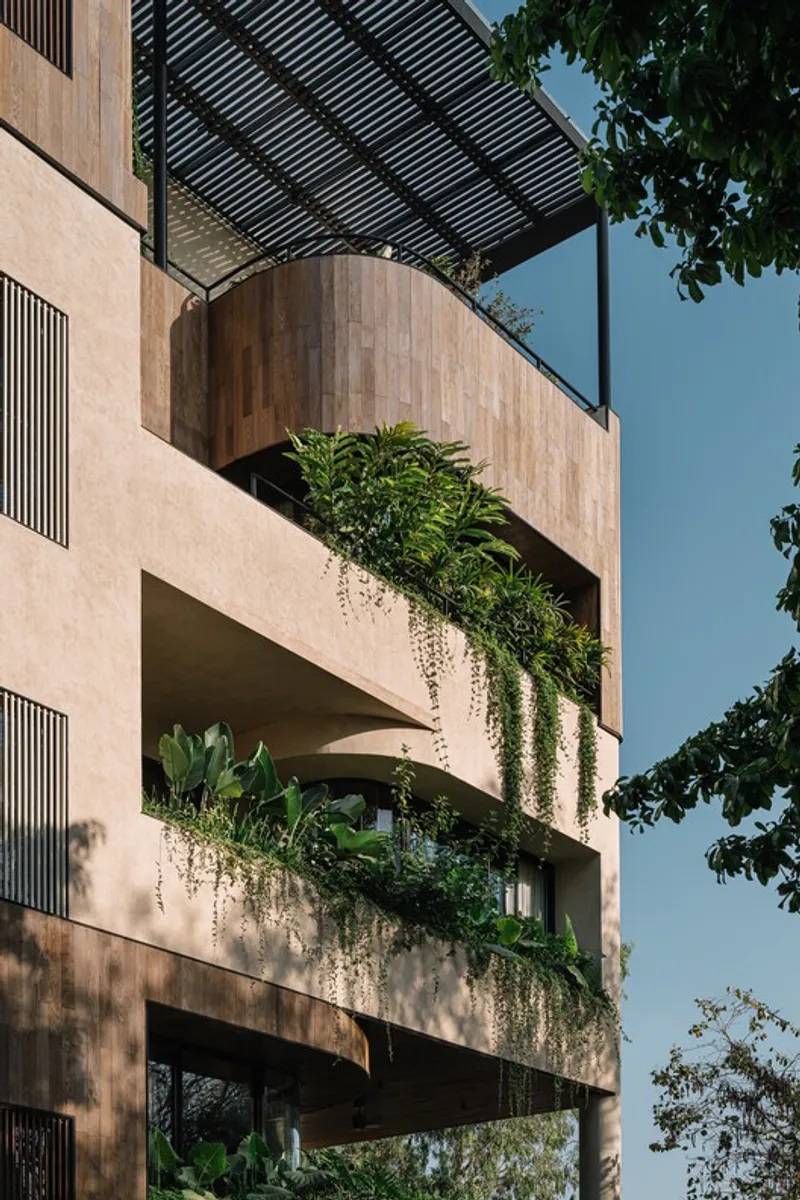
The formal composition of Villa 1374 is based on a system of staggered and stacked volumes. A solid base anchors the house to the ground, while lighter upper layers appear to float and shift, creating terraces, courts, and green pockets.
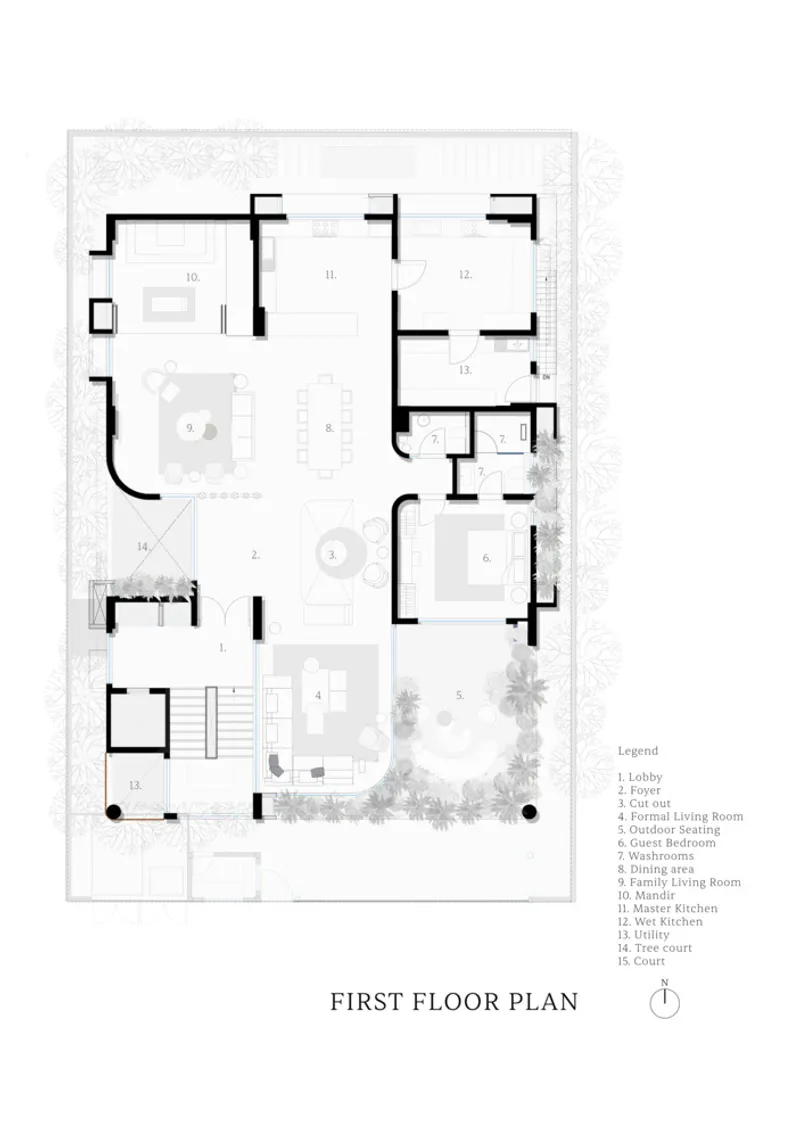
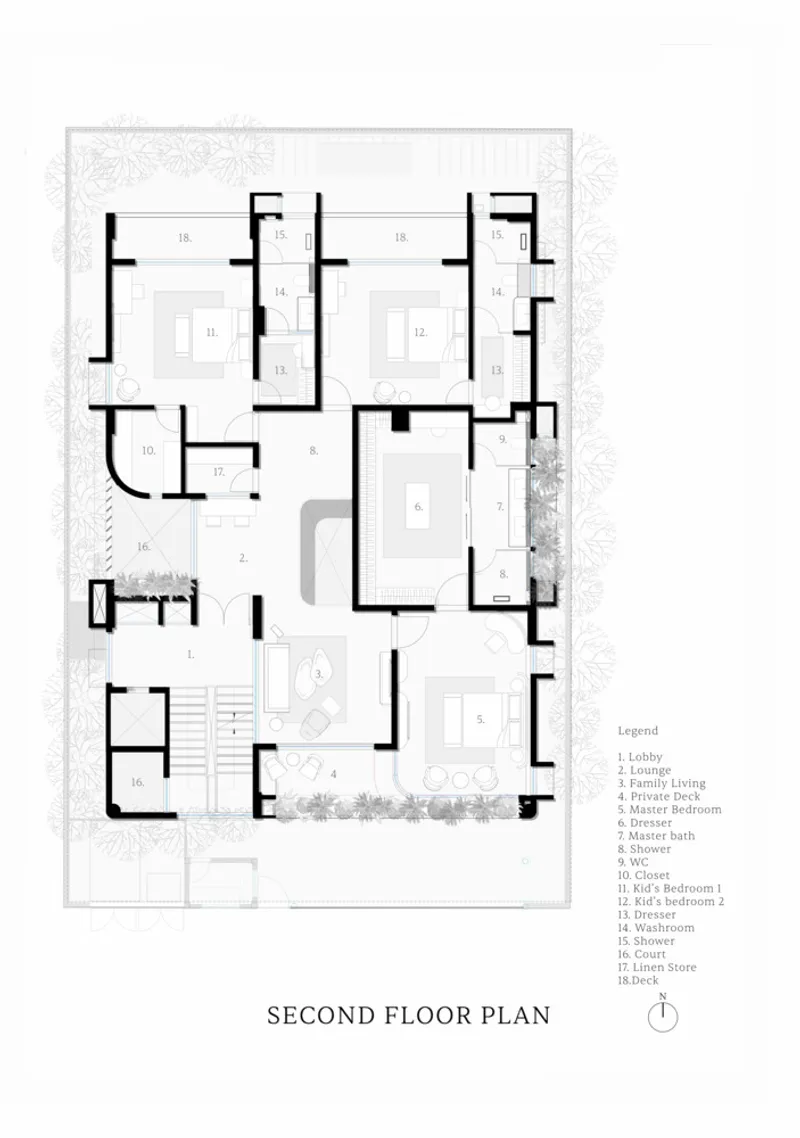
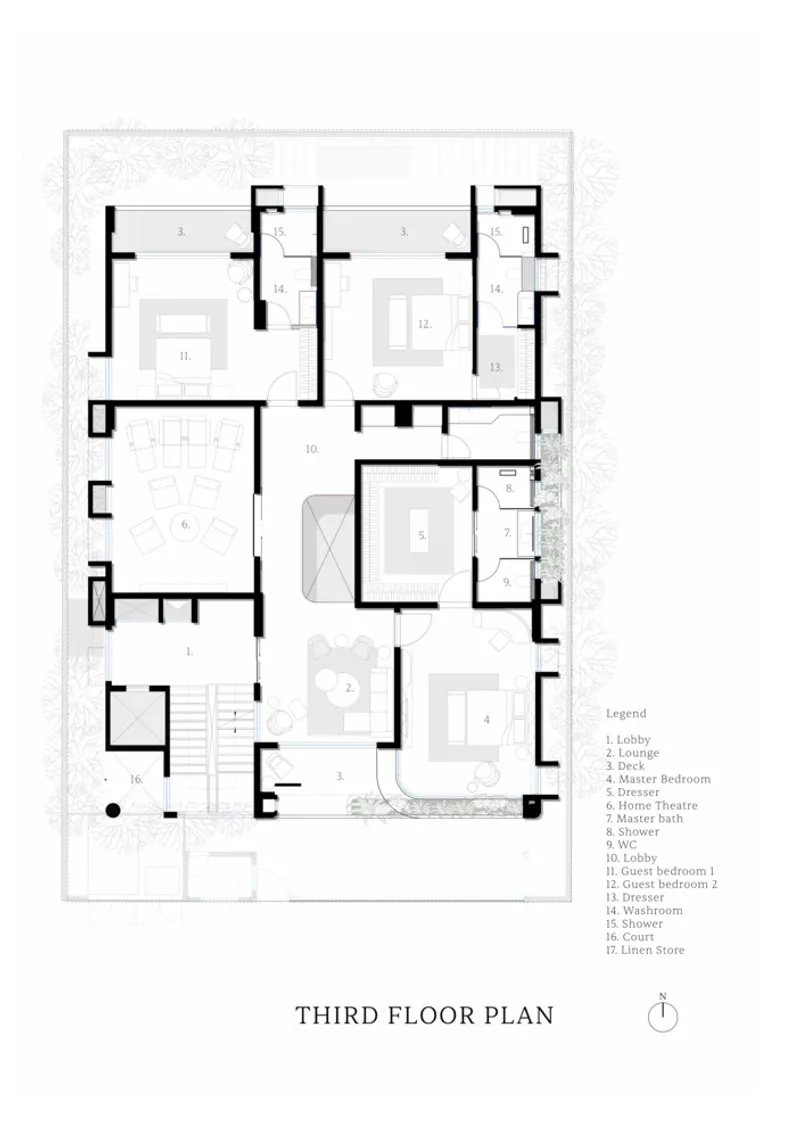
Rather than adhering to rigid boundaries, the built mass steps back and opens up, prioritizing voids as much as solids. Each level is anchored by a courtyard that functions as a social and environmental core.
This strategy allows the house to operate as a sequence of interconnected spatial episodes, where built and unbuilt elements coexist in balance. The result is a dynamic form that feels both grounded and porous.
Spatial Organization and Living Experience
The interior layout is structured around fluidity and hierarchy. Social spaces are distributed across multiple levels, encouraging interaction and shared experiences, while private zones are positioned in quieter, more secluded areas.
Double-height volumes and internal courts create visual continuity between floors, enhancing spatial depth and openness. Circulation paths are carefully choreographed, unfolding as a series of framed views, pauses, and transitions.
The staircase becomes a central architectural element, layered and interconnected with courtyards and corridors. Movement through the house is never linear; instead, it is experiential, shaped by light, vegetation, and changing perspectives.
This spatial richness supports both collective life and personal retreat, accommodating diverse modes of inhabitation.
Courtyards as Social and Environmental Anchors
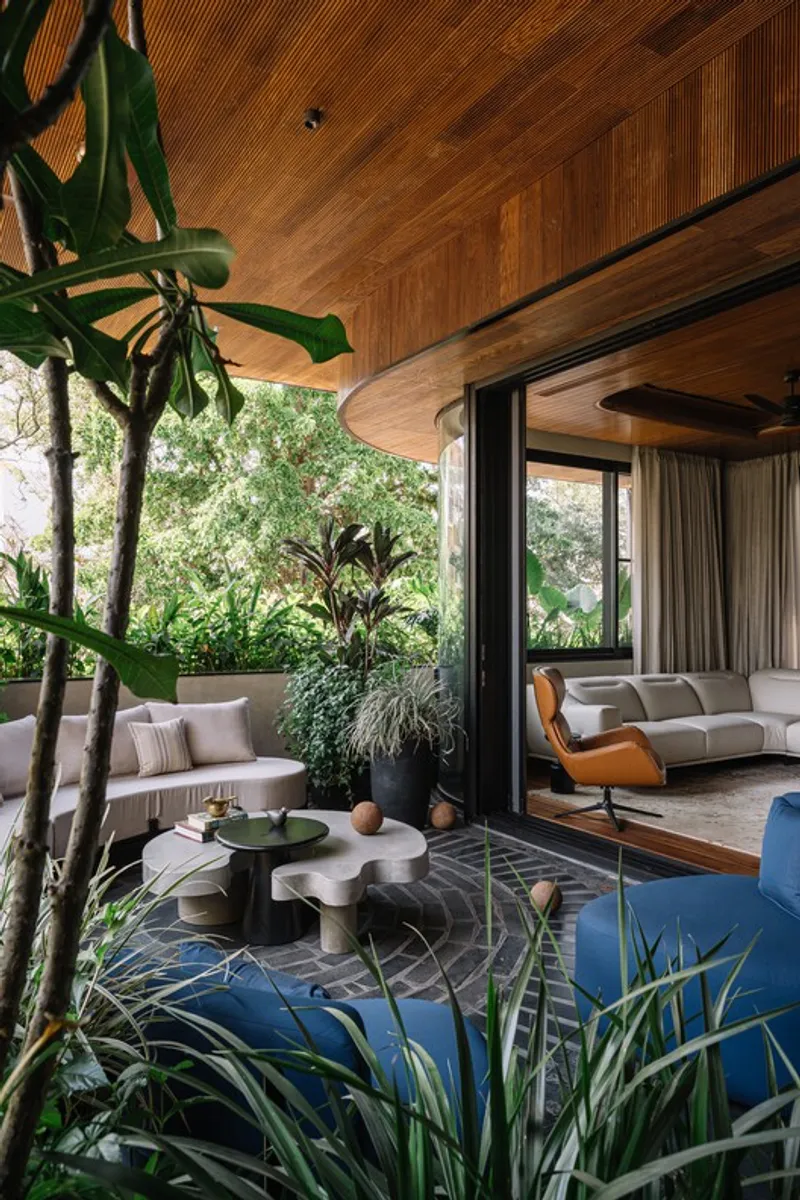
Each level of the house is organized around a courtyard that acts as the heart of shared activities. These courts regulate microclimate, enhance ventilation, and introduce natural light deep into the interior.
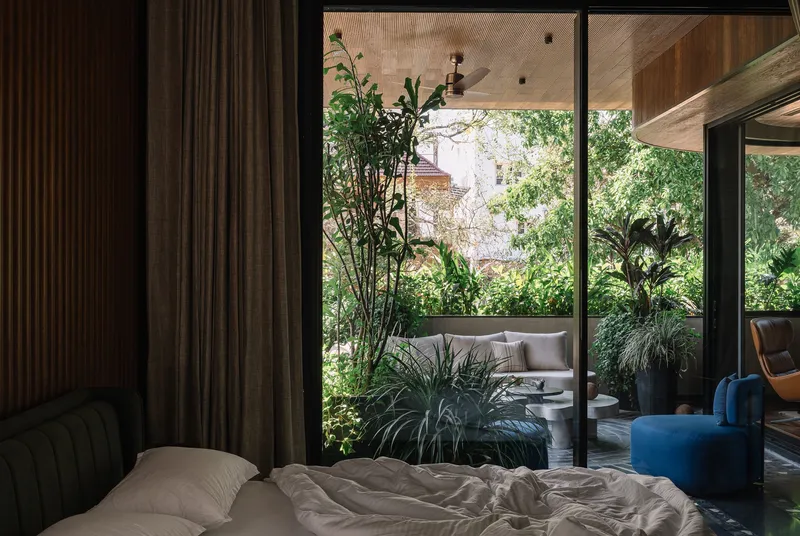
Beyond their environmental function, they serve as social catalysts. Living areas, corridors, and staircases open onto these green voids, reinforcing visual and emotional connections across the home.
The interspaced arrangement of courtyards and double-height spaces generates circulation loops and informal meeting points, strengthening family interaction and spatial continuity.
Landscape as Memory and Continuity
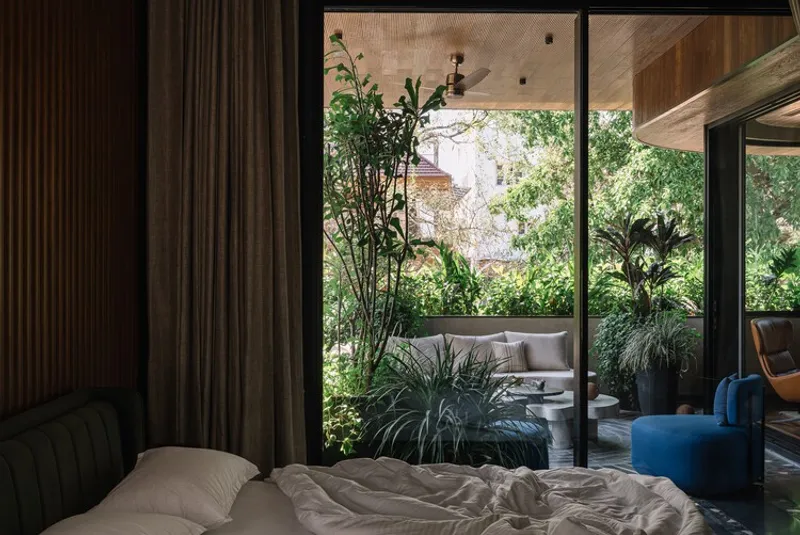
A distinctive aspect of the project is its treatment of landscape as an emotional and cultural resource. Many of the plants and pots from the clients’ previous home were carefully relocated and reintegrated into the new setting.
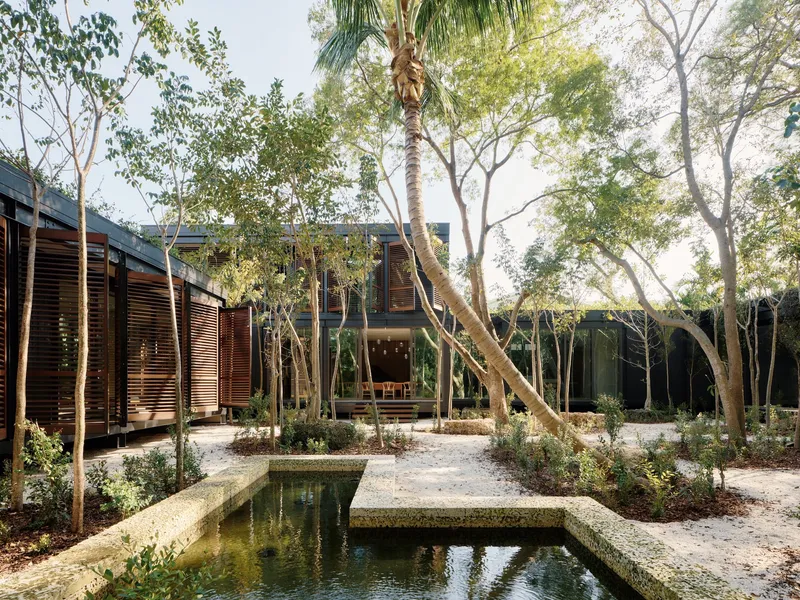
This act of “re-homing” vegetation bridges past and present, embedding personal memory within the architecture. Rather than starting with a blank slate, the design builds upon existing attachments and rituals.
The greenscape becomes a quiet companion, softening built edges and reinforcing a sense of belonging and familiarity.
Materiality and Sensory Experience
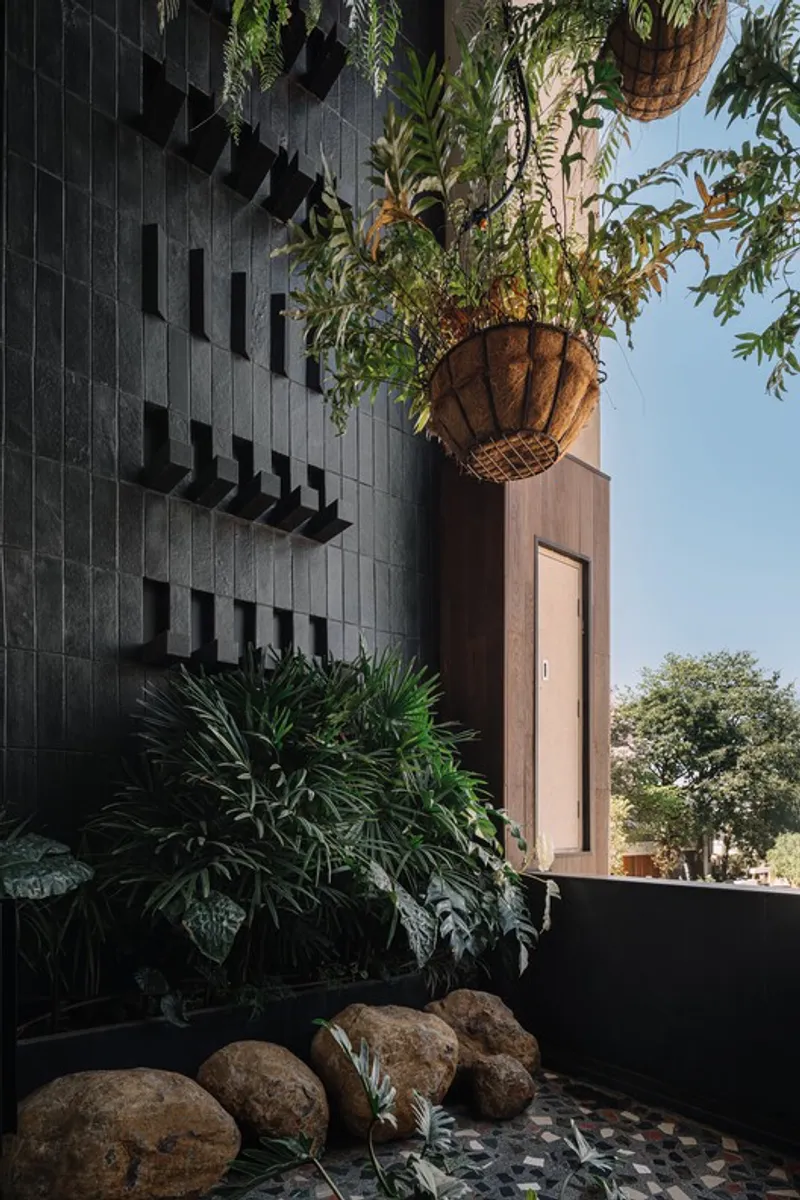
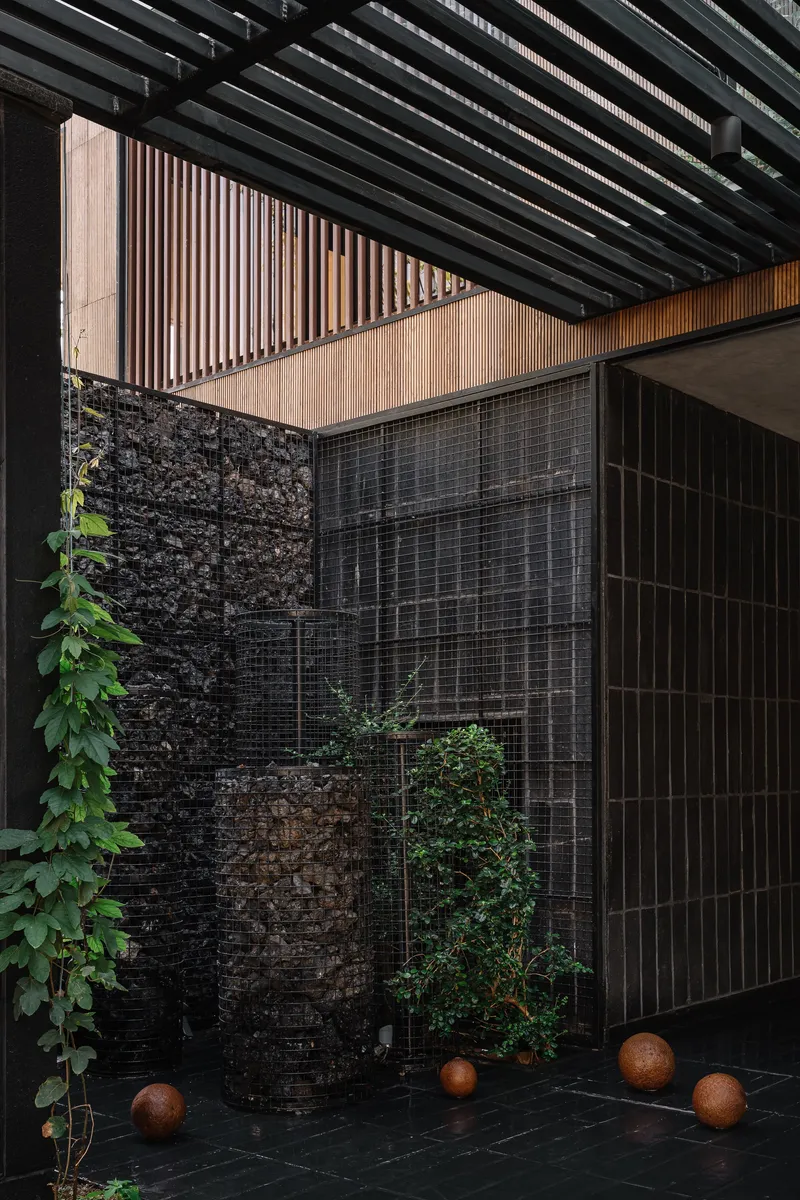
Material selection in Villa 1374 emphasizes tactility, contrast, and authenticity. Rough limestone, exposed concrete, gabion cylinders, and natural wood form the primary palette.
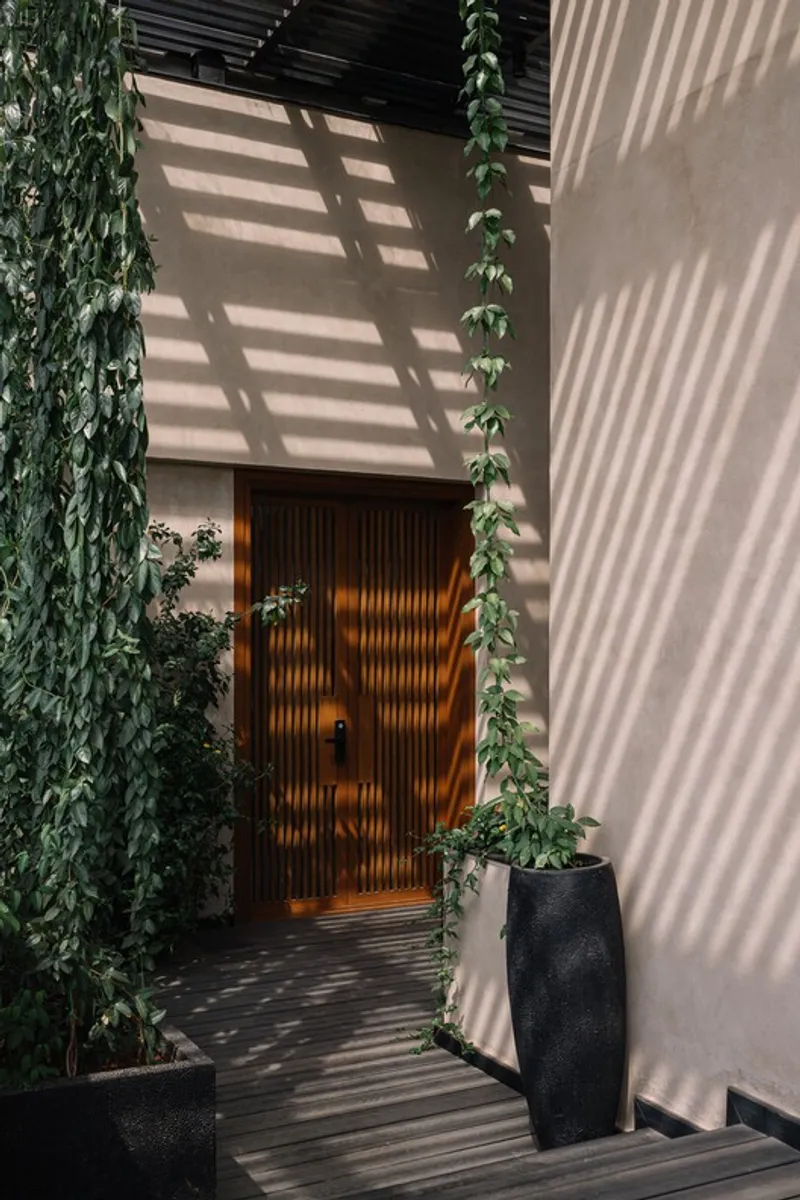
At the entrance, rugged stone surfaces and cascading greens create a meditative threshold that blurs interior and exterior boundaries. This transitional space establishes a calm and contemplative atmosphere.
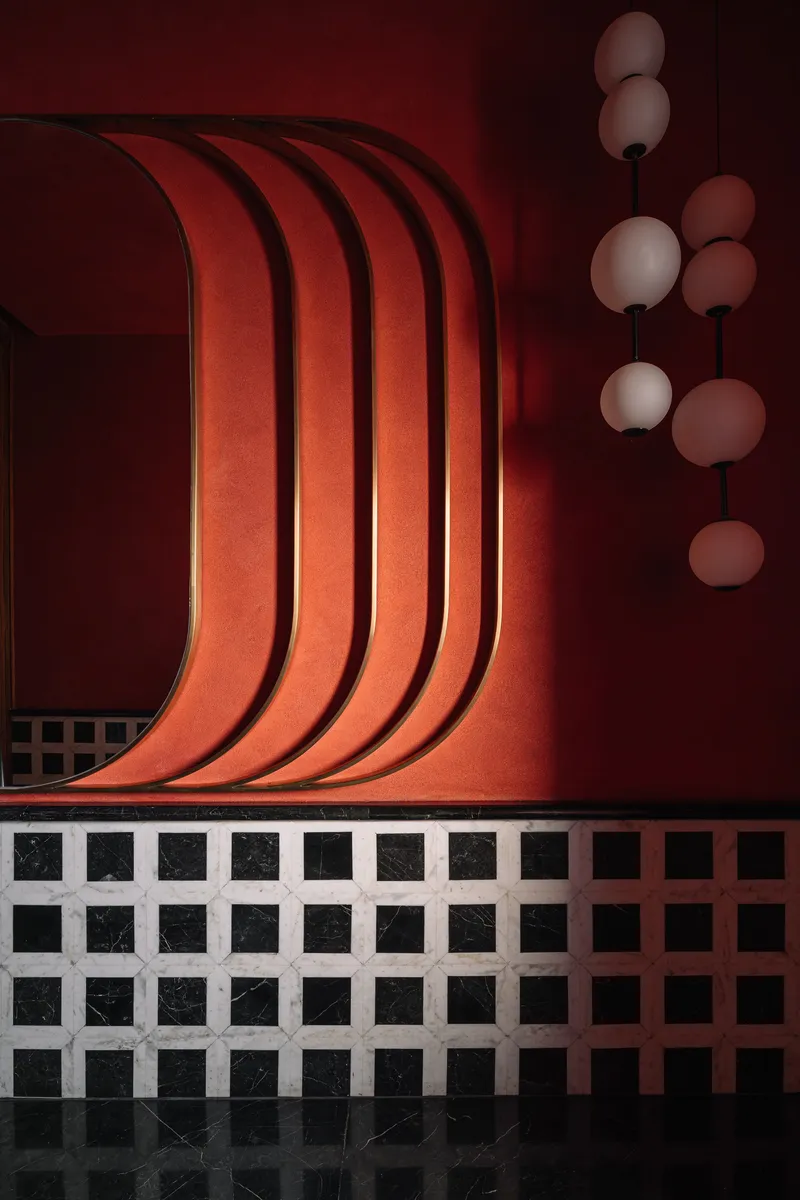
Inside, the interplay between raw textures and soft vegetation encourages sensory engagement. Surfaces are intentionally left expressive, allowing material character to shape spatial perception.
The architecture invites touch, observation, and slow movement, fostering a deeper relationship between occupants and their environment.
Light, Shadow, and Atmosphere
Light is treated as an active design element. Courtyards, double-height spaces, and staggered volumes allow daylight to penetrate at multiple angles, creating layered lighting conditions.
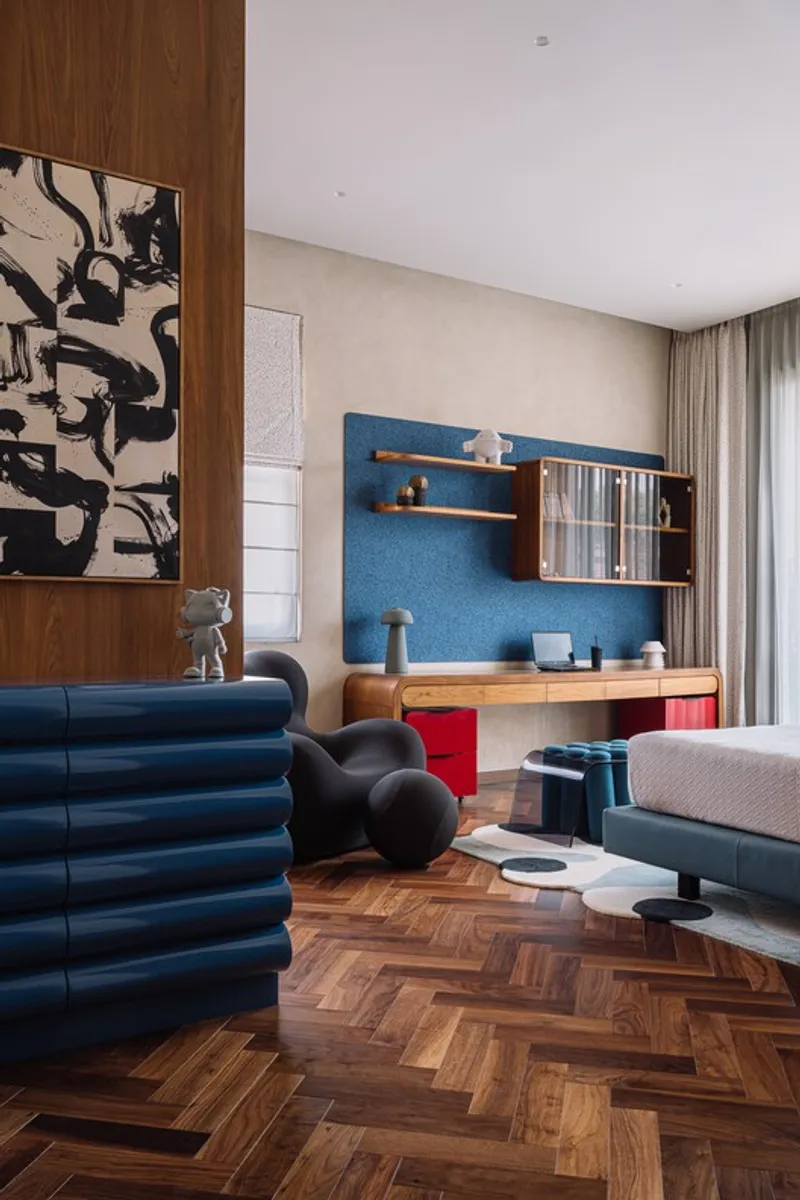
Throughout the day, shifting patterns of light and shadow animate walls, floors, and foliage. These variations enhance spatial character and reinforce the connection to natural cycles.
Rather than relying heavily on artificial lighting, the design prioritizes daylight modulation, contributing to visual comfort and energy efficiency.
The Terrace: Continuity at the Top
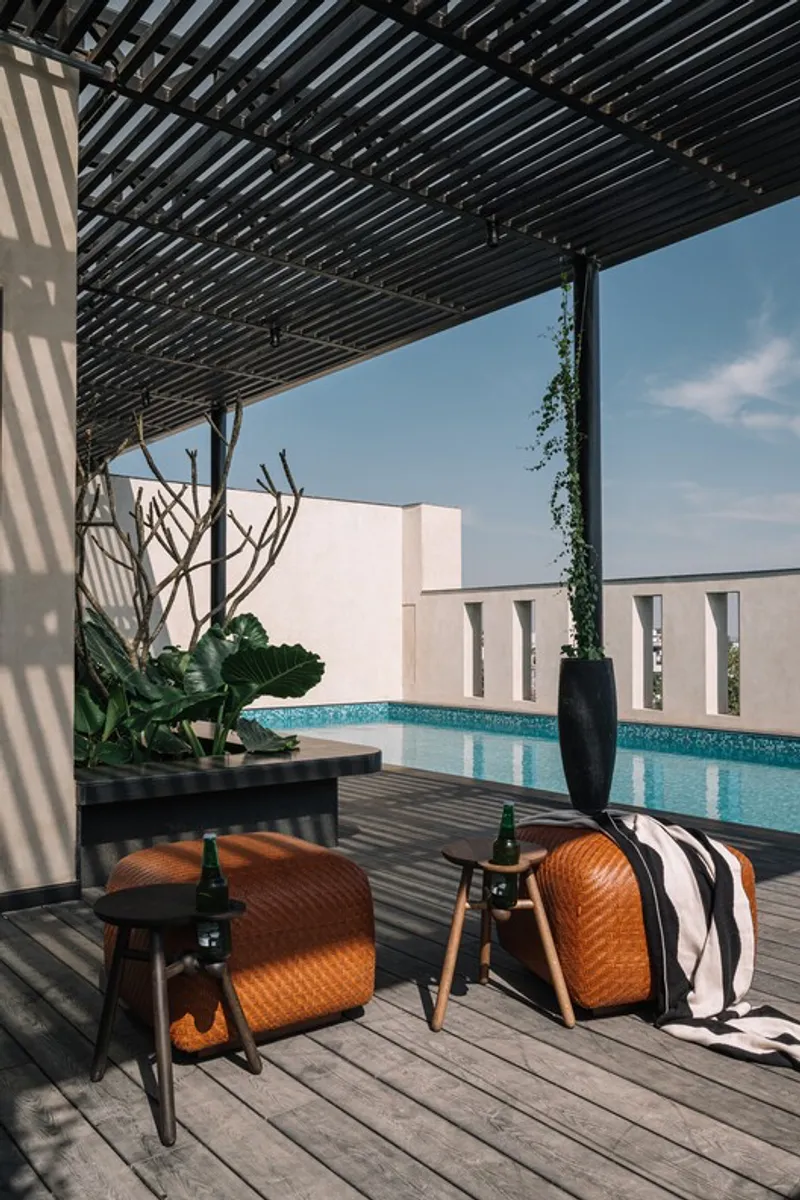
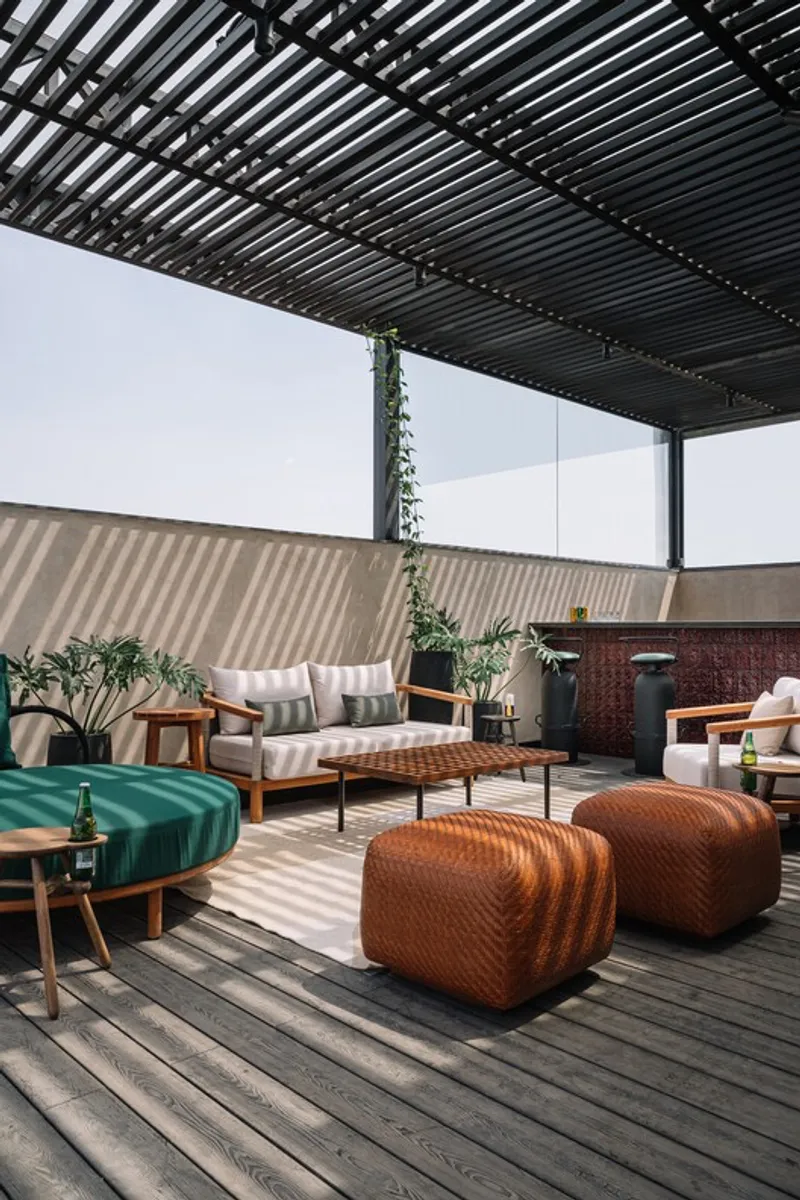
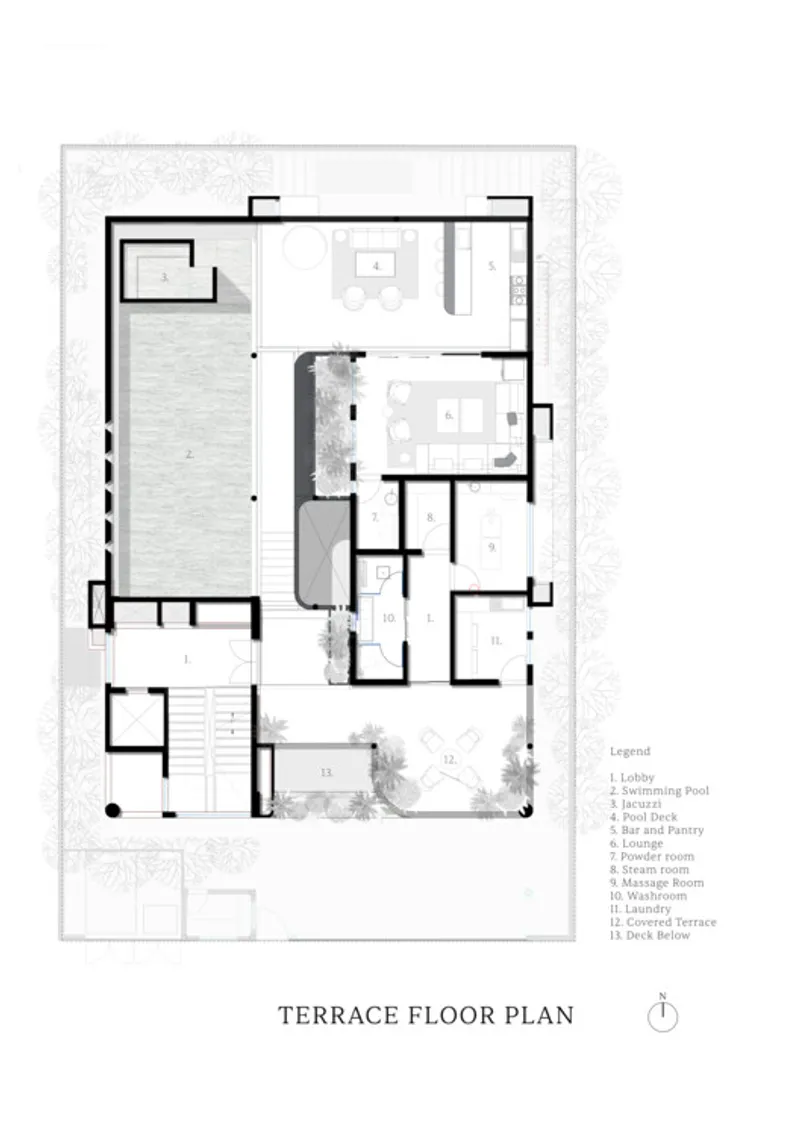
The uppermost level of Villa 1374 is conceived not as a conclusion, but as an extension of domestic life. The terrace integrates a swimming pool, entertainment areas, and open seating zones.
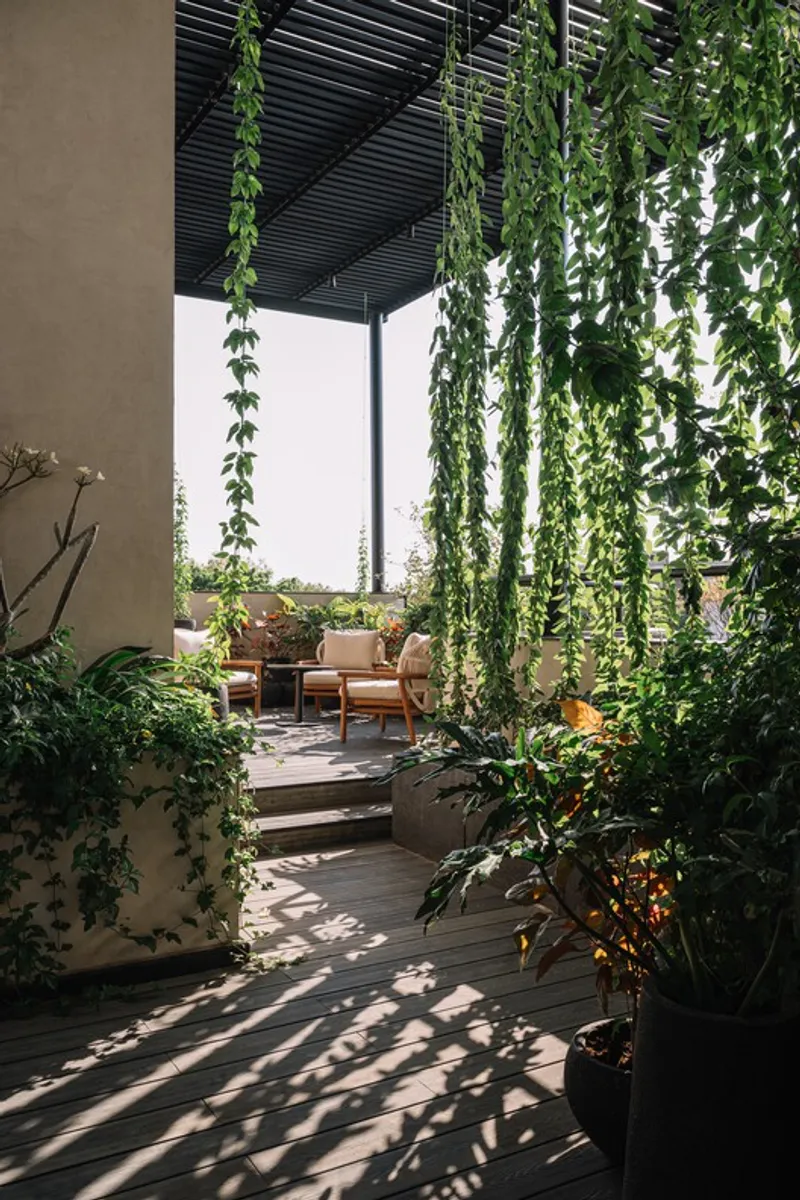
This elevated retreat functions as a social and recreational landscape, blending leisure with openness. It offers expansive views while maintaining intimacy through planting and spatial articulation.
The terrace reinforces the idea that living extends vertically, with each level contributing equally to the overall experience.
Sustainability Through Spatial Intelligence
Environmental responsibility in Villa 1374 is achieved primarily through passive design strategies. Courtyards promote cross-ventilation, vegetation reduces heat gain, and shading devices mitigate solar exposure.
The integration of existing plants minimizes landscape waste, while durable materials ensure longevity. Compact massing combined with distributed voids enhances thermal performance and comfort.
Rather than relying on complex technologies, the project demonstrates how thoughtful spatial planning can support sustainable living.
Architecture as a Living Framework
More than a physical structure, Villa 1374 functions as a living framework that adapts to evolving family dynamics and routines. Its layered organization supports flexibility, privacy, and interaction in equal measure.
The house does not impose a rigid lifestyle. Instead, it offers a series of spatial possibilities that residents can appropriate over time. Architecture becomes a backdrop for daily rituals, celebrations, and moments of solitude.
This adaptability ensures the long-term relevance of the home.
A Contemporary Expression of Indian Residential Architecture
Villa 1374 represents a mature approach to contemporary residential design in India. It balances scale, craftsmanship, and environmental sensitivity while remaining deeply rooted in local context.
By integrating landscape, memory, and spatial fluidity, The Purple Ink Studio has created a residence that transcends conventional notions of luxury. Comfort here is defined not by excess, but by connection, calm, and continuity.
The project stands as a strong example of how private homes can engage meaningfully with nature, culture, and everyday life.
All the Photographs are works of Ishita Sitwala



Popular Articles
Popular articles from the community


Conexión: Biophilic Design Reimagines High-Rise Living in Hong Kong
Conexión reimagines high-rise living in Hong Kong through biophilic design, green facades, shared spaces, daylight, water and nature within.

Co-life: Sustainable Architecture for Age-Friendly Community Living
Co-life reimagines sustainable architecture for seniors through courtyards, rammed earth, shared gardens, and spaces designed for belonging.

Riyadh For All: Intergenerational Urban Design for Active Aging in Rabat
Riyadh For All reimagines urban design in Rabat with intergenerational co-living, adaptive courtyards, and Moroccan cultural exchange today.

The Earth Pod: 3D Printed Homes for Resilient Refugee Communities
The Earth Pod reimagines refugee housing through 3D printed homes made from clay, combining resilience, self-sufficiency, and rapid shelter.


Similar Reads
You might also enjoy these articles


Hodi-Mandai Geram
Project Function: Preservation and revitalization of the Intangible heritage and socio-spatial identity of the Hodi by Housing, Cultural Memory Center, Sacred Grove, landscape, local tourism economy


Olio Towers: A Mid-Rise for Performers That Fuses Housing, Rehearsal, and Stage
Located blocks from Houston's Theater District, this modular tower stacks living units around a central performance atrium.

Oasis: Modular Green Housing Carved into Dhaka's Urban Fabric
A shortlisted Plugin Housing entry reclaims unauthorized settlements in Dhaka with stepped concrete volumes, green roofs, and ventilation-driven design.

Black Hole: A Floating Megastructure for the Post-Physical Era
Emiliano Mazzarotto envisions a spherical, self-scaling arena where e-sports, digital hotels, and holographic stadiums replace traditional public space.
Explore Architecture Competitions
Discover active competitions in this discipline



Challenge to reimagine the Iron Throne


Photograph architecture without architects


Illustrate the lost glory of Angkor Wat - Render Challenge


Design challenge to reuse E-waste
Comments (0)
Please login or sign up to add comments
No comments yet. Be the first to comment!