
Villa H by ARK-architecture
A contemporary Tunisian villa balancing compact urban constraints with light, courtyards, and restrained materiality to create calm, adaptable domestic spaces.


Set within a dense residential fabric in Tunis, Villa H by ARK-architecture explores how generosity of space can be achieved not through excess, but through clarity, restraint, and precise spatial orchestration. Completed in 2025 on a compact 504 m² plot, the 620 m² villa demonstrates how contemporary domestic architecture in the Mediterranean context can reconcile privacy, light, and openness within tight urban constraints.
Compact Serenity and Mediterranean Light in a Contemporary Tunisian Villa
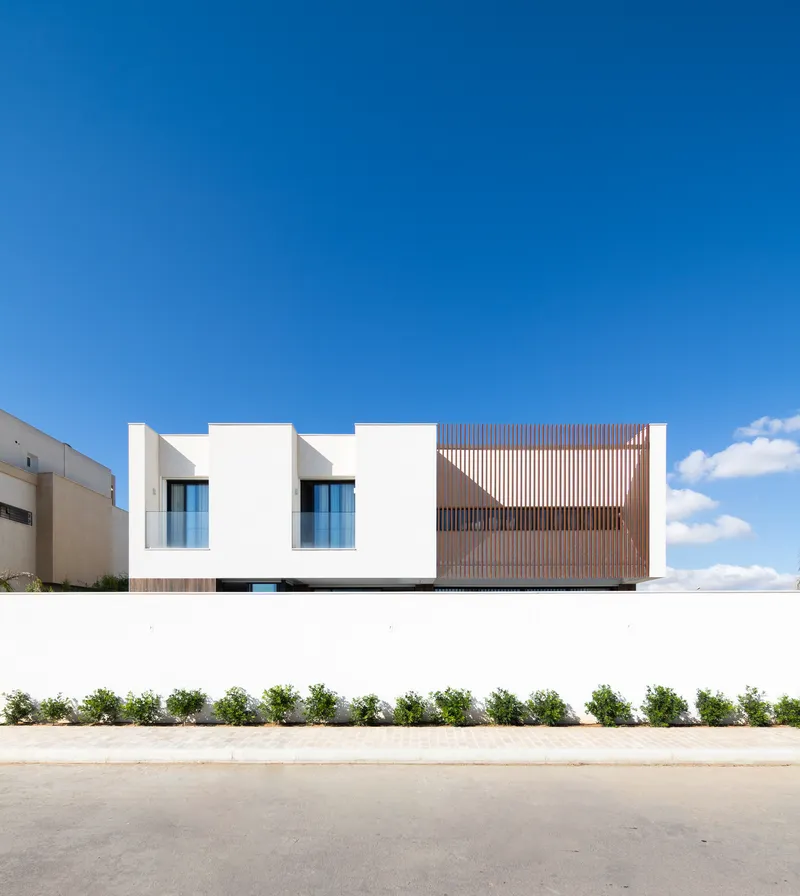
Rather than competing with its surroundings, Villa H adopts a quiet architectural posture. It presents itself as an inward-looking house: measured, composed, and carefully calibrated: where space unfolds gradually and domestic life is oriented around light, air, and landscape.
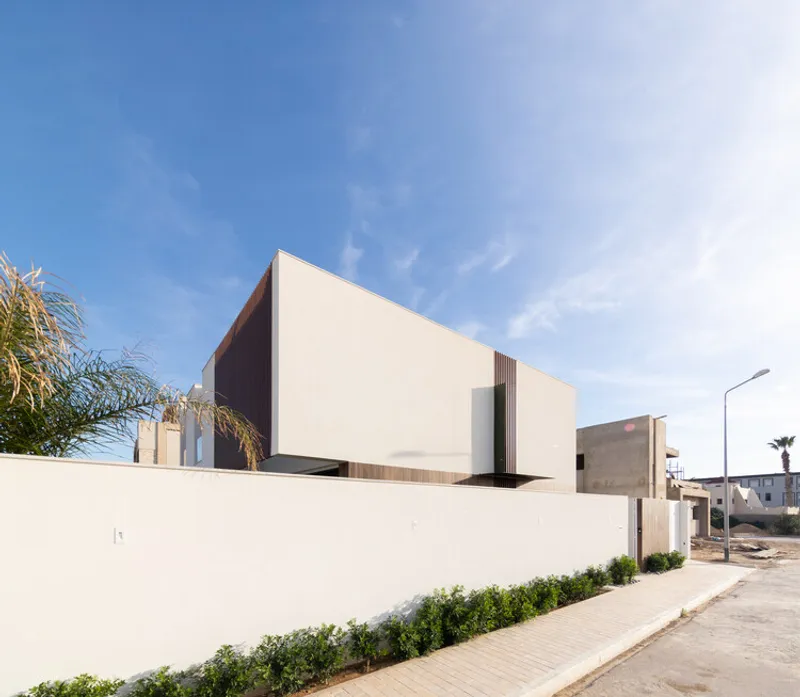
Urban Constraint as Architectural Opportunity
The project began with a clear challenge: how to accommodate a generous residential program within a limited footprint, while preserving a sense of calm and spatial fluidity. ARK-architecture approached this not by expanding outward, but by layering the house vertically and carving voids within.
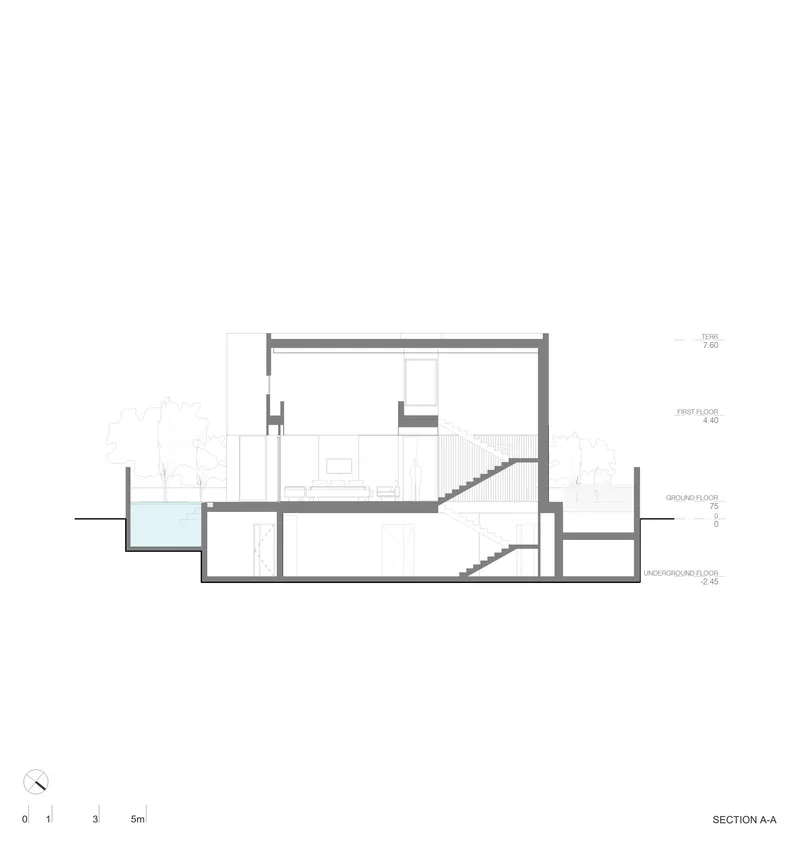
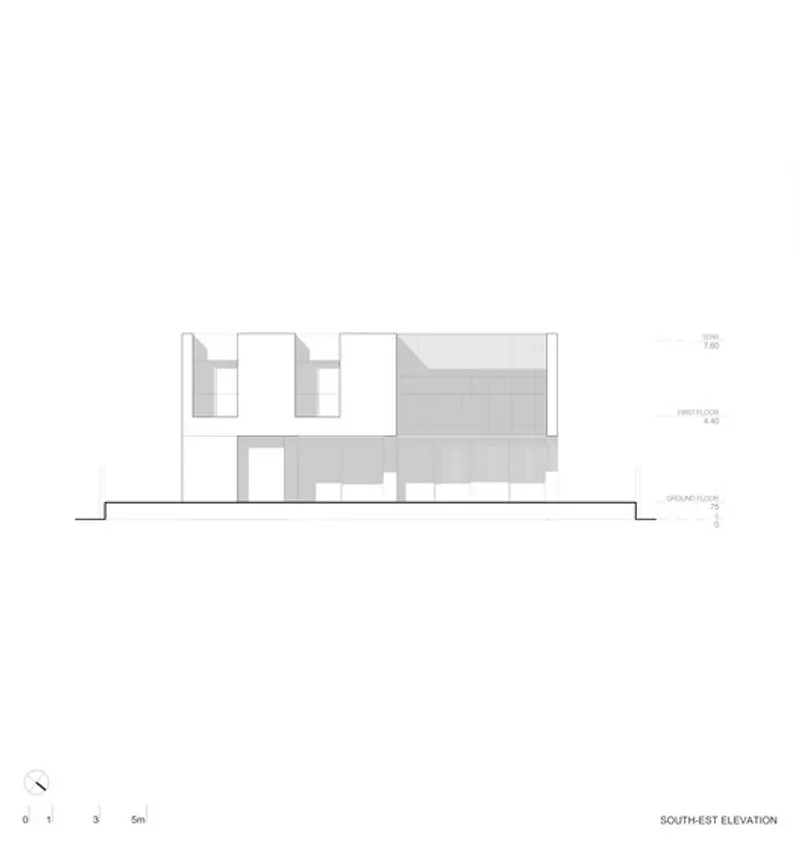
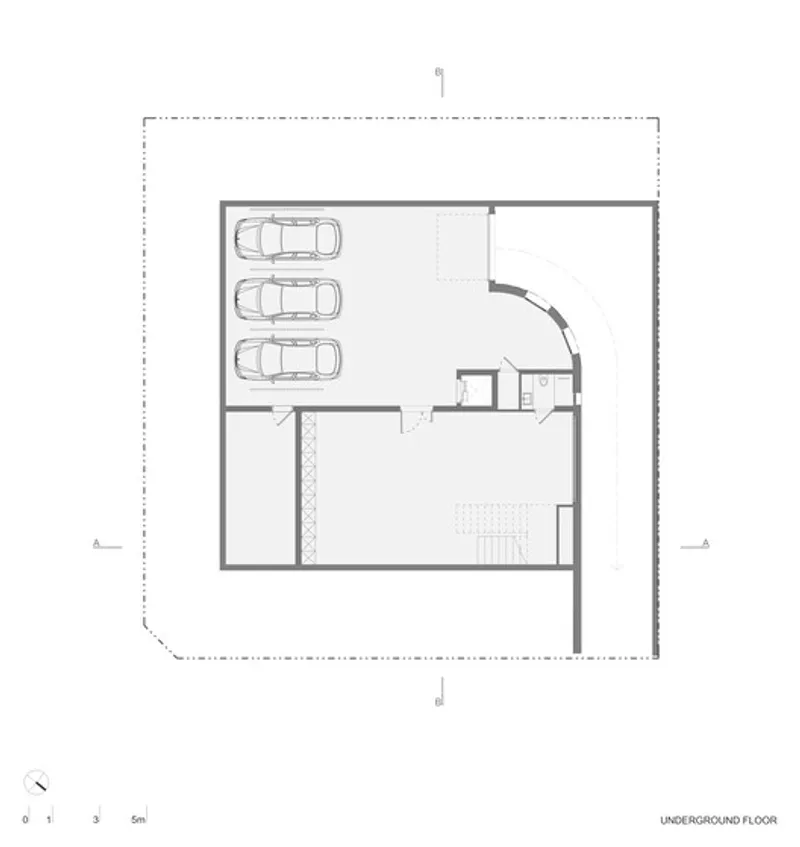
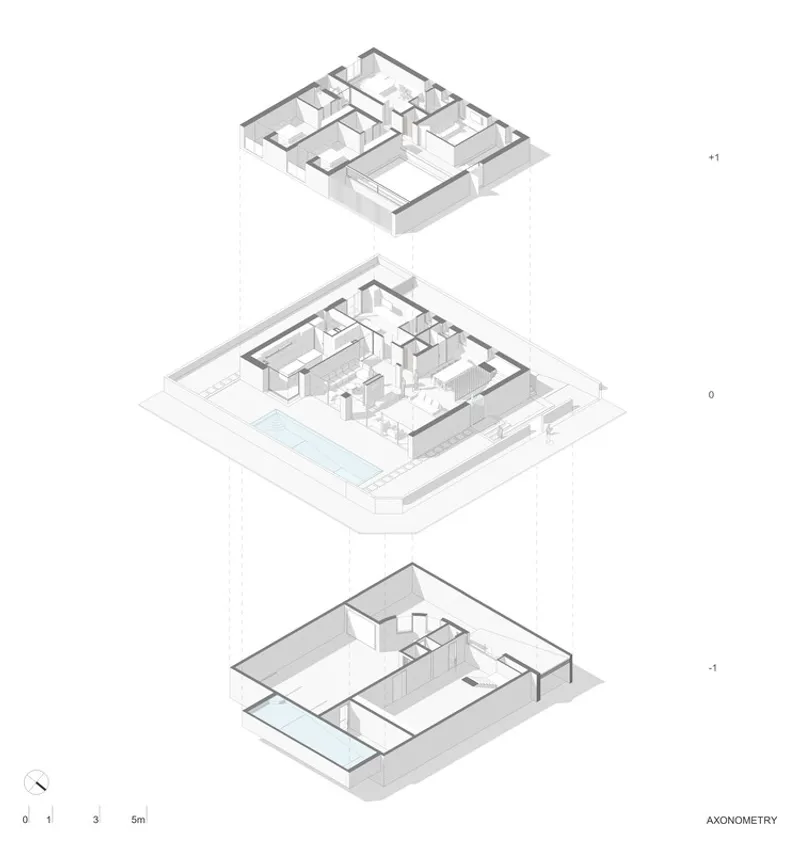
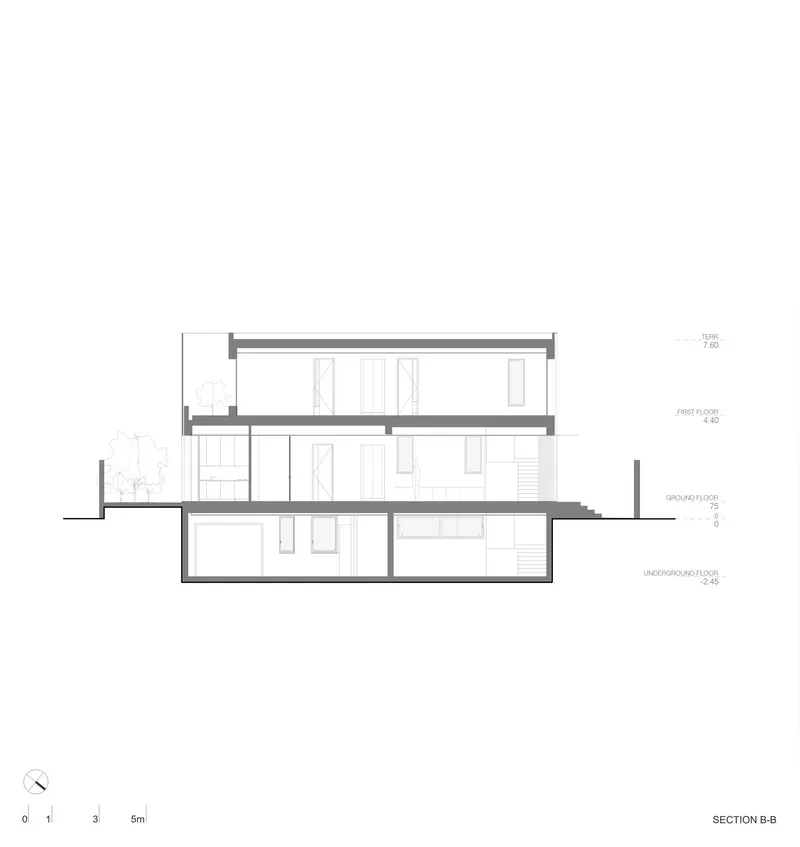
The villa is organized across three levels:
- A generous basement hosting technical spaces, leisure areas, and parking
- A compact ground floor, freeing the garden and pool as the dominant living environment
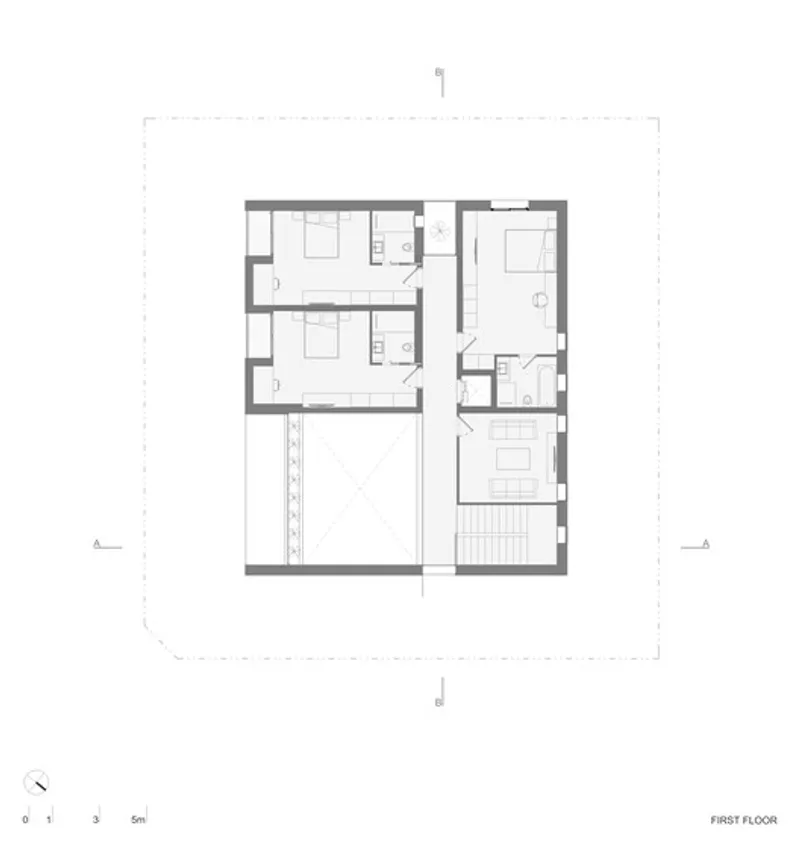
- An upper level containing four sunlit bedroom suites
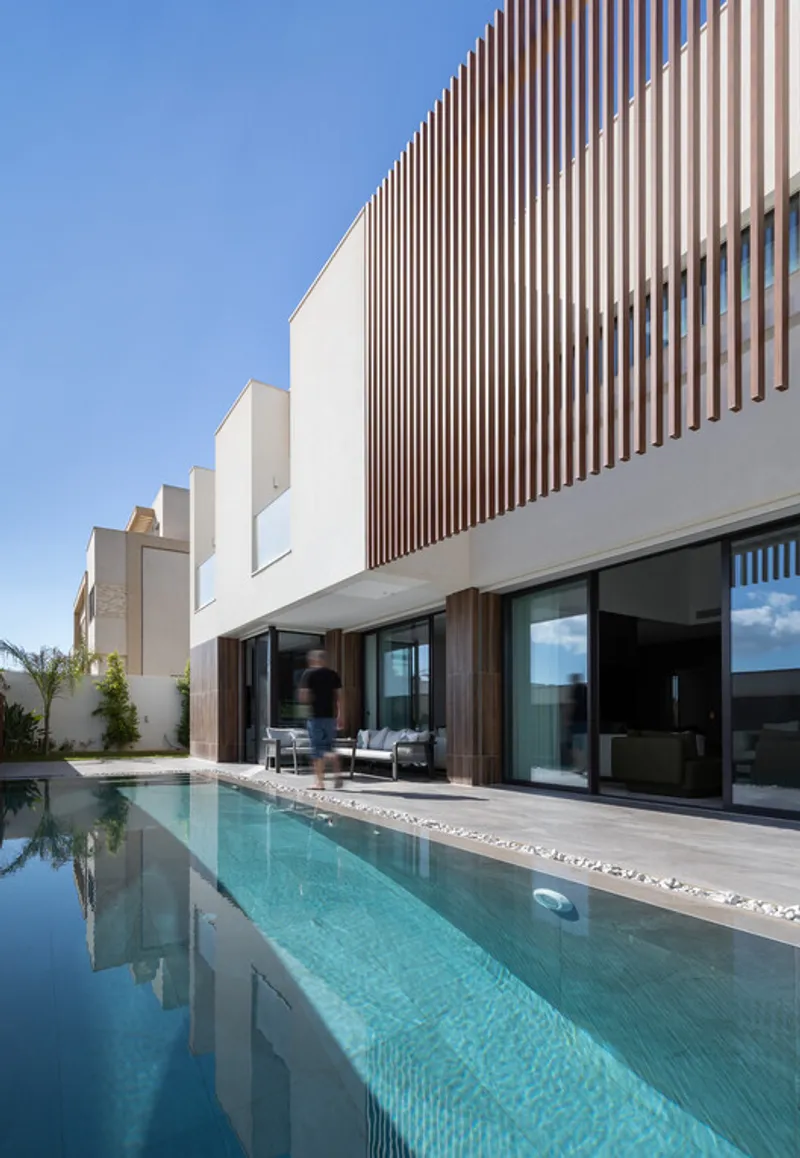
This vertical stratification allows the ground plane to remain open and breathable, reinforcing the house’s relationship with outdoor space despite its urban context.
A Quiet Façade and the Language of Privacy
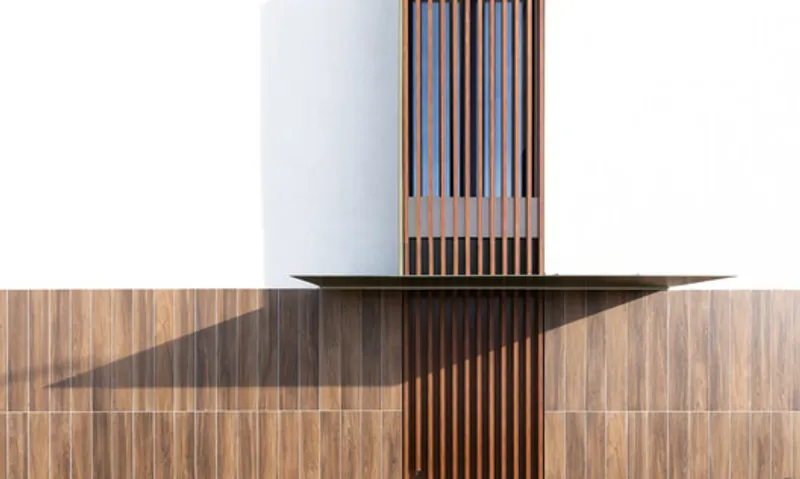
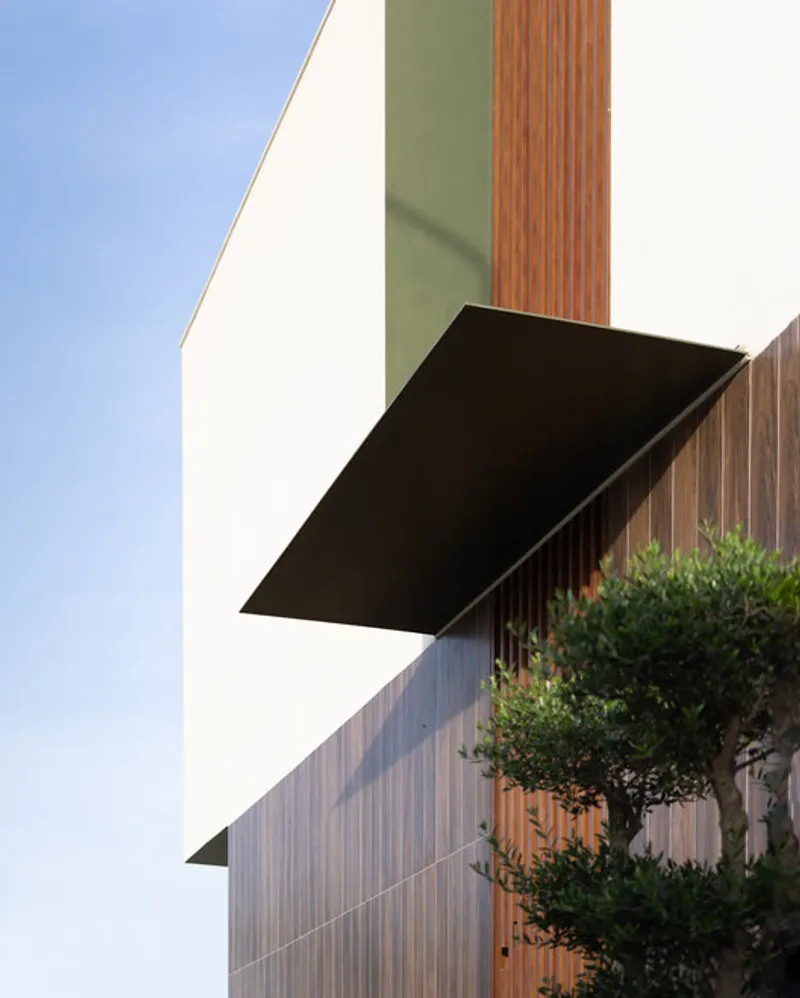
Facing the street, Villa H adopts a restrained, almost mute façade. Privacy is the guiding principle, expressed through controlled openings and a calm material palette. Rather than transparency, the exterior prioritizes discretion, shielding domestic life from the public realm.
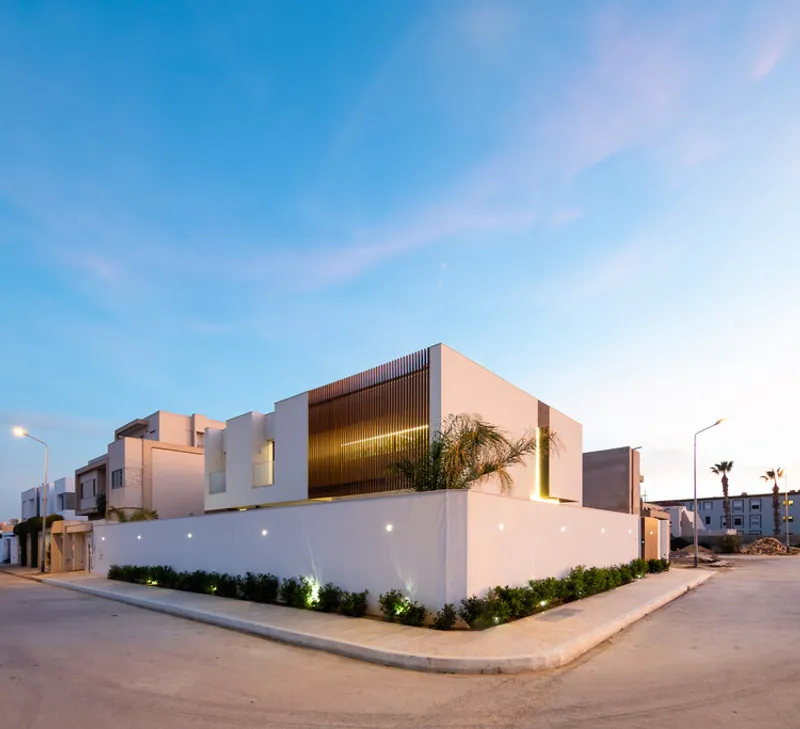
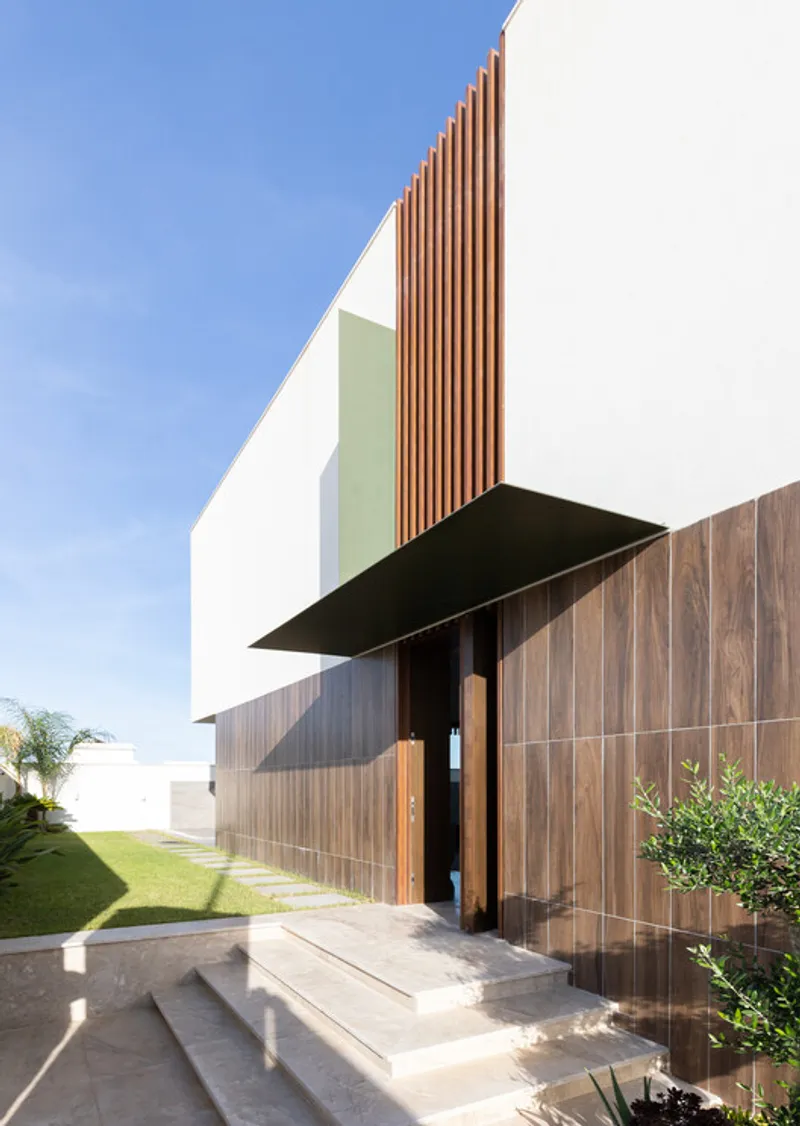
A slender olive-green steel canopy marks the entrance. Floating lightly above the threshold, it introduces a moment of architectural precision, transforming structure into gesture. Subtle yet expressive, the canopy announces entry without disrupting the façade’s composure.
This deliberate understatement establishes the villa’s architectural attitude: clarity over display, presence without excess.
The Garden and Pool as Emotional Core
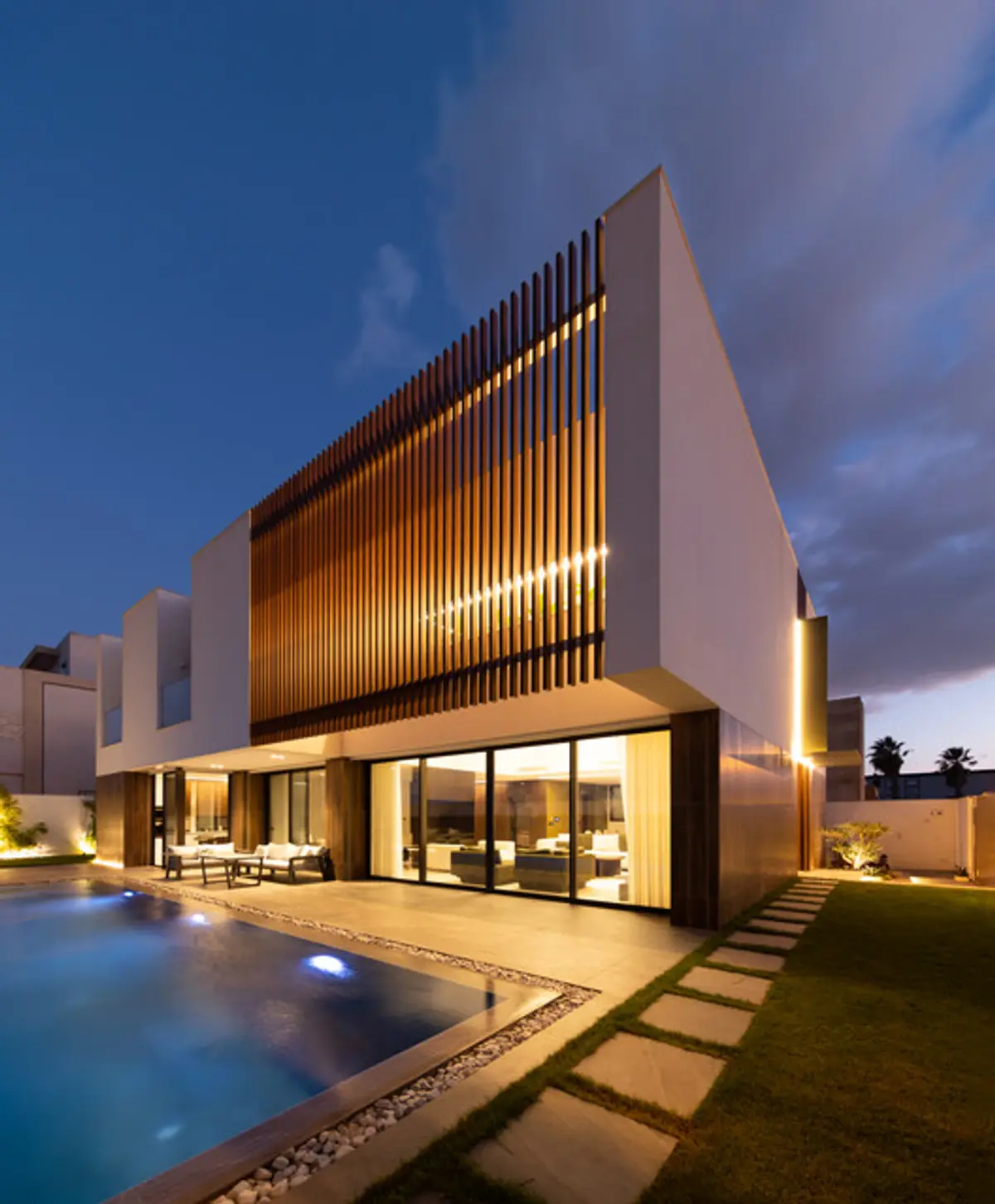
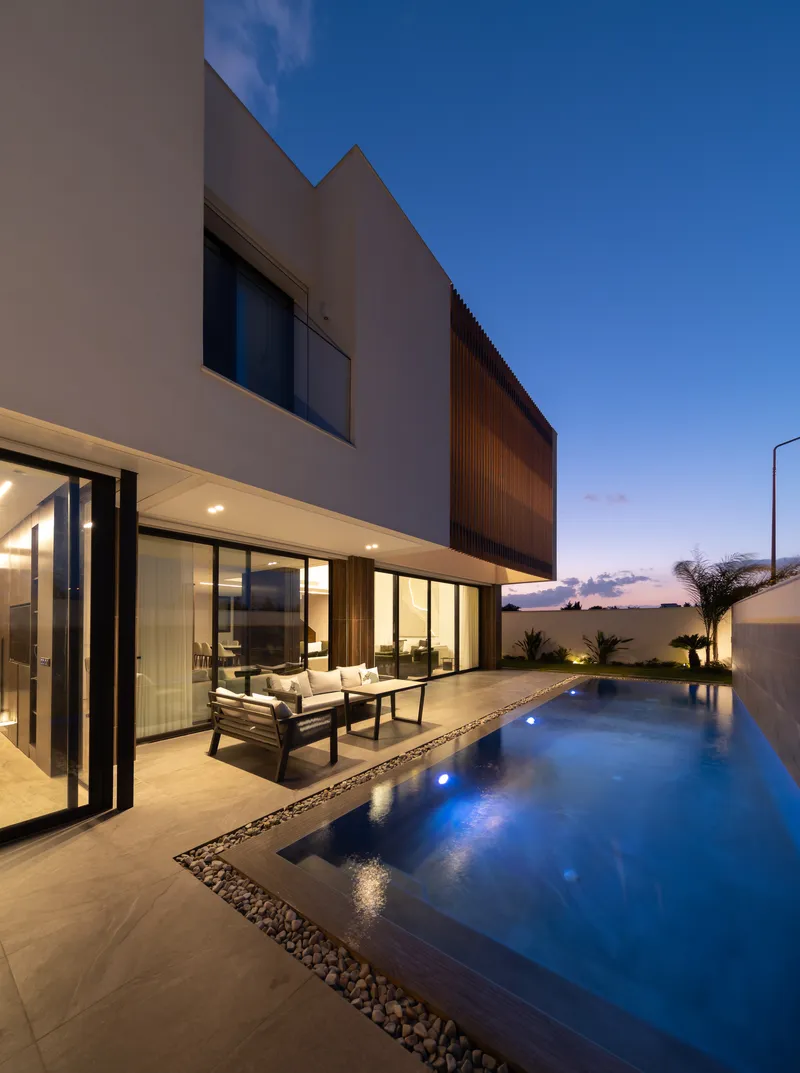
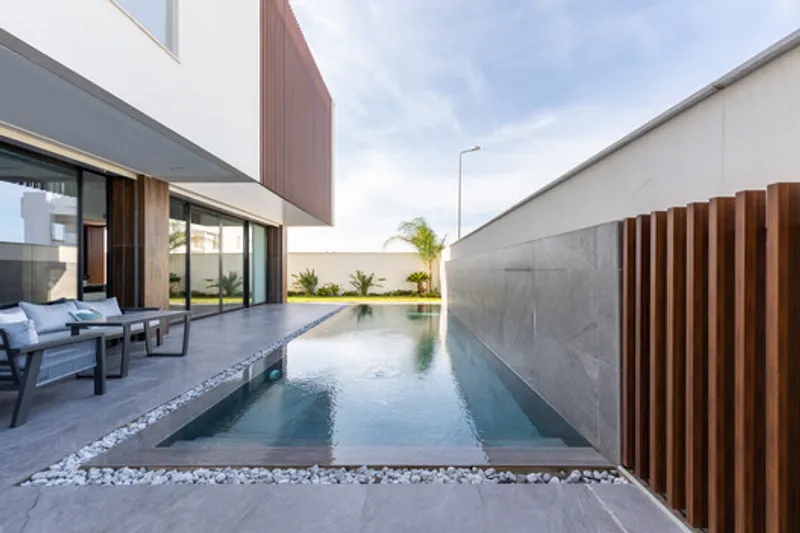
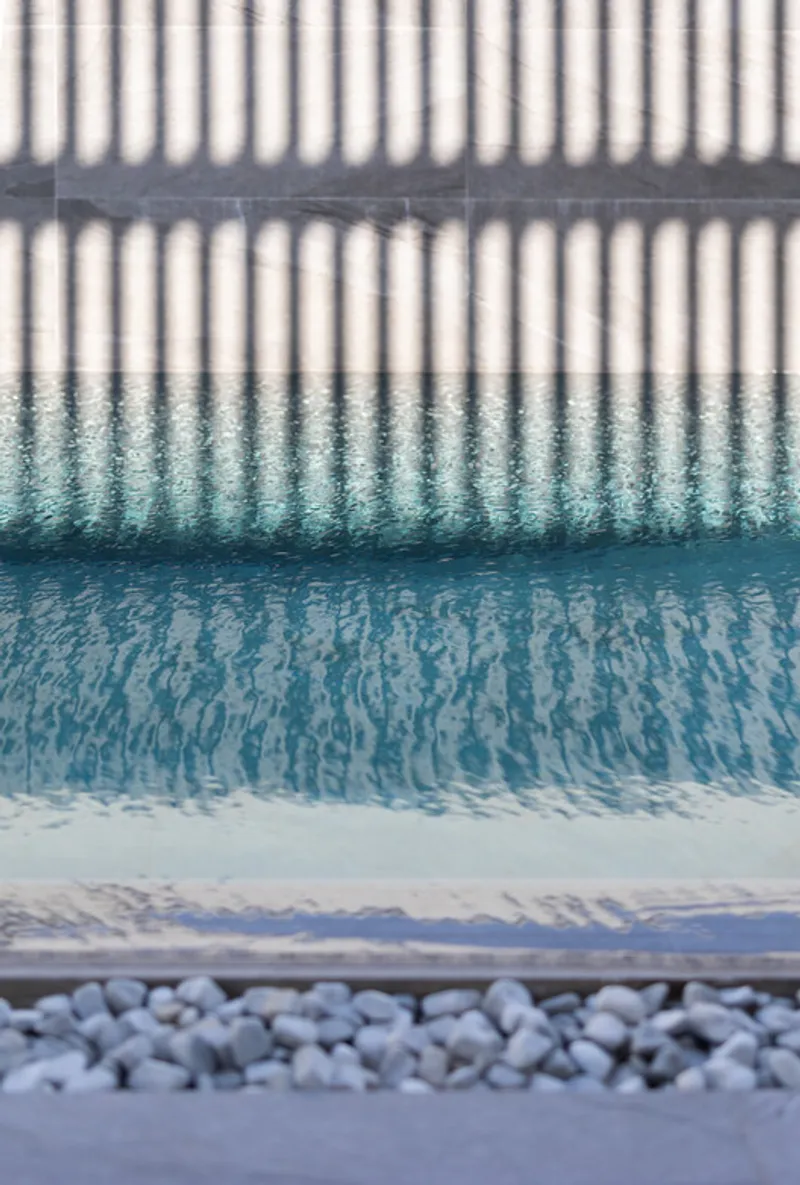
At the heart of Villa H lies the garden and swimming pool, conceived not as ancillary outdoor amenities but as the emotional and spatial center of the house. Stretching 11 meters along the property line, the pool reads as a carved extension of the architectural podium.
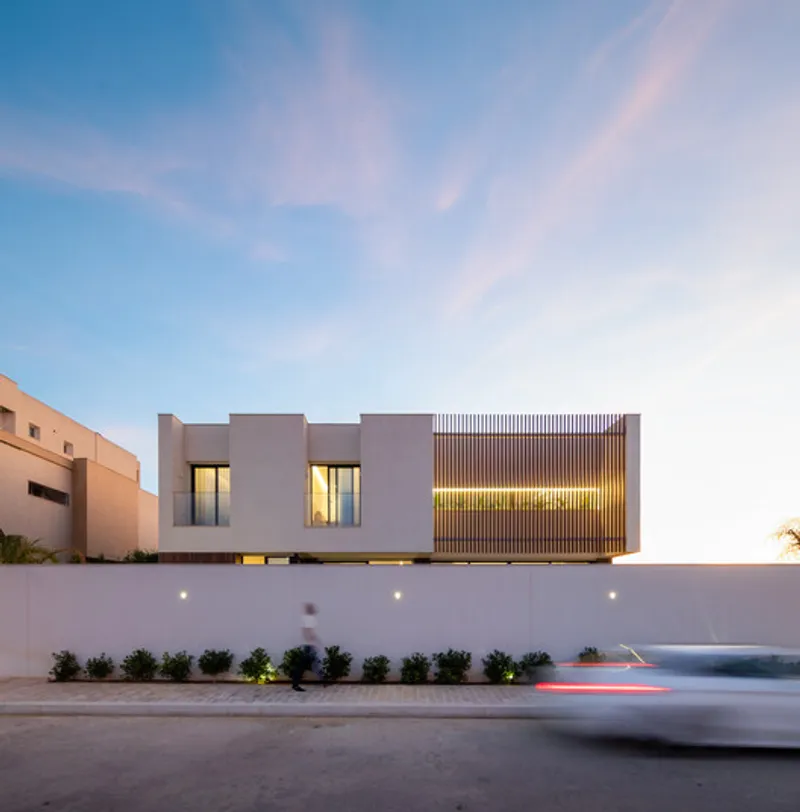
Clad in the same sandstone finish as the surrounding terrace, the pool dissolves the boundary between built form and landscape. Water, stone, and geometry merge into a single continuous composition, reinforcing a sense of unity and stillness.
The garden becomes a protected oasis, a space of repose and everyday ritual, anchoring domestic life around nature rather than the street.
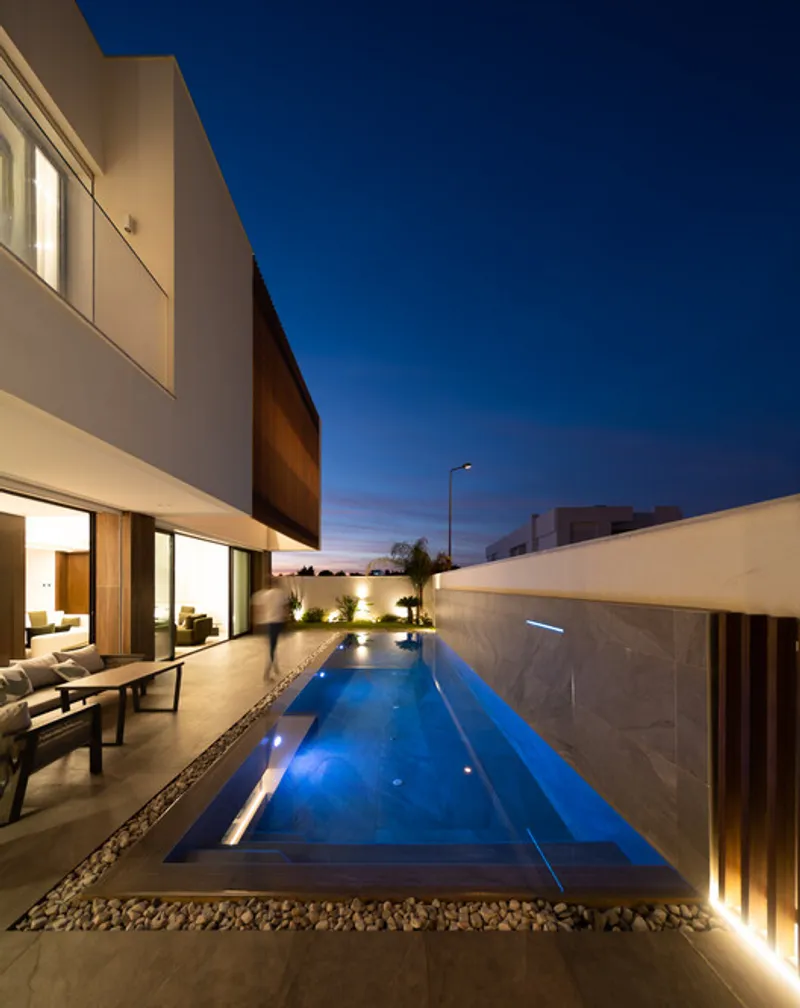
Courtyard Reimagined: The Central Patio
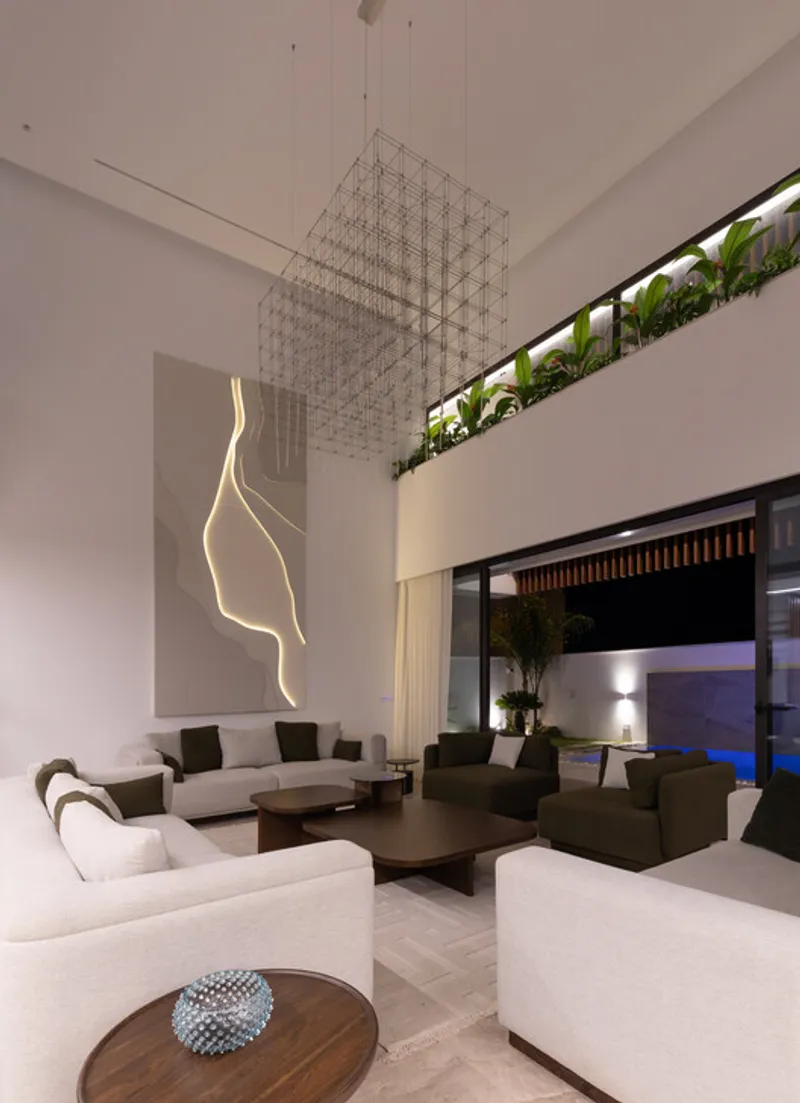
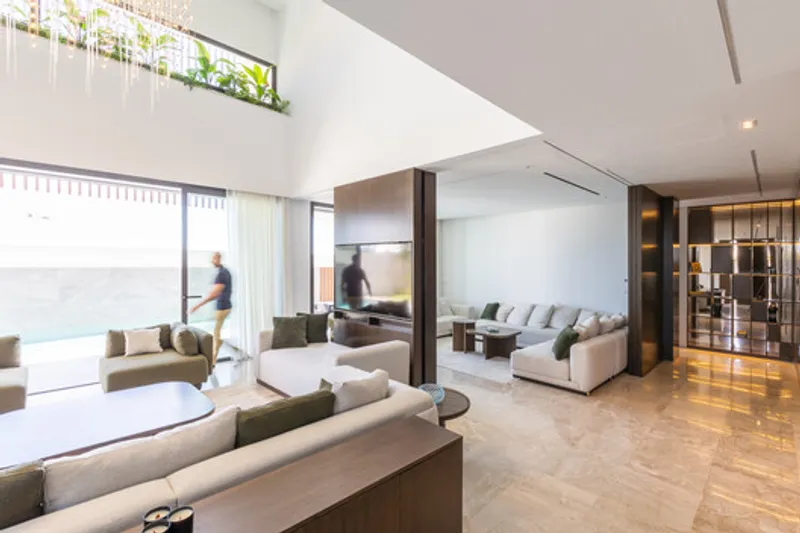
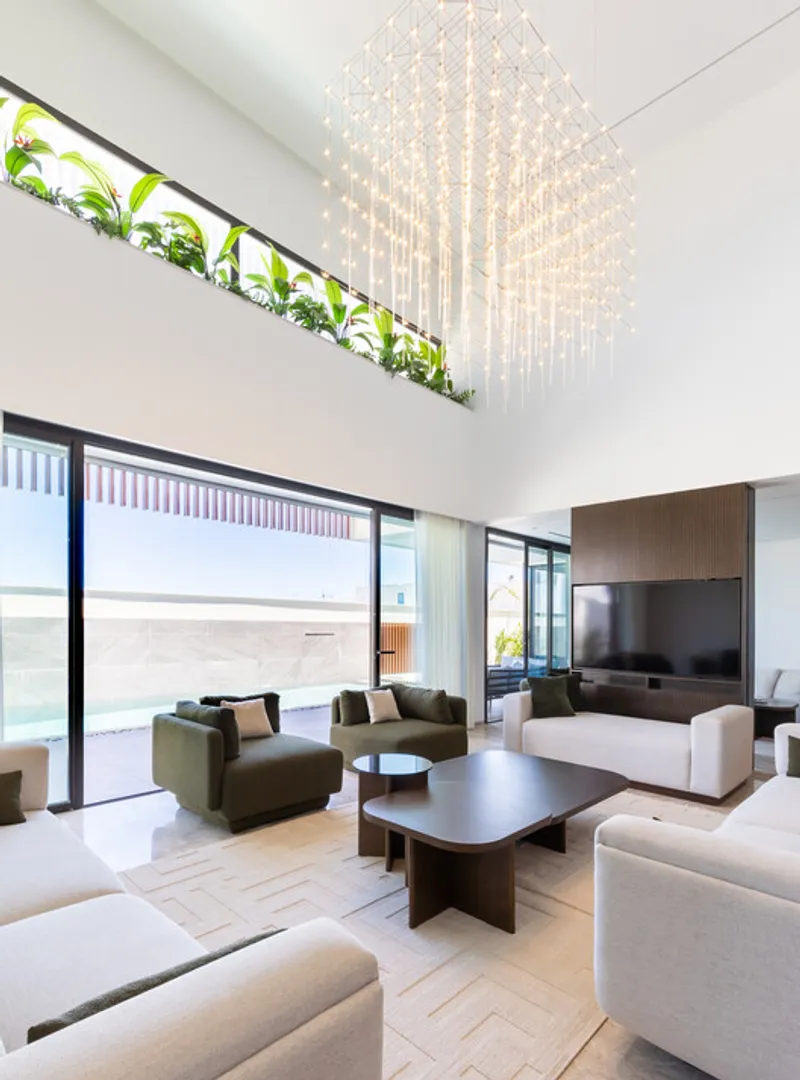
Drawing inspiration from the courtyards of traditional Arab houses, Villa H reinterprets this timeless typology through contemporary minimalism. A central patio introduces a double-height void that visually and atmospherically connects the ground floor living spaces with the upper level.
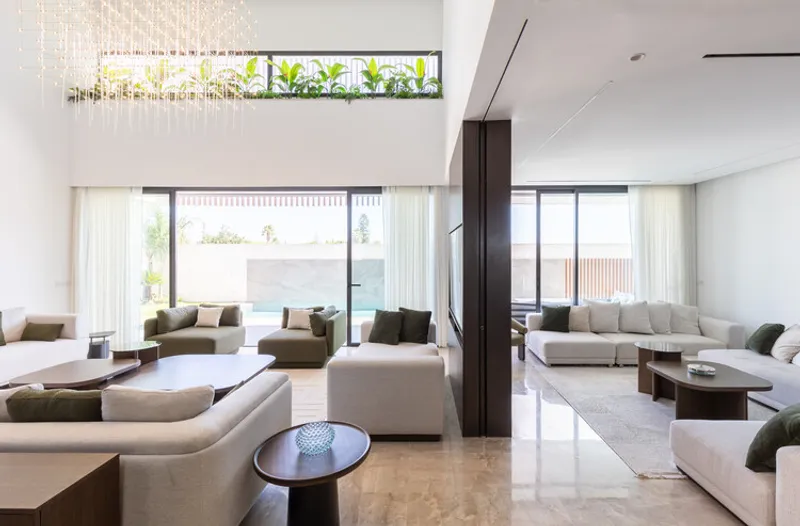
This vertical opening becomes a climatic and spatial regulator. It draws natural light deep into the interior, enhances cross-ventilation, and reinforces continuity between levels. More than a circulation device, the patio acts as a spatial anchor, organizing the house around a shared core of light and air.
The reinterpretation is subtle rather than literal, translating cultural memory into modern architectural language.
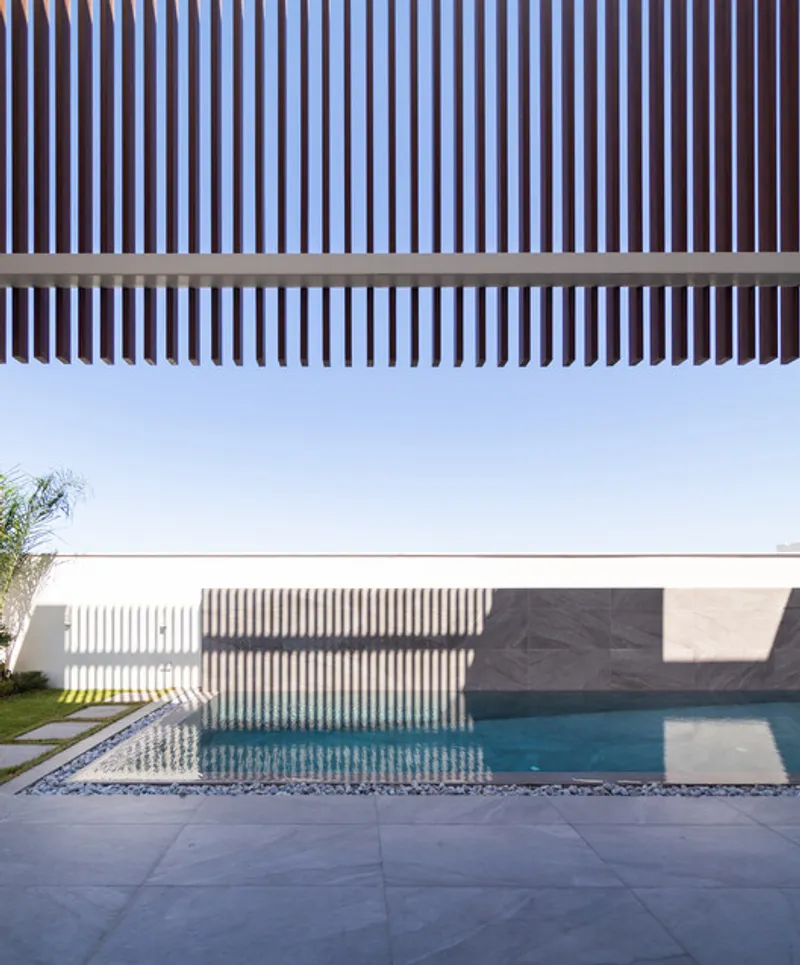
Controlling Sunlight Through Precision
Above the main terrace, a delicate aluminium louver structure modulates sunlight entering the living spaces. Developed through detailed solar analysis, the louvers soften the impact of direct sun on the large glazed façade while maintaining openness toward the garden.
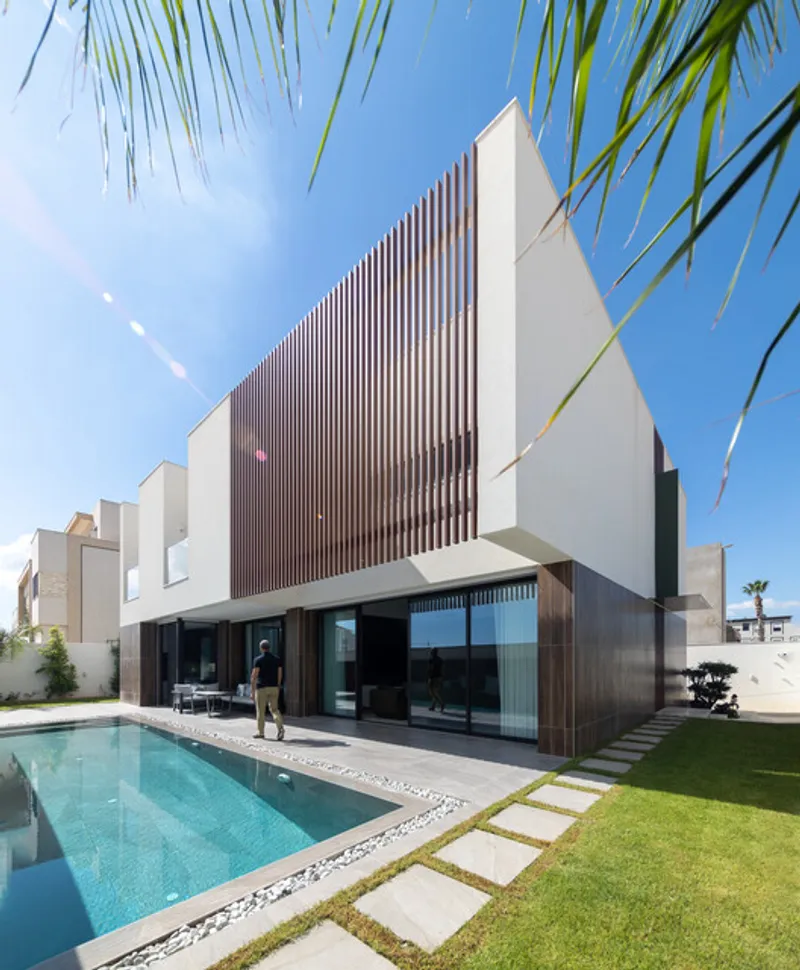
As daylight shifts throughout the day, the structure casts moving shadows across walls and floors, animating the interior without visual noise. Light becomes a dynamic material, carefully shaped rather than simply admitted.
This controlled relationship with the sun reflects a broader Mediterranean sensibility, where shade is as essential as light.
Flexible Interiors and Adaptive Living
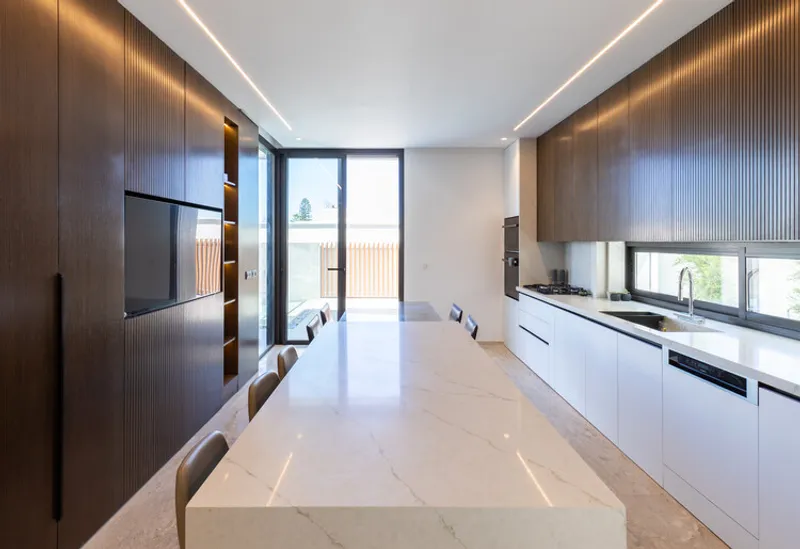
Inside Villa H, flexibility defines the domestic experience. Rather than fixed, compartmentalized rooms, the ground floor adapts to changing needs through subtle architectural devices.
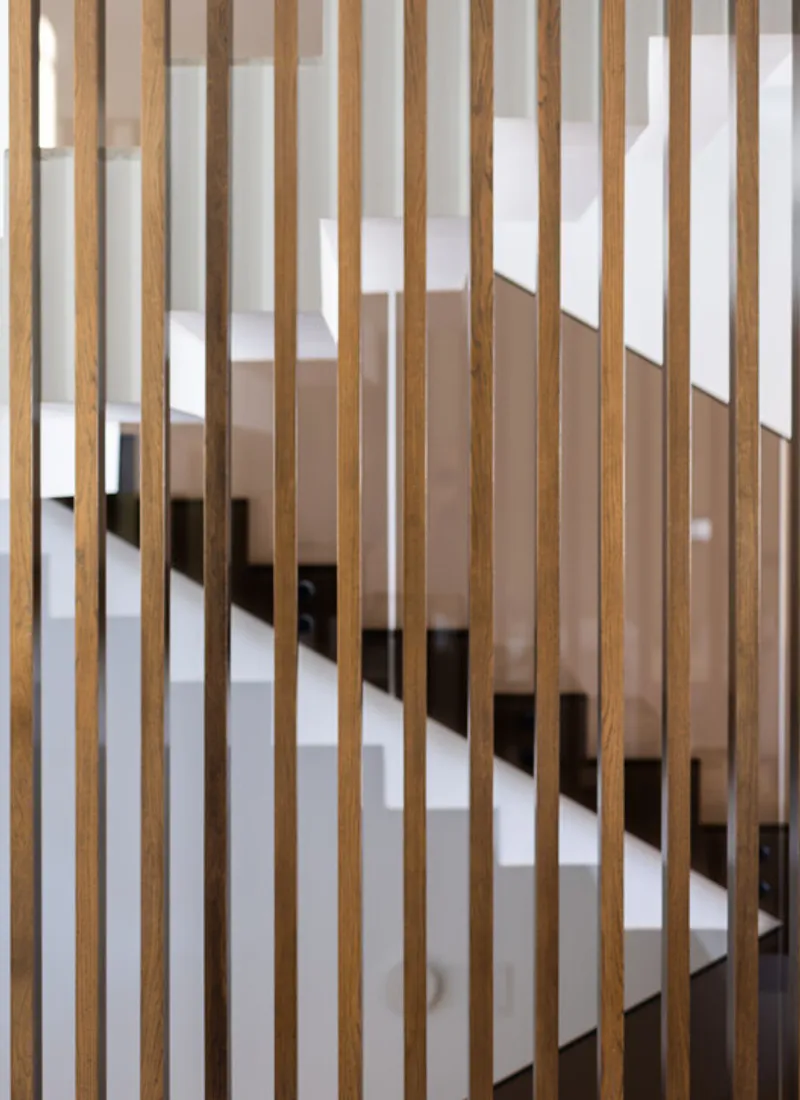
A movable wooden partition between the living and dining areas allows the space to expand or contract. When open, the ground floor reads as a single flowing volume; when closed, it creates intimacy and acoustic separation. This strategy enhances the perception of space without increasing the built footprint.
The result is a home that responds intuitively to daily life, capable of hosting gatherings or retreating into quiet domestic rhythms.
Materiality Rooted in Place
Material choices ground Villa H firmly within its Tunisian and Mediterranean context. The palette is restrained, tactile, and regionally rooted:
- Hollow clay brick walls, providing thermal performance and local continuity
- Kadhel marble flooring, offering durability and subtle luminosity
- White plaster surfaces, amplifying natural light and reinforcing spatial calm
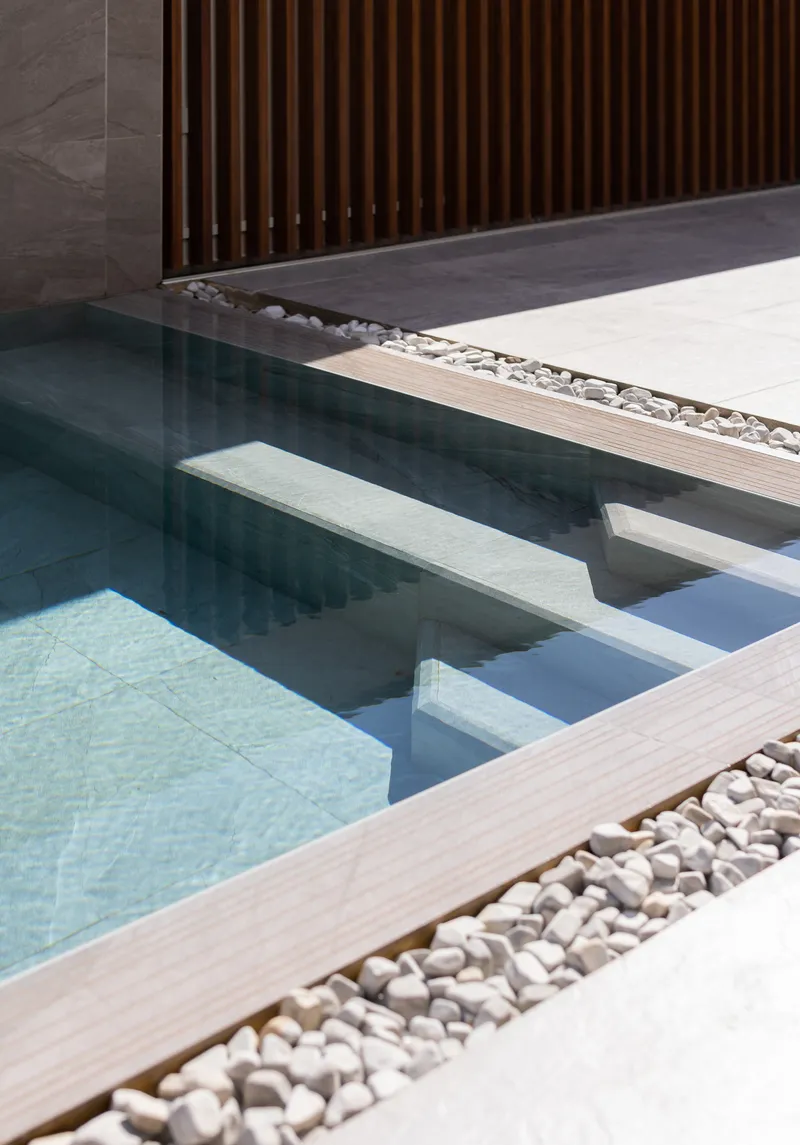
Wood finishes introduce warmth and human scale, balancing the precision of the architectural lines. Together, these materials create an atmosphere that is both refined and familiar, contemporary yet timeless.
Light, Volume, and Perception
Throughout the house, architecture is used to shape perception rather than impress through scale. Ceiling heights, openings, and voids are carefully proportioned to enhance the sense of spaciousness within a compact footprint.
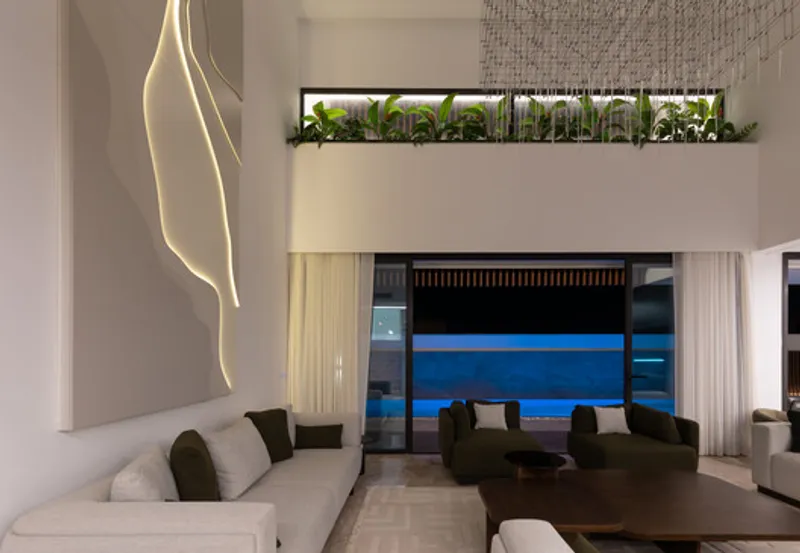
Natural light is never excessive; it is diffused, reflected, and framed. This restraint ensures interiors remain serene, avoiding glare and visual fatigue. The villa feels open without exposure, luminous without ostentation.
Symbolism and Belonging
At the entrance, an olive tree stands as a quiet symbol of continuity and rootedness. More than a landscape element, it anchors the house within a broader cultural and environmental narrative: one tied to land, time, and tradition.
Around this gesture, Villa H unfolds as an architecture of stillness. It does not seek attention through form or scale, but through precision, balance, and lived comfort.
A Contemporary Mediterranean House
Villa H exemplifies a contemporary approach to residential architecture in North Africa: one that respects climate, culture, and urban density without resorting to nostalgia or excess. ARK-architecture demonstrates that compactness and generosity are not opposites, but complementary forces when guided by clarity and restraint.
Through controlled light, adaptive spaces, and material honesty, the villa achieves a quiet elegance that endures beyond trends.
Architecture as Measure and Calm
Ultimately, Villa H is a project about measure: of light, space, and form. It proves that serenity in architecture is not achieved through subtraction alone, but through thoughtful orchestration. Within a dense city fabric, it offers a refuge defined not by isolation, but by balanced openness.
In Villa H, simplicity becomes not an aesthetic choice, but a refined architectural ethic, one that transforms constraint into enduring domestic quality.
All the Photographs are works of Bilel khemakhem


Popular Articles
Popular articles from the community


graciastudio Turns a Viewless Tijuana Lot Inward Around a Courtyard of Concrete, Timber and Trees
In Tijuana, Jorge Gracia's GA2 House stacks a timber-clad private floor over exposed concrete and replaces a missing view with a planted interior patio.


Singing Woman: An Opera House That Performs Before the Curtain Rises
Ovidiu Cristian Pavel's conceptual opera house translates Estonia's choral identity into a sculpted waterfront landmark facing the Baltic Sea.

David Ortega Stacks a Two-Story Mexico City Penthouse Around a Steel Stair and a Pergola-Shaded Roof Terrace
In Colonia Roma, a 300 m² penthouse uses oak joinery, a planted steel stair and a slatted roof pergola to make a new-build apartment feel like a house.

Cube Design Draws an Ecological Corridor Between Two Shenzhen Hills with the Nankai Building
Beside Shenzhen's container docks, the Nankai Building pairs stacked balconies with a climbing green screen to connect two hillsides across its height.

Similar Reads
You might also enjoy these articles


Hodi-Mandai Geram
Project Function: Preservation and revitalization of the Intangible heritage and socio-spatial identity of the Hodi by Housing, Cultural Memory Center, Sacred Grove, landscape, local tourism economy


Olio Towers: A Mid-Rise for Performers That Fuses Housing, Rehearsal, and Stage
Located blocks from Houston's Theater District, this modular tower stacks living units around a central performance atrium.

Oasis: Modular Green Housing Carved into Dhaka's Urban Fabric
A shortlisted Plugin Housing entry reclaims unauthorized settlements in Dhaka with stepped concrete volumes, green roofs, and ventilation-driven design.

Black Hole: A Floating Megastructure for the Post-Physical Era
Emiliano Mazzarotto envisions a spherical, self-scaling arena where e-sports, digital hotels, and holographic stadiums replace traditional public space.

Explore Villa Competitions
Discover active competitions in this discipline

Challenge to reimagine the Iron Throne

Photograph architecture without architects

Illustrate the lost glory of Angkor Wat - Render Challenge

Design challenge to reuse E-waste
Comments (0)
Please login or sign up to add comments
No comments yet. Be the first to comment!