
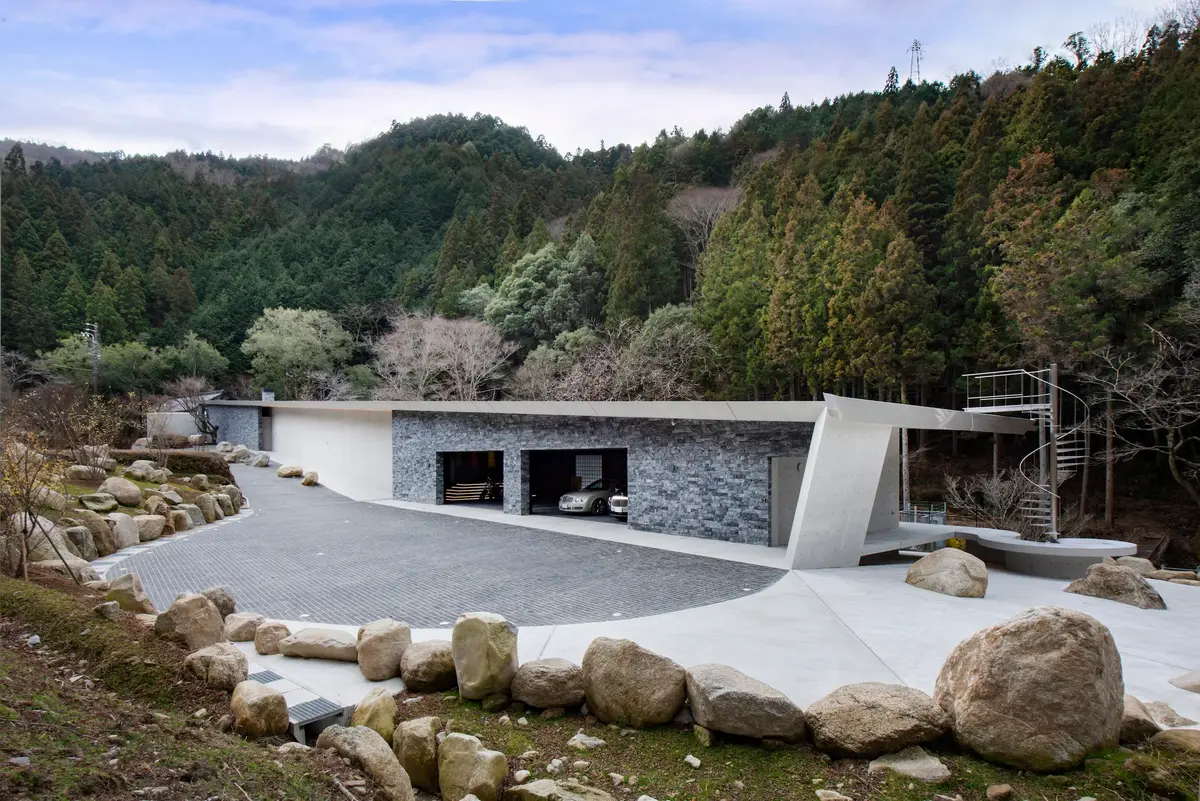
Villa K: Timeless Concrete Architecture in Dialogue with Forest and River by KIRYU ATELIER + T Architects Co.
A serene concrete villa in Toyota, Japan, harmonizing modern architecture with forest, river, and timeless spatial flexibility.


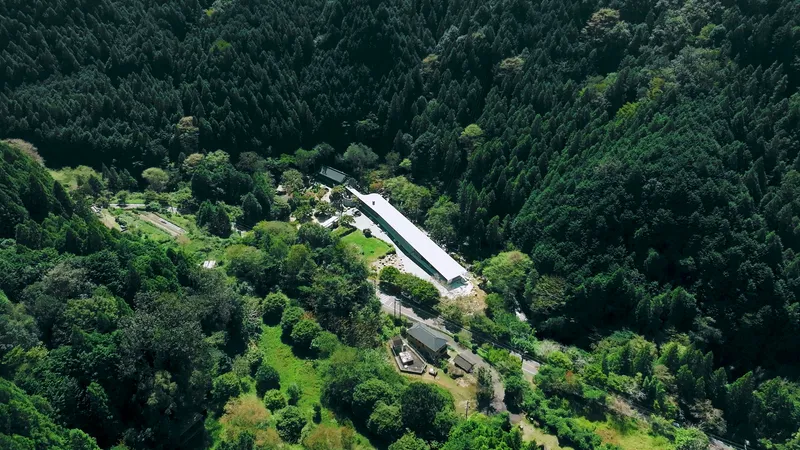
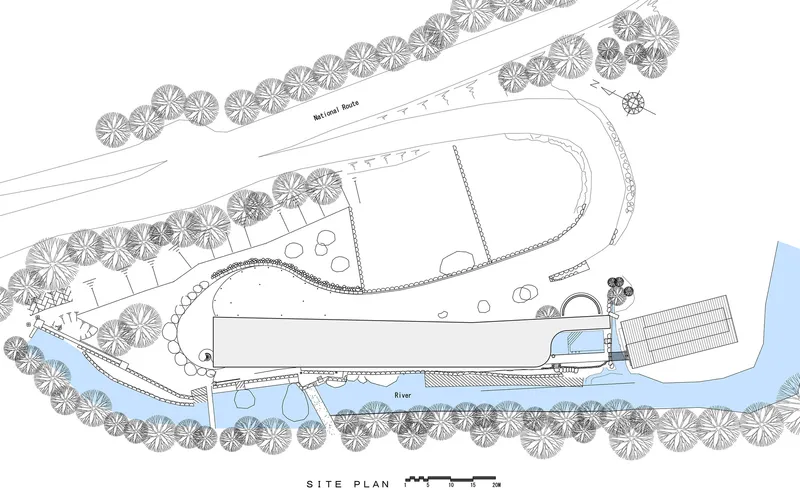
Set within a tranquil landscape where forest and river converge, Villa K is a contemplative residential project that explores harmony through contrast. Designed by KIRYU ATELIER in collaboration with T Architects Co., the villa is located in Toyota, Japan, adjacent to an existing traditional wooden structure. Completed in 2023, the 435-square-meter residence carefully balances modern architectural expression with the enduring presence of nature and vernacular heritage.
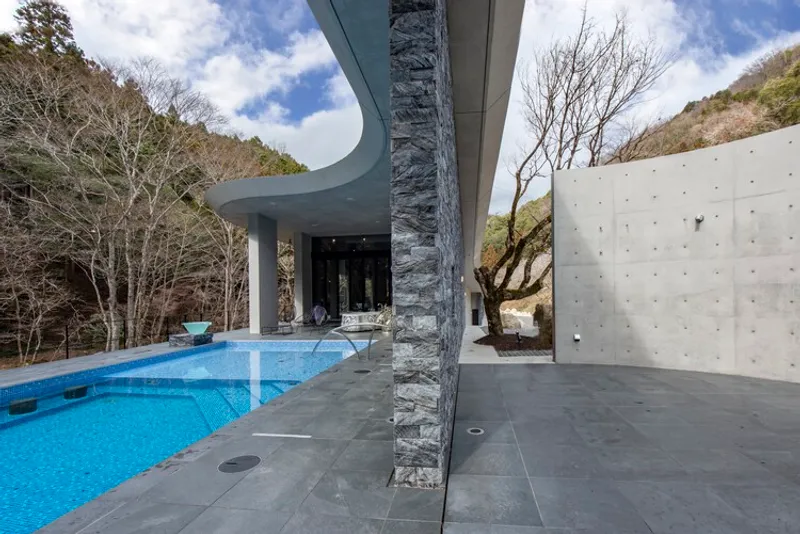
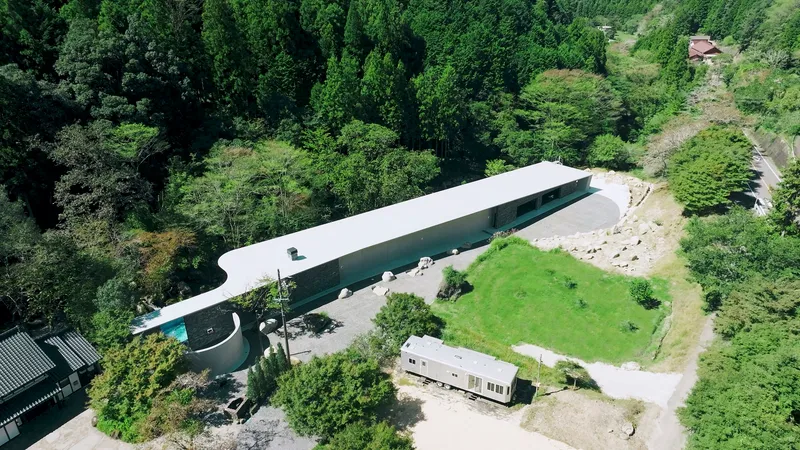
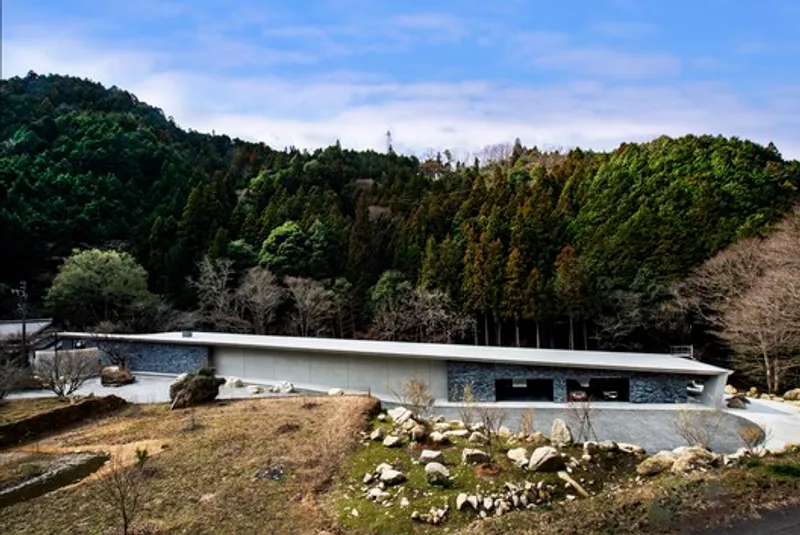
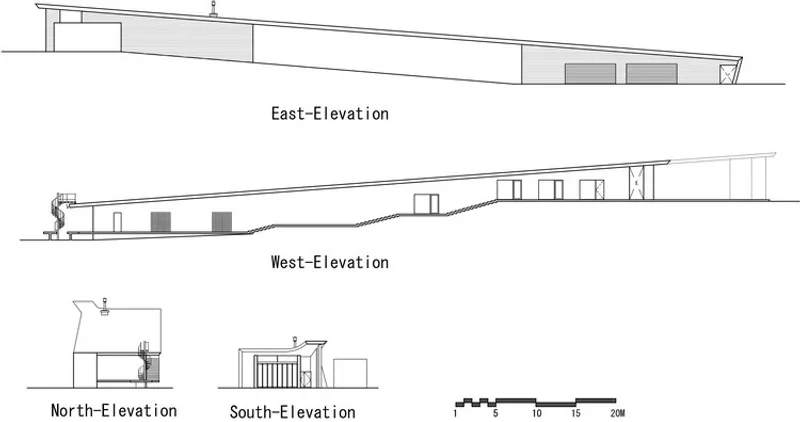
Rather than competing with its surroundings, Villa K adopts a restrained posture—low in height, grounded in the sloping terrain, and attuned to the rhythms of water, stone, and forest. The project is not conceived as an isolated object, but as an architectural condition shaped by its environment, its history, and the passage of time.
Architecture Between Tradition and Modernity
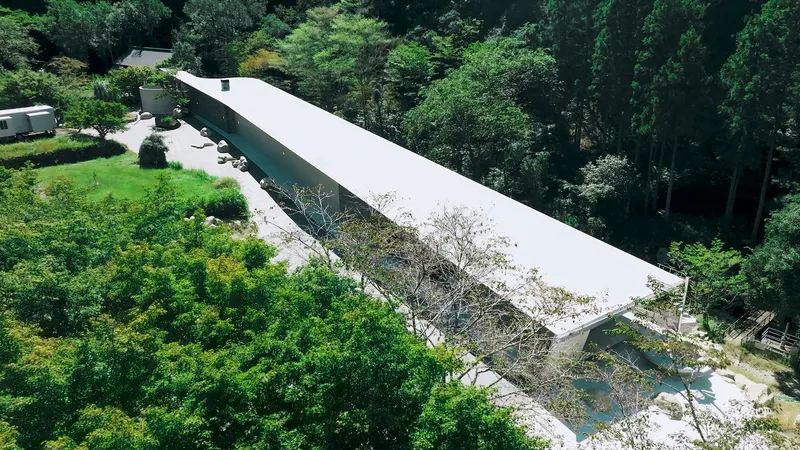
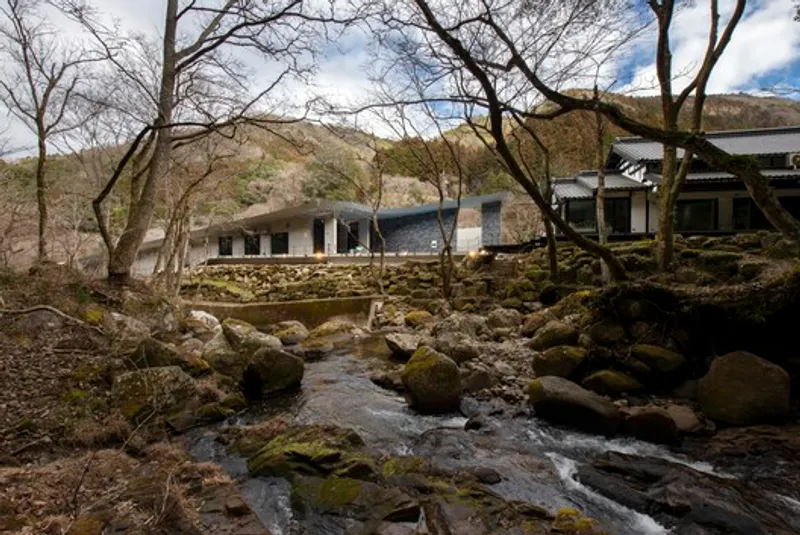
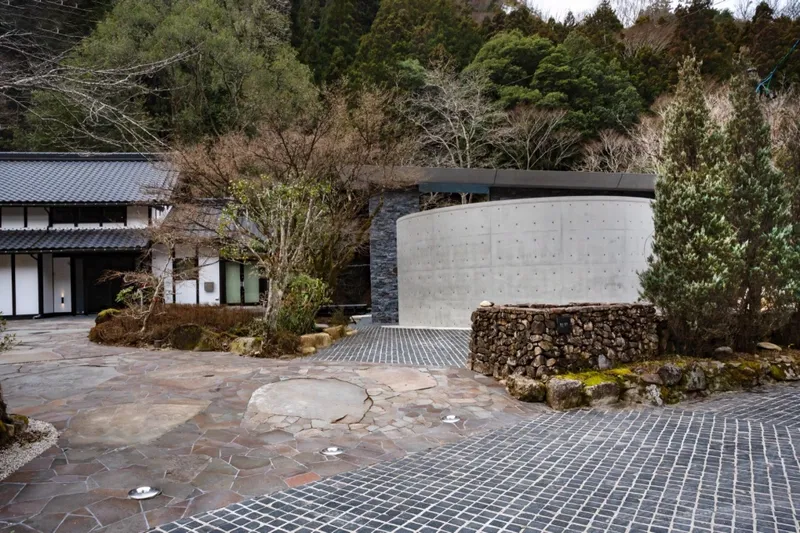
The site’s defining characteristic is its proximity to an old Japanese wooden building, representative of traditional craftsmanship and material sensibility. Rather than replicating this language, the architects chose to introduce a deliberate contrast: a robust, modern concrete structure that coexists with the delicacy of timber architecture and the fluidity of nature.
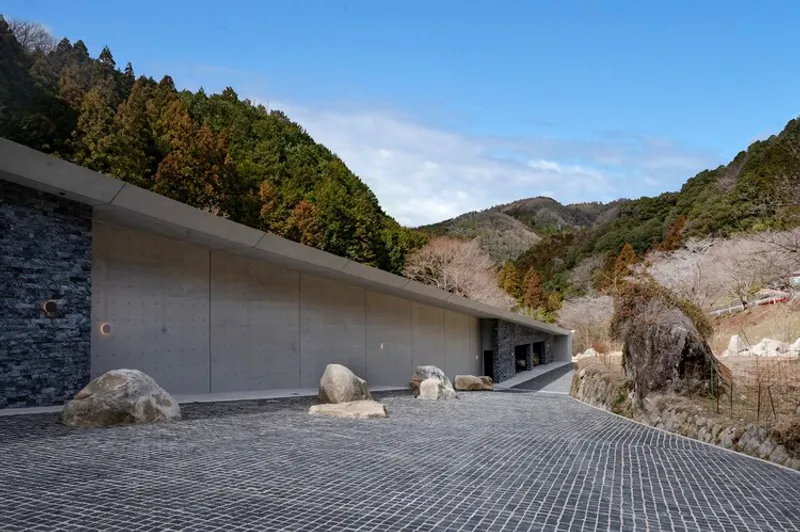
This contrast is not oppositional, but complementary. The villa’s powerful concrete form acts as a counterweight to the lightness of wood and foliage, allowing each element—old and new, natural and constructed—to heighten the presence of the other. Through this dialogue, Villa K establishes a nuanced relationship between architectural eras, acknowledging tradition while asserting a contemporary identity.
Responding to a Challenging Site
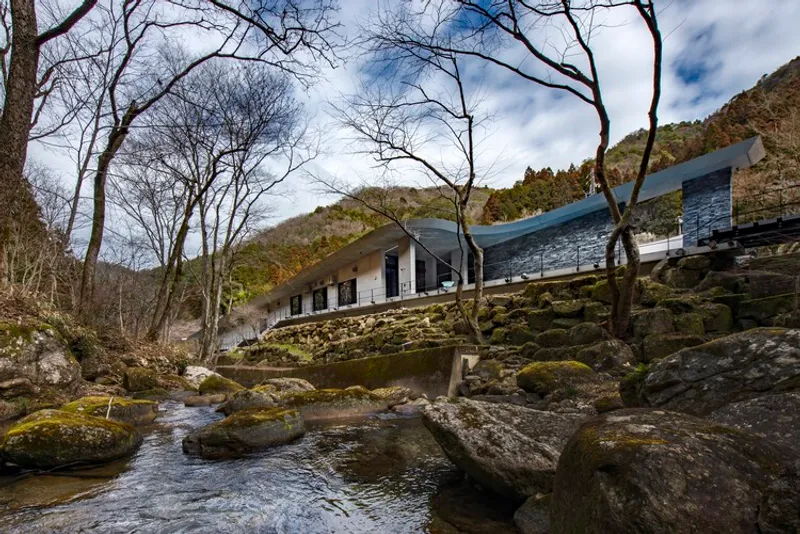
Situated along a riverbank, the construction process revealed the site’s geological complexity. Large rocks embedded within the riverbed had to be removed using specialized equipment during foundation work, presenting both logistical challenges and opportunities for design reconsideration.
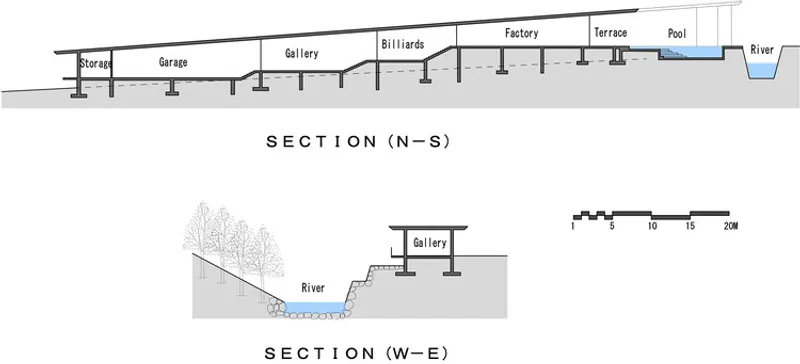
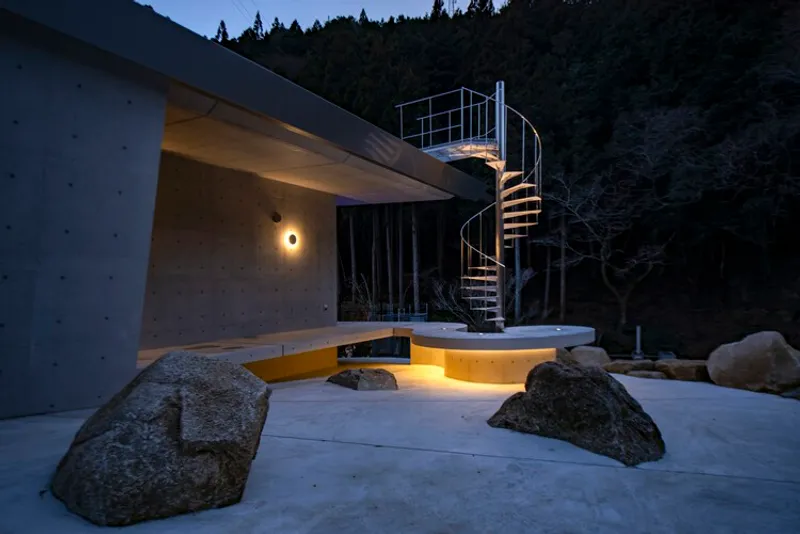
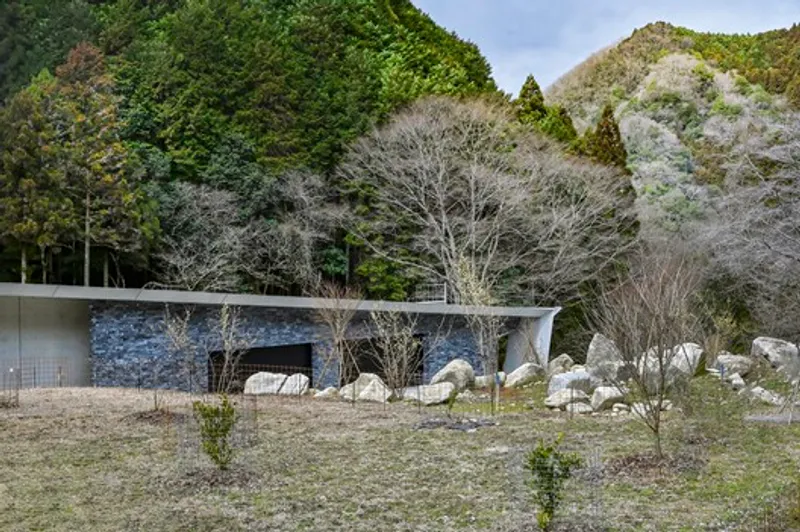
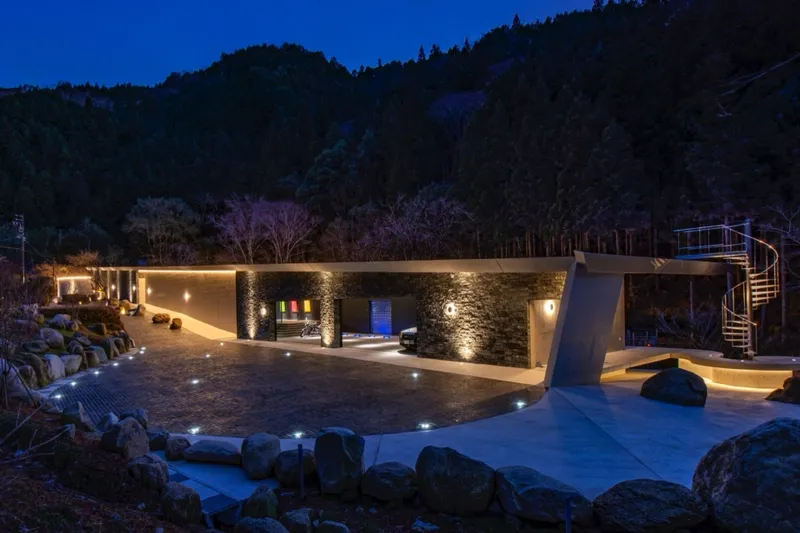
Rather than discarding these extracted stones, the architects reintroduced them into the landscape design, transforming a construction constraint into a conceptual asset. The rocks now form an integral part of the site’s outdoor environment, anchoring the building visually and materially within its context. This gesture reinforces the project’s overarching philosophy: architecture and landscape are inseparable, shaped together through thoughtful reuse and adaptation.
Concrete as a Timeless Medium
Concrete was chosen as the primary structural and expressive material to achieve a sense of timelessness—a building that could endure visually and physically alongside the slow-changing natural environment. The villa is defined by 380-millimeter-thick concrete walls, within which columns and beams are concealed, allowing the architecture to read as a continuous, monolithic form.
This thickness is not merely aesthetic. It provides significant thermal mass, enabling the building to remain cool in summer and warm in winter with minimal reliance on mechanical systems. By leveraging concrete’s heat storage properties, Villa K demonstrates a passive environmental strategy rooted in material intelligence rather than technological excess.
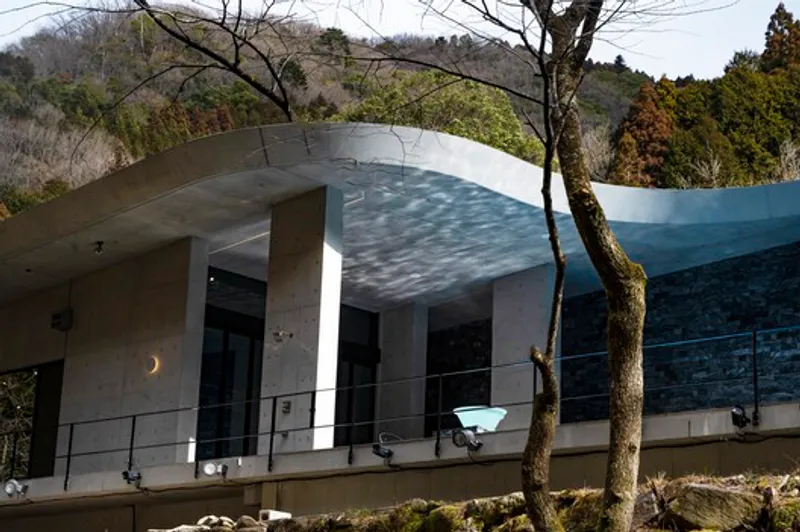
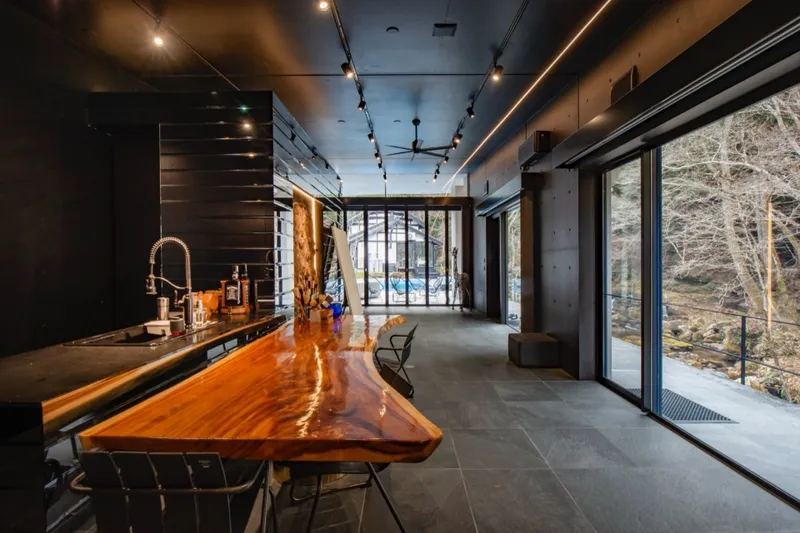
Inside, a single large continuous space is enveloped by these thick concrete walls, creating an interior environment that feels both protective and expansive. The structure becomes not just a container, but an active moderator of climate, light, and atmosphere.
Landscape as an Extension of Architecture
The landscape design plays a critical role in dissolving the boundary between built form and nature. The reintroduced river stones, combined with the surrounding forest, frame the villa as though it has emerged organically from the terrain. The architecture does not dominate the site; instead, it settles into it, echoing the contours and textures of its surroundings.
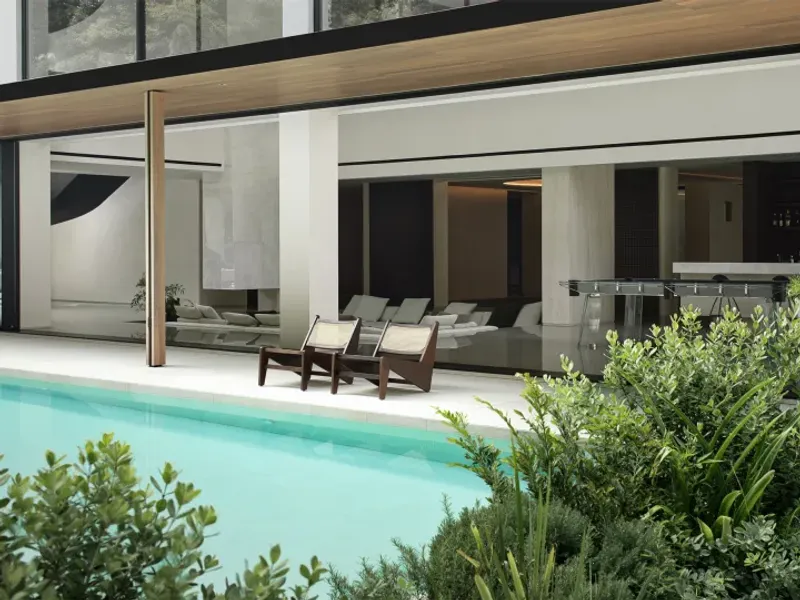
Large openings orient the interior toward views of the forest and river, allowing changing light, reflections, and seasonal shifts to animate the concrete surfaces. Water, in particular, becomes a constant presence—ever-changing, intangible, and reflective—contrasting with the solidity and stillness of the architecture.
Spatial Flexibility and Programmatic Diversity
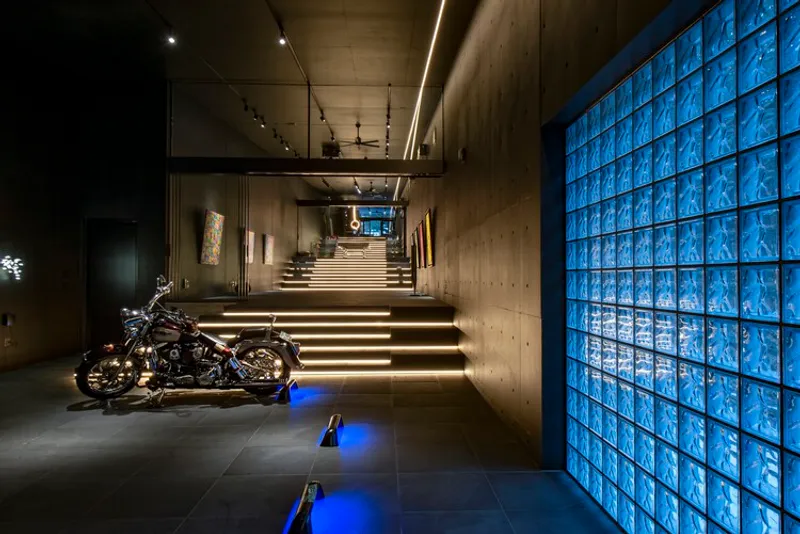
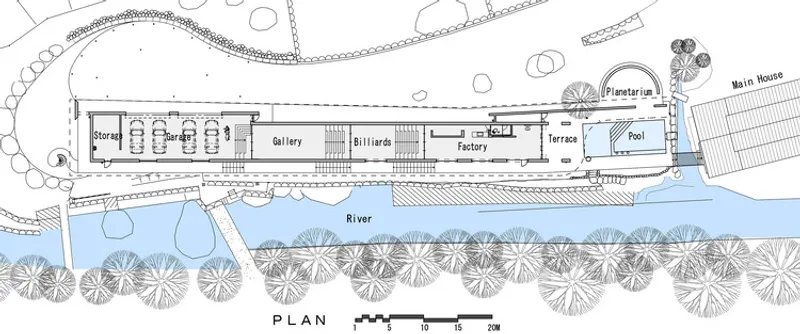
Villa K is not a conventional residence. Beyond its domestic function, the building accommodates a wide range of activities, reflecting the client’s creative lifestyle and the architects’ interest in spatial adaptability. The program includes a creative atelier and gallery for paintings and pottery, a swimming pool, a billiards space, and a garage. At times, the main space can transform into a theater room or party venue, underscoring the villa’s capacity to respond to different temporal and social conditions.
This variability is central to the project’s spatial concept. Rather than dividing the building into rigidly defined rooms, the architects conceived the interior as a flexible continuum—one that can shift between solitude and gathering, work and leisure, stillness and movement.
Dualities as a Design Principle
At the core of Villa K lies an exploration of duality. The project consciously embraces contradictions:
- Soft, curved surfaces coexist with sharp, straight lines
- Organic landscape elements meet inorganic concrete
- Openness contrasts with enclosure
- Movement is balanced by stillness
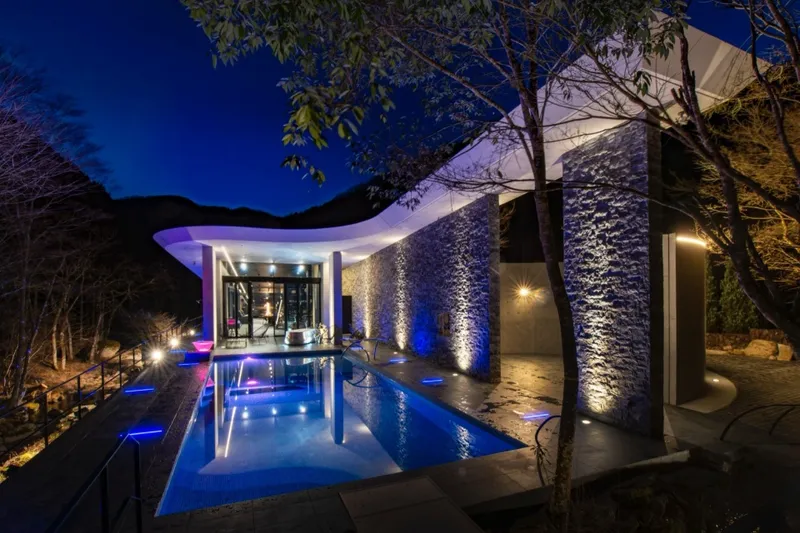
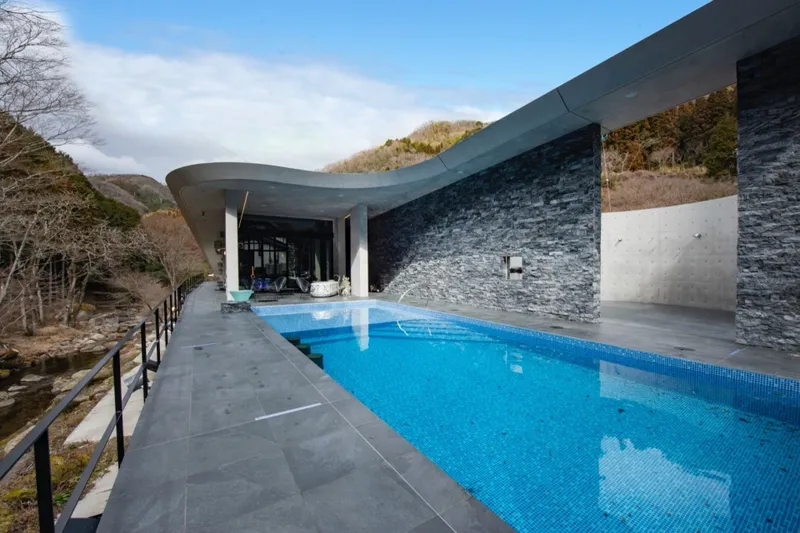
These self-contradictory conditions are not resolved, but held in tension. According to the architects, this tension reflects the nature of human experience itself—complex, layered, and often paradoxical. Villa K becomes a spatial expression of this idea, offering an environment that is both contemplative and dynamic.
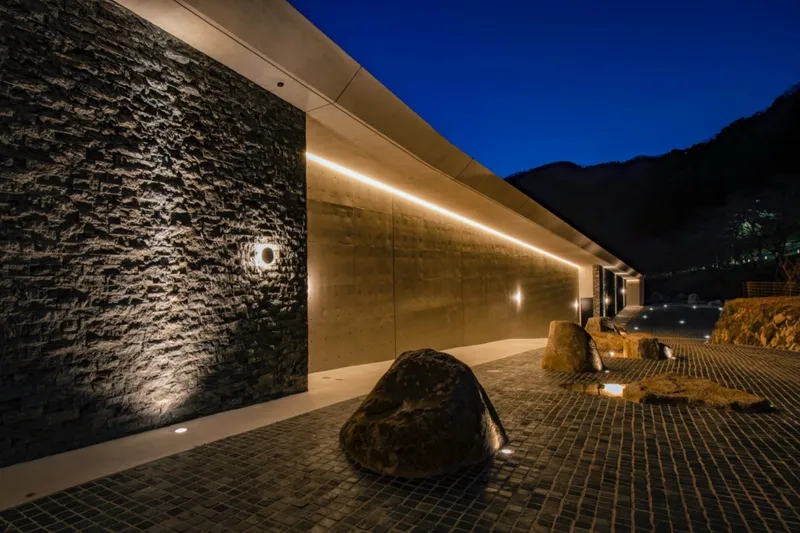
Architecture in Quiet Harmony
Despite its powerful material presence, Villa K is fundamentally quiet. It does not seek attention through form or scale, but through its measured response to place. The forest provides a dignified backdrop, the river introduces constant change, and the concrete architecture offers permanence and calm.
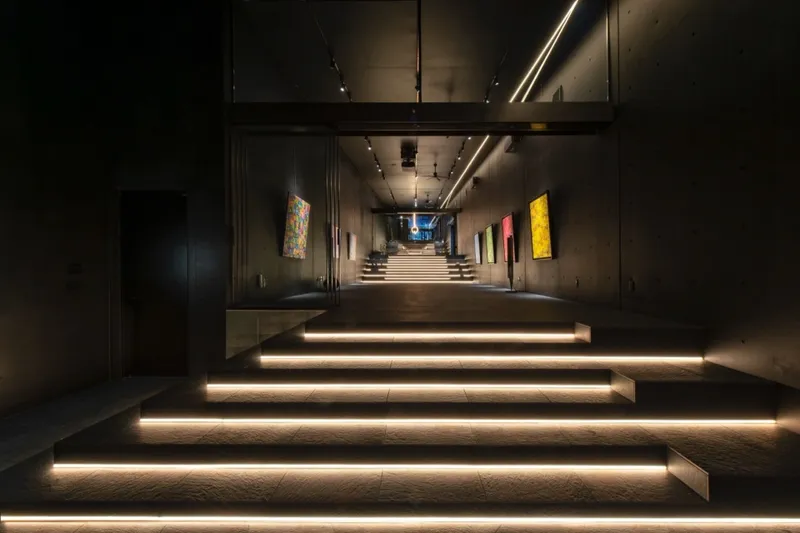
In this setting, Villa K achieves a rare balance: it is at once monumental and intimate, modern and timeless, rooted and adaptable. It stands as an example of how contemporary architecture can engage deeply with nature—not by imitation, but through thoughtful contrast, material honesty, and respect for context.
Ultimately, Villa K is an architecture of coexistence. It harmonizes with forest and water, acknowledges tradition without nostalgia, and creates a space where human creativity unfolds within the enduring rhythms of the natural world.


Popular Articles
Popular articles from the community

Opera by the Sea Estonia: Three Shells Dissolving Architecture into Tallinn's Coastline
A winning opera house proposal replaces monumental form with interconnected shells that blur the boundary between building, park and Baltic Sea.
Extended Shell: Retrofitting Kolkata's Balconies as Living Urban Thresholds
A modular retrofit system recovers the social and environmental intelligence of Kolkata's historic verandas for contemporary Park Street residents.

Faces of the Soviet Avant-Garde: Turning Moscow's Street Names into an Open-Air Museum
A network of sculptural installations across a Moscow residential district transforms forgotten architect names into spatial encounters with cultural memor

The Amber Palace Opera: A Geological Fiction Surfaces on Tallinn's Baltic Waterfront
Pierre Brillard reimagines a Baltic legend as a public landscape, opera house, and waterfront promenade rooted in Tallinn's coastal identity.

Similar Reads
You might also enjoy these articles


Hodi-Mandai Geram
Project Function: Preservation and revitalization of the Intangible heritage and socio-spatial identity of the Hodi by Housing, Cultural Memory Center, Sacred Grove, landscape, local tourism economy


Olio Towers: A Mid-Rise for Performers That Fuses Housing, Rehearsal, and Stage
Located blocks from Houston's Theater District, this modular tower stacks living units around a central performance atrium.

Oasis: Modular Green Housing Carved into Dhaka's Urban Fabric
A shortlisted Plugin Housing entry reclaims unauthorized settlements in Dhaka with stepped concrete volumes, green roofs, and ventilation-driven design.

Black Hole: A Floating Megastructure for the Post-Physical Era
Emiliano Mazzarotto envisions a spherical, self-scaling arena where e-sports, digital hotels, and holographic stadiums replace traditional public space.

Explore Timeless Architecture Competitions
Discover active competitions in this discipline

Challenge to reimagine the Iron Throne

Photograph architecture without architects

Illustrate the lost glory of Angkor Wat - Render Challenge

Design challenge to reuse E-waste
Comments (0)
Please login or sign up to add comments
No comments yet. Be the first to comment!