
Villa Number 75 by 3rd Skin Architects: Sculpting Space Through Subtraction and Transparency
Villa Number 75 explores subtractive architecture through voids, transparency, and layered spaces, blending indoor-outdoor living in Tehran’s landscape.

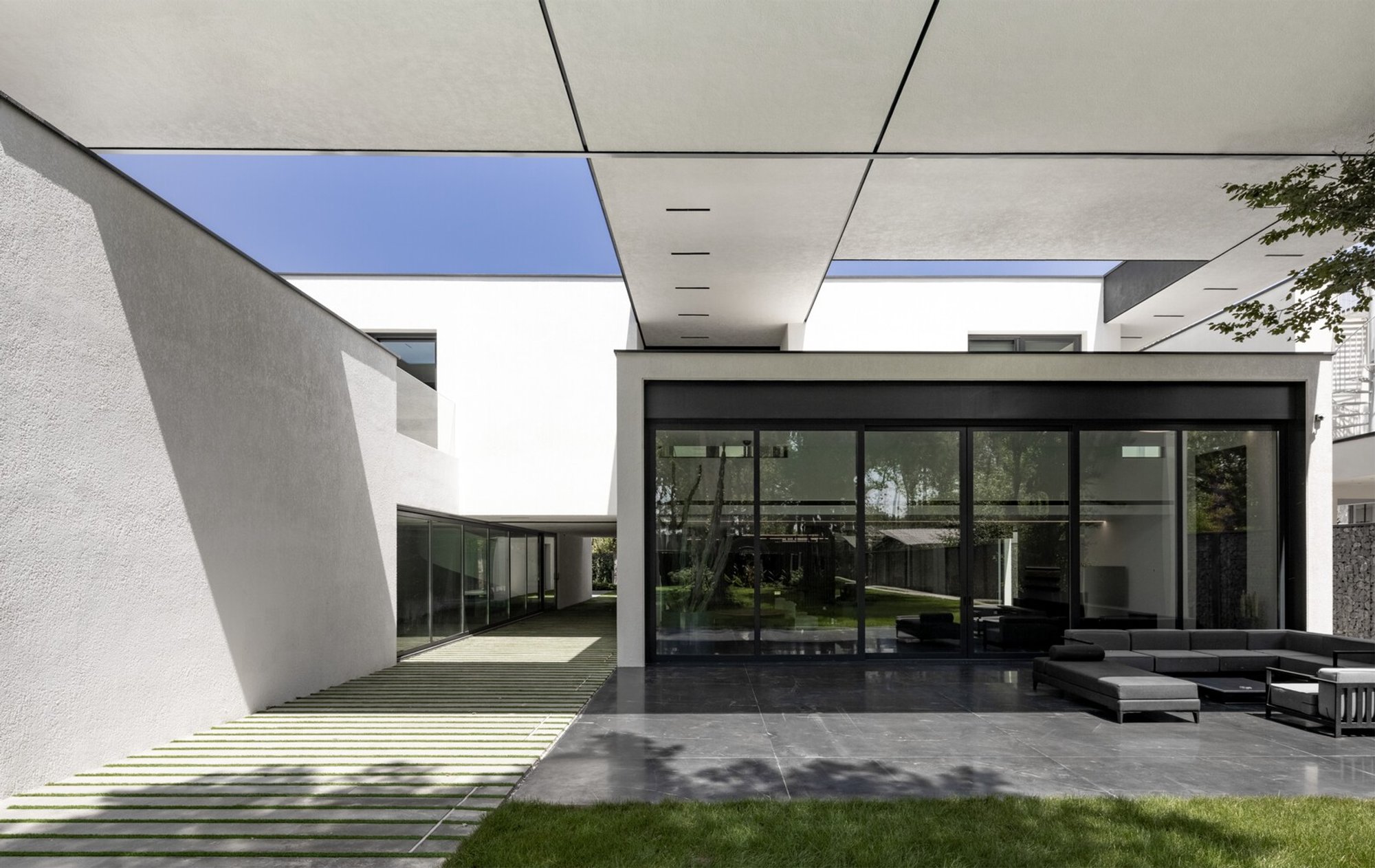
Located in the heart of Tehran, Iran, Villa Number 75 by 3rd Skin Architects is a striking 1200-square-meter private residence that redefines architectural perception through spatial subtraction, transparent voids, and contextual harmony. Completed in 2020, the villa is not simply a structure—it is a sequence of spatial experiences formed by the interplay of light, shadow, and materiality.
Architectural Concept: From Mass to Void
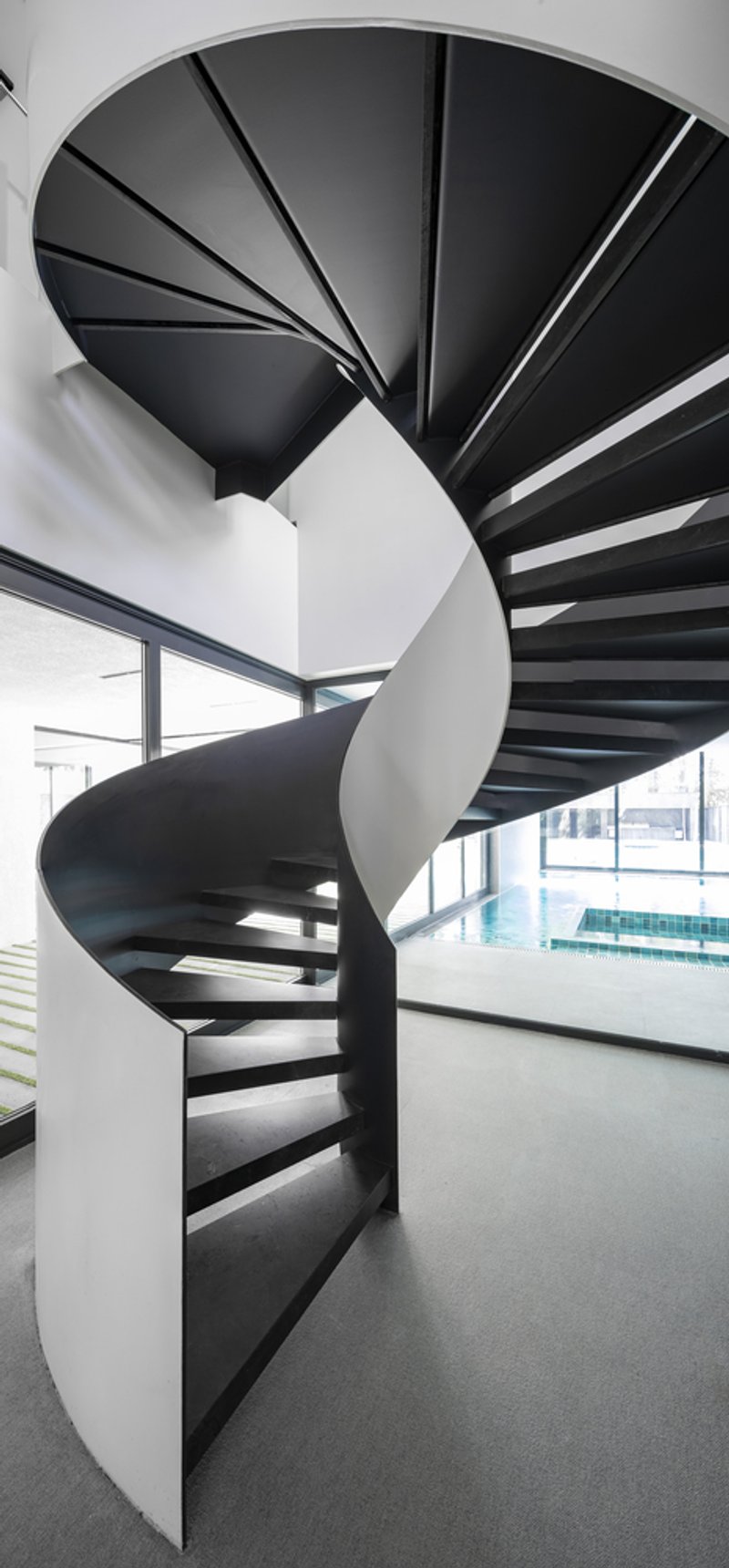
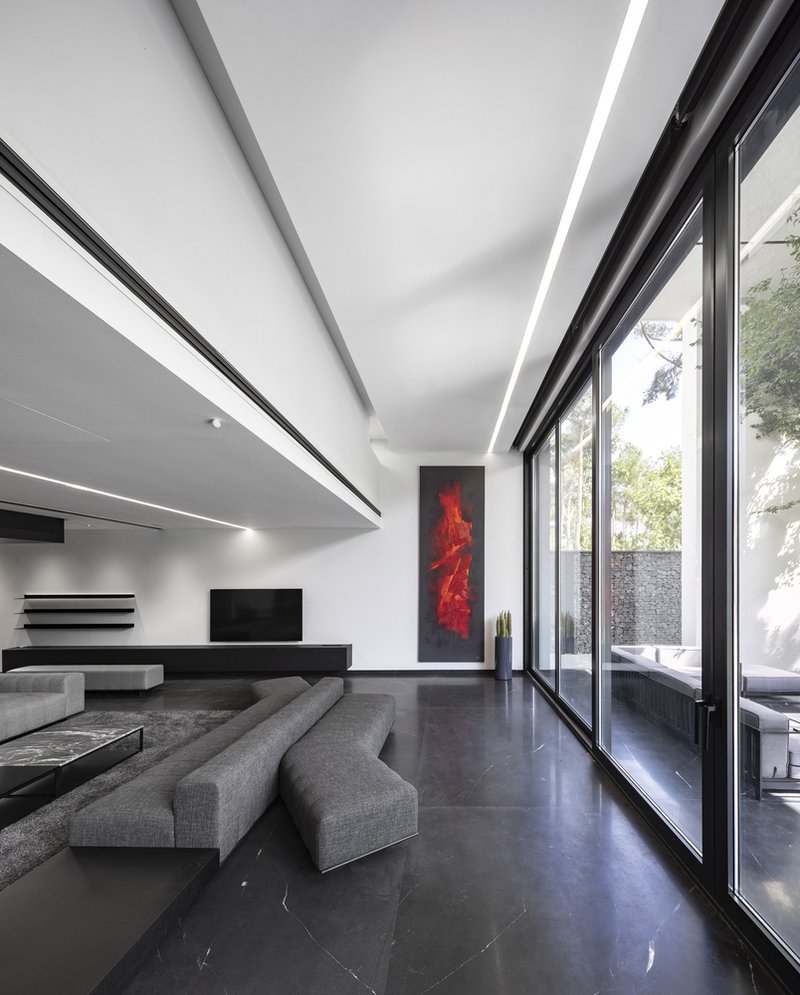
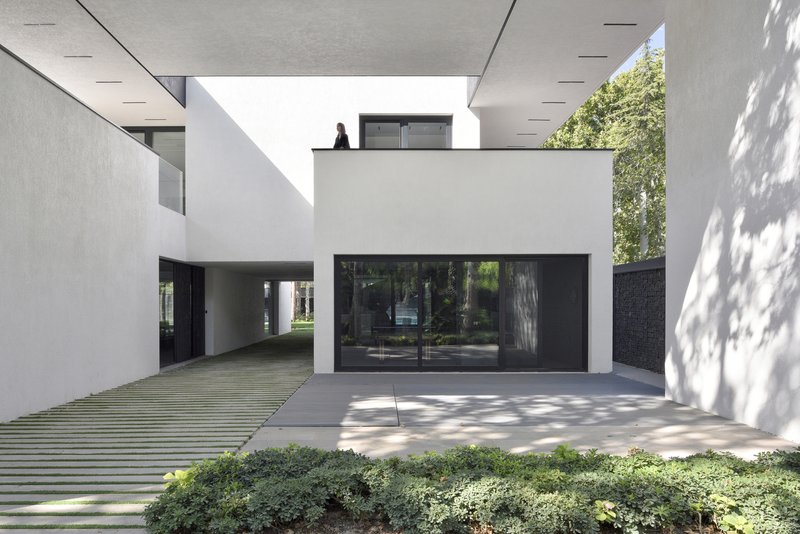
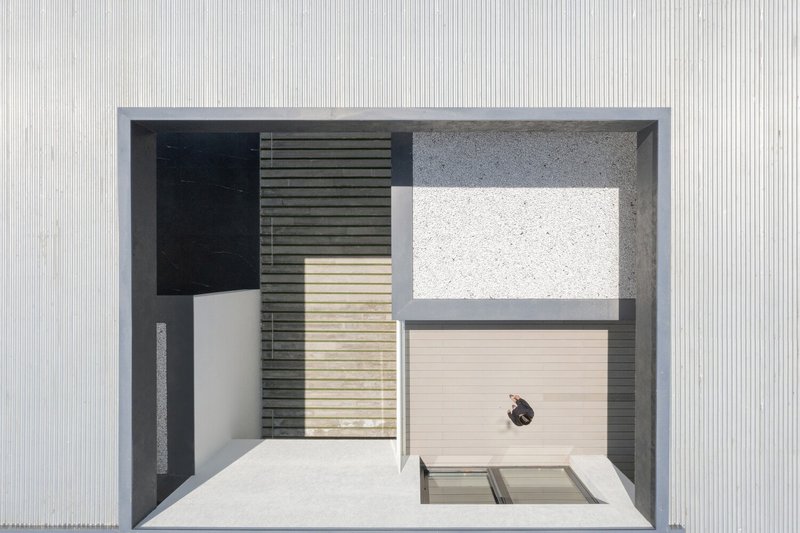
At the core of the design philosophy is the subtraction of solid volumes. The architectural form is not defined by its mass, but rather by the voids carved into it—creating moments of lightness, openness, and permeability. These voids are not incidental but intentional: they articulate entrances, balconies, courtyards, and vertical connections, anchoring the spatial narrative around transparency rather than enclosure.
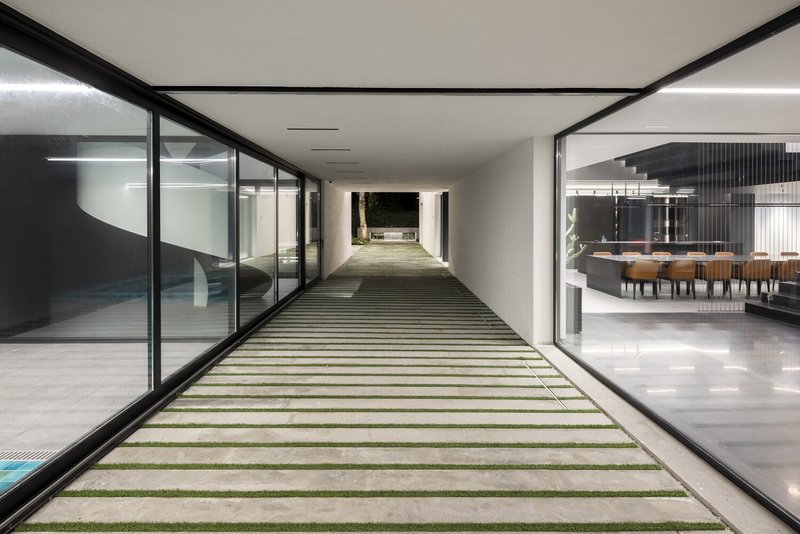
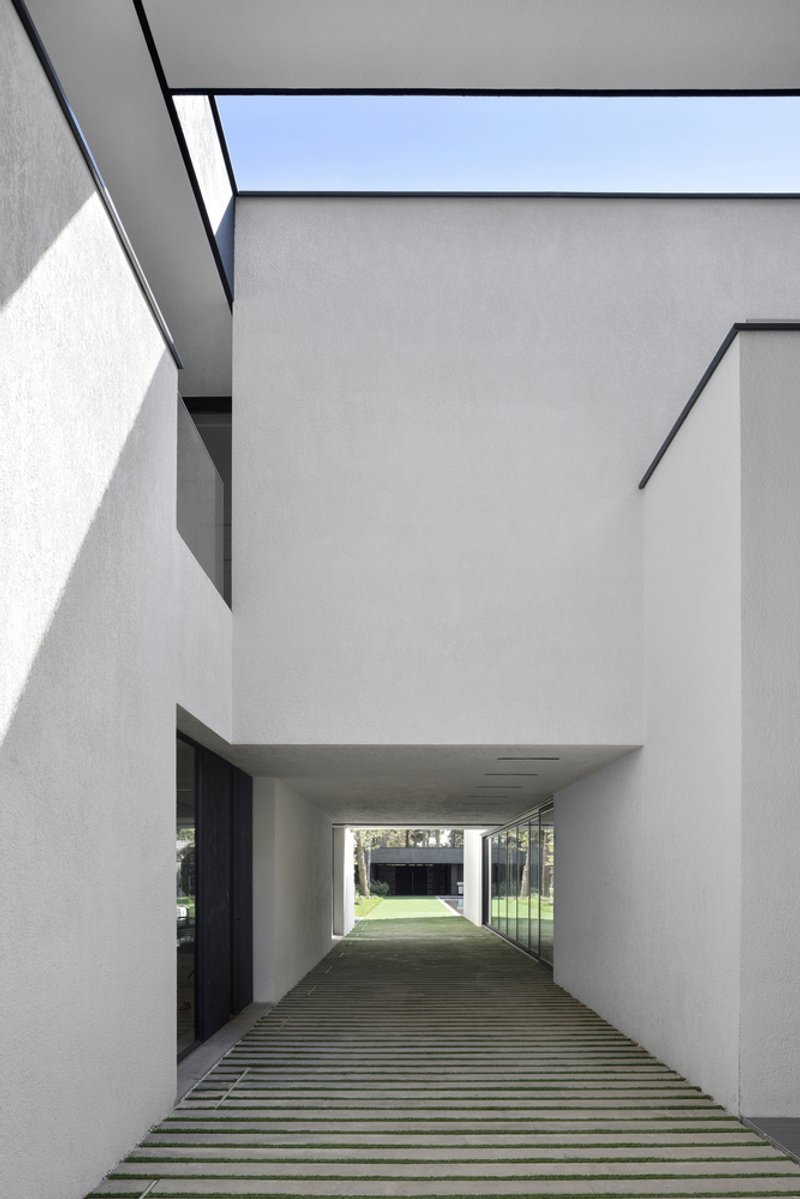
Through this method of additive-subtractive spatial formation, the architects crafted an immersive sensory journey. Voids act as transitional spaces that blur boundaries between interior and exterior, public and private. Each carved-out space aligns with natural light, wind movement, and seasonal changes, bringing nature into direct dialogue with the living environment.
Spatial Composition: Multilevel Porosity
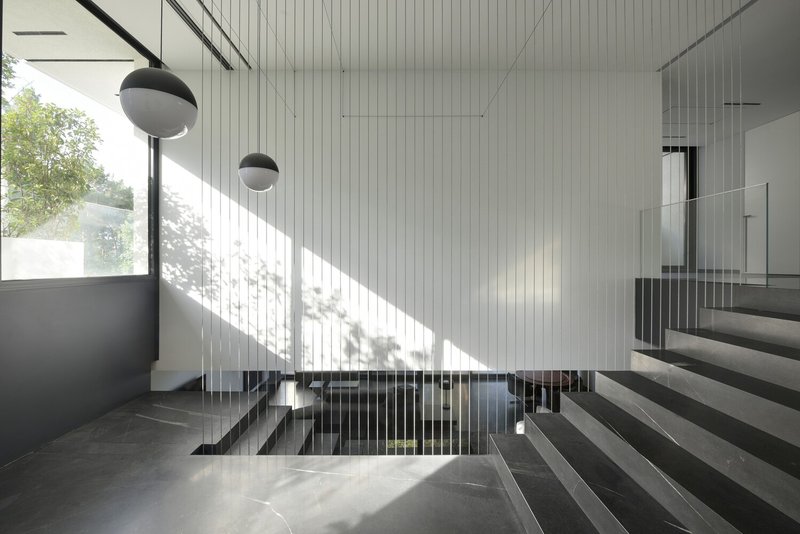
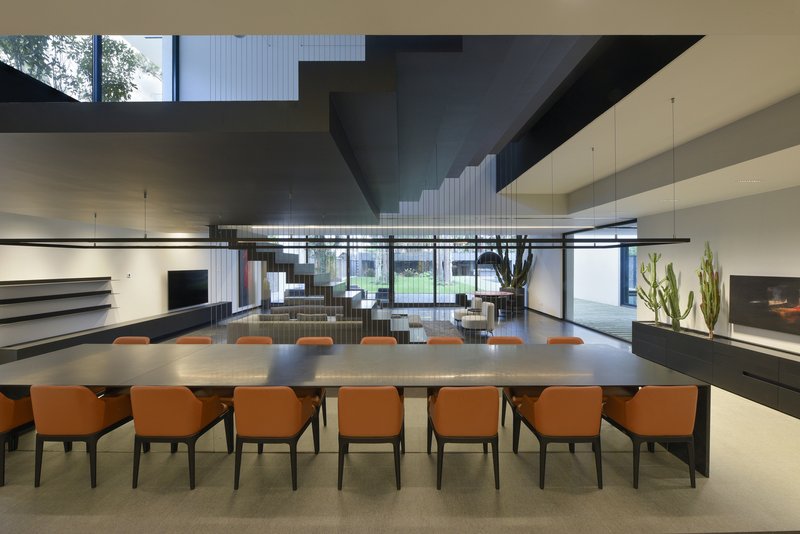
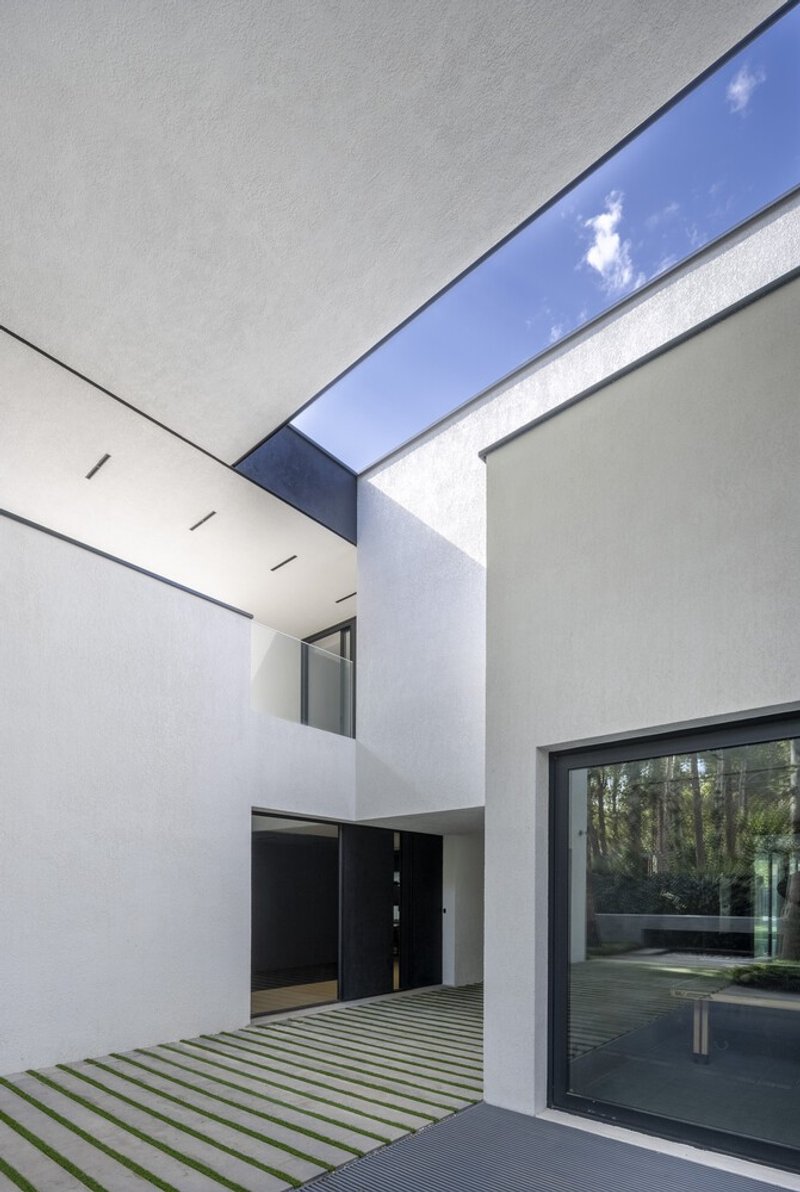
The spatial layout is strategically designed to maximize functional flexibility and visual connectivity. Multiple levels are connected through open voids and vertical frames that allow light to penetrate deeply into the building's core. Skylights and staggered openings encourage a layered visual experience, creating an architecture that evolves from one moment to the next.
On the ground floor, key communal functions—including the dining area, living hall, and guest suites—are positioned within the eastern wing. Meanwhile, sport and recreational zones occupy the western wing. The upper level houses four bedrooms, each oriented east-to-west and connected to the lower volumes through two distinct vertical circulation routes.
Materiality and Environment: Framing Nature
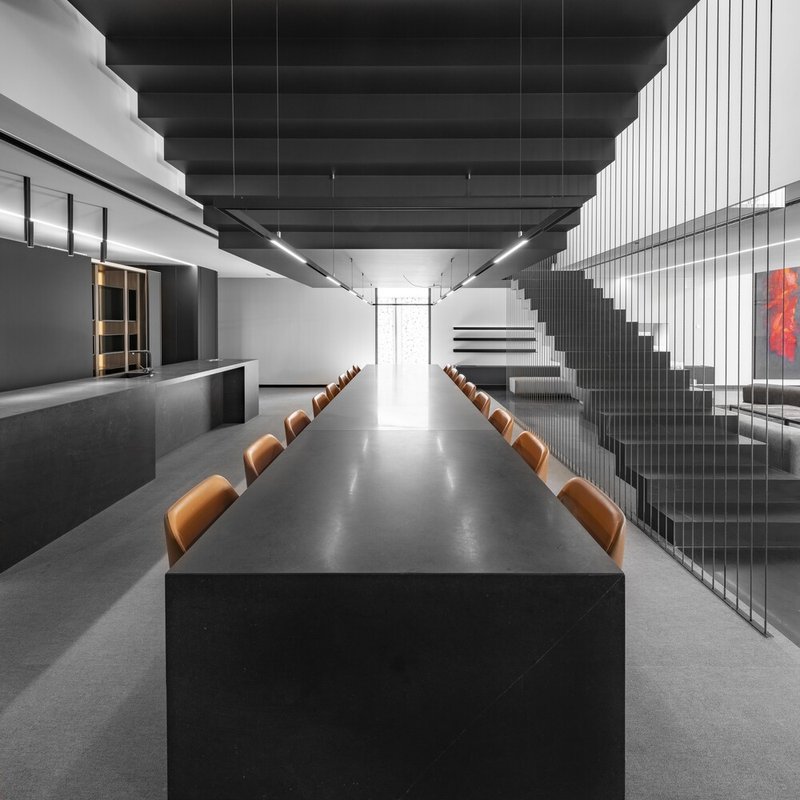
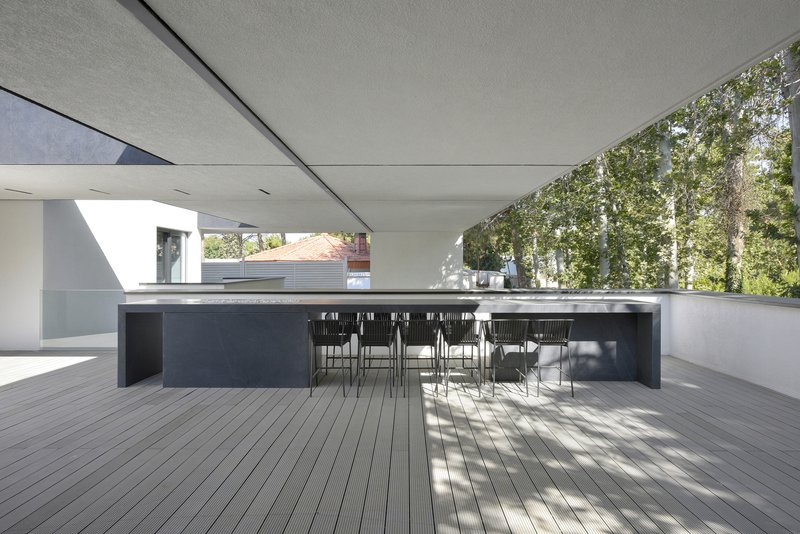
The villa's material palette is raw yet refined, with gabion walls, aluminum systems, and custom lighting solutions that emphasize texture, shadow, and interplay with natural elements. The North-South orientation of the site informed the massing and facade treatment, allowing for optimal light capture while preserving existing trees on the property.
Deep terraces and cantilevered ceilings act as shading devices, framing the sky while mitigating harsh sunlight—enhancing both environmental performance and aesthetic delight. The combination of framed views, light-drenched voids, and textured surfaces fosters an ongoing connection to the outdoors.
Arrival Sequence and Integration
Upon arrival, visitors are greeted by a carefully choreographed entry sequence. Gabion wall structures frame not just the villa’s entrance, but also auxiliary volumes like the caretaker’s residence, open-air kitchen, and covered parking. These architectural gestures create a harmonious transition from the landscape to the built form, seamlessly integrating the villa into its site.
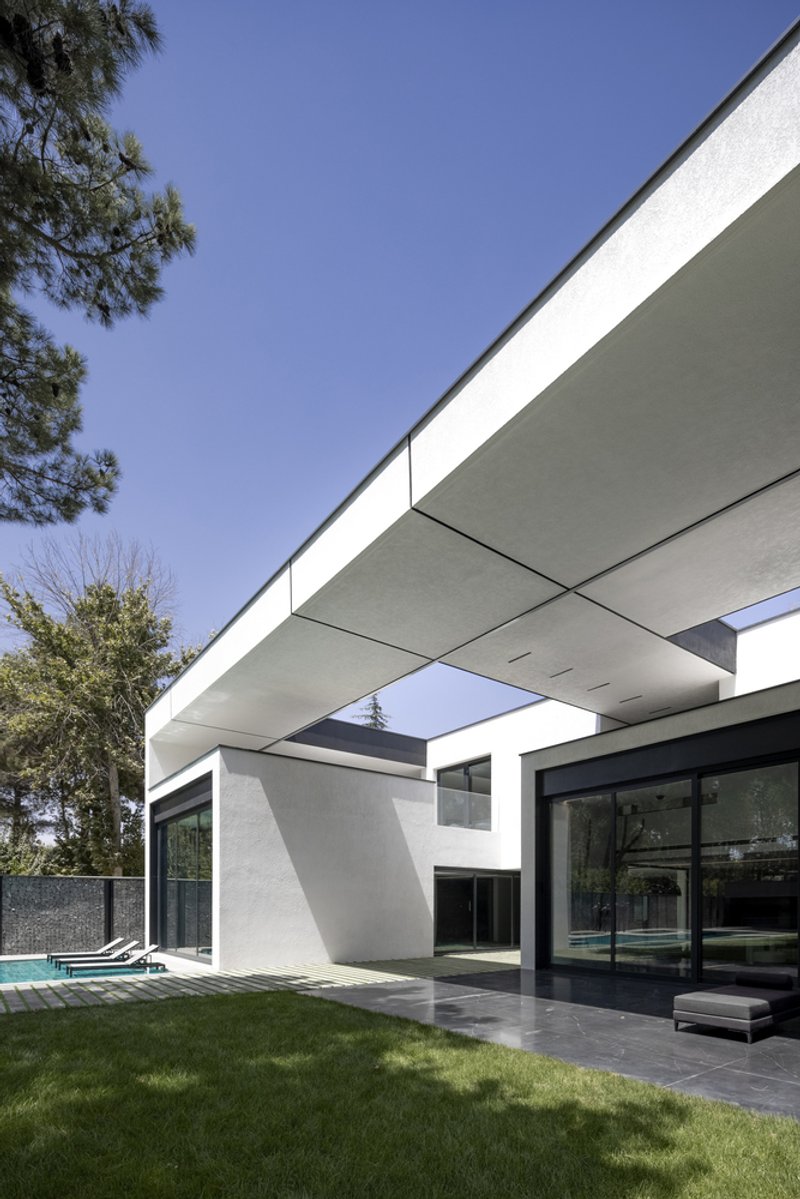
All Photographs are works of Deed Studio, Persia Photography Centre




Popular Articles
Popular articles from the community

Reincarnation Weaves a Three-Story Retreat into the Green Landscape of Rural Bangladesh
Ara Manor in Narsingdi dissolves the line between domestic architecture and its lush surroundings through screens, courtyards, and planted rooftops.

IKC de Geluksvogel: Sustainable School Architecture Designed for Free Movement and Digital Learning
IKC de Geluksvogel turns sustainable school architecture into a flexible Maastricht campus for digital learning, nature, and free movement.
The Faith: Modular Architecture for Play, Learning, and Hope in Kutupalong Refugee Camp
A modular playground architecture project in Bangladesh where play, learning, safety, and hope rebuild childhood inside a refugee camp anew.
Kaffeebühnen: Coffee Shop Architecture Designed as a Civic Stage Between Vienna’s City and Park
Kaffeebühnen turns coffee shop architecture into a civic stage, linking Vienna’s park edge, urban life, warm timber yards, and coffee craft.
Similar Reads
You might also enjoy these articles

Olio Towers: A Mid-Rise for Performers That Fuses Housing, Rehearsal, and Stage
Located blocks from Houston's Theater District, this modular tower stacks living units around a central performance atrium.
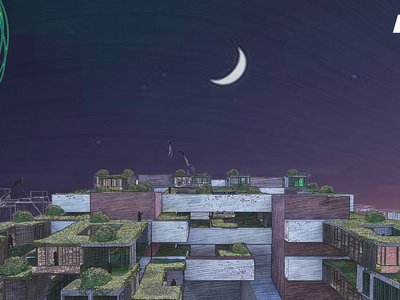
Oasis: Modular Green Housing Carved into Dhaka's Urban Fabric
A shortlisted Plugin Housing entry reclaims unauthorized settlements in Dhaka with stepped concrete volumes, green roofs, and ventilation-driven design.

Black Hole: A Floating Megastructure for the Post-Physical Era
Emiliano Mazzarotto envisions a spherical, self-scaling arena where e-sports, digital hotels, and holographic stadiums replace traditional public space.
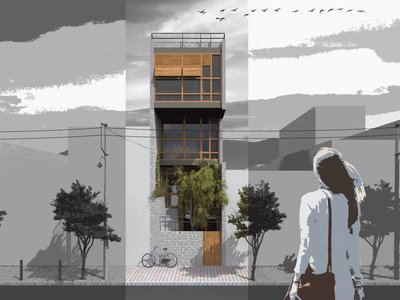
Compact & Sustainable Living in Piraeus: A Four-Level Family Home Built Around Light and Air
A narrow townhouse in one of Greece's densest port cities uses a central atrium and passive strategies to house three generations under one roof.


Explore Housing Competitions
Discover active competitions in this discipline




The International Standard for Design Portfolios


The Global Benchmark for Architecture Dissertation Awards


The Global Benchmark for Graduation Excellence


Challenge to reimagine the Iron Throne
Comments (0)
Please login or sign up to add comments
No comments yet. Be the first to comment!