

Villa Prinsenbolwerk by mojo/architecten
Villa Prinsenbolwerk by mojo/architecten blends history and modern design with ceramic façades, sculptural form, and family-oriented spatial harmony.


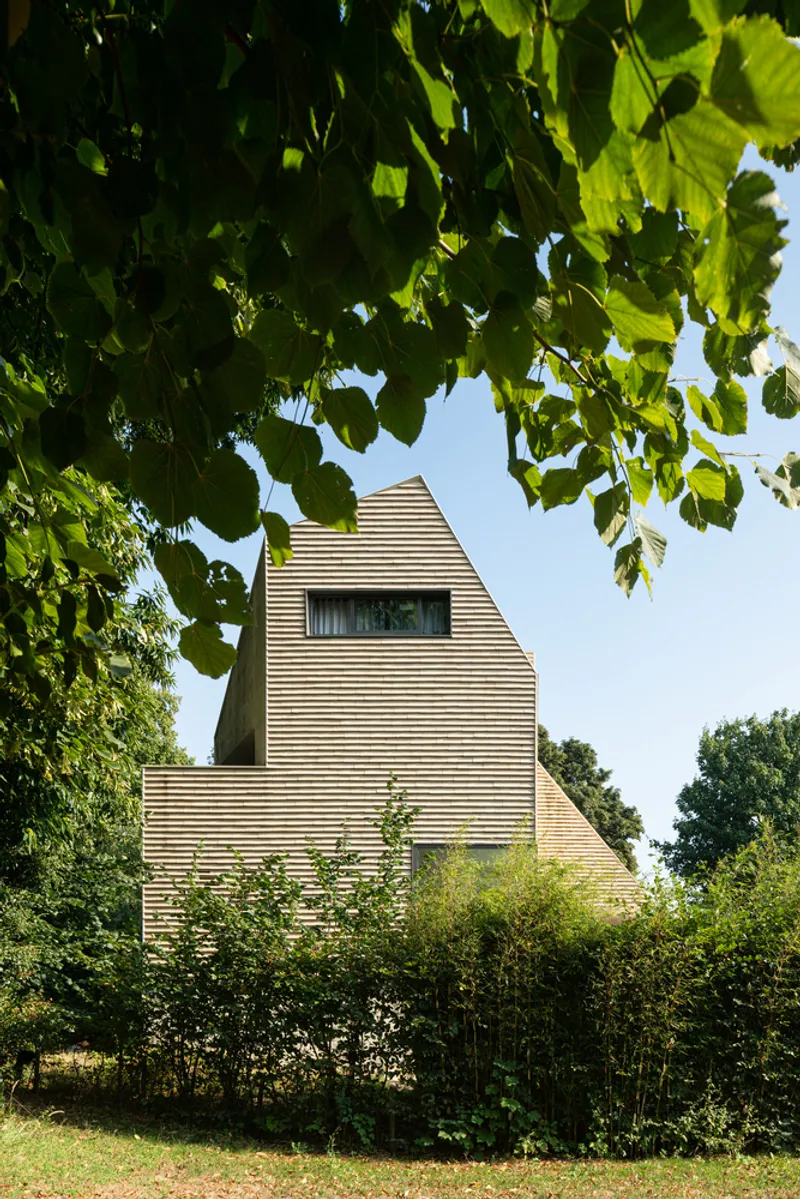
Located in Haarlem, The Netherlands, Villa Prinsenbolwerk by mojo/architecten is a striking example of contemporary Dutch residential design. Built on a site with a rich historical past, the villa harmonizes modern living with cultural memory through thoughtful architectural strategies.
Site History and Context
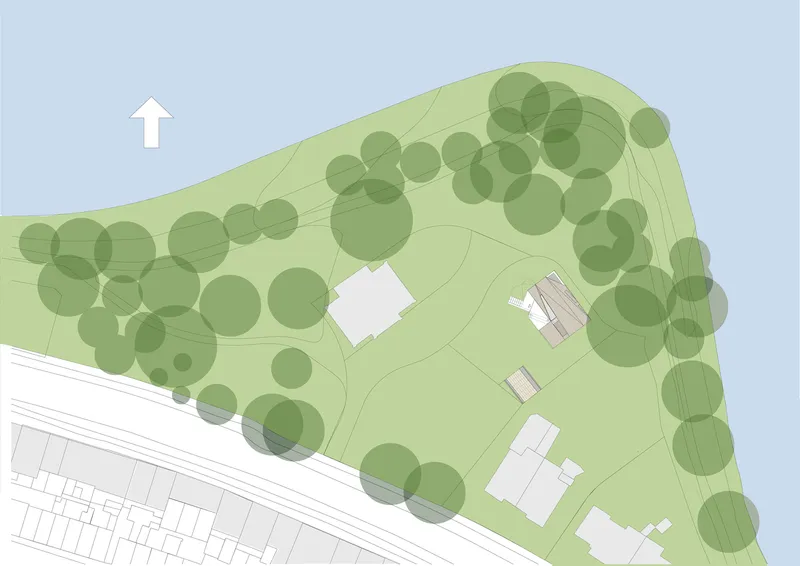
The villa stands on the grounds of a former pre-war school building, which was once part of Haarlem’s historic fortifications. In the early 1900s, the area was converted into a landscape park, and decades later, the school was demolished. When the new owners acquired the site, mojo/architecten sought to preserve its legacy, embedding the old footprint into the villa’s form.
- Basement and entrance follow the school’s original foundations.
- The roofline and floor plan echo the geometry of the former structure.
- Construction was carefully managed to avoid disturbing historic artifacts.
Architectural Concept and Design Approach
The design philosophy was guided by a reserved, heritage-sensitive approach, where minimal resources achieved maximum impact.
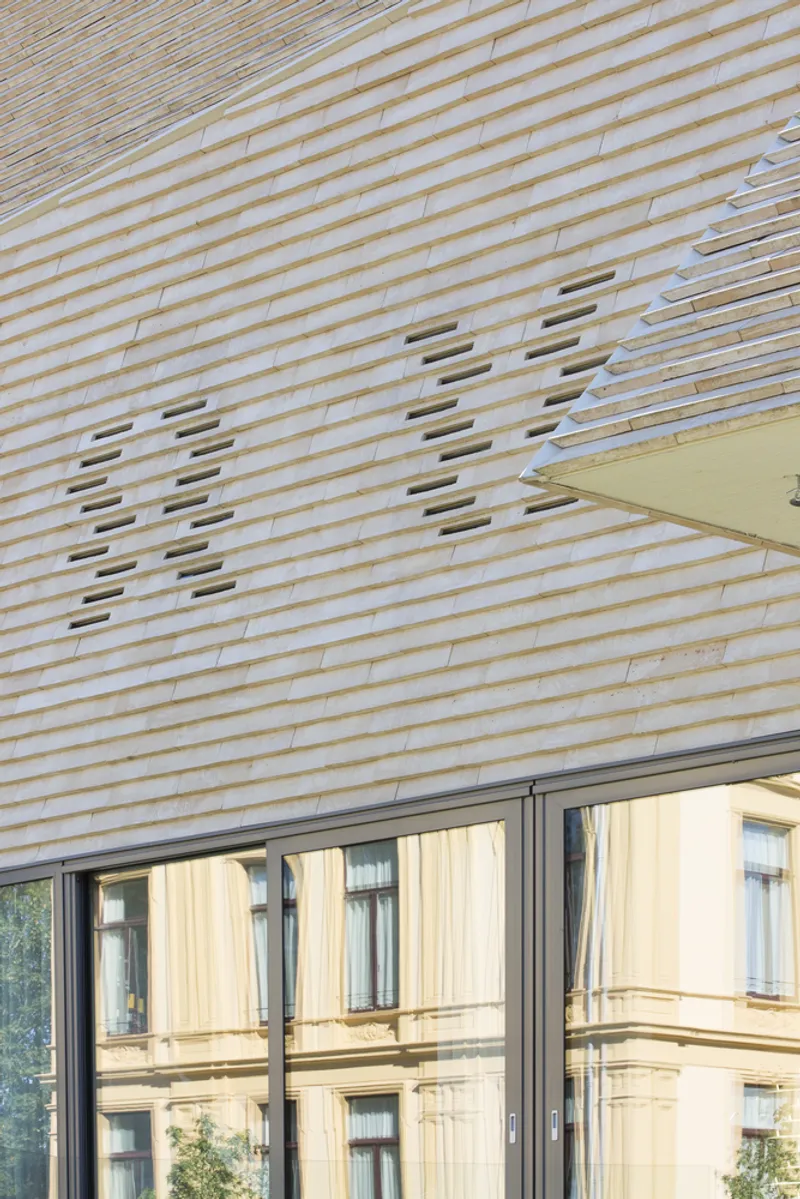
- Sculptural volume: Façades and roof are clad in mixed yellow ceramic tiles, creating a monolithic form.
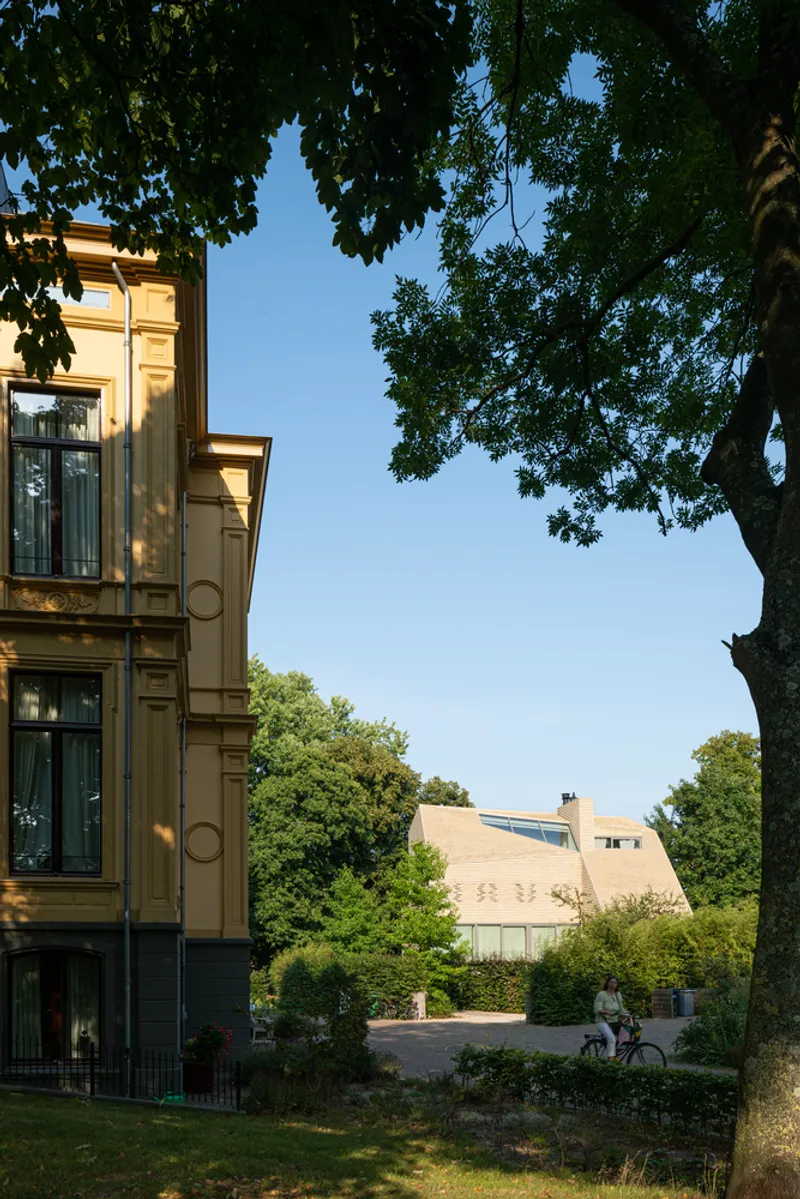
- Contextual harmony: The color palette matches nearby 19th-century white and yellow monumental buildings.
- Privacy and light: Closed façades with small, strategic openings maintain seclusion while allowing daylight.
- Terrace integration: Deep eaves extend over the private deck, blending indoor and outdoor living.
Interior Layout and Spatial Experience
The villa’s interiors reflect modern family life while maintaining a connection to the site’s history.
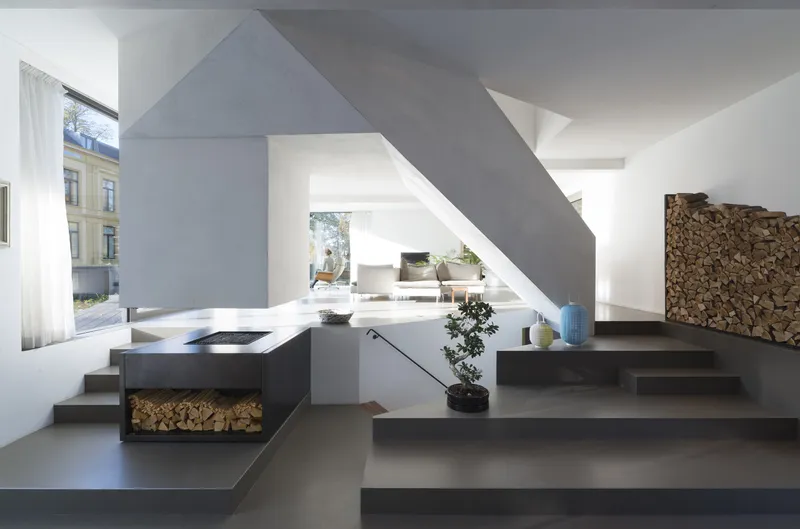
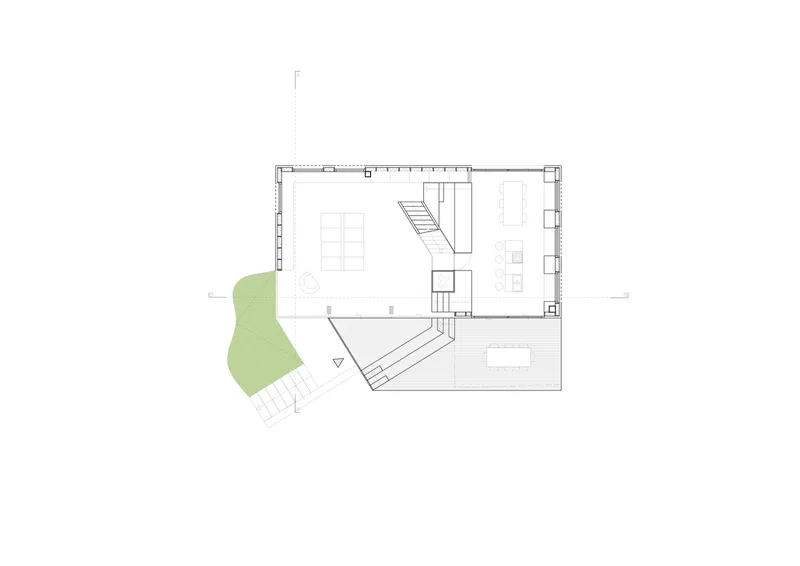
- Ground floor: Central staircase and fireplace connect the living room and kitchen.
- First floor: Master suite designed for the parents.
- Second floor: Children’s bedrooms with custom bunk beds encourage shared living and play.
This arrangement balances privacy, comfort, and family interaction, all within the compact footprint of 330 m².
Materials and Craftsmanship
Materiality plays a central role in uniting past and present.
- Ceramic cladding: Provides durability and a textured, timeless aesthetic.
- Mixed yellow tones: Reflect local architectural character while maintaining individuality.
- Landscape design: Collaborations with Copijn and Sander Rombout ensured seamless integration with the surrounding park.
- Local contractors and artisans: Bouwbedrijf ATB, Bouwhuis bouwtechniek, and De Groene Kikker contributed craftsmanship to every detail.
Villa Prinsenbolwerk is more than a modern home—it is a dialogue between architecture and history, where contemporary family living merges with cultural memory. Through its contextual design, restrained material palette, and sensitive site integration, the project demonstrates how modern architecture can respect heritage while delivering timeless comfort.
All Photographs are works of Egbert de Boer


Popular Articles
Popular articles from the community


LT2A and OPEN Architectes Thread a Brick and Glass High School Through a Wooded Belgian Campus
In Braine-l'Alleud, a 3,000 m² wing for Collège Cardinal Mercier pairs pale brick with a glazed colonnade, deferring to a small chapel and a dense wood.

Cube Design Draws an Ecological Corridor Between Two Shenzhen Hills with the Nankai Building
Beside Shenzhen's container docks, the Nankai Building pairs stacked balconies with a climbing green screen to connect two hillsides across its height.

Jaramillo Van Sluys Arquitectura and Urbanismo Turn a Demolished Registry Lot in Quito into an Orchard Plaza
In Quito's Centro Histórico, a 2,800 m² plaza exposes the San Agustín convent wall and redraws its lost Augustinian orchard in volcanic stone.

GROUP A Strips a 1969 Rotterdam Harbor Headquarters to Its Frame and Wraps It in Timber Louvers
In Rotterdam's M4H harbor district, Ferro Offices reuses a 1969 frame, adds one timber storey and reaches BREEAM-NL Outstanding.

Similar Reads
You might also enjoy these articles


Hodi-Mandai Geram
Project Function: Preservation and revitalization of the Intangible heritage and socio-spatial identity of the Hodi by Housing, Cultural Memory Center, Sacred Grove, landscape, local tourism economy


Olio Towers: A Mid-Rise for Performers That Fuses Housing, Rehearsal, and Stage
Located blocks from Houston's Theater District, this modular tower stacks living units around a central performance atrium.

Oasis: Modular Green Housing Carved into Dhaka's Urban Fabric
A shortlisted Plugin Housing entry reclaims unauthorized settlements in Dhaka with stepped concrete volumes, green roofs, and ventilation-driven design.

Black Hole: A Floating Megastructure for the Post-Physical Era
Emiliano Mazzarotto envisions a spherical, self-scaling arena where e-sports, digital hotels, and holographic stadiums replace traditional public space.

Explore Architecture Competitions
Discover active competitions in this discipline

Challenge to reimagine the Iron Throne

Photograph architecture without architects

Illustrate the lost glory of Angkor Wat - Render Challenge

Design challenge to reuse E-waste
Comments (0)
Please login or sign up to add comments
No comments yet. Be the first to comment!