
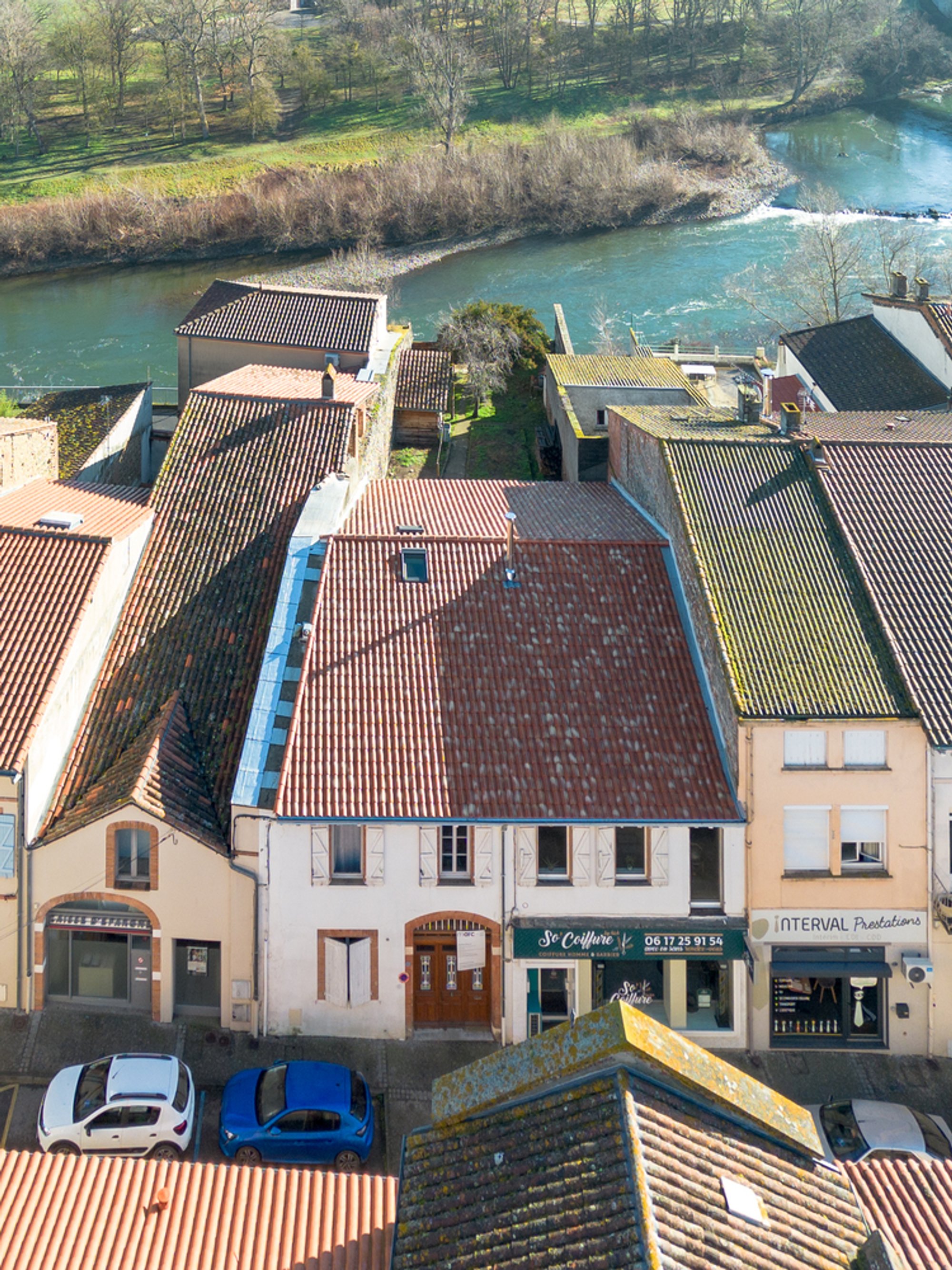
Village House Refurbishment in Toulouse by marc
Refurbished village house near Toulouse reopens to garden, exposing brick structure, reorganizing levels, enhancing daylight, views, energy performance, and living.

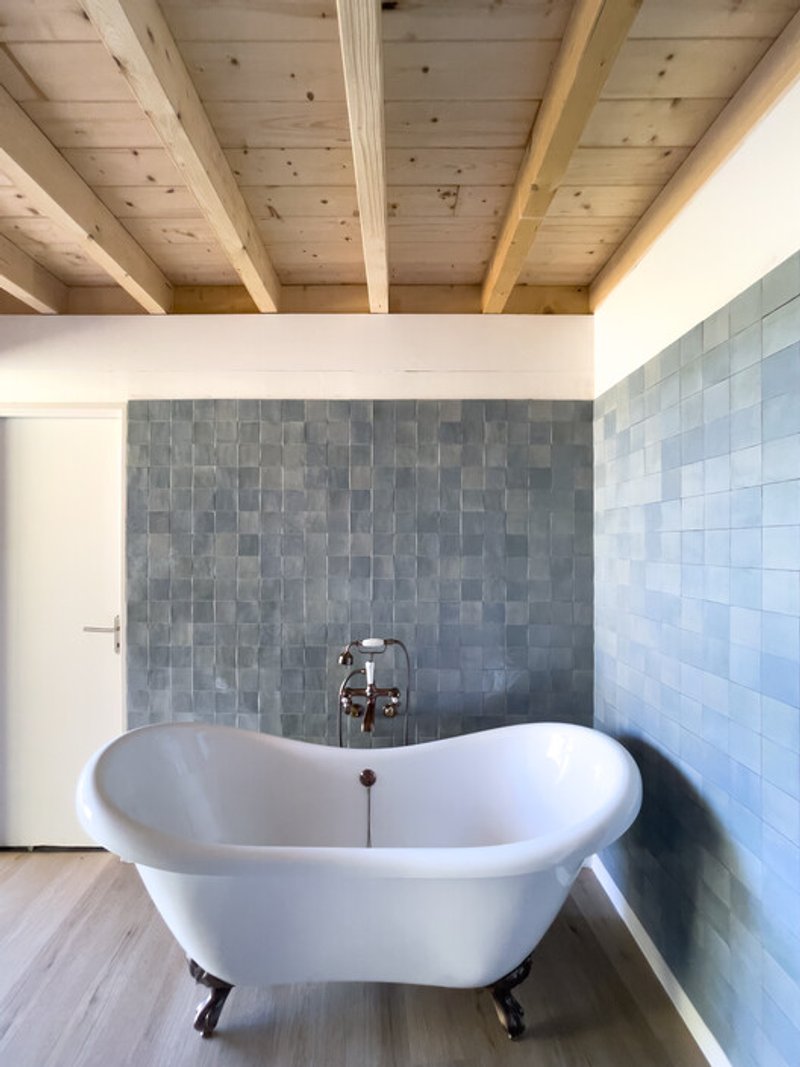
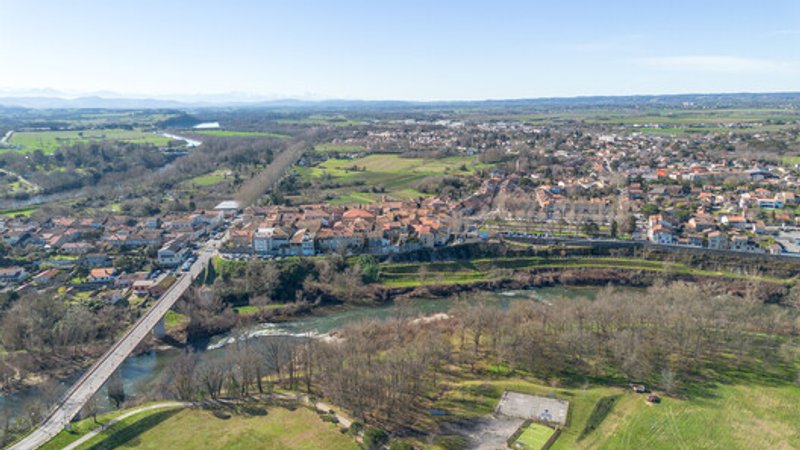
Located in the historic heart of a village south of Toulouse, this village house refurbishment by marc carefully negotiates between architectural heritage, contemporary living, and landscape connection. Adjacent to the former city wall and overlooking the Garonne River, the project reimagines a traditional house through sensitive restoration, spatial reorganization, and structural intervention, while preserving the material identity of the region.
Reinterpreting a Historic Village House
The existing building is organized over two levels with contrasting atmospheres. The street-facing level, exposed to noise and activity, originally contained the main living areas, while the garden-facing level offered quietness and expansive views. Prior to renovation, the living and dining spaces were semi-buried, poorly lit, and disconnected from the garden. Above, an underused attic and three bedrooms occupied the upper floor, limiting spatial quality and daylight access.
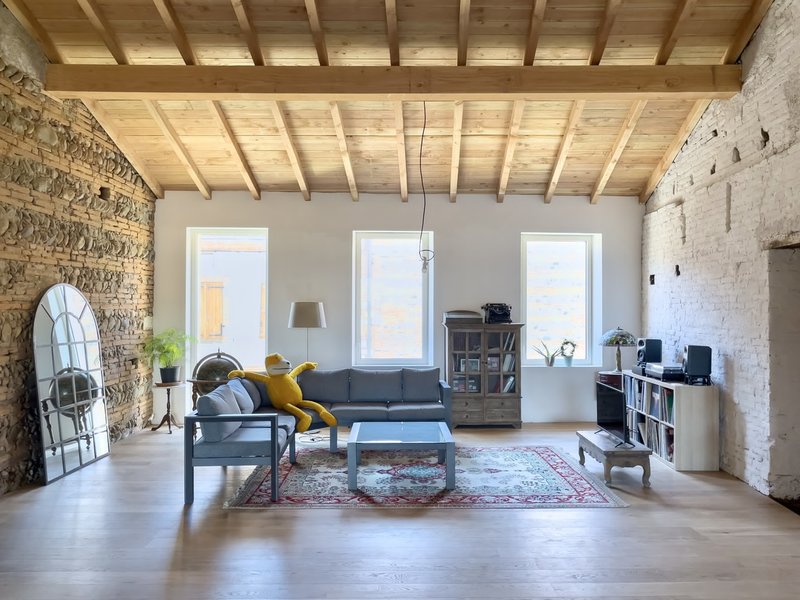
The renovation strategy reversed this hierarchy. By relocating the primary living spaces upstairs, the architects capitalized on sunlight, views, and direct access to the garden, transforming the house into a light-filled contemporary dwelling rooted in its historic context.
Spatial Transformation and Structural Strategy
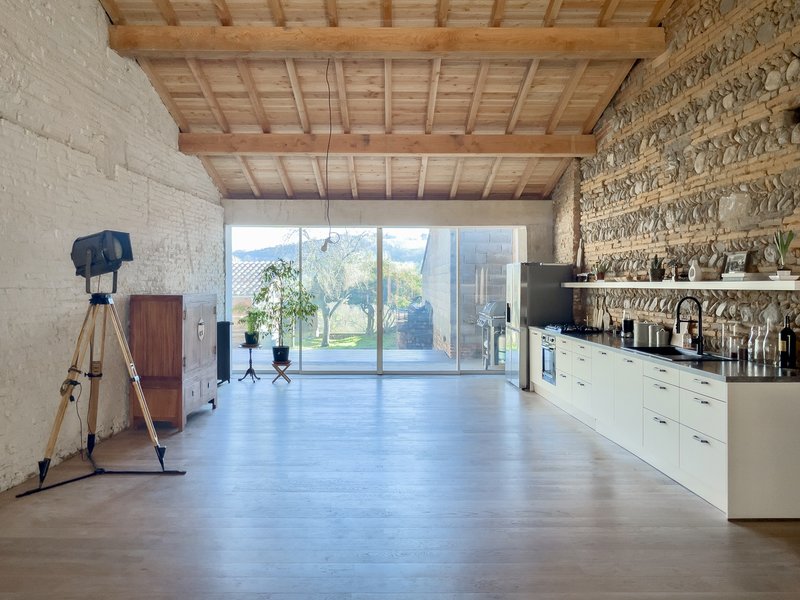
To enable this shift, one of the existing bedrooms was demolished, allowing its footprint to be absorbed into the attic volume. This intervention created a generous double-height living space, visually and spatially connecting multiple levels of the house. A new master suite was positioned on the garden side, reinforcing the relationship between private spaces and landscape, while the attic was converted to house an additional bedroom and a home office.
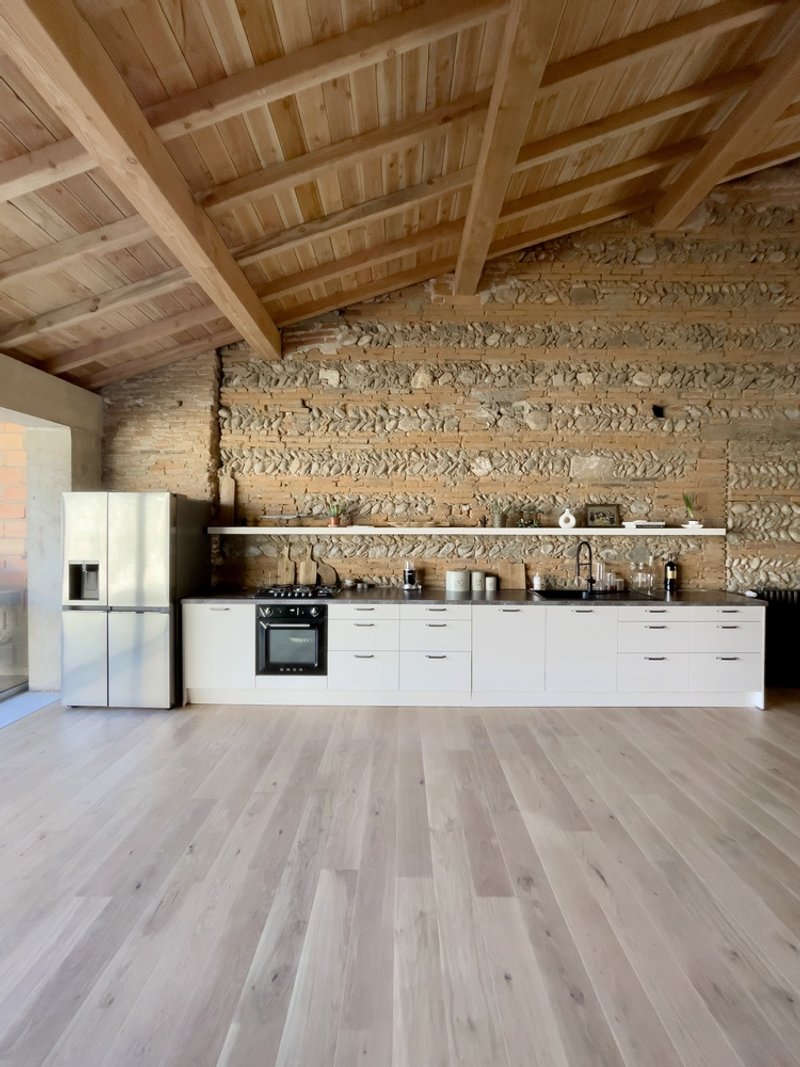
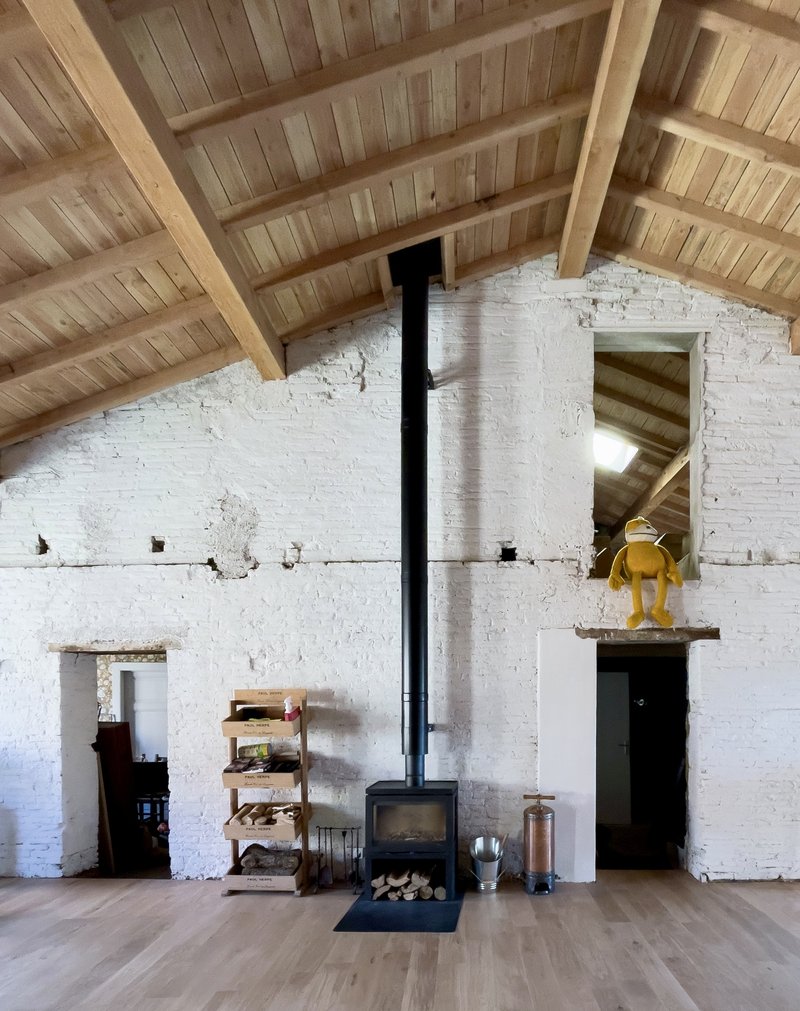
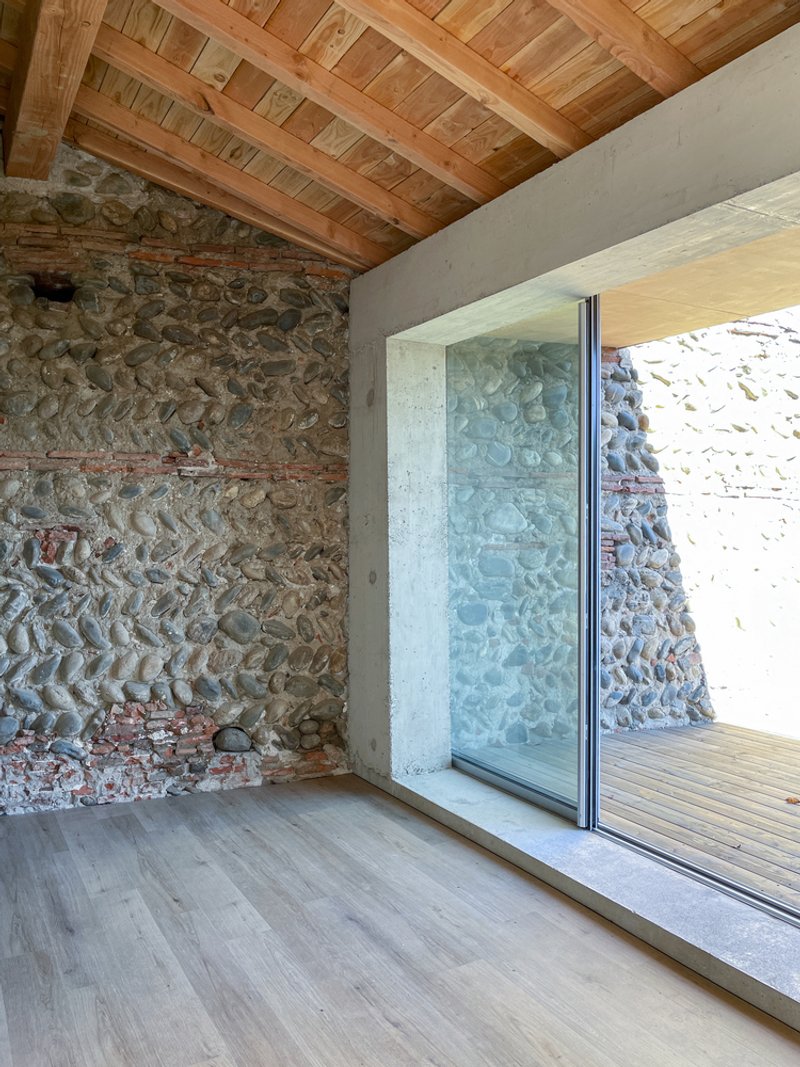
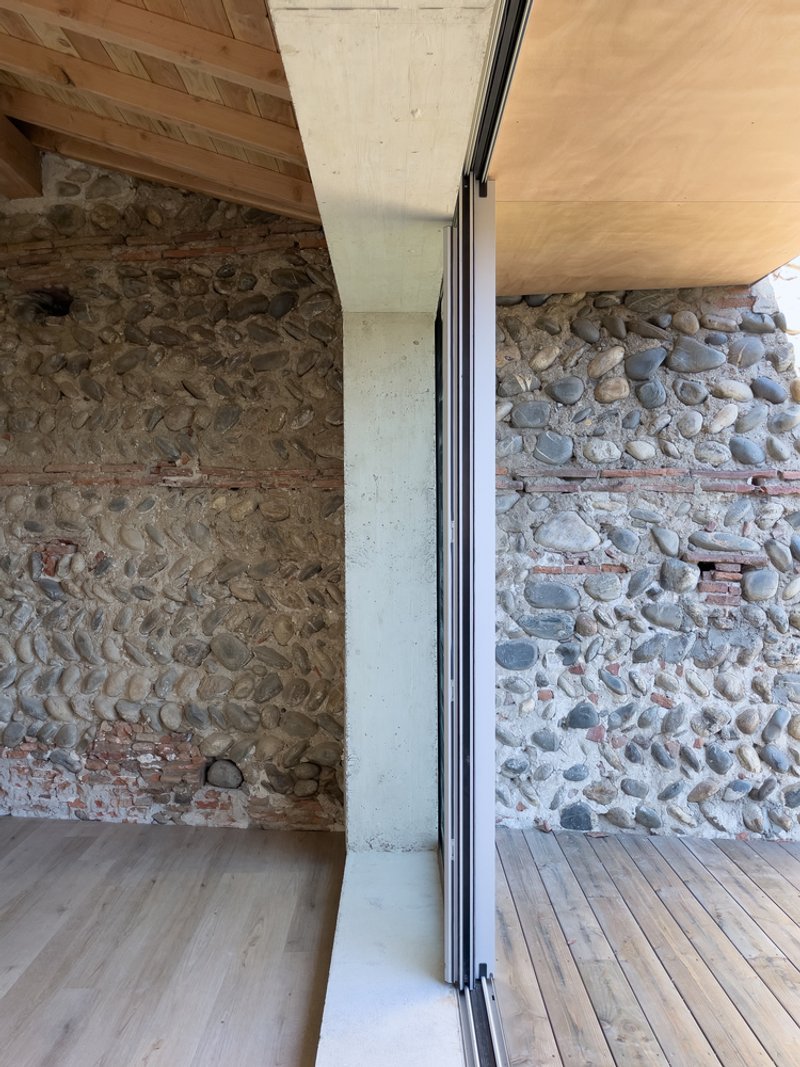
One of the project’s most significant architectural gestures was the demolition of a 10-meter-long load-bearing wall to open the interior toward the garden. A new structural system, comprising two beams supported by three reinforced concrete columns, was introduced to stabilize the building while enabling full transparency. The existing roof structure, previously at risk of collapse, was entirely replaced and deliberately left exposed, reinforcing the dialogue between old and new.
Material Honesty and Vernacular Architecture
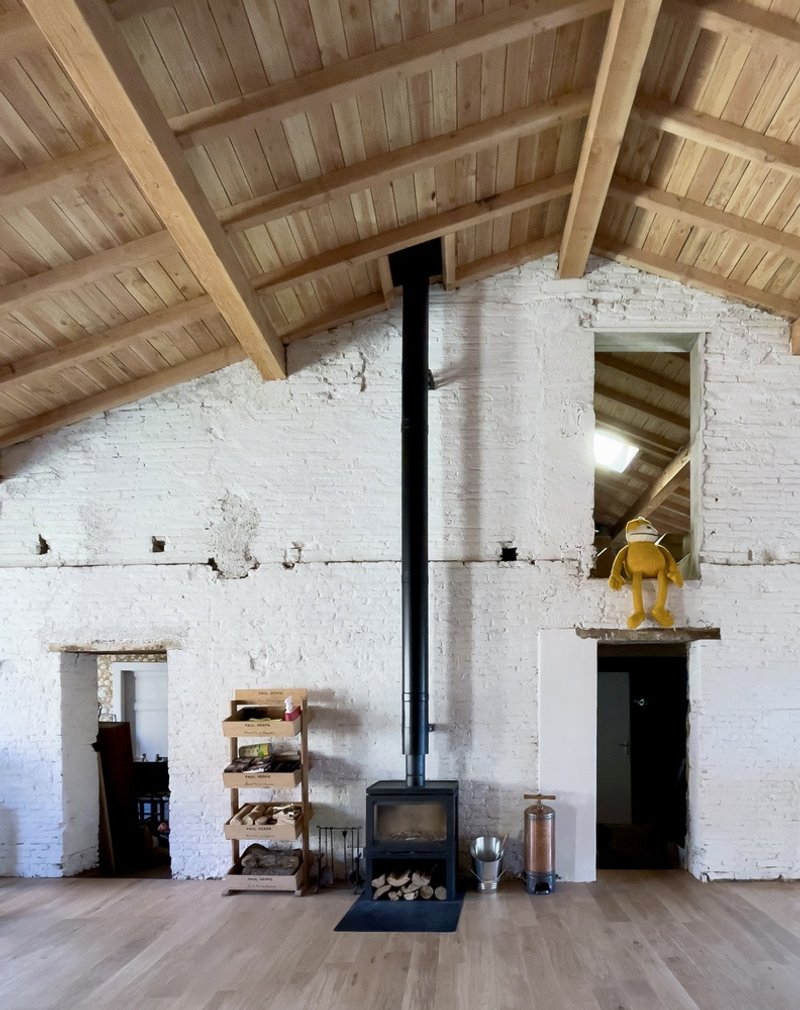
Throughout the refurbishment, the architects prioritized material authenticity and regional identity. Layers of plaster were removed to reveal original brick and pebble walls, characteristic of the vernacular architecture of the Toulouse region. These exposed surfaces provide tactile depth and historical continuity while contrasting with contemporary insertions.
Thermal performance was significantly improved through the installation of external sarking insulation using wood wool, ensuring energy efficiency without compromising the building’s character. Large anodized aluminum bay windows fully open the house to a Douglas fir wooden terrace, blurring the boundary between interior and exterior and framing uninterrupted views toward the garden and river landscape.
A galvanized steel spiral staircase, soon to be installed, will provide access to the attic level, adding a lightweight industrial element that complements the exposed structure and historic masonry.
A Contemporary Home Rooted in History
The Village House Refurbishment exemplifies a thoughtful approach to historic renovation and adaptive reuse, where architectural transformation enhances spatial quality, environmental performance, and everyday living without erasing the past. By working with the existing structure, materials, and setting, marc delivers a project that balances heritage preservation with contemporary residential design, offering a renewed model for rural and village housing in southern France.
Project Information
Architects: marc Location: Toulouse, France Year: 2024 Program: Residential refurbishment Focus: Restoration, adaptive reuse, historic preservation




Popular Articles
Popular articles from the community

Indiesalon Carves a Plywood Cave into a Seoul Bistro's Second Floor
Munhwa Bistro's second Seongsu branch wraps diners in a laminated timber vault laced with colored light and mirror illusions.
VEIVE Architects Builds a Mountain Hostel That Disappears into a Hangzhou Hillside
On the Huihang Ancient Trail in Xiangjian Village, a shelter of wood, steel, and rammed earth roots itself in the rural landscape.
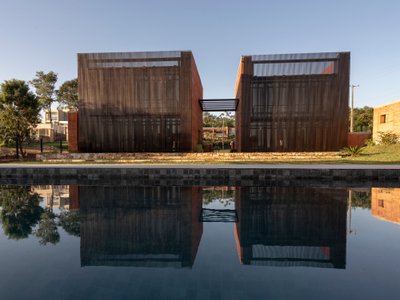
BAUEN Builds Two Rammed Earth Volumes in Paraguay Inspired by the Ovenbird's Nest
In San Bernardino, a house of compacted earth channels the instinct of a constructive bird to shelter life from the Paraguayan summer.
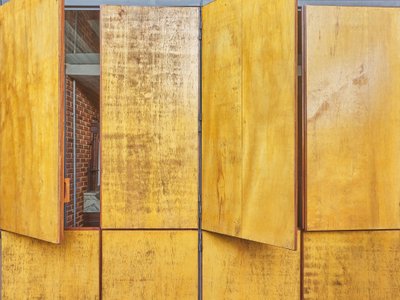
gru.a Builds a 70 m² Timber Shelter That Opens Like a Farm Door in Brazil's Valley of the Vines
In the mountainous region near Rio de Janeiro, a compact retreat uses plywood panels and deep eaves to blur the line between inside and out.

Similar Reads
You might also enjoy these articles

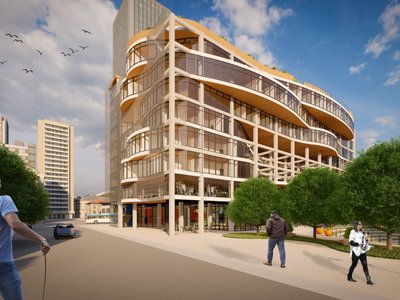
Olio Towers: A Mid-Rise for Performers That Fuses Housing, Rehearsal, and Stage
Located blocks from Houston's Theater District, this modular tower stacks living units around a central performance atrium.
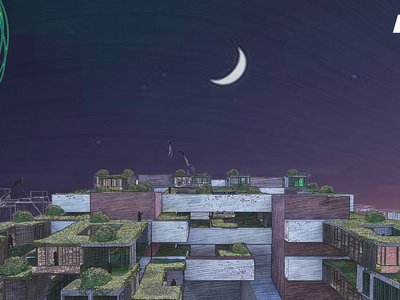
Oasis: Modular Green Housing Carved into Dhaka's Urban Fabric
A shortlisted Plugin Housing entry reclaims unauthorized settlements in Dhaka with stepped concrete volumes, green roofs, and ventilation-driven design.

Black Hole: A Floating Megastructure for the Post-Physical Era
Emiliano Mazzarotto envisions a spherical, self-scaling arena where e-sports, digital hotels, and holographic stadiums replace traditional public space.
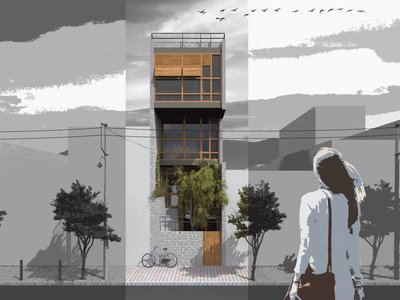
Compact & Sustainable Living in Piraeus: A Four-Level Family Home Built Around Light and Air
A narrow townhouse in one of Greece's densest port cities uses a central atrium and passive strategies to house three generations under one roof.


Explore Architecture Competitions
Discover active competitions in this discipline




The International Standard for Design Portfolios


The Global Benchmark for Architecture Dissertation Awards


The Global Benchmark for Graduation Excellence


Challenge to reimagine the Iron Throne
Comments (0)
Please login or sign up to add comments
No comments yet. Be the first to comment!