
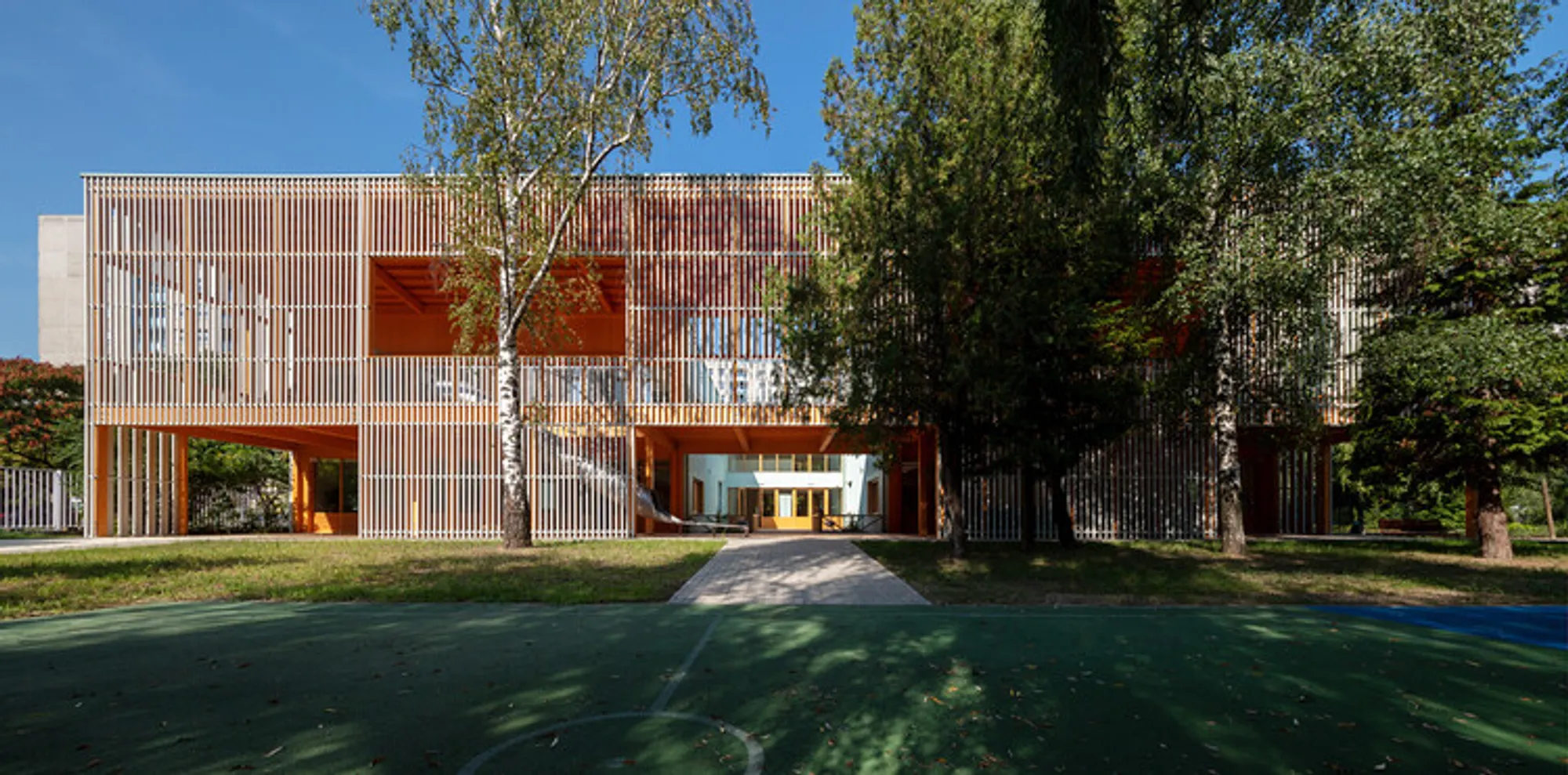
Vizafogó Kindergarten Budapest By Archikon Architects: A Sustainable Renewal of Community Architecture
Vizafogó Kindergarten by Archikon Architects transforms a socialist-era building into a warm, sustainable, child-centered learning environment near the Danube.


The Vizafogó Kindergarten in Budapest, designed by Archikon Architects, is a thoughtful renovation and extension project that redefines a typical socialist-era educational building into a warm, contemporary environment for early childhood learning. Completed in 2019 with a total area of 1,962 m², the project demonstrates how architecture can transform rigid prefabricated structures into inviting, sustainable, and pedagogically responsive spaces.
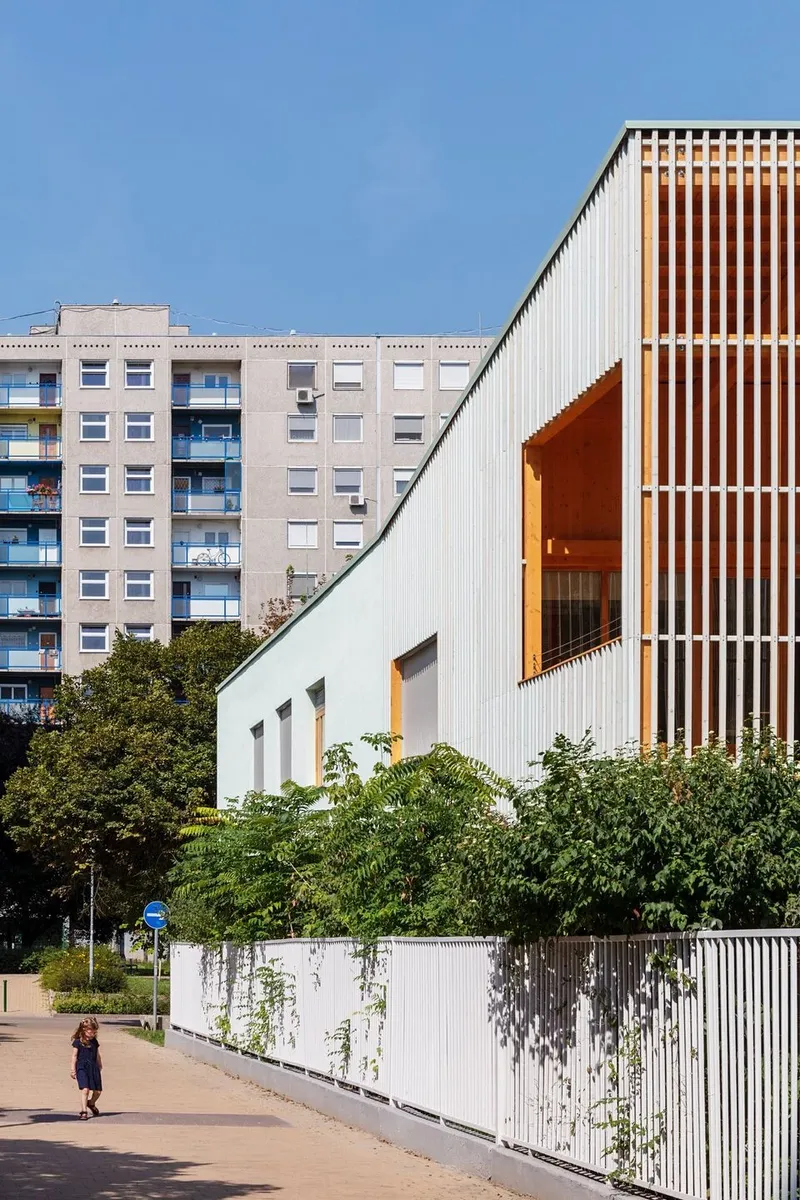
Located near the Danube River in northern Budapest, the kindergarten sits at the heart of a large housing estate surrounded by ten-story prefabricated residential blocks dating from the 1980s socialist panel housing program. Within this dense and visually monotonous urban context, the renewed kindergarten emerges as a distinctive landmark—open, colorful, and deeply connected to nature.
Context-Driven Design Strategy
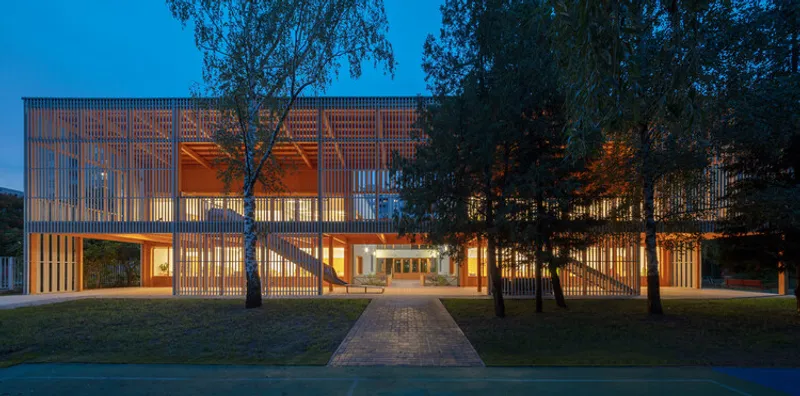
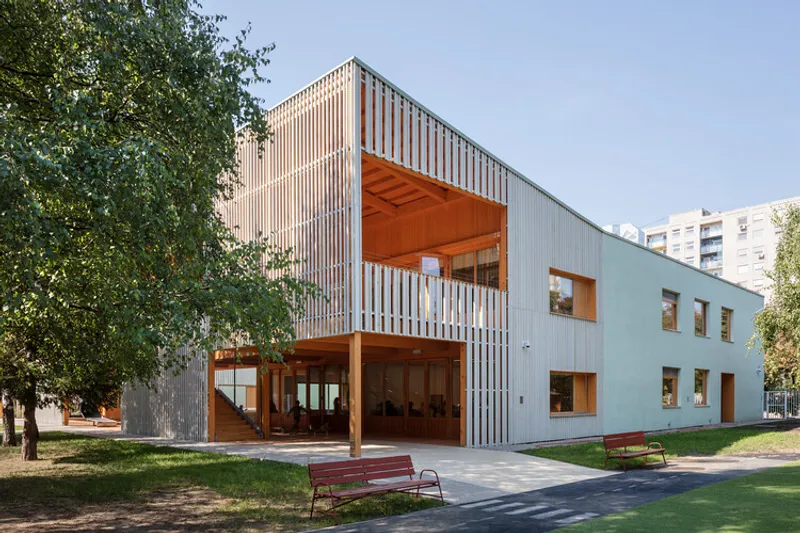
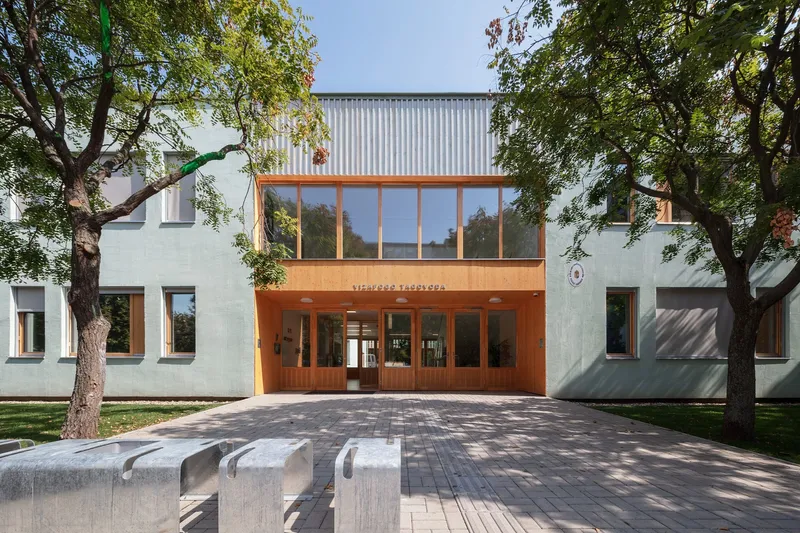
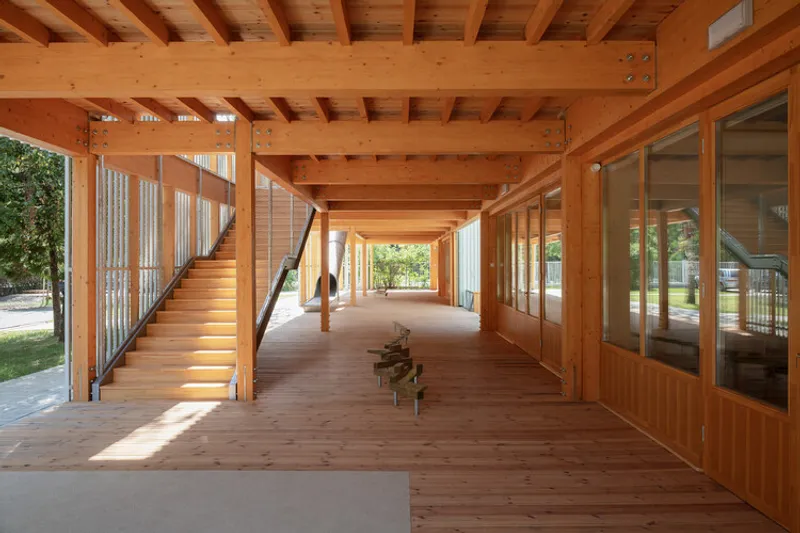
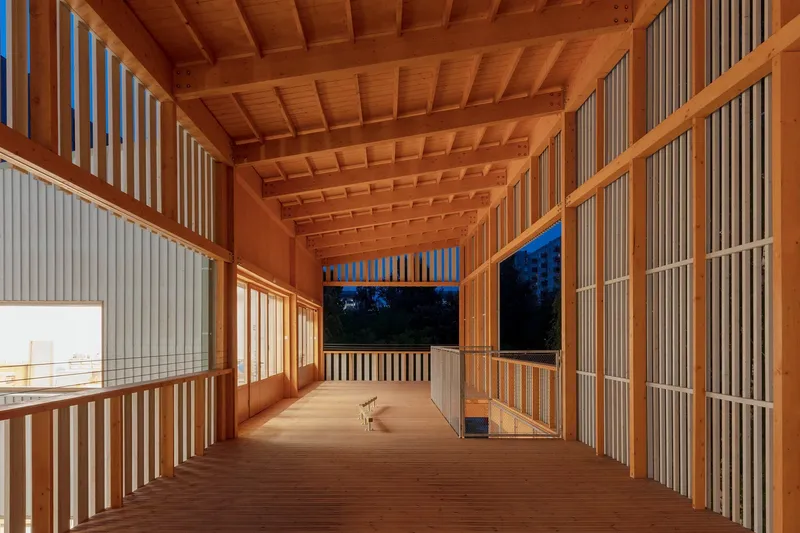
Rather than demolishing the existing two-story, eight-room kindergarten, Archikon Architects chose to preserve and reinterpret the original reinforced concrete structure. This decision allowed the project to retain its social and urban significance while dramatically improving spatial quality. The extension expands the building toward the original courtyard and introduces a covered wooden outdoor playground at the front, creating a welcoming threshold and an active interface between indoor and outdoor learning environments.
A newly defined roof outline opens the building visually and spatially, counteracting the closed and rigid character of the surrounding prefabricated blocks. This architectural gesture gives the kindergarten a new and cohesive identity, distinct from its residential neighbors while remaining firmly rooted in its community.
Sustainability and Environmental Education
The proximity of the Danube plays a central role in the project’s conceptual framework. Sustainability—particularly water utilization and environmental awareness—is embedded not only in technical solutions but also in the educational philosophy of the building. Architecture becomes a teaching tool, subtly introducing children to ecological thinking through spatial design, material choices, and natural light.
The kindergarten stands as a strong example of how sustainable architecture, environmental education, and social infrastructure can be integrated into a single, inspiring project.
Interior Architecture and Child-Centered Spaces
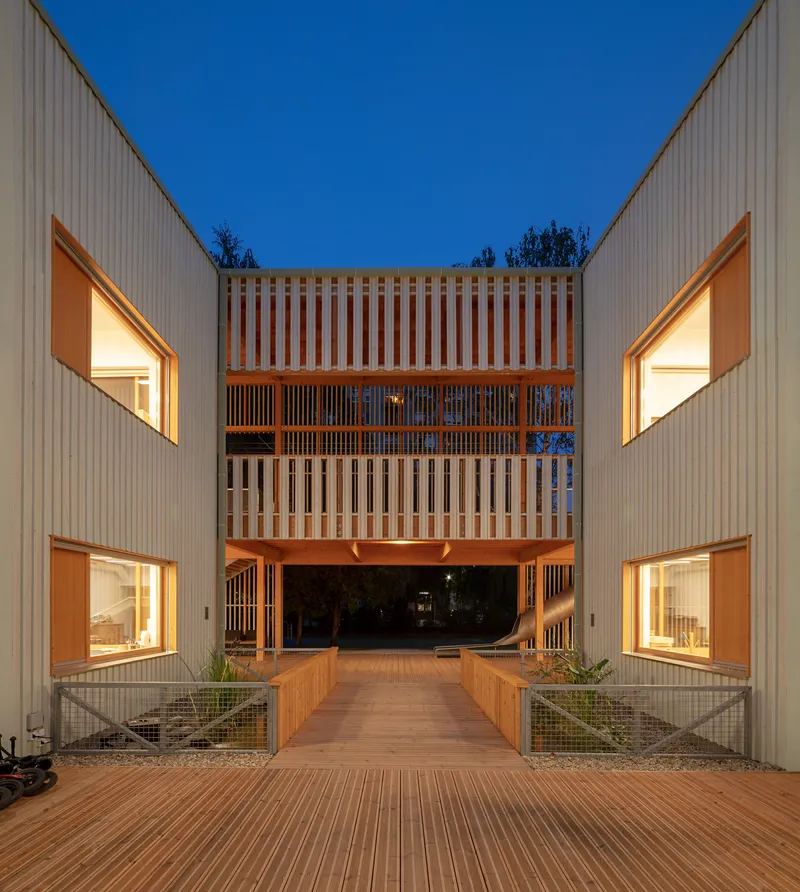
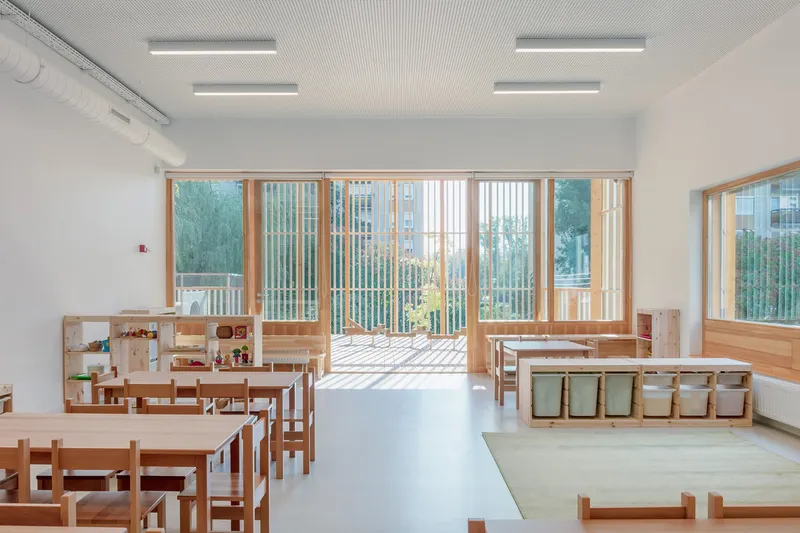
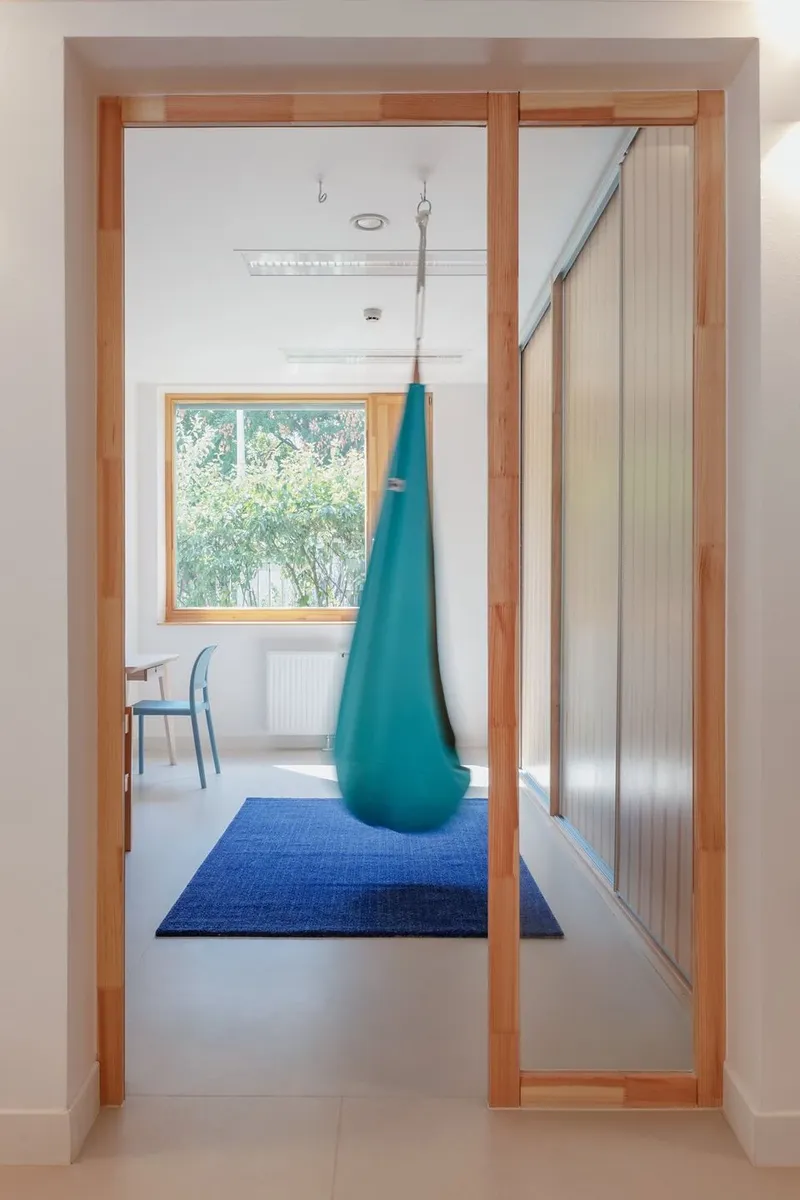
Internally, the original building’s strict and rational layout is softened through the extensive use of wood finishes on windows, beams, furniture, and interior accents. This material warmth creates a child-friendly atmosphere while maintaining durability and functionality. The interiors were designed in close collaboration with kindergarten teachers and pedagogy leaders, ensuring that the architectural solutions directly support daily routines and educational needs.
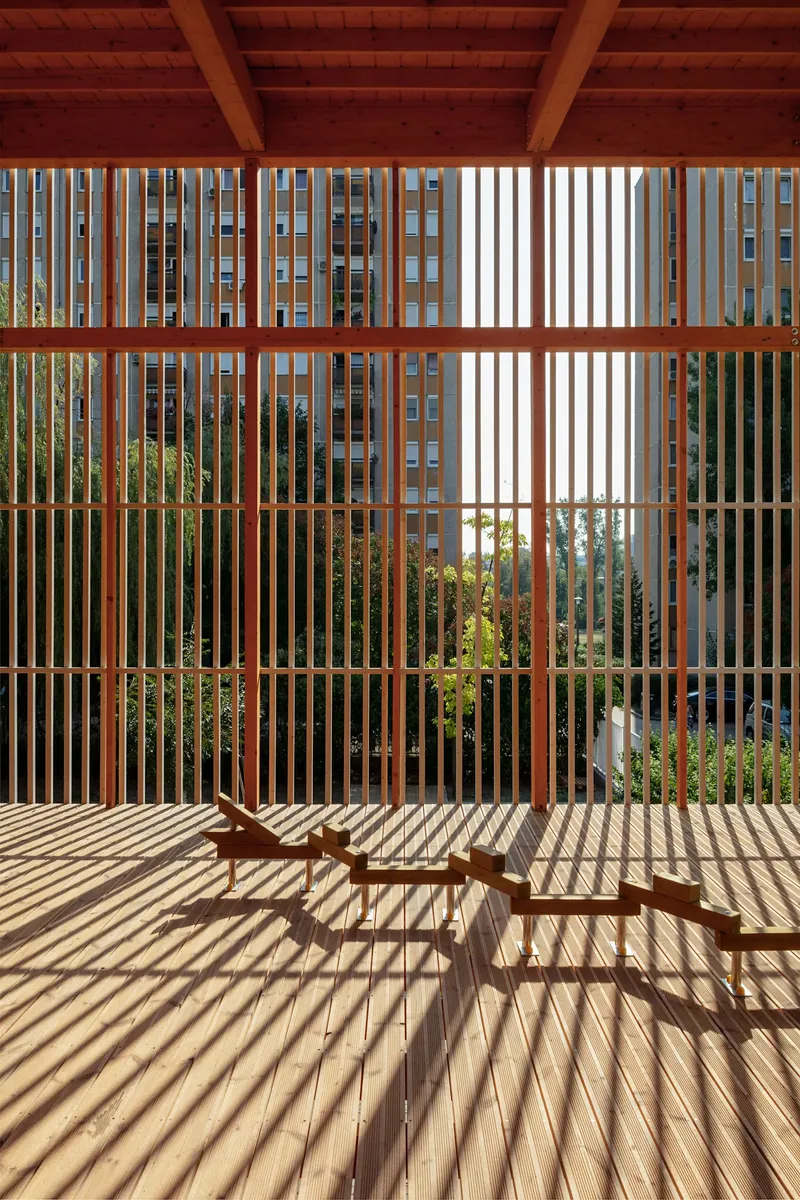
One of the most distinctive interior elements is the wooden play terrace opening toward the backyard. Equipped with a slide and outdoor play features, this semi-exterior space enhances movement, play, and exploration—key components of early childhood development.
Materiality and Urban Identity
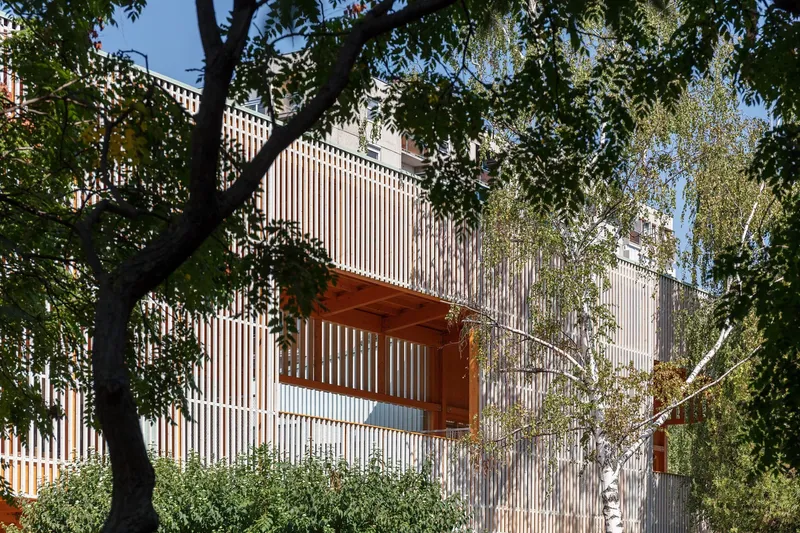
The exterior redesign introduces large openings, wooden windows, and a new color palette, clearly distinguishing the kindergarten from the surrounding gray concrete blocks. Materials from manufacturers such as AGROB BUCHTAL, Thermowood, Tarkett, Baumit Creative Top, and Ikea were carefully selected to balance durability, sustainability, and aesthetic quality.
By breaking down the original block-like mass and introducing warmth, color, and texture, the project enriches the housing estate with a new architectural character, demonstrating how small-scale public buildings can positively transform large residential environments.
A Model for Educational Renovation
The Vizafogó Kindergarten project is more than a functional upgrade—it is a model for adaptive reuse, sustainable design, and community-oriented architecture. Archikon Architects successfully transformed a standardized socialist-era structure into a contemporary kindergarten that supports learning, play, and environmental awareness, while offering a humane and joyful space for children and educators alike.
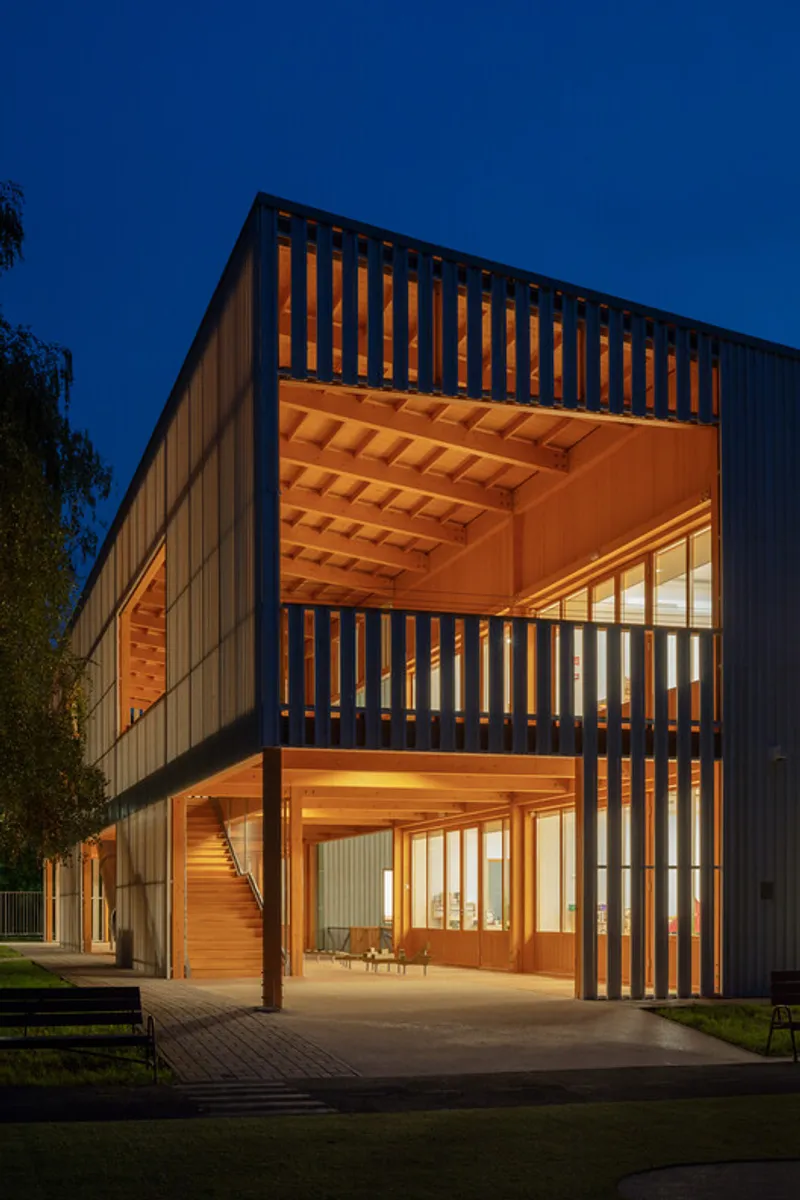
All the photographs are works of Tamás Bujnovszky




Popular Articles
Popular articles from the community


The Ocean Hive: Sustainable Architecture for a Self-Sufficient Civilization at Sea
The Ocean Hive imagines sustainable architecture at sea, where modular habitats, algae, wave power and ocean waste sustain a growing colony.

The Earth Pod: 3D Printed Homes for Resilient Refugee Communities
The Earth Pod reimagines refugee housing through 3D printed homes made from clay, combining resilience, self-sufficiency, and rapid shelter.

The Musturak Paradise: Senior Living Architecture for a Connected Future in Temara, Morocco
The Musturak Paradise reimagines senior living architecture in Temara via private homes, social spaces, culture, community, and shared care.

Play: Fragments of Their World
Familiar architecture becomes modular playground design, creating safe spaces where displaced children can learn, connect, imagine and play.


Similar Reads
You might also enjoy these articles


Hodi-Mandai Geram
Project Function: Preservation and revitalization of the Intangible heritage and socio-spatial identity of the Hodi by Housing, Cultural Memory Center, Sacred Grove, landscape, local tourism economy


Olio Towers: A Mid-Rise for Performers That Fuses Housing, Rehearsal, and Stage
Located blocks from Houston's Theater District, this modular tower stacks living units around a central performance atrium.

Oasis: Modular Green Housing Carved into Dhaka's Urban Fabric
A shortlisted Plugin Housing entry reclaims unauthorized settlements in Dhaka with stepped concrete volumes, green roofs, and ventilation-driven design.

Black Hole: A Floating Megastructure for the Post-Physical Era
Emiliano Mazzarotto envisions a spherical, self-scaling arena where e-sports, digital hotels, and holographic stadiums replace traditional public space.
Explore Educational Building Competitions
Discover active competitions in this discipline



Challenge to design public laboratory


Challenge to reimagine the Iron Throne


Photograph architecture without architects


Illustrate the lost glory of Angkor Wat - Render Challenge
Comments (0)
Please login or sign up to add comments
No comments yet. Be the first to comment!