
W-Mission Headquarters by BCHO Partners and Behet Bondzio Lin Architekten
Undulating brick headquarters in Seoul blends Gothic-inspired arches, textile symbolism, courtyards, and community-focused office spaces with spiritual spatial experience.


Designed byBCHO Partners and Behet Bondzio Lin Architekten
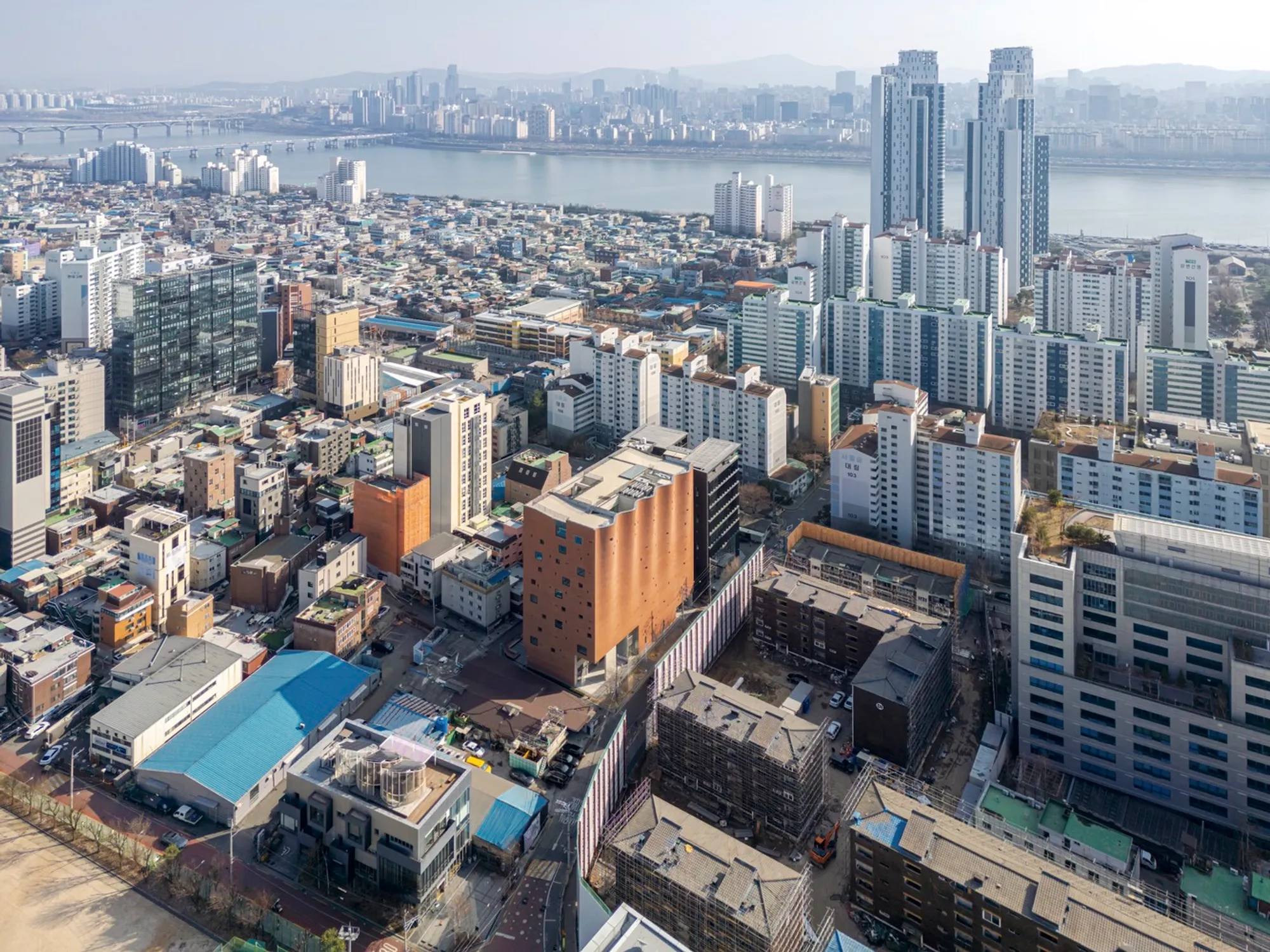
, the W-Mission Headquarters redefines the typology of the modern office building in Seoul. Located in Seongsu-dong: an industrial district reborn as a hub for art, culture, and design, the 9,483 m² project transforms traditional red brick architecture into a spiritually charged urban statement.
Completed in 2024, this headquarters for one of South Korea’s leading textile manufacturers embodies craftsmanship, material innovation, and community-driven design.
Concept: Sacredness, Sanctuary, and Community
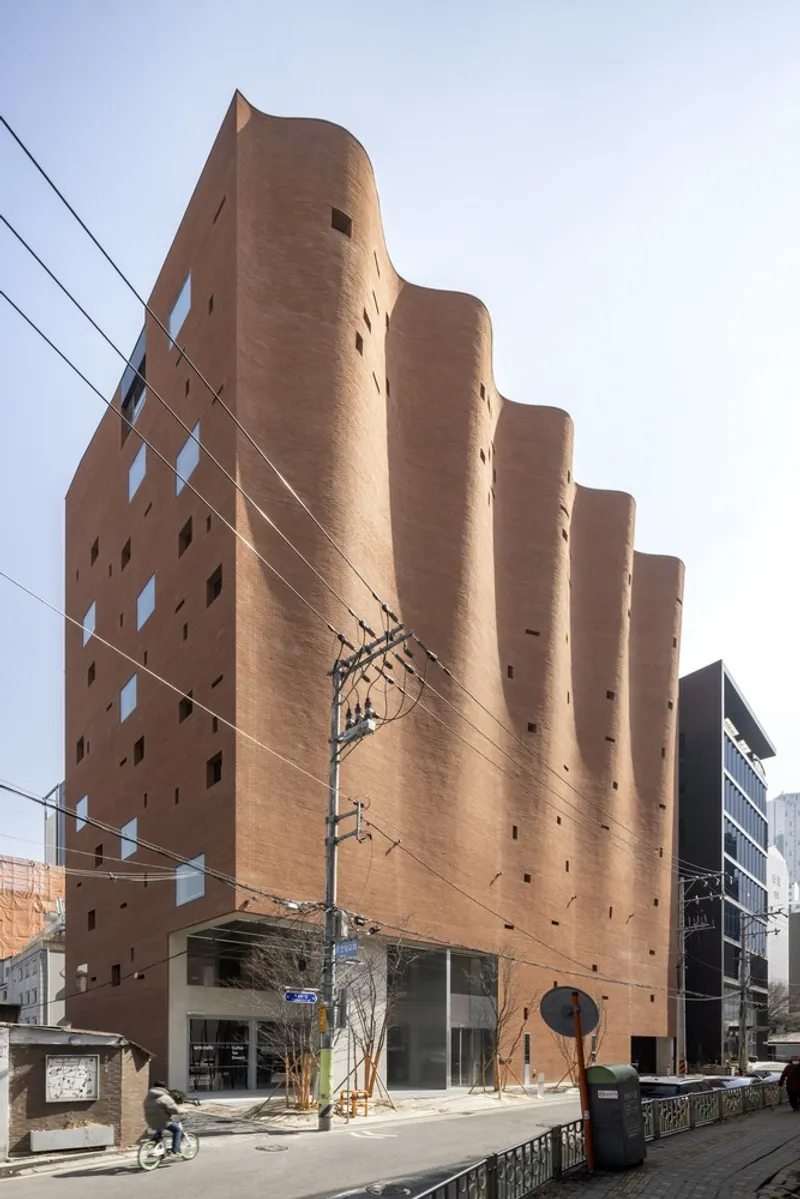
The architectural vision is grounded in three existential concepts that reflect the client’s identity: sacredness, sanctuary, and community. Inspired by ocean waves and the tactile qualities of textiles: lightness, weaving patterns, undulation, enclosure, and disclosure, the building expresses movement through solid brick.
A striking reinterpretation of the Gothic high-arched cathedral façade inverts the traditional spatial hierarchy. Instead of forming an interior nave, the monumental arch is expressed outward toward the city, transforming the urban street into a contemplative threshold.
This interplay between spirituality and materiality positions the headquarters as more than a workplace, it becomes a civic presence and cultural anchor within Seongsu-dong.
The Waving Brick Façade: Digital Craft Meets Tradition
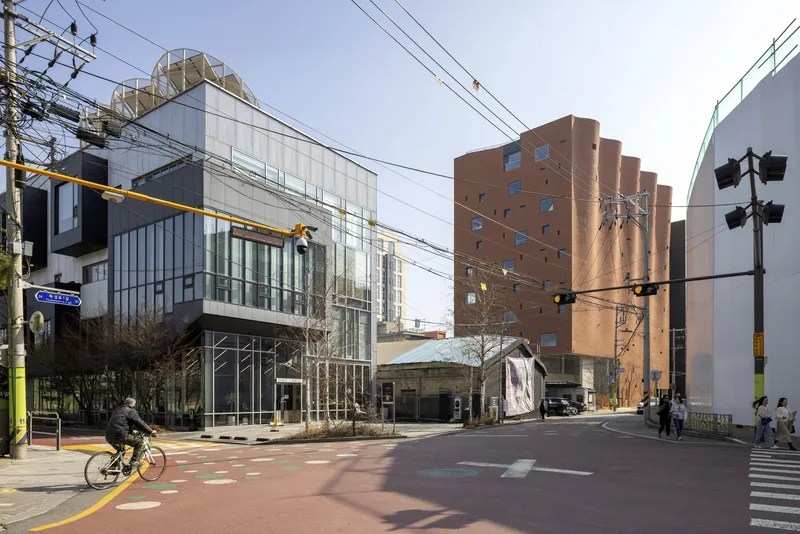
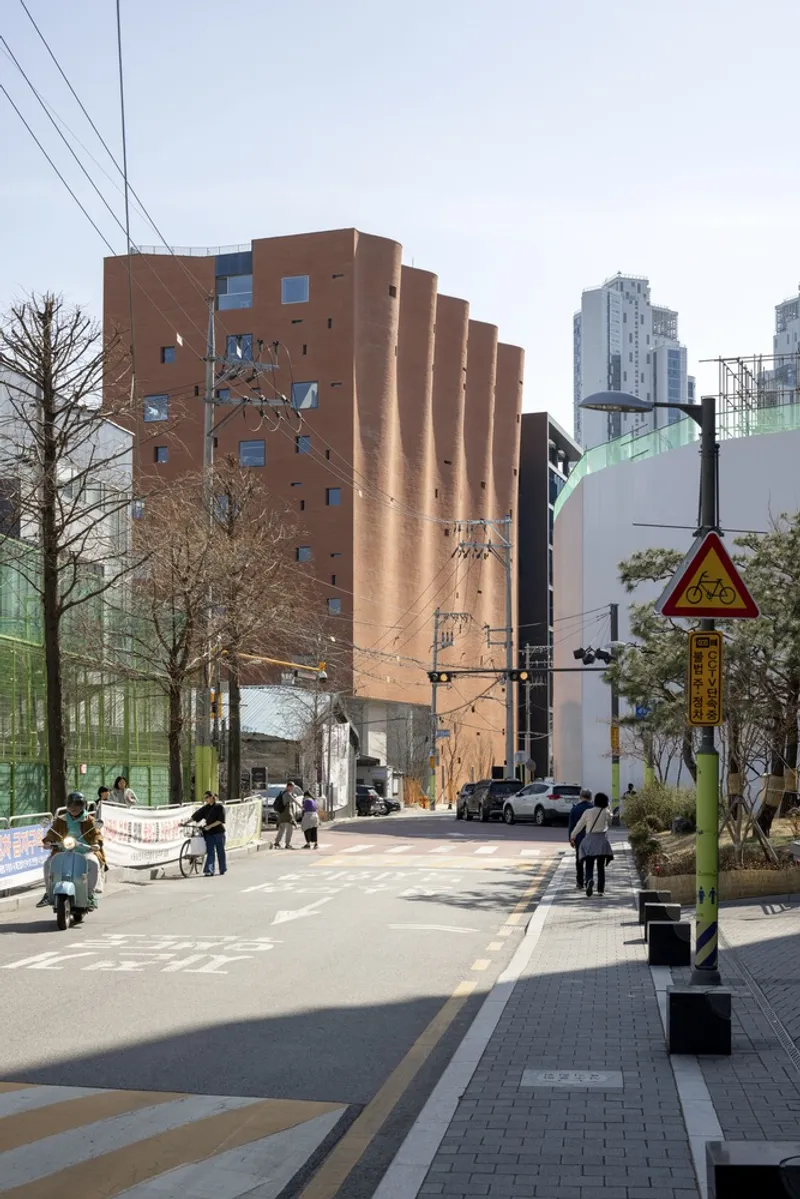
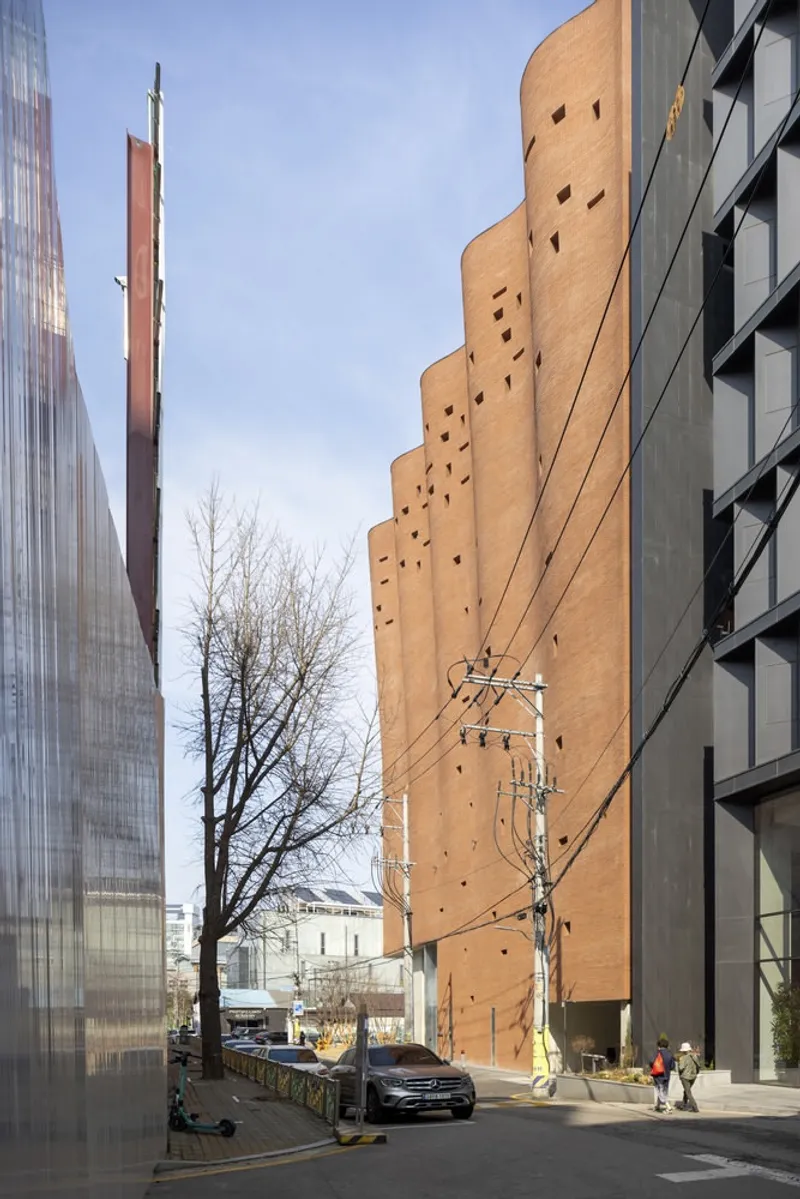
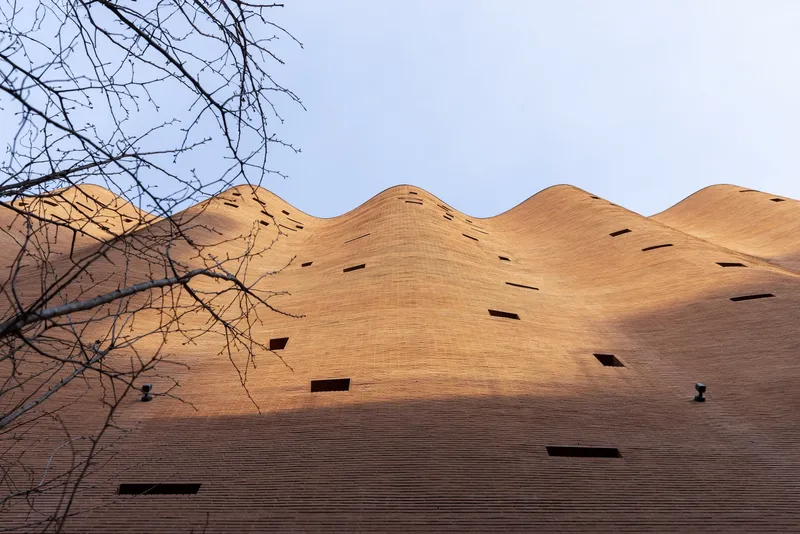
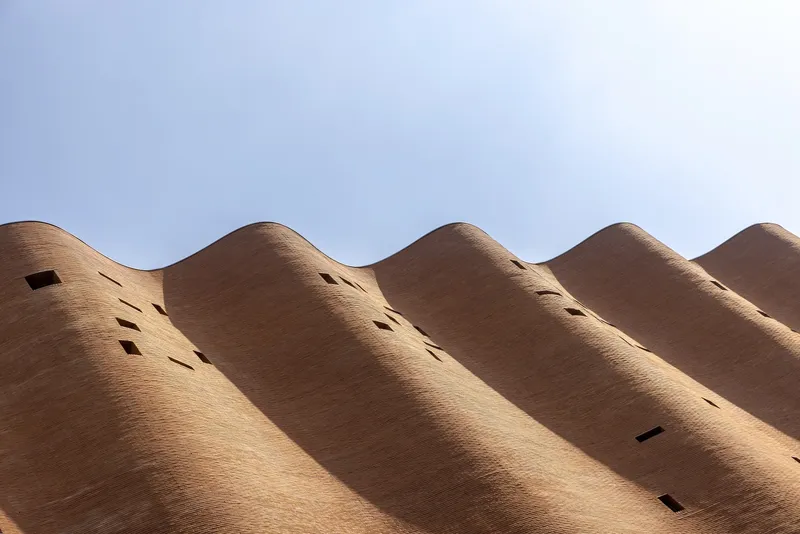
One of the defining architectural features is the undulating brick curtain wall system. Rooted in Seoul’s long-standing masonry tradition, the façade demonstrates how computational design can elevate conventional construction methods.
- 520 courses of brick define the façade height
- Every 24 courses, an additional brick incrementally increases the curvature
- Wave amplitude grows from 0 cm at the third floor to 170 cm at roof level
Using digital algorithms, the architects created a precise yet constructible wave geometry. Bricks are attached to a cast-in-situ concrete wall that guides the curve, forming a literal “curtain wall” of masonry.
The result is a textured, sculptural surface that evokes textile drapery carved in stone, bridging craft heritage with parametric design innovation.
Keywords integrated: brick façade architecture, computational brick design, parametric masonry, Gothic reinterpretation, Seoul office architecture.
Programmatic Organization: A Vertical Neighborhood
The building is structured into three stratified zones, forming a vertical community within an urban office tower.
1. Community Zone (Lower Floors)
At street level, the headquarters engages the public realm through:
- WM Café and garden
- WMission Academy
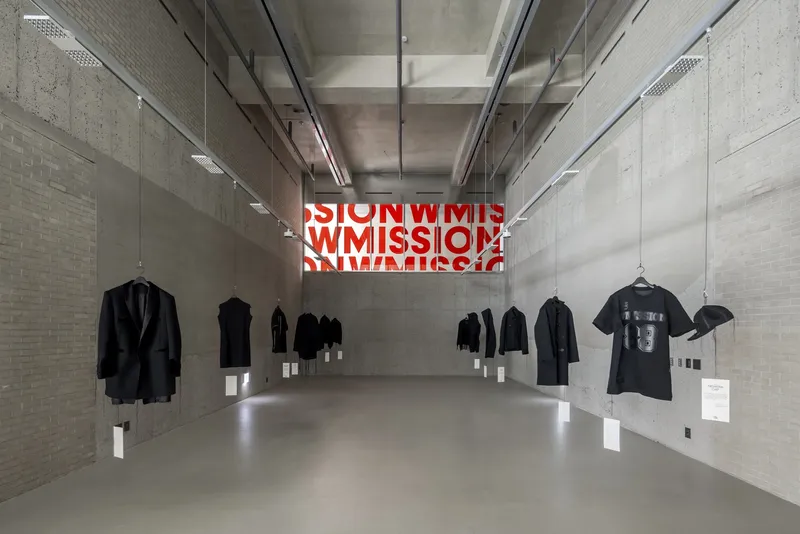
- Workshop and exhibition spaces
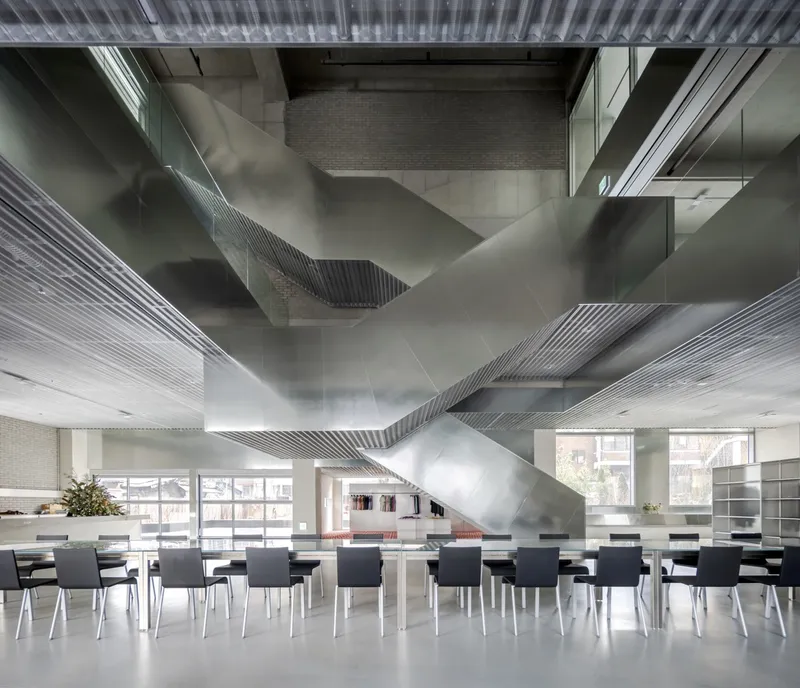
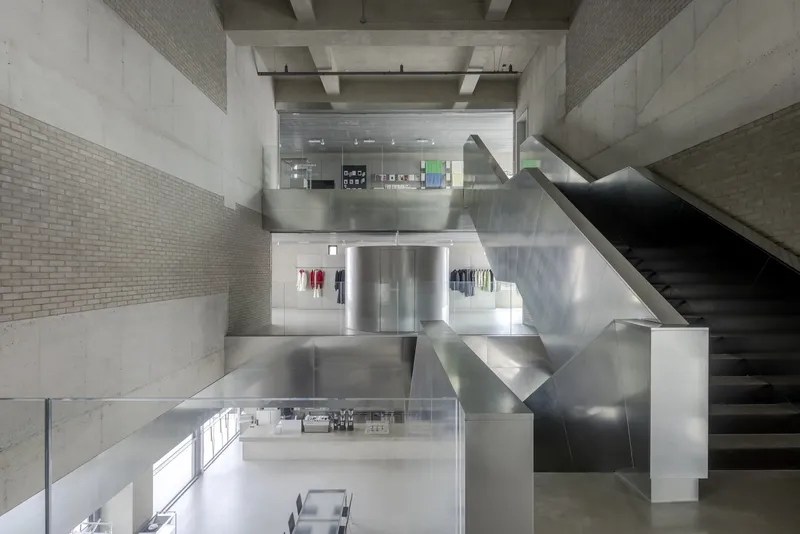
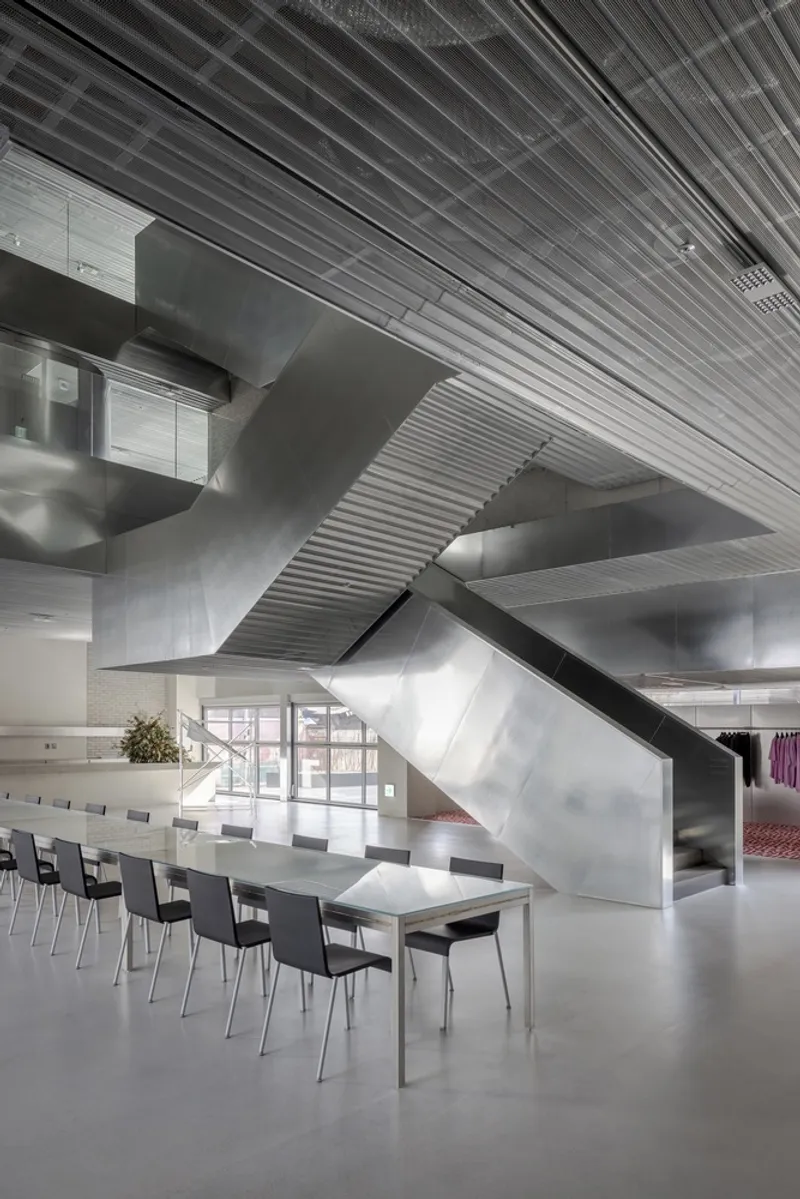
A three-story atrium activates this public layer, reinforcing transparency and accessibility. This zone establishes the headquarters as an open cultural platform rather than a closed corporate environment.
2. Open Office Block (Middle Floors)
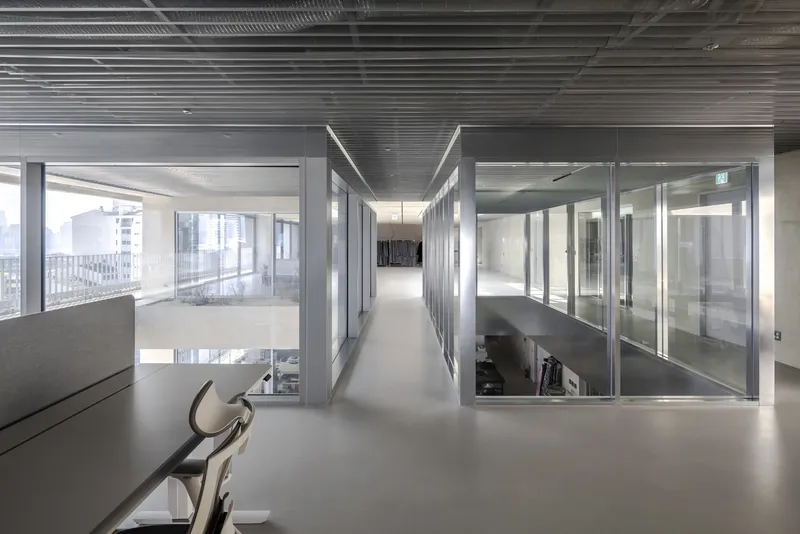
Four levels of flexible open-plan offices promote collaboration and operational efficiency. These spaces connect visually to semi-outdoor courtyards, introducing daylight and ventilation into the workplace environment.
3. Executive & Headquarters Zone (Upper Floors)
The top three floors house W-Mission’s core leadership and integrated workshop spaces. Inspired by the basilica nave typology, double-height interconnected interiors draw natural light deep into the building, creating a serene and contemplative atmosphere.
Courtyards, Light, and Urban Connectivity
All three programmatic layers incorporate semi-outdoor double-height courtyards, creating a system of interconnected patios and terraces. These outdoor pockets:
- Reinforce natural ventilation strategies
- Provide visual relief within the dense urban fabric
- Foster informal gathering and collaboration
- Strengthen the sense of vertical community
The east façade opens generously toward the Han River and Seongsu-dong district, offering terraces and garden views. In contrast, the west-facing waving brick façade frames urban perspectives approaching from Seoul Forest Park, acting as a dramatic architectural backdrop.
The north façade features carefully calibrated openings in three typologies, responding directly to programmatic and daylight requirements.
Materiality and Urban Context
Seongsu-dong’s industrial heritage is deeply rooted in brick factory buildings. The W-Mission Headquarters respects this history while redefining it. The façade’s rhythmic wave recalls textile movement, subtly referencing the company’s manufacturing identity.
By merging:
- Traditional brick craftsmanship
- Digital computational tools
- Gothic spatial inspiration
- Contemporary office planning
the project stands as a benchmark in sustainable and symbolic corporate architecture in South Korea.
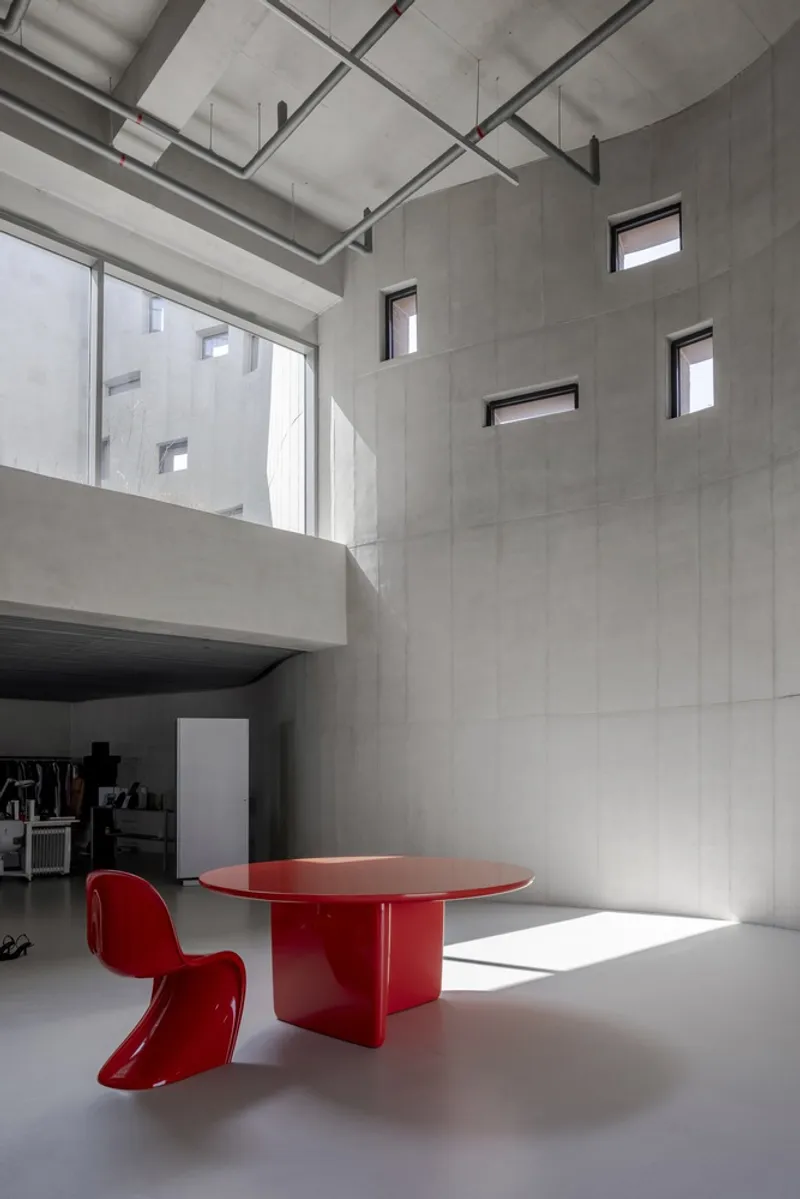
Technical Overview
- Location: Seongdong-gu, Seoul, South Korea
- Area: 9,483 m²
- Year: 2024
- Architects: BCHO Partners + Behet Bondzio Lin Architekten
- Lead Architects: Yu-Han Michael Lin, Byoungsoo Cho
- Structural Engineers: Eun Structural Engineering Co., Ltd.
- Landscape Design: Landscape Design Studio KnL
- Construction: Janghak Engineering & Construction Co., Ltd.
Architecture That Weaves Community
The W-Mission Headquarters exemplifies how architecture can weave together tradition, technology, spirituality, and urban life. Through its sculptural brick façade, layered programmatic organization, and light-filled interiors, the building transforms the idea of a corporate headquarters into a vertical sanctuary embedded within the city.
It is not merely an office building, it is an architectural narrative shaped in brick and light.
All photographs are works of
YuChen Chao Photography



Popular Articles
Popular articles from the community


Co-life: Sustainable Architecture for Age-Friendly Community Living
Co-life reimagines sustainable architecture for seniors through courtyards, rammed earth, shared gardens, and spaces designed for belonging.

The Earth Pod: 3D Printed Homes for Resilient Refugee Communities
The Earth Pod reimagines refugee housing through 3D printed homes made from clay, combining resilience, self-sufficiency, and rapid shelter.

Conexión: Biophilic Design Reimagines High-Rise Living in Hong Kong
Conexión reimagines high-rise living in Hong Kong through biophilic design, green facades, shared spaces, daylight, water and nature within.

Play: Fragments of Their World
Familiar architecture becomes modular playground design, creating safe spaces where displaced children can learn, connect, imagine and play.

Similar Reads
You might also enjoy these articles

FAMM Arquitectura Organizes Ten Villas Around Courtyards and Jungle in Nosara, Costa Rica
El Molino pairs two elongated volumes with deep overhangs and timber louvers to build a compact coastal community five minutes from the beach.
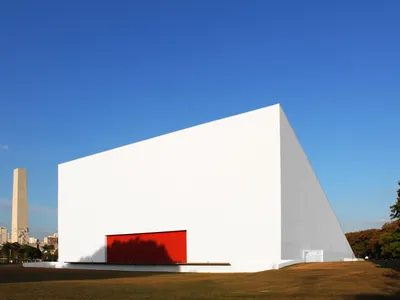
Oscar Niemeyer's Ibirapuera Park Pavilions Define São Paulo's Cultural Identity in Concrete and Curve
A constellation of modernist volumes set within São Paulo's most important urban park, conceived for the city's 400th anniversary in 1954.
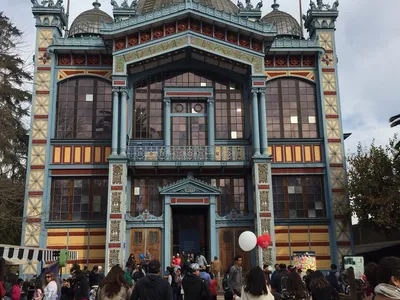
How Henri Picq's 1889 Paris Pavilion Traveled 11,000 Kilometers to Become Santiago's Artequín Museum
A prefabricated iron and glass pavilion built for the Paris Universal Exposition found a second life as a children's art museum in Chile.
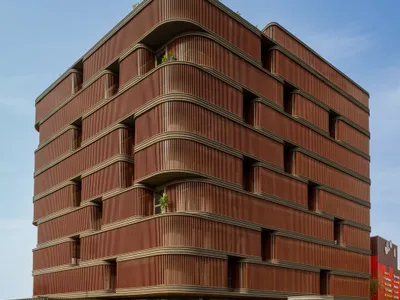
Sanjay Puri Architects Wraps a Jaipur Office Tower in Capsule-Shaped Green Buffers
A nine-level climate-responsive workplace near Jaipur Airport uses stacked planter terraces and aluminium screens to fight 40°C heat.

Explore Aotu Architecture Office Competitions
Discover active competitions in this discipline



Challenge to reimagine the Iron Throne


Photograph architecture without architects


Illustrate the lost glory of Angkor Wat - Render Challenge


Design challenge to reuse E-waste
Comments (0)
Please login or sign up to add comments
No comments yet. Be the first to comment!