
Walker Hall Graduate Student Center – LMS Architects
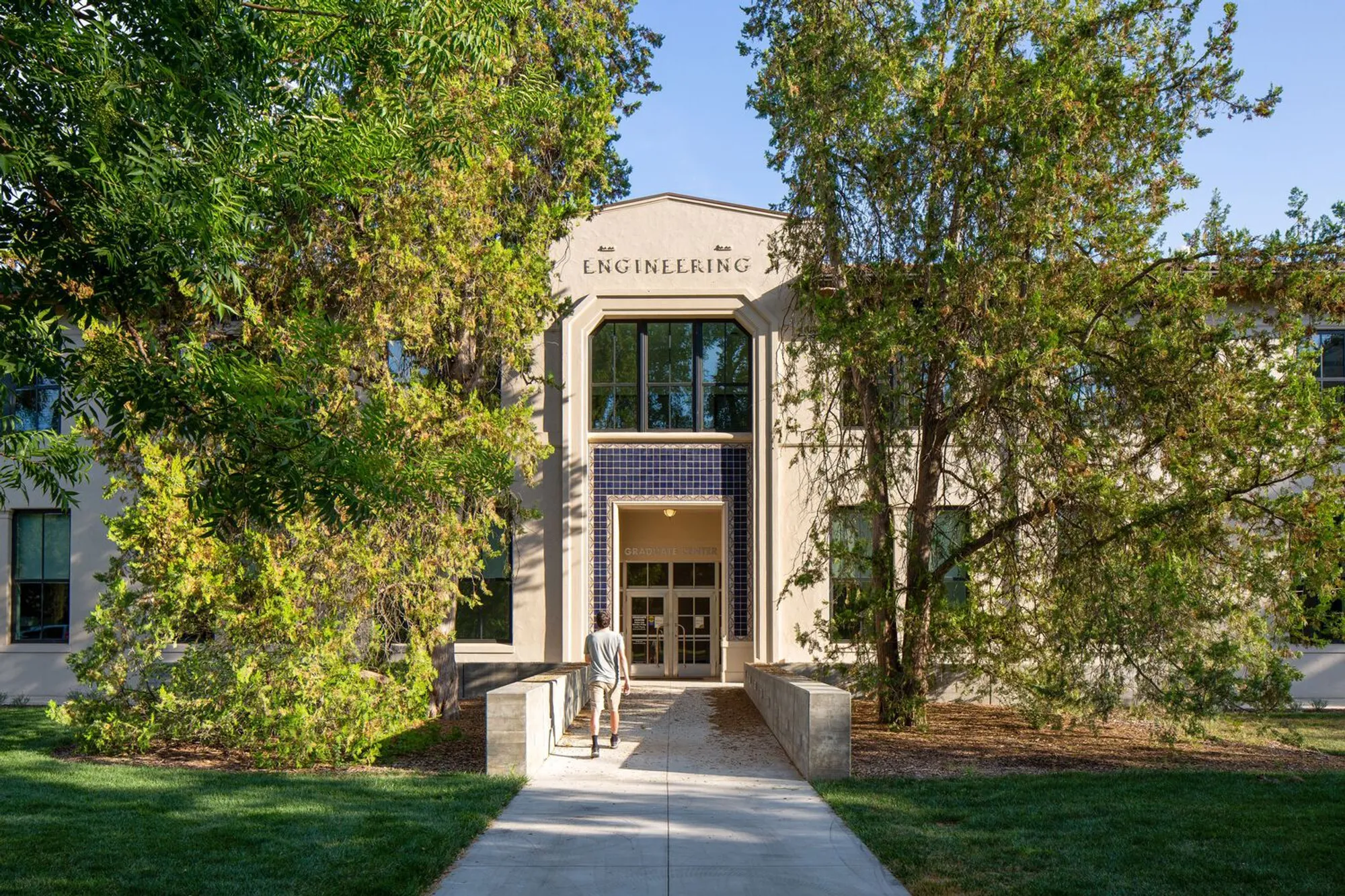
Walker Hall Graduate Student Center at UC Davis transforms a historic 1927 building into a sustainable, collaborative hub for graduate students.


A Historic Building Reborn
The Walker Hall Graduate Student Center at the University of California, Davis, designed by Leddy Maytum Stacy Architects (LMS Architects), is a landmark example of adaptive reuse in higher education architecture. Originally built in 1927, Walker Hall was once home to the university’s agricultural engineering program. Over the decades, however, the building became unsafe and fell into disuse. Today, after an ambitious transformation, it serves as a vibrant hub for graduate and professional students, blending history, innovation, and sustainability.
Historical Legacy of Walker Hall
Walker Hall is among the earliest buildings on the UC Davis campus. The 34,000-square-foot structure was designed in a Spanish-style layout, with a north-facing two-story wing for classrooms and offices, and three large south-facing wings for agricultural research workshops. These spaces once hosted hands-on experimentation in farming machinery, making the building central to the university’s agricultural identity.
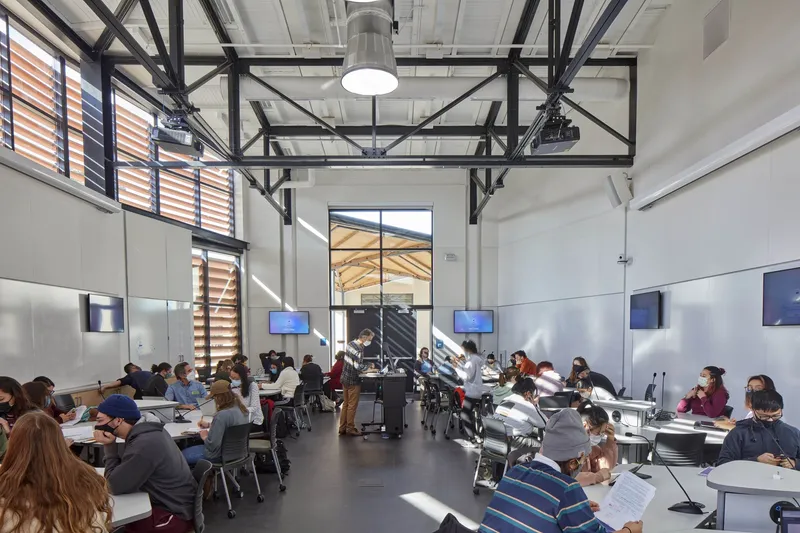
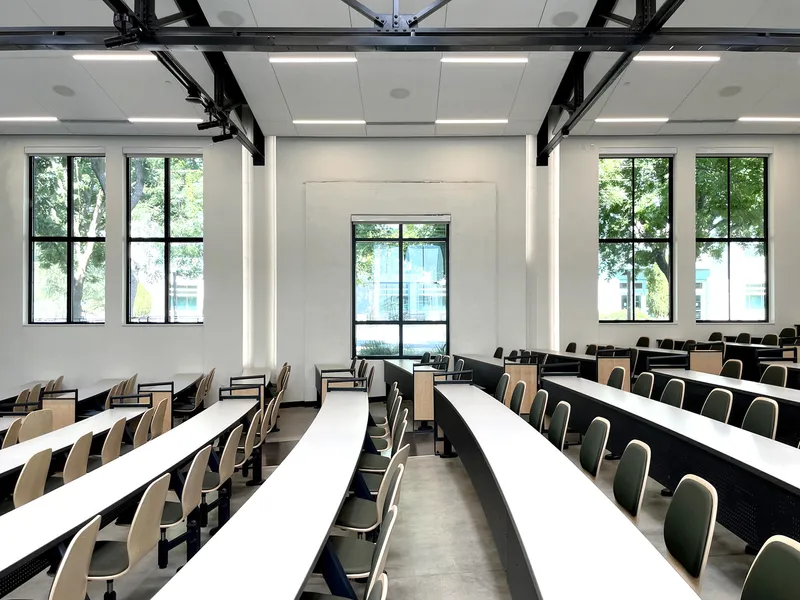
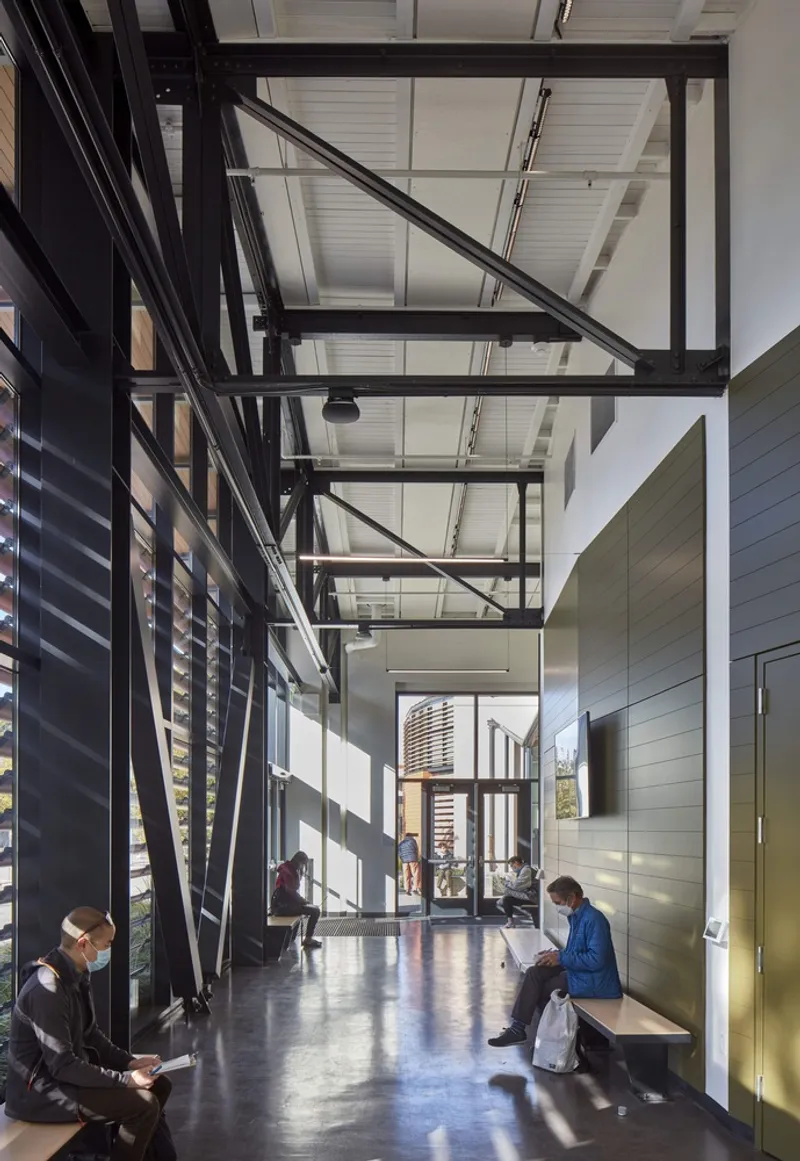
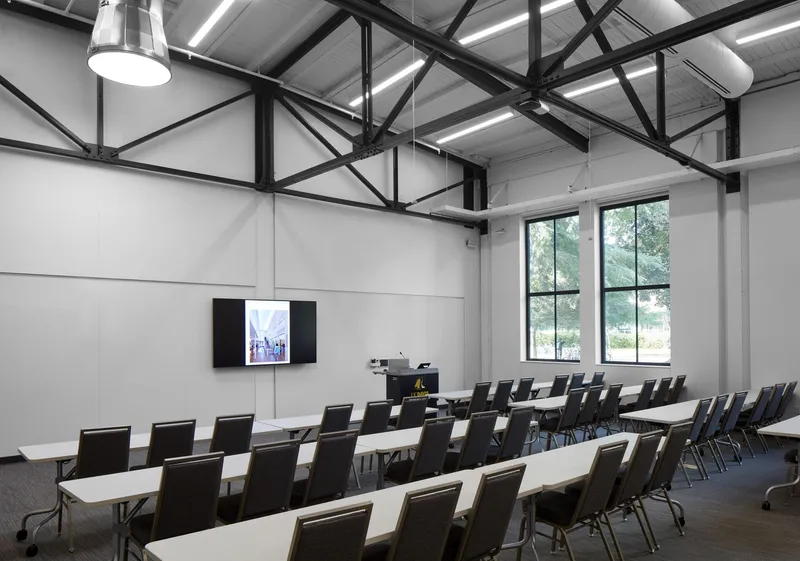
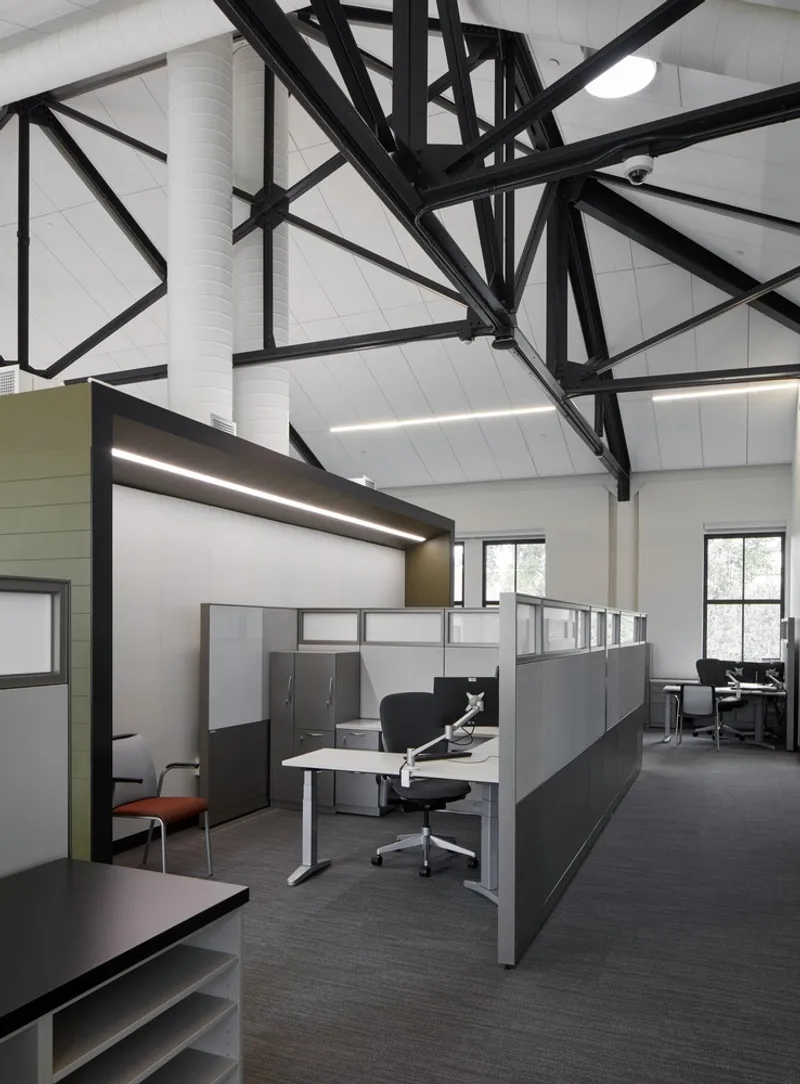
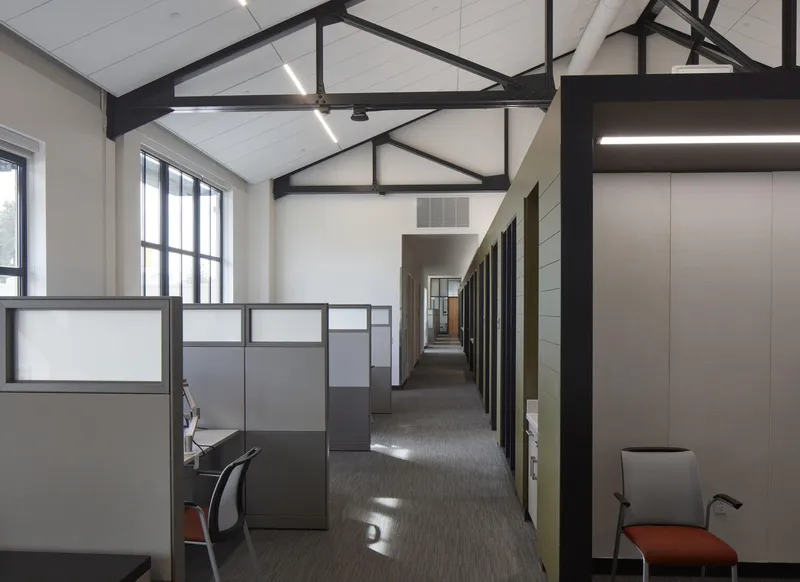
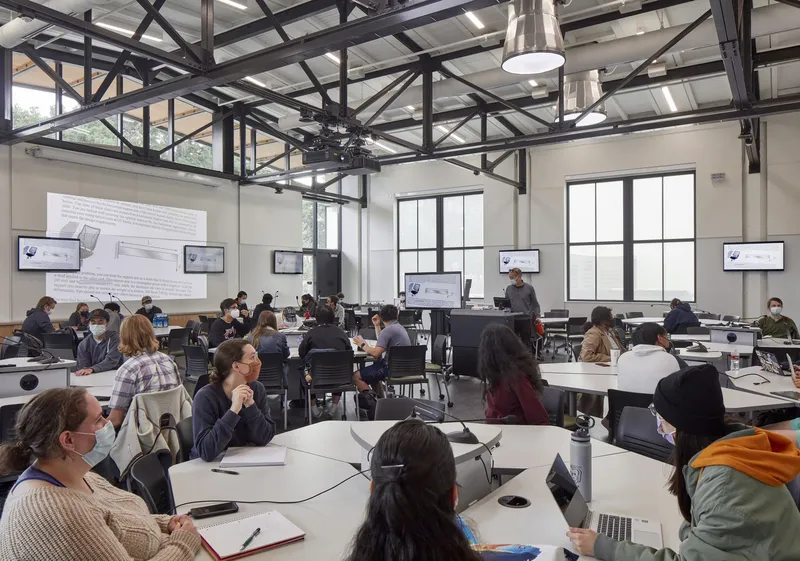
By retaining its structural steel trusses, concrete columns, and authentic finishes, the renovation honors the building’s industrial heritage while redefining its role in the 21st century.
Transformation into a Graduate Student Center
The renewed Walker Hall now houses a variety of academic, social, and professional facilities:
- A 200-seat lecture hall and two flexible general-assignment classrooms equipped with advanced digital technologies.
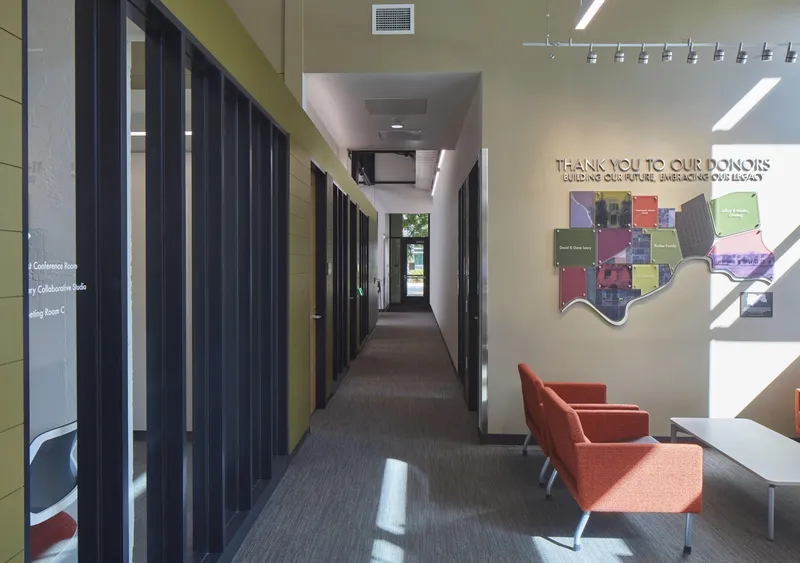
- A graduate student lounge, multipurpose meeting rooms, and study areas for collaborative learning.
- Counseling and advising offices, including mental health and financial support services, prioritizing student well-being.
- Administrative spaces for academic support and mentorship programs.
The design reflects a commitment to building a strong graduate student community—a population that makes up just 20% of the total student body but plays a vital role in advancing the university’s research mission.
Sustainable and Resilient Design
Walker Hall is not only an academic hub but also a model of sustainable campus architecture. The building underwent a full seismic retrofit, ensuring long-term safety while integrating modern building performance systems.
Key sustainability features include:
- High-performance thermal insulation and energy-efficient systems.
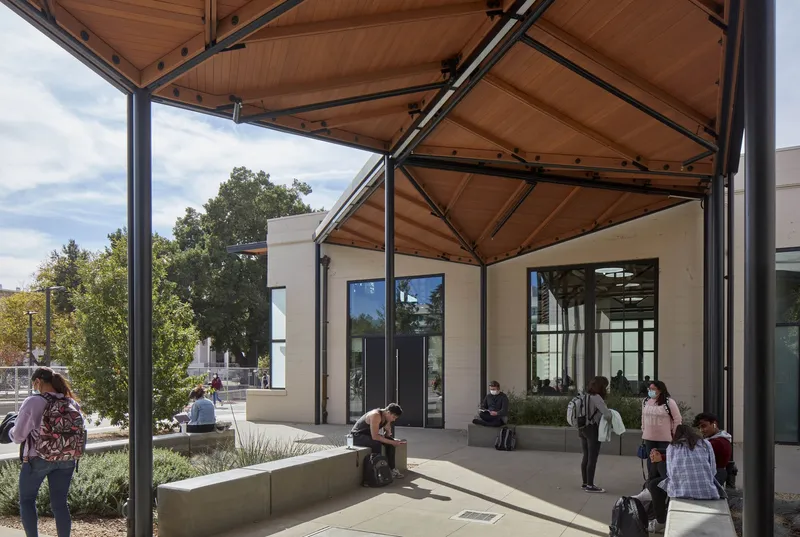
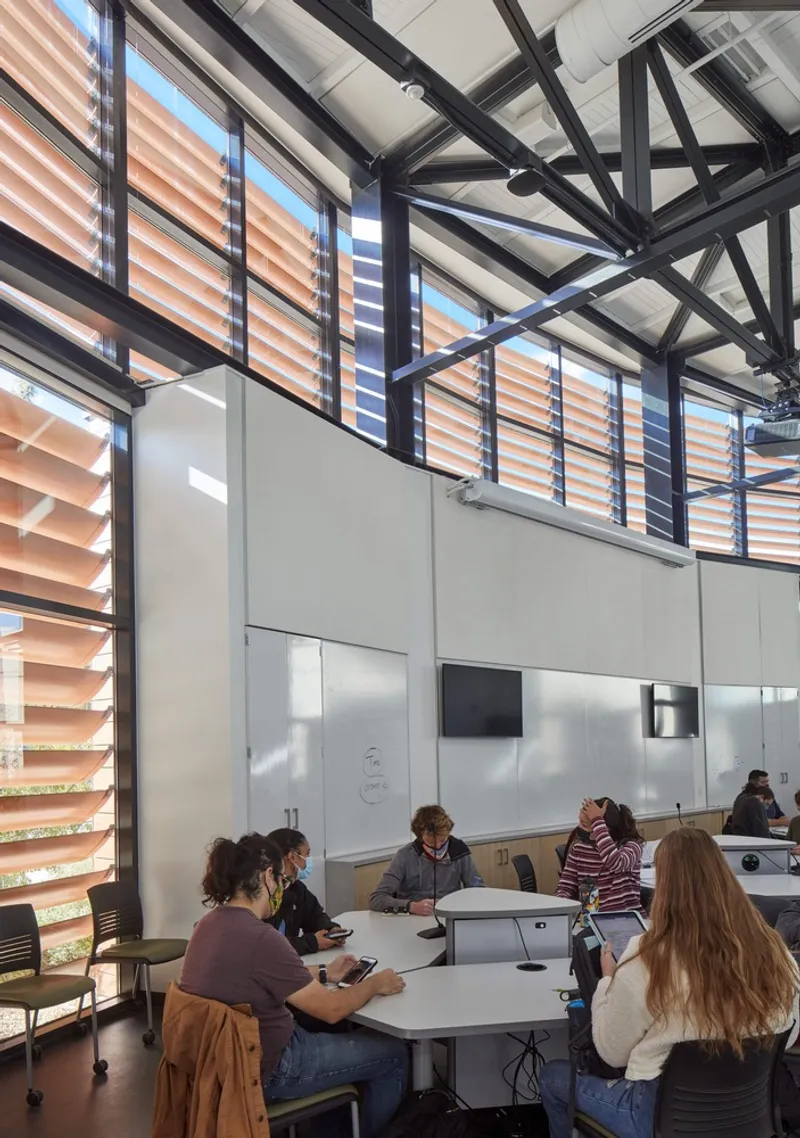
- Steel sunshades, daylight collectors, and geometrically folded canopies that reduce heat gain while enhancing natural light.
- Renewable energy integration, with power supplied by the UC Davis solar farm.
These strategies enabled the building to achieve LEED Platinum certification and operate as a net-zero electricity facility, setting a new standard for university campus design in California’s Central Valley.
Blending Past and Future
Architecturally, Walker Hall balances heritage and innovation. Large shaded openings allow natural ventilation while showcasing activity within. At night, the building glows softly, symbolizing the exchange of knowledge within. Sculptural staircases, steel detailing, and adaptive facades demonstrate how an abandoned structure can evolve into a modern academic landmark.
A Symbol of Academic Renewal
The Walker Hall Graduate Student Center exemplifies how adaptive reuse can enrich higher education campuses, breathing new life into historical buildings while supporting future generations. By combining history, sustainability, and advanced learning environments, LMS Architects have created a dynamic center that reflects both the traditions and aspirations of UC Davis.
All Photographs are works of Jeff Marsch, Bruce Damonte, Richard Barnes




Popular Articles
Popular articles from the community


Co-Life: Senior Housing Design That Reconnects Older Adults With the City
Co-Life reimagines senior housing design through healing gardens, shared streets, workshops, and a sustainable community across generations.

Play: Fragments of Their World
Familiar architecture becomes modular playground design, creating safe spaces where displaced children can learn, connect, imagine and play.

The Musturak Paradise: Senior Living Architecture for a Connected Future in Temara, Morocco
The Musturak Paradise reimagines senior living architecture in Temara via private homes, social spaces, culture, community, and shared care.

Conexión: Biophilic Design Reimagines High-Rise Living in Hong Kong
Conexión reimagines high-rise living in Hong Kong through biophilic design, green facades, shared spaces, daylight, water and nature within.


Similar Reads
You might also enjoy these articles


Hodi-Mandai Geram
Project Function: Preservation and revitalization of the Intangible heritage and socio-spatial identity of the Hodi by Housing, Cultural Memory Center, Sacred Grove, landscape, local tourism economy


Olio Towers: A Mid-Rise for Performers That Fuses Housing, Rehearsal, and Stage
Located blocks from Houston's Theater District, this modular tower stacks living units around a central performance atrium.

Oasis: Modular Green Housing Carved into Dhaka's Urban Fabric
A shortlisted Plugin Housing entry reclaims unauthorized settlements in Dhaka with stepped concrete volumes, green roofs, and ventilation-driven design.

Black Hole: A Floating Megastructure for the Post-Physical Era
Emiliano Mazzarotto envisions a spherical, self-scaling arena where e-sports, digital hotels, and holographic stadiums replace traditional public space.


Explore Academic Building Competitions
Discover active competitions in this discipline



Challenge to design public laboratory


Challenge to reimagine the Iron Throne


Photograph architecture without architects


Illustrate the lost glory of Angkor Wat - Render Challenge
Comments (0)
Please login or sign up to add comments
No comments yet. Be the first to comment!