
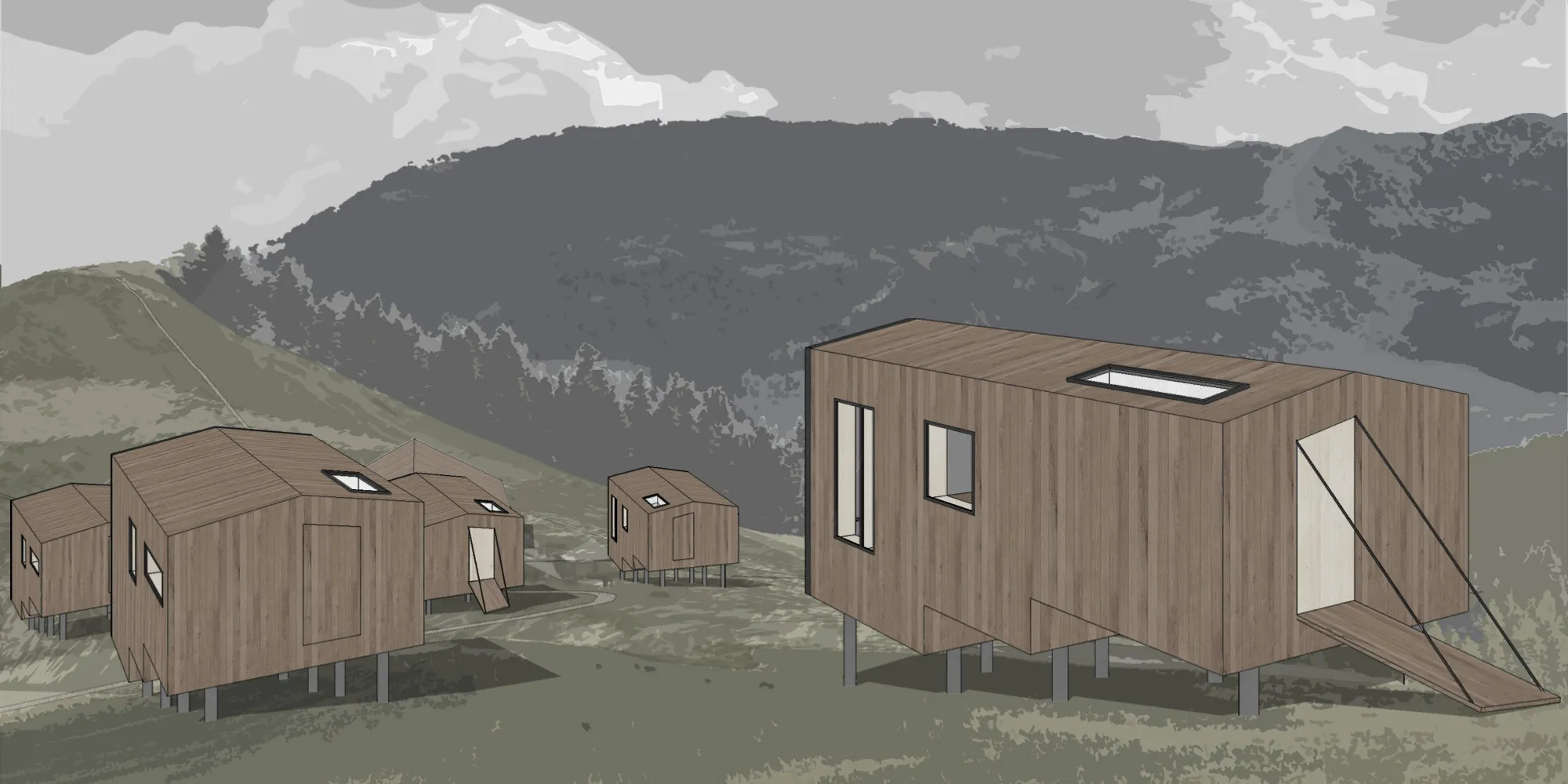
Wandering Pods - Swiss Alps
Nestled in the stunning Swiss Alps, the Wandering Hut is a unique and sustainable retreat that offers the perfect escape from the hustle and bustle of daily life.

One of the primary considerations for this architecture was functionality. It was designed to meet the specific needs of its users and the environment. The design of the hut is compact and efficient, with a minimalistic interior that maximizes functionality and comfort. The focus is on creating a connection between the inside and outside, with large windows and an open floor plan allowing plenty of natural light and fresh air.
Sustainability is a key component of the Wandering Hut design. The structure is constructed using regional resources, with the primary building material being wood. This not only reduces the carbon footprint of the project but also ensures that the materials used are sourced locally and have a minimal impact on the environment. The use of renewable construction methods, such as prefabrication and modular construction, also reduces waste and minimizes the impact on the surrounding environment.
The exterior of the Wandering Hut is clad in natural wood, which not only adds on to the aesthetic appeal of the structure but also serves as a durable and sustainable building material. The interior is also constructed using natural wood, creating a warm and inviting atmosphere that complements the natural surroundings. The use of wood as a primary material not only creates a connection between the inside and outside but also has natural insulating properties, ensuring that the structure remains comfortable and energy-efficient.
One of the unique features of the Wandering Hut is its connection to the surrounding environment. Large windows and an open floor plan allow for plenty of natural light and fresh air to flow through the structure, creating a seamless transition between the inside and outside. The design also incorporates outdoor living spaces, such as a deck and a garden, which encourage occupants to spend time in the natural surroundings and connect with nature.
The interior of the Wandering Hut is designed to maximize functionality and comfort. The space is minimalistic and efficient, with a focus on creating a sense of calm and tranquility. The primary living area is an open-plan, with a compact kitchen, dining area, and living space. The space is designed to be multifunctional, with furniture that can be easily moved and stored, depending on the occupant's needs. The use of natural materials, such as wood, adds to the aesthetic appeal of the interior and creates a warm and inviting atmosphere.
The sleeping area of the Wandering Hut is located on a mezzanine level, which provides a sense of privacy and separation from the living space. The sleeping area is designed to be comfortable and functional, with a spacious bed and storage space for clothing and personal items. Large windows in the sleeping area allow for stunning views of the natural surroundings, creating a peaceful and restful environment.
The bathroom in the Wandering Hut is compact but functional, with a shower, toilet, and sink. The bathroom also incorporates sustainable features, such as a composting toilet and a greywater recycling system, minimizing the impact on the environment.
The Wandering Hut is designed to be energy-efficient, with a focus on minimizing the environmental impact. The structure is powered by solar panels, which provide all the necessary electricity for lighting and appliances.


Popular Articles
Popular articles from the community


Co-Life: Senior Housing Design That Reconnects Older Adults With the City
Co-Life reimagines senior housing design through healing gardens, shared streets, workshops, and a sustainable community across generations.

The Ocean Hive: Sustainable Architecture for a Self-Sufficient Civilization at Sea
The Ocean Hive imagines sustainable architecture at sea, where modular habitats, algae, wave power and ocean waste sustain a growing colony.

Lunar Spiral: Space Architecture Shaped by the Mathematics of the Universe
Lunar Spiral reimagines space architecture through Fibonacci geometry, lunar regolith, levitating habitats, and self-sustaining Moon living.

Conexión: Biophilic Design Reimagines High-Rise Living in Hong Kong
Conexión reimagines high-rise living in Hong Kong through biophilic design, green facades, shared spaces, daylight, water and nature within.

Similar Reads
You might also enjoy these articles

Day and Night Park: A Time-Based Urban Newsstand in Beijing
A temporary urban newsstand in Beijing blending travel, light, and reading through poetic colors, compact form, and community-focused design.

Modernist Patio Renovation in El Masnou, Barcelona by Oliver Segura Arquitectura + Cebrià Arquitectura
Modernist patio renovation blending tradition and innovation with a movable pool, leveled floors, and Catalan materials in El Masnou.

Alto Residencial Coop: Cooperative Housing Development in Santiago de Compostela by Carbajo Barrios Arquitectos
A linear cooperative housing complex blending white volumes and perforated metal façades, enhancing community living, natural light, privacy, and urban integration.
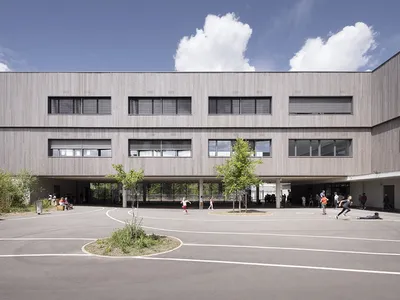
Vil Genis School by BPA ARCHITECTURE – Massy, France
Vil Genis School in Massy, France, features sustainable design, south-facing classrooms, community integration, accessible spaces, and modern educational architecture.

Explore Sustainable Design Competitions
Discover active competitions in this discipline




Challenge to reimagine the Iron Throne


Photograph architecture without architects


Illustrate the lost glory of Angkor Wat - Render Challenge


Design challenge to reuse E-waste
Comments (0)
Please login or sign up to add comments
No comments yet. Be the first to comment!