
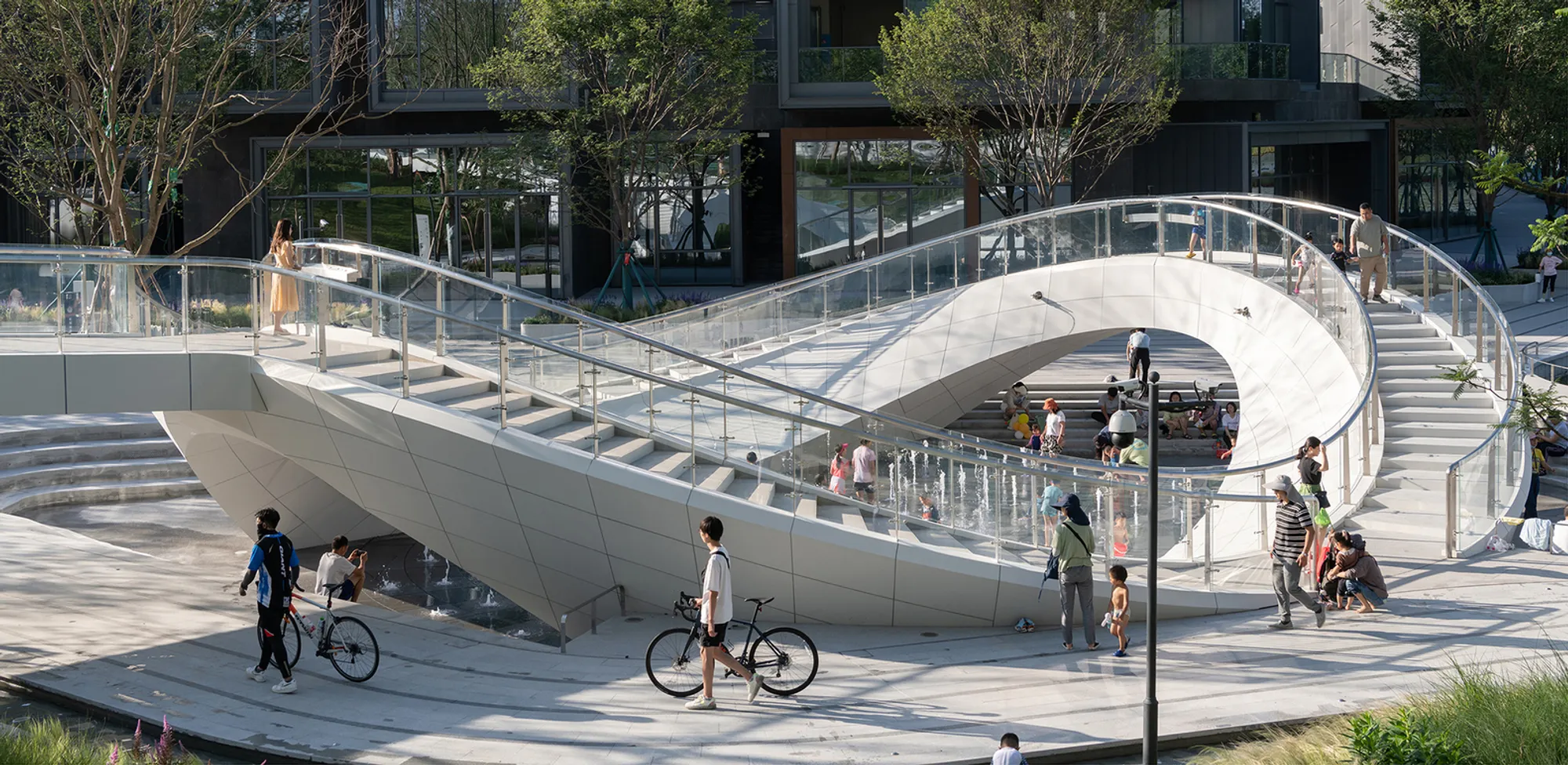
Waterline Park by Lab D+H: Transforming an Urban Gutter into a Vibrant Community Oasis in Chengdu
Waterline Park transforms a neglected urban gutter in Chengdu into a vibrant, water-centered community space promoting ecology and social connection.


Located in the heart of Chengdu, China, Waterline Park is a visionary urban renewal project by Lab D+H, led by architects Zhongwei Li and Nan Lin. Spanning over 48,400 square meters, this ambitious landscape architecture project was completed in 2022, redefining a long-neglected, narrow gutter space surrounded by dense residential buildings into an engaging, multifunctional public park that reconnects the community with nature and each other.
Revitalizing a Forgotten Space
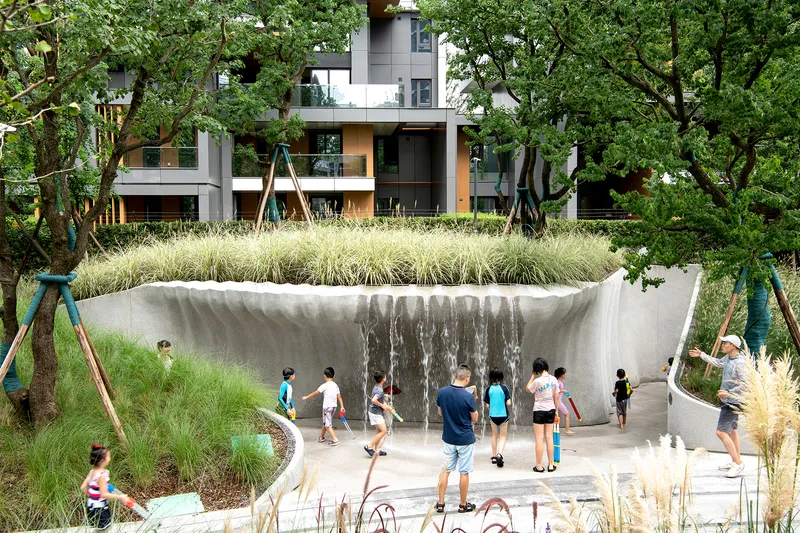
Before the transformation, the site was essentially a 1.5-kilometer-long narrow strip of land, just 40 meters wide at its slimmest point, hemmed in by steep slopes and surrounded by residential blocks. This challenging terrain, combined with its previous state as an overlooked drainage channel, made the site appear uninviting and unusable. Despite this, the area contained valuable water resources from nearby Lu Lake and some green patches, presenting a hidden opportunity to reconnect residents with their environment.
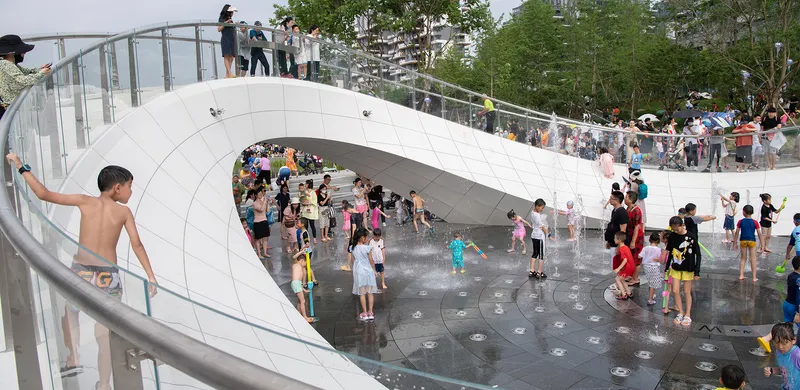
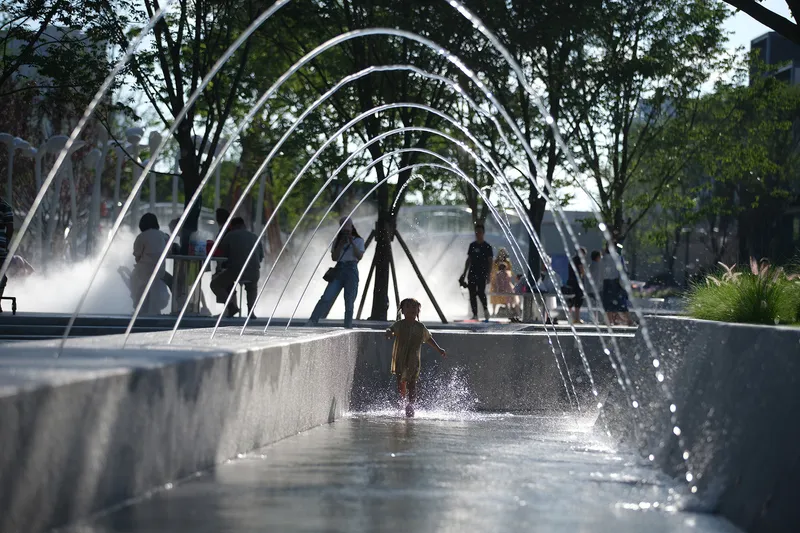
Lab D+H embraced this challenge by prioritizing water as the core design element, turning the site’s biggest hurdle into its greatest asset.
Design Philosophy: Water as the Lifeline
Waterline Park’s design centers on a dynamic, interconnected water system that links four previously fragmented parcels of land, forming a cohesive linear park running through the neighborhood. Inspired by natural landscapes—rivers, valleys, waterfalls, canals, shorelines, and islands—the park’s water features create varied terrains that skillfully handle the site’s elevation changes while providing diverse recreational and ecological functions.
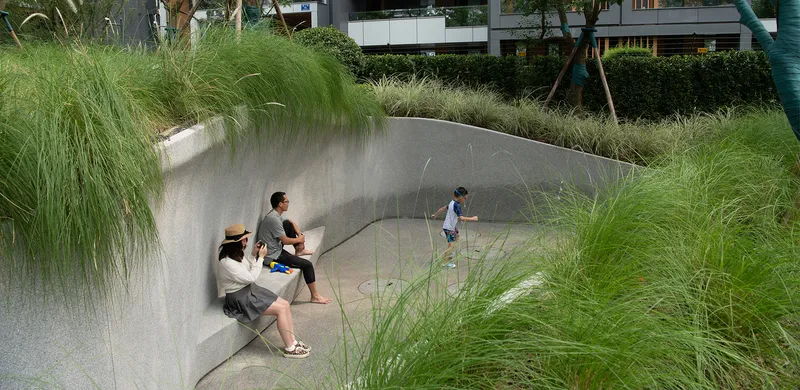
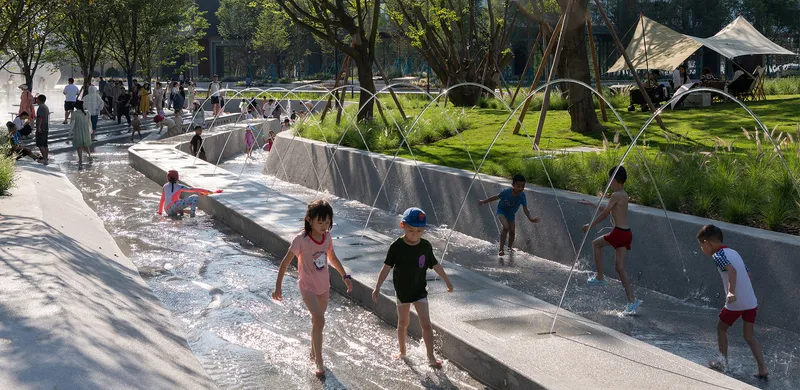
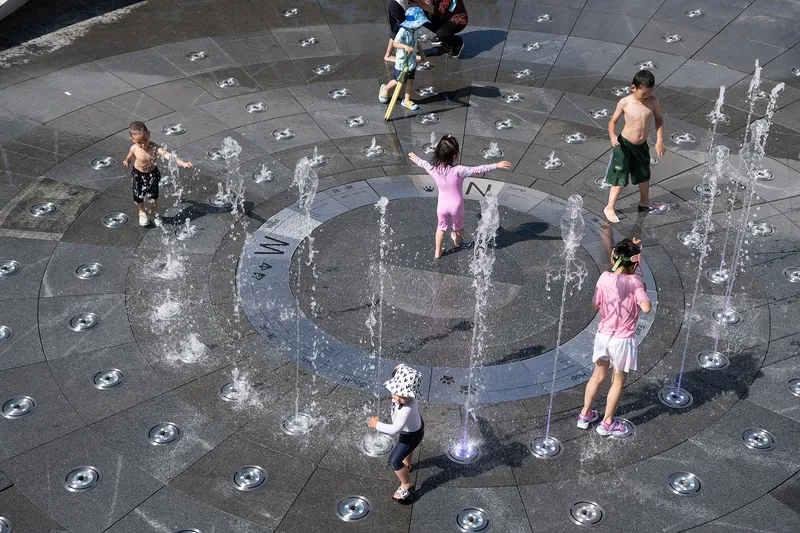
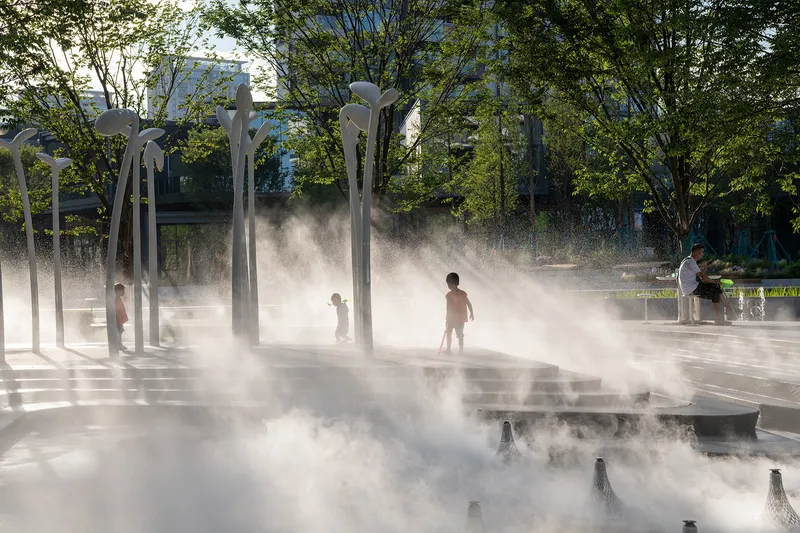
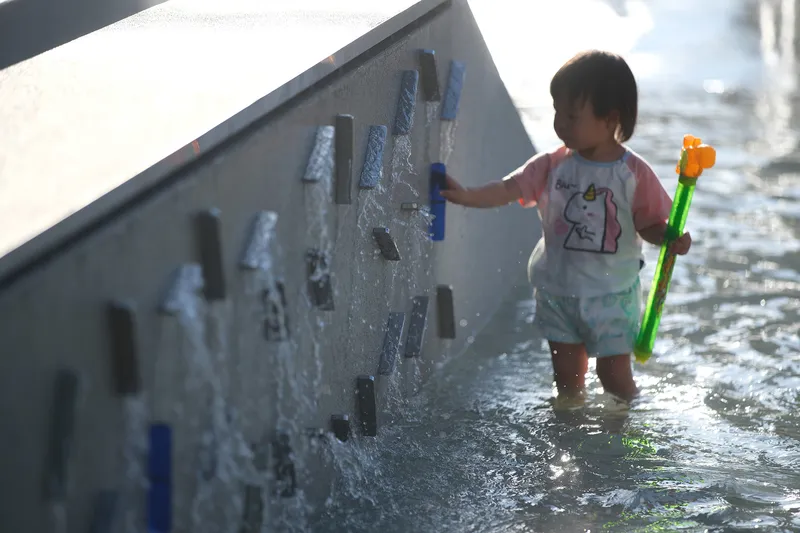
The water system is not only aesthetic but interactive. It offers residents multiple engaging water elements such as shallow pools, gentle streams, and flowing channels where visitors can relax, play, and experience the environment up close. This integration of water invites people to linger and form connections with both nature and their neighbors.
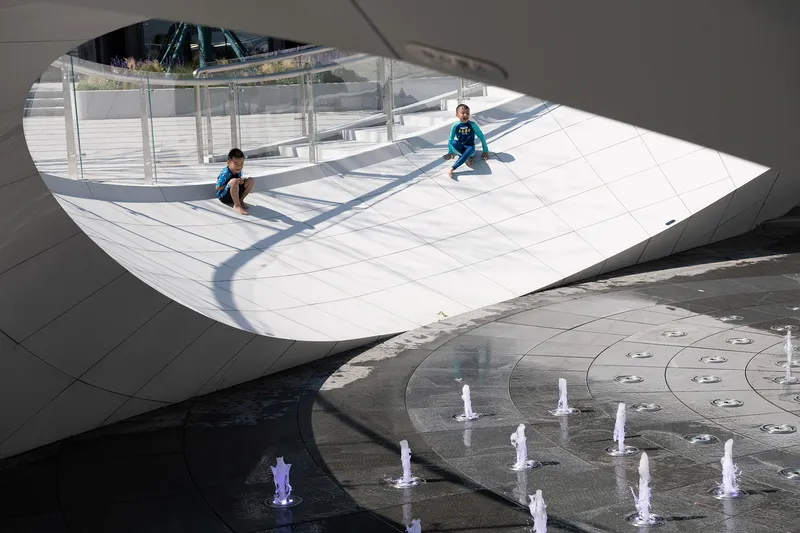
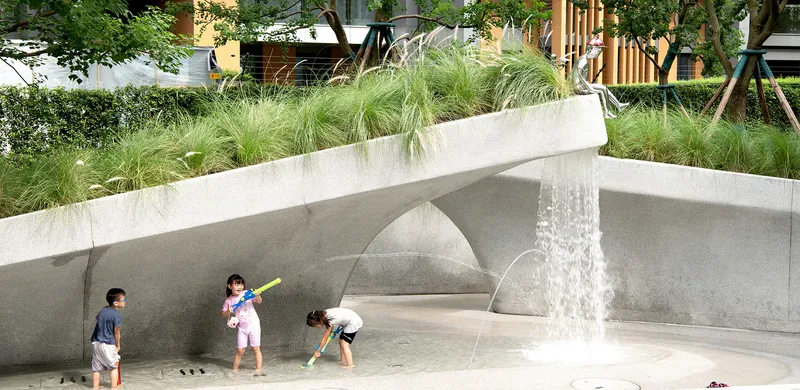
Multifunctional Spaces for Community Connection
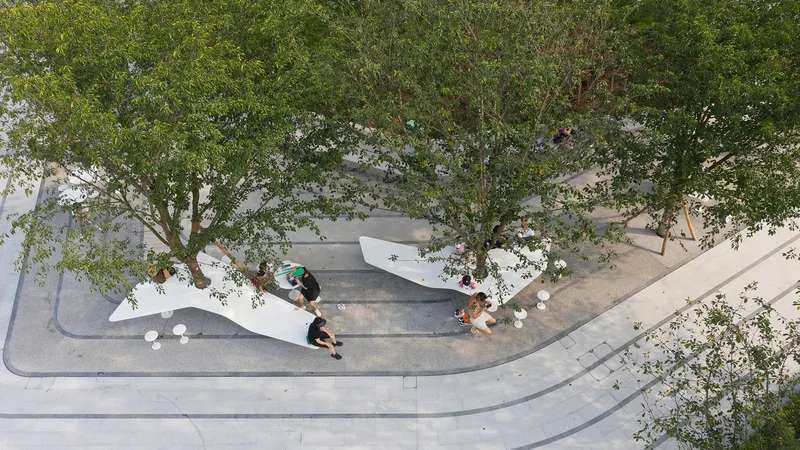
The park extends well beyond a typical green space. Along the water system, strategically designed stopping points offer seating, resting areas, and places for social activities. The park’s topography shifts organically, providing varied spatial experiences and continuous visual interest throughout its length. These features foster a sense of belonging and encourage social interaction among residents, strengthening community bonds.
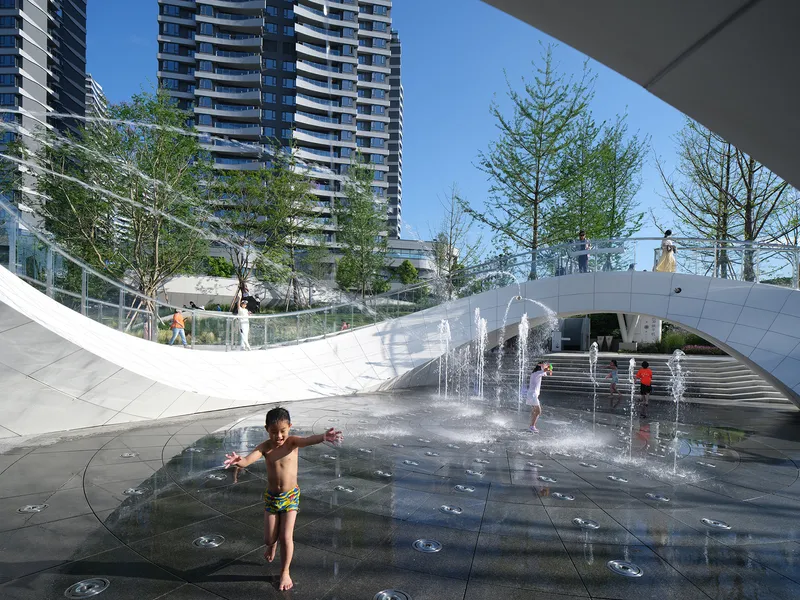
The design supports a diverse range of activities, from casual strolls and quiet contemplation to community events and ecological education. As a public space, Waterline Park elevates the quality of urban living, making it a vibrant neighborhood hub.
Ecological Innovation and Resilience
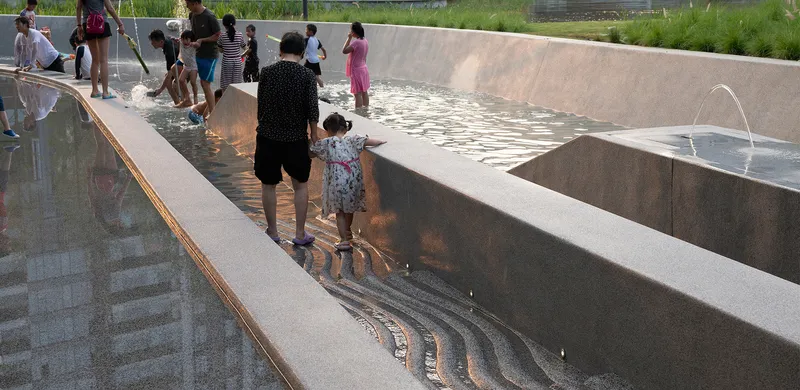
Environmental sustainability is deeply embedded in Waterline Park’s design. Acting as a green urban canyon, the park utilizes the abundant water from Lu Lake to regulate water levels seasonally, adapting to different climatic conditions. The water channels vary in depth and flow speed, creating microhabitats that support biodiversity and enhance ecological balance.
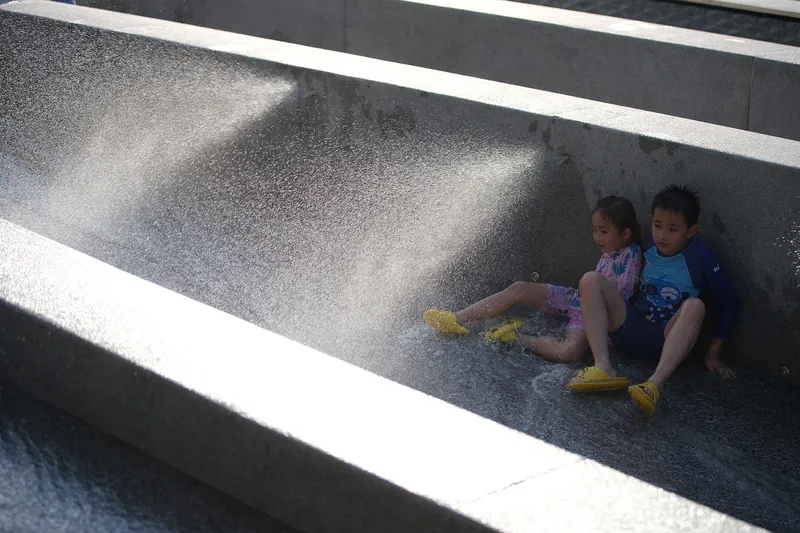
Moreover, the park doubles as a functional rain garden during flood seasons, helping to manage stormwater runoff and prevent urban flooding by facilitating natural water filtration and absorption. This resilience makes Waterline Park an essential ecological asset for Chengdu’s urban landscape.
Impact and Future Expansion
Since its completion, Waterline Park has transformed the local urban environment, offering residents a serene escape from city life while revitalizing the surrounding neighborhood. The park has spurred increased community engagement and has even influenced local housing demand, with more people eager to live near this urban oasis.
Encouraged by this success, plans are underway to develop Sections 3 and 4 of the park over the next three years, promising to expand the benefits of this innovative public space further.
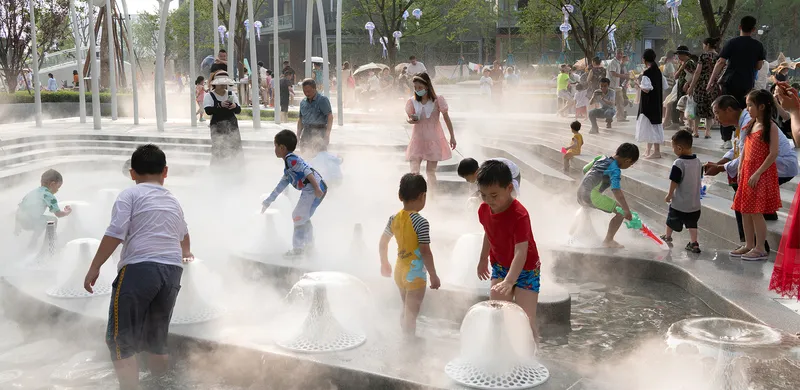
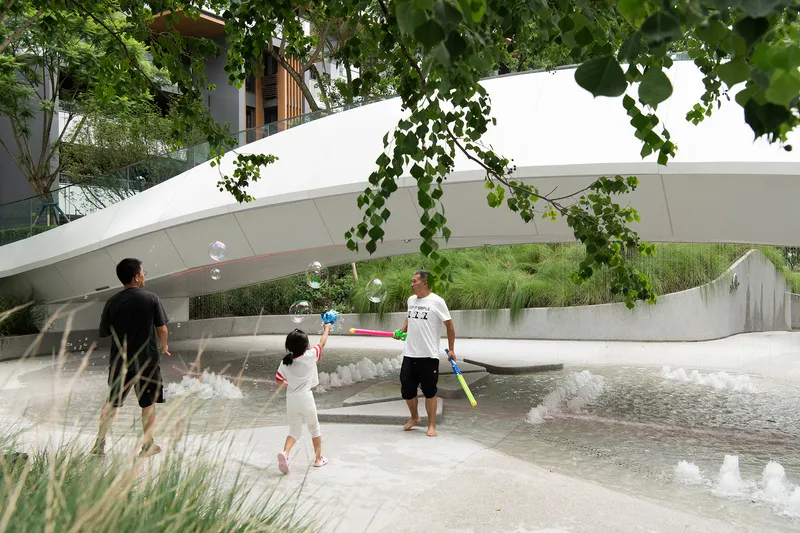
All the photographs are works of Bing Lu, Holi



Popular Articles
Popular articles from the community


Lunar Spiral: Space Architecture Shaped by the Mathematics of the Universe
Lunar Spiral reimagines space architecture through Fibonacci geometry, lunar regolith, levitating habitats, and self-sustaining Moon living.

The Ocean Hive: Sustainable Architecture for a Self-Sufficient Civilization at Sea
The Ocean Hive imagines sustainable architecture at sea, where modular habitats, algae, wave power and ocean waste sustain a growing colony.

The Earth Pod: 3D Printed Homes for Resilient Refugee Communities
The Earth Pod reimagines refugee housing through 3D printed homes made from clay, combining resilience, self-sufficiency, and rapid shelter.

Conexión: Biophilic Design Reimagines High-Rise Living in Hong Kong
Conexión reimagines high-rise living in Hong Kong through biophilic design, green facades, shared spaces, daylight, water and nature within.

Similar Reads
You might also enjoy these articles


Hodi-Mandai Geram
Project Function: Preservation and revitalization of the Intangible heritage and socio-spatial identity of the Hodi by Housing, Cultural Memory Center, Sacred Grove, landscape, local tourism economy


Olio Towers: A Mid-Rise for Performers That Fuses Housing, Rehearsal, and Stage
Located blocks from Houston's Theater District, this modular tower stacks living units around a central performance atrium.

Oasis: Modular Green Housing Carved into Dhaka's Urban Fabric
A shortlisted Plugin Housing entry reclaims unauthorized settlements in Dhaka with stepped concrete volumes, green roofs, and ventilation-driven design.

Black Hole: A Floating Megastructure for the Post-Physical Era
Emiliano Mazzarotto envisions a spherical, self-scaling arena where e-sports, digital hotels, and holographic stadiums replace traditional public space.


Explore Waterscape Competitions
Discover active competitions in this discipline



Challenge to design locus for the upliftment of human rights


Challenge to reimagine the Iron Throne


Photograph architecture without architects


Illustrate the lost glory of Angkor Wat - Render Challenge
Comments (0)
Please login or sign up to add comments
No comments yet. Be the first to comment!