
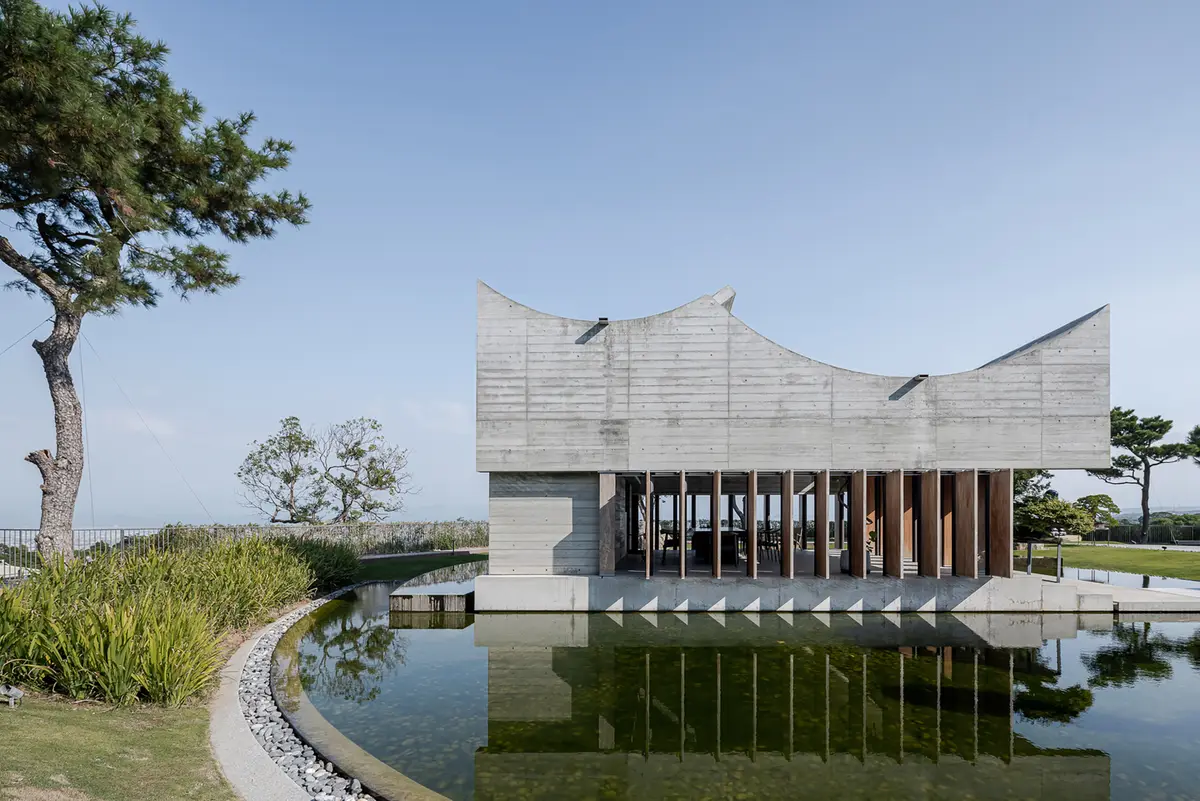
Watermoon Tea House by Behet Bondzio Lin Architekten
Watermoon Tea House blends sustainable design, teak wood, and concrete, harmonizing wind, sunlight, and water for serene Taiwanese tea culture.


Nestled on the serene slopes of Watermoon Mountain in Changhua City, Taiwan, the Watermoon Tea House by Behet Bondzio Lin Architekten is a refined architectural pavilion that harmonizes traditional tea culture with contemporary sustainable design. Completed in 2017 and covering an area of 94 m², the tea house offers a meditative retreat where nature, architecture, and culture converge seamlessly.
A Pavilion Rooted in Nature
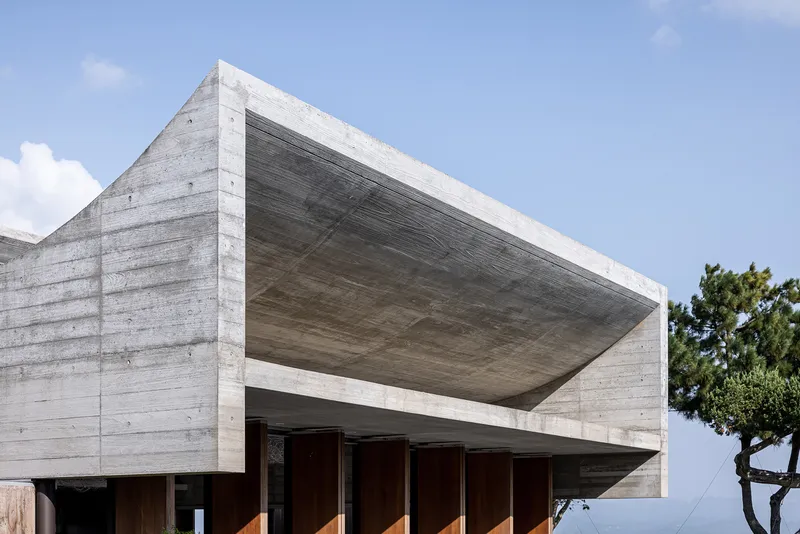
The client envisioned a tea pavilion without artificial air-conditioning, one that could naturally achieve thermal comfort despite its hilltop location. Positioned on an exposed ridge, the site faces intense southern sunlight and strong northeastern winds. The architectural response is both poetic and practical, addressing environmental challenges through form and materiality.
Design Concept and Spatial Experience
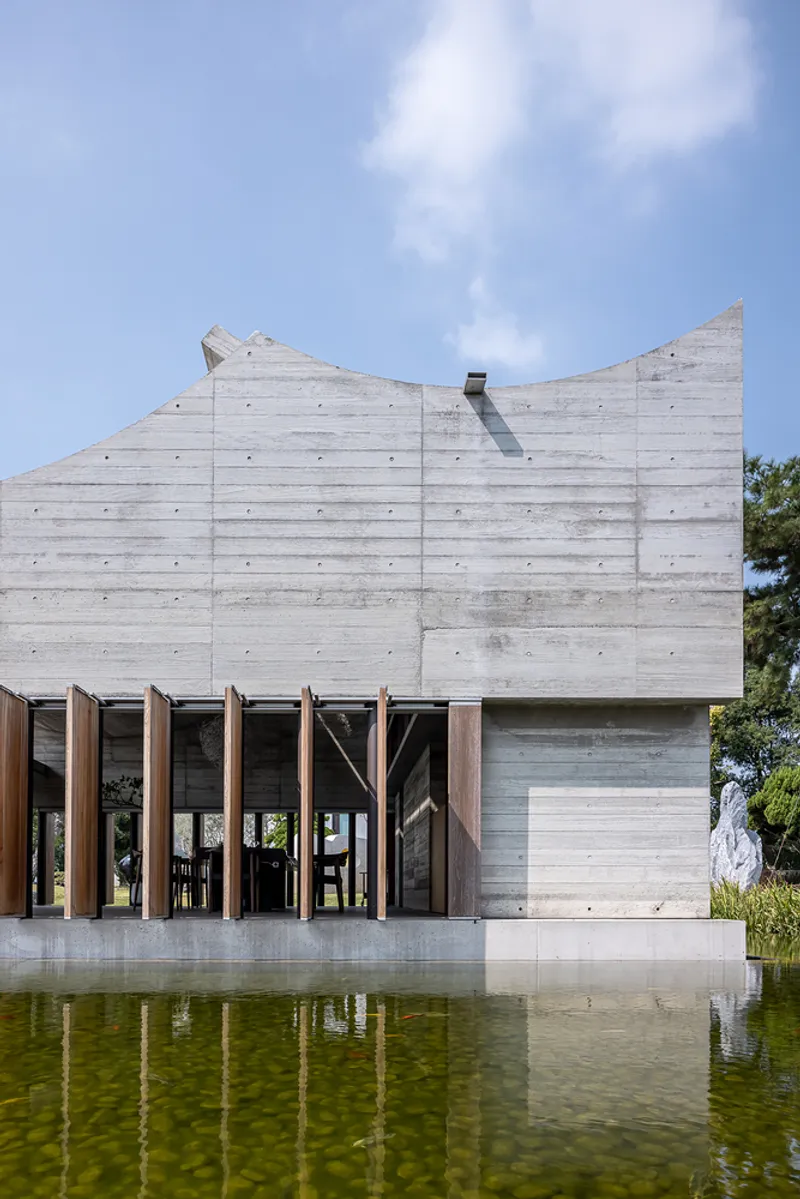
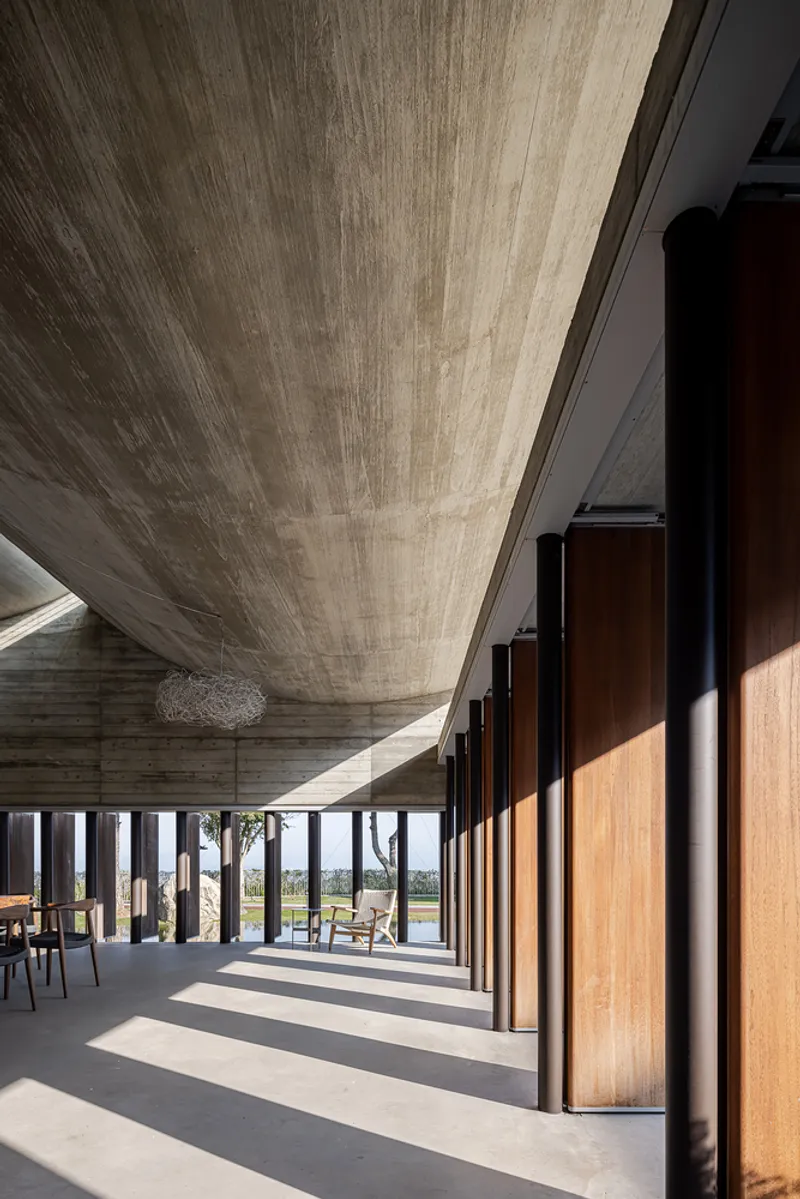
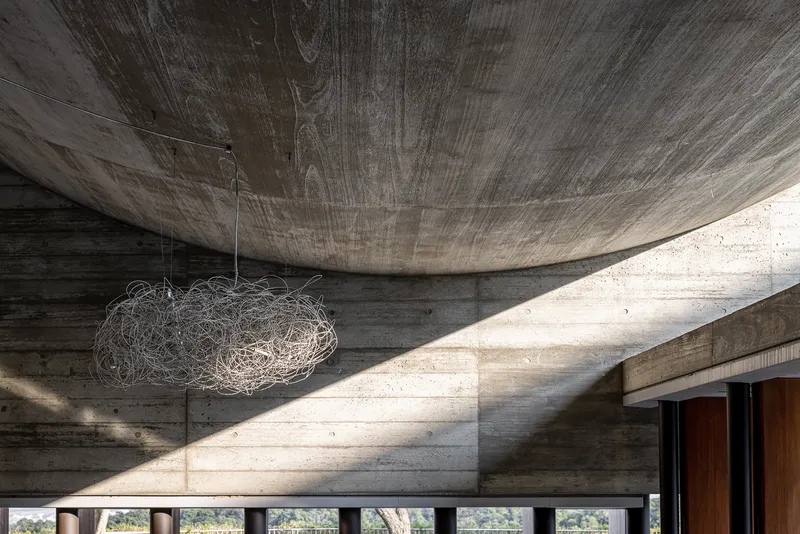
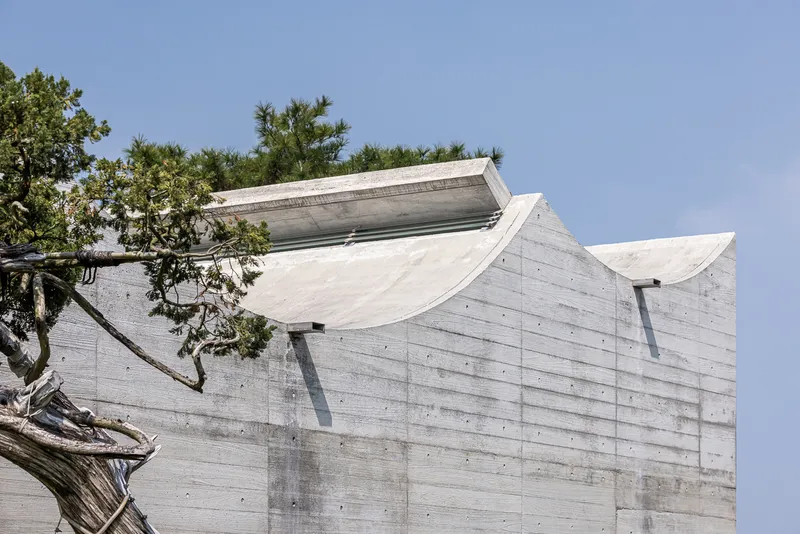
The structure employs two staggered, south-facing curved concrete plates that control airflow and channel a refreshing southern breeze into the pavilion. A horizontal concrete canopy extends outward, shading the entrance platform while allowing winter sunlight to filter through and warm the tea table naturally.
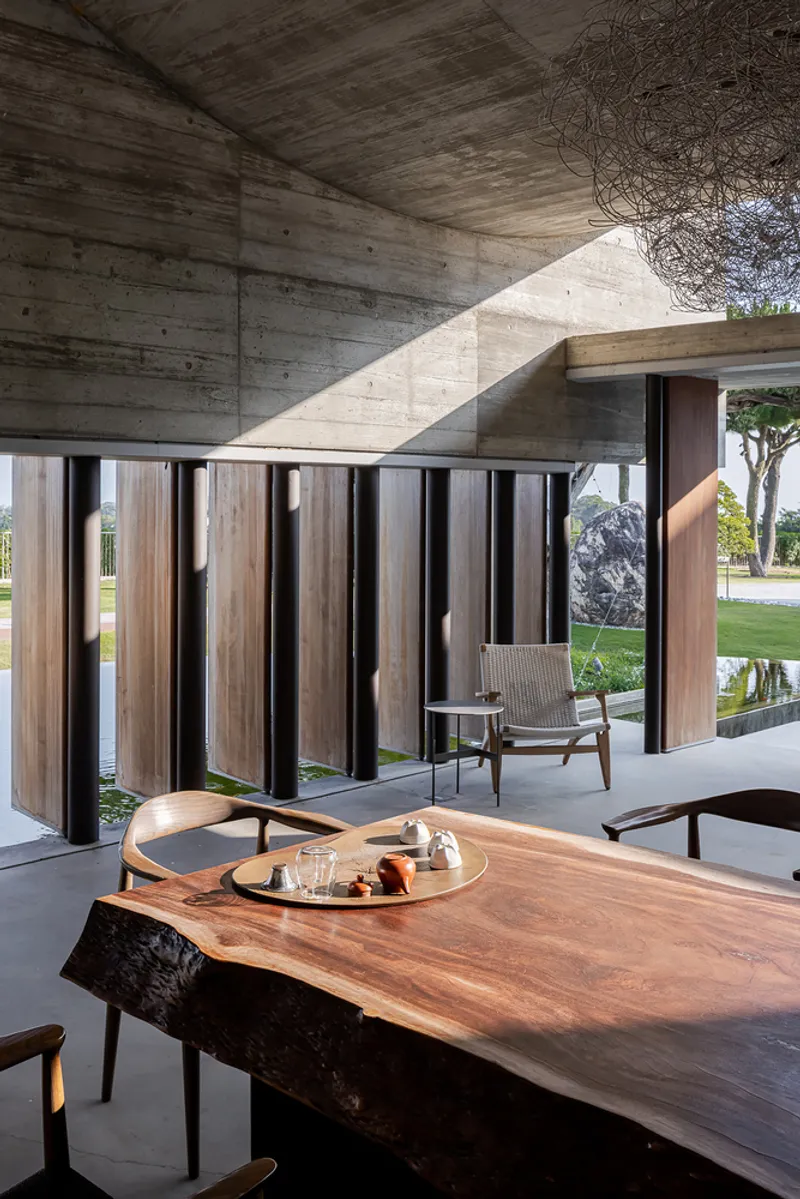
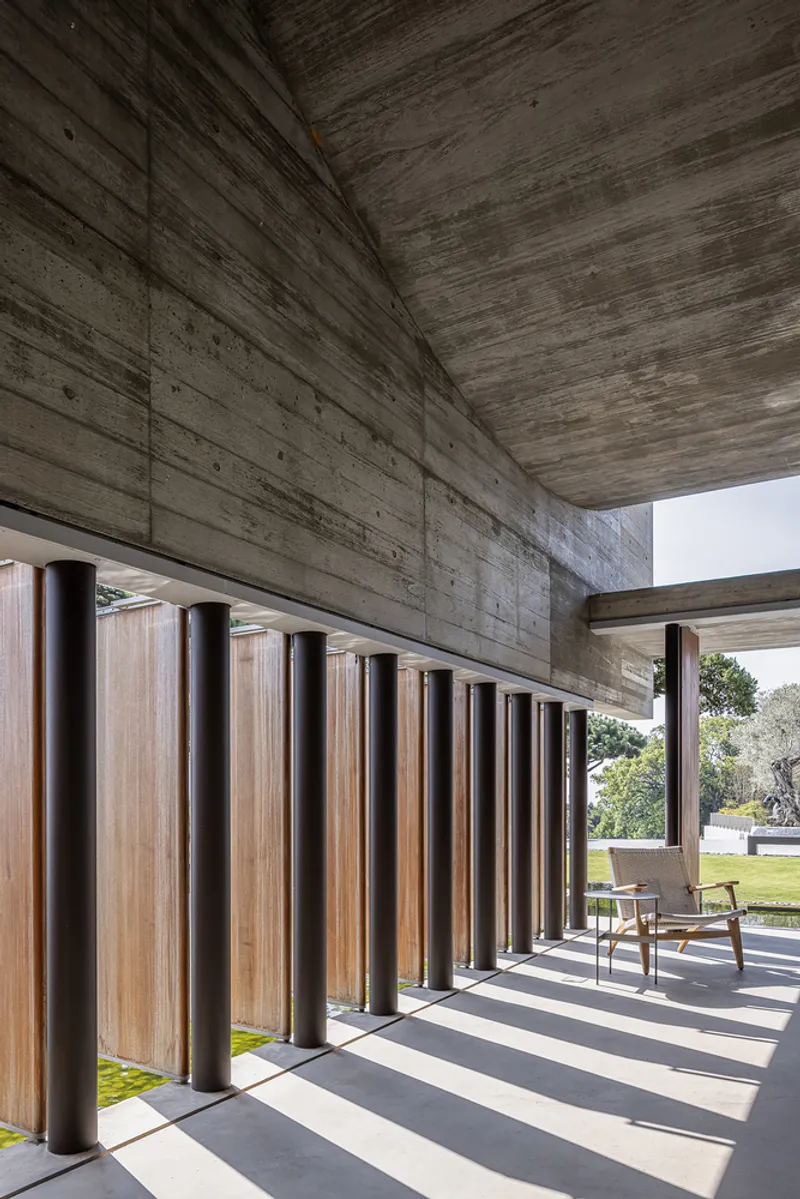
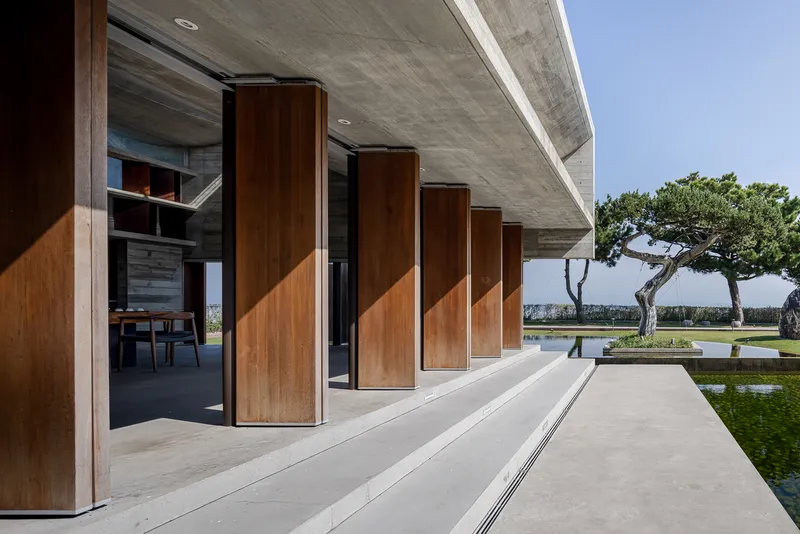
On the northern side, a triangular Burmese Teak lattice façade shields the interior from harsh winds while maintaining visual porosity. Pivoting teak doors along the perimeter allow for flexible ventilation and delicate modulation of light, crafting a dynamic interior atmosphere that changes throughout the day.
Materiality and Craftsmanship
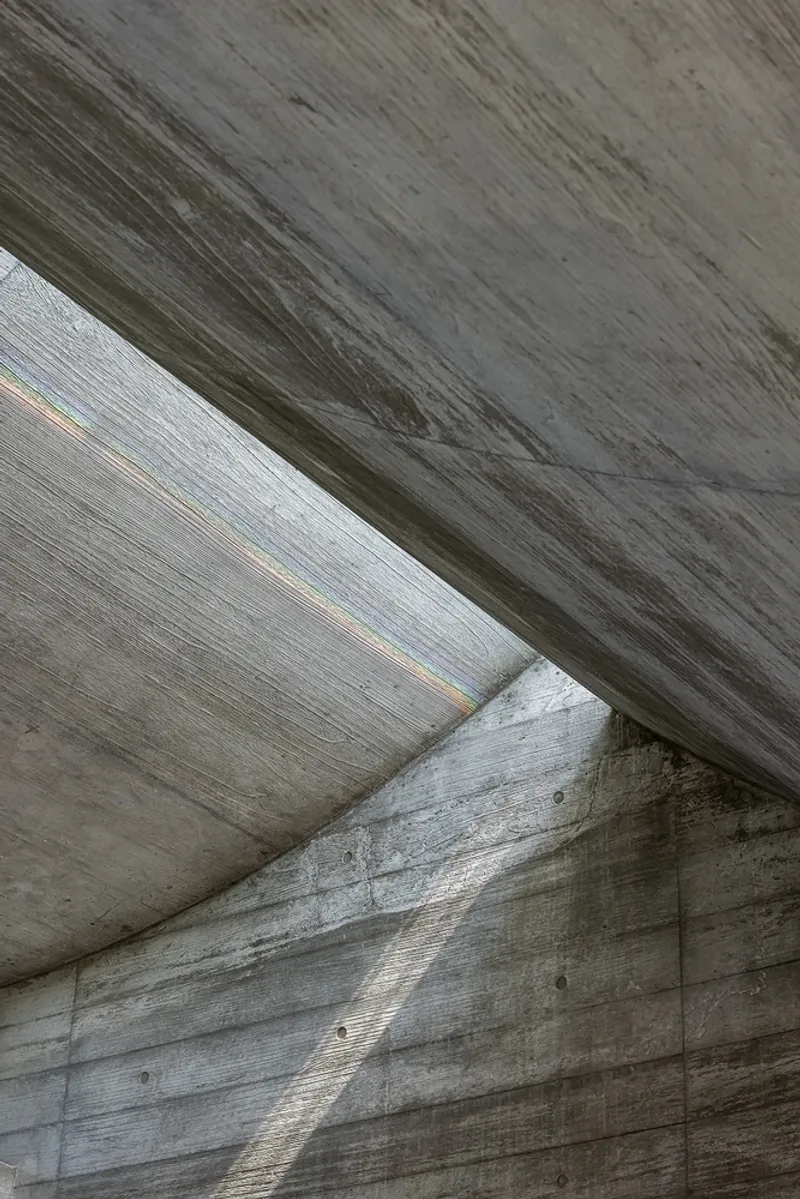
The design emphasizes natural materials—concrete for thermal stability and Burmese Teak wood for warmth and durability. These elements not only enhance environmental performance but also evoke the timeless qualities of traditional Asian tea architecture, where wood, light, and air shape the sensory experience.
Integration with Water and Landscape
Floating like an island within an oval-shaped reflecting pond, the tea house rises gently above the water—60 cm on the east side and 30 cm on the west. This subtle elevation allows water to flow naturally, increasing humidity and cooling the surrounding air in hot seasons. The pond mirrors the pavilion, reinforcing its tranquil and contemplative character, while the surrounding garden and lighting design enrich the meditative atmosphere.
A Contemporary Sanctuary for Tea Culture
The Watermoon Tea House exemplifies a sustainable design approach that blends environmental performance, cultural heritage, and architectural elegance. More than just a functional space, it is a sanctuary for tea ceremonies, offering visitors an immersive connection with landscape, light, wind, and water—all essential elements of Taiwanese tea culture.
All Photographs are works of YuChen Chao Photography


Popular Articles
Popular articles from the community


Hill & Cross Opera: Sculptural Opera House Architecture Shaped by Tallinn’s Landscape and Identity
Hill & Cross Opera reimagines opera house architecture in Tallinn through its sculptural hill, civic plaza, glass wave and a luminous cross.

The Ocean Hive: Sustainable Architecture for a Self-Sufficient Civilization at Sea
The Ocean Hive imagines sustainable architecture at sea, where modular habitats, algae, wave power and ocean waste sustain a growing colony.

Lunar Spiral: Space Architecture Shaped by the Mathematics of the Universe
Lunar Spiral reimagines space architecture through Fibonacci geometry, lunar regolith, levitating habitats, and self-sustaining Moon living.

ALGAL REALM: A Bio-Integrated Lunar Habitat Design for Life Beyond Earth
ALGAL REALM reimagines lunar habitat design with algae-powered life support, 3D-printed regolith, and vertical living for a lunar future.

Similar Reads
You might also enjoy these articles


Hodi-Mandai Geram
Project Function: Preservation and revitalization of the Intangible heritage and socio-spatial identity of the Hodi by Housing, Cultural Memory Center, Sacred Grove, landscape, local tourism economy


Olio Towers: A Mid-Rise for Performers That Fuses Housing, Rehearsal, and Stage
Located blocks from Houston's Theater District, this modular tower stacks living units around a central performance atrium.

Oasis: Modular Green Housing Carved into Dhaka's Urban Fabric
A shortlisted Plugin Housing entry reclaims unauthorized settlements in Dhaka with stepped concrete volumes, green roofs, and ventilation-driven design.

Black Hole: A Floating Megastructure for the Post-Physical Era
Emiliano Mazzarotto envisions a spherical, self-scaling arena where e-sports, digital hotels, and holographic stadiums replace traditional public space.

Explore Architecture for Water Competitions
Discover active competitions in this discipline

Challenge to reimagine the Iron Throne

Photograph architecture without architects

Illustrate the lost glory of Angkor Wat - Render Challenge

Design challenge to reuse E-waste
Comments (0)
Please login or sign up to add comments
No comments yet. Be the first to comment!