
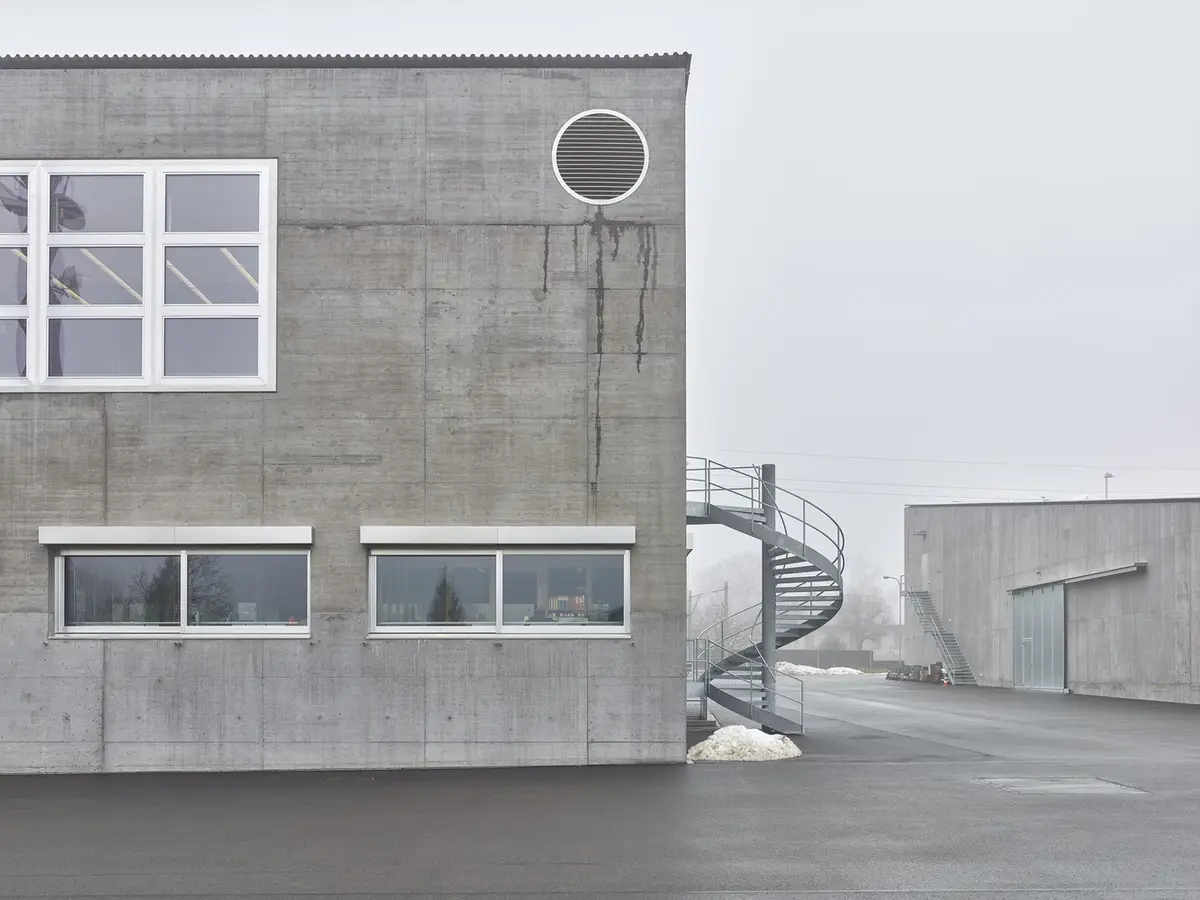
Werkhof Bülach Building – Industrial Efficiency and Robust Design by Felgendreher Olfs Köchling Architekten
Werkhof Bülach combines concrete and timber structures into efficient cold and warm houses, uniting functionality, flexibility, and robust industrial architecture.


Located in Bülach, Switzerland, the Werkhof Bülach Building by Felgendreher Olfs Köchling Architekten is a striking example of functional architecture that blends industrial efficiency with architectural clarity. Completed in 2021 and spanning 5,500 m², this road maintenance complex forms a cohesive ensemble alongside the existing Bülach Police Station, reinforcing the identity of the local infrastructure hub.
A Dual-Building Industrial Complex
The project is defined by two distinct structures, each with a specific purpose:
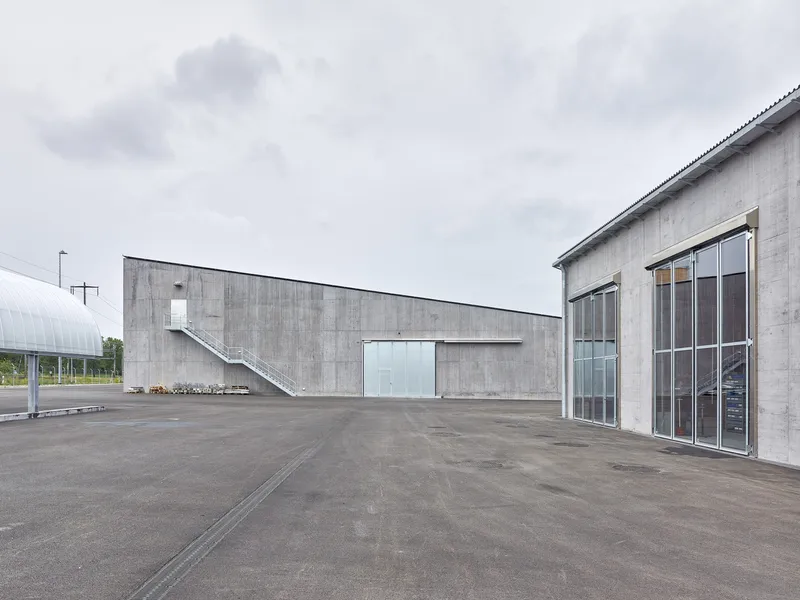
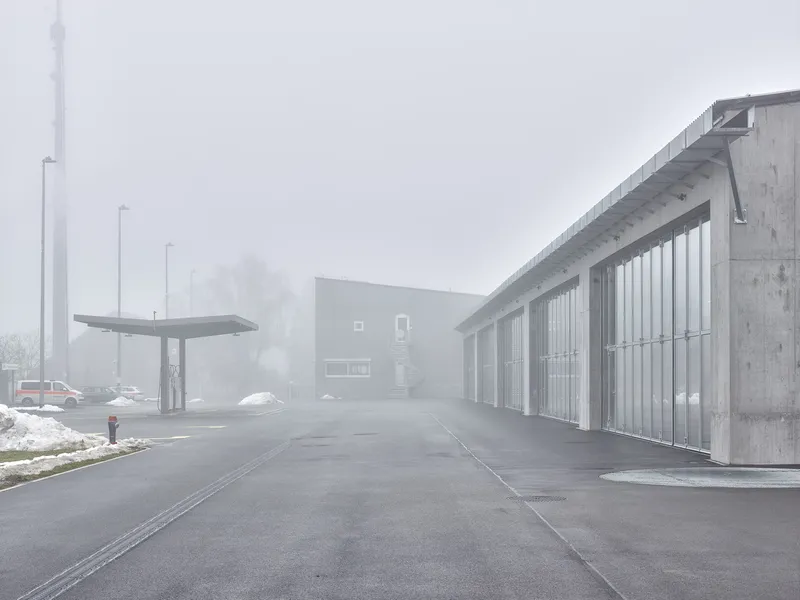
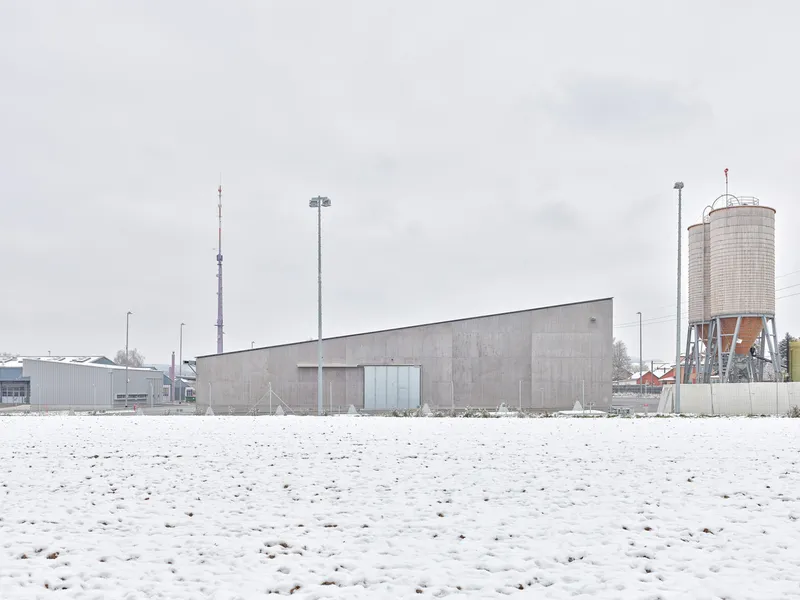
- The Cold House (Garage and Storage) – A single-wall concrete construction designed for durability and long-term adaptability. This vast, open-span space accommodates road maintenance vehicles, heavy machinery, and equipment. Minimal interior pillars and multiple access points allow for flexible maneuvering and operational efficiency, ensuring that the facility can evolve with future needs.
- The Warm House (Administration and Workshop) – A two-shell structure featuring a concrete exterior and massive load-bearing timber construction on the interior. This building houses administrative offices, staff facilities, meeting rooms, and workshops for road maintenance crews. The warm, natural timber interior offers a contrast to the robust concrete shell, creating a welcoming environment for workers.
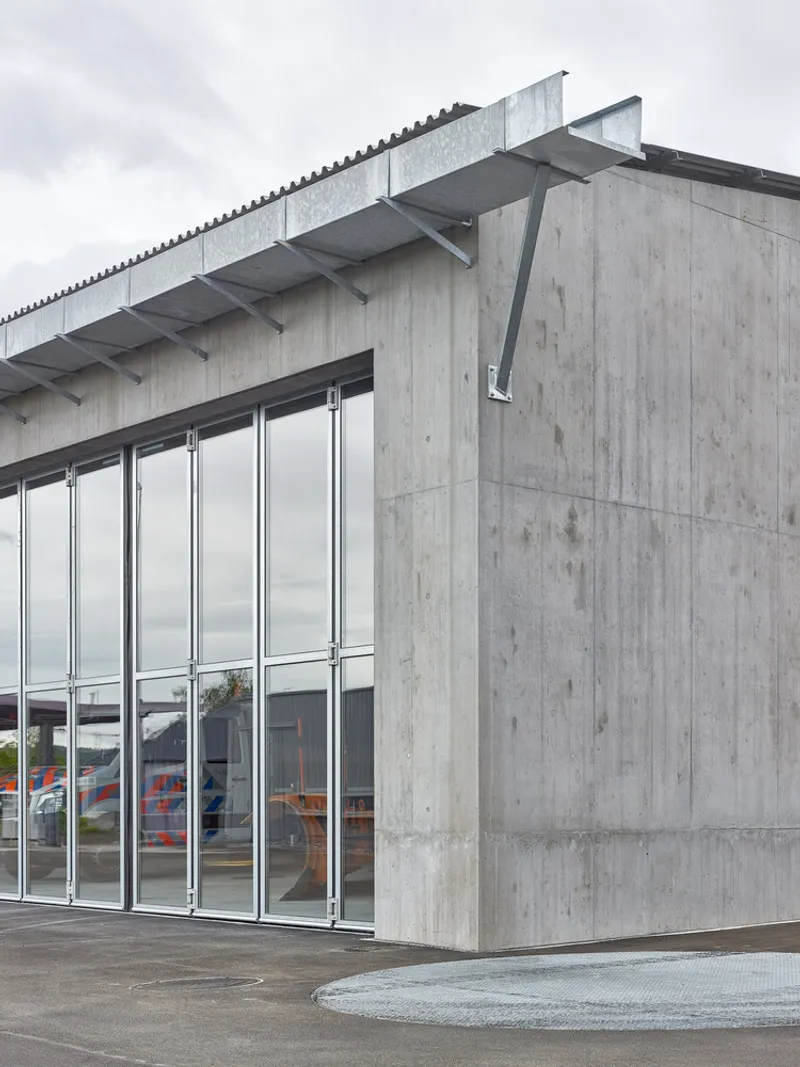
Functional Expression Through Honest Materiality
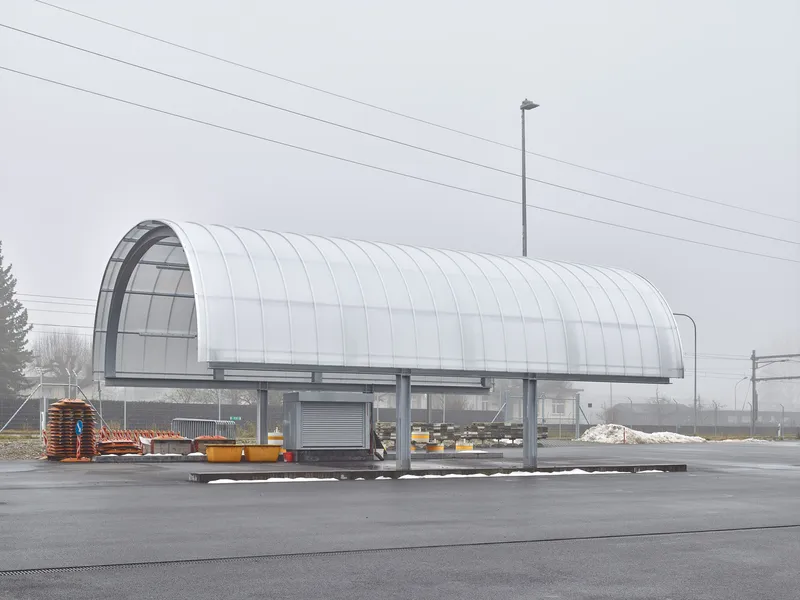
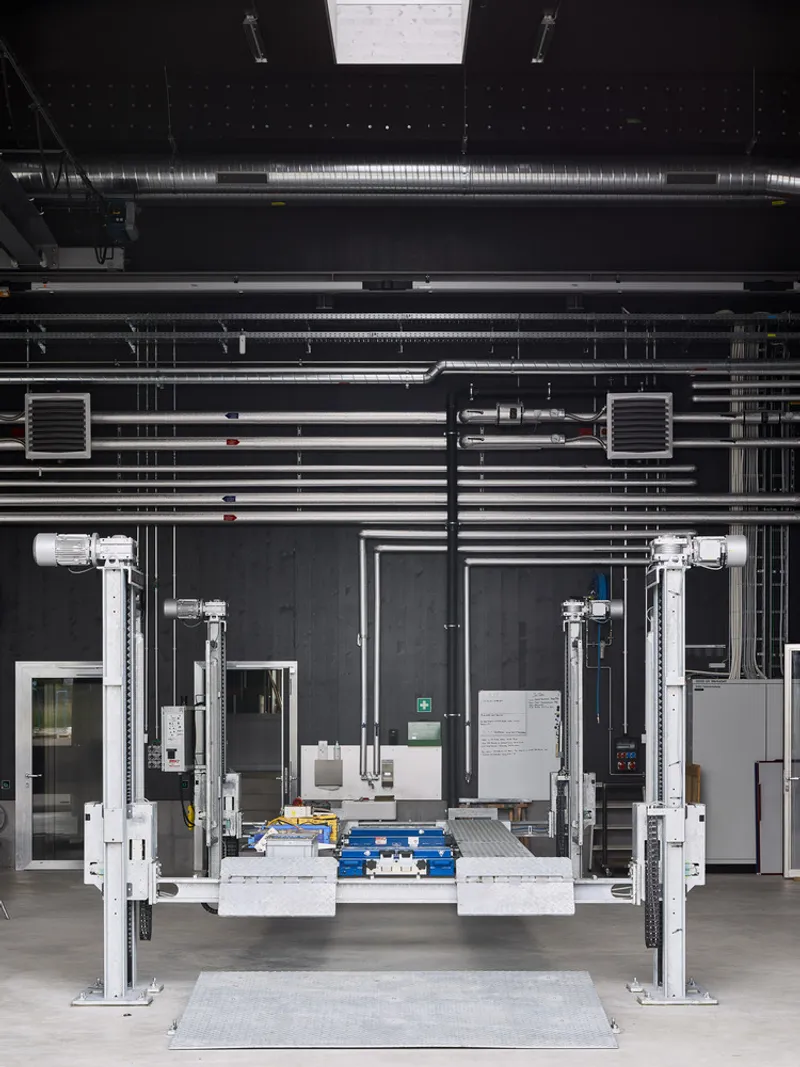
The architectural language of the Werkhof Bülach emphasizes functionality, resilience, and clear construction logic. All technical systems—including lighting, silos, fencing, and exterior staircases—are intentionally exposed and constructed in galvanized steel for both visual honesty and ease of maintenance. This approach reflects the building’s role as a working infrastructure hub rather than a decorative landmark.
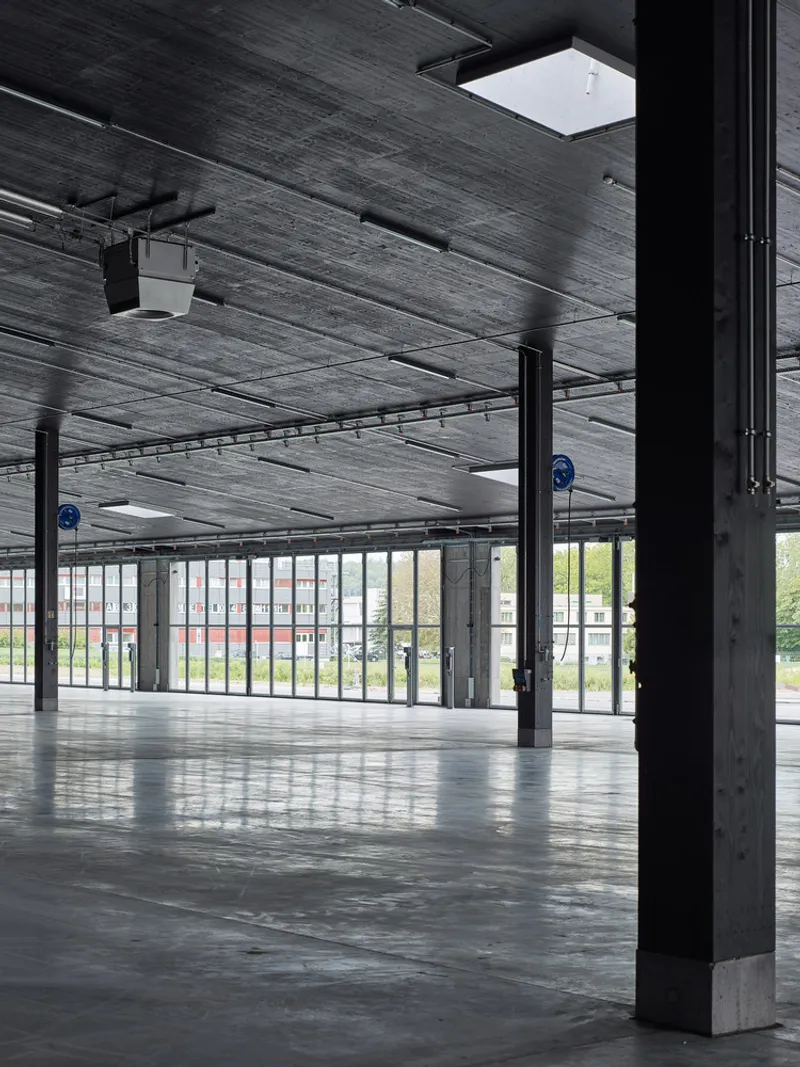
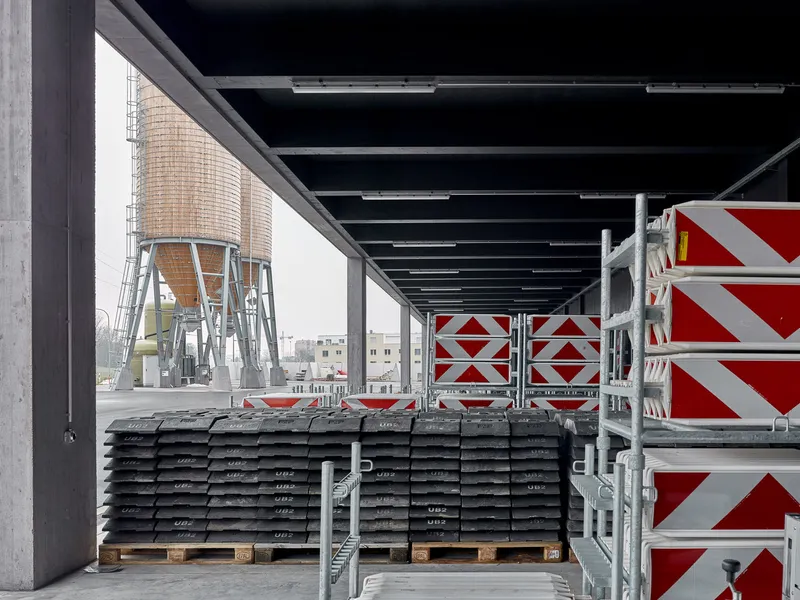
Roof Design and Urban Integration
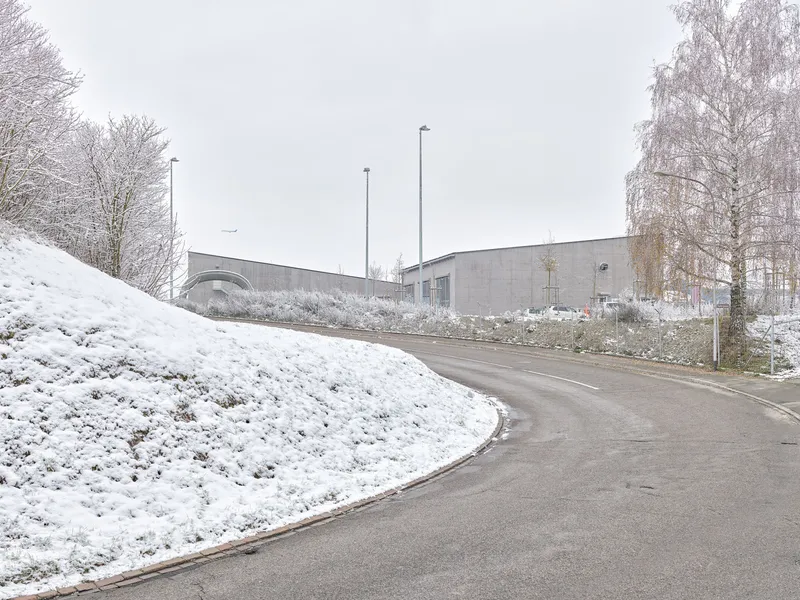
The complex is unified by plain pent roofs, each oriented in opposite directions. This creates a dynamic facade rhythm while ensuring efficient water drainage and structural stability. The high side of the administrative building establishes a strong street-facing presence, forming a clear entrance and architectural “address” for the complex.
From the street, the elongated facade reinforces the industrial character of the surrounding area, while the internal arrangement supports smooth operational workflows.
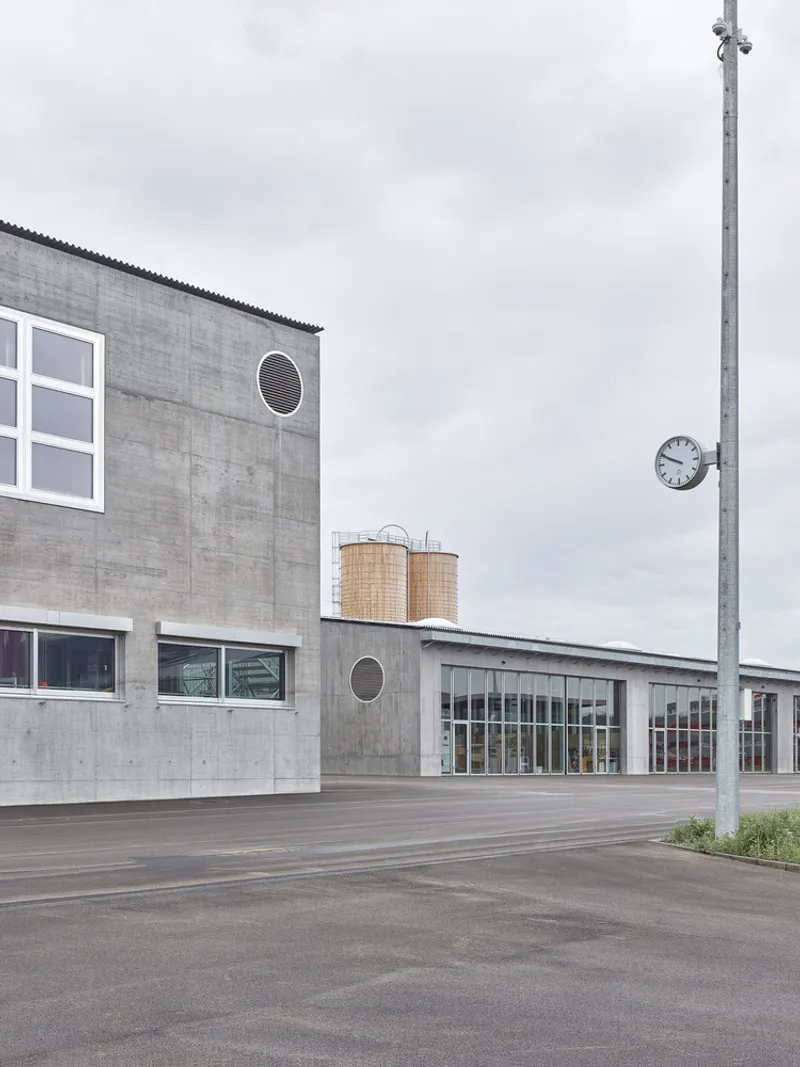
Technical Team and Construction Partners
- Architects: Felgendreher Olfs Köchling Architekten
- Structural Engineering: Merz Kley Partner
- Construction Management: Jäger Baumanagment AG, Zürich
- Manufacturers: Huber Fenster AG, Hörmann Tore
All photographs are works of Philip Heckhausen


Popular Articles
Popular articles from the community


Little Red Riding Hood: Architectural Design as a Journey Through Fear, Light, and Storytelling
Little Red Riding Hood reimagines the fairy tale through architectural design shaped by fear, light, scale, memory, uncertainty, and choice.

Hill & Cross Opera: Sculptural Opera House Architecture Shaped by Tallinn’s Landscape and Identity
Hill & Cross Opera reimagines opera house architecture in Tallinn through its sculptural hill, civic plaza, glass wave and a luminous cross.

The Ocean Hive: Sustainable Architecture for a Self-Sufficient Civilization at Sea
The Ocean Hive imagines sustainable architecture at sea, where modular habitats, algae, wave power and ocean waste sustain a growing colony.

Lunar Spiral: Space Architecture Shaped by the Mathematics of the Universe
Lunar Spiral reimagines space architecture through Fibonacci geometry, lunar regolith, levitating habitats, and self-sustaining Moon living.

Similar Reads
You might also enjoy these articles


Hodi-Mandai Geram
Project Function: Preservation and revitalization of the Intangible heritage and socio-spatial identity of the Hodi by Housing, Cultural Memory Center, Sacred Grove, landscape, local tourism economy


Olio Towers: A Mid-Rise for Performers That Fuses Housing, Rehearsal, and Stage
Located blocks from Houston's Theater District, this modular tower stacks living units around a central performance atrium.

Oasis: Modular Green Housing Carved into Dhaka's Urban Fabric
A shortlisted Plugin Housing entry reclaims unauthorized settlements in Dhaka with stepped concrete volumes, green roofs, and ventilation-driven design.

Black Hole: A Floating Megastructure for the Post-Physical Era
Emiliano Mazzarotto envisions a spherical, self-scaling arena where e-sports, digital hotels, and holographic stadiums replace traditional public space.

Explore Infrastructure Design Competitions
Discover active competitions in this discipline

Challenge to reimagine the Iron Throne

Photograph architecture without architects

Illustrate the lost glory of Angkor Wat - Render Challenge

Design challenge to reuse E-waste
Comments (0)
Please login or sign up to add comments
No comments yet. Be the first to comment!