
Whale Fall
The whale falls and all things come to life

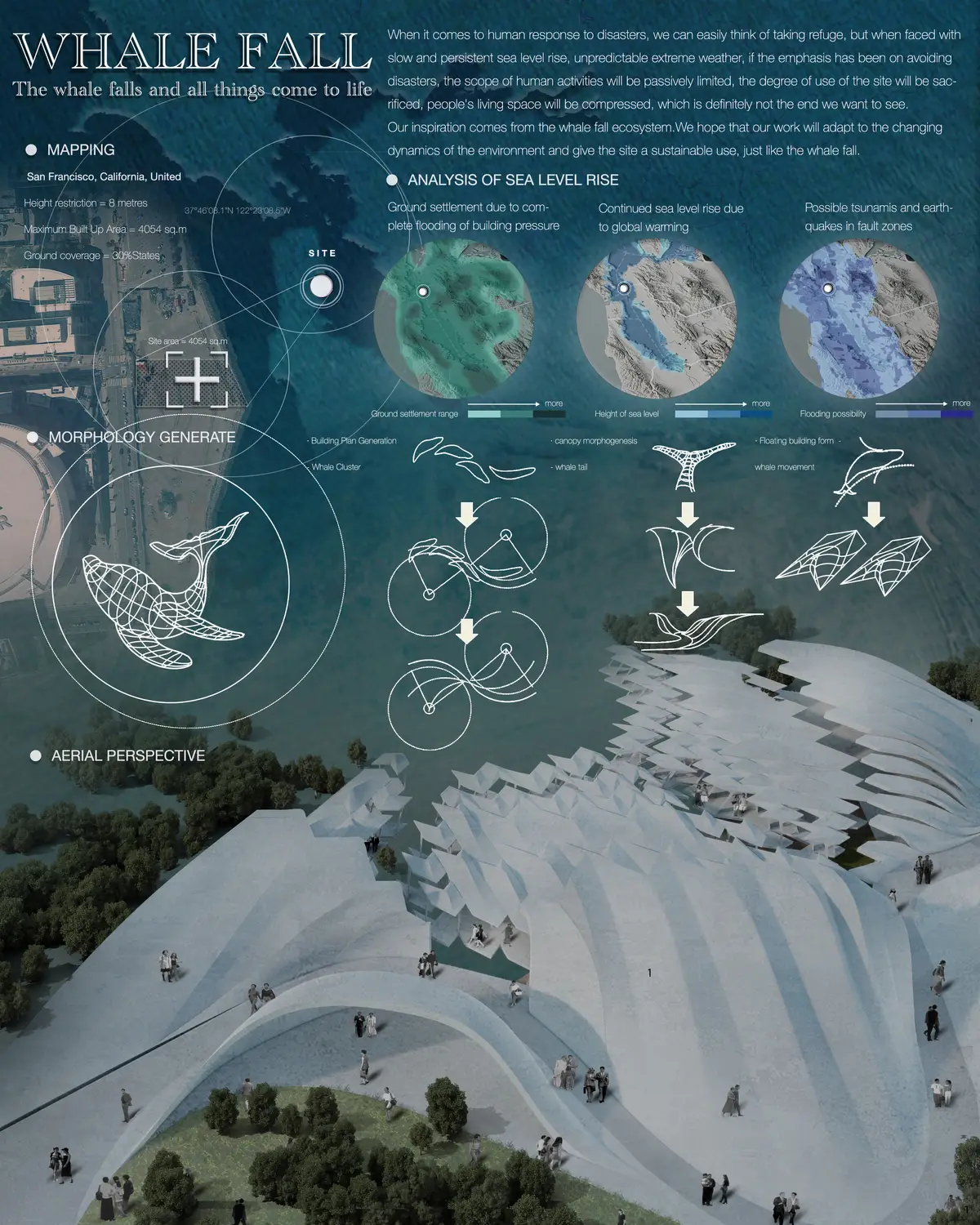
Our inspiration comes from the whale fall ecosystem

In recent years, due to the rising sea level, the buildings and landscapes along the coast have suffered a lot and may die at any time. How to make the site always vibrant through landscape design under this challenge is the real issue we need to focus on.
When it comes to human response to disasters, we can easily think of, for example, Noah's Ark, how to take refuge, but when faced with slow and persistent sea level rise, unpredictable extreme weather, if the emphasis has been on avoiding disasters, the scope of human activities will be passively limited, the degree of use of the site will be sacrificed, people's living space will be compressed, which is definitely not the end we want to see.
So we further explored how we could achieve symbiosis between buildings and hazards. This brings us to the whale fall ecosystem. Whale fall refers to the phenomenon of a whale dying and sinking to the bottom of the ocean. When a whale dies in the ocean, its carcass eventually sinks to the bottom, a process that biologists have given the name Whale Fall. A whale carcass can feed a decomposer-based recycling system for up to 100 years.
We hope that our work will adapt to the changing dynamics of the environment and give the site a sustainable use, just like the whale fall.
Part 1 :The Death of Architecture - Sea Level Rise
1. Ground settlement due to complete flooding of building pressure
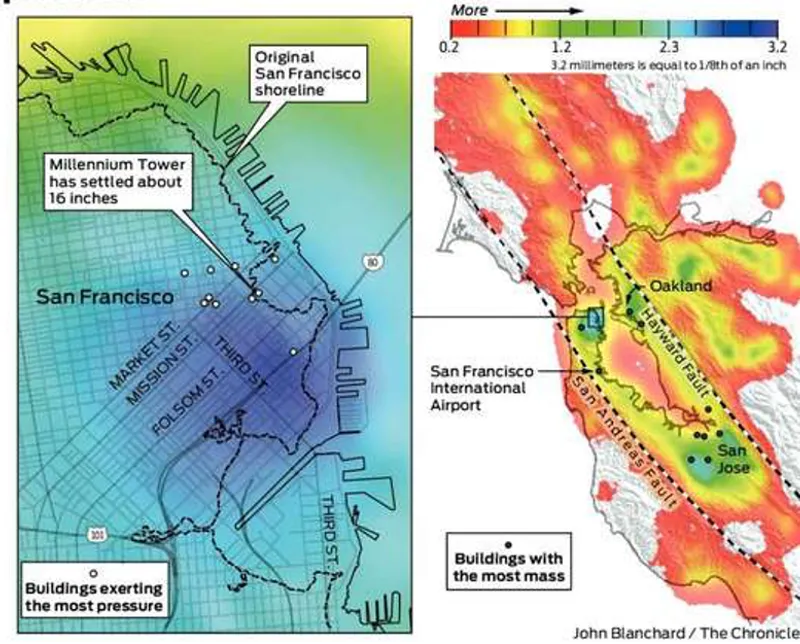
The weight of urban development is causing the bay area to sink, according to new research. The subsidence has generally been greatest in areas where buildings are most concentrated including downtown San Francisco. Here is the amount of surface compression that resulted when the buildings first went up.
2. sea level rise due to global warming
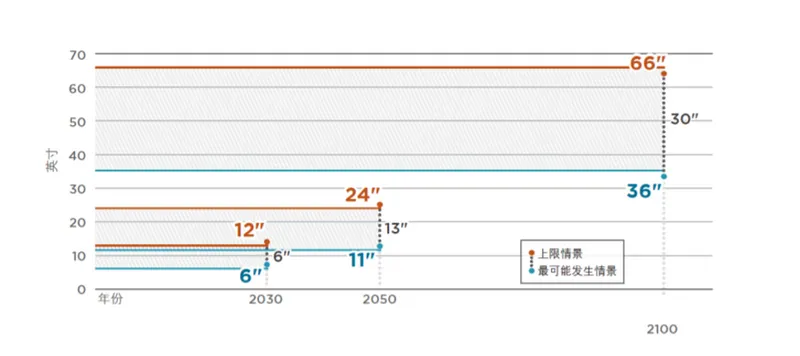
NASA and NOAA say that the Earth's average temperature has risen by one degree Celsius since modern temperature records began in 1880. According to tidal records, sea level in San Francisco Bay has risen by 8inch since 1990, and it is likely to rise by 36inch by the end of this century, as shown in the graph below.
3. Possible tsunamis and earthquakes in fault zones
By 2100, tides in the Gulf will rise by at least 3inch, and the waterfront will face more severe flooding due to a possible 7inch rise in tides.
Cascadia in the Pacific Northwest has been hit by a magnitude 9 earthquake, and the Alaska-Aleutian trench was hit by a magnitude 9.3 earthquake, one of the most powerful in North American history. The probability of a major earthquake and tsunami in the next 50 years is about 5% and may not occur, but like many low-probability events, if it does, it will have a huge impact. Half Moon Bay south of San Francisco, like the rest of Northern California, could experience flooding of up to 50inch, and Southern California beaches, such as Huntington Beach, could experience flooding of 15-20inch.
Part2: The birth of building -Floating Architecture
1.Floating building
1.1 Self-sufficient Mobile migration
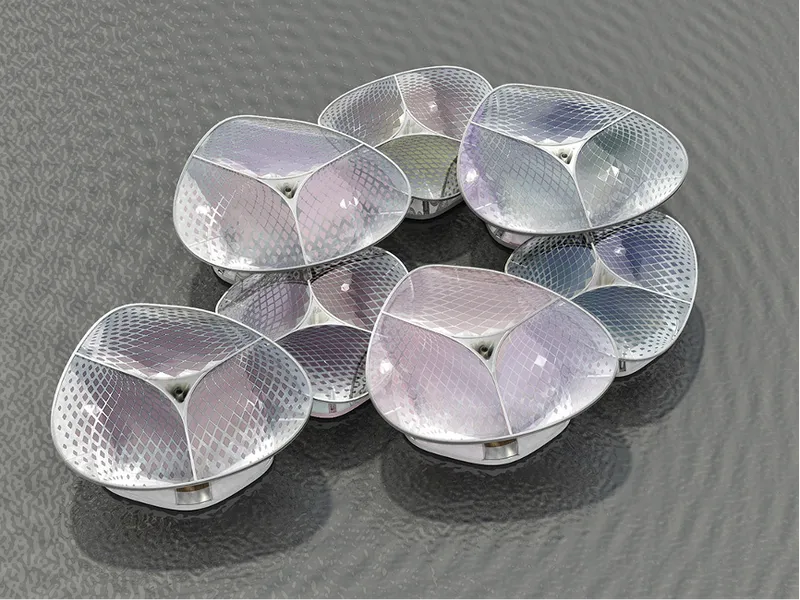
In the tradition of conceptual and visionary architecture proposals, SPARK Architects reveal their design for a floating hawker centre – the Solar Orchid. This concept for self-contained, solar-powered, floating hawker pods suggests a way to mend the now distant relationship between Singapore and its waterscapes, while celebrating and reinvigorating a favoured local pass time.
The protective canopy is an energy-generating inflated ETFE pillow incorporating thin-film photovoltaic cells. It complements the $11 million Singaporean government initiative to develop floating solar islands in Singapore’s reservoirs. The Solar Orchids can be clustered together in various formations to create hawker centres that are able to respond to different locations and conditions. They would leave no trace of their presence due to their selfcontained nature.
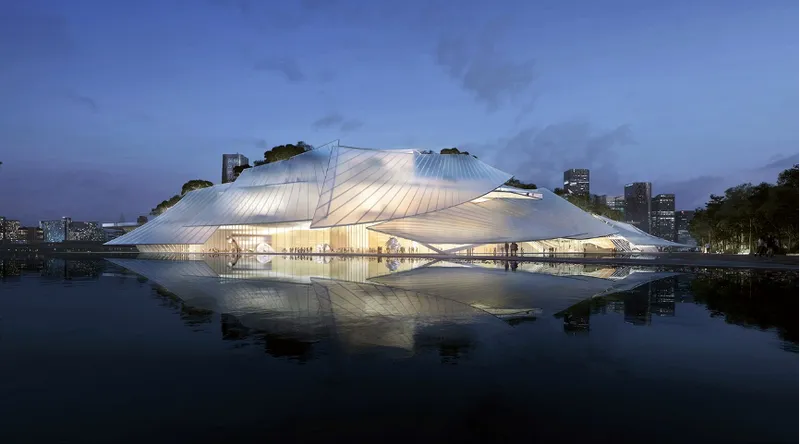
1.2 Yiwu Grand Theater
It is defined by a layering of glass sails that are reminiscent of the Chinese junks that once transported goods across the waters, while their subtle curves echo the Jiangnan-style eaves of the ancient vernacular architecture that is typical of the region. The transparency and lightness of the glass express the texture of thin, silky fabric, creating a dynamic rhythm that makes them appear as if they are blowing in the wind. They act as a protective canopy around the building, resonating with the river, elegantly floating above the water’s surface, setting a romantic atmosphere. To reduce overall energy consumption, MAD has conceived the theater with a passive solar design. Thus, the semi-transparent glass curtain wall has been developed to not only act as a shading system, but to also optimize the use of natural light within the indoor public spaces, forming a solar greenhouse effect in the winter. In the summer, it serves as the ventilation system, enhancing airflow circulation inside and outside of the building.
1.3 Maison Fibre, Biennale Architettura 2021 by ICD + ITKE
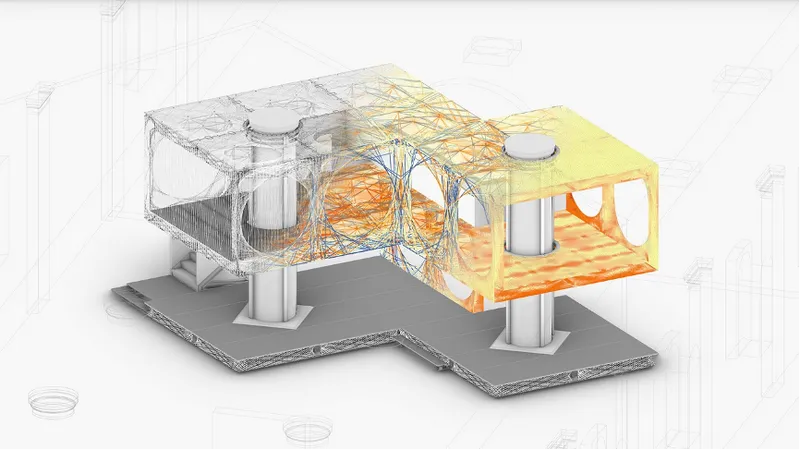
ICD and ITKE’s contribution to the Biennale Architettura 2021 is an exploration of an alternative material culture, a term commonly used in the social sciences and the humanities. Maison Fibre, the central display of the exhibition, is both a full-scale architectural installation and an open model for the cultural change being postulated. It deals with the departure from pre-digital, material-intensive construction using mostly heavy, isotropic building materials such as concrete, stone, and steel—which are often extracted in faraway places, processed into building elements, and then transported over long distances—to genuinely digital construction methods with locally differentiated and locally manufactured structures made of highly anisotropic materials: an architecture made of fibers.
1.4Floating pier Lake Iseo, Italy
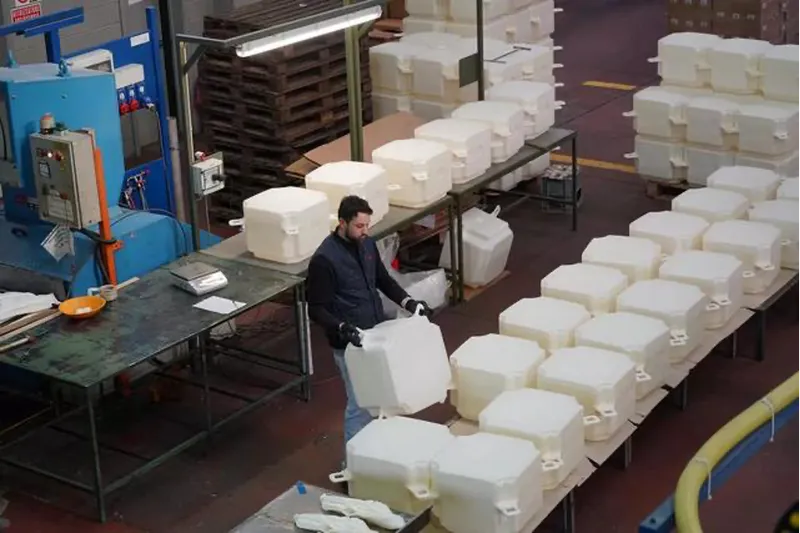
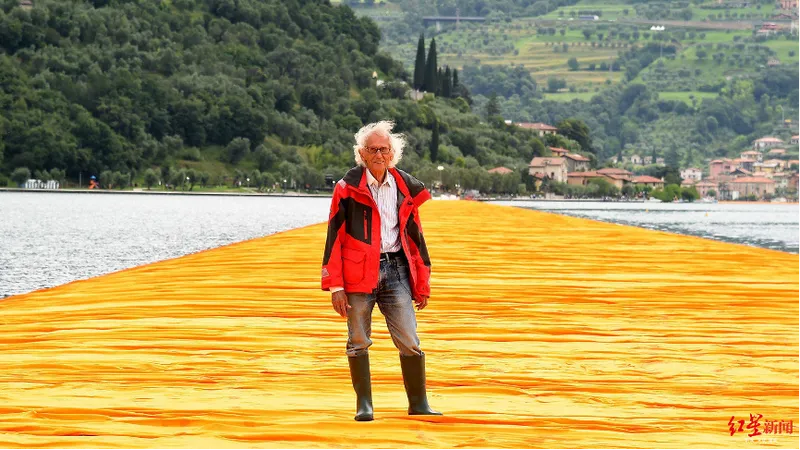
From June 18 to July 3, 2016, Lake Iseo, Italy, was reprogrammed by the artist for 16 days. A modular floating dock system of 220,000 cubes of high-density polyethylene carries 100,000 square meters of shimmering yellow fabric that floats above the water as the waves move and the piers rise and fall.
Visitors can walk on this work of art from Sulzano to Monte Isola to the island of São Paulo, which has floating piers. The hills surrounding the lake provide a bird's eye view of the floating piers, exposing unnoticed angles. A 3-kilometer-long pedestrian walkway was built as floating piers across Lake Isle. Says Christo, "Those who experience the floating pier feel like they are walking on water, or perhaps on the back of a whale." The 100,000-square-meter shimmering yellow fabric is carried by a modular system of 220,000 high-density polyethylene cubes that gradually ebb and flow with the movement of the waves as the pontoon rises above the water.

2.Floating building module design details
2.1Floating building components
1) Active solar panels
Rooftop sunlight collection tool efficiently absorbs sunlight to achieve zero energy consumption in the building.
(2) Hydrophobic leaky membrane structure The surface has micron-level emulsions, which facilitate rainwater collection. (3) Roof trusses are made of stainless steel to prevent the material from water erosion. (4)Ceiling layer Wrapping structural layer, interior space decoration, making the interior beautiful. (5)Ecological energy-saving exterior wall The thickness of the wall can be adjusted according to the expansion and contraction of outdoor temperature to ensure the constant indoor temperature and reduce energy consumption.
constant temperature inside and reduce energy consumption. (6) Installation area
This includes power conversion devices, rainwater purification devices, fire fighting and rescue devices, etc.
(7) Building base
The base is made of reinforced concrete and filled with polystyrene foam to provide sufficient buoyancy. The base is equipped with a balancing device, so that the spring ductility can be used to reduce the magnitude of building shaking when the water impact is large.
(8) Water purification device
Including water purification pipes and impurity filters. The device adsorbs household garbage and impurities in the water through a tubular device that penetrates deep into the water body.

2.2 Floating building material
The first step is to select a metal material that must meet the characteristics of light weight, strength, and corrosion resistance. The researchers targeted magnesium alloy-based composite materials. The selected magnesium alloy-based composite, reinforced with hollow silicon carbide particles, has a density of only 0.92 grams per cubic centimeter. In comparison, water has a density of 1 gram per cubic centimeter. In addition to being less dense than water, this magnesium matrix composite is strong enough to withstand the harsh marine environment.
The next step is the development of the manufacturing process. To achieve the superhydrophobicity of the magnesium alloy-based composite, the researchers used ultra-high-speed laser pulses to etch micro- and nano-scale patterns on the metal surface, trapping large amounts of air and making the metal superhydrophobic.
2.3 Module connection method
The steel structure MIC is connected to the foundation by means of a pre-buried foundation plate, and during the foundation construction, high-tensile bolts are buried and a foundation connection plate is placed between the two high-tensile bolts, with an M20 high-tensile screw connection sleeve in the middle of the plate.
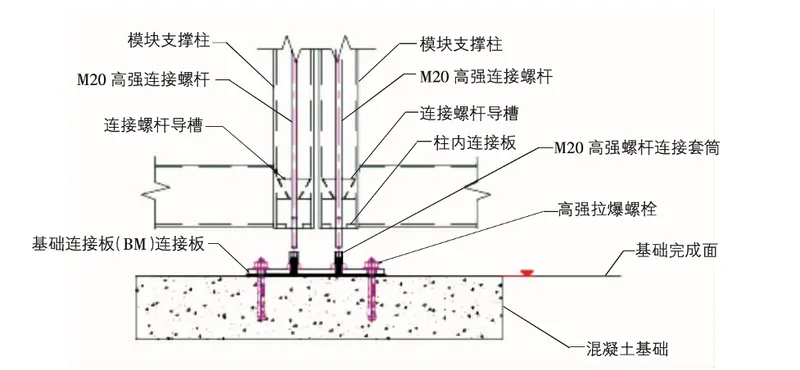
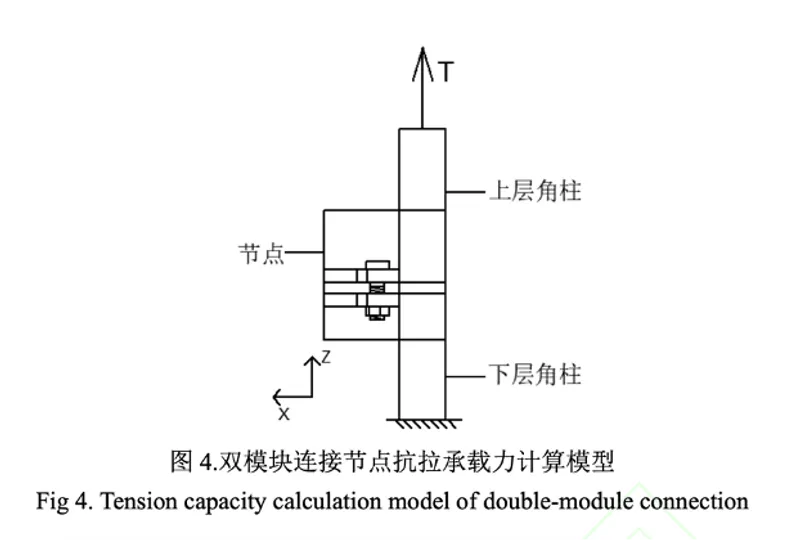
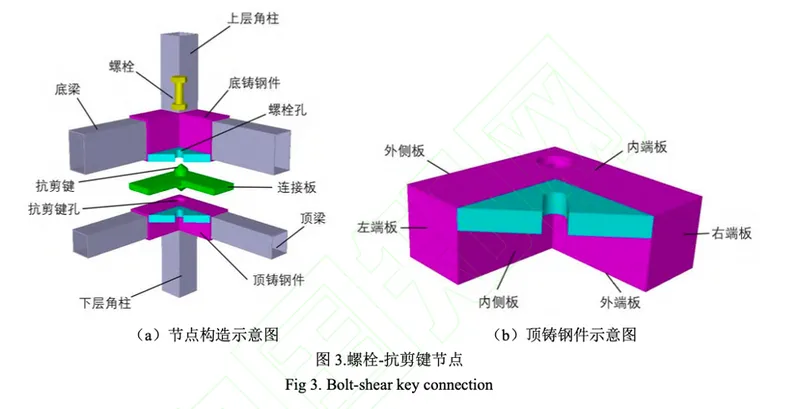
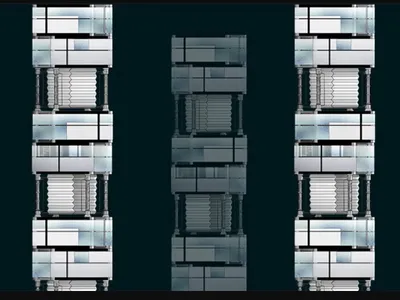
Through the M20 high-strength bolts reserved in the support column of the steel structure module, the M20 high-strength bolts in the upper and lower through parts are padded with M20 high-strength connecting screws and connected by M20 high-strength screw connecting sleeves, and if the module is a top floor module, the connection plate is padded between the M20 high-strength connecting screws on top of the adjacent module and fixed with M20 high-strength nuts, as shown in Figure 6.

Diagram of the connection between steel modules

2.4 Building climate design
Building climate design is a design tool that takes advantage of the potential of climate. This is the core of sustainable development and is a key feature of ecological architecture, where architects proactively use a variety of measures to adapt to regional climatic characteristics and minimize the use of non-renewable energy to protect the earth's ecological resources. This design approach is also known as "passive architecture" in the West. The term "passive" is derived from the much publicized "active solar architecture" of the 1970s. The English word
Passive means passive, submissive, or guided. The fundamental difference between passive and active is the way in which the climate is regulated and the design philosophy of the building is different. The active design approach is to actively control and create an artificial environment, while the passive approach is to actively adapt to nature while developing the potential of nature as much as possible. Through the rational organization of the functional blocks in the building, the building can have strong coordination and adaptability to the climate environment of the area where it is located, create the comfortable indoor and outdoor environment that people need, and realize the harmony and unity of the natural environment and human existence with the same breath and pulse as much as possible. Thus, it is ecological in nature. Of course, passive design does not mean giving up the ability to regulate active systems, but rather combining with active systems to reduce energy consumption and improve the overall comfort of the building's internal environment. Passive design strategies are not only for individual buildings, but also for groups of buildings that can be designed to achieve comfort and reduce energy consumption without actively using energy systems.
Floating buildings can use energy from the water, such as aquifer temperature storage, aquifer storage, and solar energy, as a means of moving energy through the water. In the event of an uncontrollable natural disaster or other reason to move the building, the building can be relocated to avoid the disaster or to obtain the most favorable building orientation.
The ETFE membrane material used in the construction of floating buildings is a new type of membrane structure that can be inflated in controlled amounts to adjust its shading and light transmission, which is an advantageous condition for building variability.
The idea of eco-architecture requires that we do not isolate the object from its environment, but see the building and its surroundings as a complete organism, with the eco-architecture itself as a vital part of the ecosystem. The basic characteristics of eco-building are 1) low consumption, 2) recyclability, and 3) environmental adaptability.
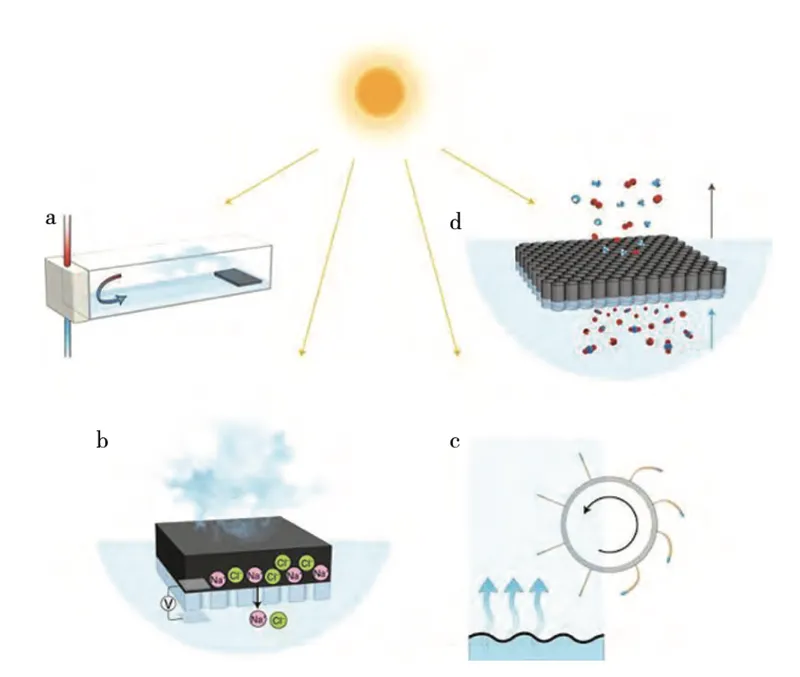
The collected sunlight is converted directly into electricity by the photovoltaic panels, which are then stored in batteries and transformed into direct and alternating current. a - Solar thermal energy harvesting driven by fast vapor transport in the vacuum chamber. Rapid liquid-vapor evaporation in the solar heating zone and vapor-liquid condensation in the exothermic zone allow for efficient solar-thermal heat transfer for heating applications away from the heat source.
A video to introduce how the building works
References (3)

Popular Articles
Popular articles from the community

Tsunami Convergenics: Turning Catastrophic Ocean Forces into Underwater Housing Infrastructure
A speculative underwater settlement off the coast of Onagawa, Japan, treats tsunamis and typhoons as energy sources rather than threats.

Faces of the Soviet Avant-Garde: Turning Moscow's Street Names into an Open-Air Museum
A network of sculptural installations across a Moscow residential district transforms forgotten architect names into spatial encounters with cultural memor

Cloaked Colonization: A Mobile Underwater Habitat That Moves Like a Fish
Micah Abaya's shortlisted EHC Pacific entry reimagines ocean settlement as a dispersed network of self-sustaining architectural organisms.

Opera by the Sea Estonia: Three Shells Dissolving Architecture into Tallinn's Coastline
A winning opera house proposal replaces monumental form with interconnected shells that blur the boundary between building, park and Baltic Sea.

Similar Reads
You might also enjoy these articles

Shakur's House: Exposed Brick as an Interior Organiser in a 168 m² Mashhad Residence
Brick moves indoors in this Mashhad residence, where masonry walls, glass partitions and teal planes sequence a compact home without closing it off.

Day and Night Park: A Time-Based Urban Newsstand in Beijing
A temporary urban newsstand in Beijing blending travel, light, and reading through poetic colors, compact form, and community-focused design.

Modernist Patio Renovation in El Masnou, Barcelona by Oliver Segura Arquitectura + Cebrià Arquitectura
Modernist patio renovation blending tradition and innovation with a movable pool, leveled floors, and Catalan materials in El Masnou.

Alto Residencial Coop: Cooperative Housing Development in Santiago de Compostela by Carbajo Barrios Arquitectos
A linear cooperative housing complex blending white volumes and perforated metal façades, enhancing community living, natural light, privacy, and urban integration.

Comments (0)
Please login or sign up to add comments
No comments yet. Be the first to comment!