
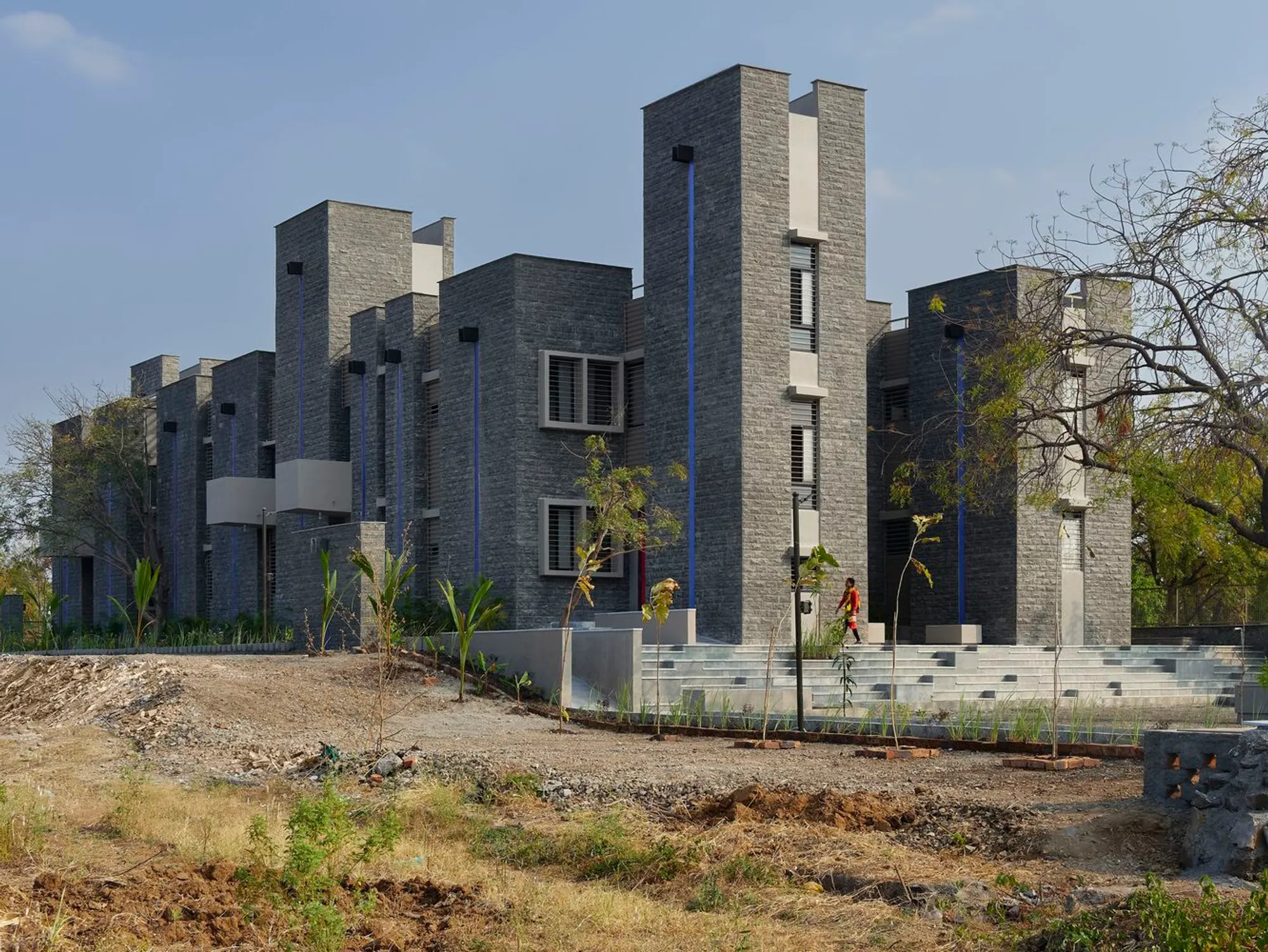
Women Empowerment Shelter by Studio PPBA: A Sustainable Sanctuary of Healing, Learning, and Livelihood in Rural India
Sustainable shelter empowering rural women through vocational training, passive cooling, rainwater harvesting, and vernacular architecture in arid northern Bijapur.


Architect: Studio PPBA
A Shelter for Resilience: Empowering Women Through Architecture
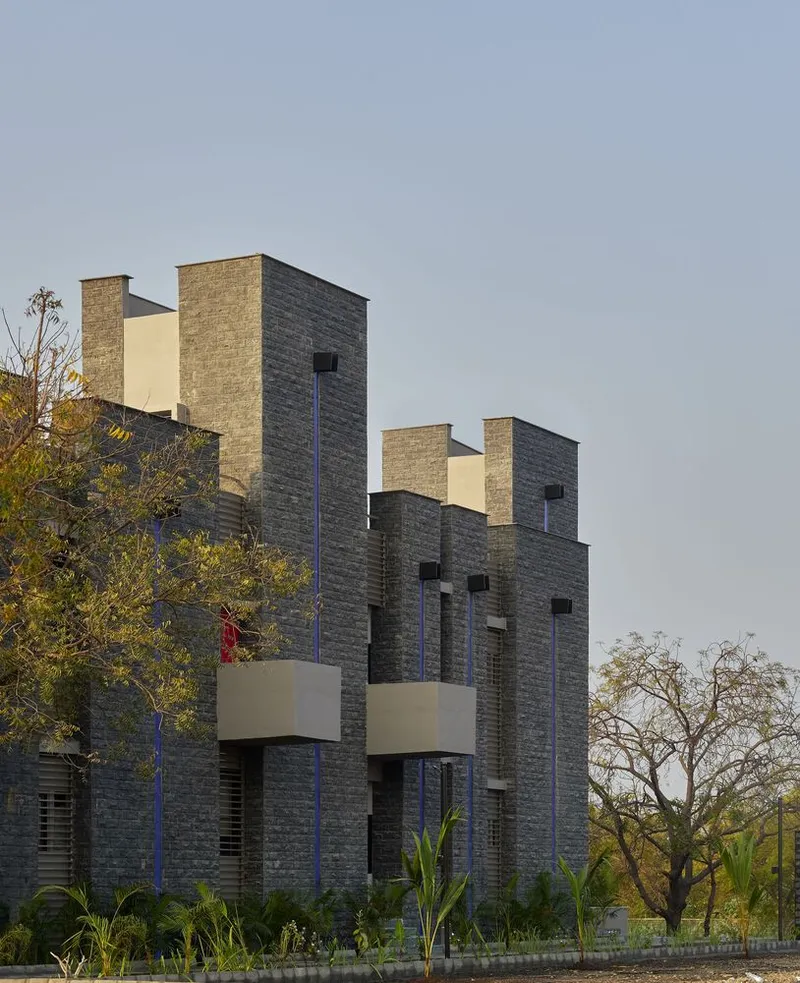
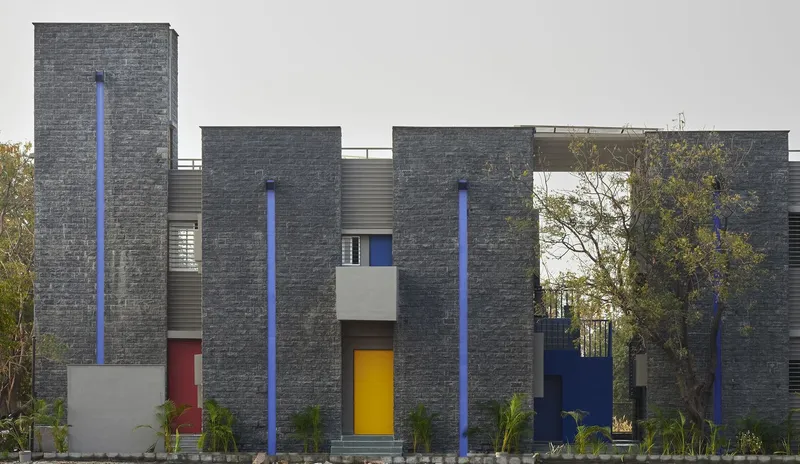
In the arid landscapes of northern Bijapur lies a powerful response to one of India's most urgent social needs — safe, dignified spaces for marginalized women. Conceived and executed by Studio PPBA, the Women Empowerment Shelter is not just a building, but a transformational ecosystem that blends sustainable design, vernacular architecture, and social infrastructure into a cohesive, community-centric project.
Built in the remote village of Loni [B.K.], this shelter serves as a refuge and empowerment hub for over 150 women and girls, supported by 35 staff members. It’s part safe home, part vocational center, and part community node — designed to facilitate not only recovery but reskilling, economic independence, and social reintegration.
Designing for Social Impact: Program, Layout, and Flexibility
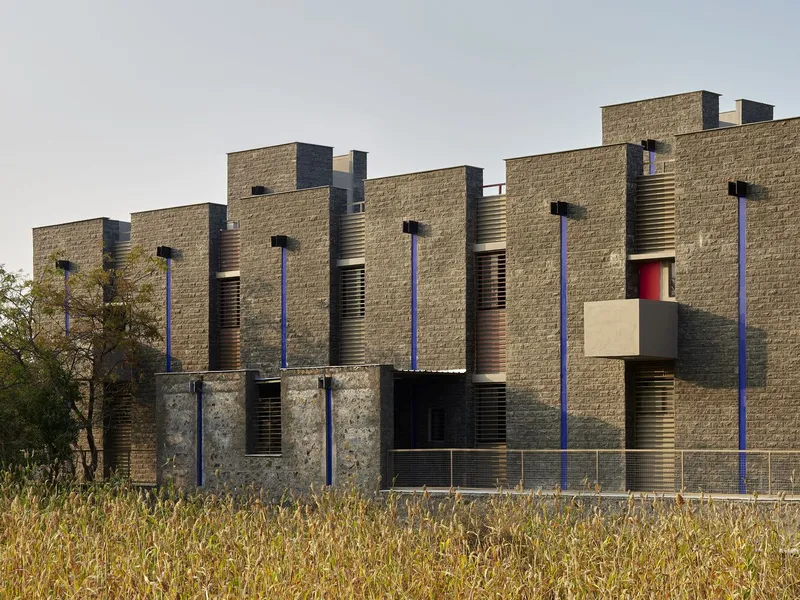
The shelter is intentionally modular and flexible, based on a scalable 200x1500x200 mm spatial grid that responds to spatial needs while allowing room for future expansion. Organized longitudinally from north to south, the layout separates public and communal activities (to the north), accommodation and training facilities (centrally), and services and utilities (to the south).
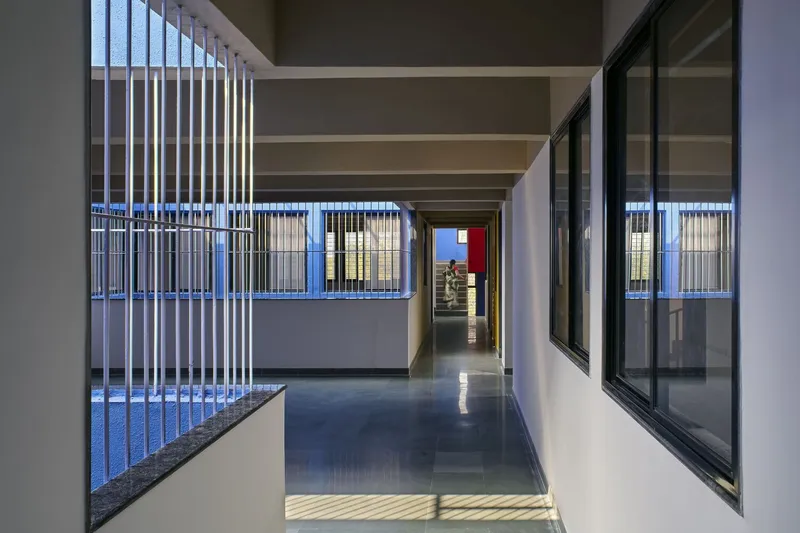
The design is also climate-responsive, taking advantage of the site's natural slope and prevailing wind direction. The internal street along the northern edge provides consistent shade throughout the day, acting as a natural thermal barrier while simultaneously encouraging social interaction.
Ventilation shafts are strategically placed across the structure to aid in passive cooling and natural lighting — ensuring energy efficiency while enhancing comfort in the harsh, dry climate of the Deccan plateau.
Water Wisdom: An Integrated Approach to Scarcity and Sustainability
Water scarcity in this region shaped the core of the design approach. Studio PPBA created a comprehensive water management system that embodies the ethos of reuse, recharge, and resilience. Highlights include:
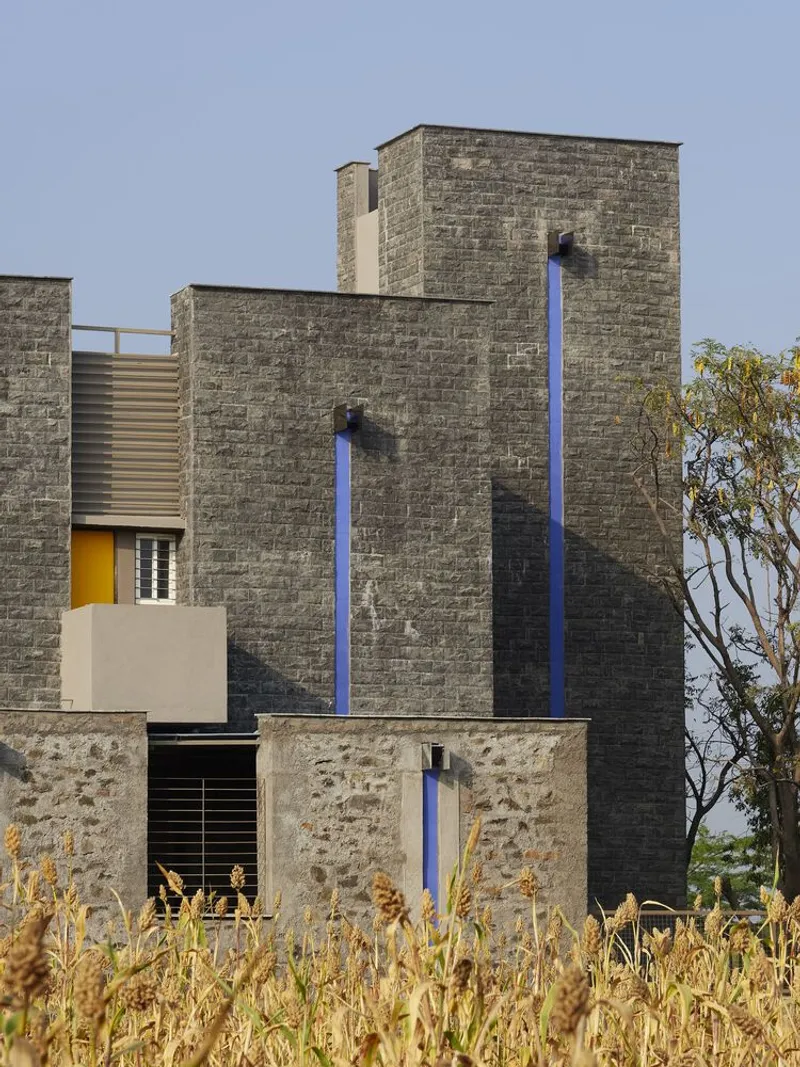
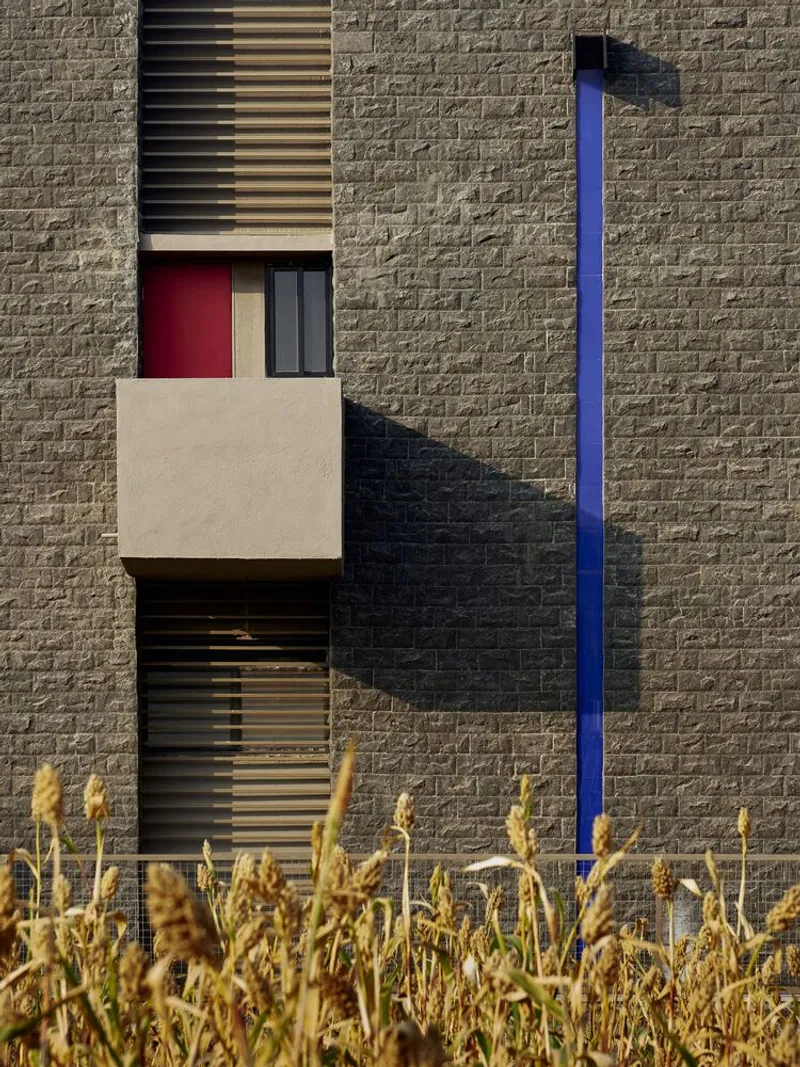
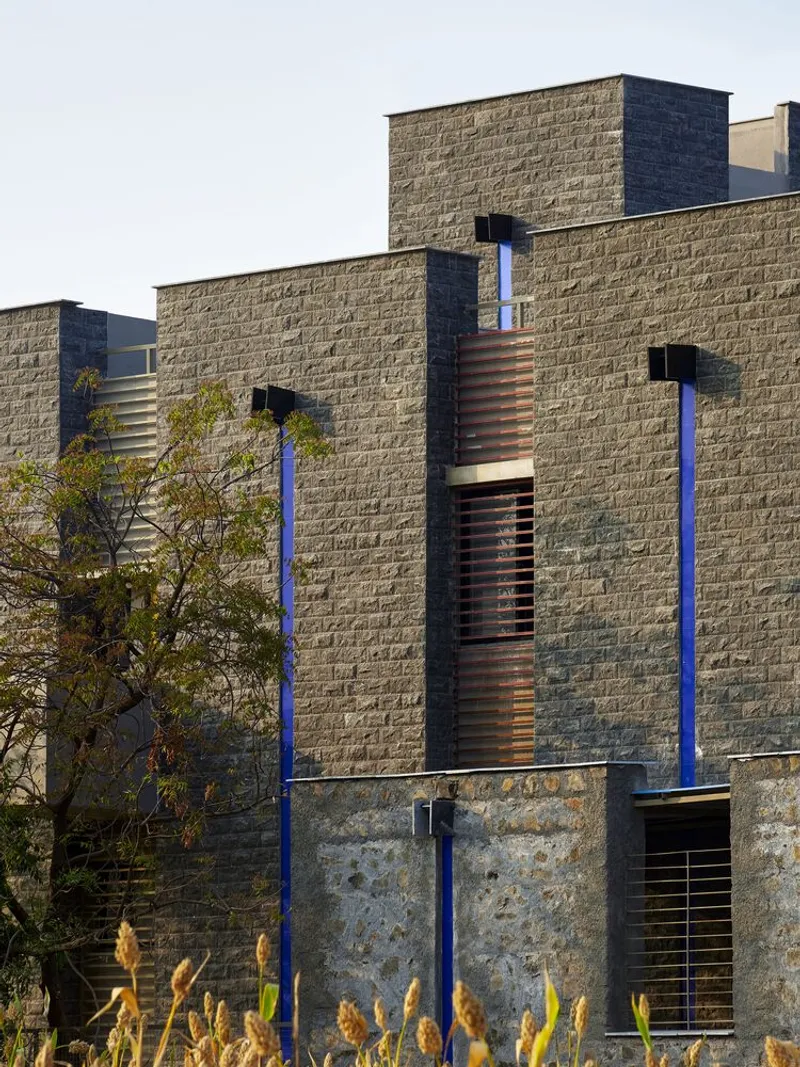
- Rainwater harvesting channels along the facade directing runoff into underground tanks.
- A 20,000-liter greywater treatment system, channeling wastewater through bio-gas digesters and root zone beds, used later for landscape irrigation and farming.
- Compost pits and sanitary pad incinerators, which not only address hygiene and waste but also educate residents on eco-conscious practices.
These systems are operated and maintained by the women themselves, reinforcing self-reliance and environmental stewardship.
Built with the Land, Not on It: Contextual and Material Sensitivity
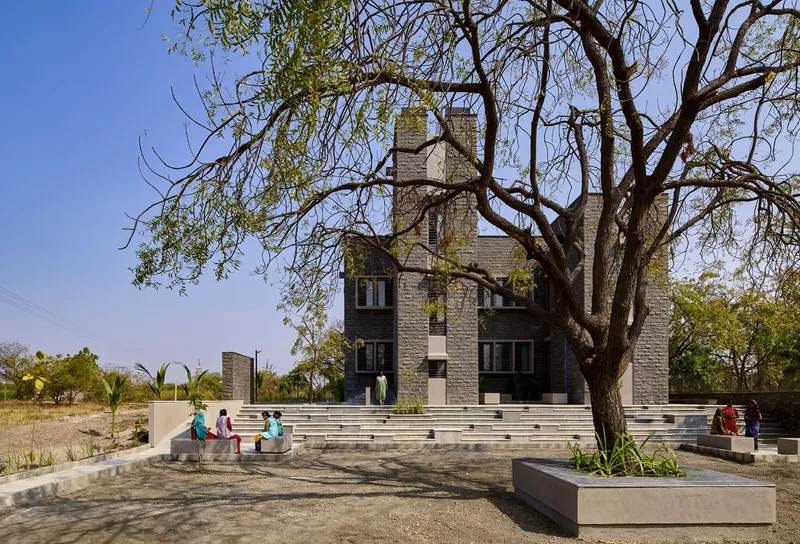
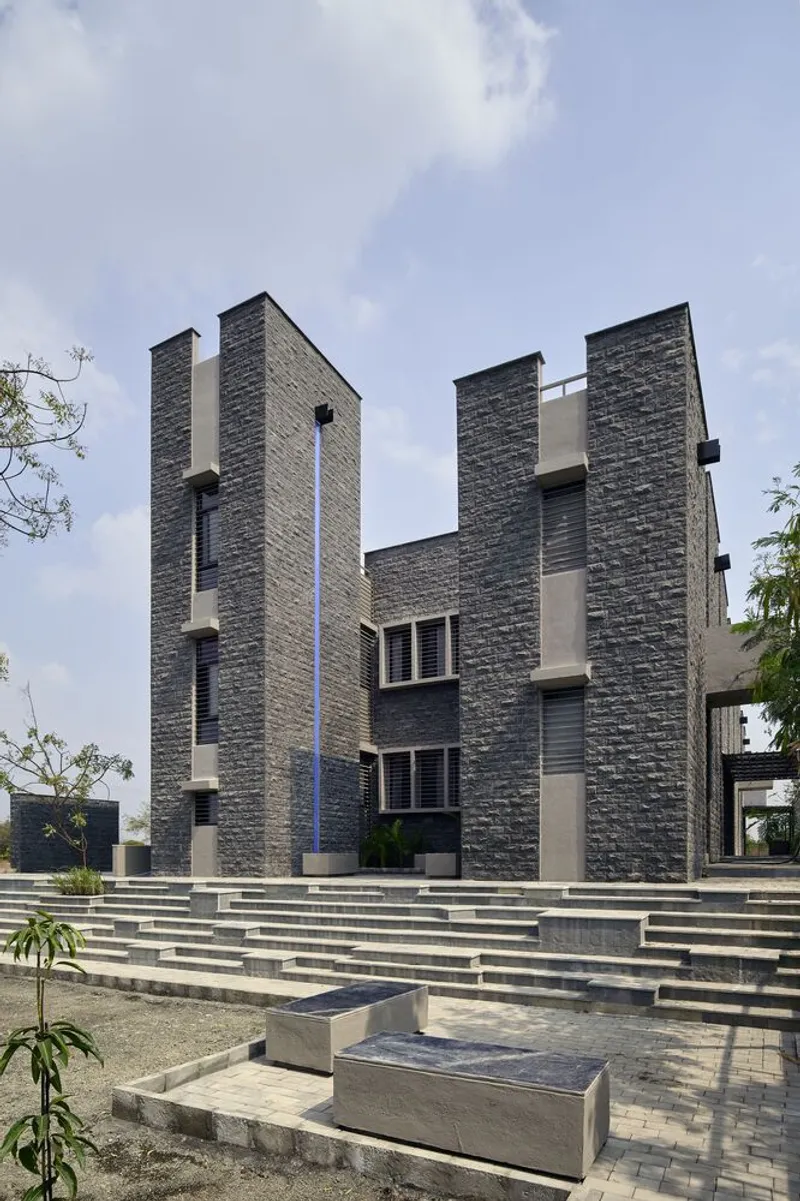
Studio PPBA’s design honors the local terrain and vernacular heritage. Instead of leveling the sloped land, they integrated open stepped seating into the contours to form a cultural gathering space — celebrating community, ritual, and exchange.
Construction materials were sourced locally — especially basalt stone, renowned for its thermal mass and durability. The use of traditional building techniques not only reduced carbon emissions and costs but also empowered local labor and preserved regional craftsmanship.
The landscape strategy favors native flora such as neem, mango, tamarind, and hardy flowering trees, chosen for their low water demand and ecological adaptability. The result is a site that looks and lives in harmony with its environment.
A Model of Participatory and Inclusive Design
What makes this project truly stand out is its community-based construction model. Women from the local community were involved in both the building process and post-occupancy operations, fostering a sense of ownership, confidence, and resilience.
The shelter is managed by Maher Trust, an NGO committed to serving women and children in crisis. It provides vocational training, counseling, educational support, and social reintegration services — with architecture acting as a catalyst for emotional and economic transformation.
A Blueprint for Empowerment in Rural India
The Women Empowerment Shelter is a quietly radical project — not only for what it achieves architecturally, but for how it redefines what architecture can do. It represents a sensitive, site-responsive, and socially embedded design that empowers through empathy, function, and sustainability.
In a world where architecture often caters to excess, this project reminds us that thoughtful, community-first design can heal, empower, and regenerate.



Popular Articles
Popular articles from the community


Co-Life: Senior Housing Design That Reconnects Older Adults With the City
Co-Life reimagines senior housing design through healing gardens, shared streets, workshops, and a sustainable community across generations.

The Ocean Hive: Sustainable Architecture for a Self-Sufficient Civilization at Sea
The Ocean Hive imagines sustainable architecture at sea, where modular habitats, algae, wave power and ocean waste sustain a growing colony.

Conexión: Biophilic Design Reimagines High-Rise Living in Hong Kong
Conexión reimagines high-rise living in Hong Kong through biophilic design, green facades, shared spaces, daylight, water and nature within.

The Earth Pod: 3D Printed Homes for Resilient Refugee Communities
The Earth Pod reimagines refugee housing through 3D printed homes made from clay, combining resilience, self-sufficiency, and rapid shelter.


Similar Reads
You might also enjoy these articles


Hodi-Mandai Geram
Project Function: Preservation and revitalization of the Intangible heritage and socio-spatial identity of the Hodi by Housing, Cultural Memory Center, Sacred Grove, landscape, local tourism economy


Olio Towers: A Mid-Rise for Performers That Fuses Housing, Rehearsal, and Stage
Located blocks from Houston's Theater District, this modular tower stacks living units around a central performance atrium.

Oasis: Modular Green Housing Carved into Dhaka's Urban Fabric
A shortlisted Plugin Housing entry reclaims unauthorized settlements in Dhaka with stepped concrete volumes, green roofs, and ventilation-driven design.

Black Hole: A Floating Megastructure for the Post-Physical Era
Emiliano Mazzarotto envisions a spherical, self-scaling arena where e-sports, digital hotels, and holographic stadiums replace traditional public space.
Explore Sustainable Design Competitions
Discover active competitions in this discipline



Challenge to reimagine the Iron Throne


Photograph architecture without architects


Illustrate the lost glory of Angkor Wat - Render Challenge


Design challenge to reuse E-waste
Comments (0)
Please login or sign up to add comments
No comments yet. Be the first to comment!