
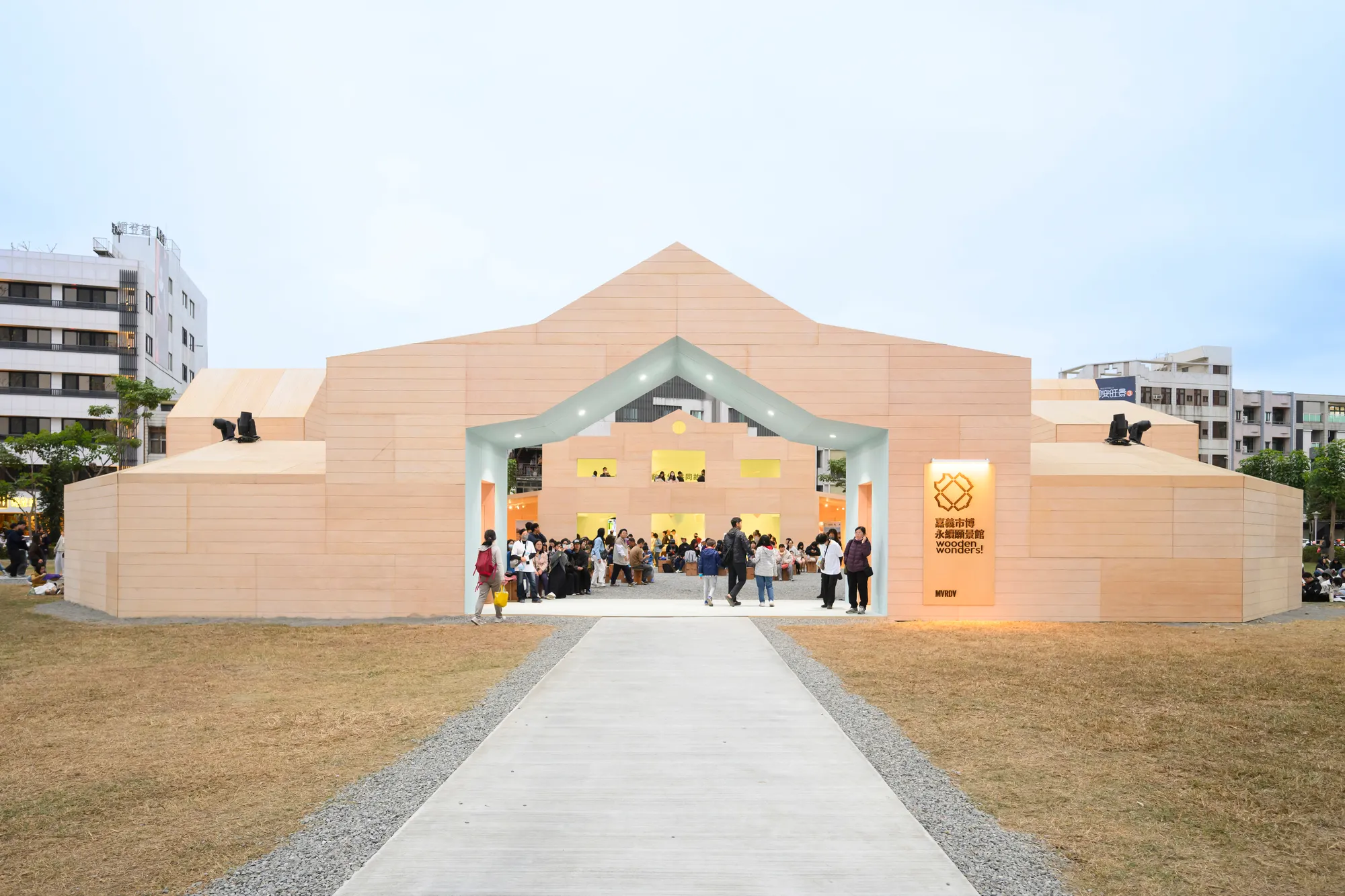
Wooden Wonders: Chiayi City Expo by MVRDV
A temporary timber pavilion by MVRDV celebrating Chiayi’s wood heritage, reimagining sustainable futures through architecture, exhibition, and civic dialogue.


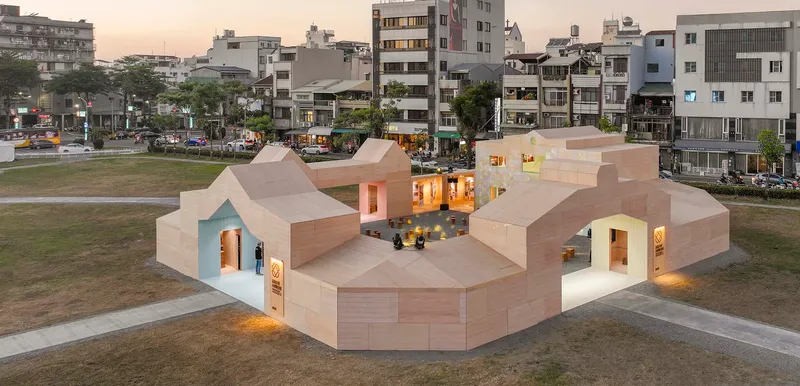
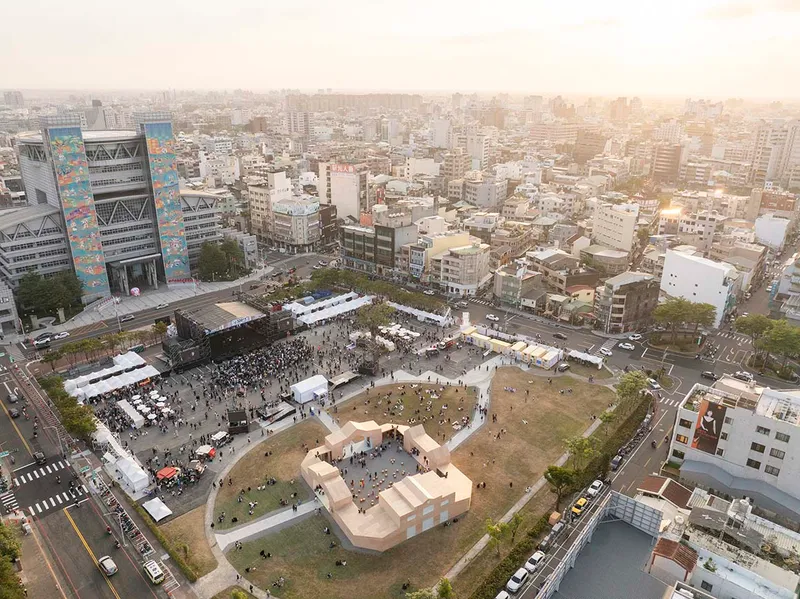
Created for the 321st anniversary of Chiayi City, Wooden Wonders is a temporary pavilion and exhibition by MVRDV that transforms a civic celebration into an architectural and cultural manifesto. Located opposite Chiayi’s City Hall, the 780 m² timber pavilion, completed in 2025, explores the past, present, and future of wood as a material deeply intertwined with the city’s identity, and increasingly relevant to global conversations on sustainability.
Reframing Timber Heritage and Climate Futures Through Architecture in Taiwan
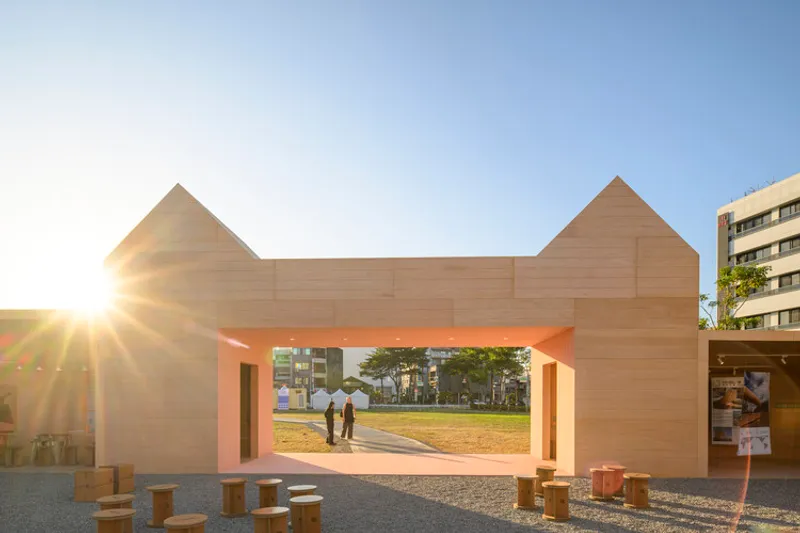
Rather than functioning merely as an exhibition container, Wooden Wonders positions architecture itself as an educational medium. Through form, material, and spatial organisation, the pavilion invites citizens to rediscover Chiayi’s timber legacy and reconsider wood as a viable, forward-looking construction material in an era shaped by climate urgency.
Chiayi and the Legacy of Wood
Chiayi’s historical relationship with timber is inseparable from its geography. Situated near the dense forests of Taiwan’s mountainous interior, the city developed as a key centre for the timber industry. Wood shaped everyday life in Chiayi, from toys and furniture to entire neighbourhoods of wooden buildings.
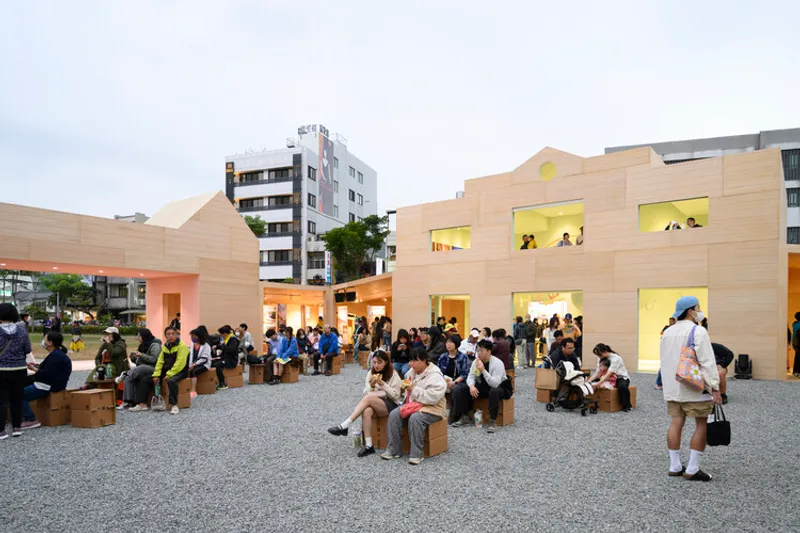
As forests became protected and construction methods shifted toward concrete and steel, much of this knowledge faded from public consciousness. Yet more than 6,000 timber buildings still remain in Chiayi, quiet witnesses to a material culture now at risk of being forgotten. In recent years, the city government has begun recognising and restoring this heritage, creating fertile ground for Wooden Wonders to emerge as both reflection and catalyst.
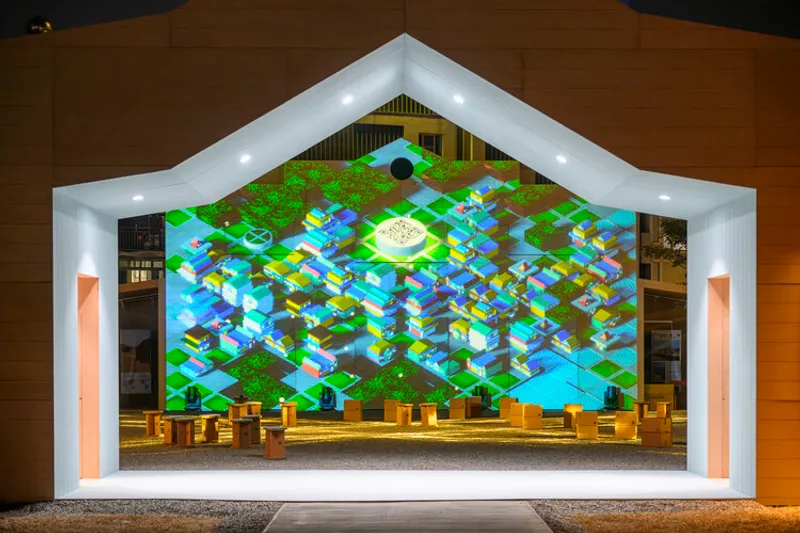
A Pavilion as Urban Living Room
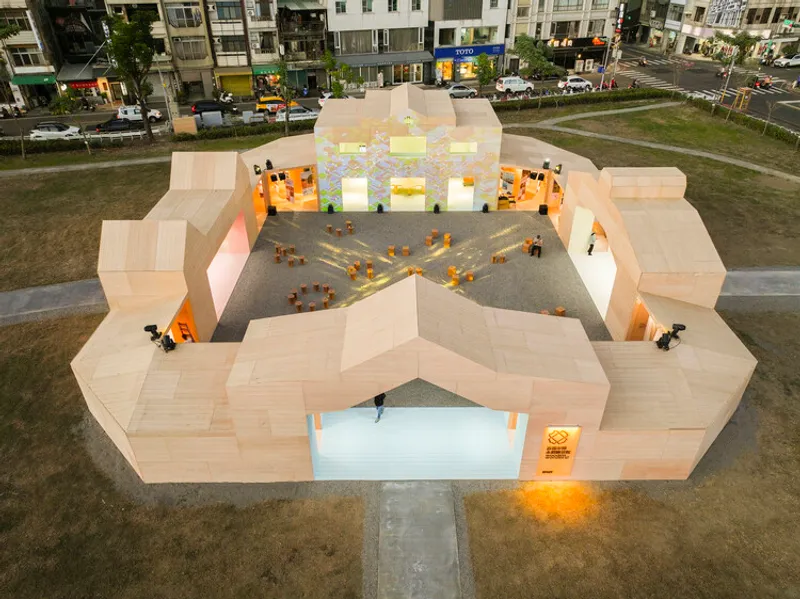
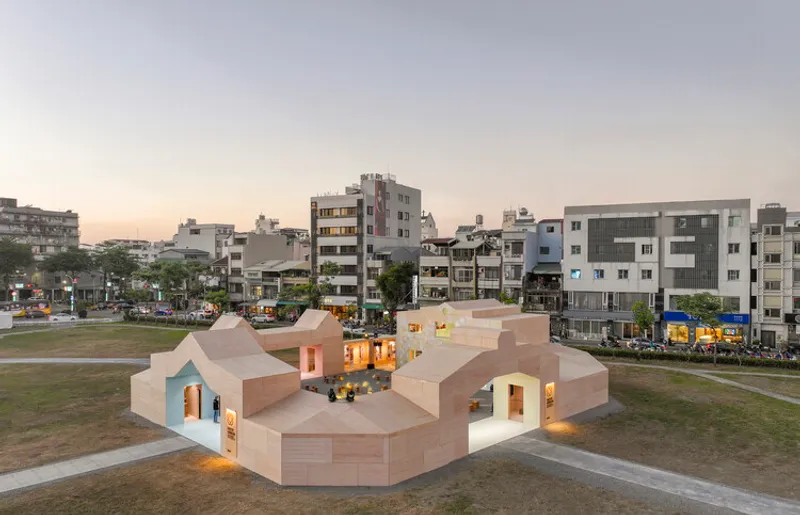
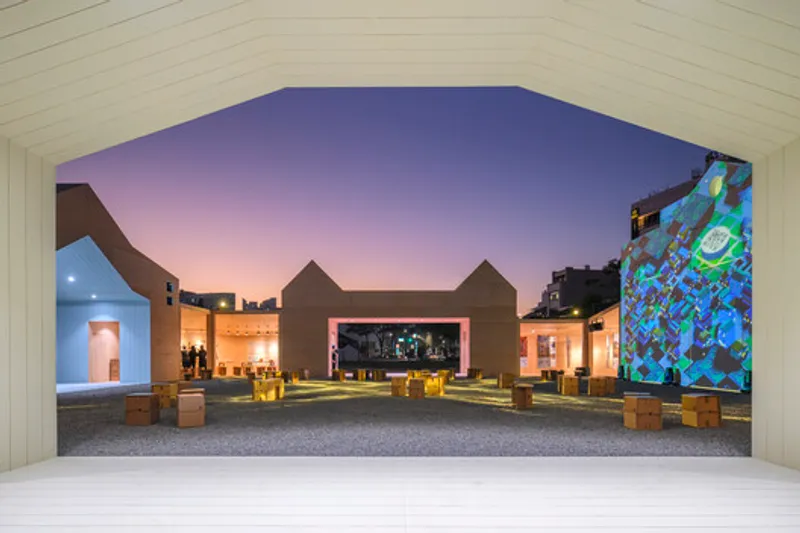
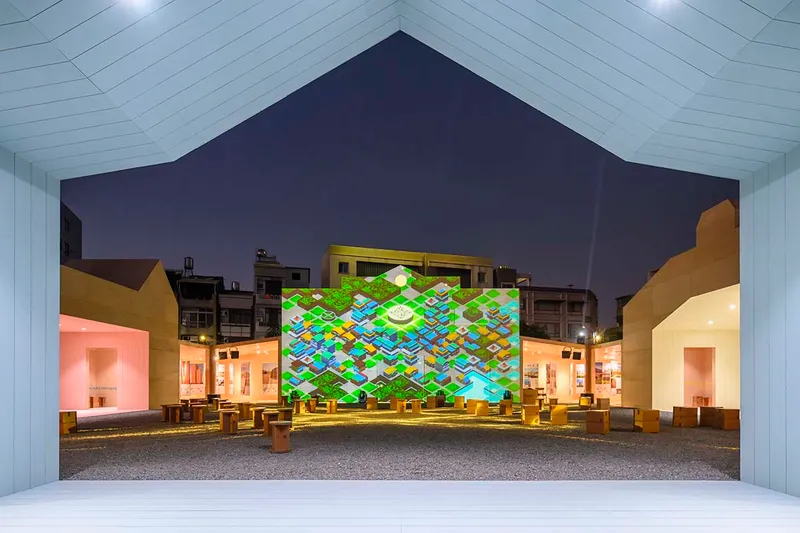
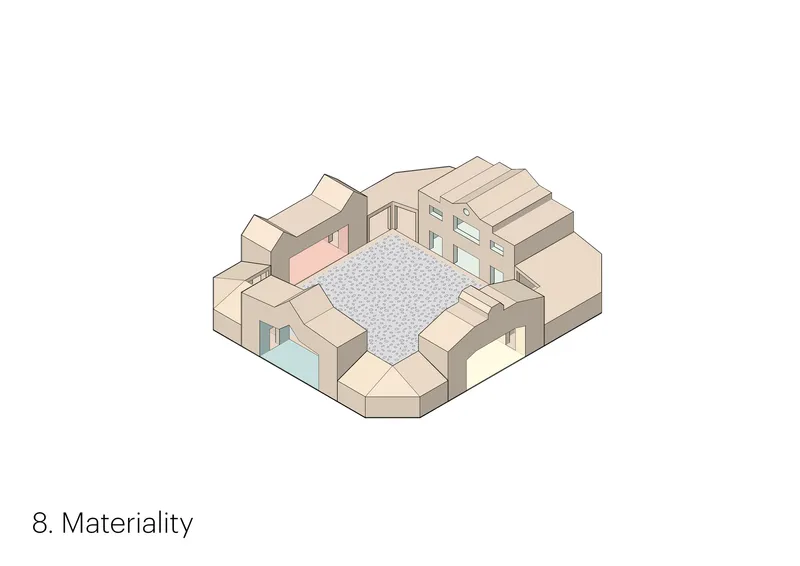
Wooden Wonders is conceived as a temporary civic space rather than a closed monument. Its plan encloses a square central courtyard, turning the pavilion inward and creating a calm gathering space shielded from surrounding streets. During the anniversary celebrations, this courtyard becomes an urban living room: hosting events, conversations, and evening light projections that animate the pavilion’s façades.
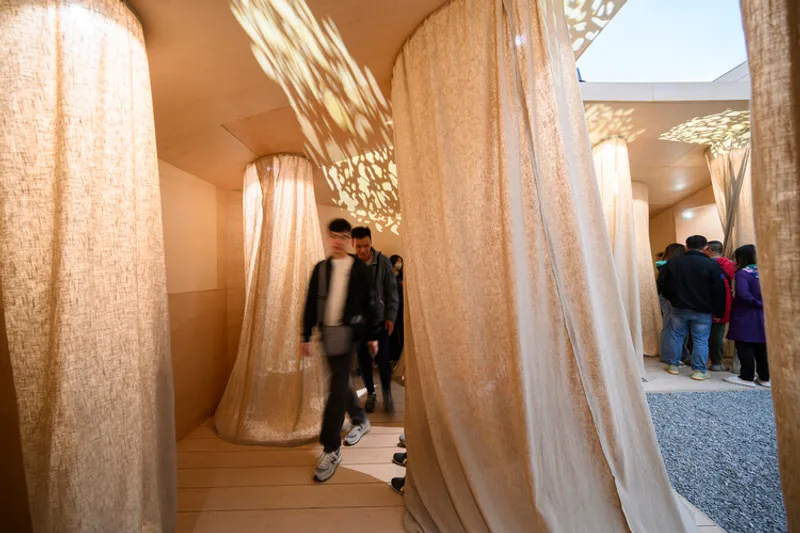
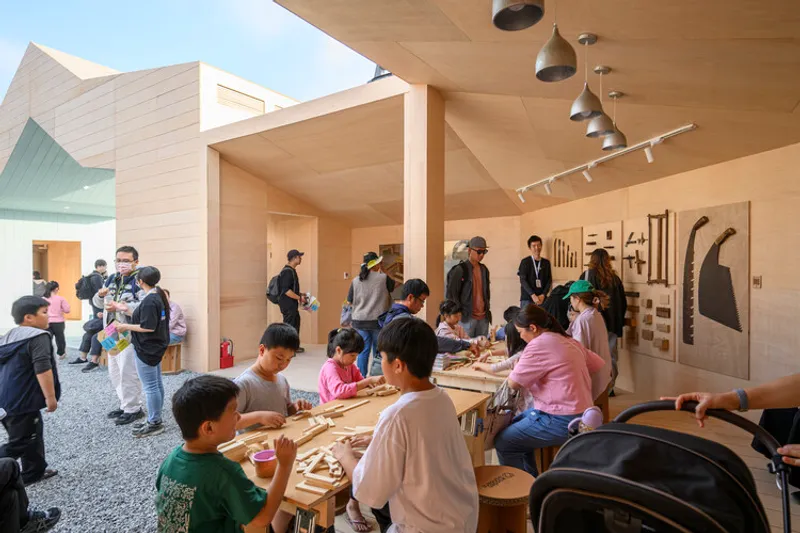
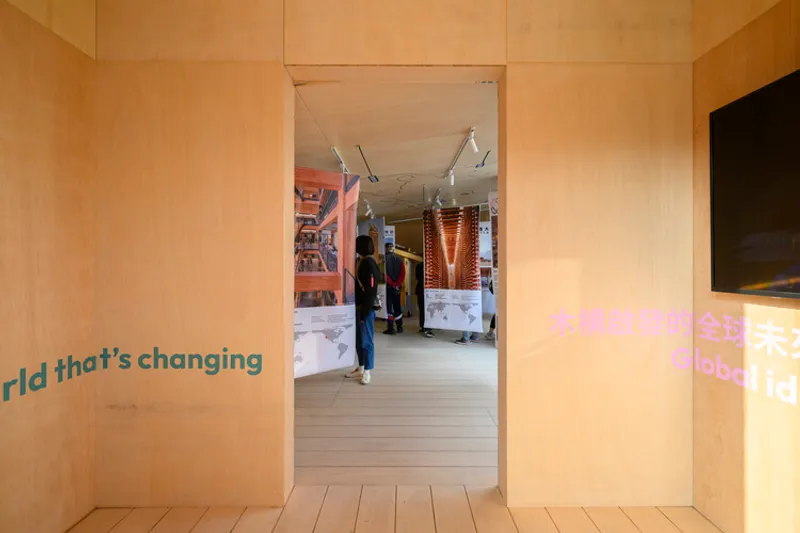
The perimeter structure surrounding the courtyard houses the exhibition, forming a continuous spatial loop that encourages exploration while maintaining clear orientation. This layout reinforces the pavilion’s role as both exhibition and meeting place, blending cultural programming with everyday urban life.
Architecture Informed by Research
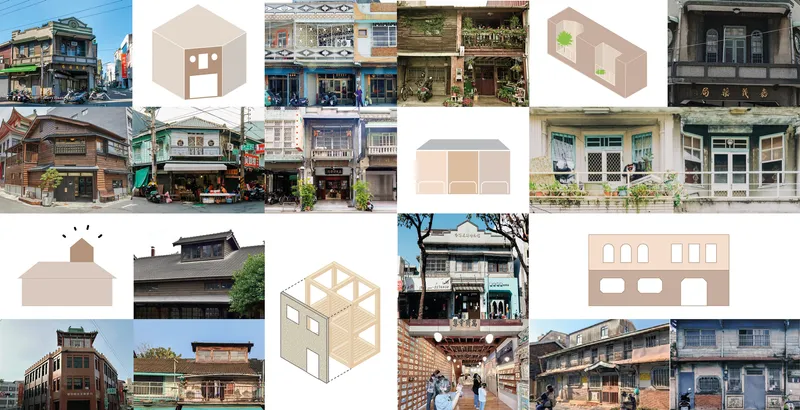
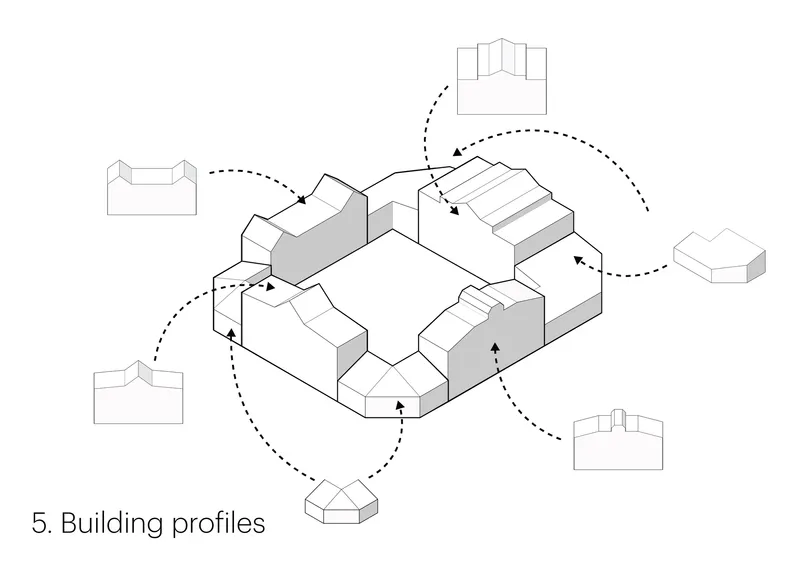
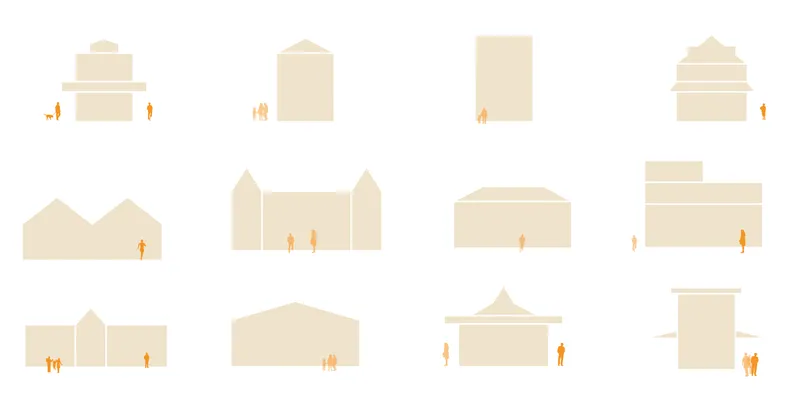
MVRDV began the design process with a detailed study of Chiayi’s existing timber buildings, uncovering an eclectic architectural lineage spanning multiple periods and styles. Despite this diversity, recurring characteristics emerged: diagonal corner cuts that emphasise street intersections, and expressive rooflines shaped by ornamental crowns and decorative façade elements.
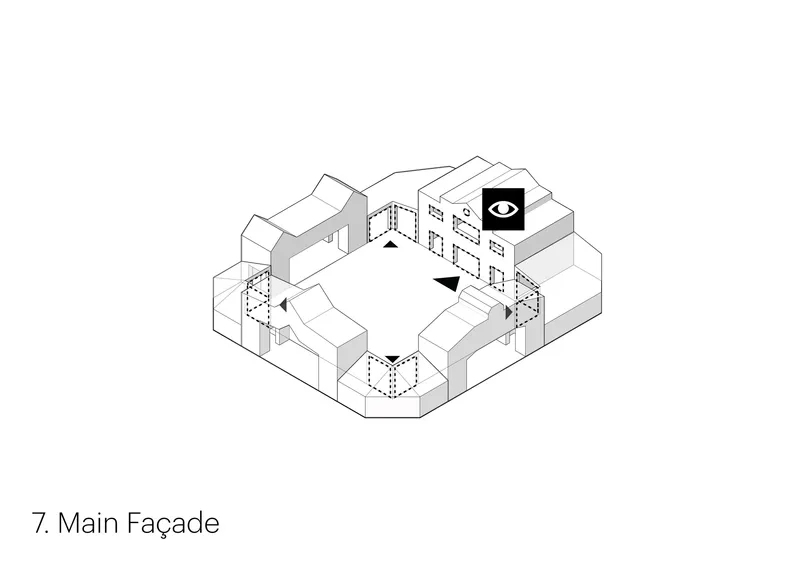
These features are reinterpreted in the pavilion’s architecture. The structure’s four chamfered corners reference Chiayi’s corner cafés and shops, while each side is crowned with a distinctive roofline inspired by notable local timber buildings, including museums and civic structures. The result is a form that feels contemporary yet unmistakably rooted in place.
Gateways, Colour, and Invitation
Three sides of the pavilion open toward the courtyard, forming generous gateways that draw visitors inside. The interiors of these gateways are finished in soft pastel colours, referencing the hues of the historical buildings that inspired them. This subtle use of colour creates moments of warmth and welcome, softening the pavilion’s geometric clarity.
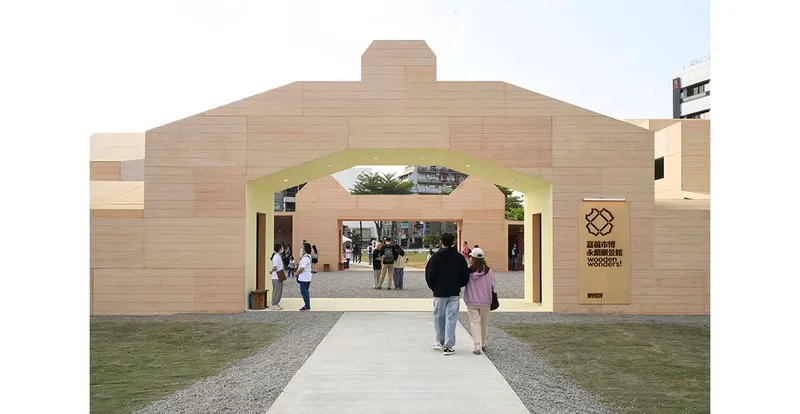
Rather than overwhelming visitors with didactic gestures, the architecture communicates through recognition and familiarity, allowing residents to see fragments of their city reflected back at them in a new configuration.
Timber as Message and Medium
In Taiwan, timber construction has long been perceived as less reliable than concrete or steel, a perception reinforced by seismic regulations and post-war modernisation. Wooden Wonders takes a deliberate and bold stance against this bias.
As Jacob van Rijs, founding partner of MVRDV, notes, the story of timber in Chiayi mirrors global shifts in attitude toward the material. Once common and pragmatic, wood was sidelined in favour of industrial materials. Today, however, the climate crisis reframes this narrative: wood stores carbon, while concrete and steel release significant emissions, and decades of innovation in engineered timber have expanded its structural potential.
The pavilion itself embodies this argument, using timber not nostalgically, but confidently, as a material capable of shaping contemporary public architecture.
Exhibition as Spatial Journey
The exhibition occupies the perimeter spaces around the courtyard and is organised into five thematic sections, each addressing a different dimension of Chiayi’s relationship with wood.
- The Forest immerses visitors in the origins of timber, engaging all five senses to explain how wood is grown, harvested, and renewed.
- The Workshop celebrates traditional craftsmanship, highlighting skills and techniques that once defined local industry.
The remaining three sections focus on Chiayi’s ambition to become Taiwan’s “Wood Capital.” These spaces draw comparisons with regions such as Norway and New Zealand, illustrating how other places have preserved and modernised their timber cultures under contemporary conditions.
Imagining a Timber Future
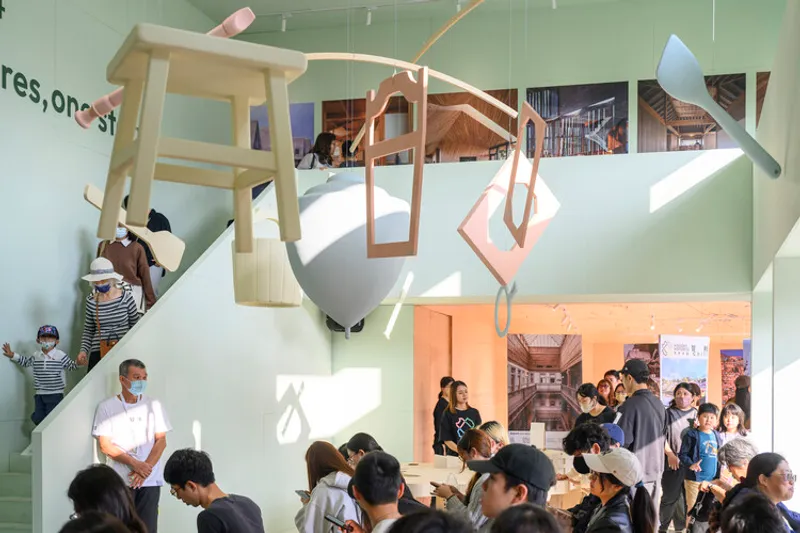
The exhibition culminates in the main hall, a generous two-storey space occupying the pavilion’s northern side. Here, visitors are invited to imagine a future city shaped by renewed timber construction: through speculative displays, proposals, and participatory elements that encourage public input.
Rather than presenting fixed answers, the exhibition frames timber as an open-ended opportunity, asking how material choices might influence urban life, environmental responsibility, and cultural continuity.
Architecture as Civic Catalyst
Beyond the exhibition itself, Wooden Wonders functions as a platform for public dialogue. Throughout the anniversary celebrations, the pavilion hosts lectures, forums, and discussions involving architects, urban planners, academics, and city officials. These events reinforce the pavilion’s role as a space where architecture extends into policy, education, and collective imagination.
Evenings transform the building once more, as light projections animate the façades, reinforcing the pavilion’s presence as a civic landmark despite its temporary nature.
Temporary, Yet Enduring
Although designed as a temporary structure, Wooden Wonders aspires to have a lasting impact. Its success is measured not in permanence of material, but in the conversations it sparks and the attitudes it shifts.
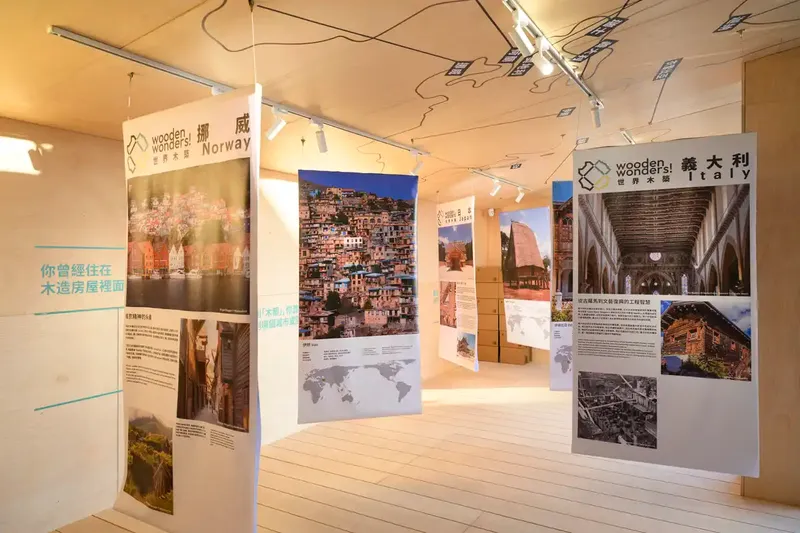
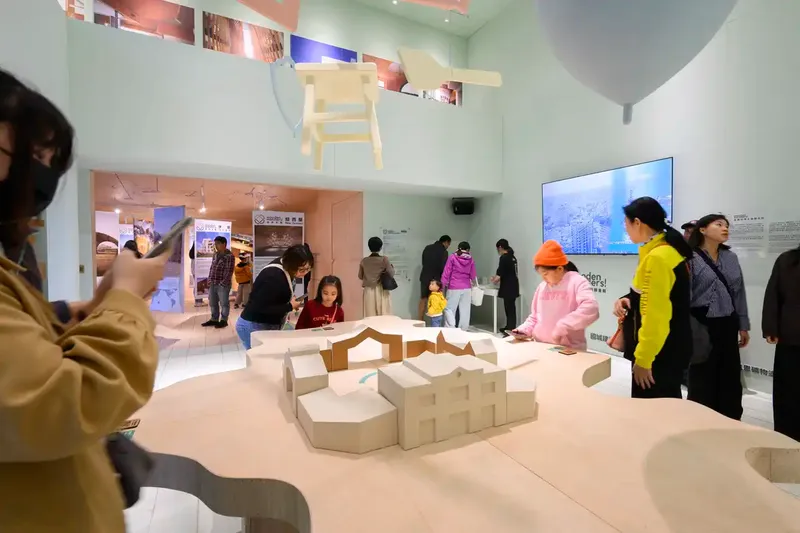
By combining architectural research, exhibition design, and public programming, MVRDV demonstrates how a pavilion can operate simultaneously as memory device, educational tool, and future-oriented manifesto.
Reclaiming Timber’s Relevance
Wooden Wonders ultimately reframes timber not as a relic of the past, but as a material of possibility. In doing so, it reconnects Chiayi with its own heritage while aligning the city with global sustainability discourse.
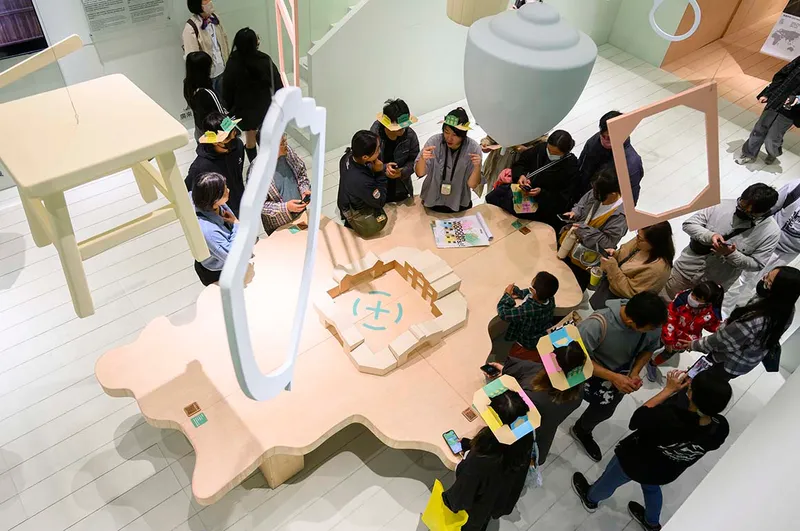
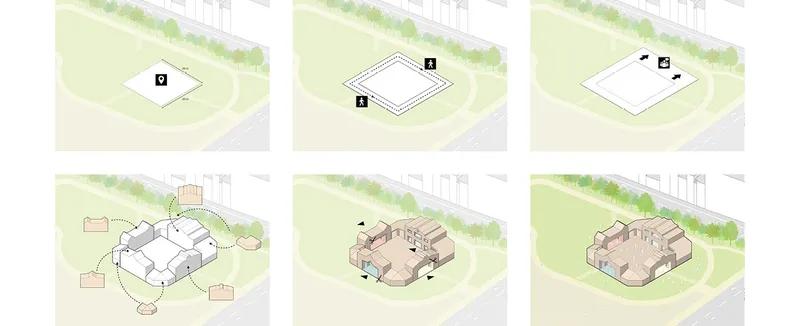
In a moment when cities worldwide are rethinking how they build, Wooden Wonders offers a powerful reminder: sometimes, the path forward begins by looking carefully at what was already there.
All the Photographs are works of Shephotoerd



Popular Articles
Popular articles from the community


Lunar Spiral: Space Architecture Shaped by the Mathematics of the Universe
Lunar Spiral reimagines space architecture through Fibonacci geometry, lunar regolith, levitating habitats, and self-sustaining Moon living.

Play: Fragments of Their World
Familiar architecture becomes modular playground design, creating safe spaces where displaced children can learn, connect, imagine and play.

The Musturak Paradise: Senior Living Architecture for a Connected Future in Temara, Morocco
The Musturak Paradise reimagines senior living architecture in Temara via private homes, social spaces, culture, community, and shared care.

The Earth Pod: 3D Printed Homes for Resilient Refugee Communities
The Earth Pod reimagines refugee housing through 3D printed homes made from clay, combining resilience, self-sufficiency, and rapid shelter.

Similar Reads
You might also enjoy these articles


Hodi-Mandai Geram
Project Function: Preservation and revitalization of the Intangible heritage and socio-spatial identity of the Hodi by Housing, Cultural Memory Center, Sacred Grove, landscape, local tourism economy


Olio Towers: A Mid-Rise for Performers That Fuses Housing, Rehearsal, and Stage
Located blocks from Houston's Theater District, this modular tower stacks living units around a central performance atrium.

Oasis: Modular Green Housing Carved into Dhaka's Urban Fabric
A shortlisted Plugin Housing entry reclaims unauthorized settlements in Dhaka with stepped concrete volumes, green roofs, and ventilation-driven design.

Black Hole: A Floating Megastructure for the Post-Physical Era
Emiliano Mazzarotto envisions a spherical, self-scaling arena where e-sports, digital hotels, and holographic stadiums replace traditional public space.


Explore Wood Construction Competitions
Discover active competitions in this discipline



Challenge to reimagine the Iron Throne


Photograph architecture without architects


Illustrate the lost glory of Angkor Wat - Render Challenge


Design challenge to reuse E-waste
Comments (0)
Please login or sign up to add comments
No comments yet. Be the first to comment!