
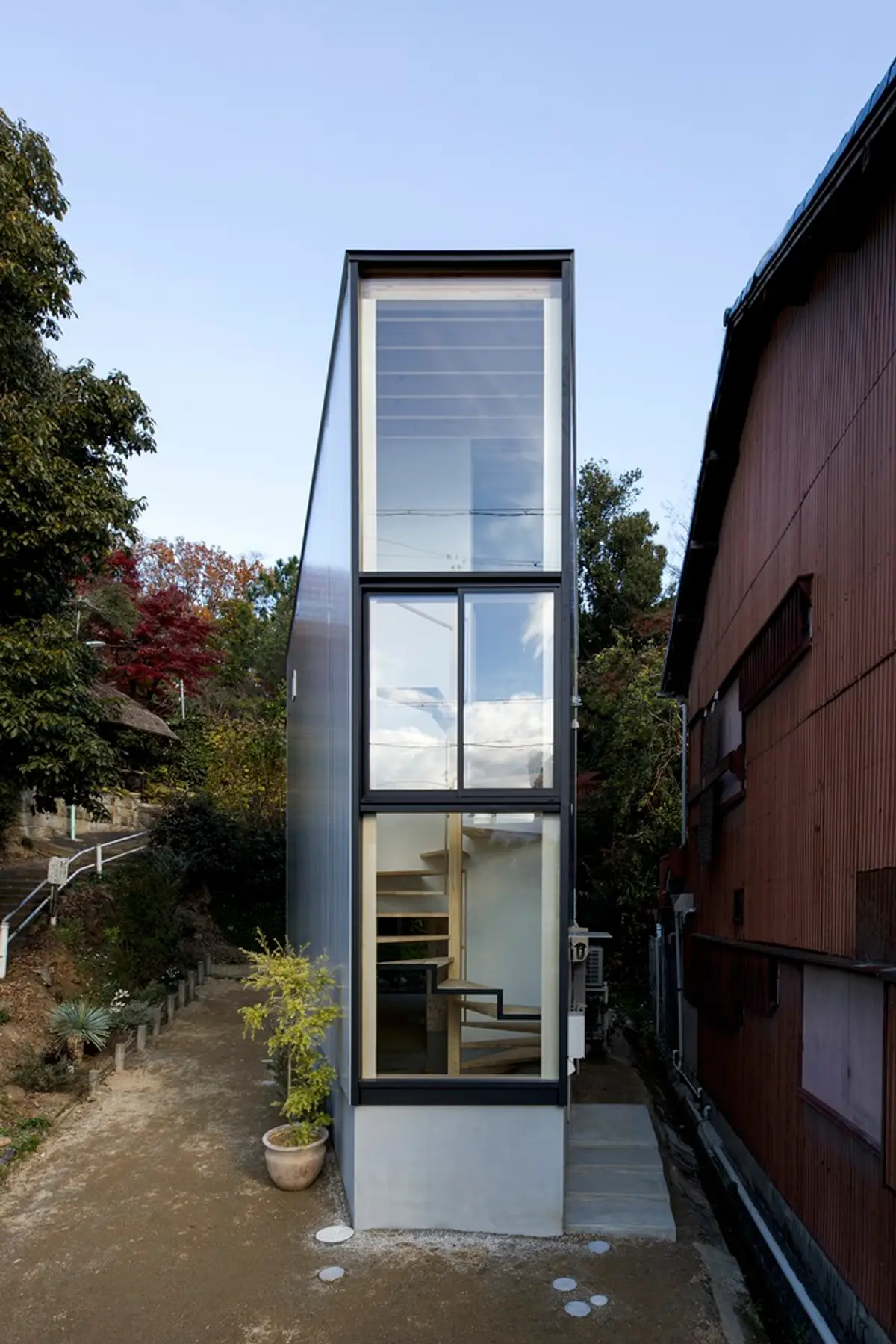
Workshop in Shiroyama by Katsutoshi Sasaki + Associates: A Compact Studio Bridging City and Forest
Compact mixed-use studio in Nagoya by Katsutoshi Sasaki + Associates, seamlessly connecting urban edge and forest through thoughtful architecture.


A Micro-Architecture Nestled Between Urban Density and Sacred Forest
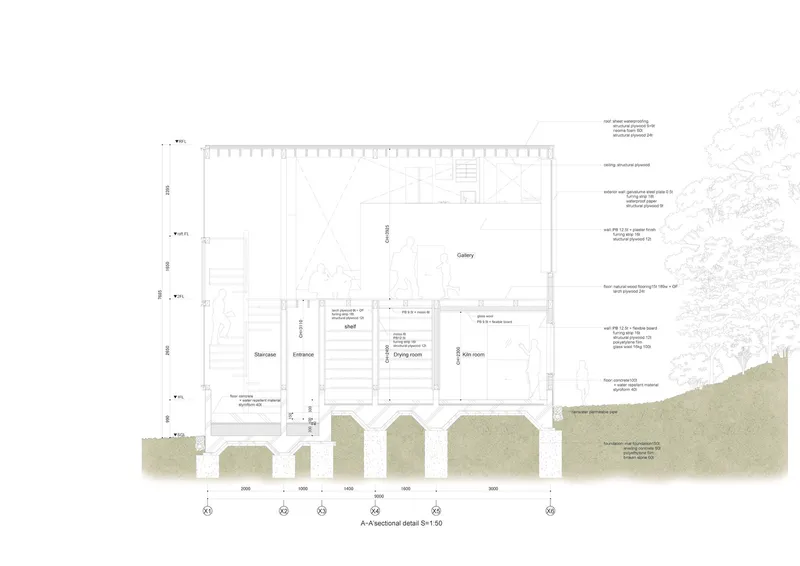
The Workshop in Shiroyama by Katsutoshi Sasaki + Associates is a compact, 62-square-meter mixed-use building situated at a striking threshold between contrasting landscapes: a dense urban neighborhood to the west and a tranquil forest owned by a shrine to the east. Despite its small scale and a highly restricted buildable footprint—limited to just 30 m² due to strict zoning and regulatory constraints—the design achieves a spatial richness and environmental sensitivity that far exceed its modest dimensions.
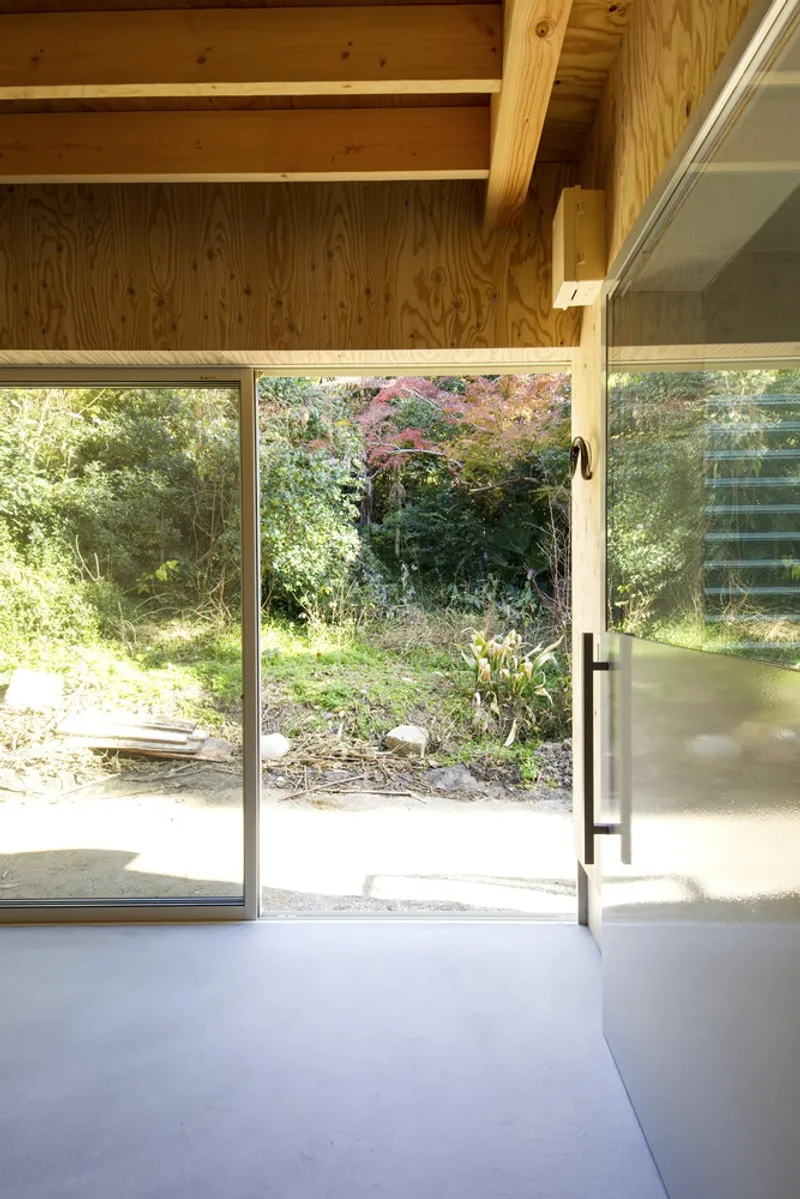
Conceived as a studio, gallery, and guesthouse for a ceramic artist, the project masterfully navigates its physical limitations to create a multi-layered architectural experience that shifts with each viewpoint and level.
Site Strategy: Weaving Nature Into Urban Fabric
The building occupies a rare and transitional site—one where city infrastructure abruptly gives way to sacred woodland. Katsutoshi Sasaki + Associates approached this unique context with a design that blurs the boundaries between the built and natural environments.
Three carefully positioned openings orchestrate visual and spatial connections to the surroundings:
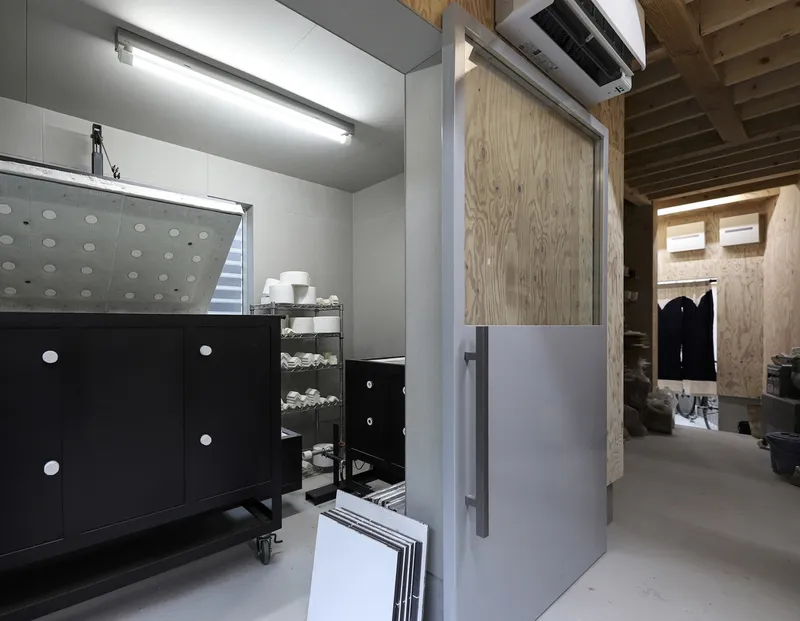
- Workshop Forest Window: Located on the ground floor, this aperture opens the ceramics studio toward the forest, allowing the artist to work in what feels like a woodland retreat—even though the site is in the urban core of Nagoya.
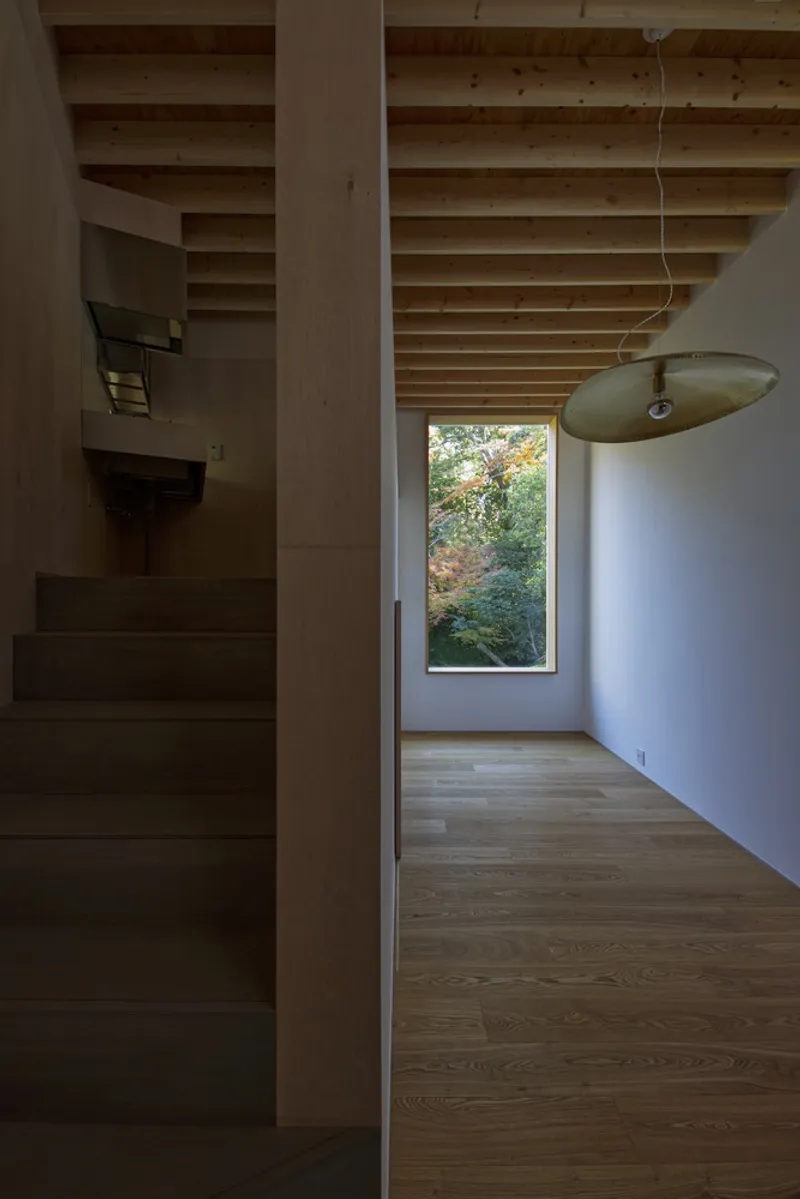
- Staircase Aperture: As one ascends the spiral staircase, the view transitions—from the domestic scale of adjacent homes to panoramic urban vistas—marking a journey from the intimate to the expansive.
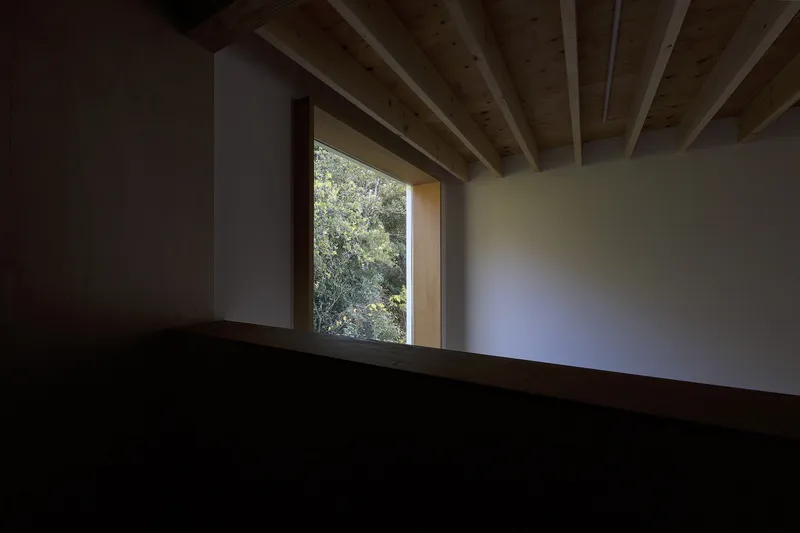
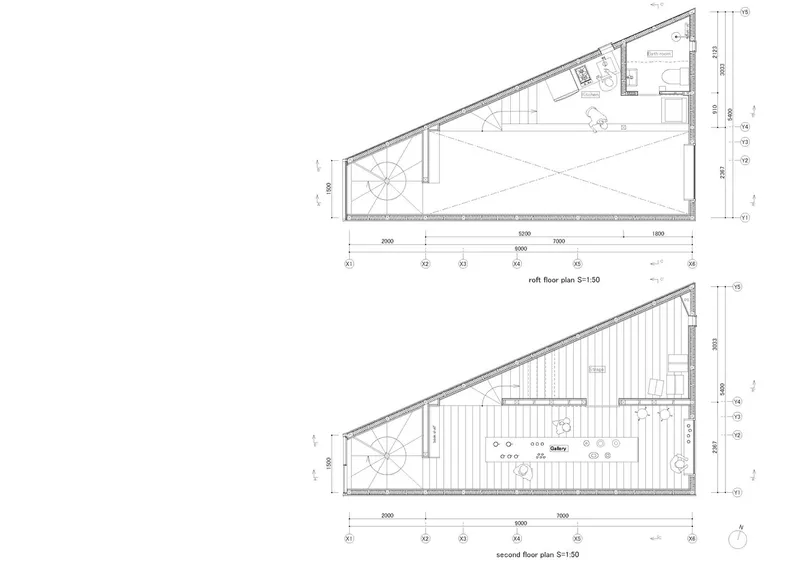
- Second-Floor Landscape Window: Facing east, this large picture window frames treetops and sky, transforming the upstairs gallery and guest space into a meditative observatory above the forest undergrowth.
Design Response: Light, Openness, and Material Clarity
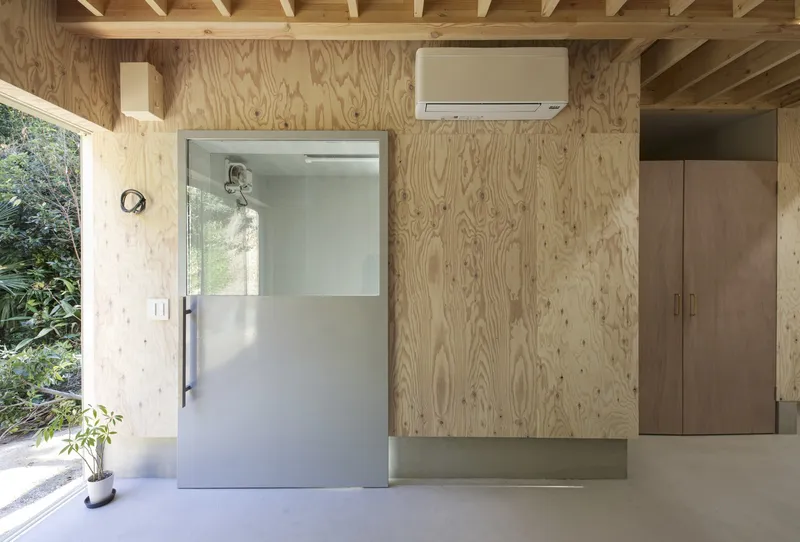
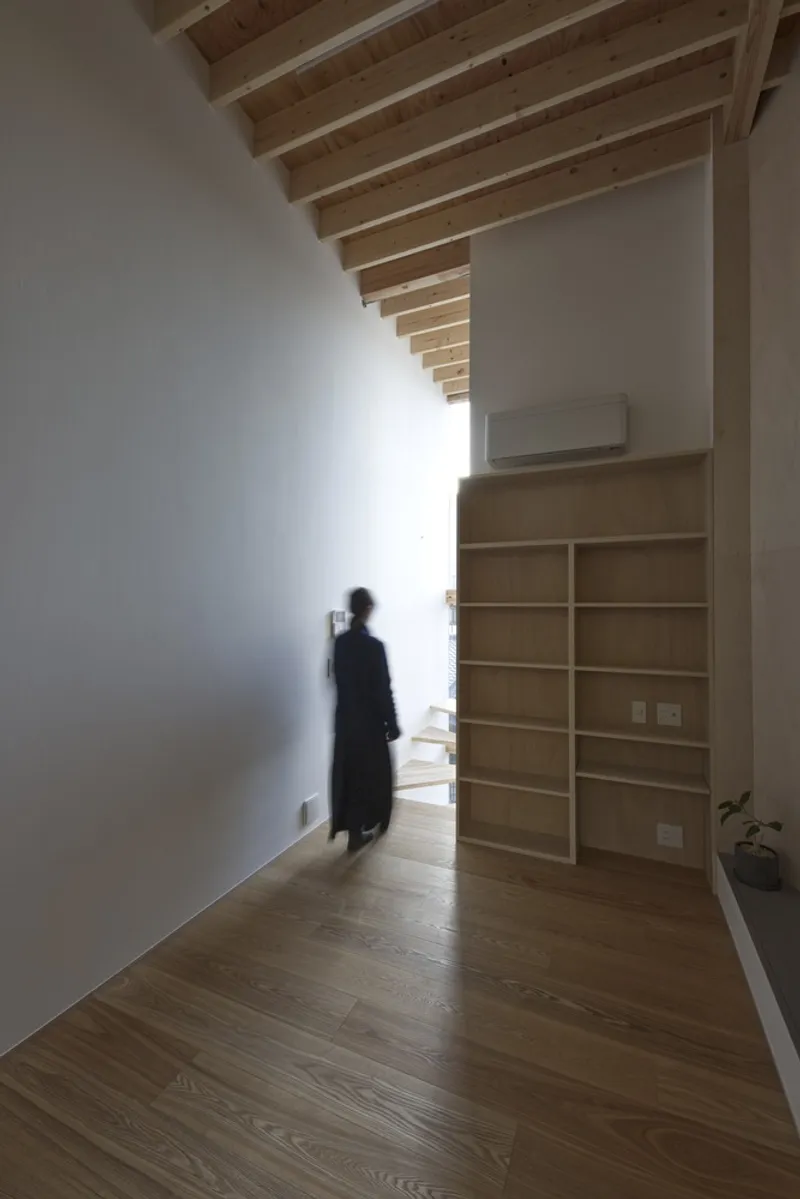
Despite its tight floor area, the building feels generous thanks to its tall ceilings, exposed timber beams, and expansive glazing. The architecture maintains a clean, minimalist material palette, allowing natural light and outdoor views to dominate the spatial atmosphere.
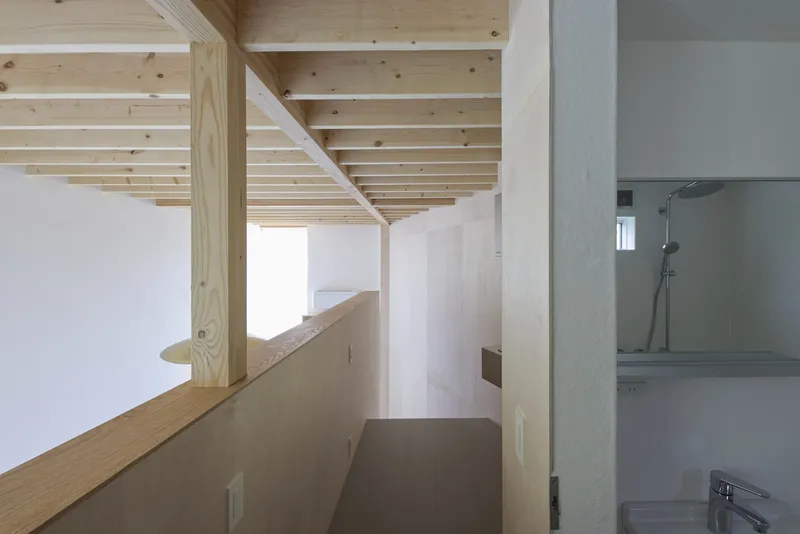
The ground floor houses the workshop—a functional yet serene environment designed to nurture creative focus. The upper floor accommodates a dual-purpose space that functions both as a gallery for showcasing ceramic work and as a simple guest suite.
Sliding partitions and compact closets offer flexible usage without cluttering the space. Every structural and spatial element is carefully considered, resulting in a form that is at once geometrically crisp and contextually responsive.
Regulatory Constraints as Design Opportunity
The workshop’s design cleverly transforms regulatory limitations into a driving force for creativity. Zoning and forest proximity laws restricted the footprint to a narrow zone, prompting a vertical composition with strong site orientation. Rather than fighting the constraints, the design embraces them, producing a structure that feels both rooted and elevated, compact yet expansive.
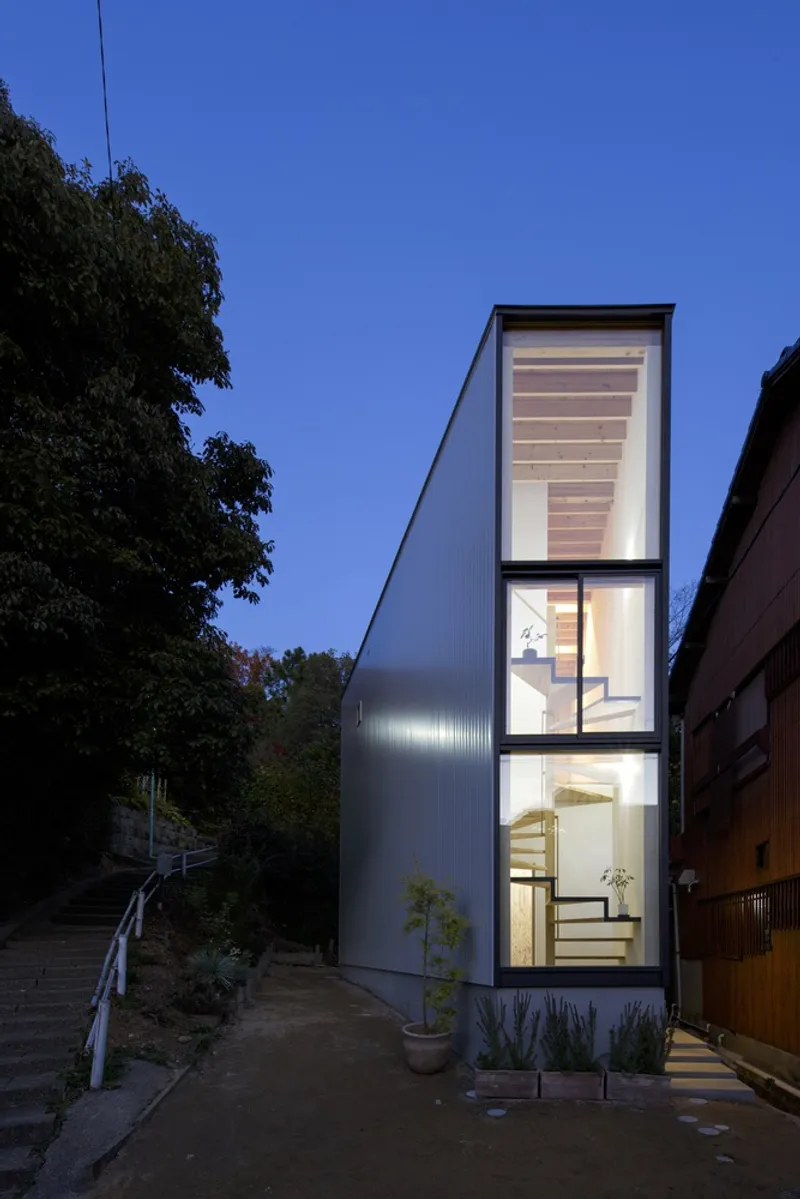
The building’s scale is modest, but its experiential depth is remarkable, functioning as a lens that reveals the layered landscape of Nagoya’s edge—where city, shrine, and forest meet.
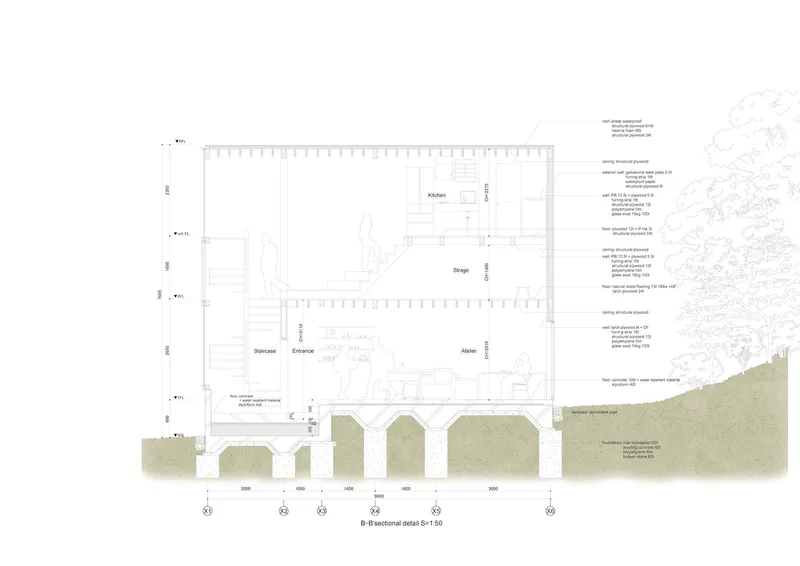
A Harmonious Mixed-Use Microstructure
At just 62 square meters, the Workshop in Shiroyama is a case study in small-scale architectural intelligence. It is programmatically flexible, environmentally responsive, and sensitively crafted to support both artistic production and quiet living.
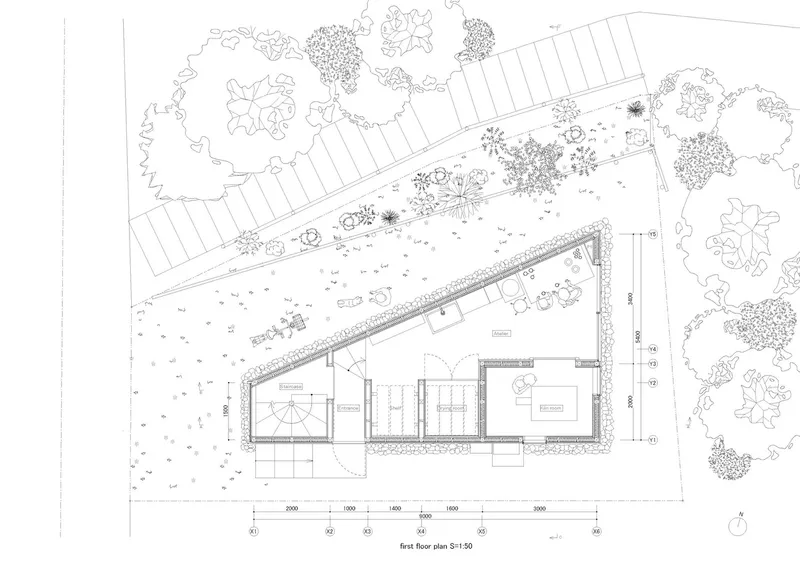
Katsutoshi Sasaki + Associates have created a micro-architecture that transcends its physical limits, offering a deeply atmospheric and site-specific design that honors both the client’s creative practice and the natural surroundings.


Popular Articles
Popular articles from the community


Temporary Home for Dogs: A Reversed Zoo Rethinks Animal Shelter Architecture
In Bucharest, a sinuous corridor and freed landscape flip the logic of containment, designing a shelter that works to make itself unnecessary.

The Amber Palace Opera: A Geological Fiction Surfaces on Tallinn's Baltic Waterfront
Pierre Brillard reimagines a Baltic legend as a public landscape, opera house, and waterfront promenade rooted in Tallinn's coastal identity.

Opera by the Sea Estonia: Three Shells Dissolving Architecture into Tallinn's Coastline
A winning opera house proposal replaces monumental form with interconnected shells that blur the boundary between building, park and Baltic Sea.

Opera on the Sea: Driftwood Logic Shapes a Timber Opera House on Estonia's Coast
Trevor Orgill's opera house translates the entangled drift of floating timber into a civic building where wood, water, and music converge.

Similar Reads
You might also enjoy these articles


Hodi-Mandai Geram
Project Function: Preservation and revitalization of the Intangible heritage and socio-spatial identity of the Hodi by Housing, Cultural Memory Center, Sacred Grove, landscape, local tourism economy


Olio Towers: A Mid-Rise for Performers That Fuses Housing, Rehearsal, and Stage
Located blocks from Houston's Theater District, this modular tower stacks living units around a central performance atrium.

Oasis: Modular Green Housing Carved into Dhaka's Urban Fabric
A shortlisted Plugin Housing entry reclaims unauthorized settlements in Dhaka with stepped concrete volumes, green roofs, and ventilation-driven design.

Black Hole: A Floating Megastructure for the Post-Physical Era
Emiliano Mazzarotto envisions a spherical, self-scaling arena where e-sports, digital hotels, and holographic stadiums replace traditional public space.

Explore Tetsuo Kobori Architects Competitions
Discover active competitions in this discipline

Challenge to reimagine the Iron Throne

Photograph architecture without architects

Illustrate the lost glory of Angkor Wat - Render Challenge

Design challenge to reuse E-waste
Comments (0)
Please login or sign up to add comments
No comments yet. Be the first to comment!