
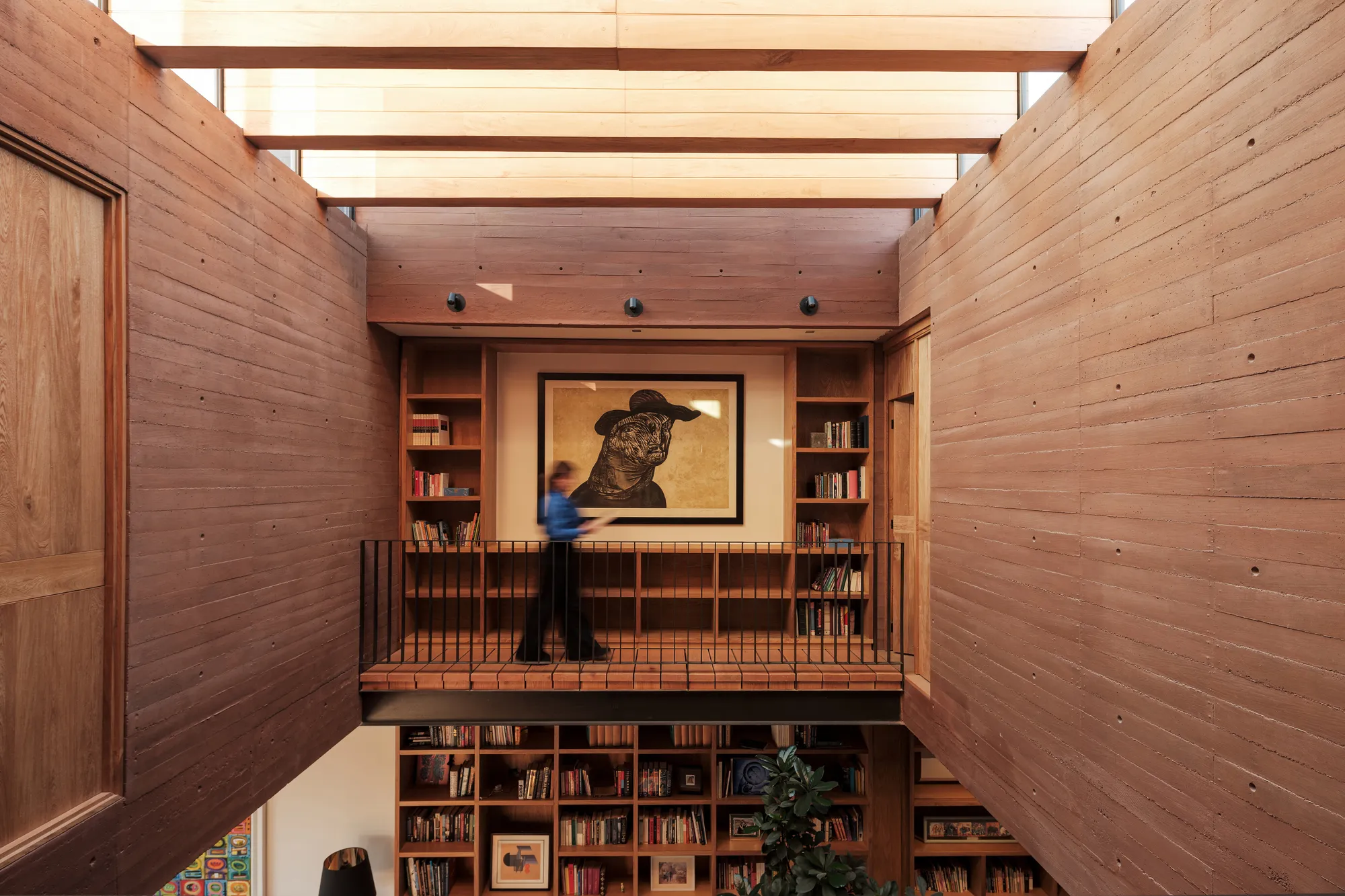
Writer’s House By em-estudio
Writer’s House is an introspective courtyard home where books, light, and concrete shape a private sanctuary for creativity and reflection.


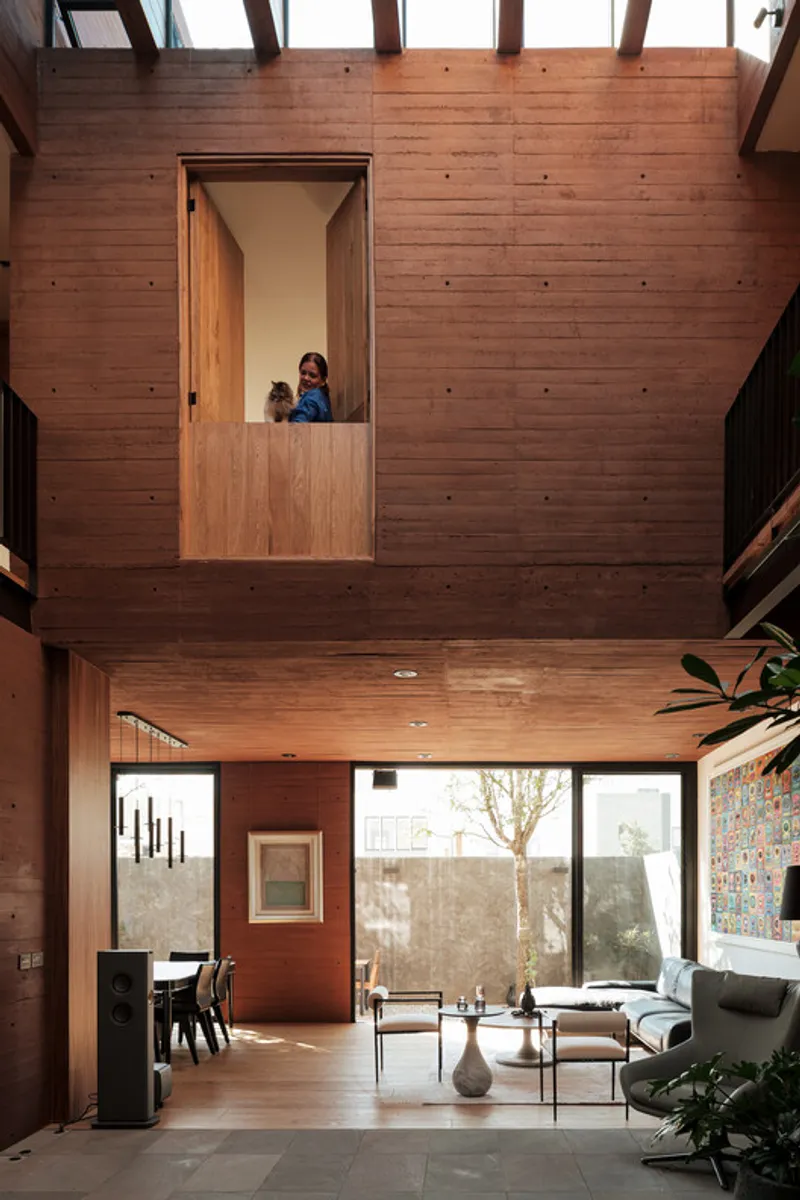
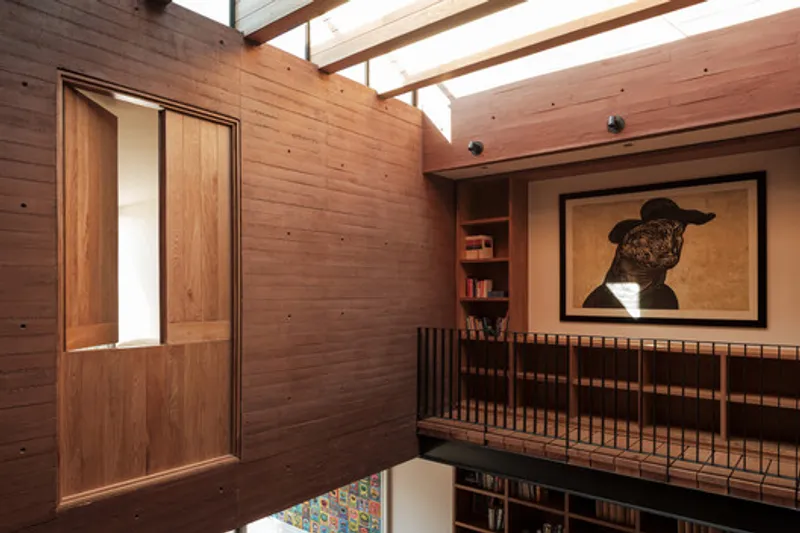
Located in Zapopan, Mexico, Writer’s House by em-estudio is a deeply introspective residential project that translates the solitary and reflective nature of writing into architecture. Conceived as a private refuge, the house is organized around a central courtyard that becomes both the spatial and symbolic heart of the home. This courtyard is defined by a double-height bookshelf — the project’s most iconic element — transforming literature itself into the architectural axis around which daily life unfolds.
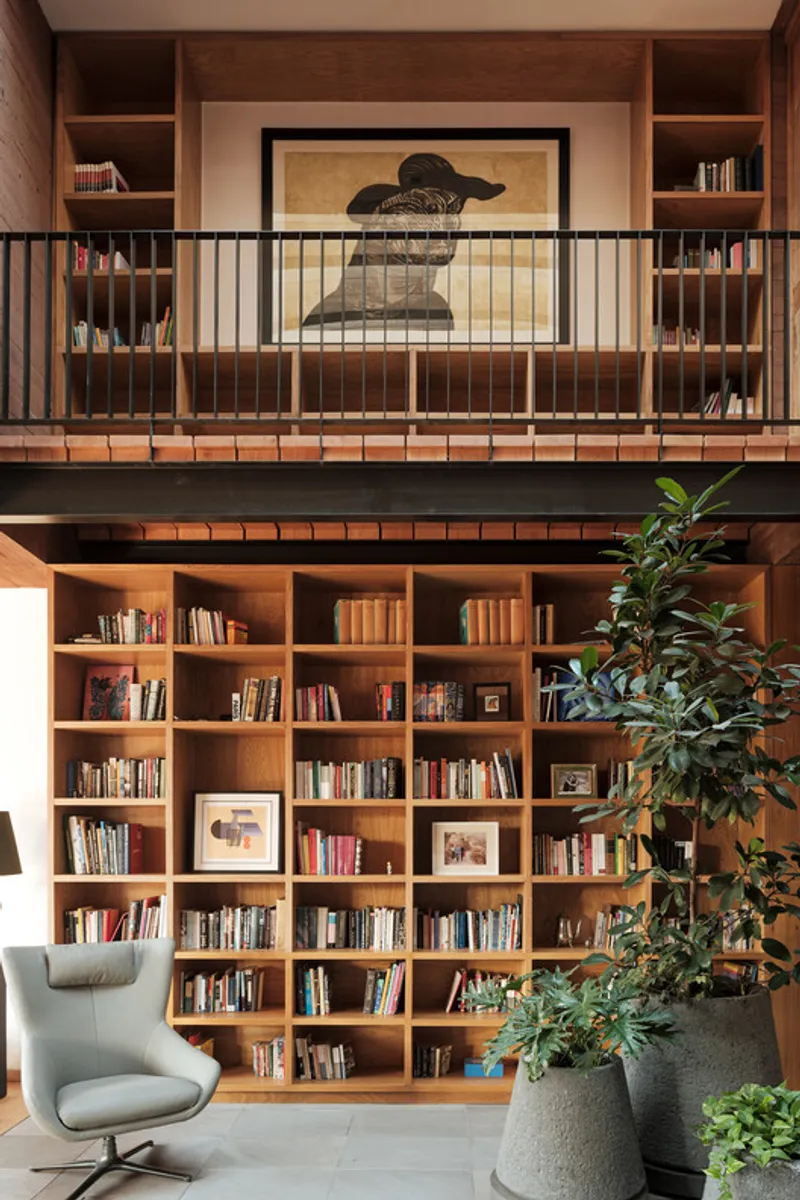
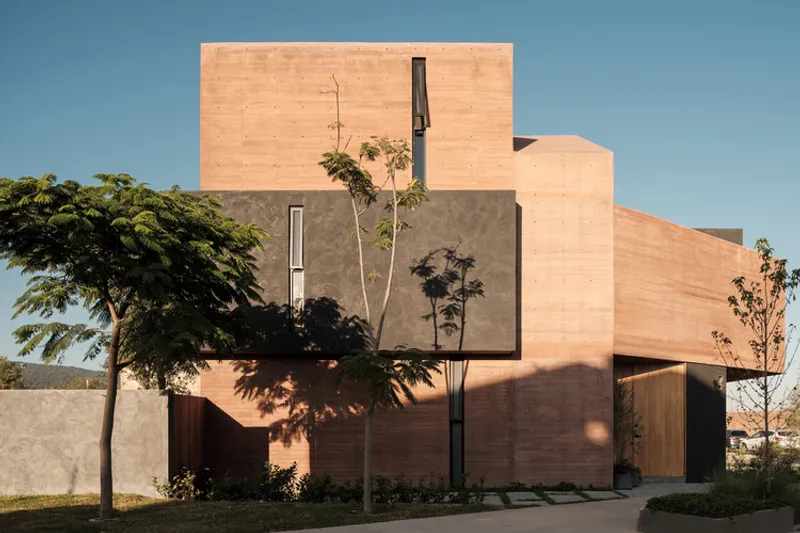
Rooted in the traditional Latin American courtyard house, the design prioritizes inward focus over outward expression. The building presents itself as a solid, stone-like volume to the exterior, deliberately closed off from the surrounding context to protect privacy and concentration. Inside, however, the house opens generously toward the courtyard, where light, air, and visual connections animate the interior spaces.
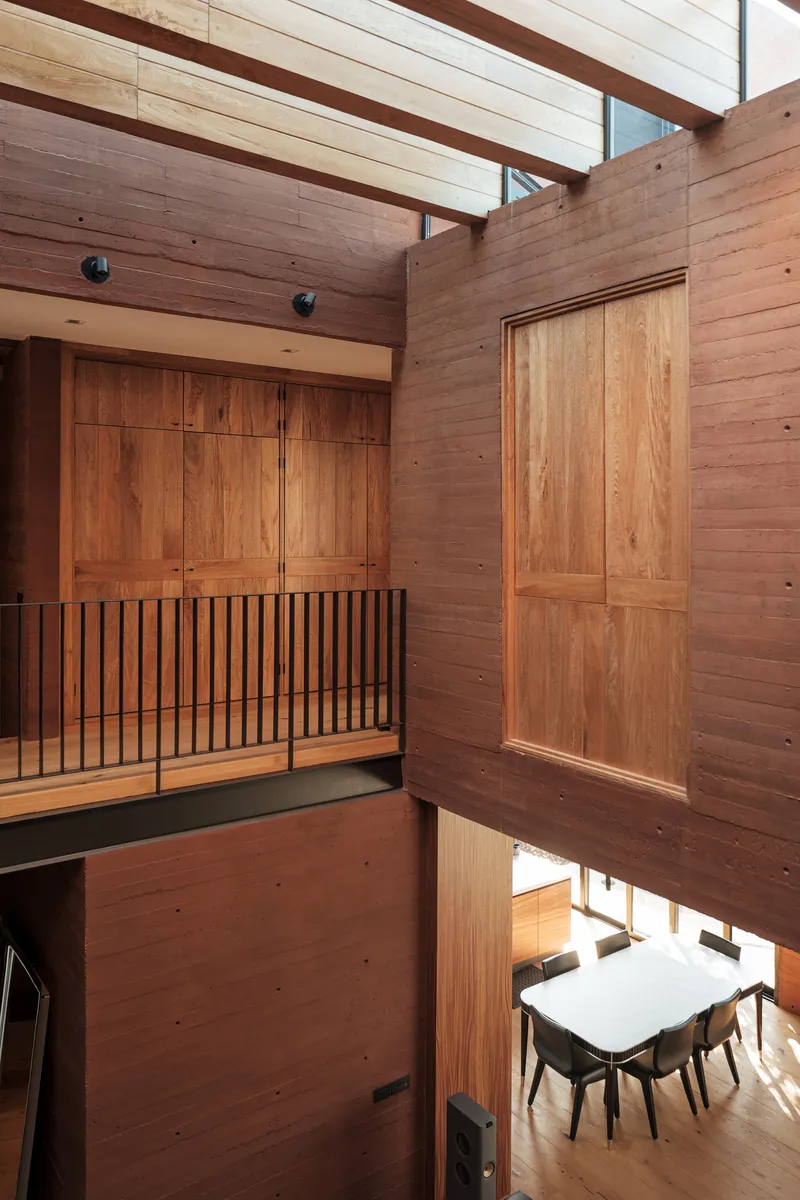
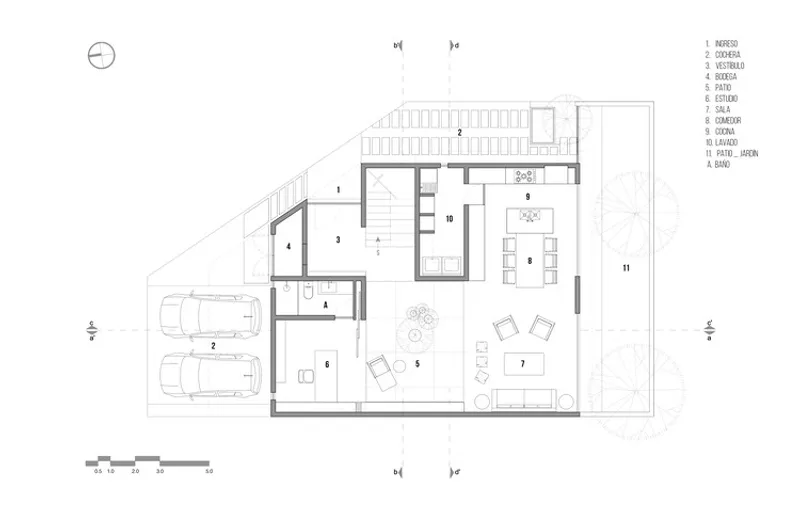
The spatial organization reinforces this centrality. Every room is oriented toward the courtyard-bookshelf, ensuring constant visual dialogue with the core creative space. Cross ventilation is a key design driver: openings facing the courtyard allow air to flow naturally through the house, cooling interiors and enhancing comfort in Zapopan’s climate without relying heavily on mechanical systems.
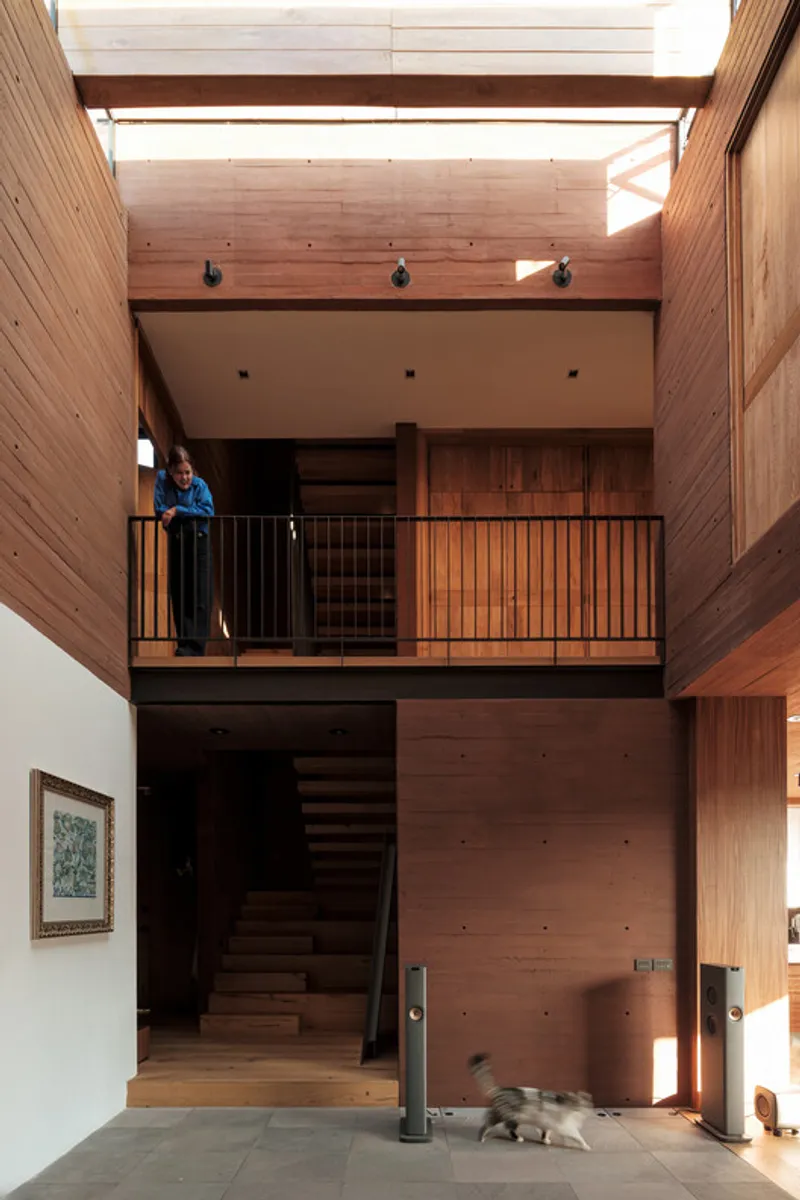
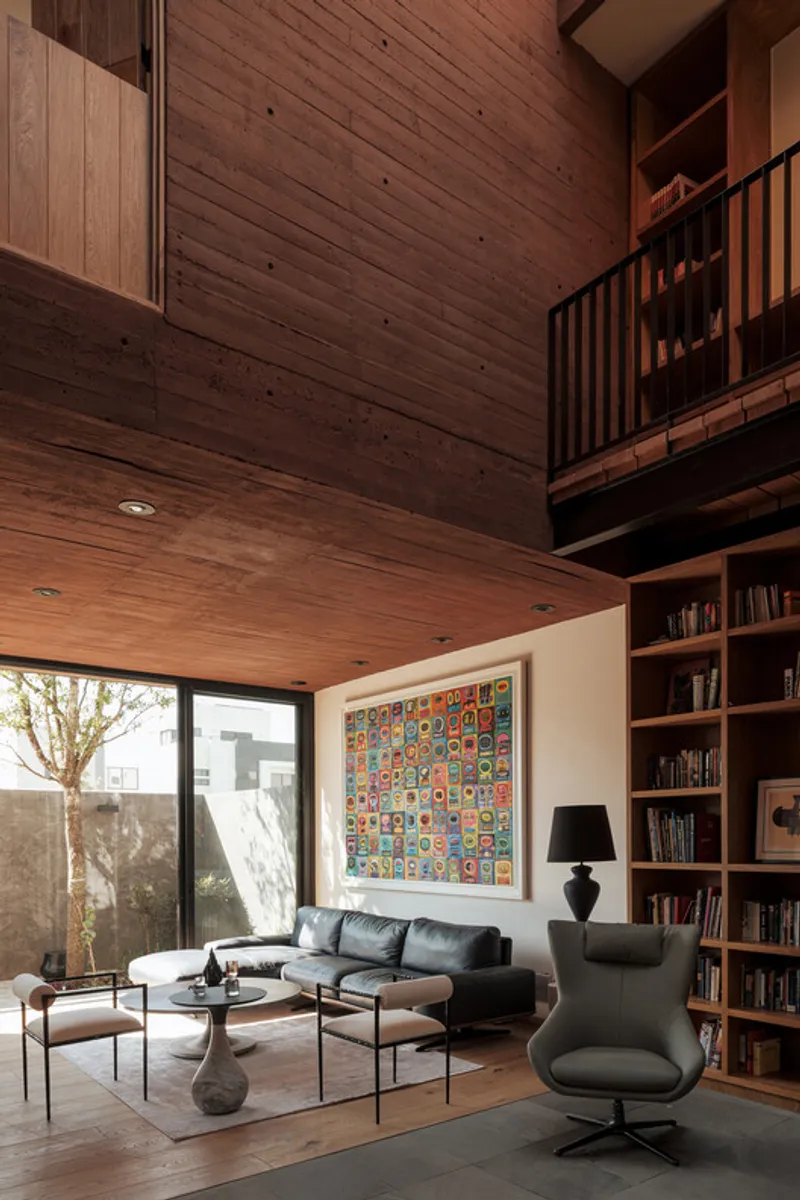
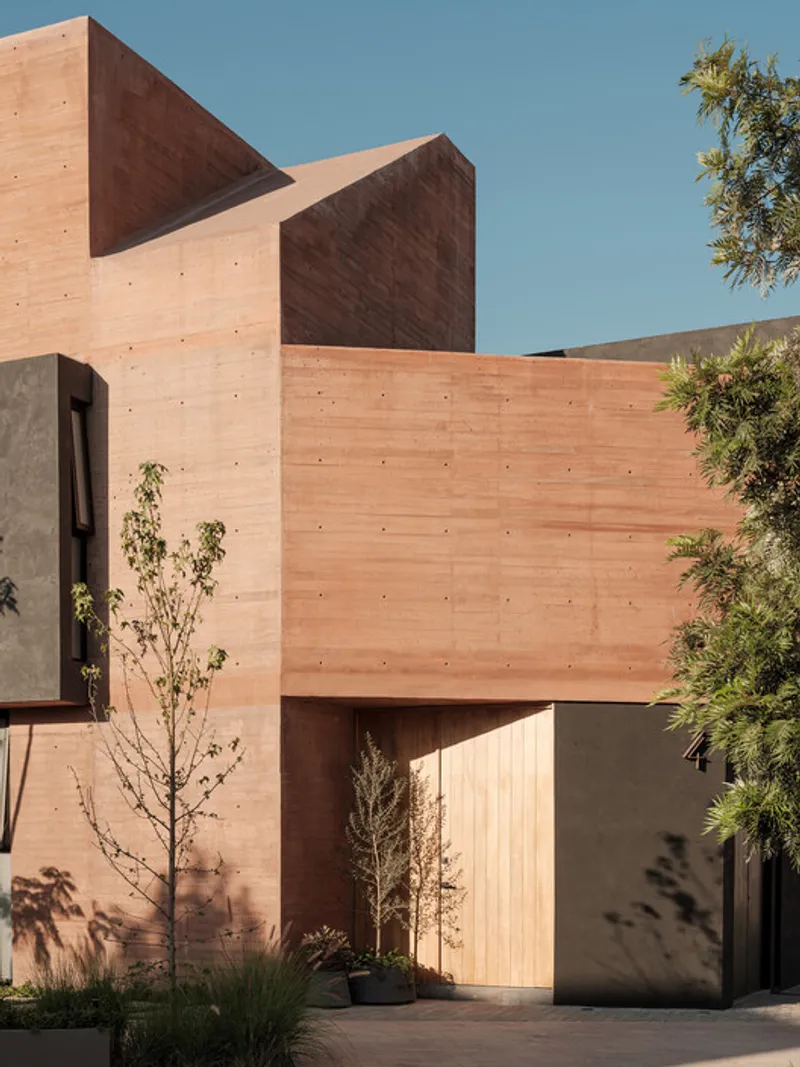
The architectural massing emerges from the superposition of stone and concrete volumes. Subtle shifts, voids, and recesses create a dynamic play of light and shadow throughout the day, enriching the sensory experience of the interiors. These controlled gestures soften the otherwise monolithic presence of the structure, lending it rhythm and depth.
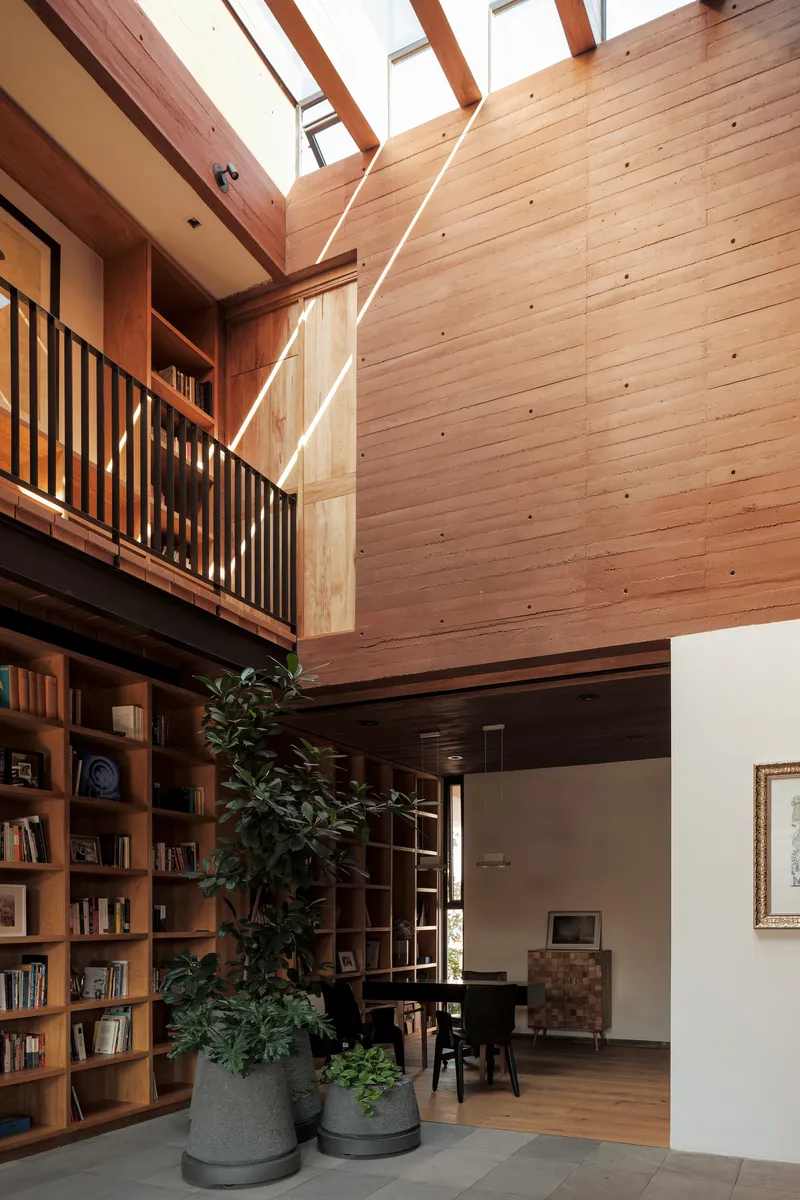
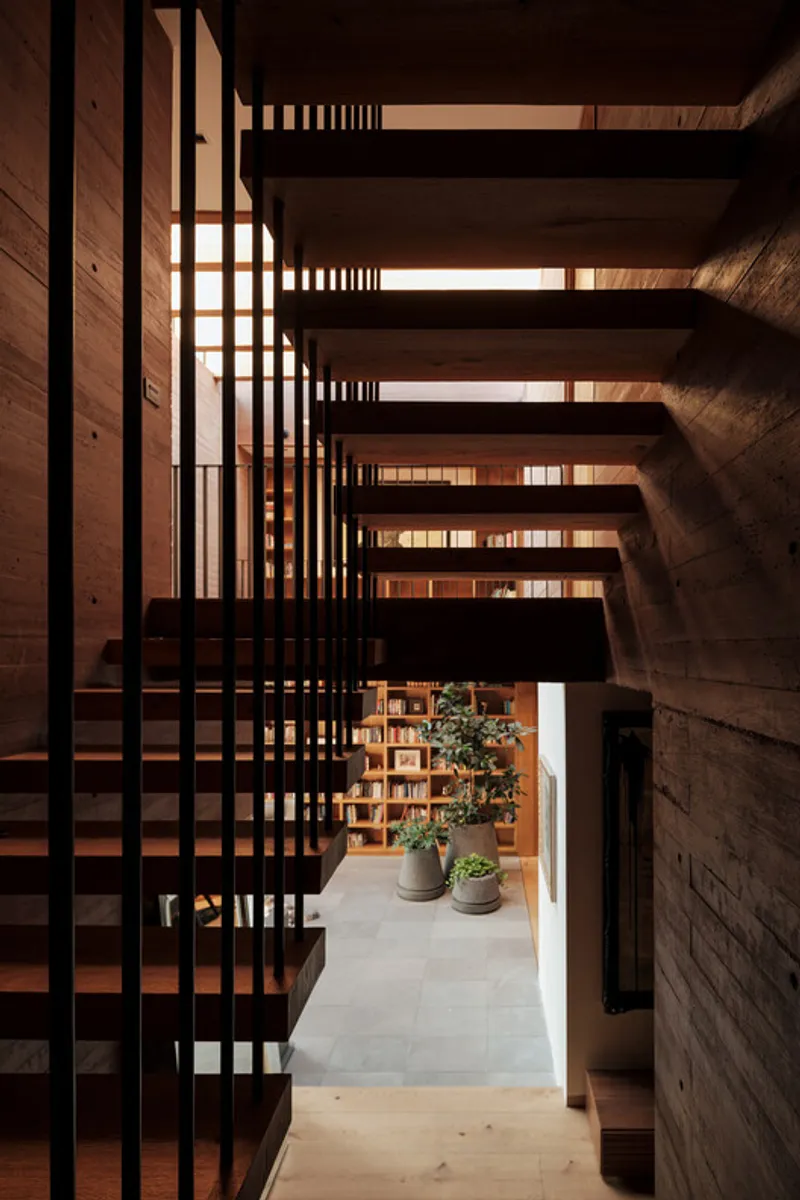
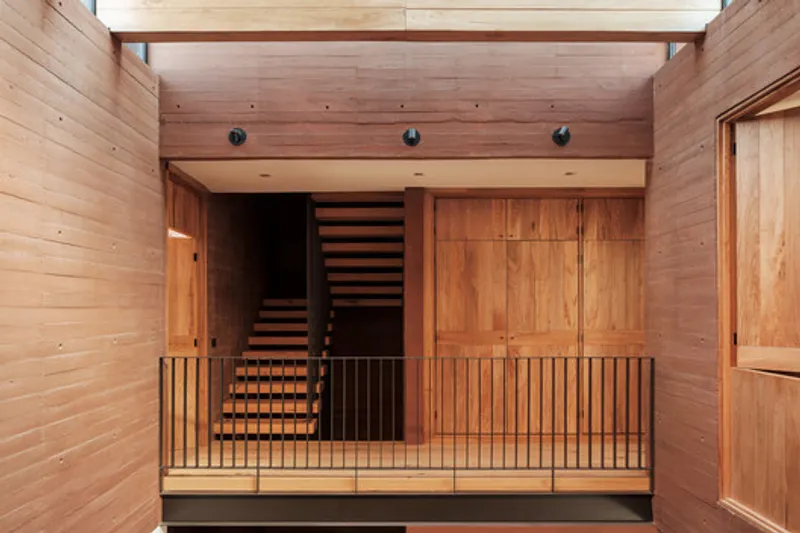
Programmatically, the house is distributed vertically across three levels. The ground floor accommodates social areas, service spaces, and the writer’s creative workspace — a zone designed for focus, contemplation, and daily practice. The first floor houses three family bedrooms, including a master suite with its own private interior courtyard. This secluded outdoor space further reinforces the home’s inward-looking character and provides a personal retreat within the retreat. The third level contains a flexible family living and working space that opens onto a terrace, offering a rare outward glance and a moment of release from the otherwise enclosed composition.
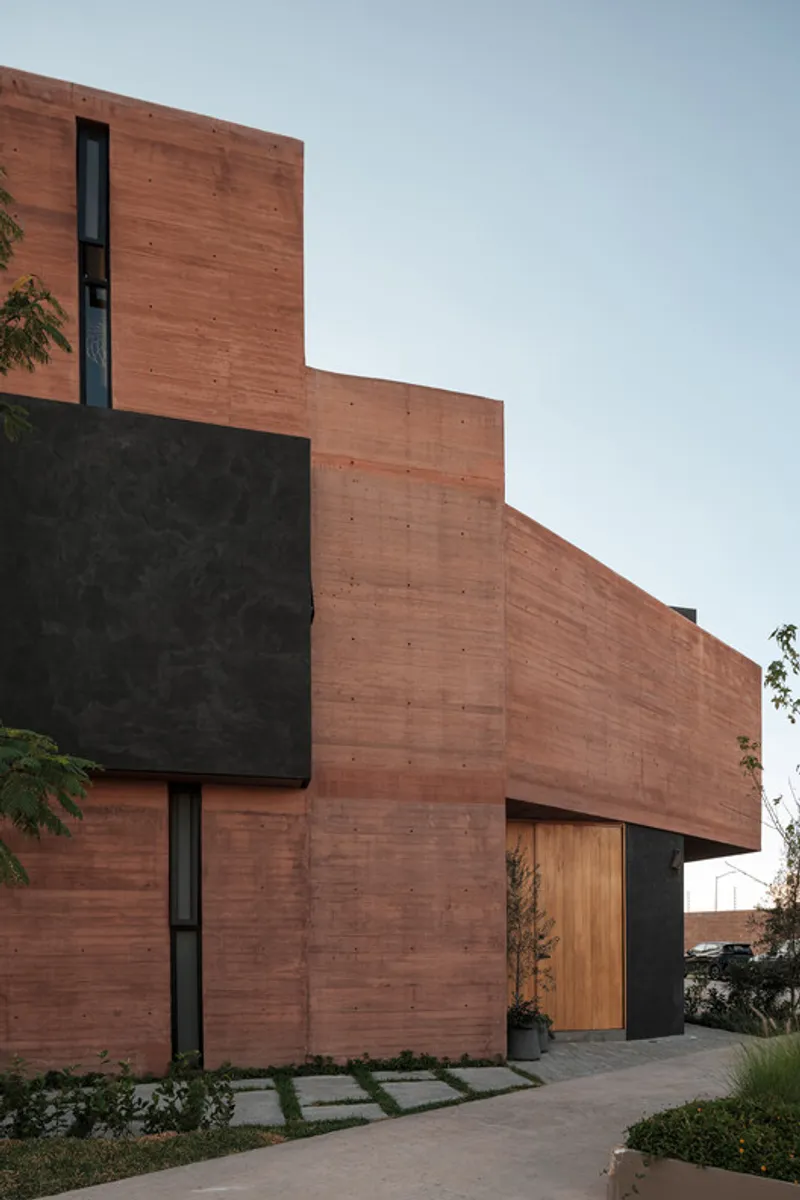
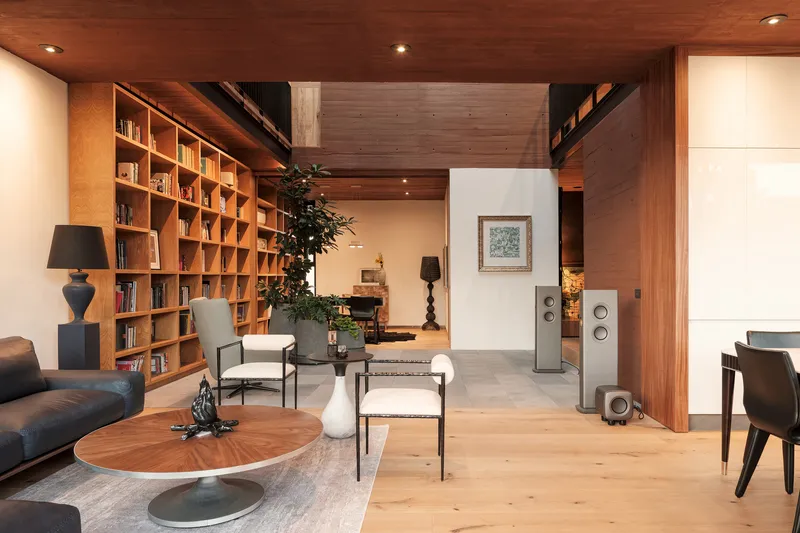
Materiality plays a fundamental role in shaping the atmosphere of the house. Exposed, pigmented concrete and natural materials dominate throughout, selected for their durability, low maintenance, and ability to age gracefully. Over time, these surfaces develop a patina shaped by light, air, and use, allowing the house to accumulate memory and character — much like the books that line its central shelves.
Writer’s House is not merely a residence; it is an architectural manifesto on introspection, creativity, and permanence. By placing writing — and the act of reading — at the center of domestic life, em-estudio crafts a home that is both protective and inspiring, where architecture becomes a quiet companion to thought, imagination, and time.
All the photographs are works of Lorena Darquea




Popular Articles
Popular articles from the community


Co-life: Sustainable Architecture for Age-Friendly Community Living
Co-life reimagines sustainable architecture for seniors through courtyards, rammed earth, shared gardens, and spaces designed for belonging.

The Ocean Hive: Sustainable Architecture for a Self-Sufficient Civilization at Sea
The Ocean Hive imagines sustainable architecture at sea, where modular habitats, algae, wave power and ocean waste sustain a growing colony.

Conexión: Biophilic Design Reimagines High-Rise Living in Hong Kong
Conexión reimagines high-rise living in Hong Kong through biophilic design, green facades, shared spaces, daylight, water and nature within.

AL-JANNAH: Sustainable Architecture and Permaculture for Afghan Widows
AL-JANNAH uses sustainable architecture and permaculture to create resilient oasis of housing, learning, work and renewal for Afghan widows.


Similar Reads
You might also enjoy these articles


Hodi-Mandai Geram
Project Function: Preservation and revitalization of the Intangible heritage and socio-spatial identity of the Hodi by Housing, Cultural Memory Center, Sacred Grove, landscape, local tourism economy


Olio Towers: A Mid-Rise for Performers That Fuses Housing, Rehearsal, and Stage
Located blocks from Houston's Theater District, this modular tower stacks living units around a central performance atrium.

Oasis: Modular Green Housing Carved into Dhaka's Urban Fabric
A shortlisted Plugin Housing entry reclaims unauthorized settlements in Dhaka with stepped concrete volumes, green roofs, and ventilation-driven design.

Black Hole: A Floating Megastructure for the Post-Physical Era
Emiliano Mazzarotto envisions a spherical, self-scaling arena where e-sports, digital hotels, and holographic stadiums replace traditional public space.


Explore Housing Competitions
Discover active competitions in this discipline



Challenge to reimagine the Iron Throne


Photograph architecture without architects


Illustrate the lost glory of Angkor Wat - Render Challenge


Design challenge to reuse E-waste
Comments (0)
Please login or sign up to add comments
No comments yet. Be the first to comment!