

Xcumpich House: A Contemporary Village-Inspired Residence in Mérida by Taller Mexicano de Arquitectura
A contemporary Mérida home blending village-house inspiration, celosía screens, natural light, and textured concrete to create a warm, climate-responsive residential sanctuary.


Xcumpich House, designed by Taller Mexicano de Arquitectura and completed in 2023, is a contemporary residential project located in the northern region of Mérida, Yucatán. Rooted in local identity and climate-responsive design, the house—affectionately known as Chac, a Mayan term referencing its distinctive reddish walls—reinterprets traditional neighborhood typologies through a modern architectural language. With a total area of 312 m², the project blends material authenticity, passive design strategies, and spatial warmth to create a home deeply connected to its context.
A Design Inspired by Mérida’s Traditional Village Houses
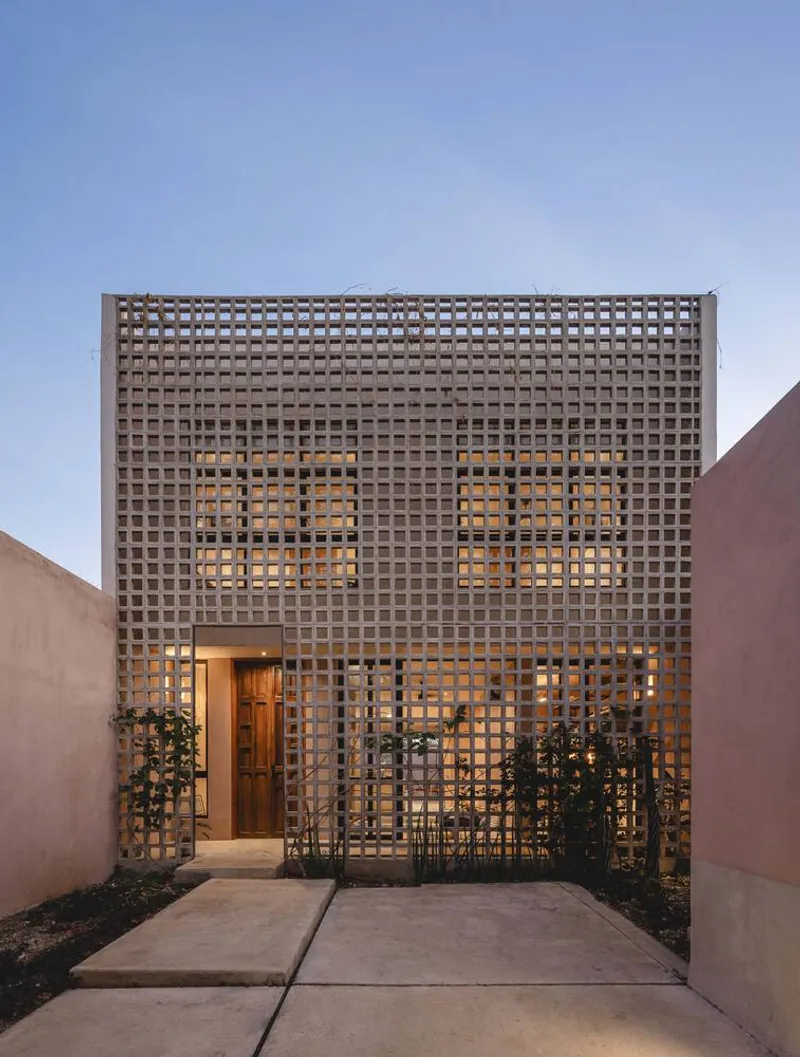
The architects sought to emulate the atmosphere of the small village houses found throughout Yucatán—modest, naturally ventilated structures that engage with their surroundings at a human scale. Xcumpich House reimagines this typology with a refined contemporary approach. Its façade, defined by warm pigmented cement, welcomes the neighborhood while subtly standing out through its sculptural volumes and crafted textures.
A key design element is the celosía (breeze block) system, strategically integrated to filter indirect daylight, promote cross ventilation, and frame views toward the public park across the street. This porous screen creates a semi-transparent threshold that maintains privacy while preserving the home’s visual connection to the community.
Ground Floor: Fluid Spatial Continuity and Passive Comfort
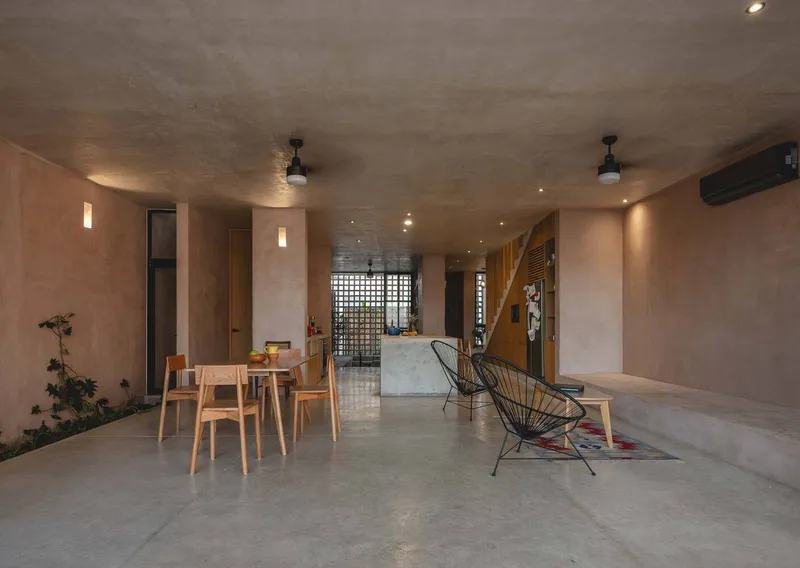
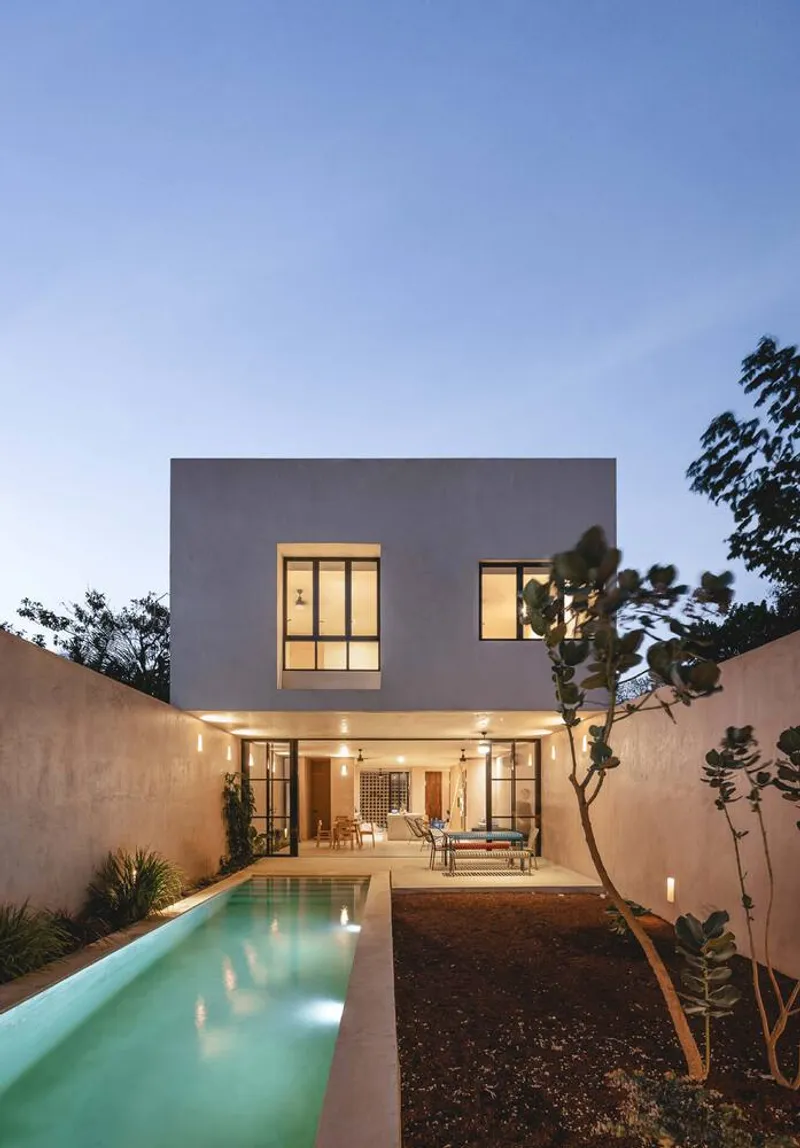
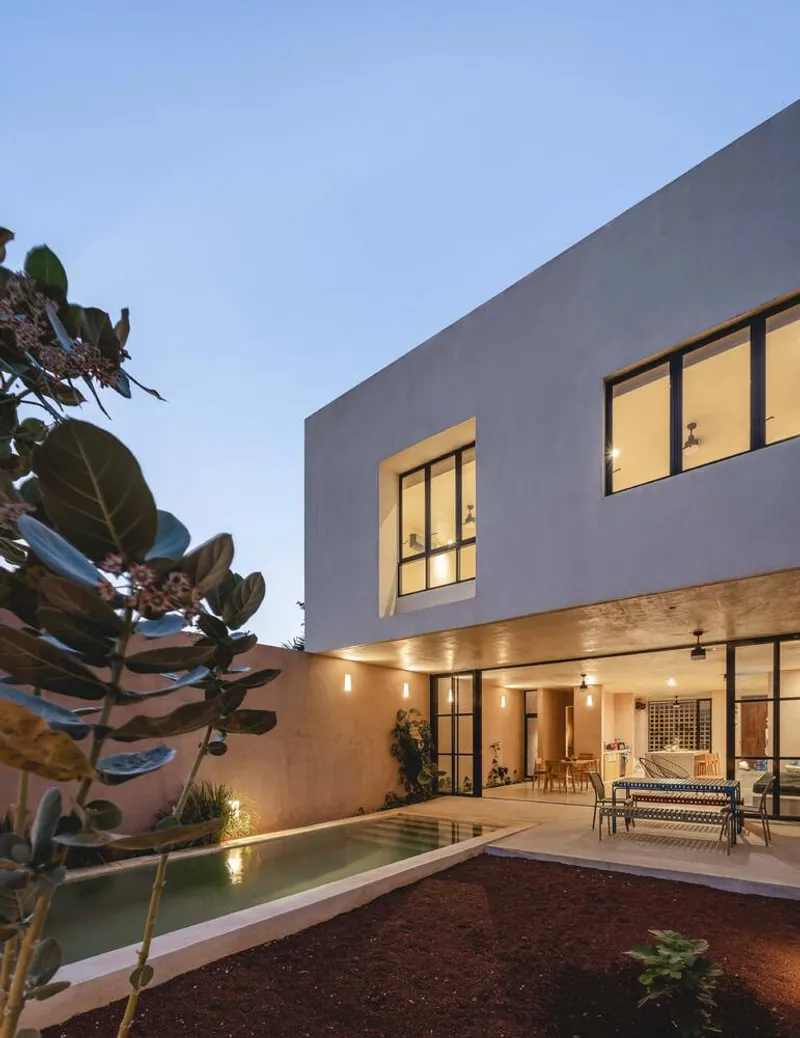
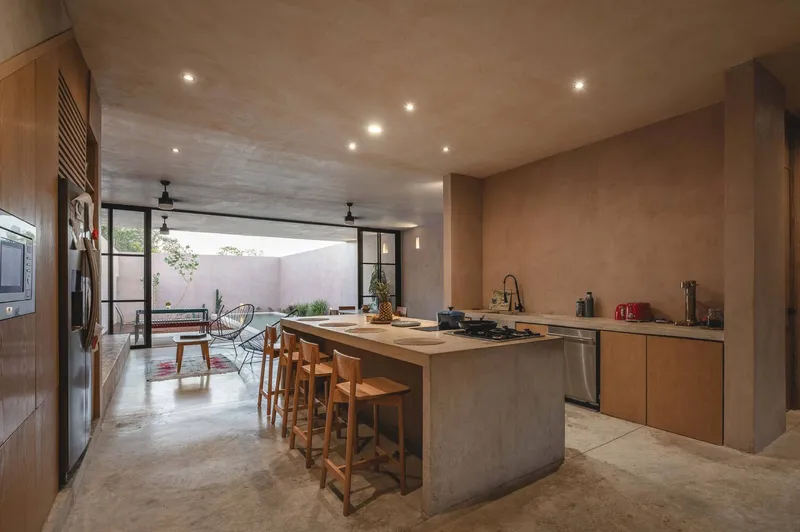
The ground floor is conceived as an open, integrated plane where the living, dining, and kitchen areas flow toward the exterior. Large openings dissolve the boundary between indoor and outdoor spaces, creating a sheltered yet permeable environment ideal for Mérida’s warm climate. This blurred spatial relationship extends the living experience to the very edge of the property, transforming the house into a continuous, shaded pavilion.
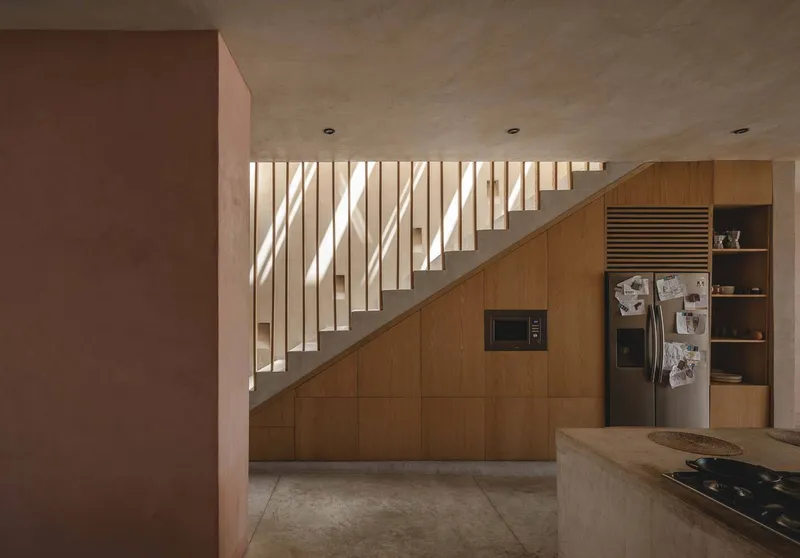
Enclosed service spaces—including a dedicated textile workshop for the owner—are discreetly positioned to enhance functionality without interrupting the spatial openness. The sunken family room introduces a subtle change in level that doubles as a built-in furniture opportunity, maximizing use of space while adding depth to the interior composition. This strategy is also reflected beneath the staircase, where integrated storage solutions optimize the kitchen area.


Upper Floor: A Quiet, Light-Filled Sanctuary
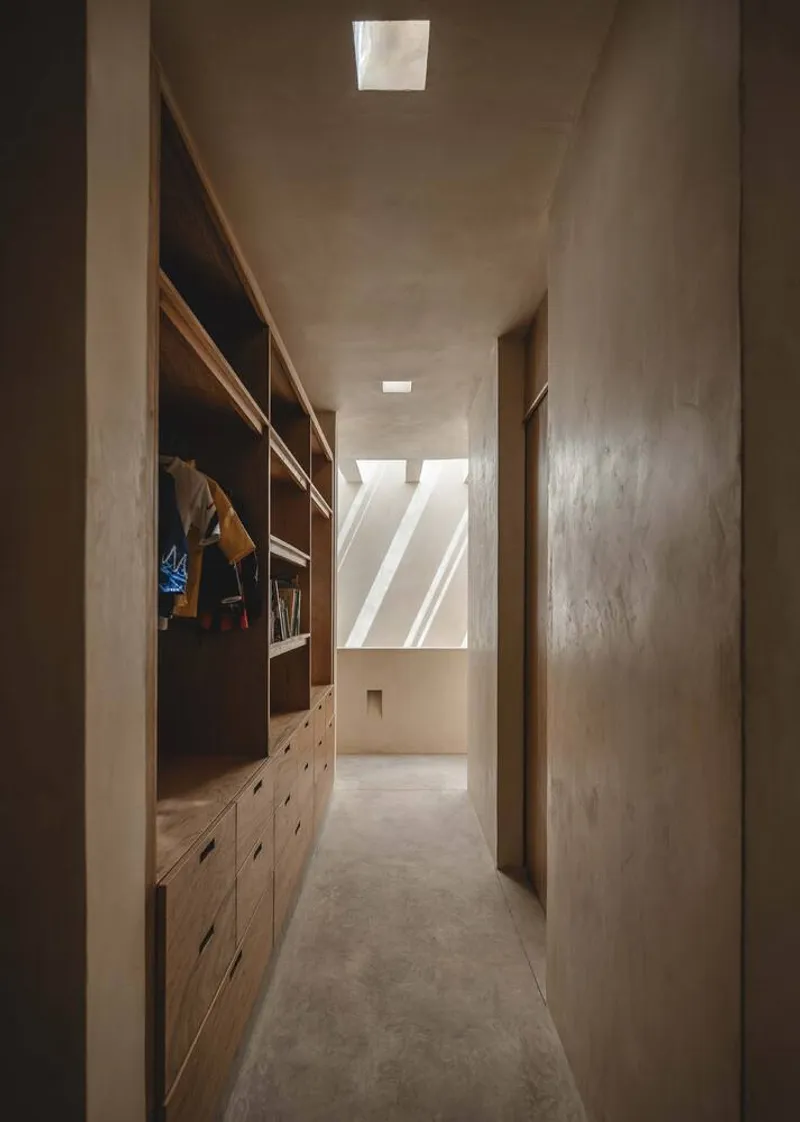
The upper level forms a compact cube containing the private bedrooms and bathrooms. Here, natural light becomes the protagonist. Skylights puncture the roof, casting dynamic shadows across the smooth chukum-finished walls, a traditional Yucatecan material known for its soft, natural texture. Throughout the day, these shifting light patterns animate the corridors and create a meditative atmosphere that contrasts with the social openness of the lower floor.

Materiality: A Dialogue of Color, Texture, and Craft
Material expression plays a central role in defining Xcumpich House. Both floors are distinguished by variations in tone and texture on the pigmented cement walls, subtly transitioning from earthy reddish hues to cooler shades. All fixed architectural elements—stairs, countertops, bathtubs, and floors—are left in their natural gray concrete finish, generating a rich contrast that highlights the home’s handcrafted precision.
Manufacturers such as Kimikolor and Pigmentos contributed to the creation of these deep tonal layers, reinforcing the project’s material authenticity. The combination of chukum, pigmented wall finishes, and raw concrete results in a harmonious palette that balances regional identity with contemporary aesthetics.
A Contemporary Expression of Yucatán’s Architectural Heritage
Xcumpich House stands as a thoughtful reinterpretation of Mérida’s residential heritage. Through its climate-responsive layout, crafted materiality, and seamless blend of privacy and openness, the house honors regional traditions while embracing modern design principles. By integrating passive cooling strategies, interconnected interior spaces, and a textured architectural expression, Taller Mexicano de Arquitectura has created a home that is both timeless and deeply rooted in place.
All photographs are works of Manolo R. Solís




Popular Articles
Popular articles from the community


Conexión: Biophilic Design Reimagines High-Rise Living in Hong Kong
Conexión reimagines high-rise living in Hong Kong through biophilic design, green facades, shared spaces, daylight, water and nature within.

The Musturak Paradise: Senior Living Architecture for a Connected Future in Temara, Morocco
The Musturak Paradise reimagines senior living architecture in Temara via private homes, social spaces, culture, community, and shared care.

The Ocean Hive: Sustainable Architecture for a Self-Sufficient Civilization at Sea
The Ocean Hive imagines sustainable architecture at sea, where modular habitats, algae, wave power and ocean waste sustain a growing colony.

Lunar Spiral: Space Architecture Shaped by the Mathematics of the Universe
Lunar Spiral reimagines space architecture through Fibonacci geometry, lunar regolith, levitating habitats, and self-sustaining Moon living.


Similar Reads
You might also enjoy these articles


Hodi-Mandai Geram
Project Function: Preservation and revitalization of the Intangible heritage and socio-spatial identity of the Hodi by Housing, Cultural Memory Center, Sacred Grove, landscape, local tourism economy


Olio Towers: A Mid-Rise for Performers That Fuses Housing, Rehearsal, and Stage
Located blocks from Houston's Theater District, this modular tower stacks living units around a central performance atrium.

Oasis: Modular Green Housing Carved into Dhaka's Urban Fabric
A shortlisted Plugin Housing entry reclaims unauthorized settlements in Dhaka with stepped concrete volumes, green roofs, and ventilation-driven design.

Black Hole: A Floating Megastructure for the Post-Physical Era
Emiliano Mazzarotto envisions a spherical, self-scaling arena where e-sports, digital hotels, and holographic stadiums replace traditional public space.


Explore Housing Competitions
Discover active competitions in this discipline



Challenge to reimagine the Iron Throne


Photograph architecture without architects


Illustrate the lost glory of Angkor Wat - Render Challenge


Design challenge to reuse E-waste
Comments (0)
Please login or sign up to add comments
No comments yet. Be the first to comment!