

Yeeii Teahouse by Vari Architects
A breathing teahouse in Chongqing, blending Eastern poetic sensibility and Nordic rationality to reconnect people, nature, and the modern city.


Hidden within the dense folds of Chongqing’s mountainous urban landscape, Yeeii Teahouse by Vari Architects emerges as a quiet architectural refuge: an intimate structure that mediates between city, forest, and human ritual. Completed in 2025, the 110 m² teahouse is conceived as a breathing space: neither fully enclosed nor fully exposed, but delicately balanced between openness and inward calm.
A Breathing Pavilion Weaving Eastern Poetics and Nordic Rationality in Chongqing
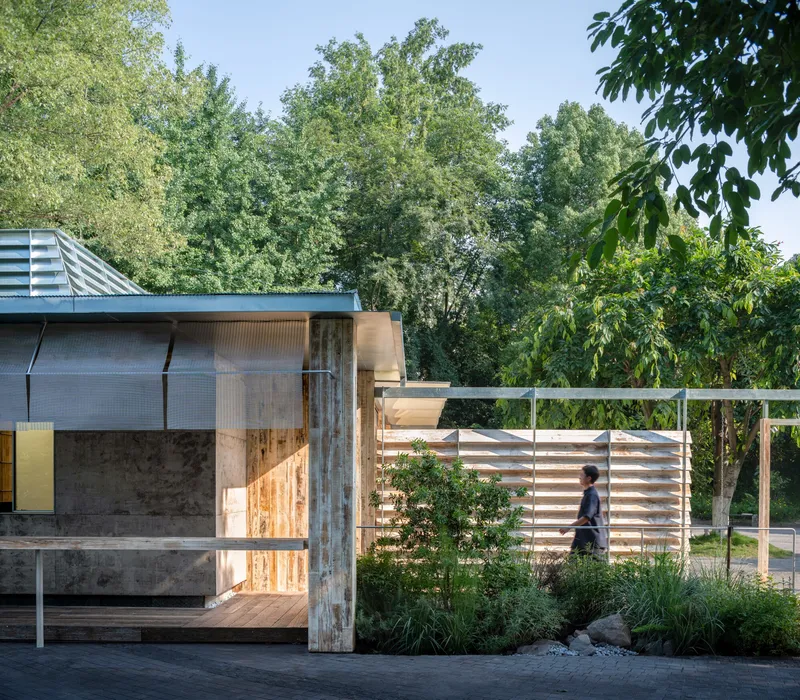
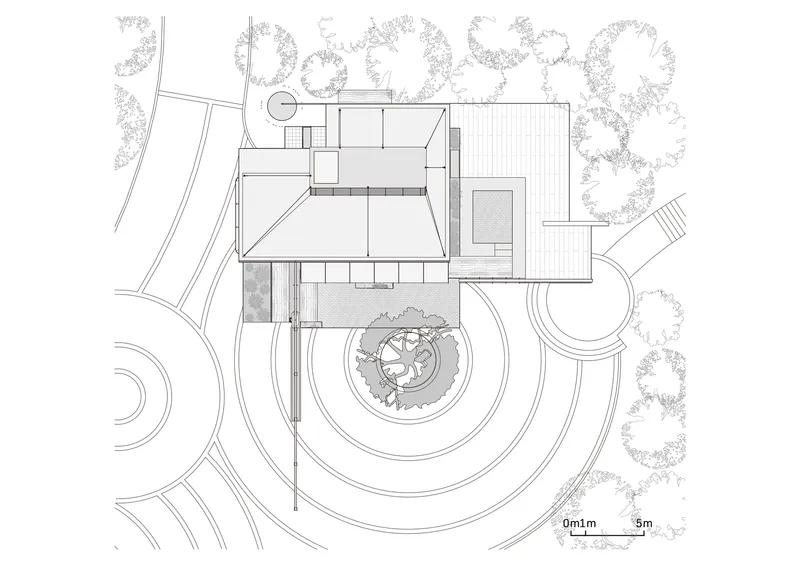
Rooted in Vari Architects’ ongoing Natural Tectonic exploration, the project seeks to reweave the relationship between people, nature, and the contemporary metropolis. By embedding Scandinavian rationality and warmth into an Eastern spatial sensibility, Yeeii Teahouse offers a subtle, poetic response to life within one of China’s most intense urban environments.
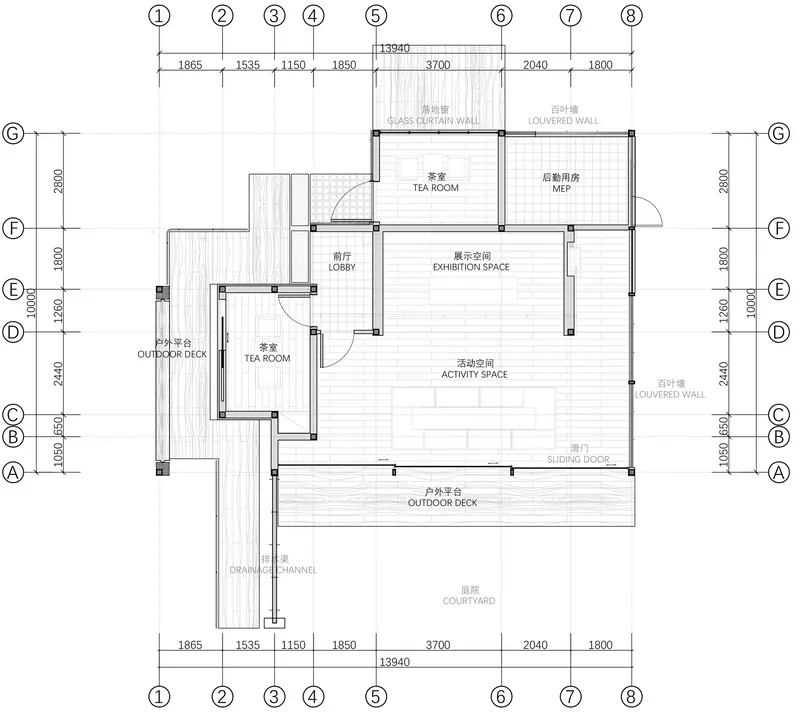
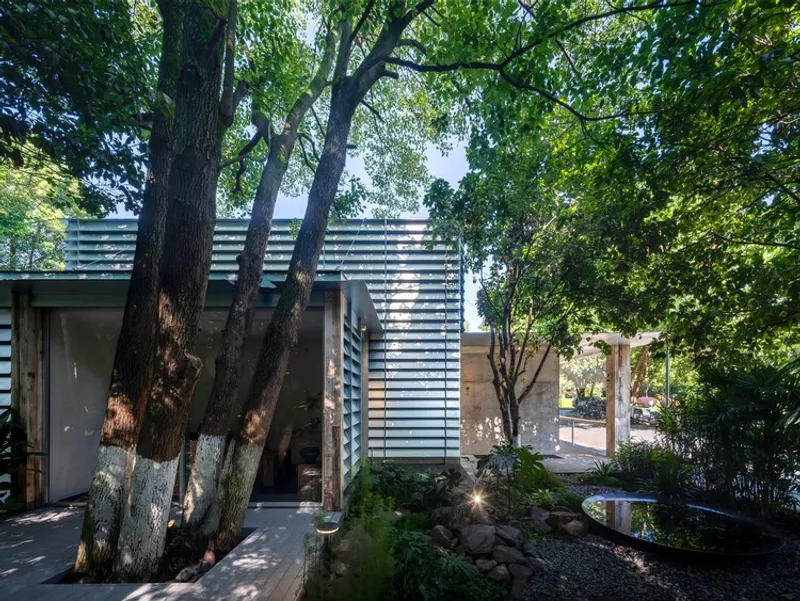
A Natural Oasis in the Mountain City
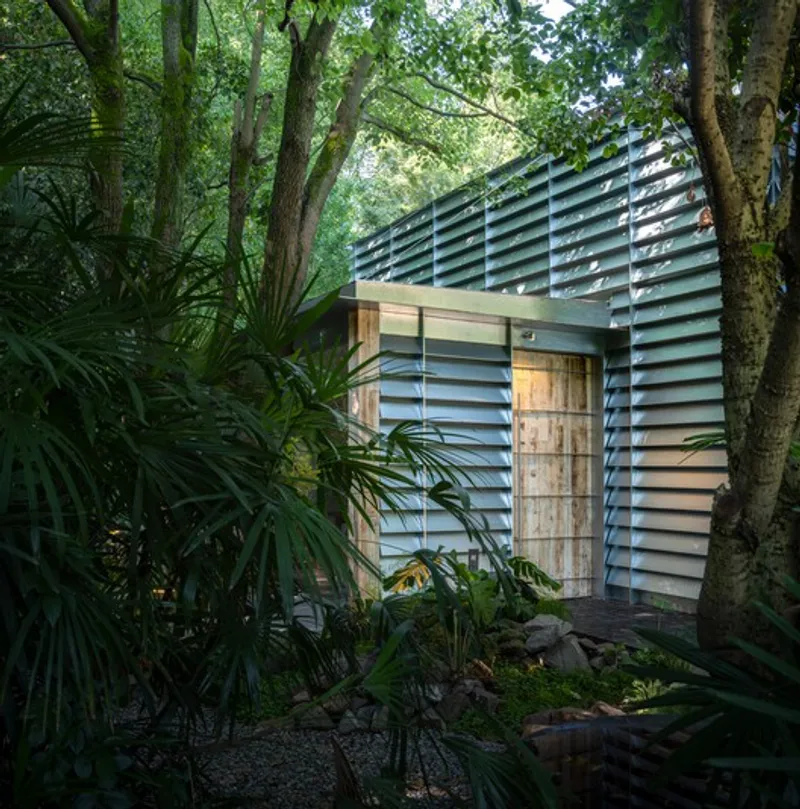
Chongqing is defined by density, verticality, and relentless movement. Yet within its steep terrain and wooded slopes, pockets of stillness persist, natural oases that momentarily suspend the city’s rhythm. Yeeii Teahouse occupies one such crevice, positioned among layered trees overlooking a courtyard landscape and distant water.
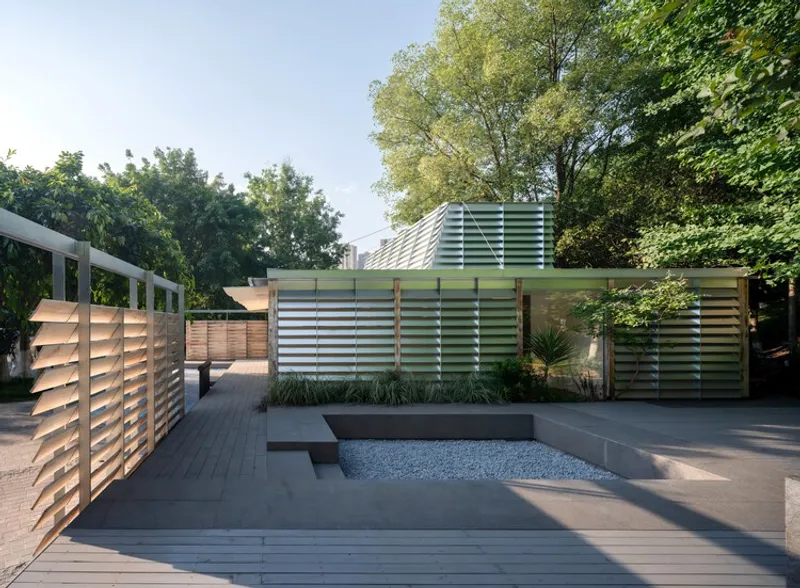
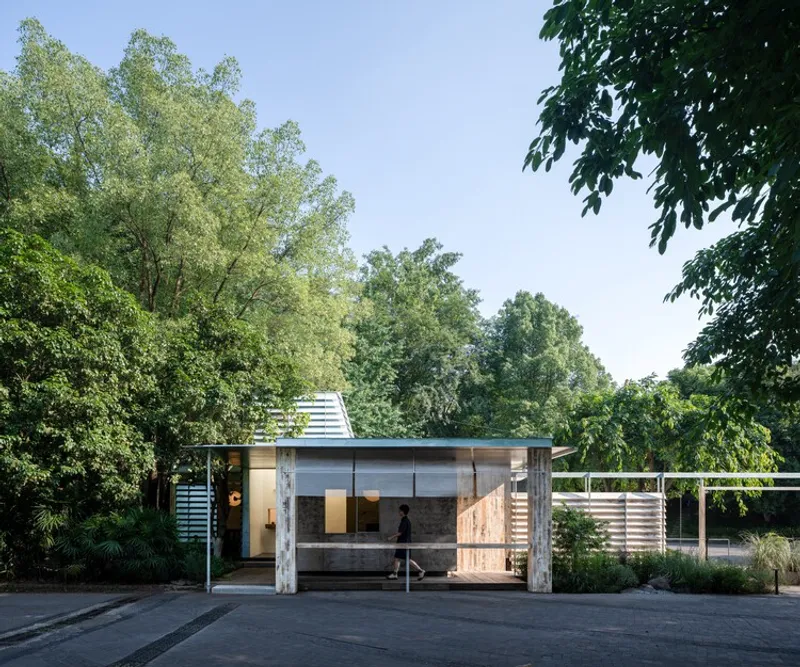
Rather than announcing itself as an object, the building nestles into its surroundings, allowing architecture to recede in favor of atmosphere. The teahouse is less a destination than a pause: a place where the act of drinking tea becomes a means of reconnecting with landscape, breath, and time.
Eastern Posture Through Modern Materials
A central question guiding the project was how to express an Eastern posture through contemporary architectural language. Vari Architects approach this not through historic reference or literal symbolism, but through material operation and spatial restraint.
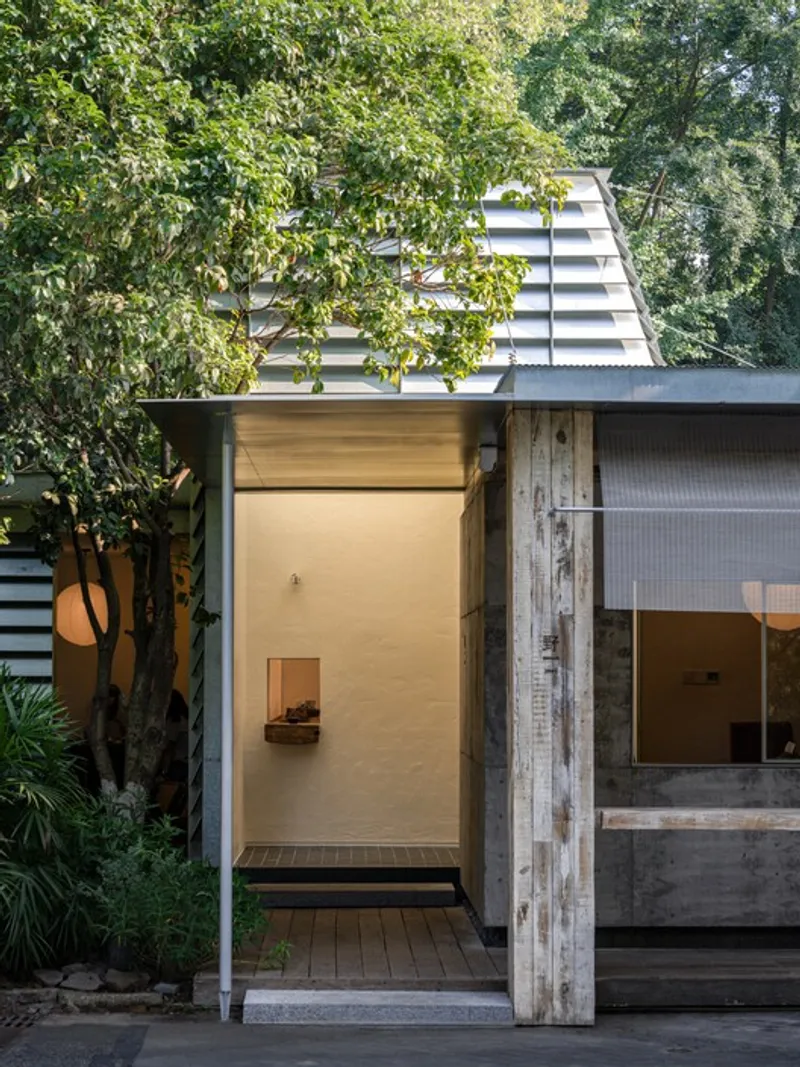

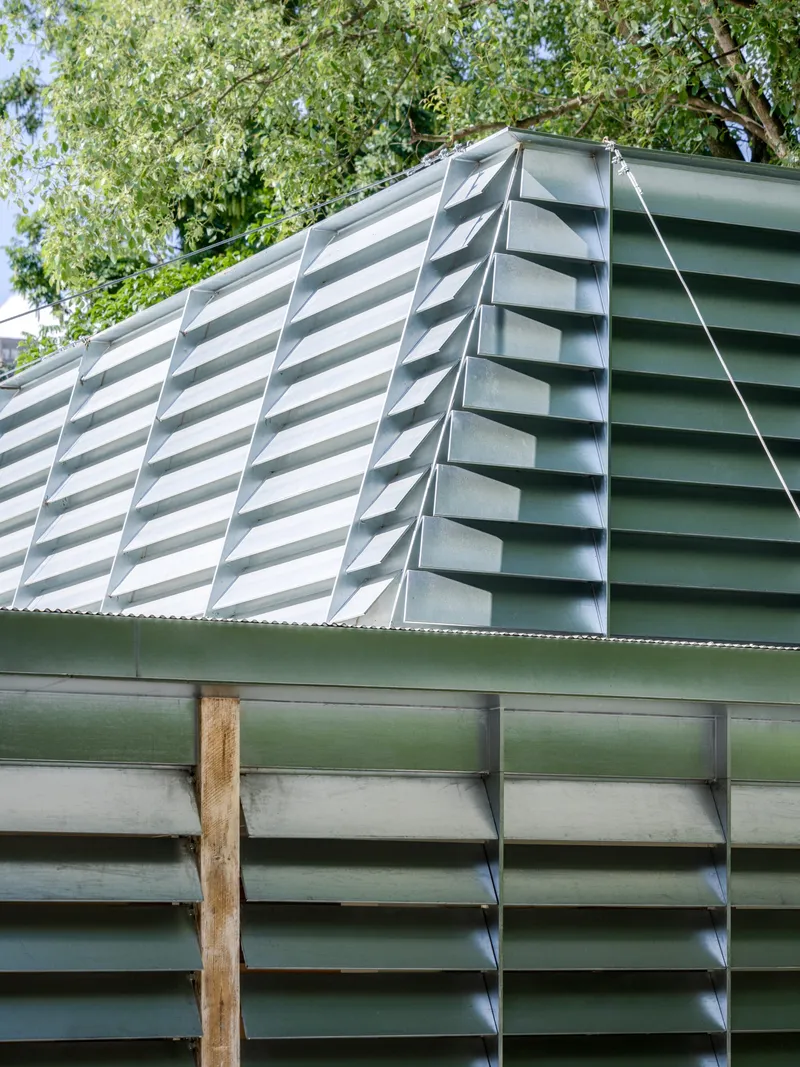
Industrial materials: metal, glass, aluminum, and wood: are filtered through Eastern aesthetic principles of subtlety, indirectness, and inward reflection. Rather than overt expression, meaning emerges gradually through shadow, texture, and layered perception.
The structure gleams quietly among the trees, its presence revealed not by form alone but by the way light filters through screens, how wind moves through gaps, and how surfaces respond to changing daylight. This restrained articulation reflects an Eastern sensibility where what is withheld is as important as what is shown.
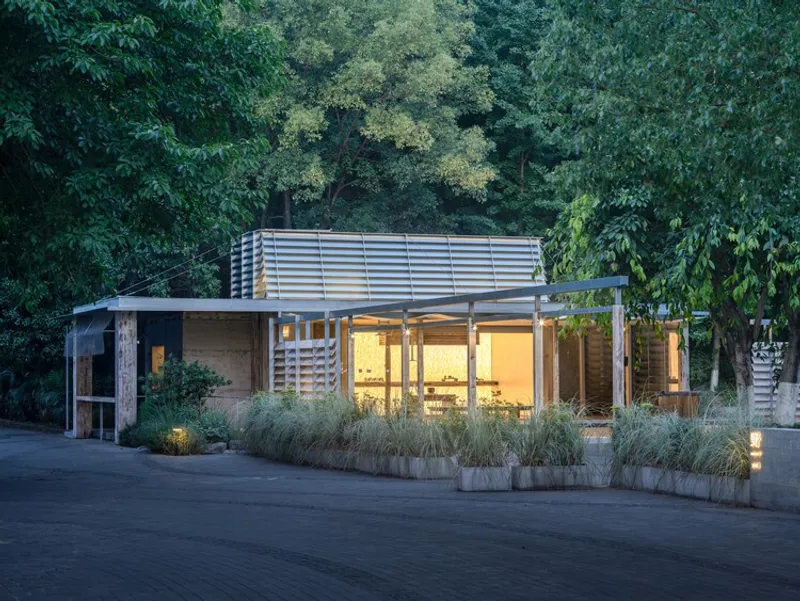
Rational Structure, Spiritual Intimacy
While the teahouse maintains an exposed and legible structural order, reflecting Scandinavian rationality, it simultaneously preserves a strong inward spiritual affinity. Columns, beams, and joints are not concealed, yet the space never feels raw or industrial. Instead, structure becomes a calm framework for contemplation.
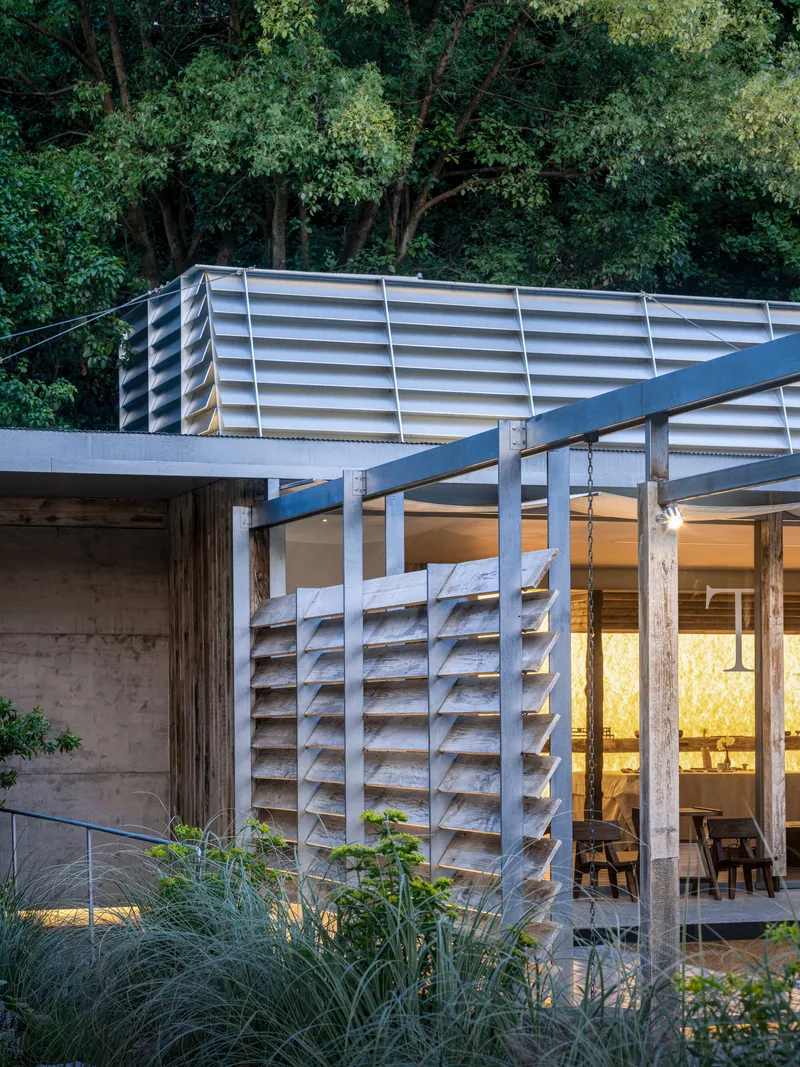
This balance allows visitors to experience intimacy within openness. The building does not impose enclosure; it invites presence. In doing so, it challenges the notion that spiritual or contemplative spaces must be hidden or closed off, proposing instead that inwardness can coexist with exposure.
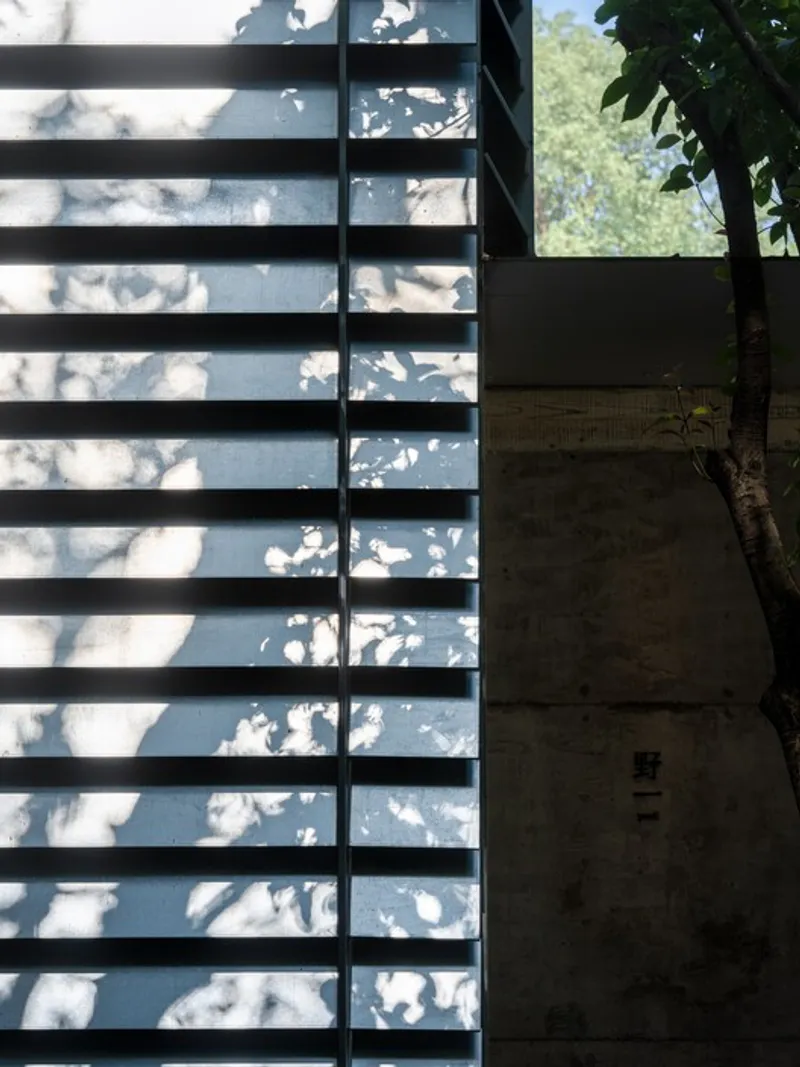
Lattice Screens and the Breath of Nature
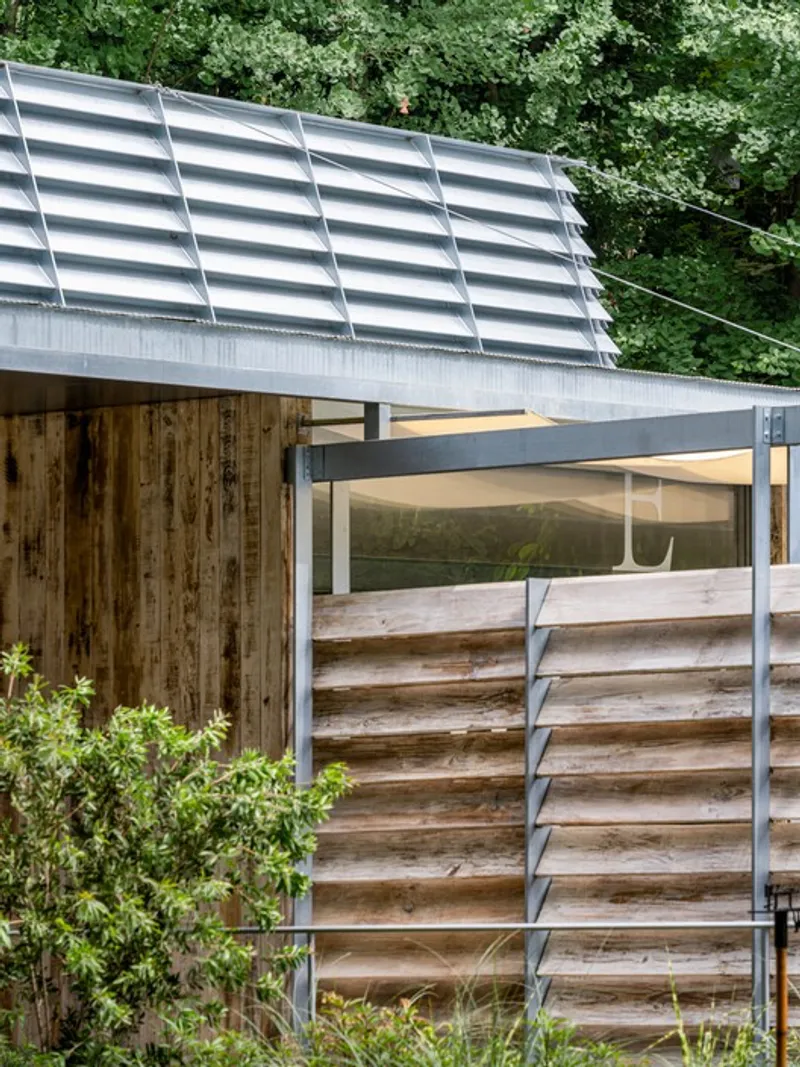
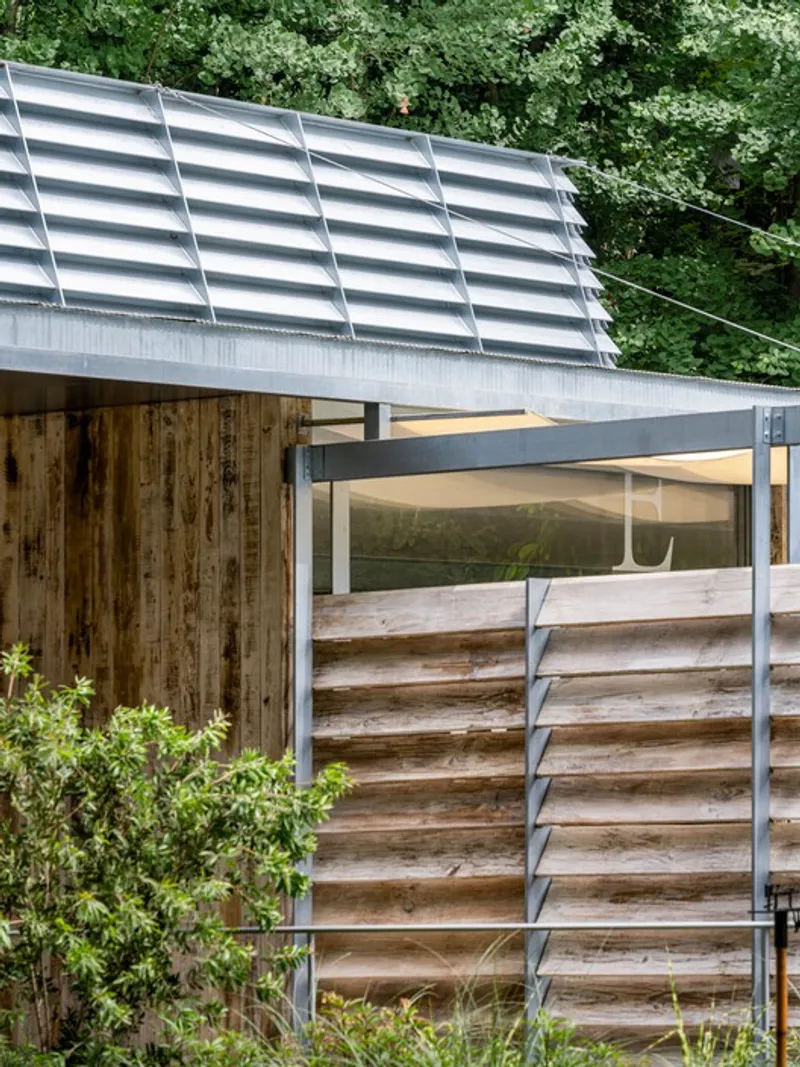
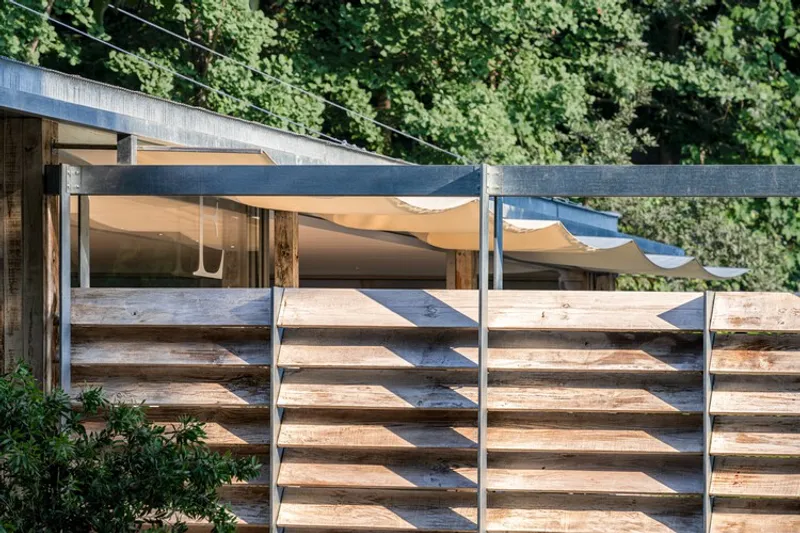
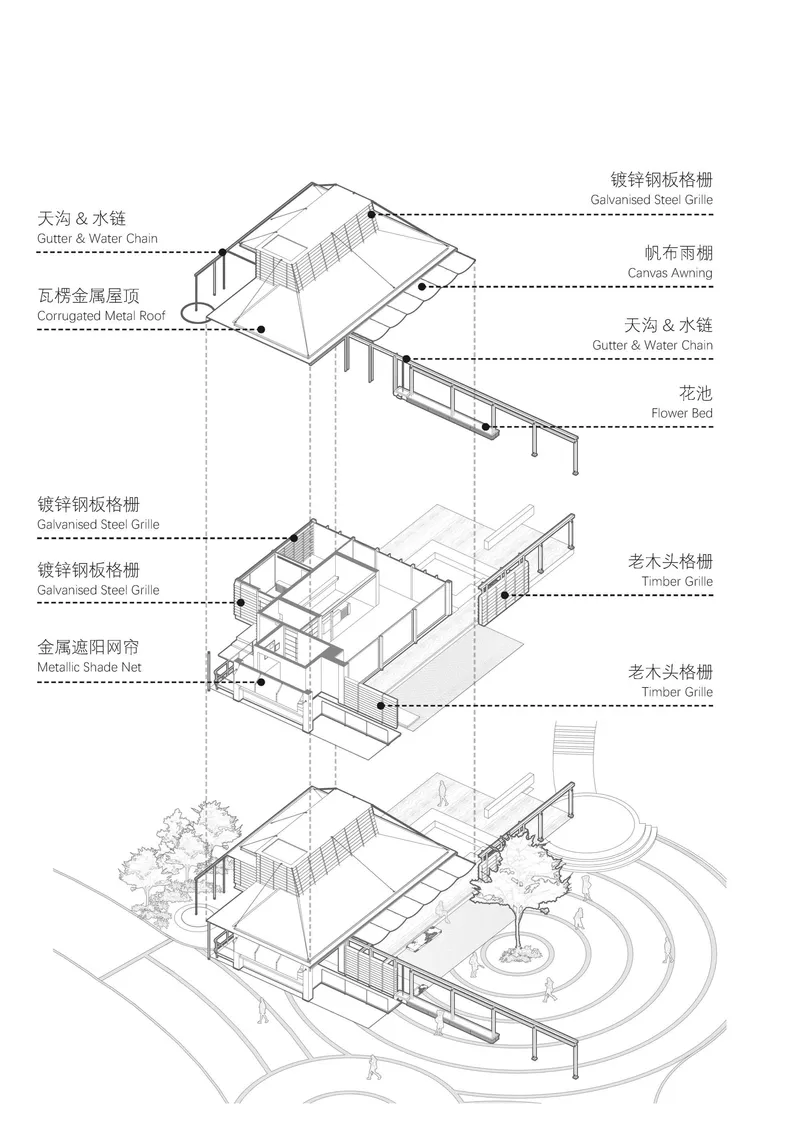
The teahouse is enclosed on three sides by lattice screens, composed of dense anodized aluminum and wooden slats. These screens reinterpret traditional textures through contemporary fabrication, creating a porous boundary that continuously registers the outside world.
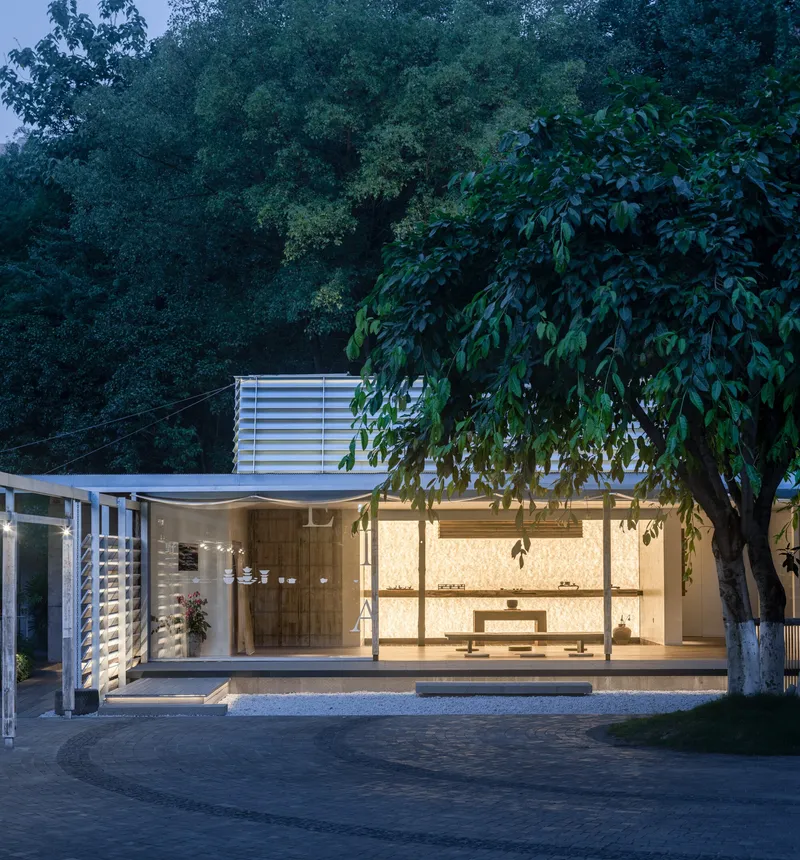
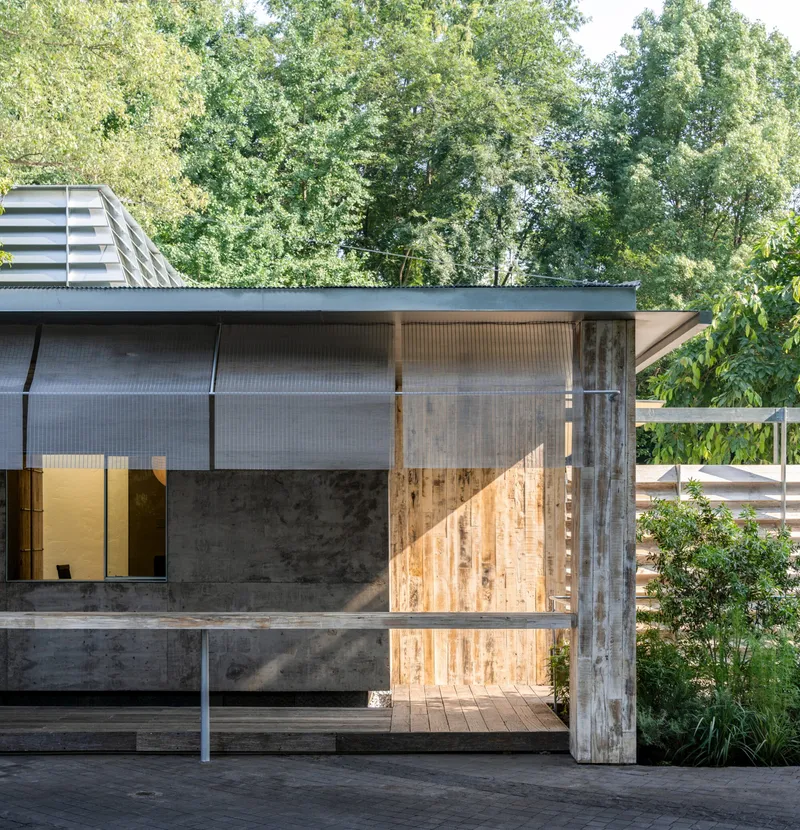
Light, wind, and shadow pass through the lattice, allowing the interior to mirror the breath and pulse of nature. The boundary is never static; it shifts with time of day, season, and weather. This permeability transforms enclosure into dialogue, dissolving rigid distinctions between inside and outside.
Extended Eaves and Environmental Dialogue
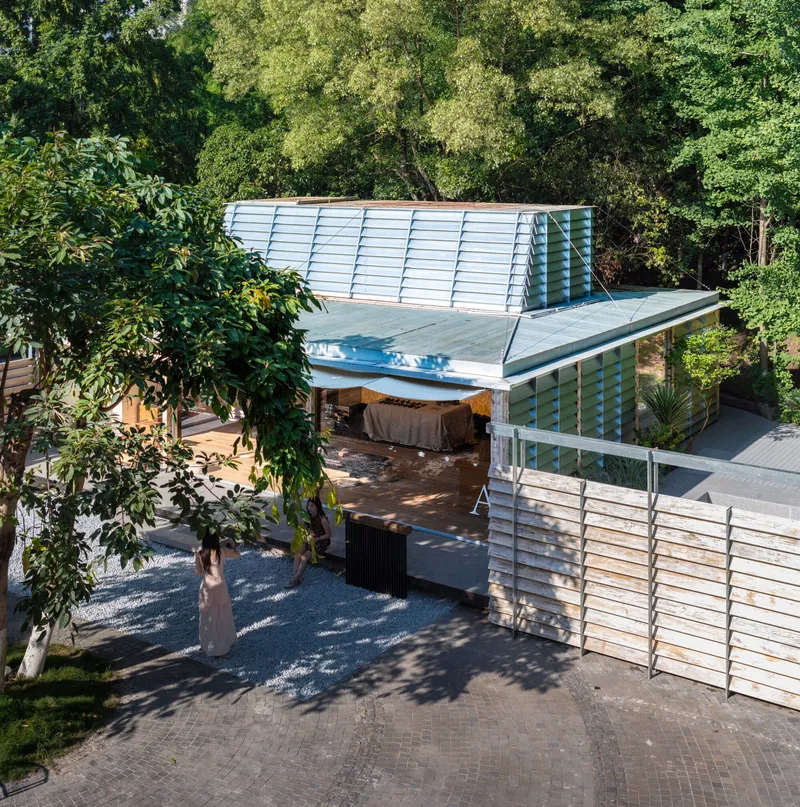
Extended eaves play a crucial role in shaping the teahouse’s environmental response. Projecting outward, they mediate sunlight and rain while deepening the architectural conversation with the surrounding landscape.
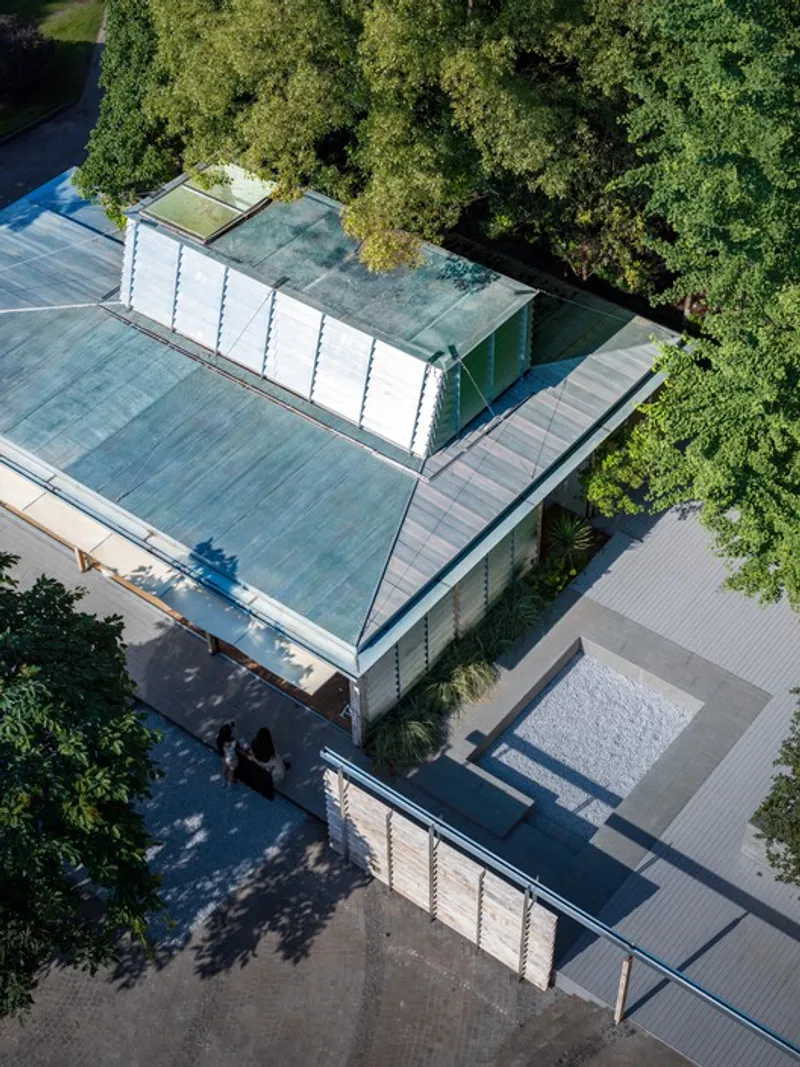
As wind and filtered light enter beneath the eaves, the boundary between built form and nature becomes increasingly ambiguous. The resulting atmosphere is distinctly summery and serene, where sound, movement, and shadow animate the space without disturbing its calm.
Courtyard Orientation and Visual Continuity
On the side facing the courtyard, the architecture opens more directly. Transparent glass and exposed structure nest within one another, framing views of the courtyard’s large tree, undulating vegetation, and the shimmering lake beyond.
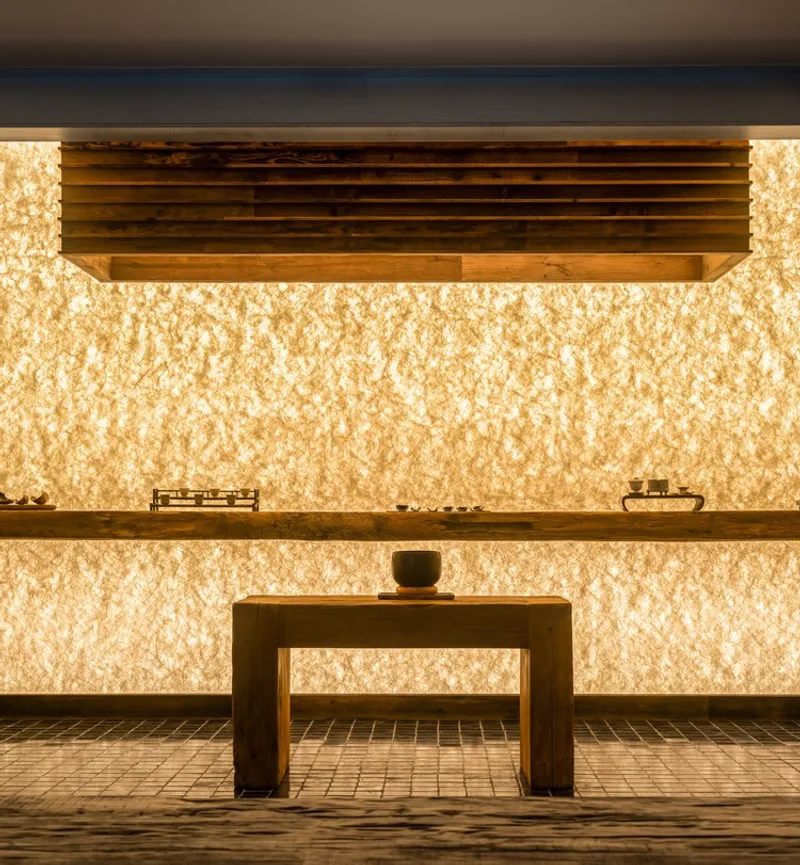
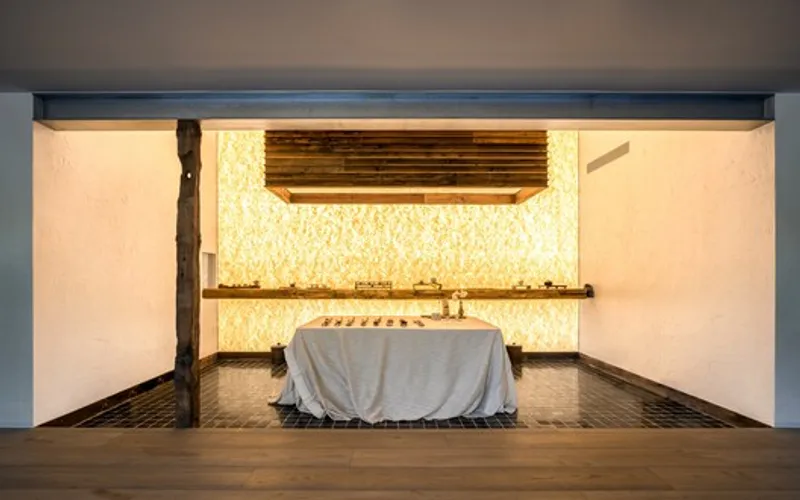
This openness is not abrupt but carefully composed. The teahouse does not simply look outward; it absorbs the landscape into its interior, allowing nature to become an active participant in the spatial experience.
Canvas as Soft Threshold
A defining interior element is the suspended canvas, whose gentle curve introduces softness and elasticity into the otherwise precise architectural framework. Its textile quality contrasts with the rigidity of metal and glass, offering a tactile counterpoint that mediates the transition toward the exterior.
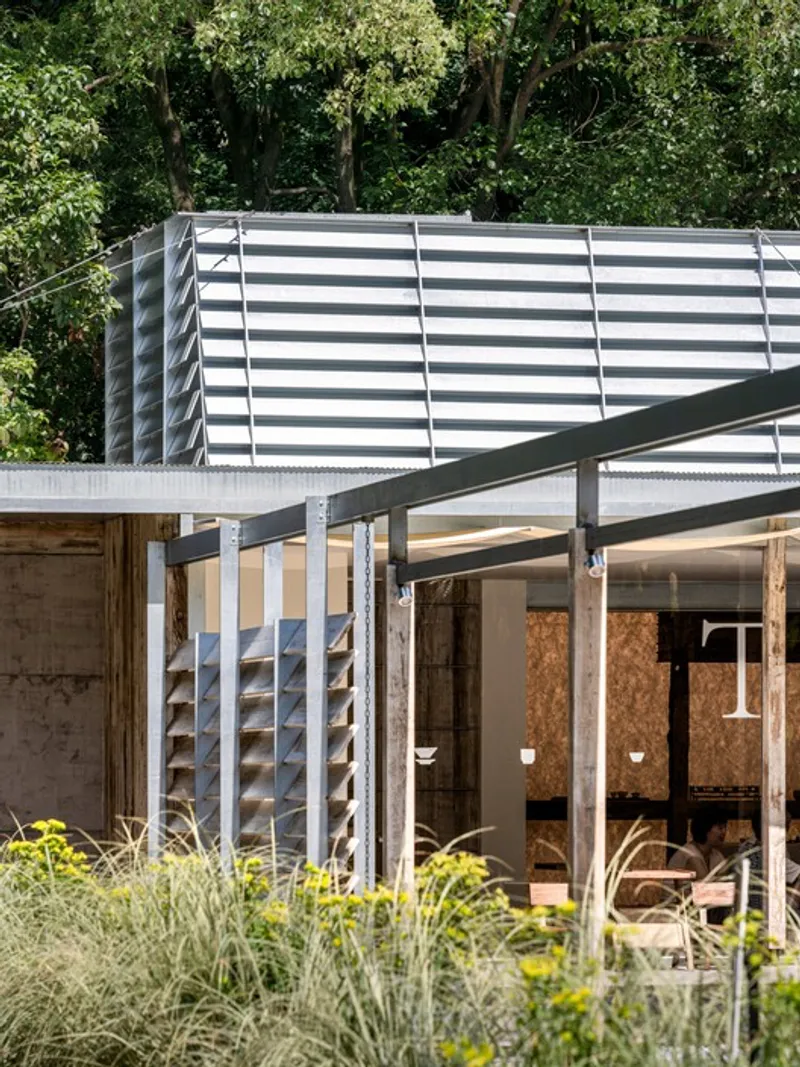
The canvas does not function as a wall or partition in a conventional sense. Instead, it acts as a spatial membrane, blurring boundaries and reinforcing the teahouse’s breathing quality. Movement, light, and air interact with the fabric, subtly altering perception throughout the day.
Sitting Amid Springs and Valleys
The spatial experience evokes a classical Chinese poetic idea often described as “sitting amid inexhaustible springs and valleys.” This notion speaks to a condition where nature is not observed at a distance but inhabited and felt.
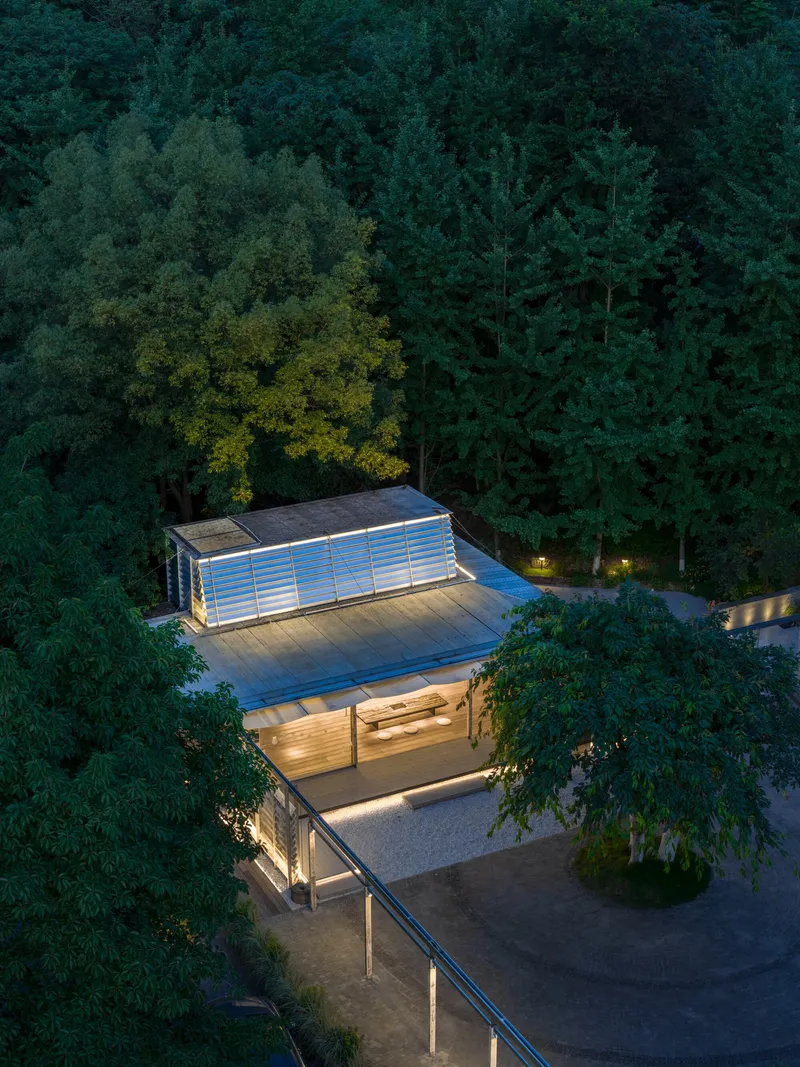
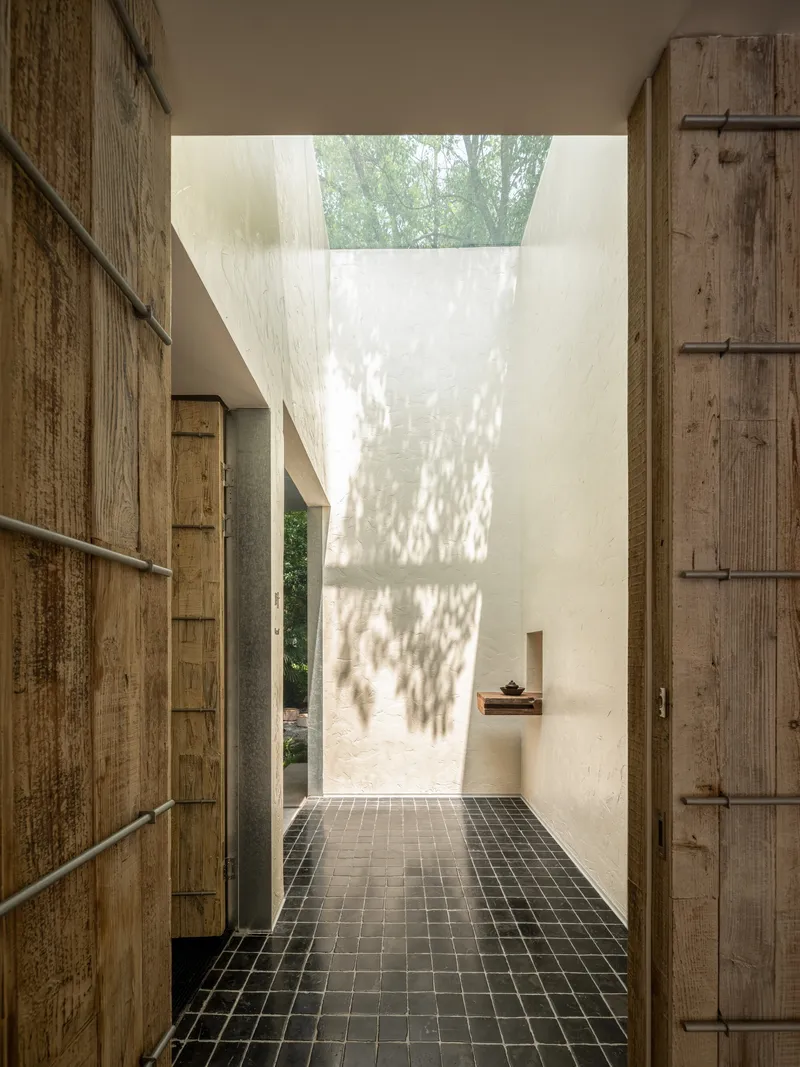
Within Yeeii Teahouse, the courtyard tree, shifting foliage, and distant water are framed into everyday rituals of tea drinking. Architecture becomes a lens through which the landscape is continuously rediscovered, never static, always renewing.
Natural Tectonics as Spatial Philosophy
Vari Architects’ Natural Tectonic approach is evident throughout the project. Structure, material, and environment are not treated as separate systems, but as interdependent layers forming a single architectural organism.
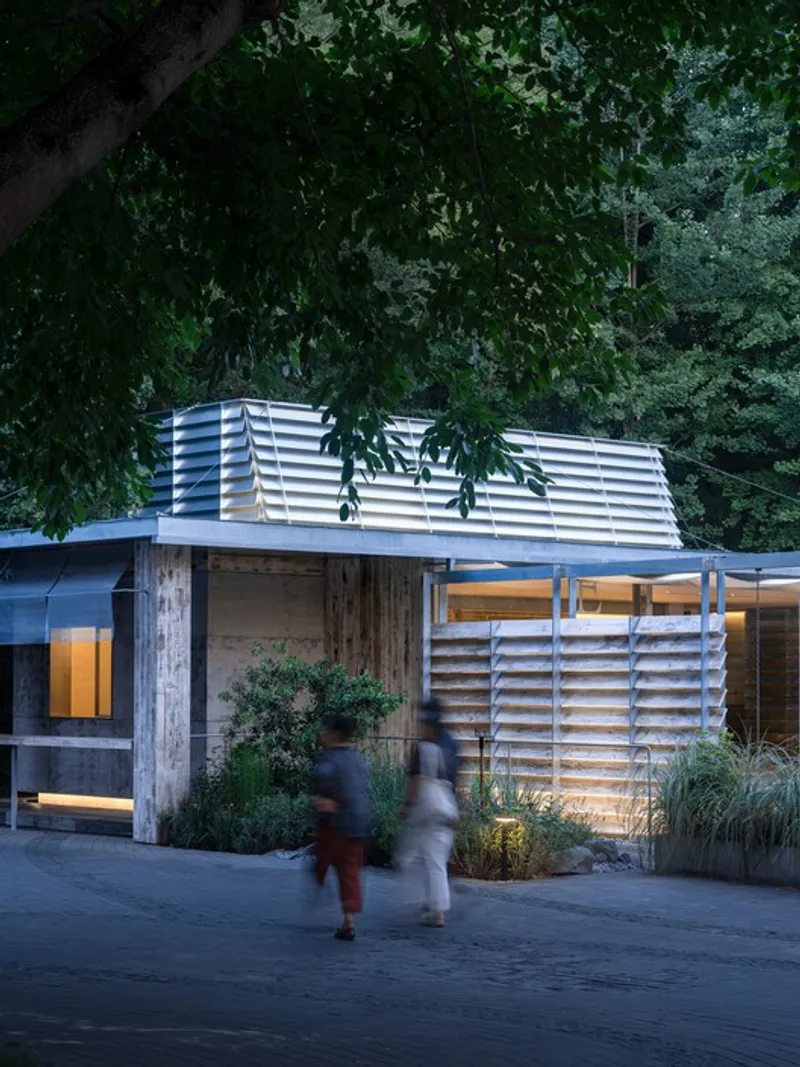
The teahouse does not rely on technological spectacle or formal excess. Instead, it is calibrated through proportion, rhythm, and material honesty, allowing space to feel both grounded and ephemeral.
A Contemporary Teahouse for the Modern Metropolis
While deeply rooted in Eastern philosophy, Yeeii Teahouse is unmistakably contemporary. Its use of modern materials, exposed structure, and minimal detailing situates it firmly within today’s architectural discourse.
Yet its ambition is timeless: to create a place where people can slow down, sense their surroundings, and reconnect with nature, even within the dense fabric of a megacity.
Architecture as Quiet Mediation
Ultimately, Yeeii Teahouse is not about form-making, but about mediation: between city and forest, tradition and modernity, rational structure and emotional warmth. It demonstrates how small-scale architecture can carry profound cultural and spatial meaning.
In its restraint, permeability, and poetic clarity, the teahouse becomes a gentle counterpoint to urban intensity, a reminder that stillness, when carefully crafted, can be as powerful as monumentality.


Popular Articles
Popular articles from the community


LT2A and OPEN Architectes Thread a Brick and Glass High School Through a Wooded Belgian Campus
In Braine-l'Alleud, a 3,000 m² wing for Collège Cardinal Mercier pairs pale brick with a glazed colonnade, deferring to a small chapel and a dense wood.

GROUP A Strips a 1969 Rotterdam Harbor Headquarters to Its Frame and Wraps It in Timber Louvers
In Rotterdam's M4H harbor district, Ferro Offices reuses a 1969 frame, adds one timber storey and reaches BREEAM-NL Outstanding.

U.GA Architects Wraps an Oval Rooftop Pool in Curved Board-Formed Concrete on Busan's Jeollidan-gil
In Busan's Jeonpo-dong, a 454 m² mixed-use block stacks a neighborhood facility, guest rooms and an oval rooftop pool inside spiraling concrete walls.

Architekt Andreas Gruber Scatters 23 Dark Timber Chalets Across a South Tyrolean Forest Edge
In Molini di Tures, Amonti Chalets breaks a resort into a hamlet of gabled timber houses, with parking, storage and services pushed into the slope.

Similar Reads
You might also enjoy these articles


Hodi-Mandai Geram
Project Function: Preservation and revitalization of the Intangible heritage and socio-spatial identity of the Hodi by Housing, Cultural Memory Center, Sacred Grove, landscape, local tourism economy


Olio Towers: A Mid-Rise for Performers That Fuses Housing, Rehearsal, and Stage
Located blocks from Houston's Theater District, this modular tower stacks living units around a central performance atrium.

Oasis: Modular Green Housing Carved into Dhaka's Urban Fabric
A shortlisted Plugin Housing entry reclaims unauthorized settlements in Dhaka with stepped concrete volumes, green roofs, and ventilation-driven design.

Black Hole: A Floating Megastructure for the Post-Physical Era
Emiliano Mazzarotto envisions a spherical, self-scaling arena where e-sports, digital hotels, and holographic stadiums replace traditional public space.

Explore Architecture Competitions
Discover active competitions in this discipline

Challenge to reimagine the Iron Throne

Photograph architecture without architects

Illustrate the lost glory of Angkor Wat - Render Challenge

Design challenge to reuse E-waste
Comments (0)
Please login or sign up to add comments
No comments yet. Be the first to comment!