
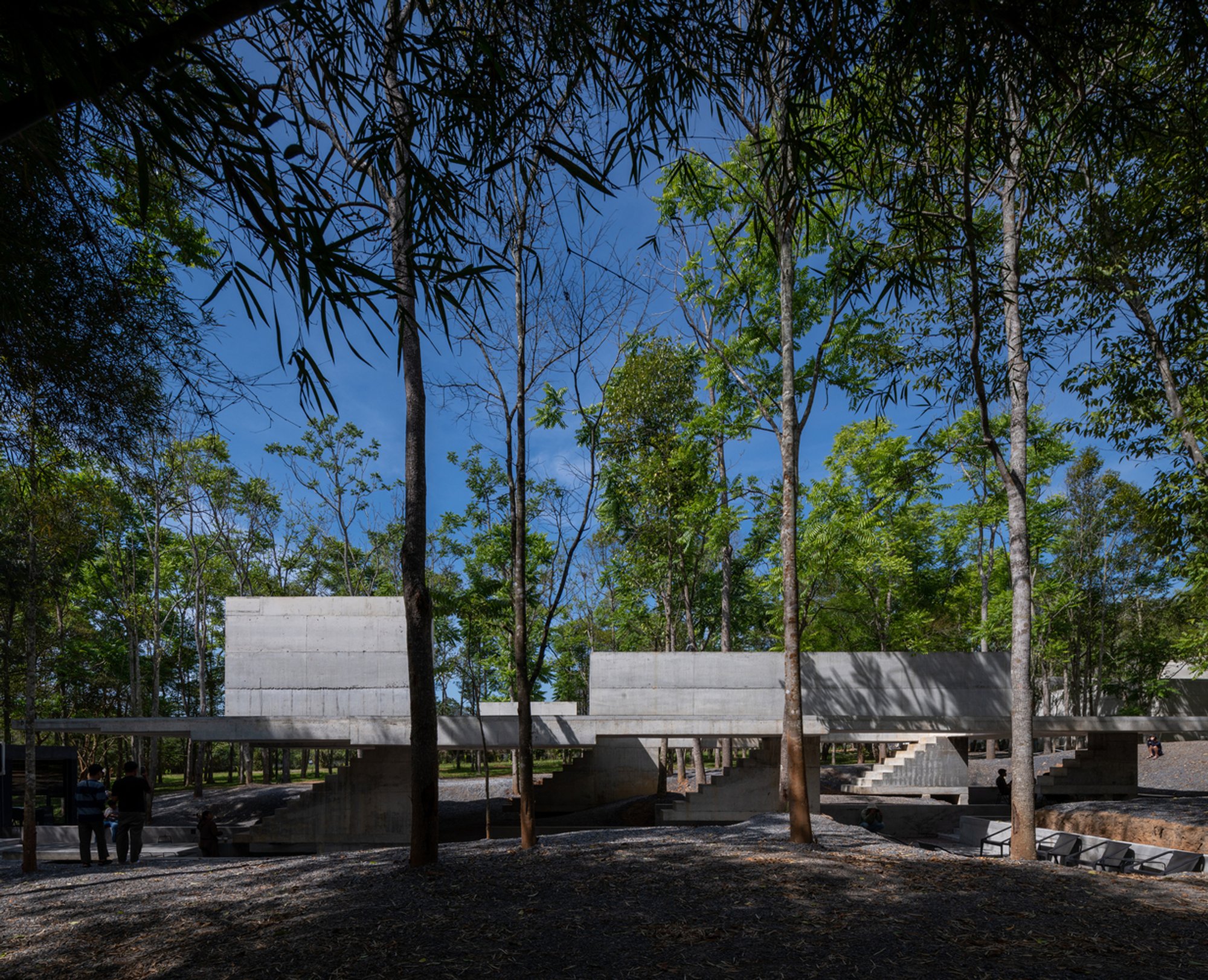
Yellow-Mini Café by JOYS Architects: A Harmonious Fusion of Nature and Architecture
Yellow-Mini Café by JOYS Architects blends minimalist design with nature, using a floating roof and excavated spaces to enhance spatial experience.

A Thoughtfully Designed Coffee Retreat in Pak Chong, Thailand
Nestled in the serene landscape of Pak Chong, Thailand, Yellow-Mini Café by JOYS Architects is a prime example of contemporary architecture seamlessly blending with nature. Spanning 170 square meters, the project, completed in 2022, exemplifies an innovative approach to spatial design, emphasizing the interplay between built structures and their natural surroundings. Designed by lead architects Suebsai Jittakasem, Prasert Ananthayanont, and Nutt La-iad-on, with structural engineering by Jet Structural and construction by Pornsila Engineering Company Limited, the project reflects a commitment to minimalist aesthetics, sustainable building practices, and user-centric functionality.
A Site-Responsive Architectural Vision
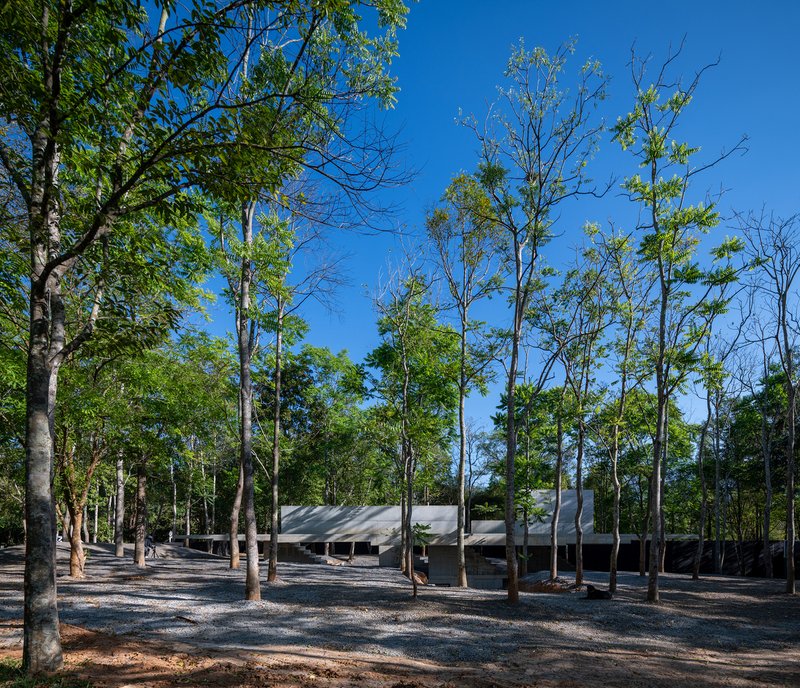
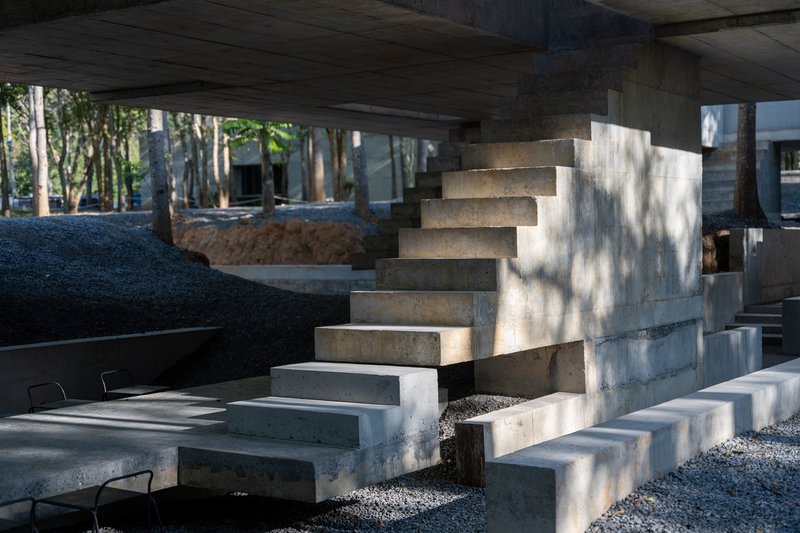
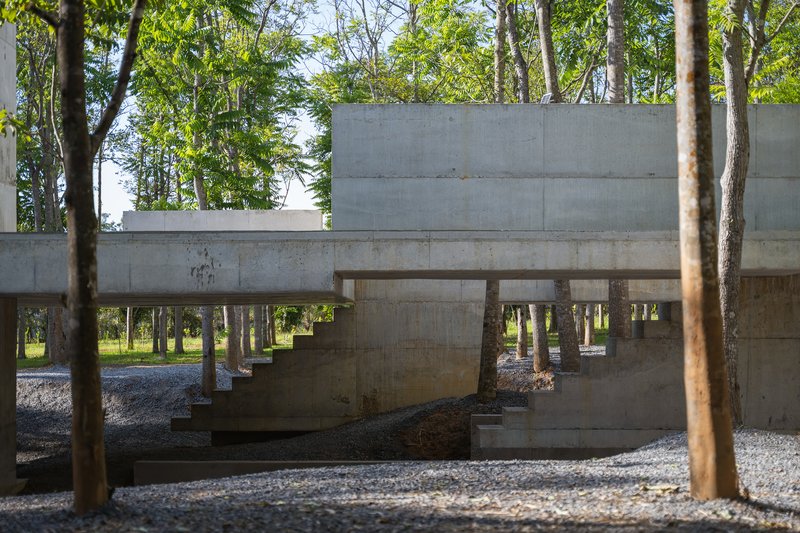
The Yellow-Mini Café is strategically positioned on a site featuring a subtle slope and vertical tree formations. Rather than imposing a rigid structure onto the landscape, the design enhances the site’s hidden attributes. A flat horizontal plane, acting as both a roof and a spatial boundary, acknowledges the site’s topography while offering a functional and adaptable environment beneath.
The Roof as an Architectural Element
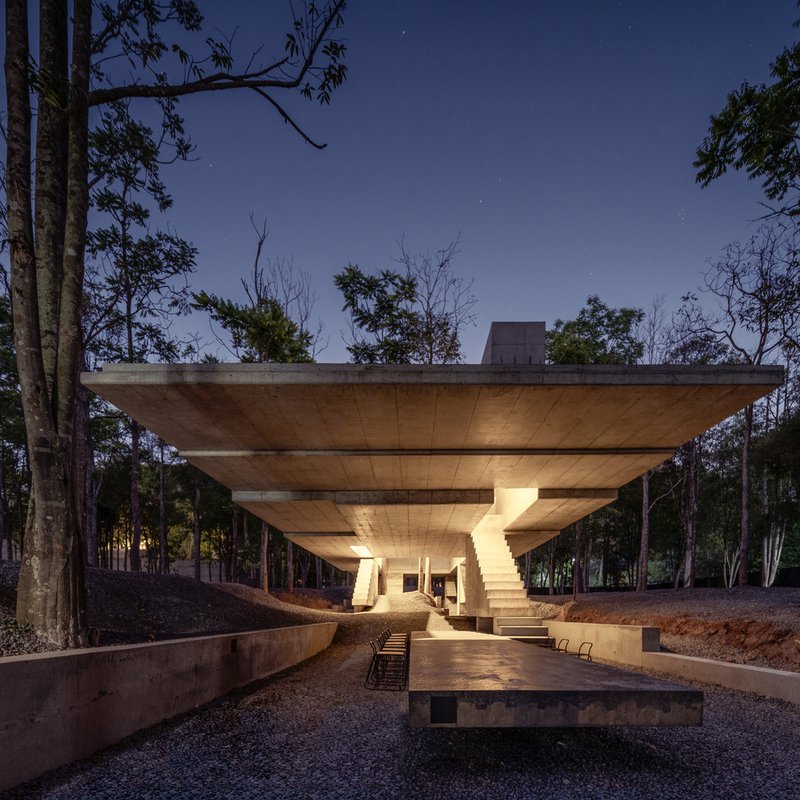
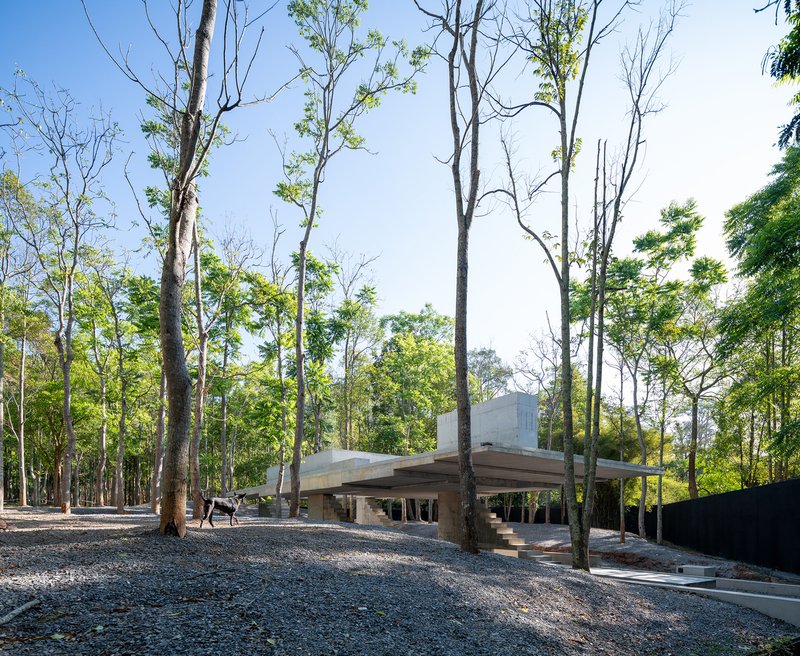
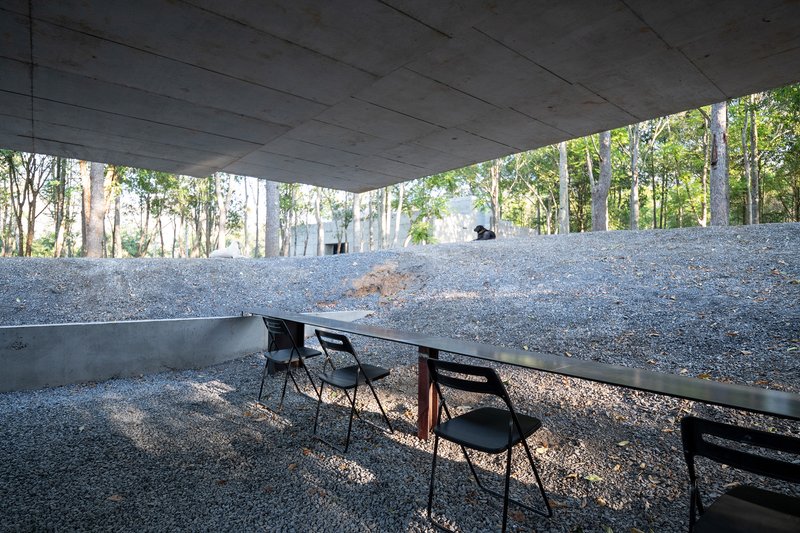
In this project, the roof is not merely a covering—it is the fundamental architectural element. By elevating the roof on a minimal structural framework, the architects create a floating effect, emphasizing the transition between built and natural environments. Beneath this plane, visitors can sit, lie down, and move freely, experiencing the dynamic interplay between architecture and nature. This open-concept approach fosters a sense of connection with the surroundings while maintaining an inviting and comfortable atmosphere.
Balancing Nature and Built Form
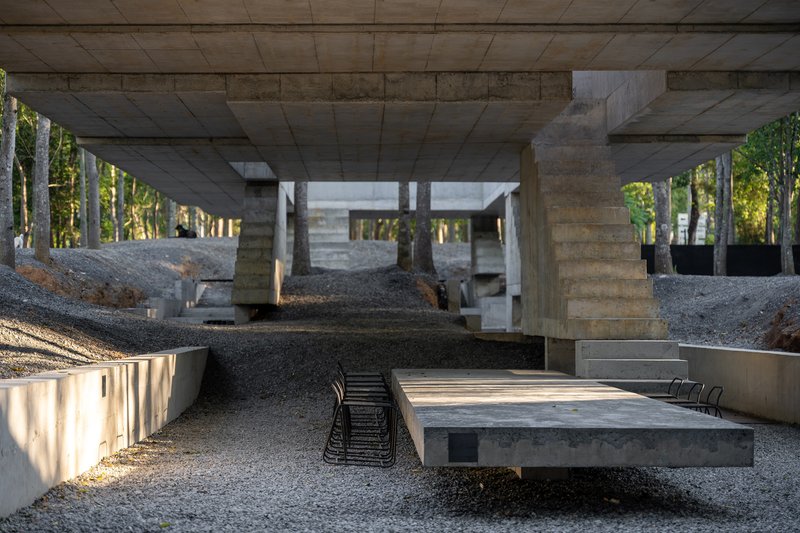
The project raises thought-provoking questions about architectural truth and geography. Should architecture preserve the original ground condition, or is change an inherent part of nature? The Yellow-Mini Café embraces transformation, integrating both natural and human-made modifications. The construction process itself becomes a design element—excavated spaces from the structural footing are repurposed into seating areas and functional zones. These excavations act as spatial markers, revealing layers of the site’s history and adapting them for contemporary use.
Integrating Structure, Construction, and Spatial Experience
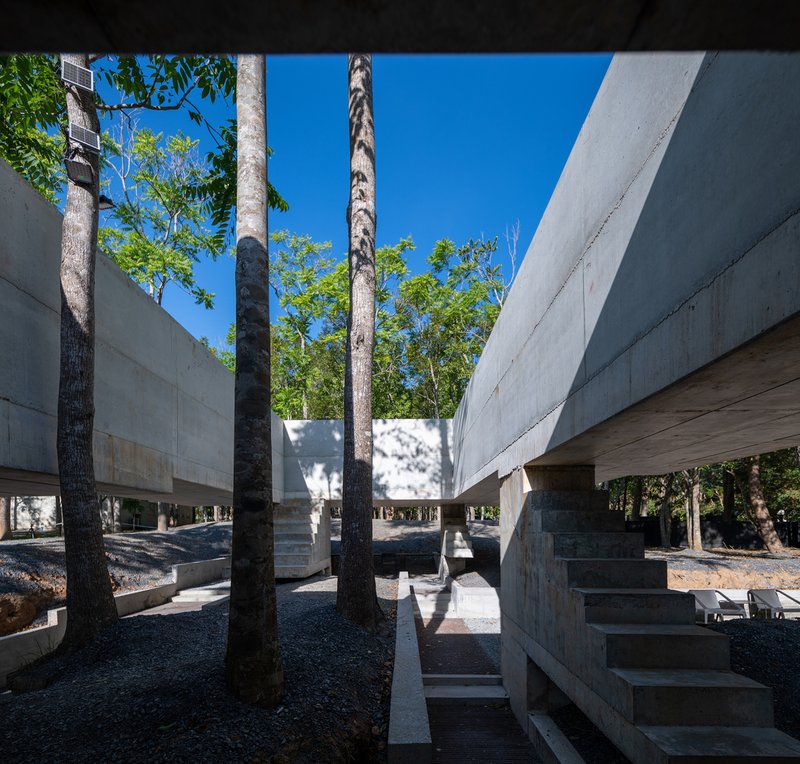
The design strategy is deeply rooted in the relationship between structure, construction techniques, and spatial organization. Key features include:
- Structural Traces: Variations in the roof’s thickness and support elements subtly indicate structural logic while maintaining an elegant aesthetic.
- Construction Details: Differences in foundation levels and the use of diverse concrete textures highlight the interaction between built components and the site.
- Architectural Space: Interior zones align with the building foundation levels, with stair-like supporting structures shaping the height and atmosphere of each space.
A Sustainable and Context-Driven Design Approach
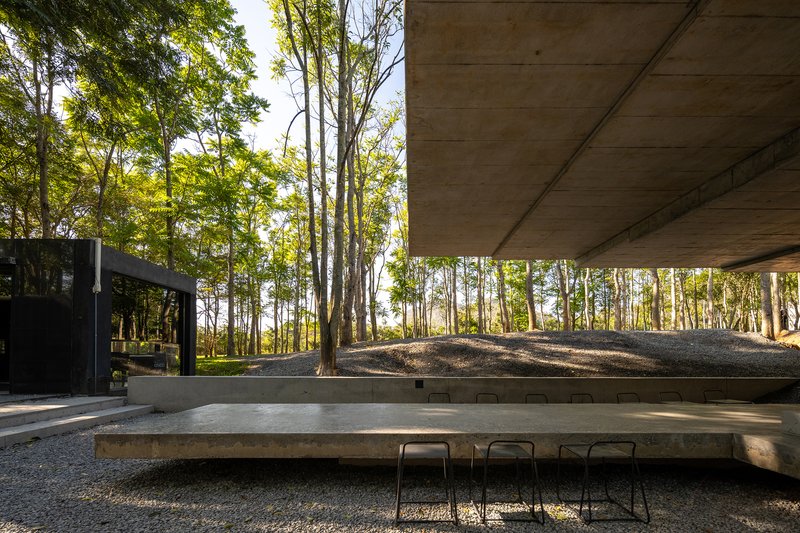
Beyond its aesthetic appeal, Yellow-Mini Café embodies sustainable architectural principles. By minimizing land alteration, utilizing locally sourced materials, and incorporating passive cooling strategies, the project reduces environmental impact while enhancing user comfort. The result is an architecture that is both site-conscious and socially engaging, encouraging visitors to experience space in a new and immersive way.
A Modern Sanctuary Rooted in Nature
Yellow-Mini Café by JOYS Architects is a compelling example of contemporary design that respects and enhances its natural context. By integrating thoughtful spatial strategies with a deep understanding of the site’s characteristics, the project creates a harmonious retreat where architecture and nature coexist.




Popular Articles
Popular articles from the community

PLATAFORMArq Folds a Concrete Roof Over the Portuguese Mountains in House #474
A 220-square-meter residence in Teixoso, Portugal, wraps board-formed concrete into an angular canopy that frames the Serra da Estrela foothills.

Milan Crossover: Sustainable Architecture for a New Fashion Culture in Milan
Milan Crossover transforms fashion culture through sustainable architecture, linking material libraries, remake studios, and public runways.
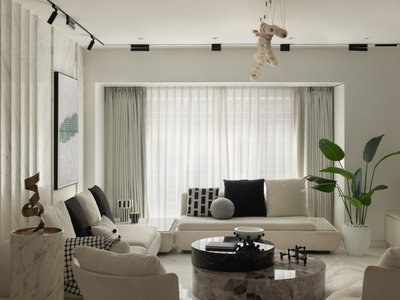
Inside a Timeless Mumbai Residence by Aether Studio
Aether Studio's 2,250 sq ft apartment in Malad, Mumbai uses marble, brass, boucle, and disciplined restraint to build a quiet retreat from the city.
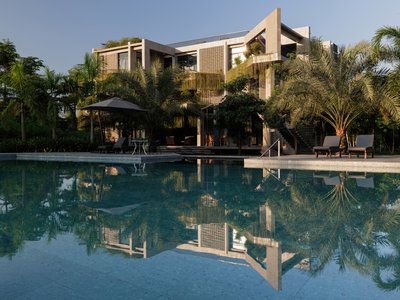
Reincarnation Weaves a Three-Story Retreat into the Green Landscape of Rural Bangladesh
Ara Manor in Narsingdi dissolves the line between domestic architecture and its lush surroundings through screens, courtyards, and planted rooftops.

Similar Reads
You might also enjoy these articles

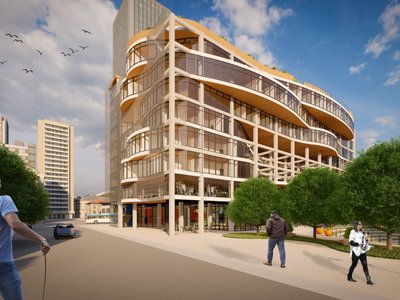
Olio Towers: A Mid-Rise for Performers That Fuses Housing, Rehearsal, and Stage
Located blocks from Houston's Theater District, this modular tower stacks living units around a central performance atrium.
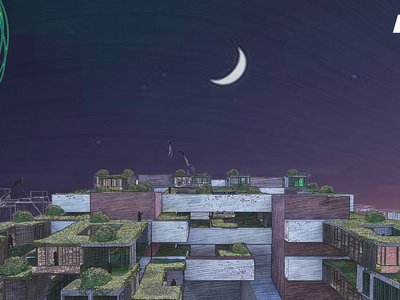
Oasis: Modular Green Housing Carved into Dhaka's Urban Fabric
A shortlisted Plugin Housing entry reclaims unauthorized settlements in Dhaka with stepped concrete volumes, green roofs, and ventilation-driven design.

Black Hole: A Floating Megastructure for the Post-Physical Era
Emiliano Mazzarotto envisions a spherical, self-scaling arena where e-sports, digital hotels, and holographic stadiums replace traditional public space.
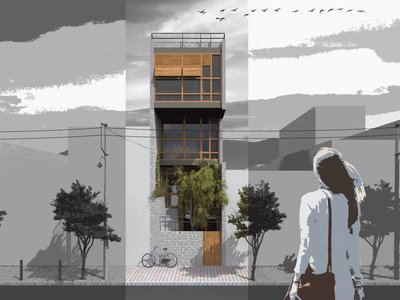
Compact & Sustainable Living in Piraeus: A Four-Level Family Home Built Around Light and Air
A narrow townhouse in one of Greece's densest port cities uses a central atrium and passive strategies to house three generations under one roof.

Explore Installations Competitions
Discover active competitions in this discipline




The International Standard for Design Portfolios


The Global Benchmark for Architecture Dissertation Awards


The Global Benchmark for Graduation Excellence

Challenge to design a portable theatre
Comments (0)
Please login or sign up to add comments
No comments yet. Be the first to comment!