
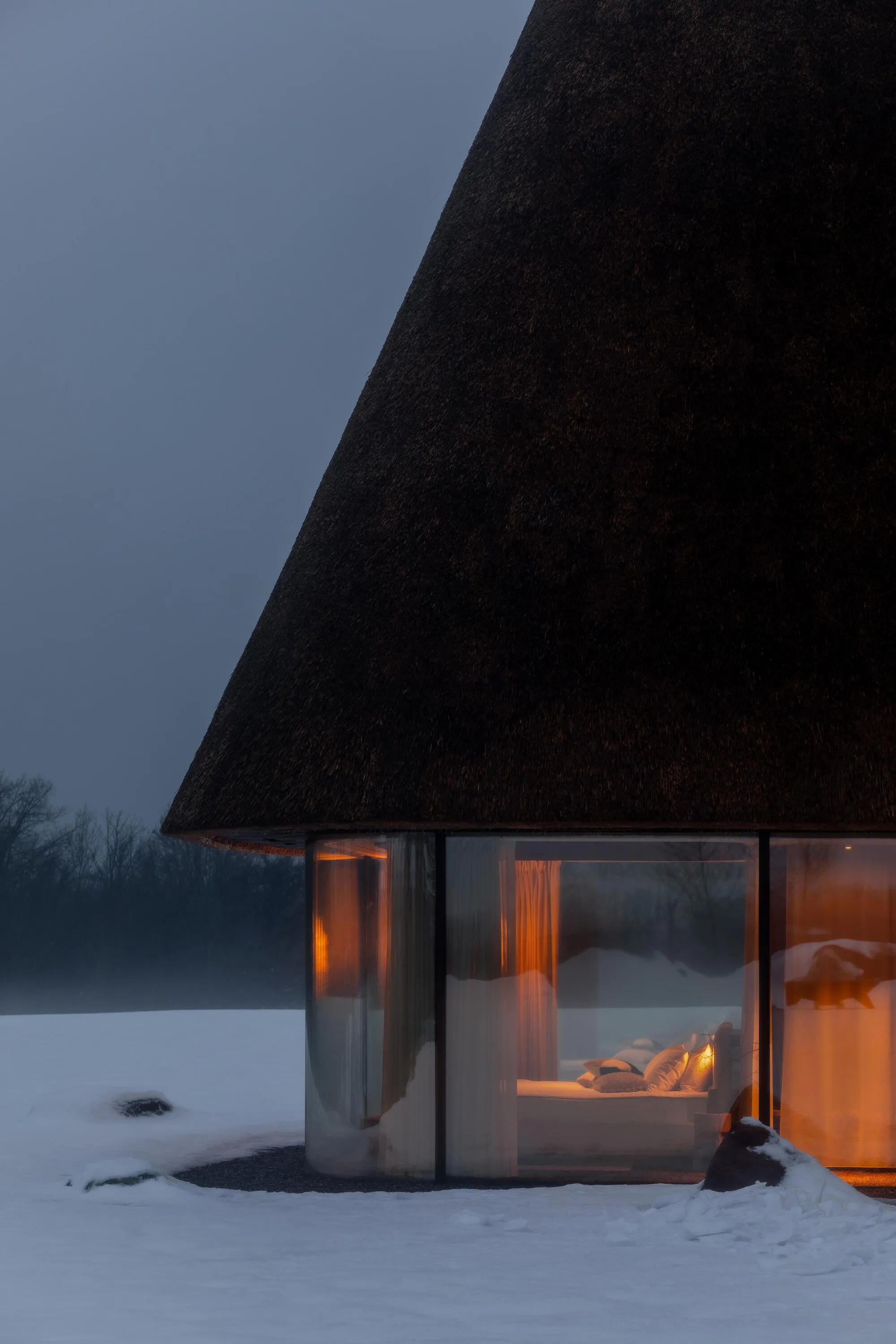
YOD Group's Reed Roof Guesthouses in Ukraine
Conical thatched pavilions by YOD Group reinterpret Ukrainian vernacular architecture as glass-wrapped retreats set in snow-covered fields.


There is a particular kind of building that looks like it could have been there for centuries or landed yesterday. YOD Group's Under the Reed Roof Guesthouses in Ukraine occupy that tension with real conviction. At just 50 square metres each, these conical thatched pavilions sit scattered across a flat landscape, their silhouettes barely distinguishable from haystacks or ancient shelters. Yet their curved glass walls, terrazzo floors, and carefully detailed interiors belong firmly to the present.
The premise is deceptively simple: take the Ukrainian tradition of thick whitewashed walls and steep thatched roofs, strip away the walls, and replace them with glass. What remains is a roof, a hearth, and a view. The project is less about innovation for its own sake and more about asking what happens when a deeply rooted building typology meets contemporary transparency. The answer, photographed by Mykhailo Lukashuk in thick winter fog, is something close to magic.
Landscape as Architecture

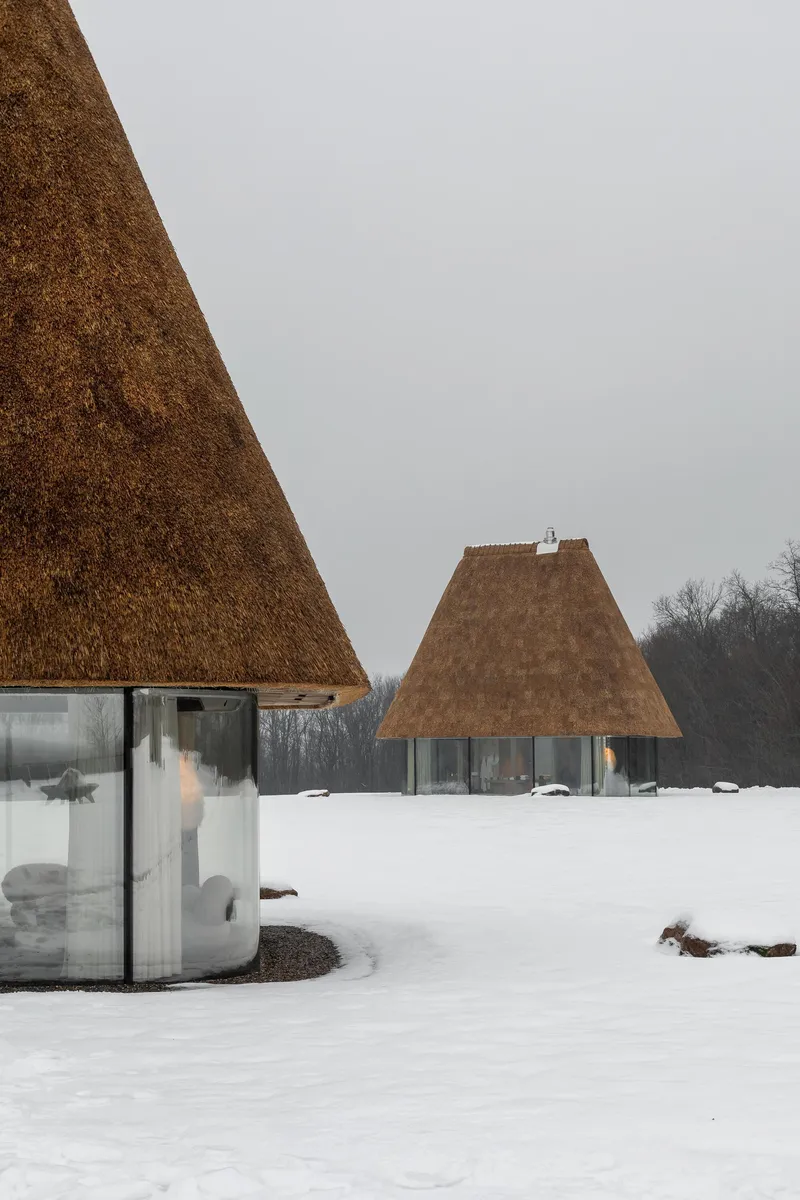
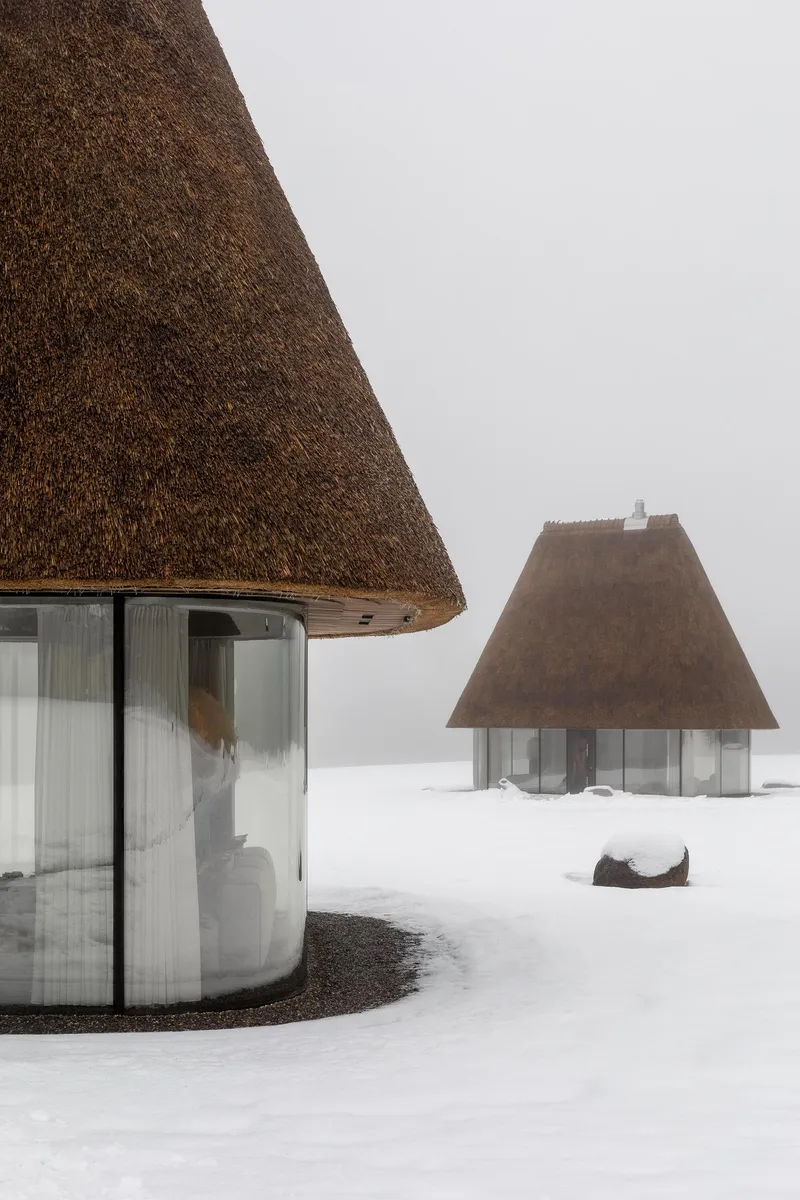
Seen from a distance, the guesthouses read as a small village, their conical profiles punctuating a flat snowfield like markers on a horizon. YOD Group understands that the real composition here is not any single building but the relationship between multiple volumes, the ground, and the fog. The varying sizes and spacing prevent the cluster from feeling regimented. Instead, the pavilions appear almost migratory, as though they arrived independently and chose to settle nearby.
The decision to photograph the project in deep winter was a smart one. Snow erases context, reducing the ground plane to a blank surface that amplifies each structure's geometric clarity. The mist softens edges and flattens depth, turning the landscape into something closer to a painting than a site plan. These are buildings designed to be seen against nothing.
The Thatched Cone
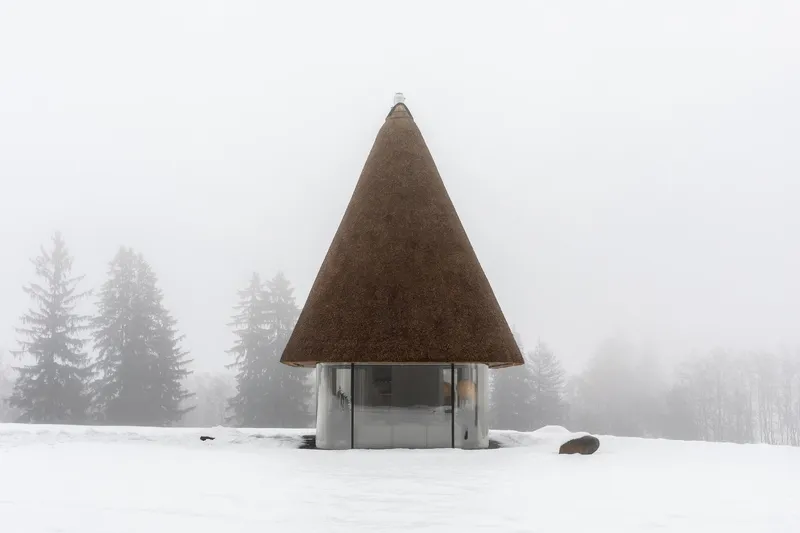
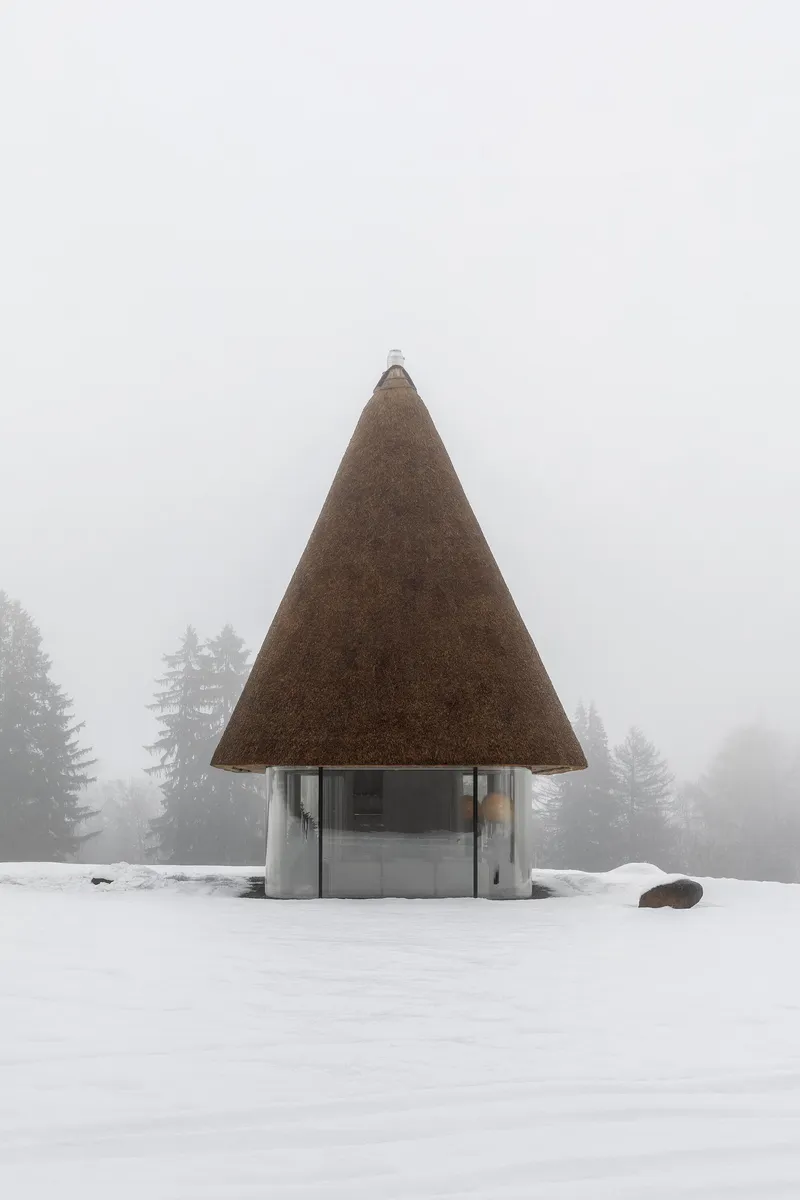
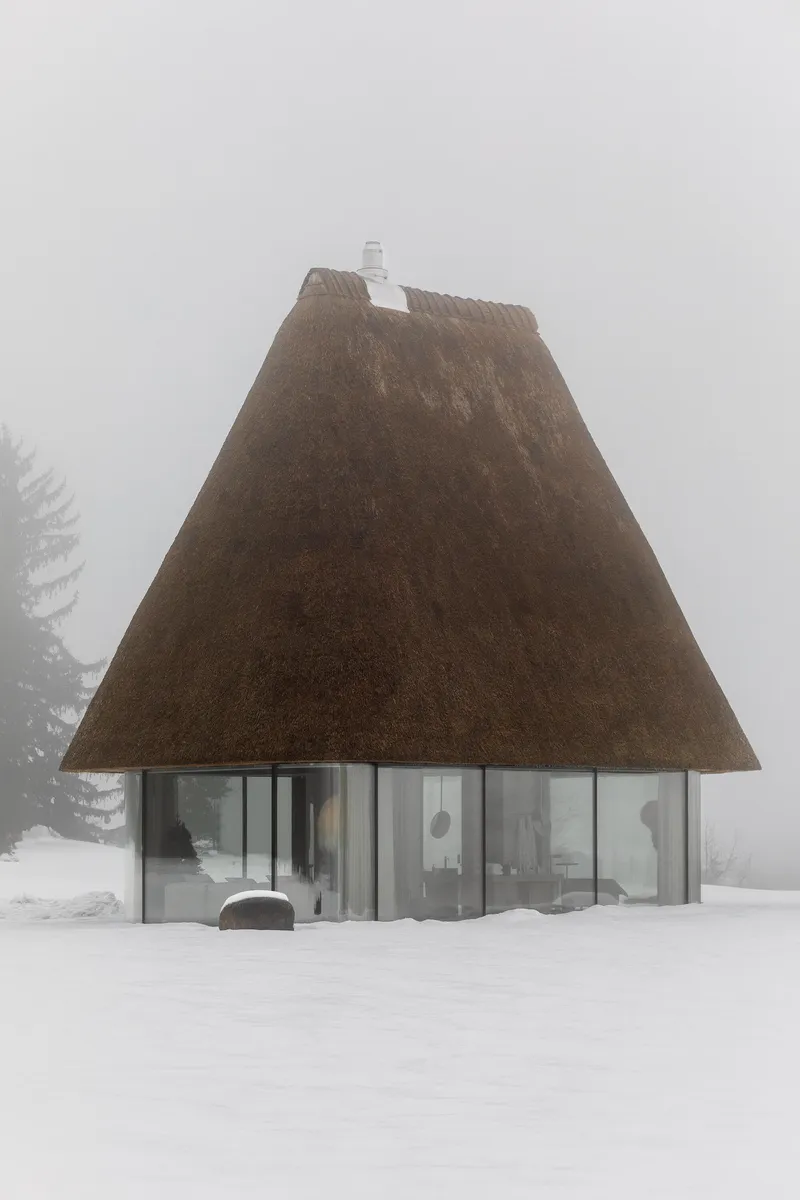
Each guesthouse is defined by a single, steep pyramidal roof clad in natural reed thatch. The proportions are generous relative to the footprint, giving the structures a top-heavy quality that is at once archaic and playful. Thatch is one of the oldest roofing materials on the planet, and seeing it deployed at this scale, with this precision, reminds you why it persists. It insulates, sheds water, and ages with character that no synthetic material can replicate.
From certain angles the pavilions look entirely opaque, solid volumes of straw rising from the snow. It is only as you move around them that the glass base reveals itself, a surprise that reframes the entire reading of the building. The roof becomes a hovering object, a canopy rather than an enclosure.
Glass Meets Thatch
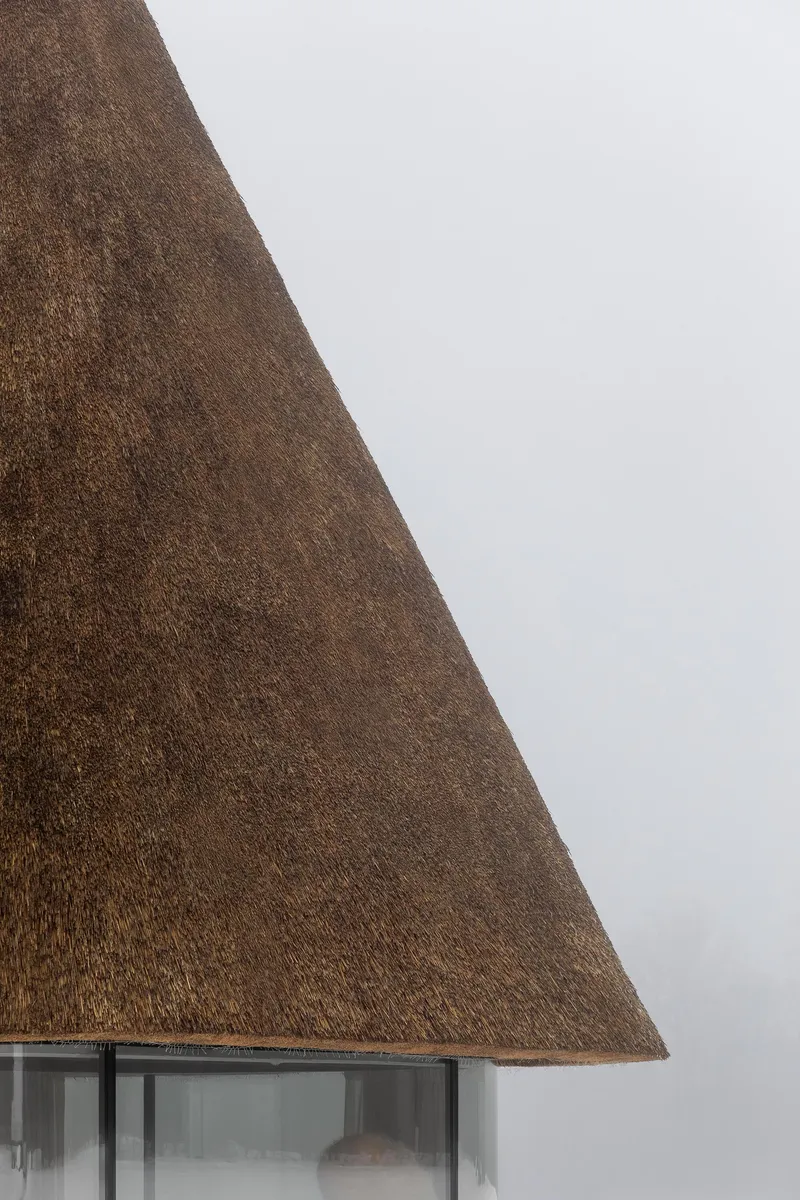
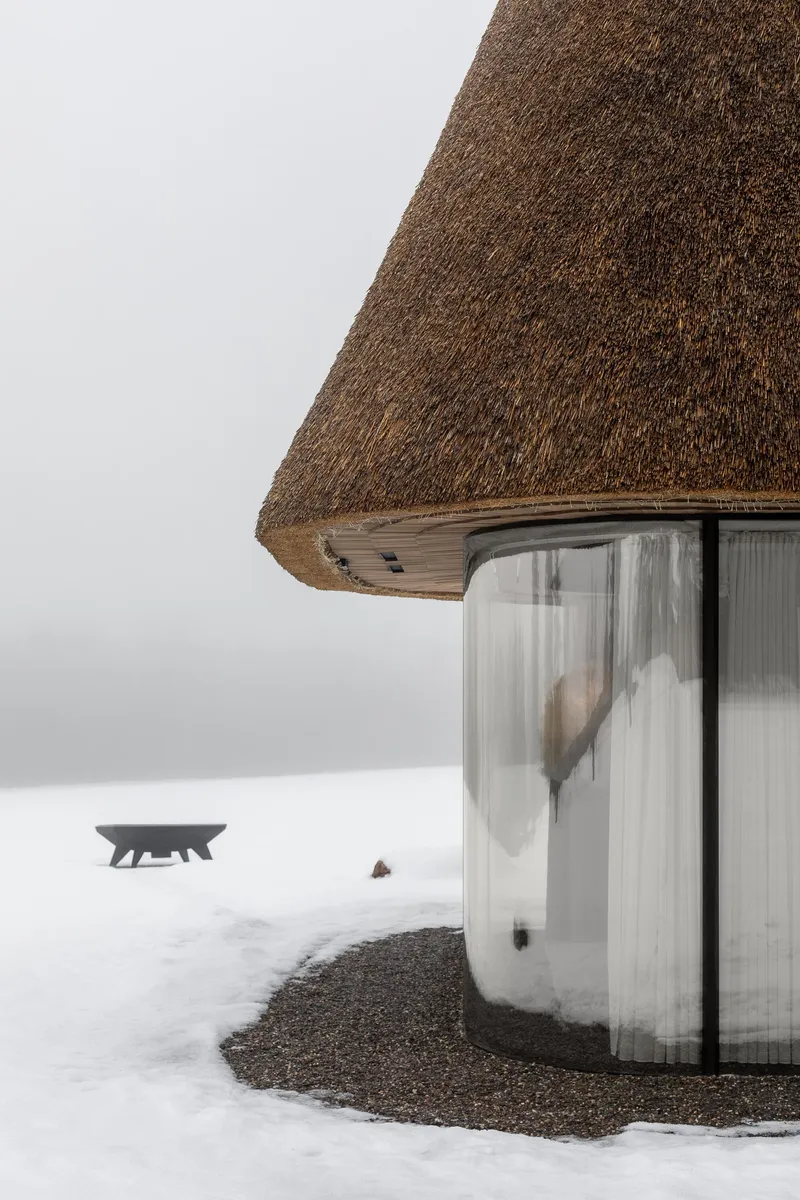
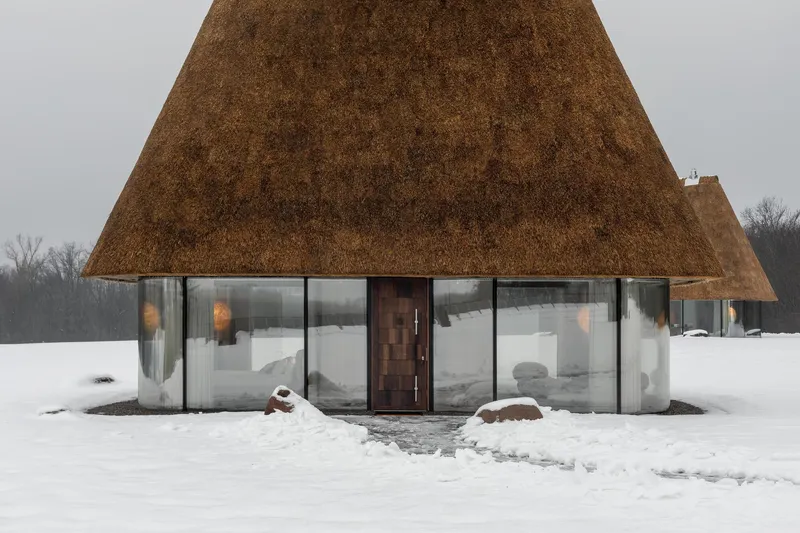
The most compelling detail in the project is the junction where the thatched roof meets the curved glass curtain wall. This is where the conceptual gamble either pays off or falls apart, and YOD Group gets it right. The thatch overhangs slightly, casting a shadow line that reads as a clean separation between the ancient and the modern. There is no clumsy transition bracket or decorative trim, just material meeting material.
The curved glazing wraps the full perimeter, transforming the interior into a panoramic viewing platform. A gravel base sits at the foot of each pavilion, providing drainage and a textural buffer between snow and glass. The result is a building that feels both protective and exposed, sheltered by the heavy roof but open to the landscape on all sides.
Hearth and Interior
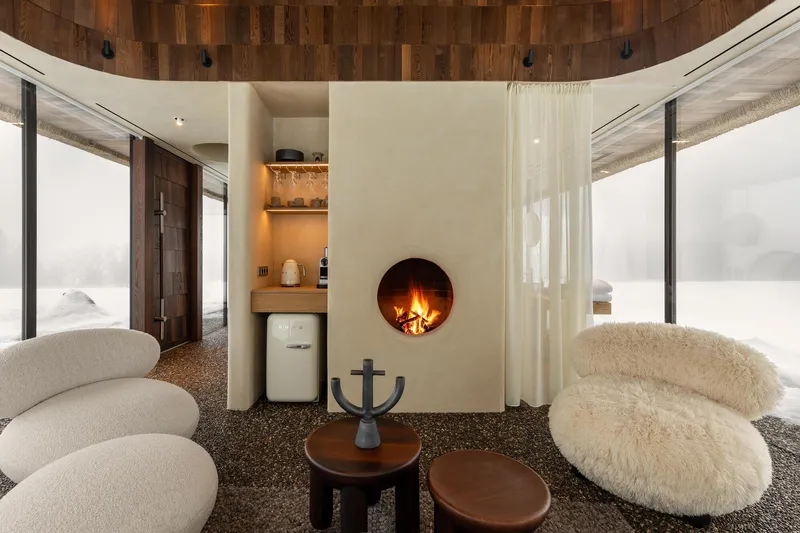
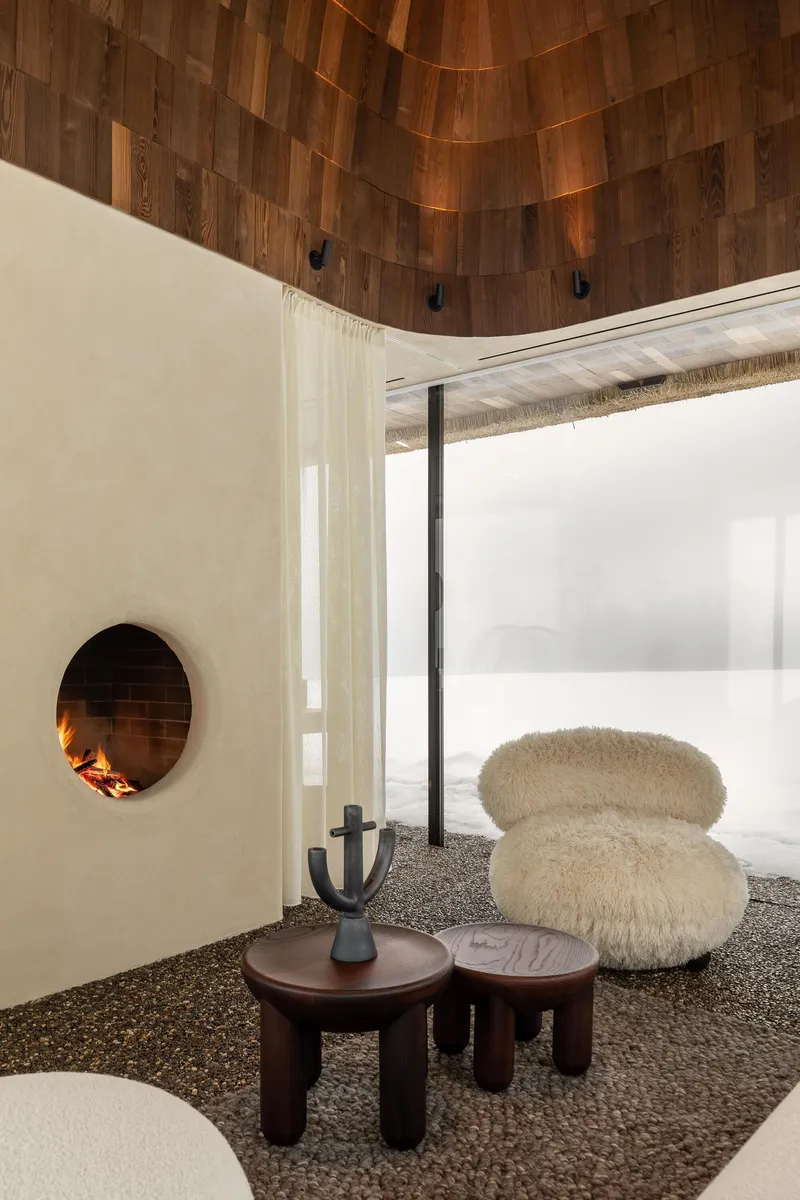
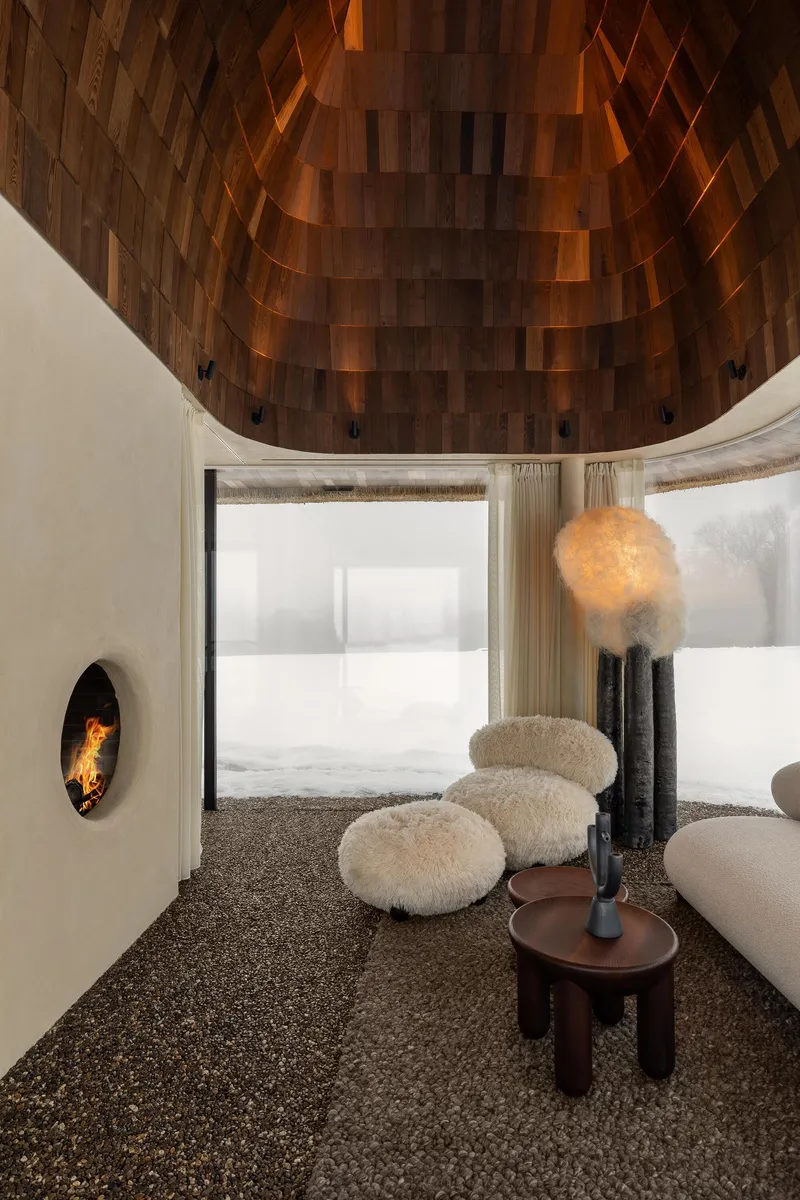
Inside, the plan organizes itself around a central masonry core that contains a circular fireplace opening and a small kitchenette niche. This is the heart of each guesthouse in both a literal and spatial sense. The fire is visible from the main living area, its round aperture punched through a white curved wall that echoes the building's oval geometry. It is a genuinely primal gesture: fire at the centre, glass at the edge, sky above.
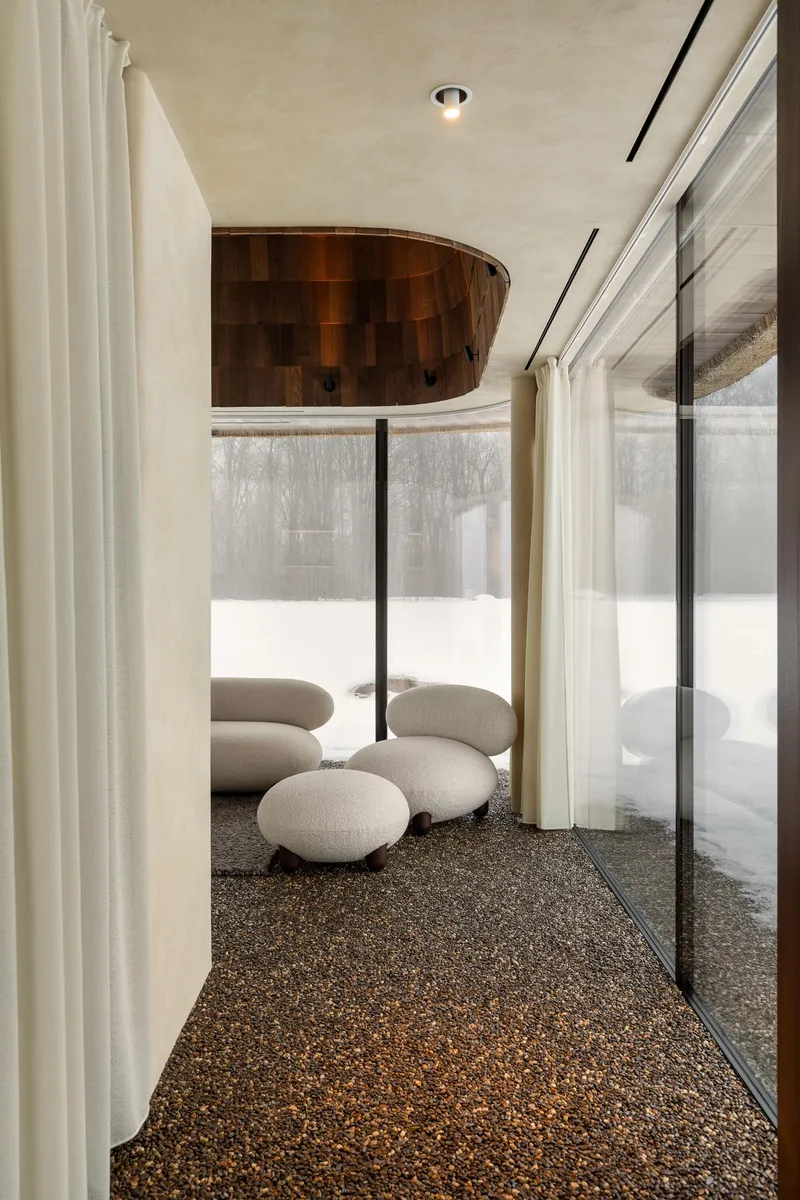
Above, the ceiling is lined with layered plywood ribs that converge toward the peak of the cone, creating a warm timber dome that contrasts with the coolness of the terrazzo floor and the transparency of the walls. Pendant lights hang from the apex, their spherical forms rhyming with the circular fireplace and the overall curved plan. Nothing in the material palette is accidental.
Living Under the Dome
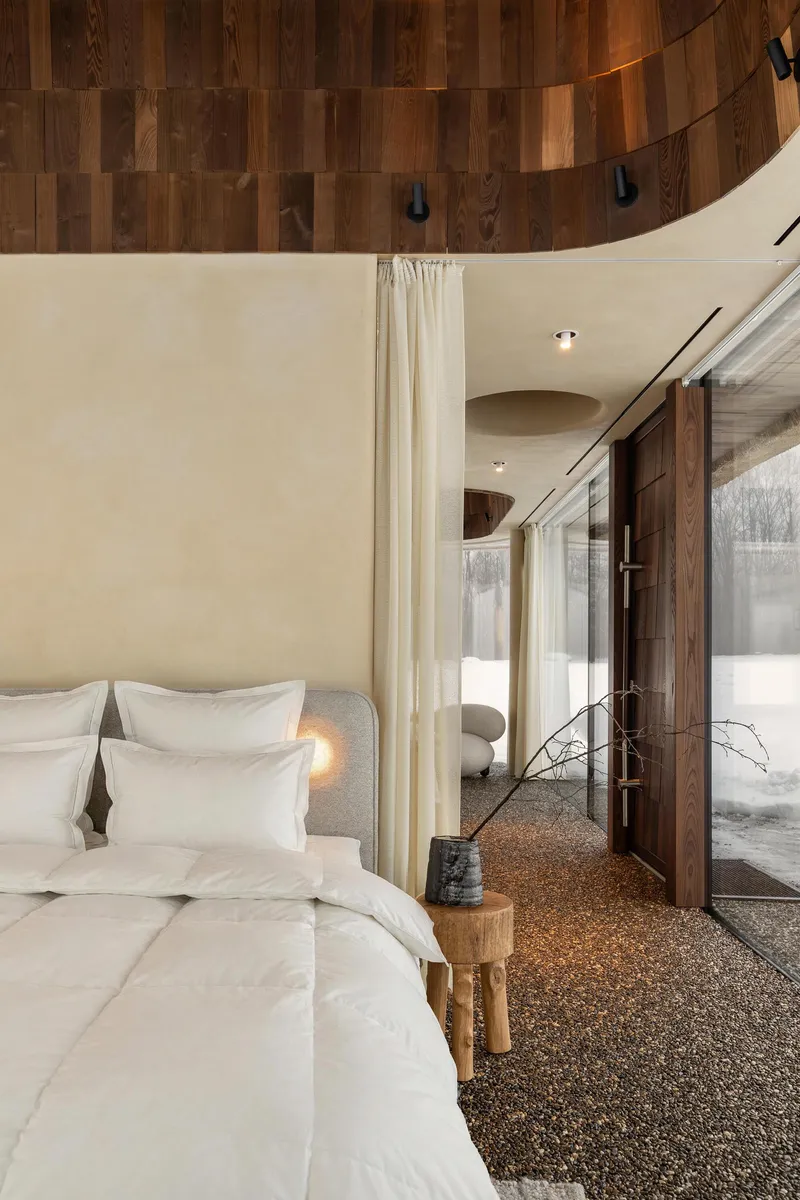
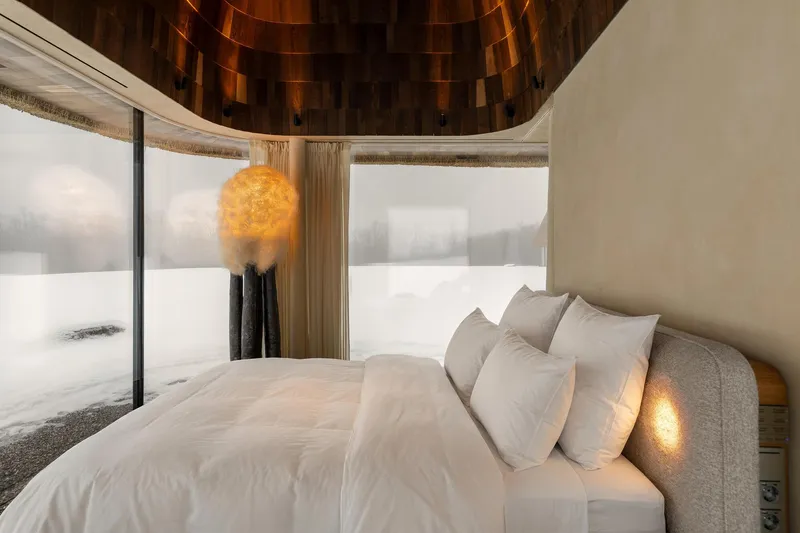
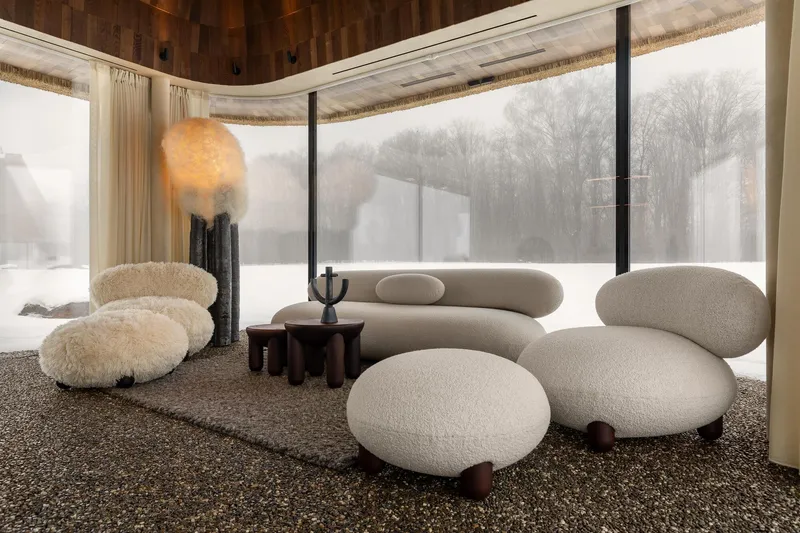
The sleeping area occupies one side of the oval plan, positioned directly against the curved glazing so that the bed faces an uninterrupted wall of landscape. The wood-paneled ceiling wraps down and around, creating a cocoon-like enclosure that feels intimate despite the transparency. Waking up in one of these rooms in winter would mean opening your eyes to a horizon of white, framed by warm timber and softened by the deep overhang of the thatched roof above.
The seating areas are similarly oriented outward, with low cushions and minimal furniture ensuring that nothing competes with the view. YOD Group resists the temptation to over-furnish. The interior reads as a single continuous space organized loosely by the central core, with zones for sleeping, sitting, and bathing flowing into one another without hard partitions.
Material Details
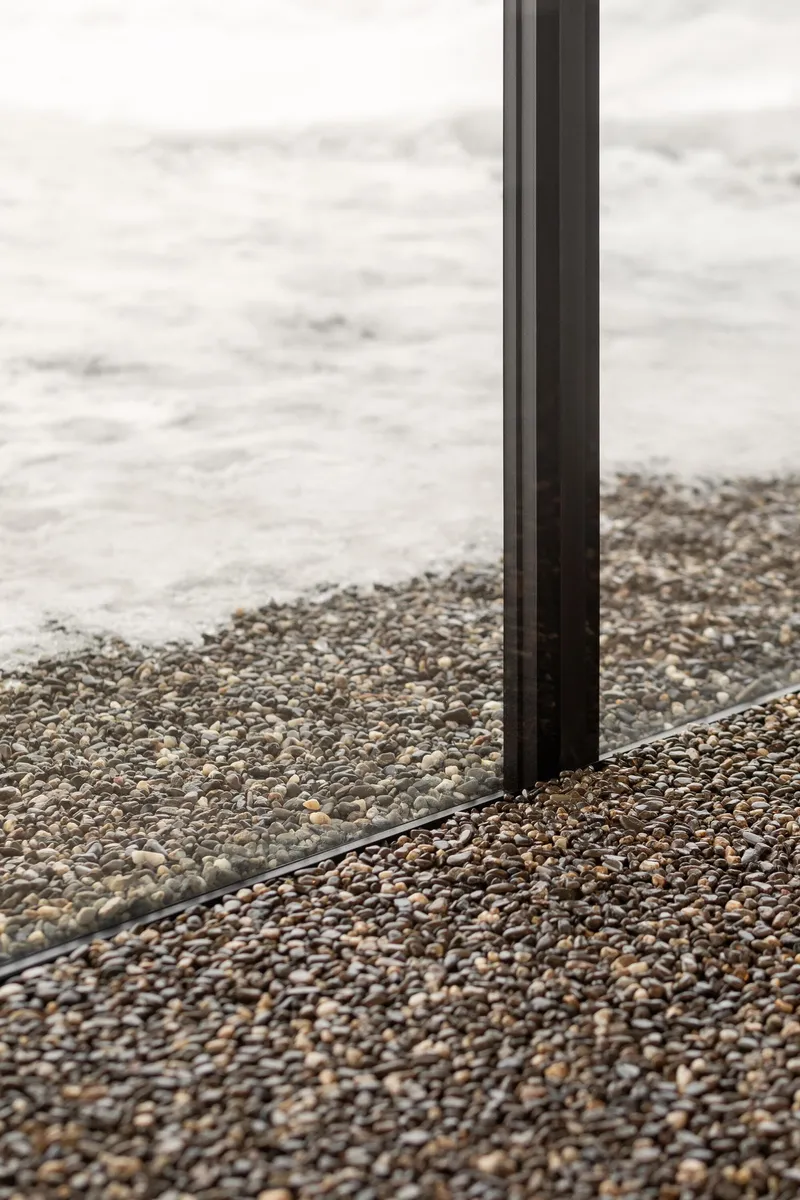
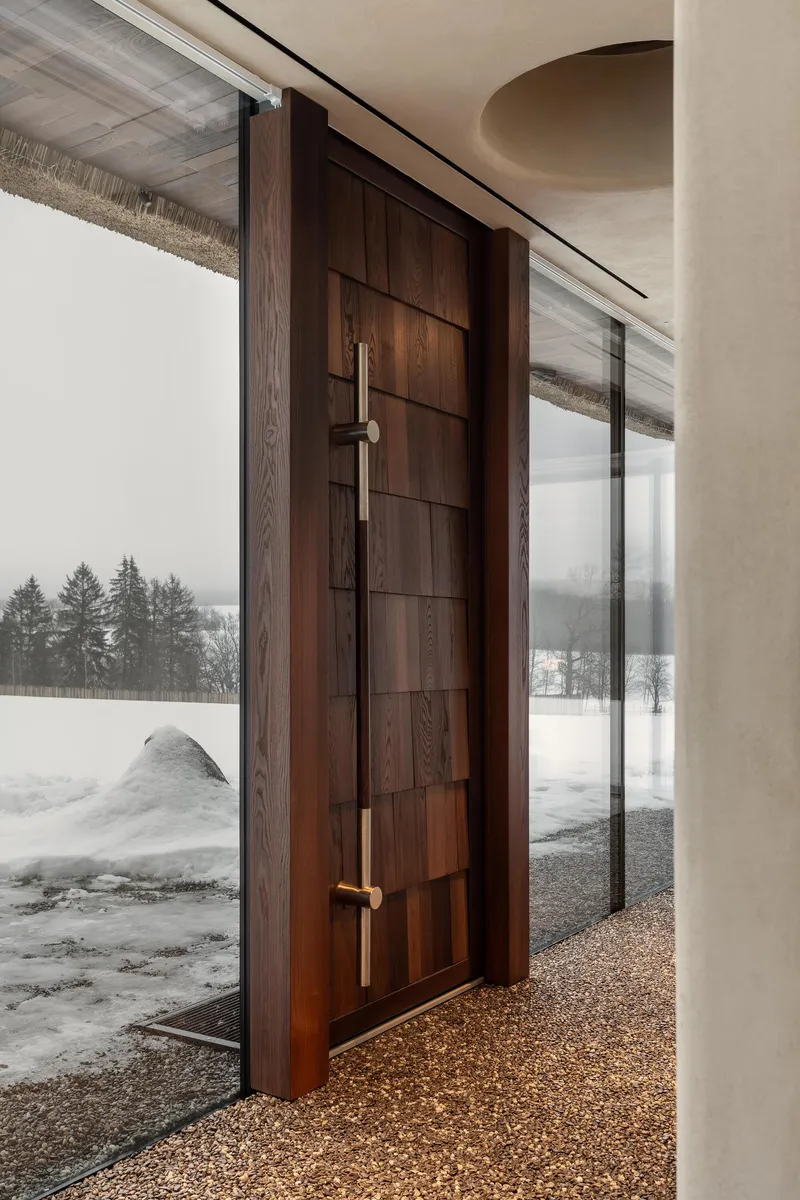

The material palette is restrained but tactile. The terrazzo floor uses an exposed aggregate mix with visible stone fragments, providing a surface that is both durable and visually rich. The glazing profiles are slim, almost disappearing where they meet the floor, which amplifies the sense that the roof is simply floating. The entry door is clad in horizontal timber planking with bronze lever handles, a detail that signals craft without shouting.
Looking upward into the timber structure reveals the engineering behind the organic form. Plywood ribs are layered and tapered as they rise toward the apex, creating a pattern that recalls both traditional basket weaving and contemporary parametric design. It is an honest display of structure, with each rib doing visible work.
After Dark
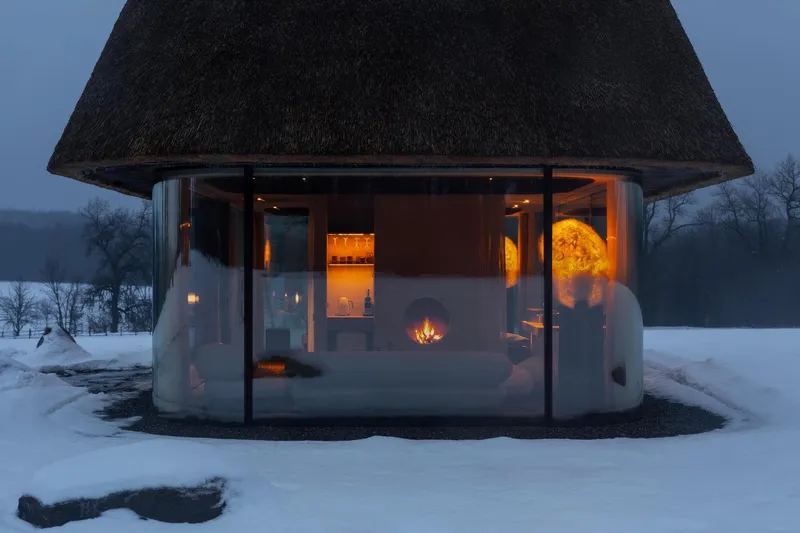
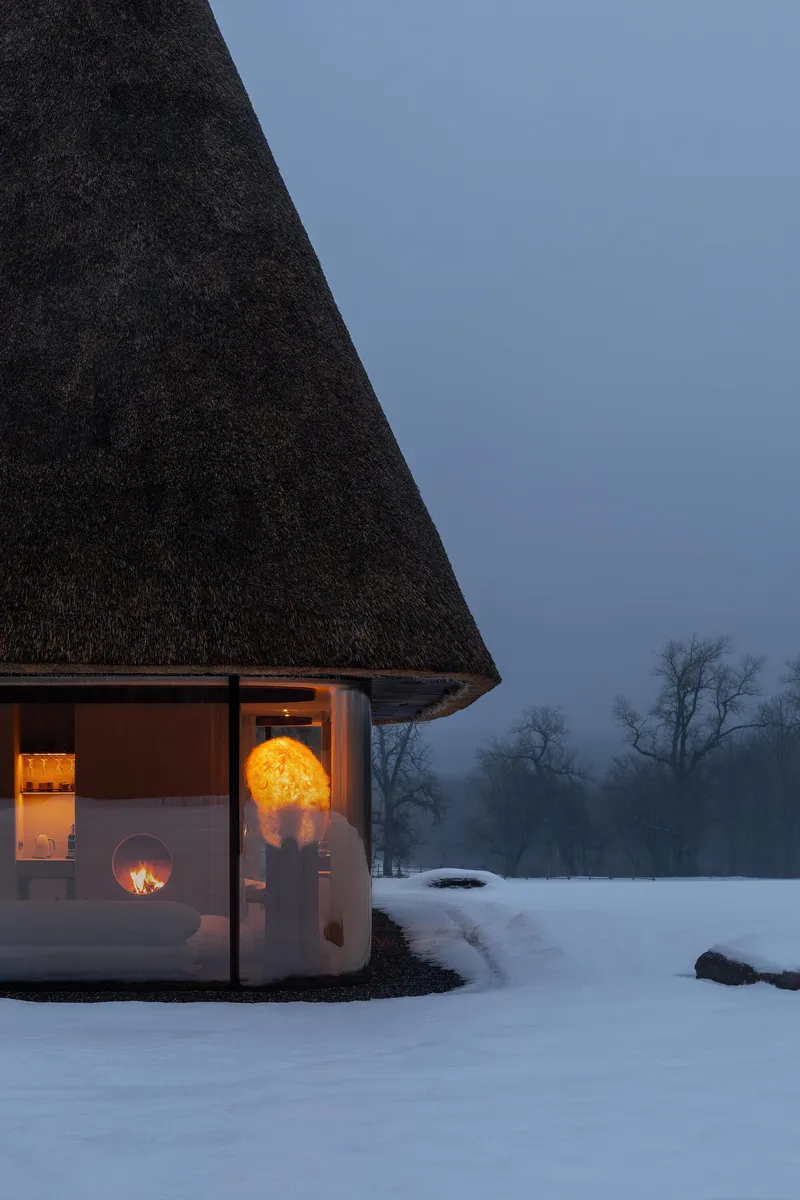
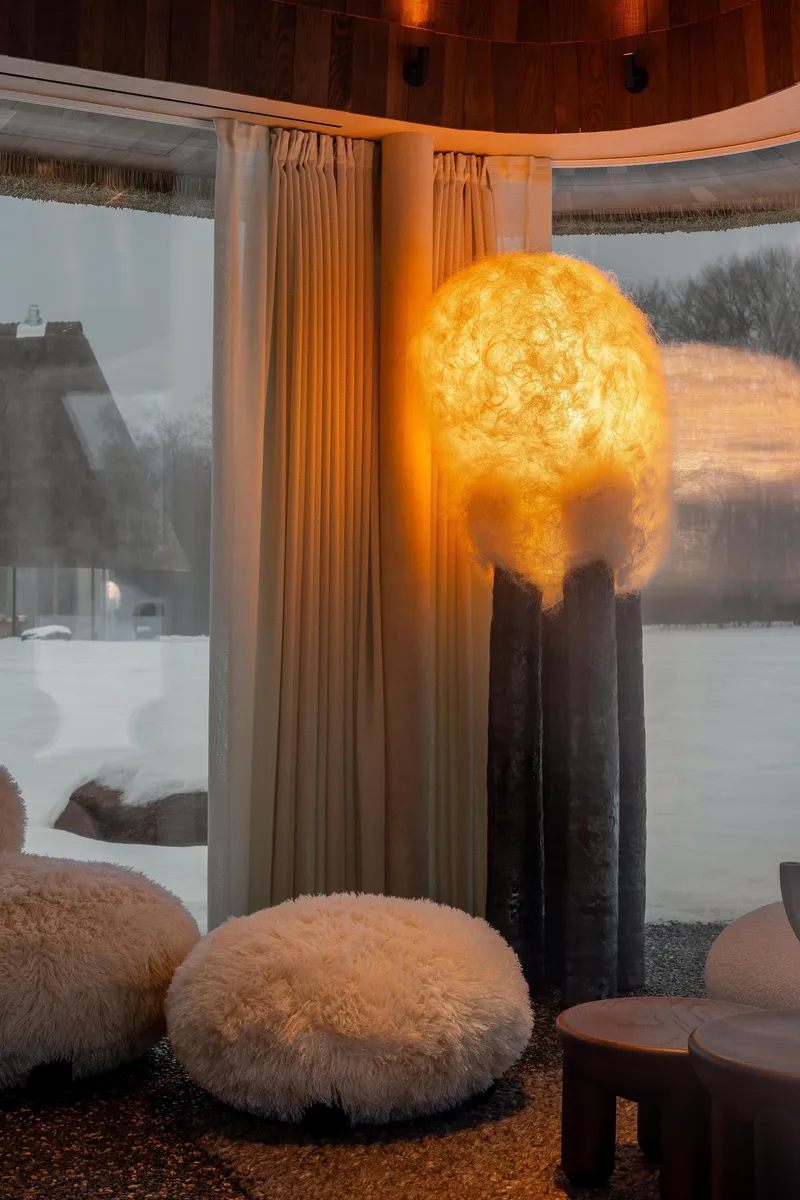
At twilight, the pavilions undergo a complete transformation. The glass walls that dissolve into the landscape during the day become lanterns, projecting warm amber light outward across the snow. The thatched roofs darken into solid silhouettes, and the interior becomes the spectacle. The spherical pendant lights glow like small moons, reinforcing the project's recurring circular geometry.
These dusk photographs reveal something important about the design strategy. The guesthouses are conceived as objects that change character with the light. By day they are quiet, almost camouflaged. By night they announce themselves. That duality gives the project a richness that a single reading could never capture.
Plans and Drawings
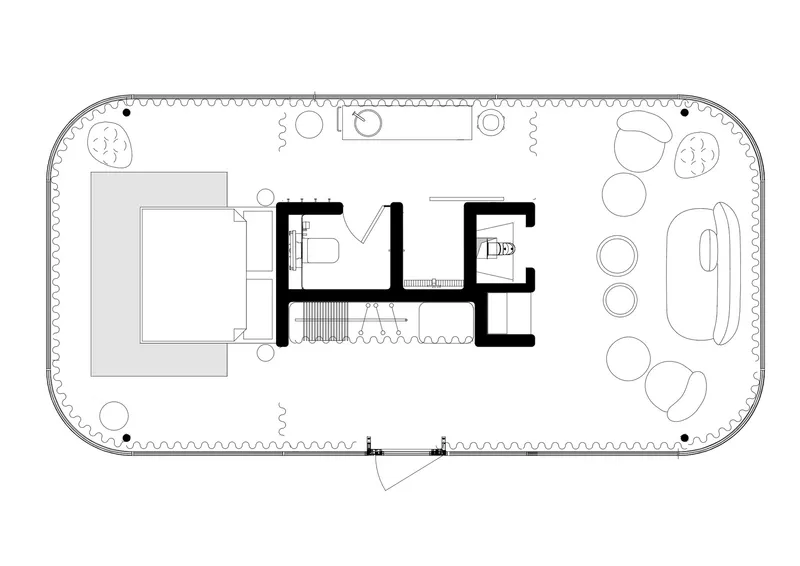
The floor plan confirms what the photographs suggest: the building is organized around an oval footprint with a central bathroom core. The bedroom occupies one lobe of the oval, while the living and kitchen areas wrap around the opposite side. A curved perimeter deck extends the usable area outward, blurring the threshold between interior and landscape. The economy of the plan is striking. At 50 square metres, every gesture counts, and nothing is wasted.
Why This Project Matters
Under the Reed Roof is a lesson in how vernacular intelligence and contemporary ambition can coexist without compromise. YOD Group does not treat the thatched roof as a nostalgic prop or the glass walls as a technological flex. Each material carries real weight in the design, and their combination produces something that neither could achieve alone. The project proves that 50 square metres, handled with discipline, can contain as much architectural thought as a building ten times its size.
More broadly, these guesthouses offer a counter-argument to the prevailing trend of retreat architecture that relies on dark timber boxes and cantilevered decks. The cone, the thatch, and the full-perimeter glass propose a different model: one rooted in local tradition, scaled to the landscape, and capable of genuine atmosphere. In a field crowded with Instagram cabins, that matters.
Under the Reed Roof Guesthouses by YOD Group, Ukraine. 50 m². Completed 2026. Photography by Mykhailo Lukashuk.
About the Studio
Share Your Own Work on uni.xyz
If projects like this are the kind of work you want to make, uni.xyz is a place to publish your own, find collaborators, and enter design competitions.



Popular Articles
Popular articles from the community


Hill & Cross Opera: Sculptural Opera House Architecture Shaped by Tallinn’s Landscape and Identity
Hill & Cross Opera reimagines opera house architecture in Tallinn through its sculptural hill, civic plaza, glass wave and a luminous cross.

Co-Life: Senior Housing Design That Reconnects Older Adults With the City
Co-Life reimagines senior housing design through healing gardens, shared streets, workshops, and a sustainable community across generations.

Conexión: Biophilic Design Reimagines High-Rise Living in Hong Kong
Conexión reimagines high-rise living in Hong Kong through biophilic design, green facades, shared spaces, daylight, water and nature within.

AL-JANNAH: Sustainable Architecture and Permaculture for Afghan Widows
AL-JANNAH uses sustainable architecture and permaculture to create resilient oasis of housing, learning, work and renewal for Afghan widows.

Similar Reads
You might also enjoy these articles

Bao Huynh Watercolor Atelier: A Serene Art Retreat in Hội An
Bao Huynh Watercolor Atelier in Hội An blends multifunctional art spaces, sustainable design, local materials, and family-friendly living in a serene environment.

Atelier Macri Concept Store Interior Design by CASE-REAL
Atelier Macri store features a "ko" counter, walnut wood details, cork displays, blending retail, gallery, and seamless customer experiences.

Manuel Vargas Izquierdo Stadium and High-Performance Sports Center: Architectural Excellence in Jalpa de Méndez
The Manuel Vargas Izquierdo Stadium blends sustainable design, inclusive sports facilities, and cultural-inspired architecture, revitalizing Jalpa de Méndez’s public spaces.

KAKR Buluh Awar Hall: Revitalizing Community and Ecology Through Bamboo Architecture
Community built bamboo hall revitalizes Buluh Awar village, empowering youth, restoring ecology, celebrating vernacular craftsmanship through sustainable architecture and culture.



Comments (0)
Please login or sign up to add comments
No comments yet. Be the first to comment!