

Ayurvedic Medical Centre in Ahmedabad
Ahmedabad

The project for the Ayurvedic Medical Centre in Ahmedabad originates from a reflection on the relationship between health, nature, and architecture. In a historical moment characterized by pollution, stress, and an increasing dependence on industrialized medical systems, the proposal seeks to restore the connection between human well-being and the natural environment through spaces designed for care, meditation, and holistic treatment. The building is conceived not only as a healthcare facility, but also as a place capable of transmitting balance, serenity, and awareness through architecture itself.
The competition brief emphasized the importance of creating a medical centre dedicated to Ayurveda, one of the oldest healing systems in the world, rooted in Indian culture and based on the use of natural remedies, medicinal herbs, meditation, and preventive therapies. Starting from these principles, the project was developed around the idea of a deep integration between architecture and landscape, avoiding the perception of the building as an isolated object and instead imagining it as an extension of the surrounding environment.
The site, located in Ahmedabad near the Sabarmati River and surrounded by residential settlements and medical facilities, suggested the possibility of creating a contemporary interpretation of traditional Ayurvedic spaces. The climate, the vegetation, and the cultural context became fundamental elements in defining the architectural concept. Rather than imposing a monumental structure onto the landscape, the project seeks harmony with the site through low-impact forms, natural materials, and a strong presence of vegetation.
One of the key elements of the proposal is the green roof, designed not only as a sustainable strategy to reduce overheating and improve thermal comfort, but also as a symbolic continuation of the surrounding landscape. The roof transforms the building into an inhabitable terrain, almost disappearing into nature when viewed from above. This approach reinforces the Ayurvedic philosophy according to which human beings are not separated from nature but deeply interconnected with it. The vegetation on the roof also contributes to biodiversity, improves rainwater management, and creates a cooler microclimate in response to Ahmedabad’s high temperatures.
The spatial organization of the building was designed to clearly distinguish public and private functions while maintaining fluid circulation between spaces. The ground floor hosts the more public and accessible areas of the centre, including the Entrance Hall, Reception, Waiting Room, Information Centre, and Clinics.
The upper floor instead accommodates the more collective and introspective activities of the centre. Here are located the Training Room, Meditation Hall, Dining Room, Kitchen, and Storage spaces. The Meditation Hall represents one of the spiritual cores of the project: a silent and contemplative environment designed to promote mental well-being and mindfulness practices. Large openings allow natural ventilation and filtered daylight to shape the atmosphere throughout the day, generating a continuous dialogue between interior and exterior spaces.
Particular importance was given to the landscape design, conceived as an integral part of the therapeutic experience. The garden is not treated as a simple decorative element, but as an active healing environment where visitors can reconnect with nature and directly experience the principles of Ayurveda. Within this landscape, seven trees and seven greenhouses are arranged according to the symbolism of the seven chakras, which are fundamental in Ayurvedic philosophy and Indian spiritual tradition.
Each greenhouse is associated with a chakra and contains specific medicinal herbs and plants traditionally connected to different aspects of physical and emotional well-being. The sequence of the seven greenhouses creates a symbolic and sensory path through the garden, inviting visitors to engage with the therapeutic properties of vegetation and experience a process of introspection and balance. Similarly, the seven trees become landmarks within the site, representing stability, growth, and the cyclical rhythms of life. Their presence provides shade, improves the microclimate, and reinforces the connection between spirituality and ecology that lies at the core of the project.
Another significant element of the landscape is the presence of a small pond or reflective water basin located within the garden. In Ayurveda, water represents purification, regeneration, and balance, and for this reason the water feature plays both a symbolic and environmental role within the project. From an architectural perspective, the reflective surface visually amplifies the perception of space and surrounding vegetation, increasing the sense of openness and tranquility. From an environmental point of view, the water contributes to passive cooling through evaporation, helping to reduce temperatures in outdoor areas and improving thermal comfort in adjacent spaces. The sound of water and its reflective qualities also generate a meditative atmosphere that encourages relaxation and contemplation, transforming the garden into a multisensory therapeutic landscape.
The relationship between architecture and vegetation was carefully studied to ensure a continuous fusion between built and natural elements. Pathways intertwine with planted areas, shaded courtyards dissolve the boundaries between interior and exterior spaces, and large openings constantly frame views of greenery from all internal environments. The building does not dominate nature, but rather becomes part of a larger ecological system. This integration reflects the Ayurvedic understanding that healing is not achieved exclusively through medicine, but through a balance between body, mind, and environment.
The choice of materials also supports this philosophy. Natural textures, earthy tones, and sustainable materials were selected to create warm and tactile spaces capable of conveying comfort and authenticity. The architecture avoids excessive technological expression and instead prioritizes simplicity, light, ventilation, and contact with natural elements. In this way, the project proposes a contemporary healthcare environment deeply rooted in local traditions and environmental sensitivity.
Ultimately, the Ayurvedic Medical Centre aims to become more than a simple place of treatment. It is envisioned as a sanctuary where architecture, landscape, and traditional medicine merge into a holistic healing experience. Through the integration of vegetation, water, sustainable strategies, and symbolic elements such as the seven chakras, the project seeks to restore a more balanced relationship between humans and nature. In doing so, it proposes an alternative vision of healthcare architecture: one in which well-being is generated not only through medical practice, but also through space, atmosphere, and connection with the natural world.



Popular Articles
Popular articles from the community


Riyadh For All: Intergenerational Urban Design for Active Aging in Rabat
Riyadh For All reimagines urban design in Rabat with intergenerational co-living, adaptive courtyards, and Moroccan cultural exchange today.

The Musturak Paradise: Senior Living Architecture for a Connected Future in Temara, Morocco
The Musturak Paradise reimagines senior living architecture in Temara via private homes, social spaces, culture, community, and shared care.

Play: Fragments of Their World
Familiar architecture becomes modular playground design, creating safe spaces where displaced children can learn, connect, imagine and play.

The Ocean Hive: Sustainable Architecture for a Self-Sufficient Civilization at Sea
The Ocean Hive imagines sustainable architecture at sea, where modular habitats, algae, wave power and ocean waste sustain a growing colony.


Similar Reads
You might also enjoy these articles

Day and Night Park: A Time-Based Urban Newsstand in Beijing
A temporary urban newsstand in Beijing blending travel, light, and reading through poetic colors, compact form, and community-focused design.

Modernist Patio Renovation in El Masnou, Barcelona by Oliver Segura Arquitectura + Cebrià Arquitectura
Modernist patio renovation blending tradition and innovation with a movable pool, leveled floors, and Catalan materials in El Masnou.

Alto Residencial Coop: Cooperative Housing Development in Santiago de Compostela by Carbajo Barrios Arquitectos
A linear cooperative housing complex blending white volumes and perforated metal façades, enhancing community living, natural light, privacy, and urban integration.
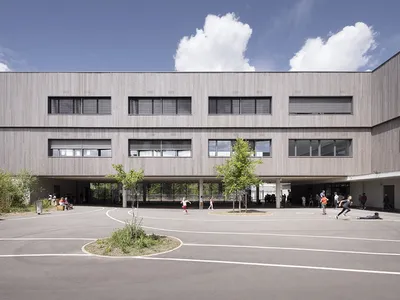
Vil Genis School by BPA ARCHITECTURE – Massy, France
Vil Genis School in Massy, France, features sustainable design, south-facing classrooms, community integration, accessible spaces, and modern educational architecture.


Explore Architecture Competitions
Discover active competitions in this discipline




Challenge to reimagine the Iron Throne


Photograph architecture without architects


Illustrate the lost glory of Angkor Wat - Render Challenge


Design challenge to reuse E-waste
Comments (0)
Please login or sign up to add comments
No comments yet. Be the first to comment!