
Zambezi River House by Felix Brinkhege: Sustainable Luxury on Zambia’s Iconic Waterways
Zambezi River House by Felix Brinkhege in Zambia blends sustainable rammed-earth design, luxury riverfront living, wildlife views, and eco-friendly aquaculture integration.


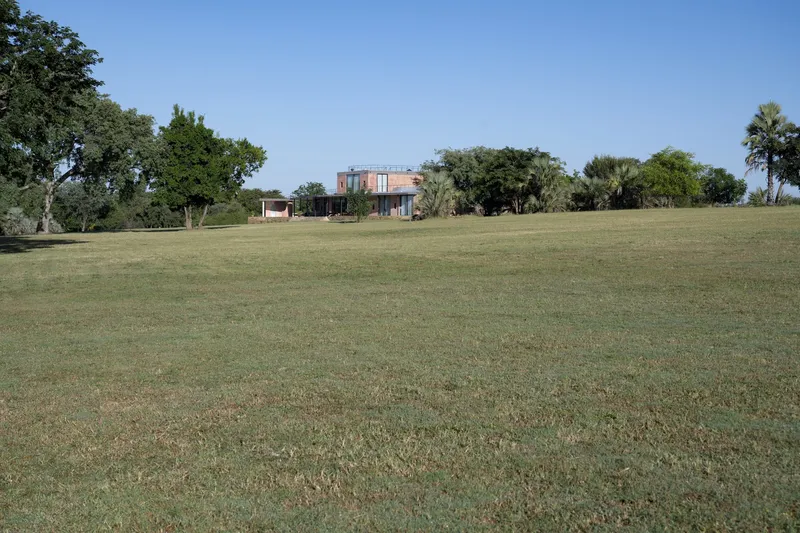
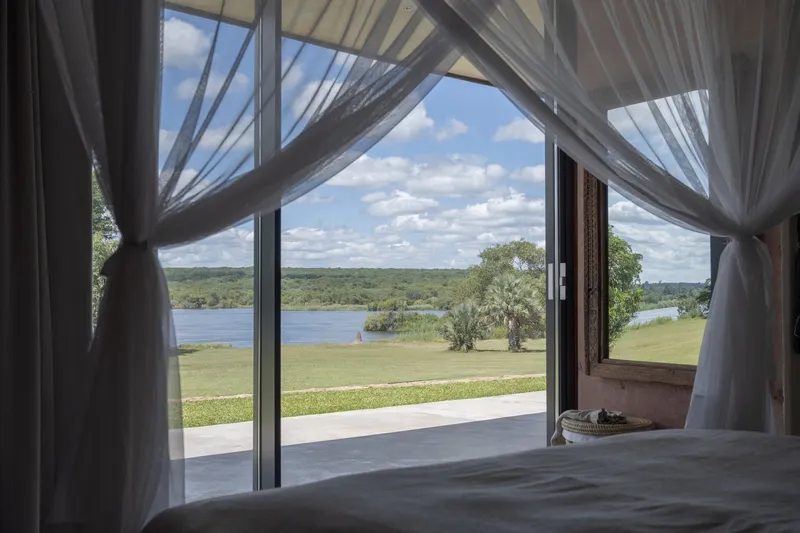
Nestled along the majestic Zambezi River, the Zambezi River House by architect Felix Brinkhege is a remarkable fusion of sustainable design, local materials, and breathtaking natural landscapes. Completed in 2022, this extraordinary residence overlooks Africa's most powerful river, which forms the border between Zambia and Zimbabwe, flowing towards the Indian Ocean. Surrounded by two national parks: the smaller Mosi-oa-Tunya, famous for the Victoria Falls, and the expansive Zambezi National Park on the Zimbabwean side, the house captures both panoramic river views and intimate connections with wildlife. On clear days, the “thundering smoke” of Victoria Falls is visible from the roof terrace, appearing as a singular cloud on the horizon.
Integrating Architecture with Nature and Conservation
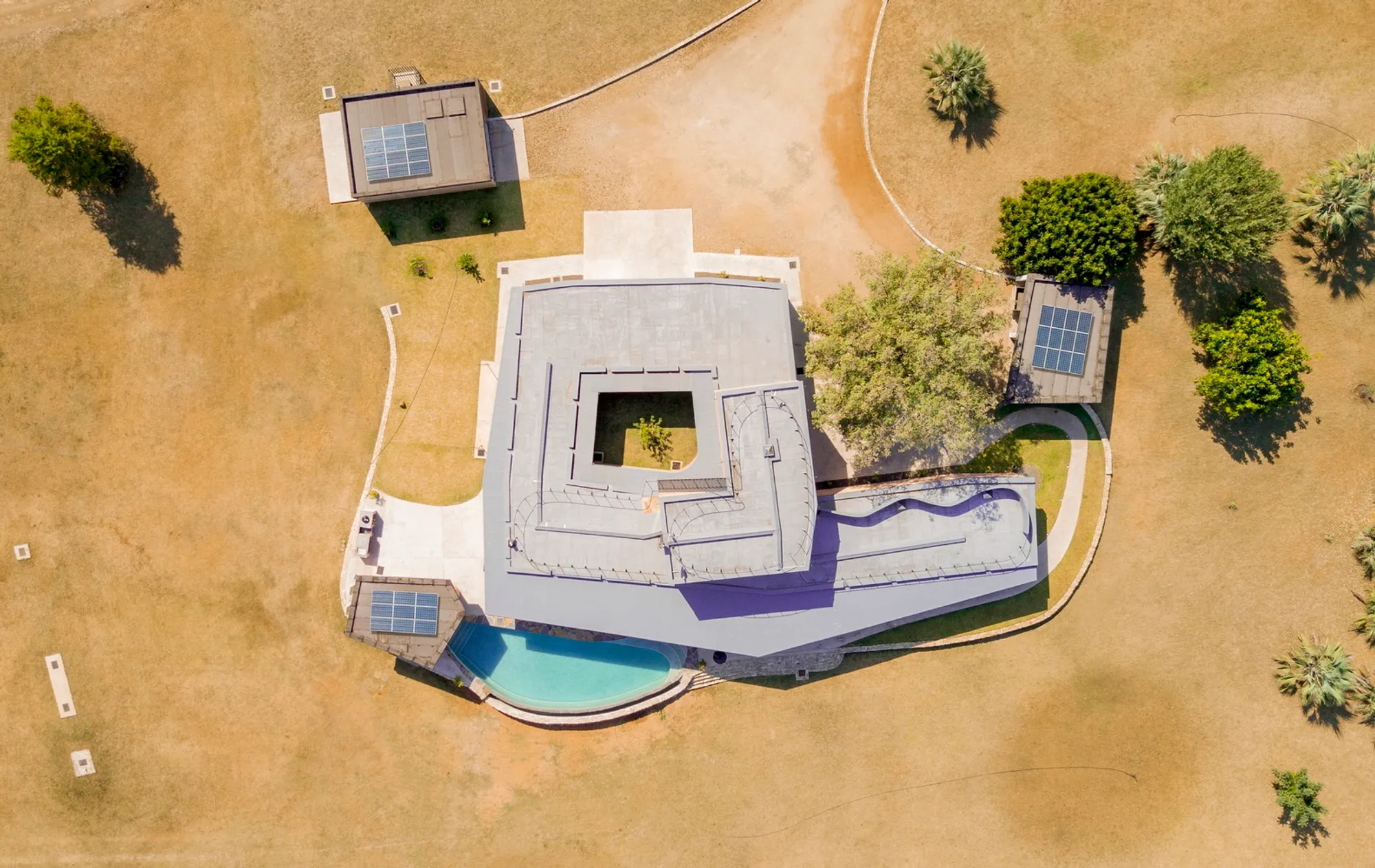
The site itself is part of the Zambezi Fish Farm, a conservation-driven initiative to curb overfishing along this vital river ecosystem. Through a Zambian-Zimbabwean-Swedish partnership, a sustainable pumping system irrigates fish terraces designed like rice paddies, while an artificial wetland filters nutrients through aquatic plants such as reeds and water lilies. The house sits strategically between the river, swamp, fish terraces, and national parks, acting as both a headland and the focal point of the ecological landscape.
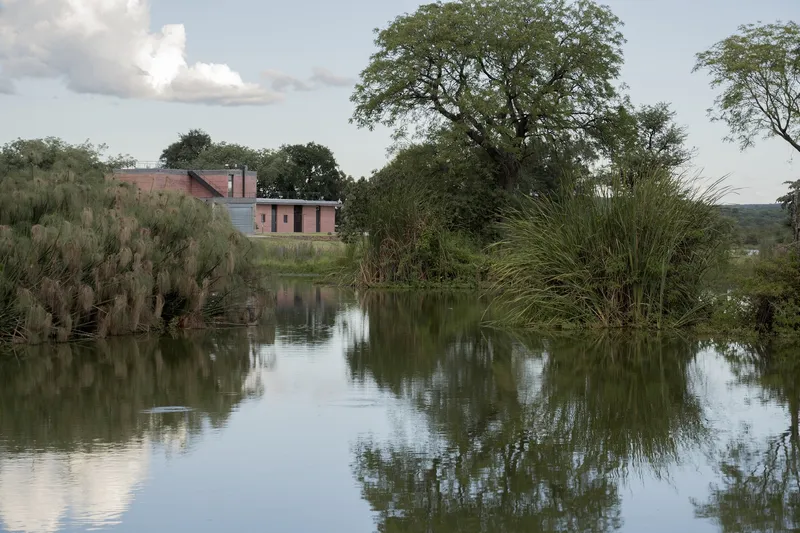
Responding to Topography and Wildlife
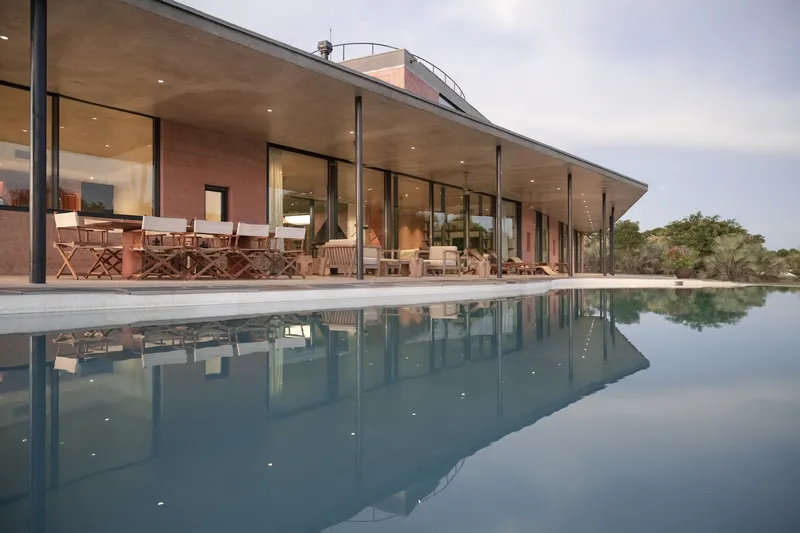
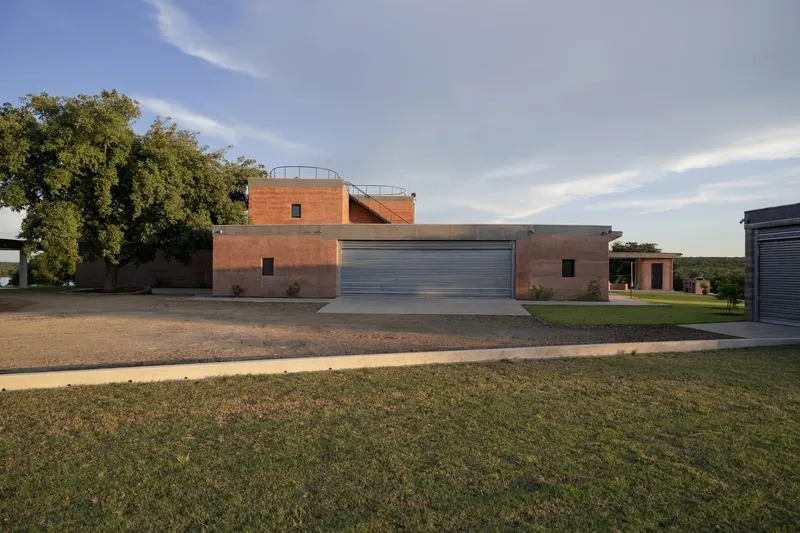
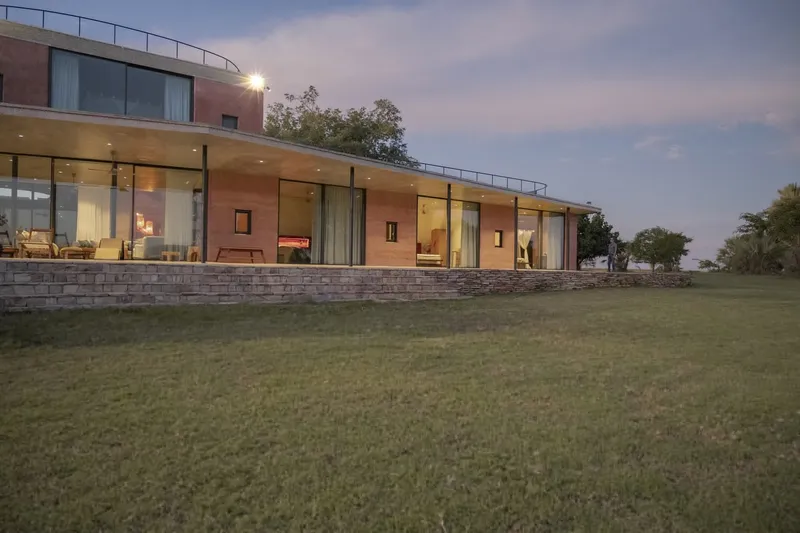
The gently sloping terrain necessitated elevating the residence and its outdoor areas on a carefully curved base, echoing the fish terrace topography while acting as a natural barrier against nocturnal wildlife. Constructed predominantly from yellow-green quartzite stone sourced from the Zimbabwean plateau, the base seamlessly blends with the landscape. At its edge, a drop-shaped infinity pool extends towards the river, echoing the fluidity of the water terraces and enhancing the visual connection with the surrounding environment.
Thoughtful Floor Plan and Spatial Design
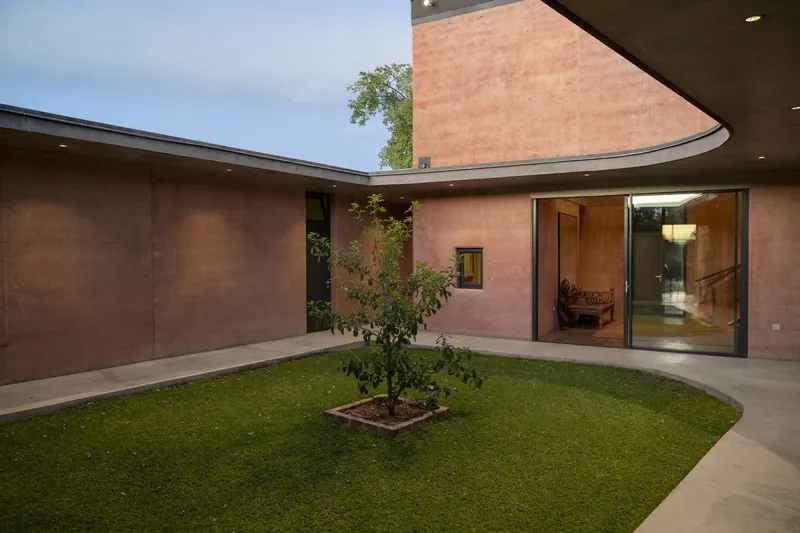
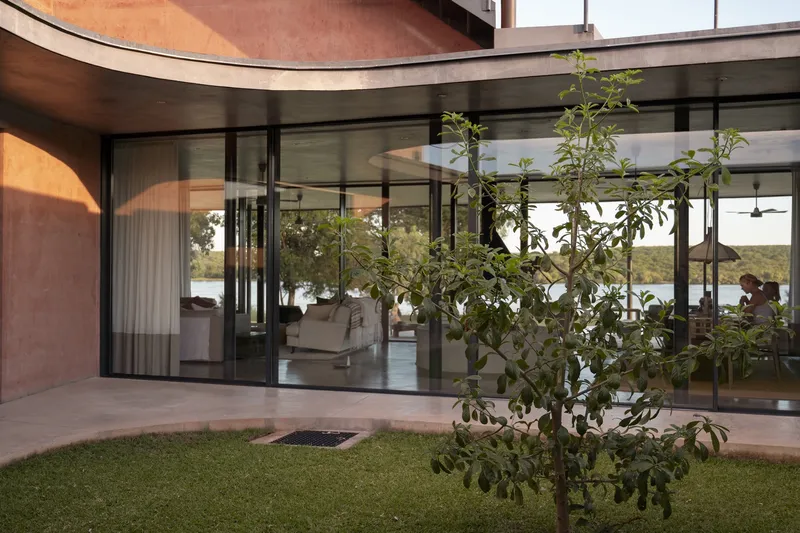
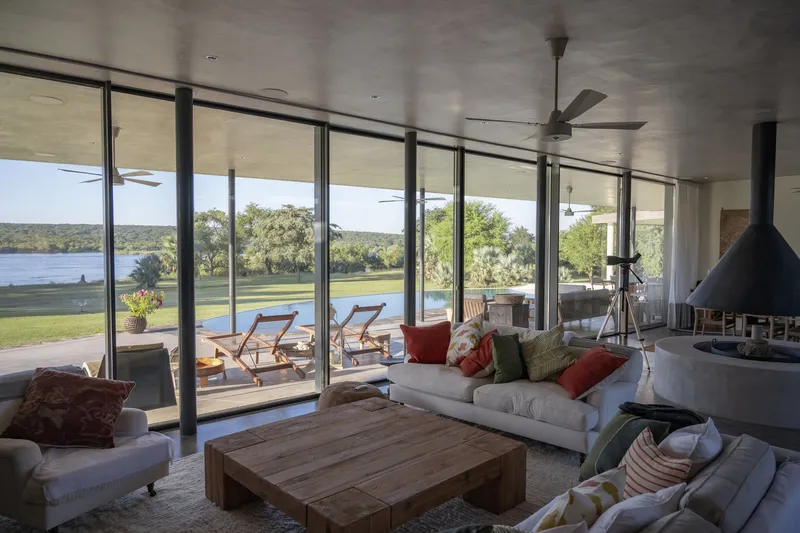
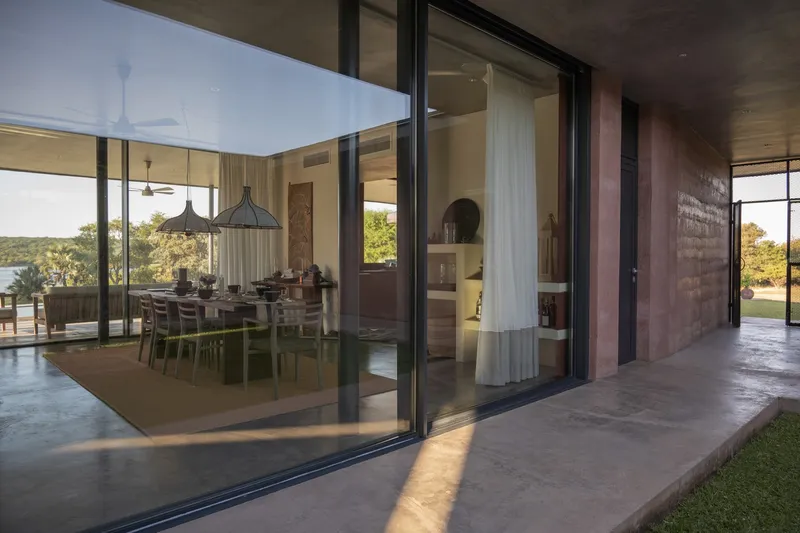
The ring-shaped floor plan addresses the dual goals of an inner courtyard and maximized river views. The main living areas and guest wing, stretching over 42 meters, face the river, offering uninterrupted vistas of hippos, antelopes, and seasonal elephant gatherings. Service areas, including workshops, laundry rooms, and garages, are oriented toward the fish terraces, organized around the central courtyard. Subtle six-degree bends along the facade break up the building’s length and emphasize the cubic geometry of the design, highlighting its function as both a private residence and the administrative hub of the aquaculture operation. A separate apartment on the upper floor provides additional privacy for long-term residents.
Sustainable and Climate-Responsive Materials
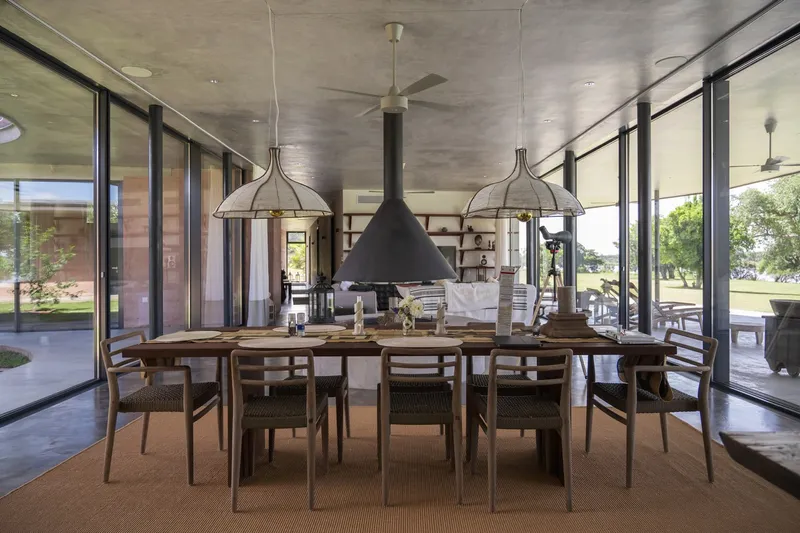
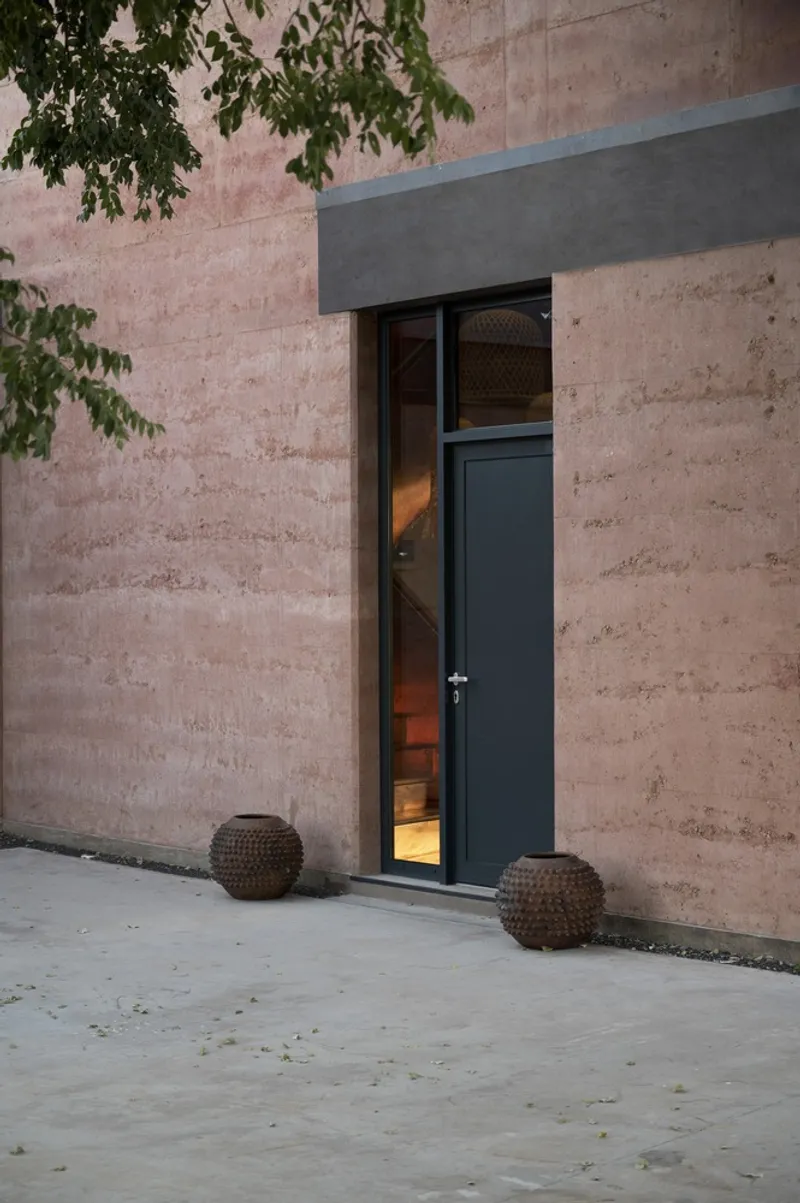
To mitigate extreme temperatures reaching 45°C during the dry season, exterior and interior walls were built from rammed earth up to 30 centimeters thick. The local red earth, rich in natural oxides, was stabilized with only 4 to 5% white cement, ensuring a homogeneous facade while maintaining a natural color palette. The monolithic aesthetic of the walls is softened by frameless sliding windows that allow cross-ventilation and a seamless indoor-outdoor experience.
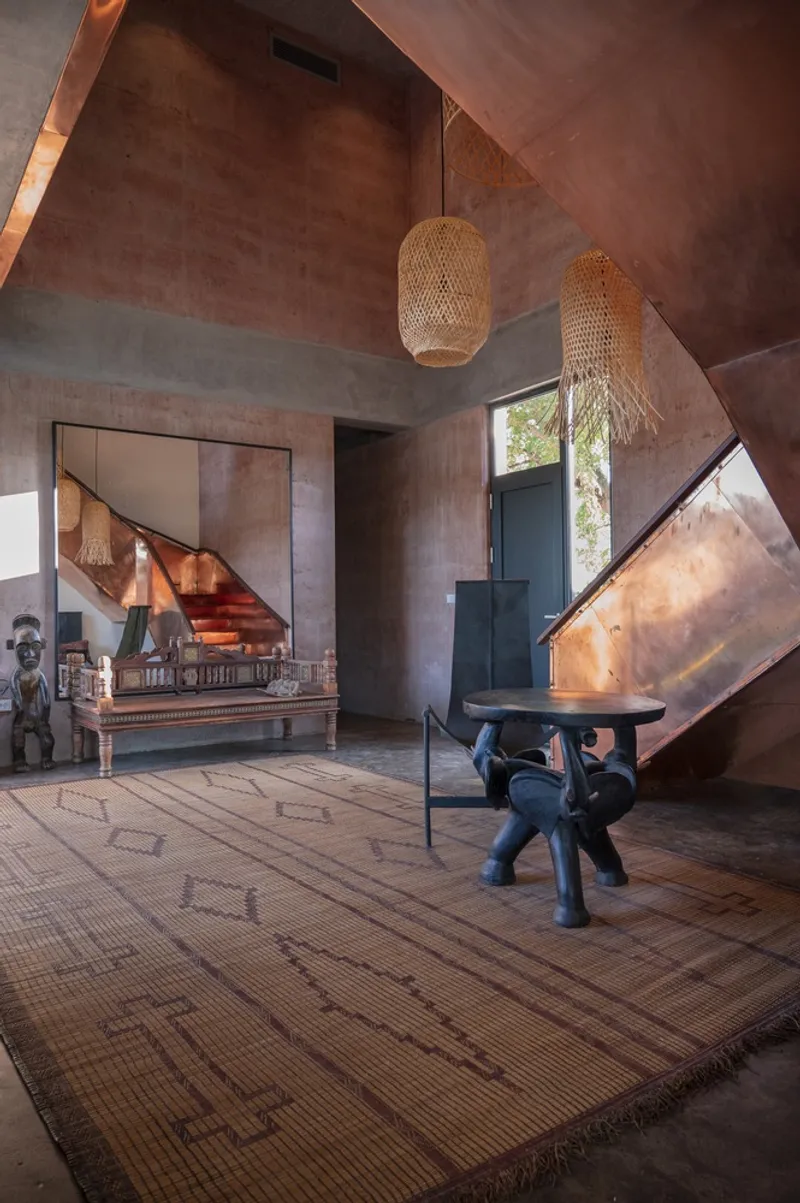
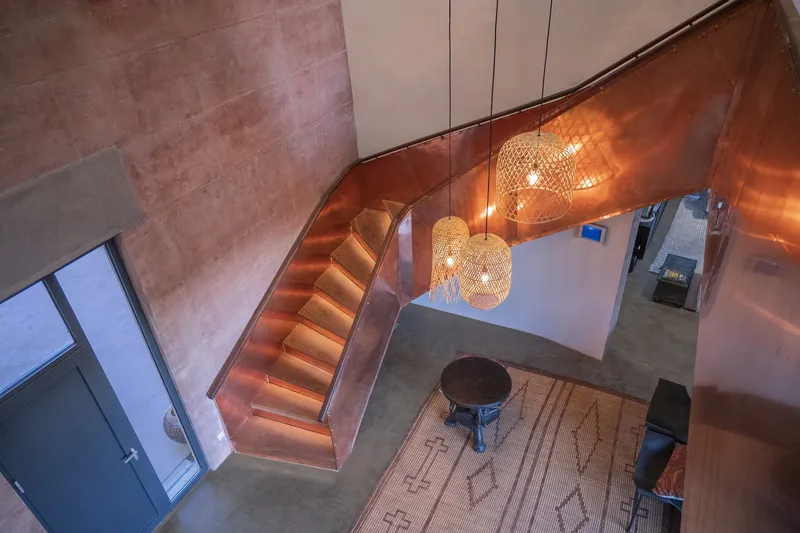
Inside, the materials palette is deliberately restrained: polished exposed screeds, lime plaster walls, local teak, unplastered rammed earth, and copper details pay homage to Zambia’s rich copper heritage. A young baobab tree in the central courtyard will eventually provide shade and act as the natural centerpiece of the home.
Auxiliary Structures and Self-Sufficiency
The property includes three additional rammed earth structures: a boat garage, carport, and pool house with sauna and steam bath. Solar panels and a water treatment system ensure self-sufficiency, crucial given the house’s remote location, where traditional utilities would have been challenging to connect.
Harmonizing Luxury, Sustainability, and Context
The Zambezi River House exemplifies a sensitive balance between modern luxury, ecological responsibility, and cultural context. It demonstrates how architecture can enhance natural beauty while respecting and supporting fragile ecosystems, creating a timeless sanctuary on one of Africa’s most iconic rivers.




Popular Articles
Popular articles from the community


The Musturak Paradise: Senior Living Architecture for a Connected Future in Temara, Morocco
The Musturak Paradise reimagines senior living architecture in Temara via private homes, social spaces, culture, community, and shared care.

Hill & Cross Opera: Sculptural Opera House Architecture Shaped by Tallinn’s Landscape and Identity
Hill & Cross Opera reimagines opera house architecture in Tallinn through its sculptural hill, civic plaza, glass wave and a luminous cross.

The Earth Pod: 3D Printed Homes for Resilient Refugee Communities
The Earth Pod reimagines refugee housing through 3D printed homes made from clay, combining resilience, self-sufficiency, and rapid shelter.

Co-Life: Senior Housing Design That Reconnects Older Adults With the City
Co-Life reimagines senior housing design through healing gardens, shared streets, workshops, and a sustainable community across generations.

Similar Reads
You might also enjoy these articles


Hodi-Mandai Geram
Project Function: Preservation and revitalization of the Intangible heritage and socio-spatial identity of the Hodi by Housing, Cultural Memory Center, Sacred Grove, landscape, local tourism economy


Olio Towers: A Mid-Rise for Performers That Fuses Housing, Rehearsal, and Stage
Located blocks from Houston's Theater District, this modular tower stacks living units around a central performance atrium.

Oasis: Modular Green Housing Carved into Dhaka's Urban Fabric
A shortlisted Plugin Housing entry reclaims unauthorized settlements in Dhaka with stepped concrete volumes, green roofs, and ventilation-driven design.

Black Hole: A Floating Megastructure for the Post-Physical Era
Emiliano Mazzarotto envisions a spherical, self-scaling arena where e-sports, digital hotels, and holographic stadiums replace traditional public space.


Explore Housing Competitions
Discover active competitions in this discipline



Challenge to reimagine the Iron Throne


Photograph architecture without architects


Illustrate the lost glory of Angkor Wat - Render Challenge


Design challenge to reuse E-waste
Comments (0)
Please login or sign up to add comments
No comments yet. Be the first to comment!