
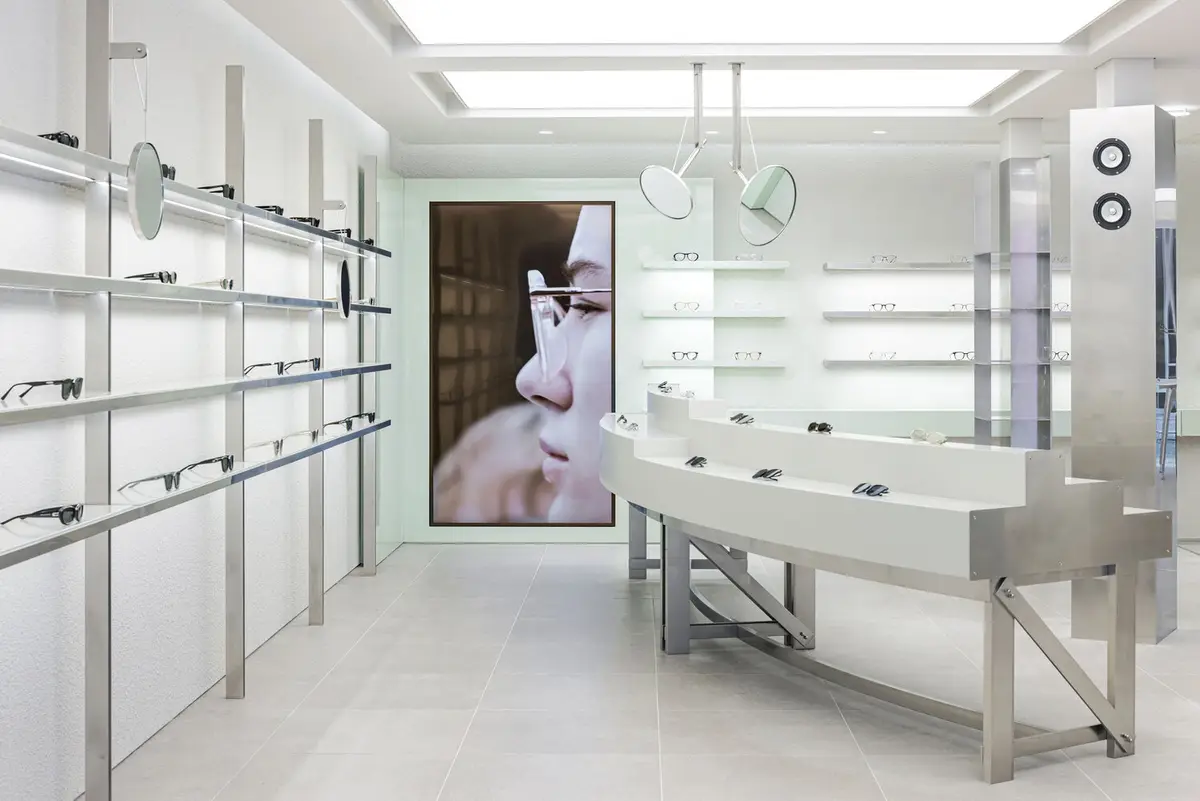
Zeus Eyewear Store by studio LETTAR
Precision-driven eyewear store translating mechanical delicacy into spatial design, featuring exposed assemblies, unified display axes, and refined retail interiors.


Jung District, South Korea | Retail Interior Architecture | 2024
Designed by studio LETTAR, the Zeus Eyewear flagship store in Seoul’s Jung District transforms the intricate logic of eyewear design into a carefully composed retail interior. Spanning 90 square meters, the project translates the structural, mechanical, and aesthetic qualities of glasses into spatial language, creating a refined environment that reflects the brand’s two decades of craftsmanship and research.
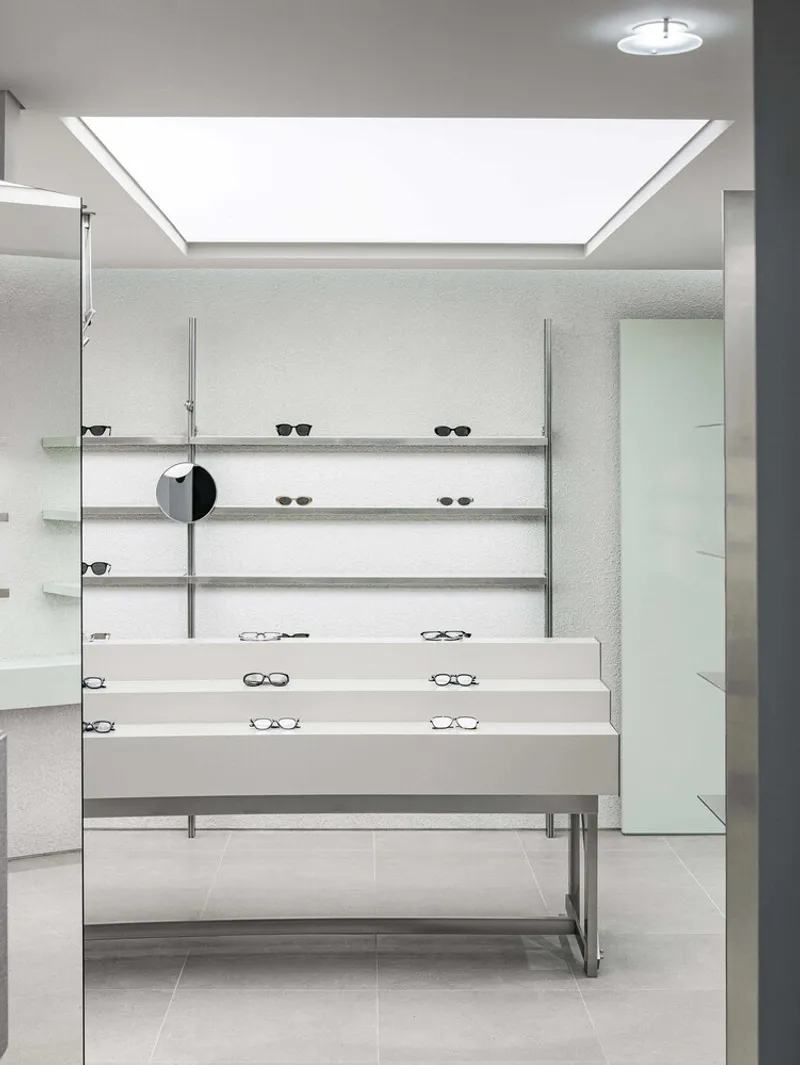
Eyewear occupies a unique position between precision engineering and fashion. Composed of countless small components: hinges, lenses, screws, and frames, glasses must achieve technical accuracy while maintaining elegance and comfort. Studio LETTAR approached the Zeus Eyewear store as an architectural interpretation of these qualities, expressing delicacy, mechanical integration, and balance between function and beauty throughout the space.
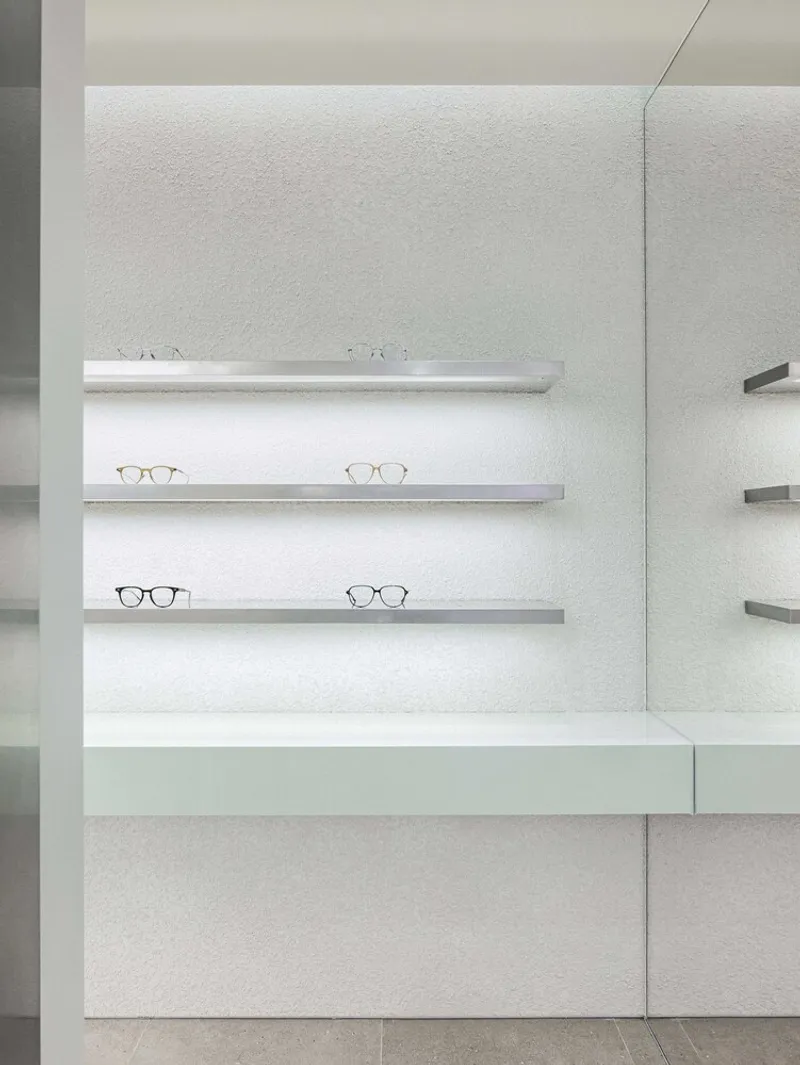
The interior layout is organized around a strong, unified spatial axis. While the wall-mounted display units vary in form, they are aligned at a consistent height, visually connecting the perimeter and establishing a continuous horizontal line. This gesture creates a natural flow through the store, guiding visitors intuitively from one display zone to the next. Structural columns are subtly repositioned as diagonal elements, welcoming customers at entry points while also dividing the space into functional zones without interrupting visual continuity.
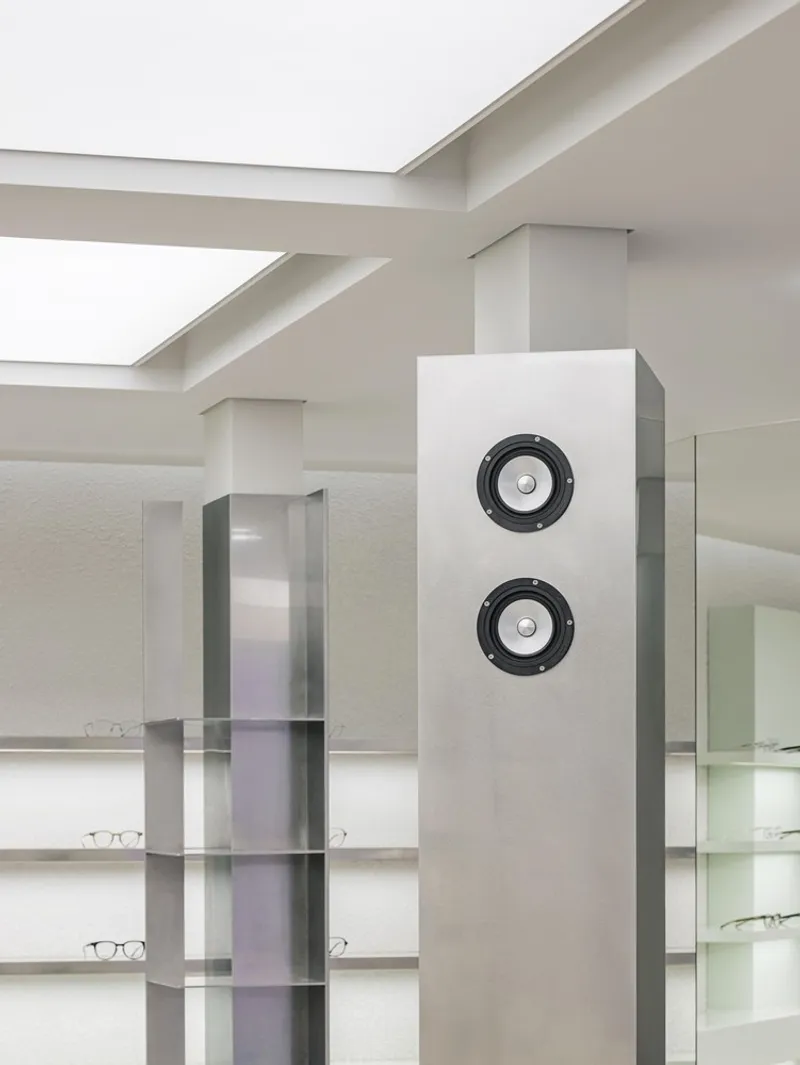
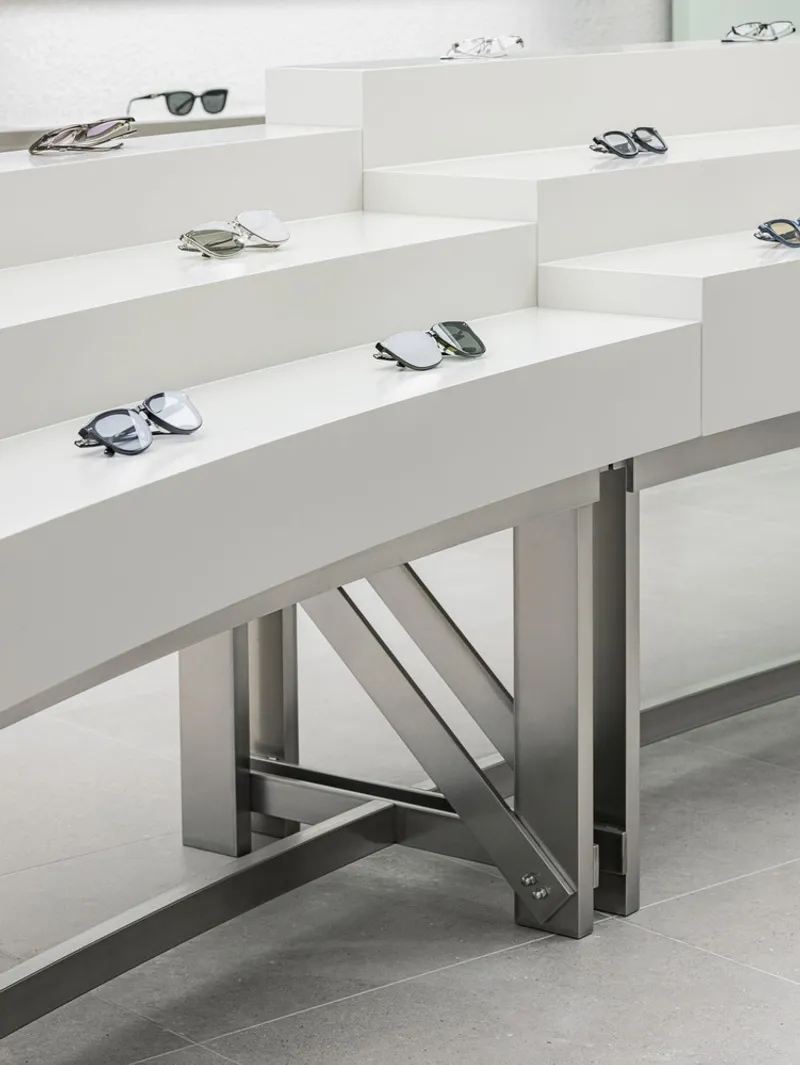
Rather than concealing construction details, the design intentionally exposes bolts, nuts, joints, and assembly components across architectural elements, furniture, and lighting. These mechanical details become a defining aesthetic, reinforcing the brand’s technical expertise and echoing the precision engineering behind eyewear production. The exposed assemblies add depth and tactility to the interior, enhancing the perception of craftsmanship and material honesty.
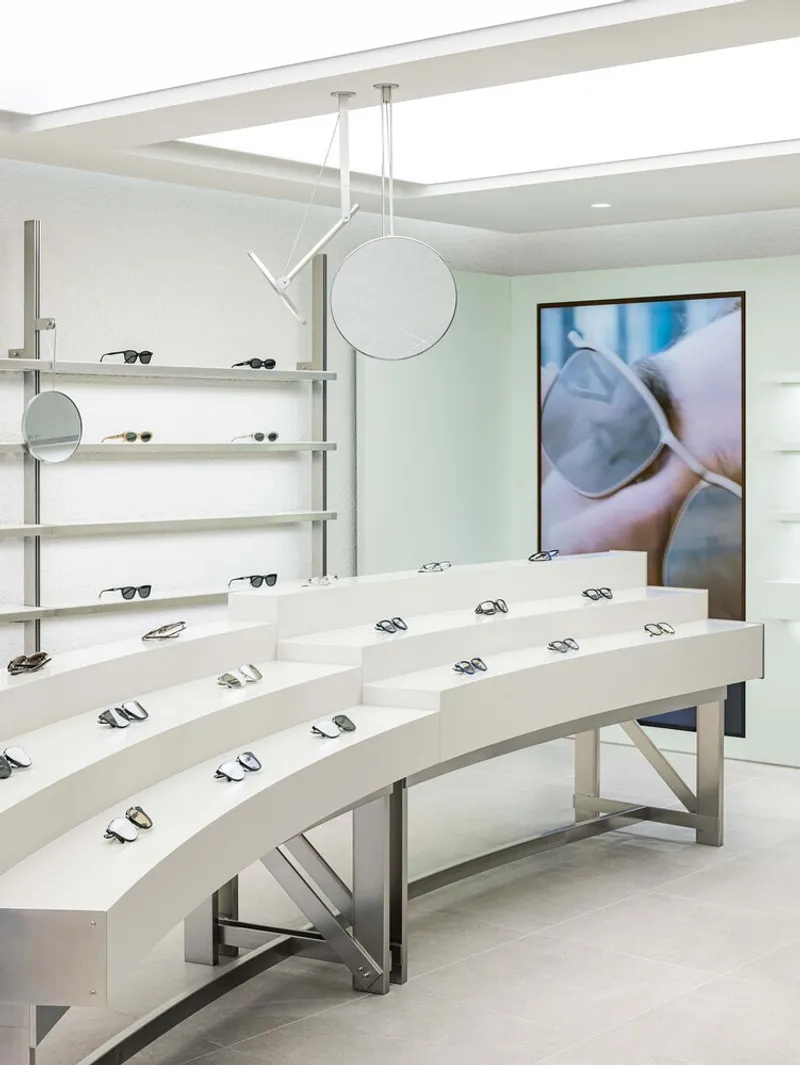
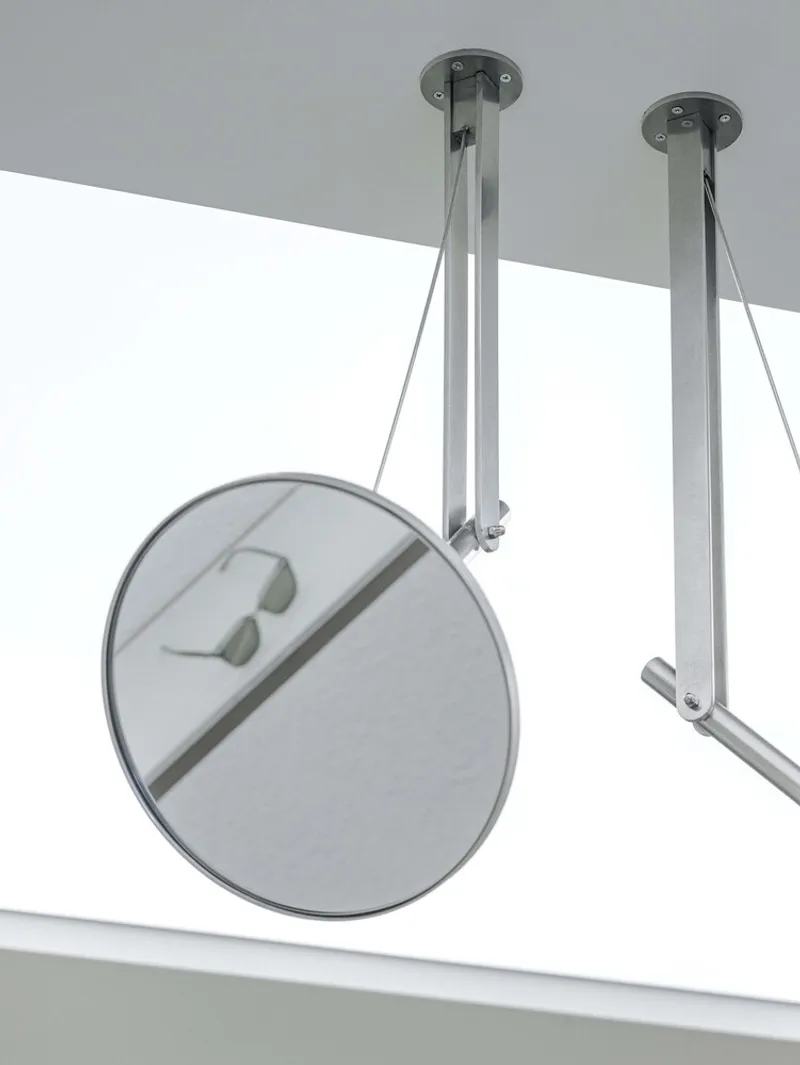
Display furniture is customized to reflect the diversity of Zeus Eyewear’s collections. Varying heights, configurations, and finishes are used to respond to the specific characteristics of each pair of glasses. This layered approach ensures that functionality and visual clarity remain central, while also introducing rhythm and variation across the retail environment.
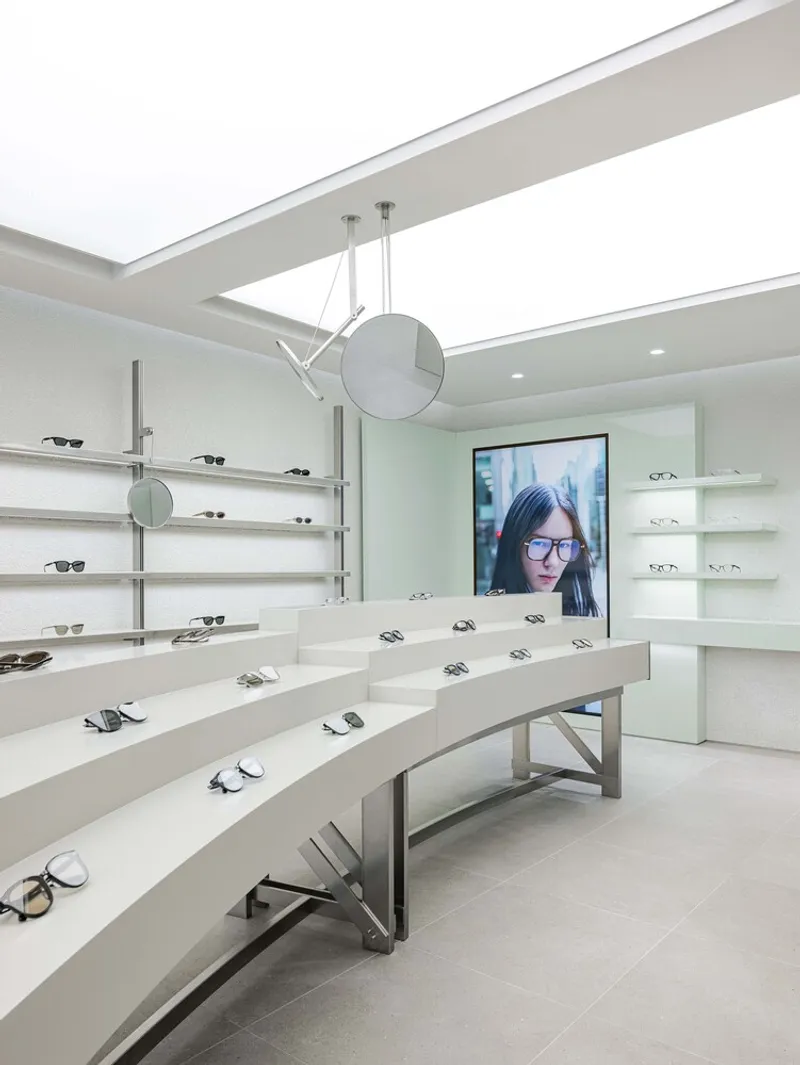
A long wall display is dedicated to showcasing a single sunglasses series in multiple lens colors. Divided into four sections, the installation combines mirrors and furniture at different heights to create a dynamic and immersive viewing experience. The surrounding finishes remain calm and monochromatic, allowing the subtle variations in lens color to stand out without distraction.
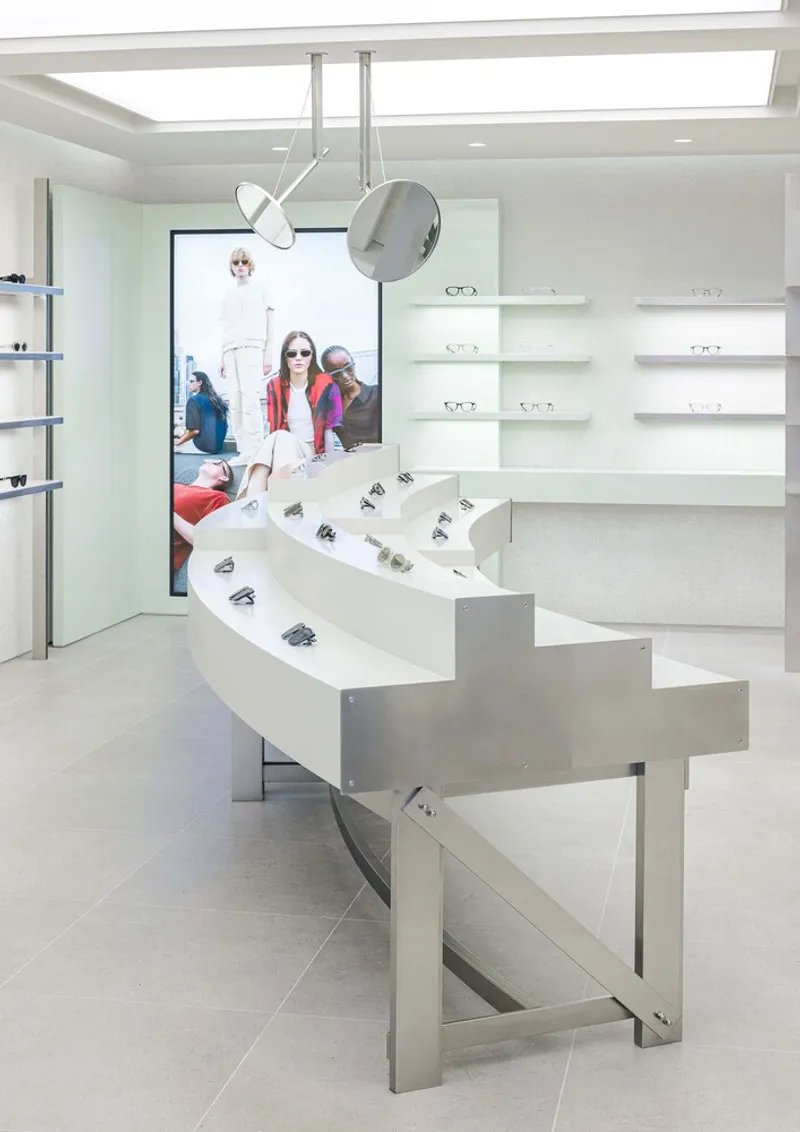
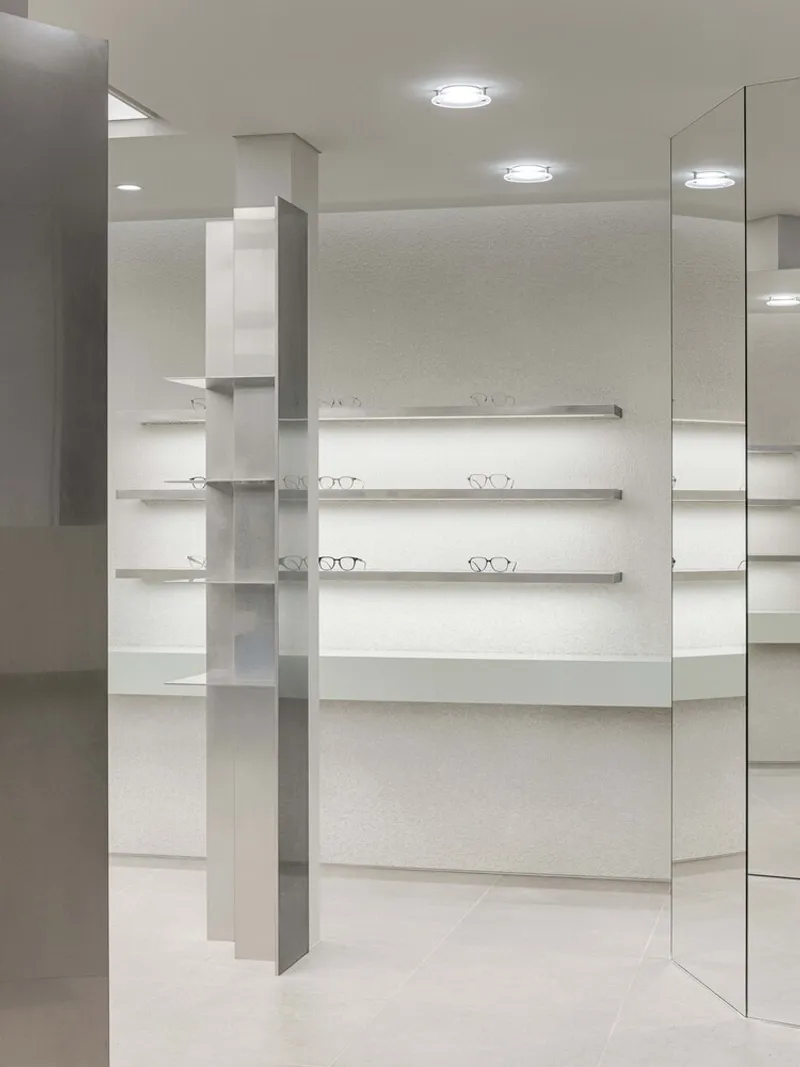
In contrast, another display zone adopts a more minimal expression, focusing attention on frame shapes and structural clarity. Fresh accent colors are introduced here to balance the restrained palette and to highlight the sculptural qualities of the eyewear. Through these shifts in display language, the store maintains visual interest while preserving a cohesive spatial identity.
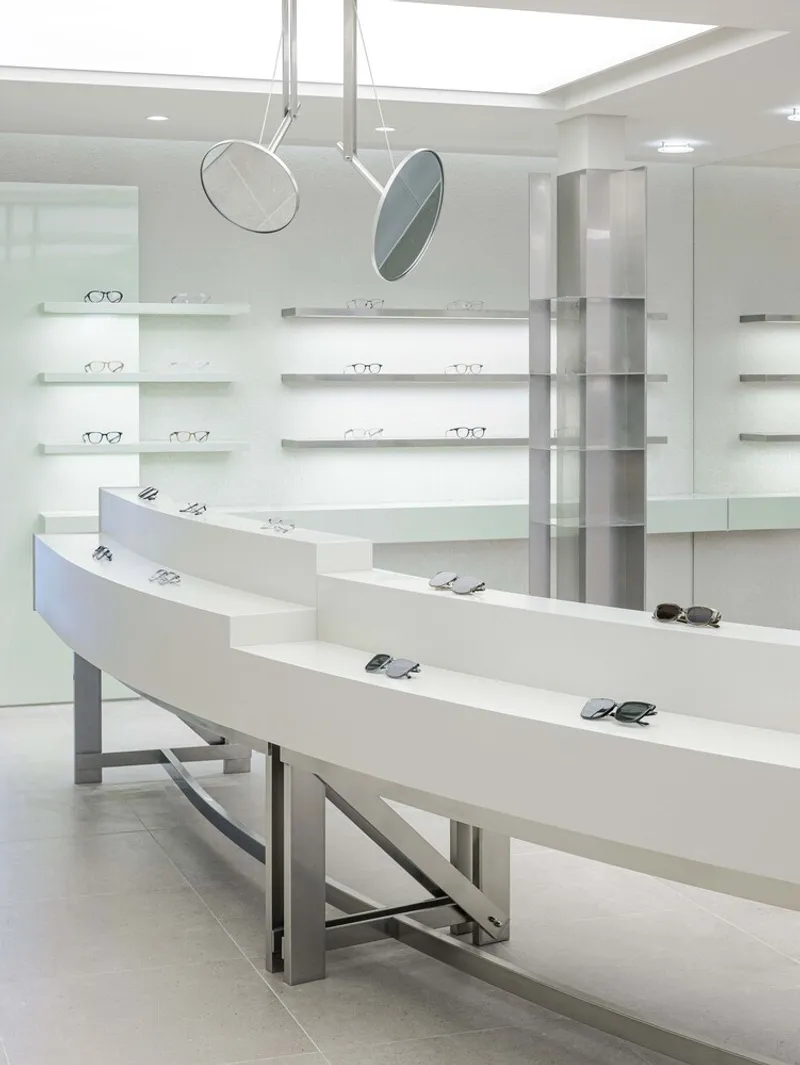
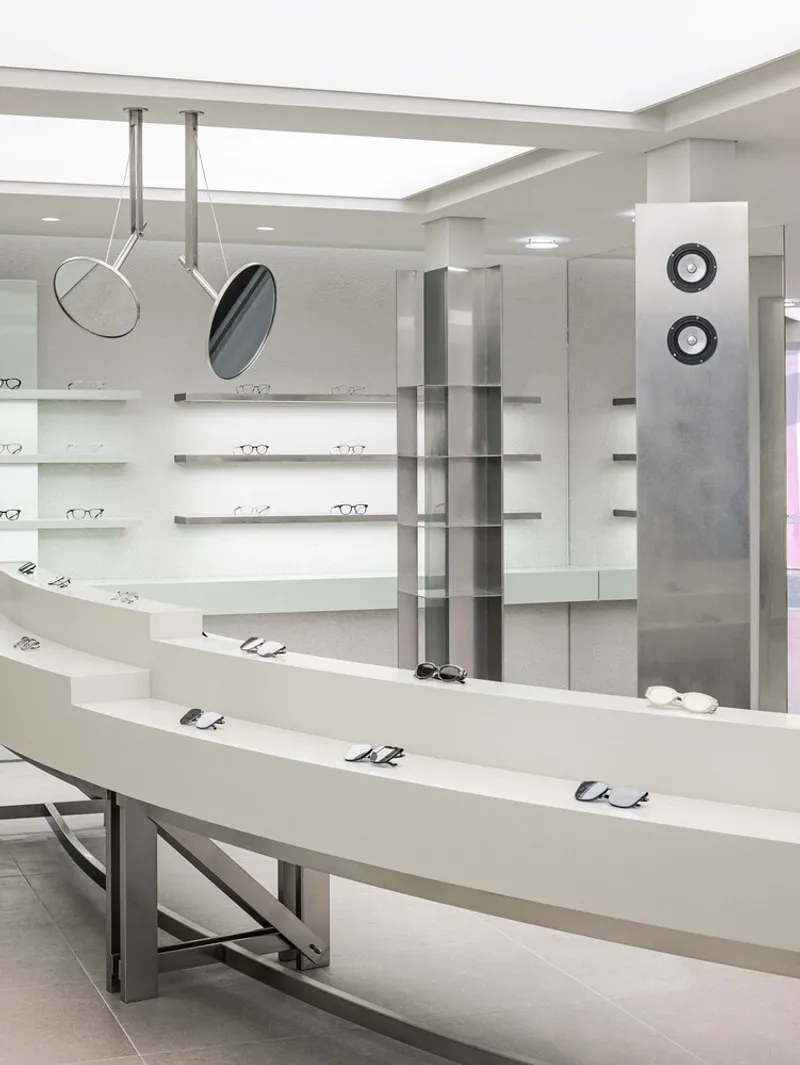
Ultimately, the Zeus Eyewear store demonstrates how a small, delicate object can inform architectural scale. By translating the precision, complexity, and elegance of glasses into space, studio LETTAR has created a retail interior that strengthens the ZEUS brand identity: positioning it as professional, sophisticated, and deeply rooted in craftsmanship.
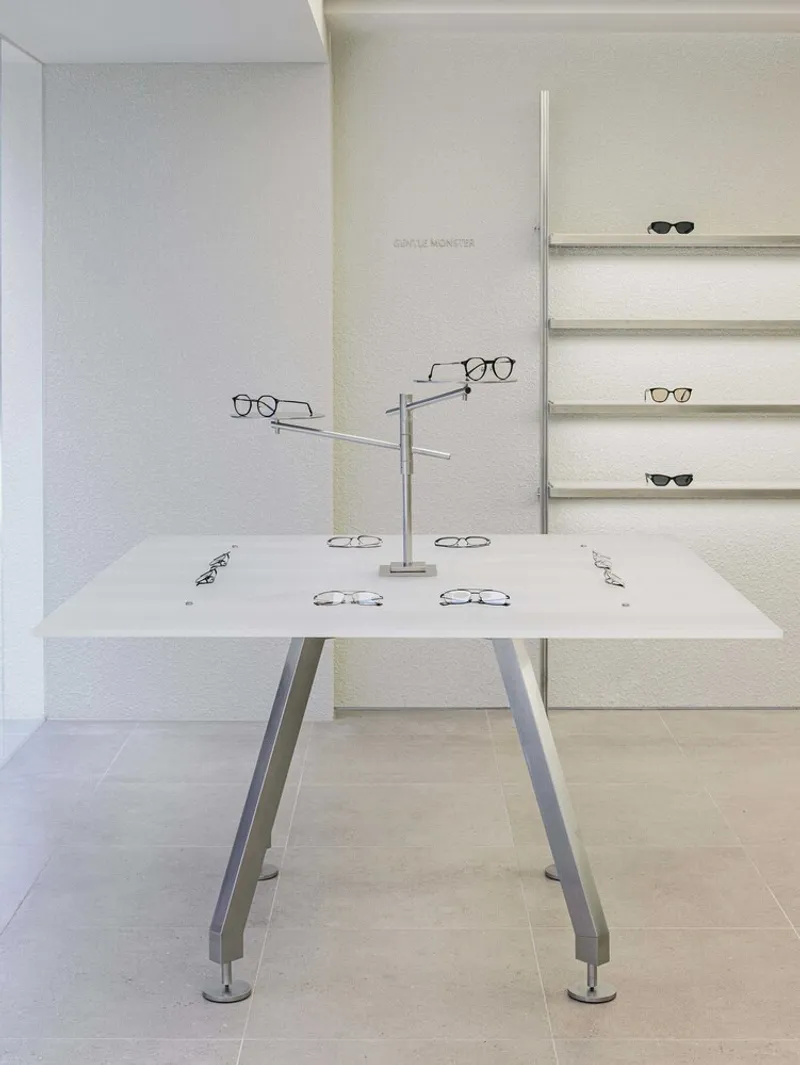
All photographs are works of Yongjoon Choi


Popular Articles
Popular articles from the community


GROUP A Strips a 1969 Rotterdam Harbor Headquarters to Its Frame and Wraps It in Timber Louvers
In Rotterdam's M4H harbor district, Ferro Offices reuses a 1969 frame, adds one timber storey and reaches BREEAM-NL Outstanding.

longwave studio Reorganizes a 112 m² Tainan Apartment Around the Daily Routines of a Family and Two Cats
In Tainan, Taiwan, birch plywood, rust-red furniture and a freestanding plaster wall link arrival, storage, work and family life in one apartment.

Cube Design Draws an Ecological Corridor Between Two Shenzhen Hills with the Nankai Building
Beside Shenzhen's container docks, the Nankai Building pairs stacked balconies with a climbing green screen to connect two hillsides across its height.

U.GA Architects Wraps an Oval Rooftop Pool in Curved Board-Formed Concrete on Busan's Jeollidan-gil
In Busan's Jeonpo-dong, a 454 m² mixed-use block stacks a neighborhood facility, guest rooms and an oval rooftop pool inside spiraling concrete walls.

Similar Reads
You might also enjoy these articles


Hodi-Mandai Geram
Project Function: Preservation and revitalization of the Intangible heritage and socio-spatial identity of the Hodi by Housing, Cultural Memory Center, Sacred Grove, landscape, local tourism economy


Olio Towers: A Mid-Rise for Performers That Fuses Housing, Rehearsal, and Stage
Located blocks from Houston's Theater District, this modular tower stacks living units around a central performance atrium.

Oasis: Modular Green Housing Carved into Dhaka's Urban Fabric
A shortlisted Plugin Housing entry reclaims unauthorized settlements in Dhaka with stepped concrete volumes, green roofs, and ventilation-driven design.

Black Hole: A Floating Megastructure for the Post-Physical Era
Emiliano Mazzarotto envisions a spherical, self-scaling arena where e-sports, digital hotels, and holographic stadiums replace traditional public space.

Explore Interior Design Competitions
Discover active competitions in this discipline

Challenge to design luxury tourism on rails

Challenge to reimagine the Iron Throne

Photograph architecture without architects

VR headsets Storefront design competition
Comments (0)
Please login or sign up to add comments
No comments yet. Be the first to comment!