
Zhoushan Summer Hotel Phase II by MAT Office
A refined coastal hotel renovation in Zhoushan that reshapes courtyards, materials, and sea-facing spaces to promote slow, sustainable island living.


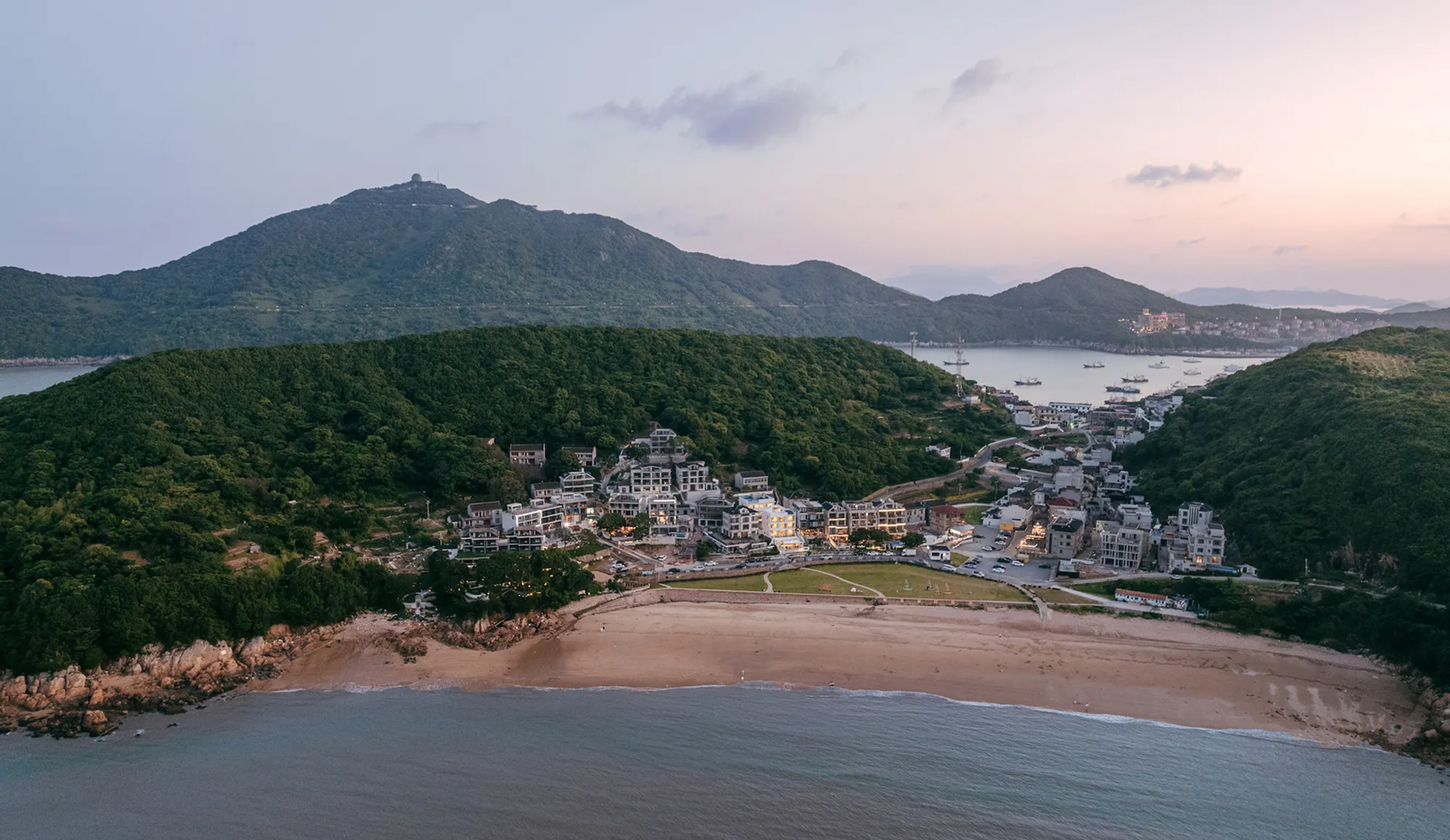
Architects: MAT Office Located along the coastline of Zhoushan, Zhoushan Summer Hotel Phase II represents a thoughtful architectural response to the rapid transformation of China’s fishing villages under tourism pressure. Completed in 2024, this 720-square-meter hotel renovation continues the spatial and cultural narrative established by the original Summer Hotel while critically addressing the consequences of uncontrolled coastal development.

Context and Architectural Challenge
Five years after the completion of the original Summer Hotel, its strategy of introducing balconies and reshaped facades had unintentionally become a visual template for the village. White walls and square windows spread rapidly, replacing vernacular diversity with homogeneous self-built houses. While this aesthetic shift initially discouraged superficial “European-style villa” imitations, it later accelerated speculative tourism construction, resulting in environmental degradation and a shortage of high-quality spatial experiences.
Phase II emerges at this critical moment. Rather than expanding the building volume or altering the original house forms, the architects were constrained to work within two adjacent three-story concrete structures, one facing the sea, the other embedded into the hillside, with a 1.5-meter level difference. This limitation became the project’s driving force.

Spatial Strategy: Courtyards, Terraces, and Circulation
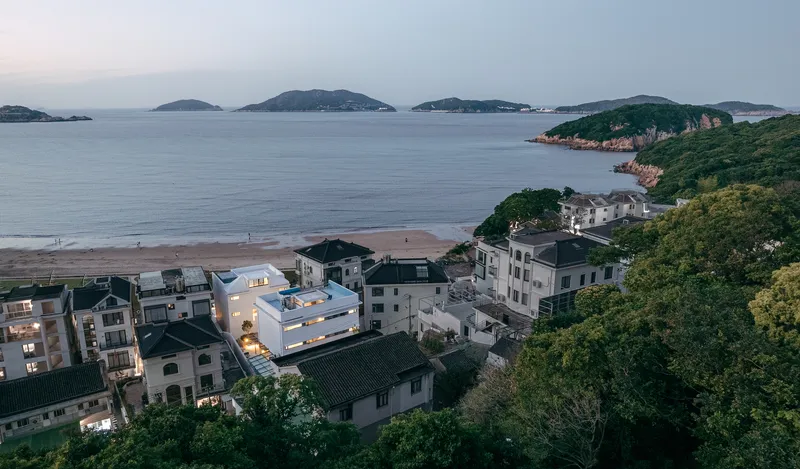
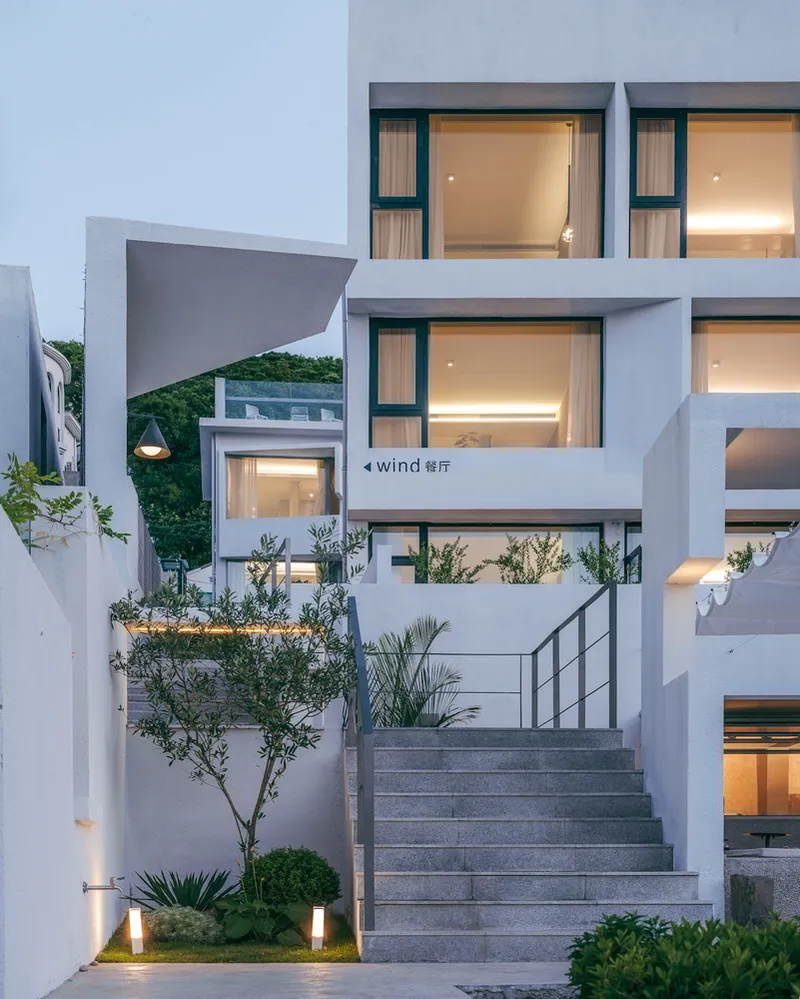
The renovation strategy focuses on spatial separation and connection. The seaside and hillside buildings are organized around three distinct outdoor realms. A fully open sea-facing terrace extends toward the beach, hosting informal tea and leisure activities and reinforcing the hotel’s relationship with the shoreline. Between the two buildings, a central courtyard becomes the social heart of the hotel, integrating reception, dining, and communal gathering spaces.
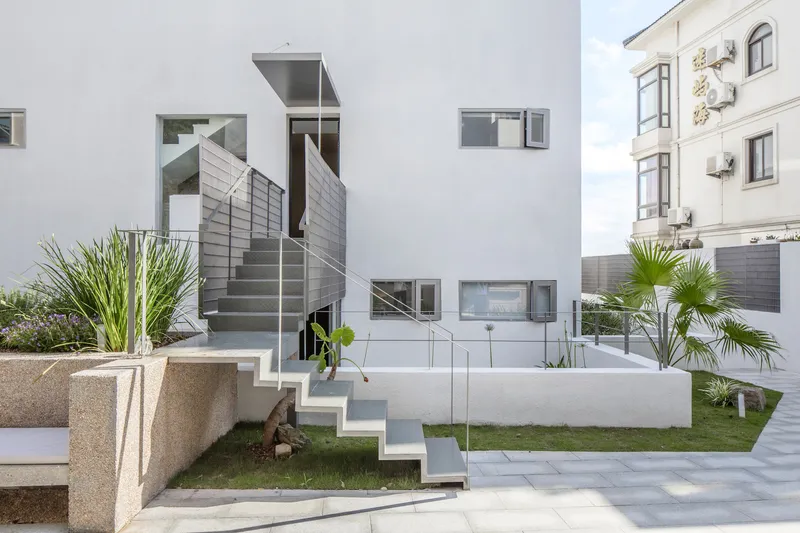
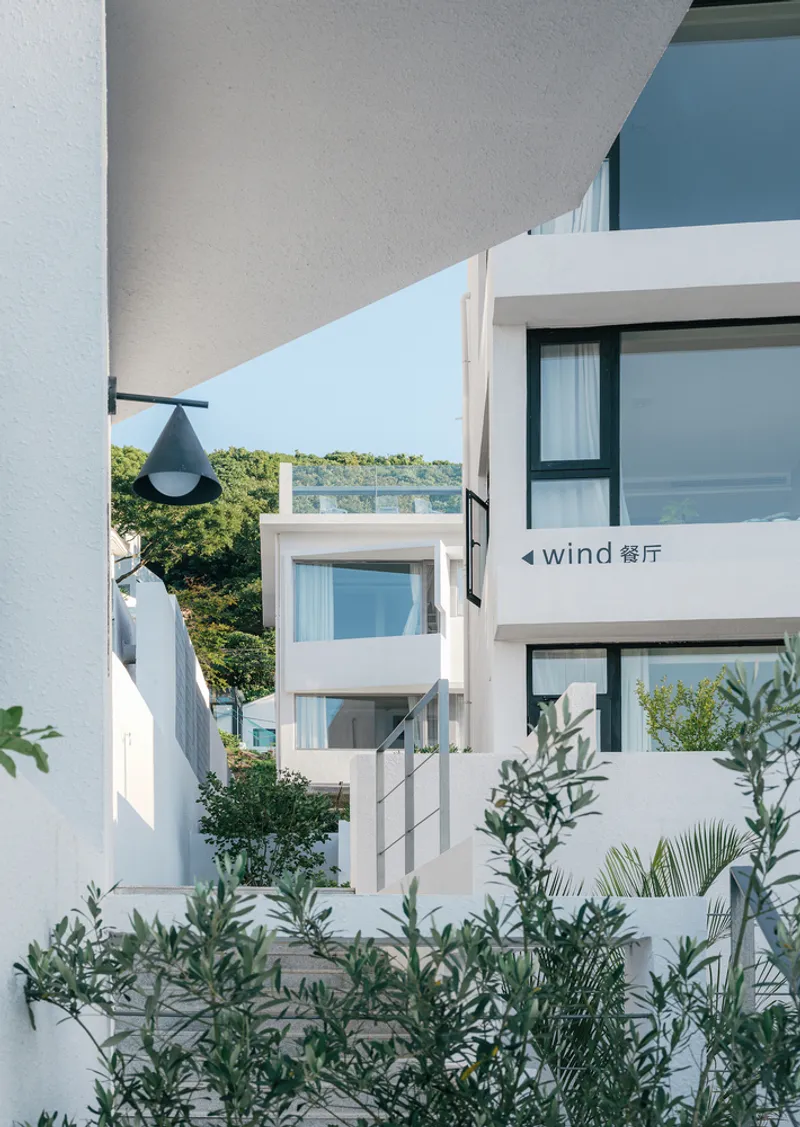
A carefully designed stepped landscape creates a gradual transition from the beach to the inner courtyard, guiding guests naturally from the entrance to the lobby. A lightweight steel sky bridge floats above the courtyard, directly connecting to the second floor of the seaside building. Meanwhile, the original exterior staircase is reimagined as a sea-facing swimming pool, transforming circulation infrastructure into a destination experience.


Facade Design and Visual Identity
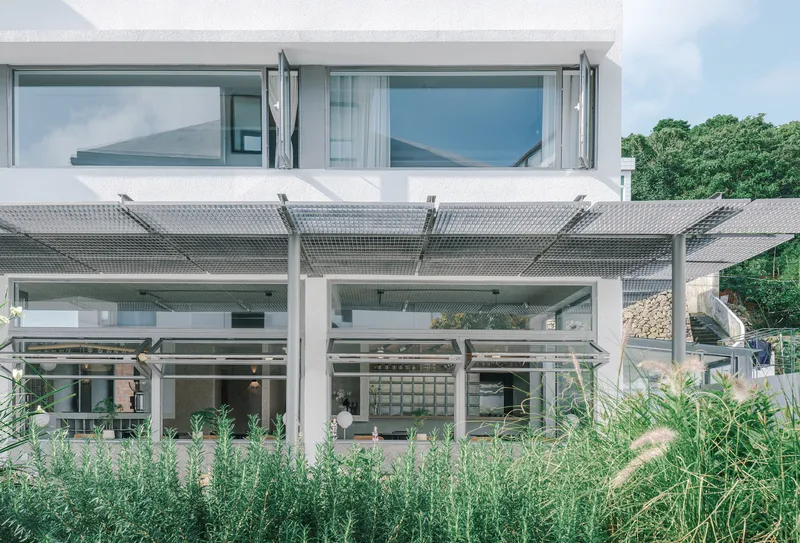
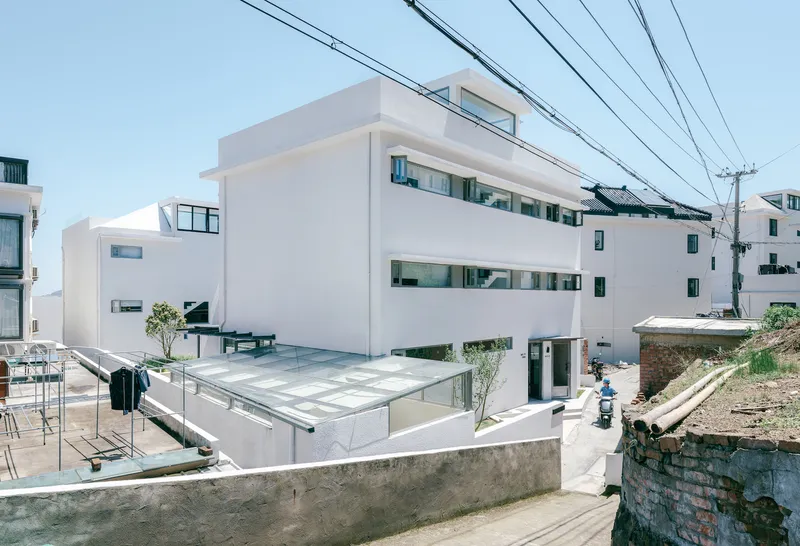
To counter the visual monotony of surrounding developments, the two buildings adopt contrasting facade languages. The seaside structure retains its square windows with subtle refinements, prioritizing cost control and uninterrupted sea views. In contrast, the hillside building introduces elongated horizontal windows inspired by modernist residential architecture, reinforced by continuous sunshades.
These strong horizontal lines visually anchor the building within the landscape while clearly distinguishing it from neighboring constructions. The restrained intervention resists architectural chaos and establishes a calm, recognizable identity along the bay.

Material Strategy: Memory, Texture, and Tactility
Materiality plays a central role in shaping the hotel’s atmosphere. Drawing from regional construction traditions in Jiangsu and Zhejiang, the project reintroduces cement-based textures through contemporary detailing. Terrazzo and washed stone: once ubiquitous in southern China during the 1980s and 1990s: are used extensively across floors, walls, corridors, and guest rooms. Public areas feature black washed stone made from sedimentary aggregates, paired with white and gray cement to create subtle visual depth.
Cement-scraped walls and ceilings dominate restaurants and tea rooms, while warm brown plaster in corridors and guest rooms echoes the tones of coastal reefs and sandy beaches. Throughout the interiors, multi-layer plywood introduces warmth and human scale. Used for stair railings, benches, built-in furniture, and wall elements, the wood surfaces soften the mineral-heavy palette and enhance comfort.
Metal elements complete the material composition. Steel grilles and aluminum plates, referencing the ubiquitous steel sunshades found throughout the village, form canopies and sky bridges. Their silver-gray finish adds lightness and youthful energy to the otherwise white architectural volume.
Toward a Sustainable Coastal Lifestyle
Beyond aesthetics, Zhoushan Summer Hotel Phase II reflects on the broader tension between tourism development and cultural preservation. Visitors seek authenticity, while locals desire modernization and economic opportunity. Rather than offering spectacle, the project proposes refinement through careful spatial organization and tactile material choices.


Named “Southern Wind,” the second phase deepens the hotel’s atmosphere of relaxation and slow living. Guests ascend from the beach, feel the sea breeze along shaded steps, observe daily life unfolding in the courtyard, and experience moments of quiet leisure that feel cinematic yet deeply grounded in place. The project ultimately envisions a sustainable model for coastal tourism: one rooted in restraint, longevity, and respect for the evolving identity of Zhoushan’s fishing villages.



Popular Articles
Popular articles from the community


Hill & Cross Opera: Sculptural Opera House Architecture Shaped by Tallinn’s Landscape and Identity
Hill & Cross Opera reimagines opera house architecture in Tallinn through its sculptural hill, civic plaza, glass wave and a luminous cross.

Lunar Spiral: Space Architecture Shaped by the Mathematics of the Universe
Lunar Spiral reimagines space architecture through Fibonacci geometry, lunar regolith, levitating habitats, and self-sustaining Moon living.

Conexión: Biophilic Design Reimagines High-Rise Living in Hong Kong
Conexión reimagines high-rise living in Hong Kong through biophilic design, green facades, shared spaces, daylight, water and nature within.

The Musturak Paradise: Senior Living Architecture for a Connected Future in Temara, Morocco
The Musturak Paradise reimagines senior living architecture in Temara via private homes, social spaces, culture, community, and shared care.


Similar Reads
You might also enjoy these articles

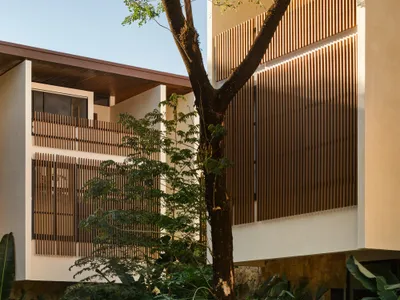
FAMM Arquitectura Organizes Ten Villas Around Courtyards and Jungle in Nosara, Costa Rica
El Molino pairs two elongated volumes with deep overhangs and timber louvers to build a compact coastal community five minutes from the beach.
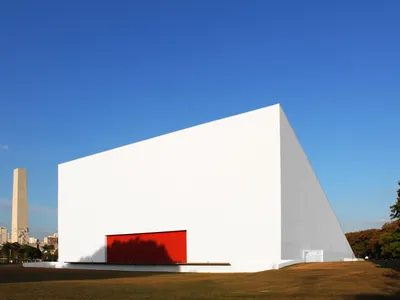
Oscar Niemeyer's Ibirapuera Park Pavilions Define São Paulo's Cultural Identity in Concrete and Curve
A constellation of modernist volumes set within São Paulo's most important urban park, conceived for the city's 400th anniversary in 1954.
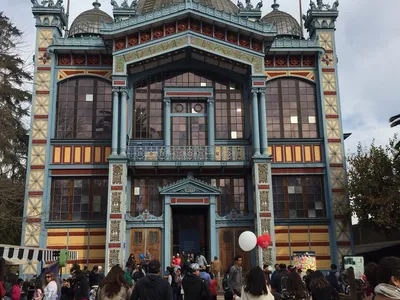
How Henri Picq's 1889 Paris Pavilion Traveled 11,000 Kilometers to Become Santiago's Artequín Museum
A prefabricated iron and glass pavilion built for the Paris Universal Exposition found a second life as a children's art museum in Chile.
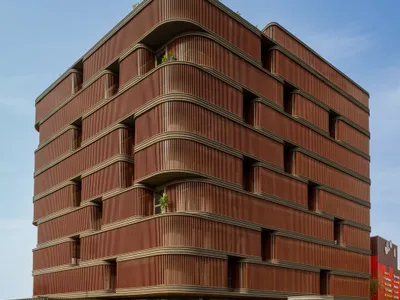
Sanjay Puri Architects Wraps a Jaipur Office Tower in Capsule-Shaped Green Buffers
A nine-level climate-responsive workplace near Jaipur Airport uses stacked planter terraces and aluminium screens to fight 40°C heat.


Explore Housing Competitions
Discover active competitions in this discipline



Challenge to reimagine the Iron Throne


Photograph architecture without architects


Illustrate the lost glory of Angkor Wat - Render Challenge


Design challenge to reuse E-waste
Comments (0)
Please login or sign up to add comments
No comments yet. Be the first to comment!