

Zhouzhuang Theater Façade Renovation By CAALADI + Practice on Earth: A Contemporary Cultural Transformation
A curtain-like aluminum façade transforms a former hotel into a culturally resonant immersive theater at Zhouzhuang’s historic water town entrance.


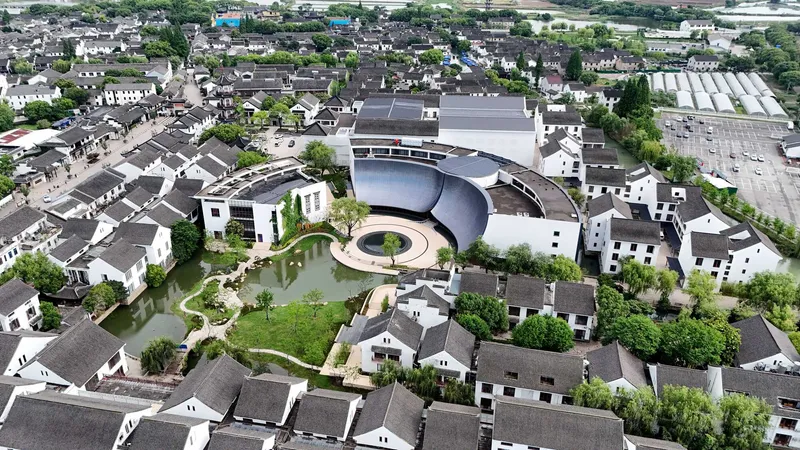
Located at the entrance of Zhouzhuang, Jiangsu Province, the Zhouzhuang Theater Façade Renovation transforms a long-vacant 2003 hotel complex into a dynamic performance venue for Zhouzhuang Odyssey, a cultural production jointly presented by the Zhouzhuang Town Government and the China Oriental Performing Arts Group. Led by Practice on Earth in collaboration with the China Academy of Art Landscape Architecture Design Institute, the project reinterprets the oversized modern hotel building into a culturally resonant, immersive theater environment while respecting the historical water town’s scale and ambiance.
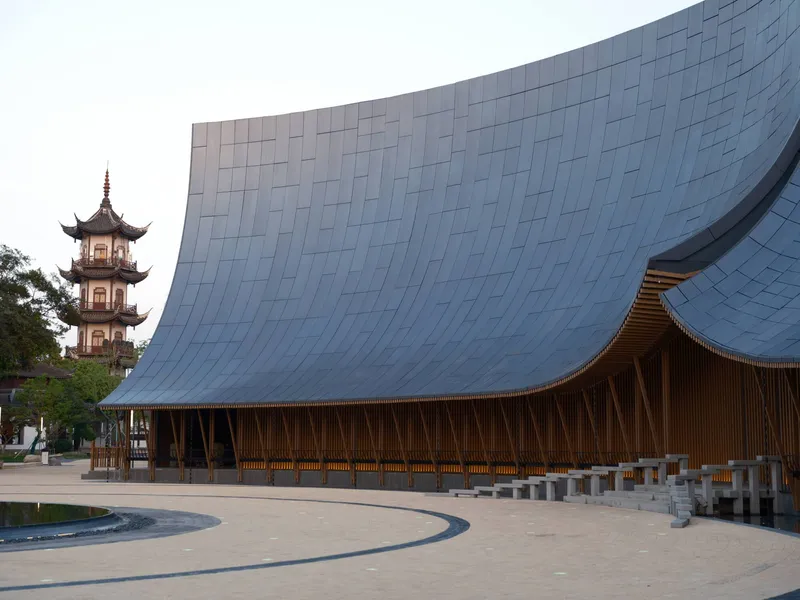
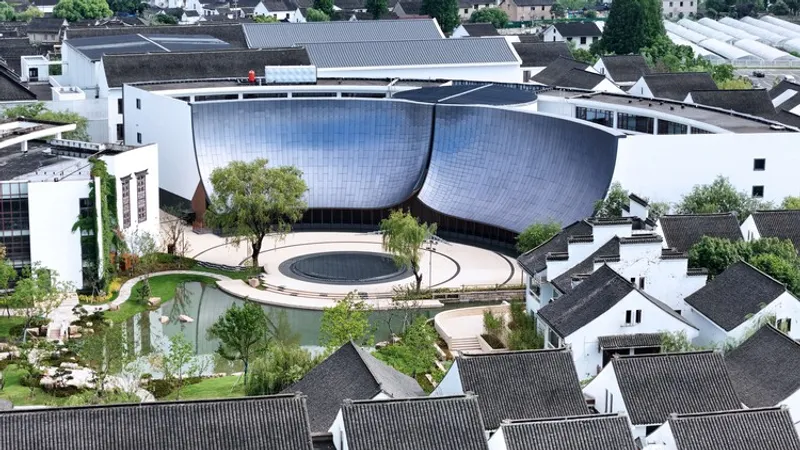
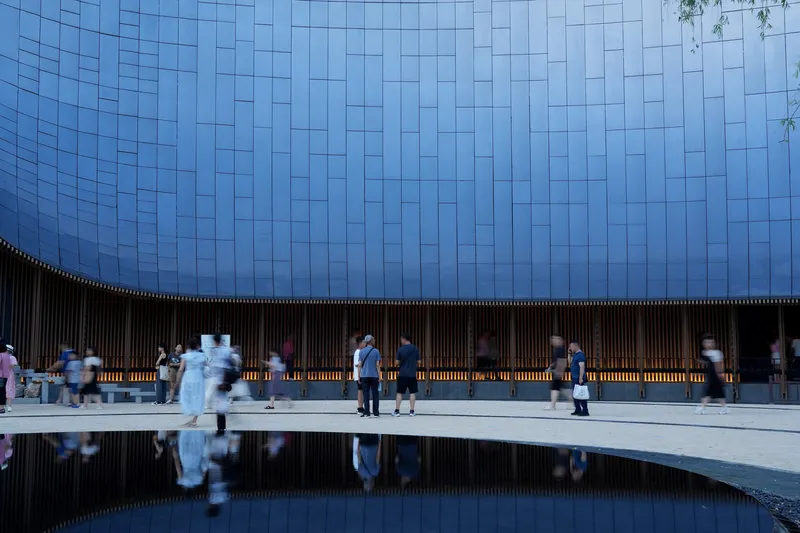
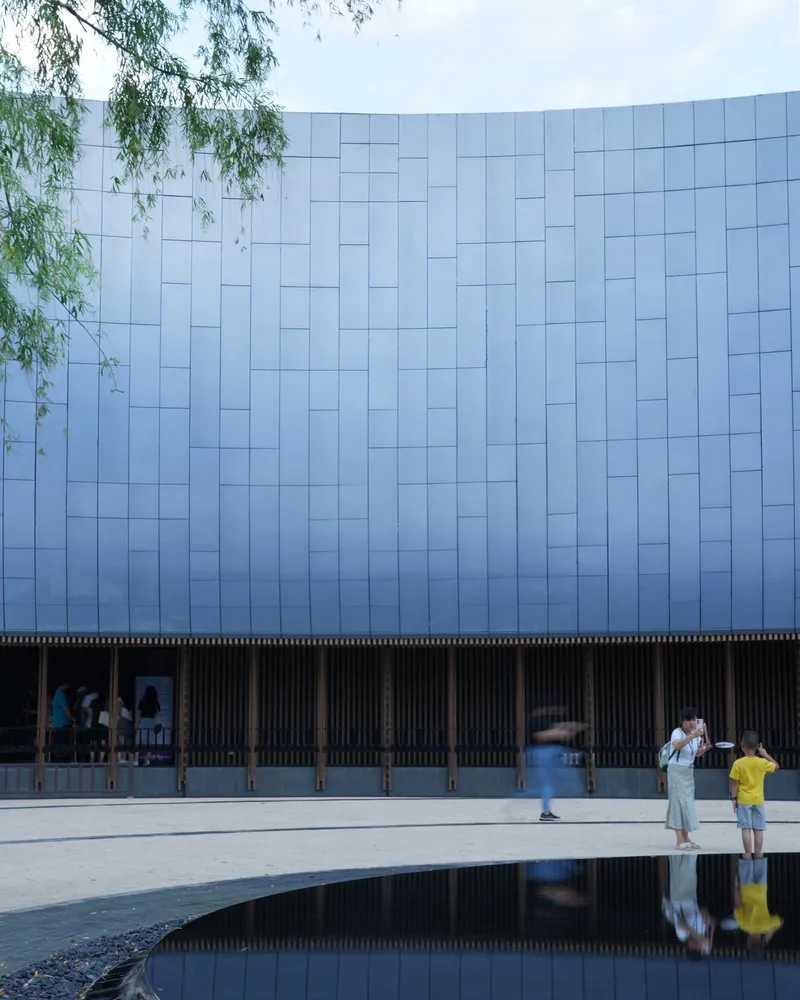
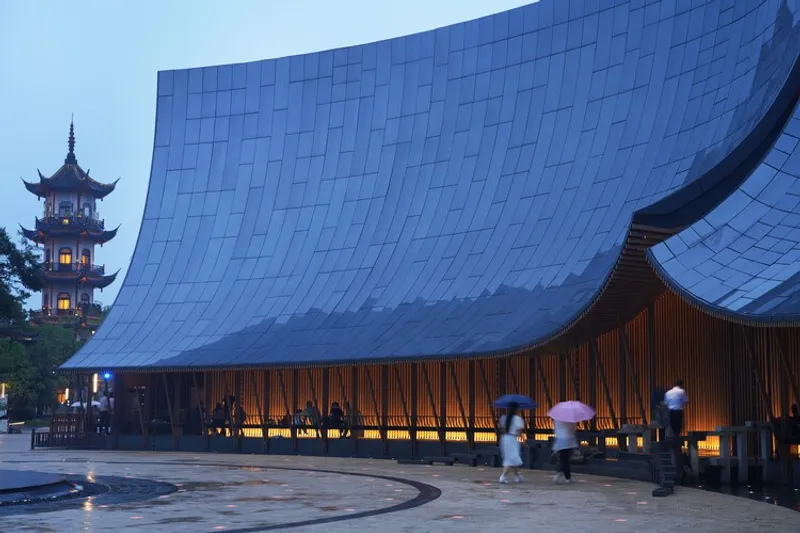
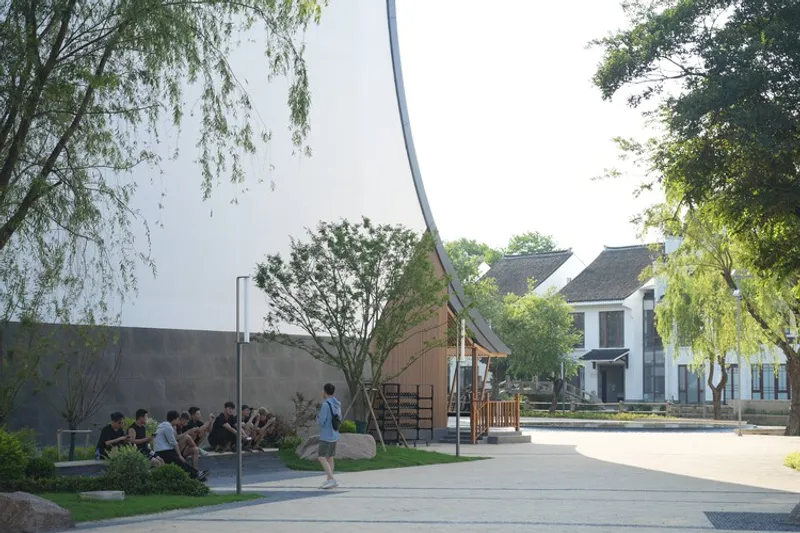
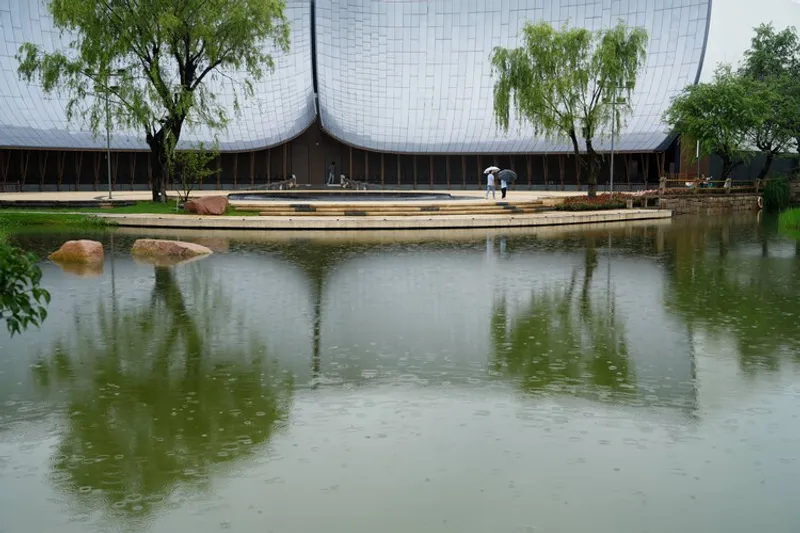
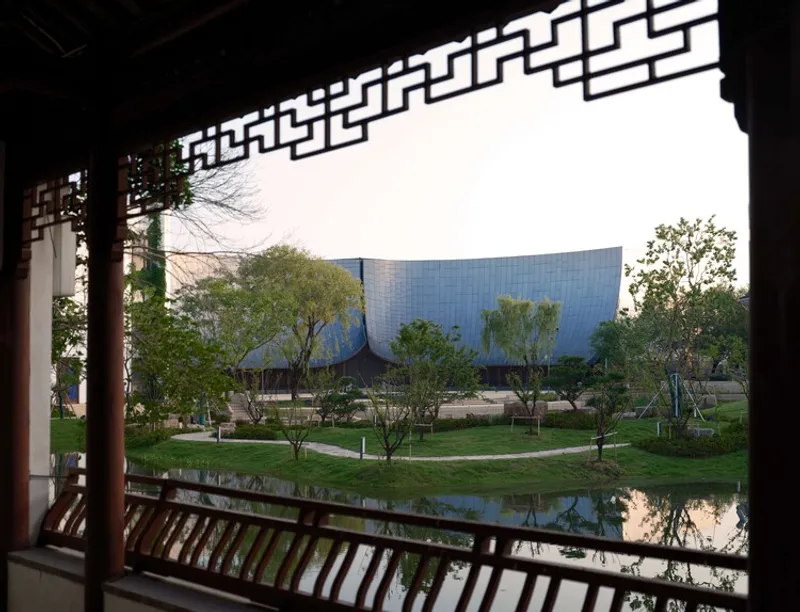
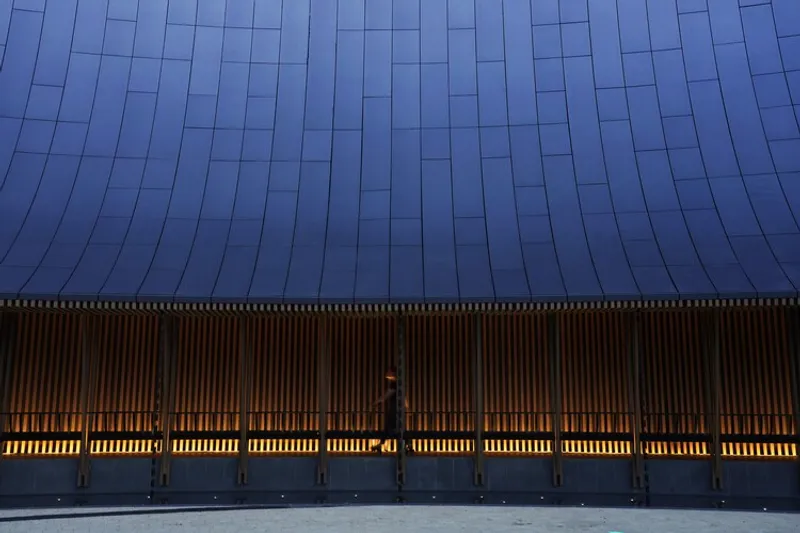
Spanning 17,000 m², the primary challenge lay in adapting the existing hotel structure, whose proportions were originally designed for accommodation, to suit the intimate scale and heritage-rich context of Zhouzhuang. Instead of applying traditional motifs to the façade, the architects introduced “The Curtain”, a sculptural and conceptual intervention that both conceals and reveals. Two sweeping, curved aluminum panels drape the building, creating a light, open impression, while a lifted entrance evokes theatrical anticipation. Behind, a darkened corridor forms a silhouette reminiscent of traditional Chinese gabled roofs, anchoring the contemporary design within local architectural culture.
Parametric Design and Façade Innovation
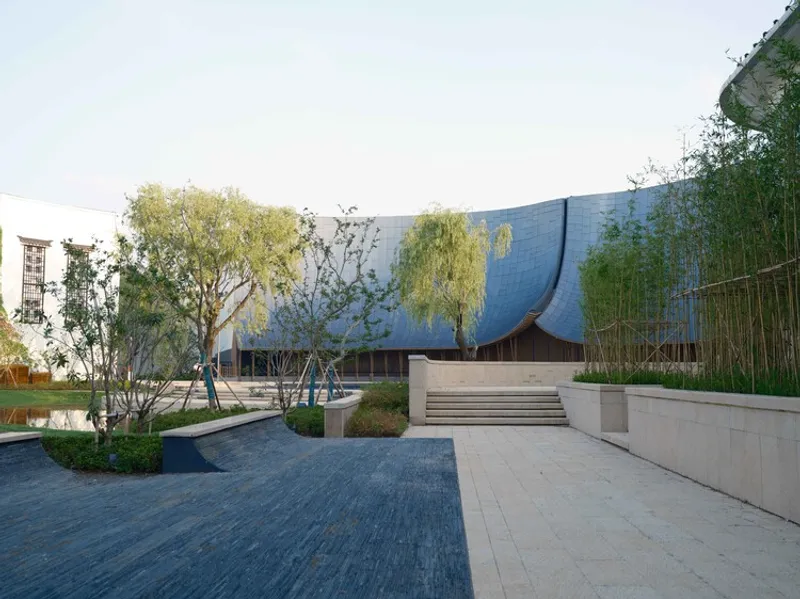
Early in the design process, a parametric strategy was adopted to efficiently manage the complex design and fabrication requirements. Anodized aluminum panels, 20mm-thick honeycomb sheets: were selected for durability, light reflection, and cost-effectiveness. Panels were discretized to minimize double curvature, with smaller panels used in high-curvature areas, evoking the texture and rhythm of traditional roof tiles. The façade comprises over 1,060 unique panels, installed using a BIM-integrated workflow and fine-tuned on site with Total Station-assisted layout and steel positioning plates, overcoming site constraints that prevented traditional hoisting methods.
Functional, Cultural, and Spatial Integration
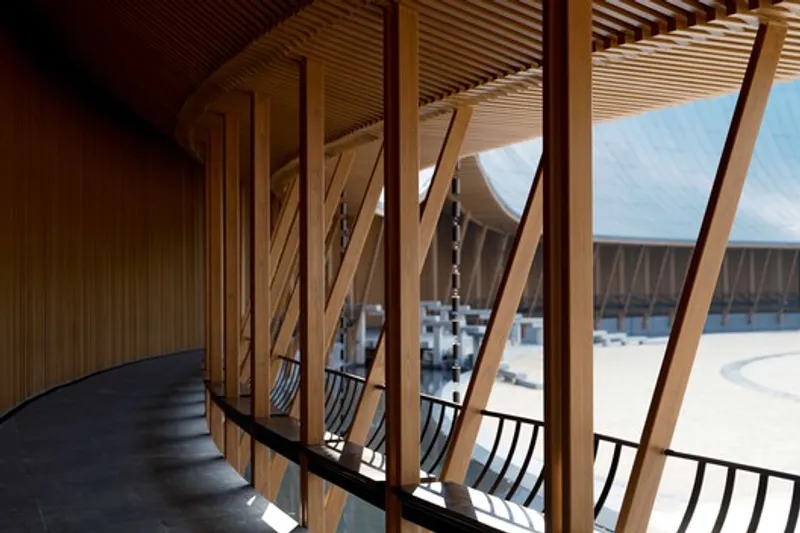
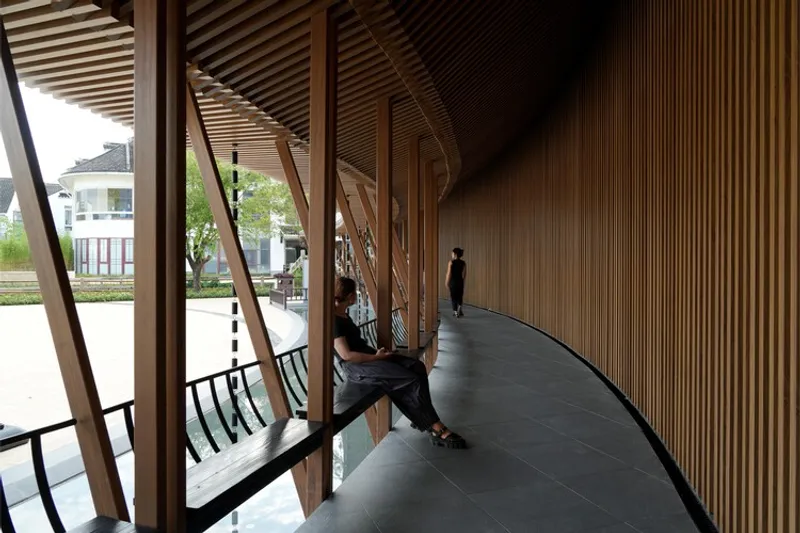
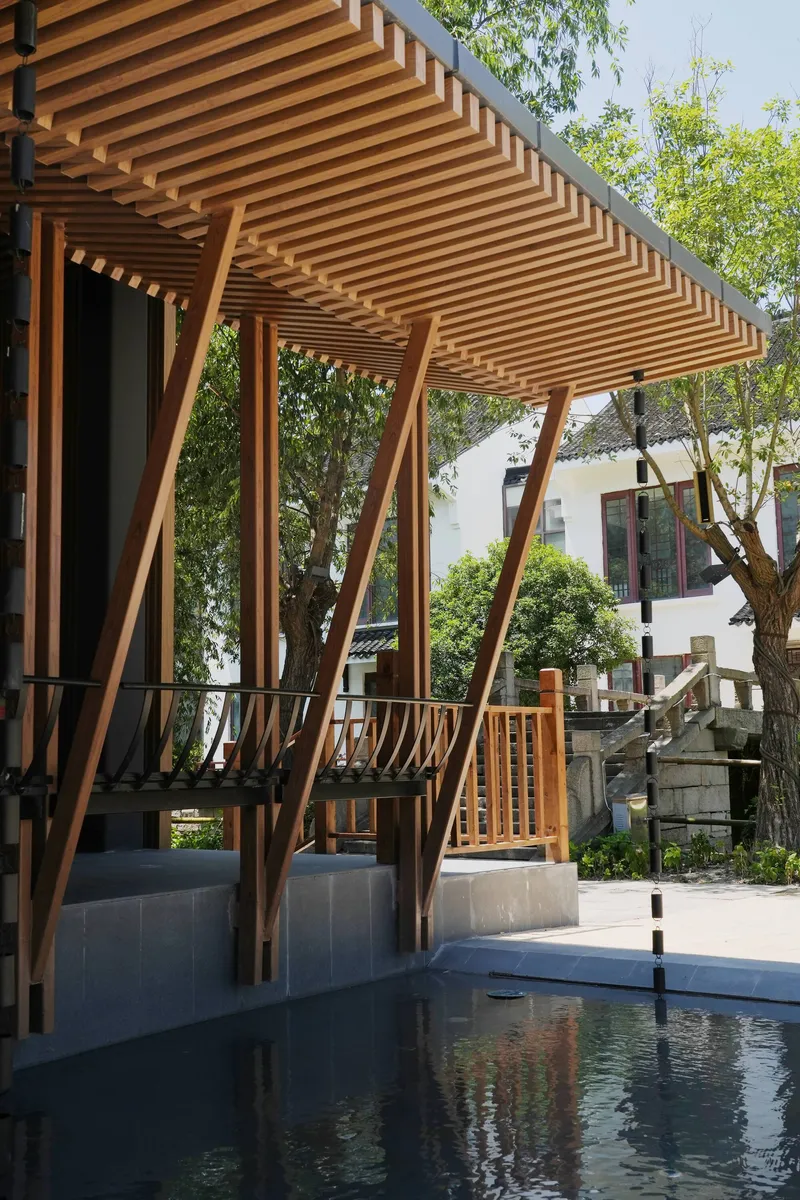
The renovation integrates audience circulation, equipment access, and performance logistics into the design of both the façade and entrance corridor. A 50×100 grid module organizes visible architectural elements such as walls, ceilings, twin columns, and eaves. Modular repetition with subtle variation creates a rhythmic, lightweight pedestrian experience beneath the curtain, guiding visitors while evoking Zhouzhuang’s historic spatial textures. Rainwater management was incorporated as a poetic design element: hidden channels and rain chains collect water, feeding pools below, which animate the façade differently under sun and rain, producing a dynamic interaction with the natural climate.
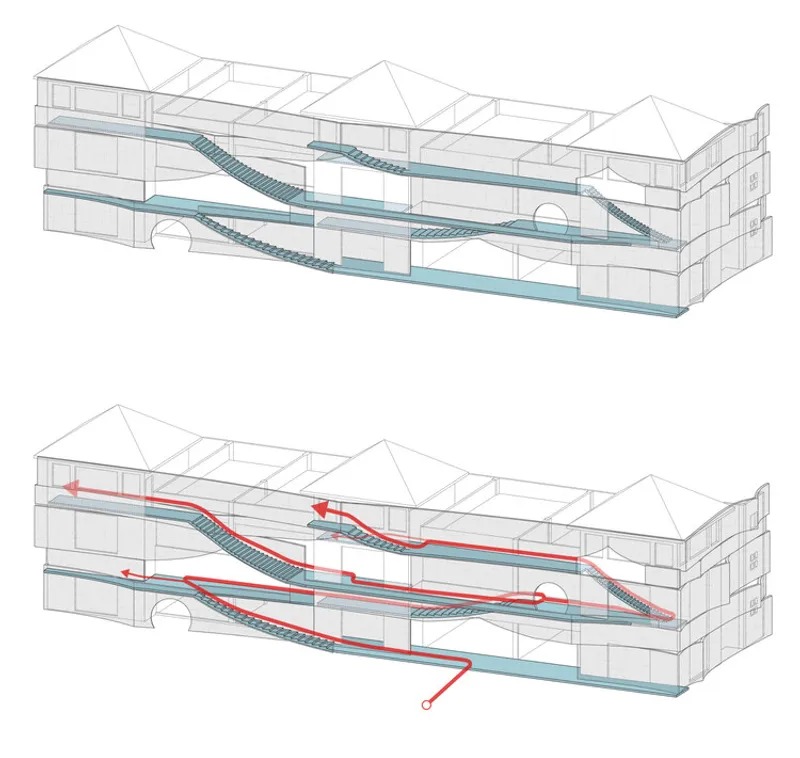
The theater spans three adjacent buildings, each with distinct façade conditions. The curtain concept extends across these structures, creating walkable areas, including a continuous staircase behind the panels. This allows for future outdoor performances, audience interaction, and flexible programming. By blending perforated panel types with carefully coordinated curves and layering, the design achieves a soft, fabric-like effect, bridging traditional Chinese references and modern performance requirements.
A Cultural Landmark for Zhouzhuang
The Zhouzhuang Theater Façade Renovation redefines adaptive reuse in a heritage context, turning a defunct hotel into a culturally vibrant, visually compelling, and technically sophisticated theater. It exemplifies how modern parametric design, material innovation, and contextual sensitivity can harmonize contemporary architecture with the scale, atmosphere, and identity of a historic water town, providing both functional performance spaces and a symbolic landmark for residents and visitors alike.
All the photographs are works of Cloe Yun Wang


Popular Articles
Popular articles from the community


graciastudio Turns a Viewless Tijuana Lot Inward Around a Courtyard of Concrete, Timber and Trees
In Tijuana, Jorge Gracia's GA2 House stacks a timber-clad private floor over exposed concrete and replaces a missing view with a planted interior patio.


Opera on the Sea: Driftwood Logic Shapes a Timber Opera House on Estonia's Coast
Trevor Orgill's opera house translates the entangled drift of floating timber into a civic building where wood, water, and music converge.

ETEH Reworks the Shared Spaces of São Domingos School in Brazil Around Timber, Color and Hanging Plants
At São Domingos School in Brazil, 436 m² of hall, refectory and library are recast with timber joinery, a yellow and blue code and trailing greenery.

The Amber Palace Opera: A Geological Fiction Surfaces on Tallinn's Baltic Waterfront
Pierre Brillard reimagines a Baltic legend as a public landscape, opera house, and waterfront promenade rooted in Tallinn's coastal identity.

Similar Reads
You might also enjoy these articles


Hodi-Mandai Geram
Project Function: Preservation and revitalization of the Intangible heritage and socio-spatial identity of the Hodi by Housing, Cultural Memory Center, Sacred Grove, landscape, local tourism economy


Olio Towers: A Mid-Rise for Performers That Fuses Housing, Rehearsal, and Stage
Located blocks from Houston's Theater District, this modular tower stacks living units around a central performance atrium.

Oasis: Modular Green Housing Carved into Dhaka's Urban Fabric
A shortlisted Plugin Housing entry reclaims unauthorized settlements in Dhaka with stepped concrete volumes, green roofs, and ventilation-driven design.

Black Hole: A Floating Megastructure for the Post-Physical Era
Emiliano Mazzarotto envisions a spherical, self-scaling arena where e-sports, digital hotels, and holographic stadiums replace traditional public space.

Explore Cultural Architecture Competitions
Discover active competitions in this discipline

Challenge to reimagine the Iron Throne

Photograph architecture without architects

Illustrate the lost glory of Angkor Wat - Render Challenge

Bring back Drive In's
Comments (0)
Please login or sign up to add comments
No comments yet. Be the first to comment!