

Zigzag House by Architectare: A Perfect Blend of Simplicity, Functionality, and Modern Design
Zigzag House by Architectare blends modular design, natural warmth, and sustainability, offering flexible, cost-effective living with seamless indoor-outdoor integration.


Zigzag House, designed by Architectare and located in Petrópolis, Brazil, exemplifies a seamless fusion of minimalism and functionality. This 377 m² residence, completed in 2019, was created for a young couple with two children who aspired to build their dream home within a limited budget. The house embodies cost-effective yet innovative architectural solutions, carefully balancing spatial organization, aesthetics, and sustainability.
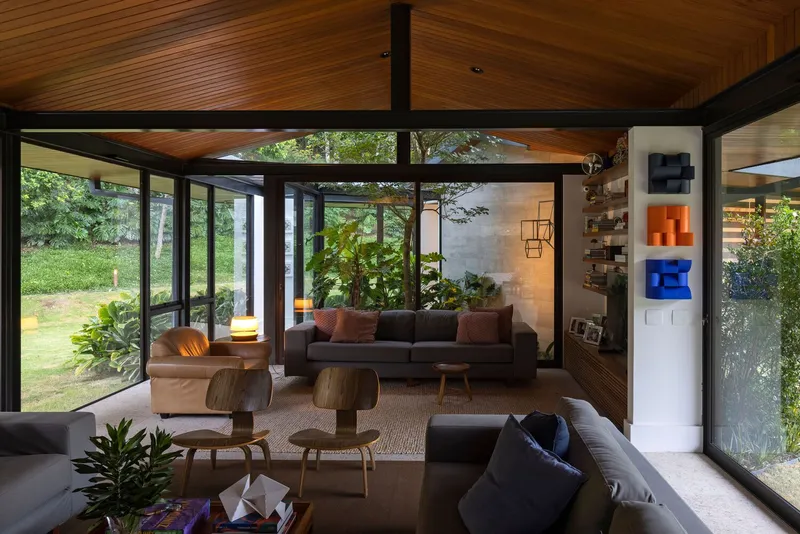
Modular and Flexible Design Concept:
To maintain affordability and ease of construction, the architects adopted a modular approach that repeats throughout the house. This modular system enabled the project to be built in stages, allowing for the potential construction of the garage and an additional room in the future. Divided into three distinct functional blocks—service, social, and intimate—the house was arranged in a zigzag pattern, avoiding a linear layout and enhancing visual appeal. The meeting points between these blocks create unique squares that serve various purposes, including a tranquil winter garden and a versatile gourmet balcony.
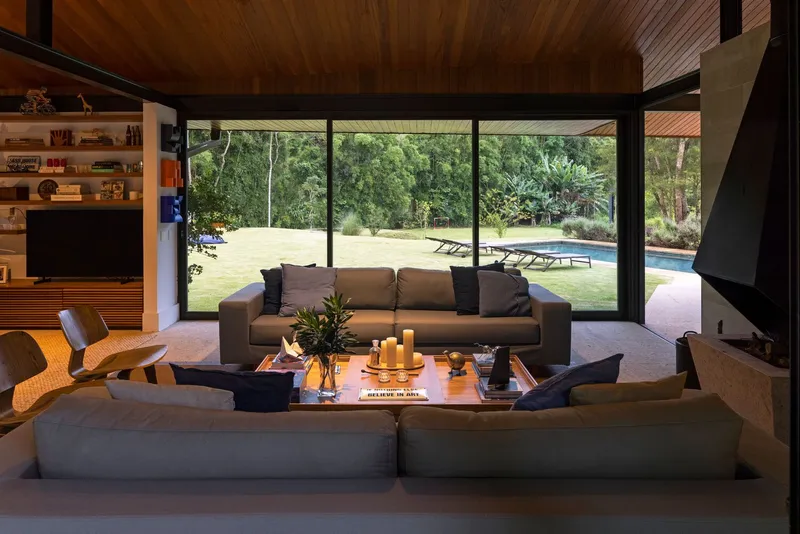
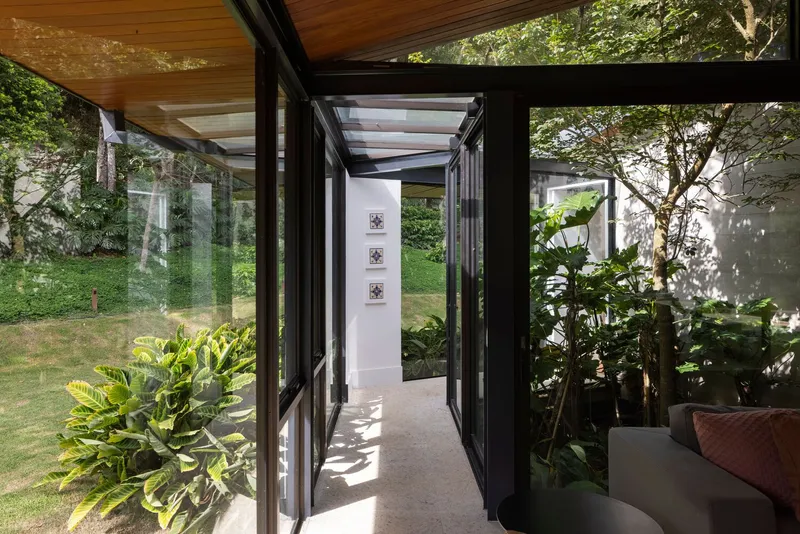
Winter Garden and Social Hub:
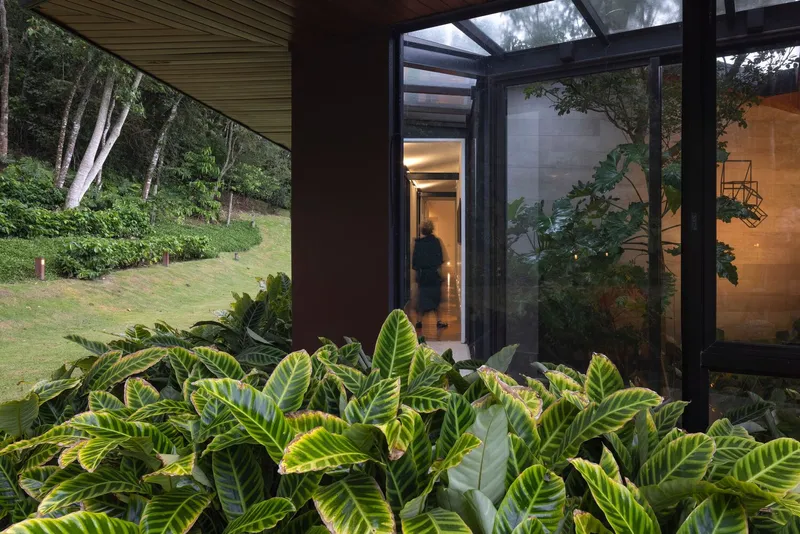
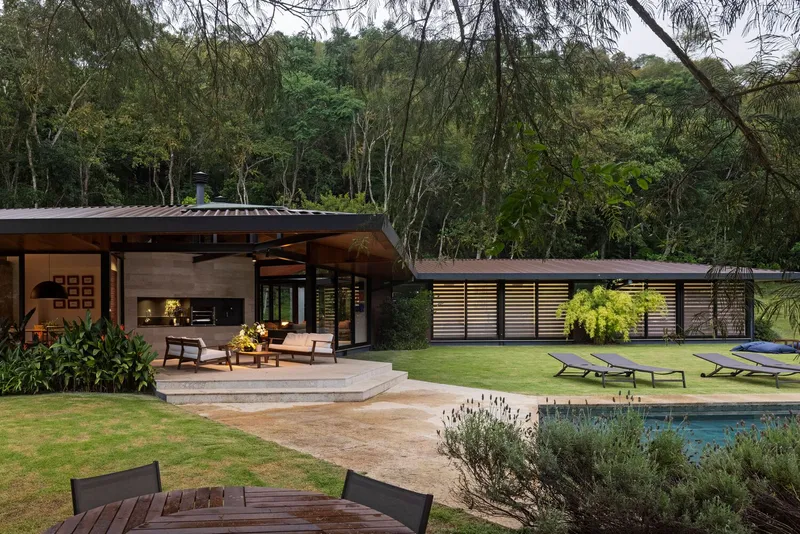
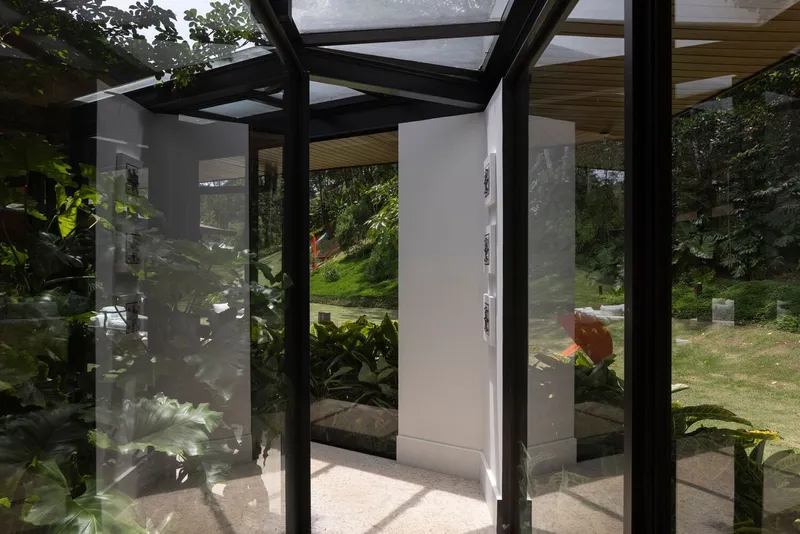
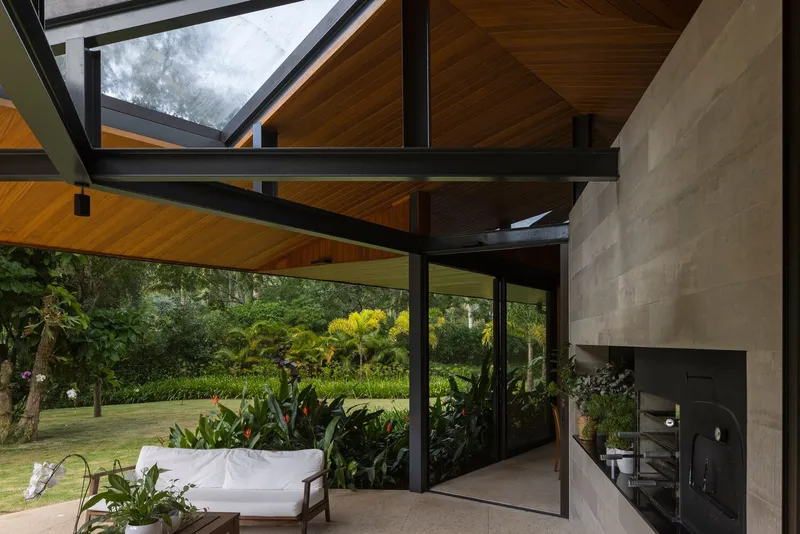
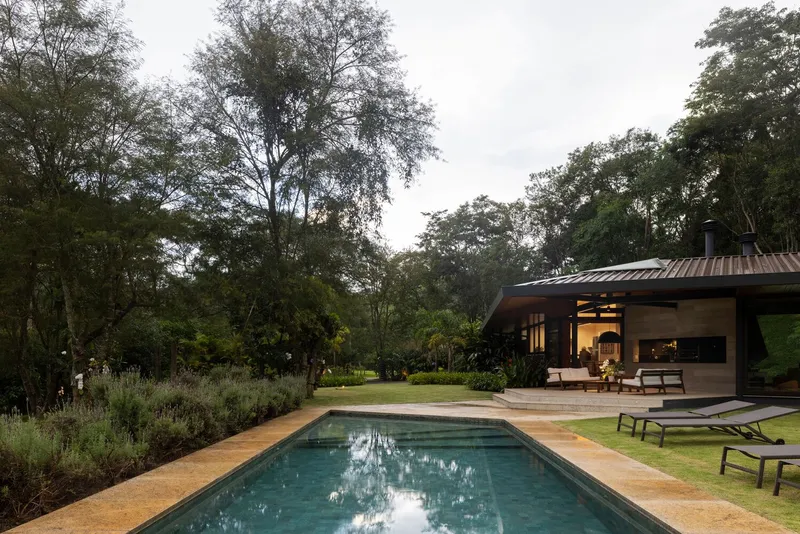
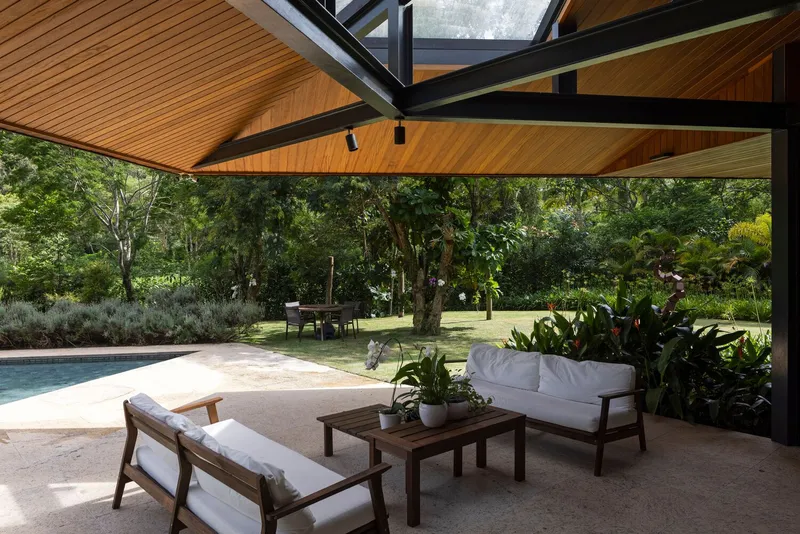
The intersection between the social and intimate blocks opens up to a stunning winter garden that brings in natural light and greenery, ensuring a serene ambiance while providing privacy through a glass gallery. This feature serves as a natural partition, maintaining privacy between the living and private areas. Meanwhile, the meeting of the social and service blocks forms the heart of the home—a gourmet balcony that seamlessly integrates with the pool terrace and dining area. This multifunctional space enhances the connectivity between leisure, service, and social zones, promoting a harmonious living experience.
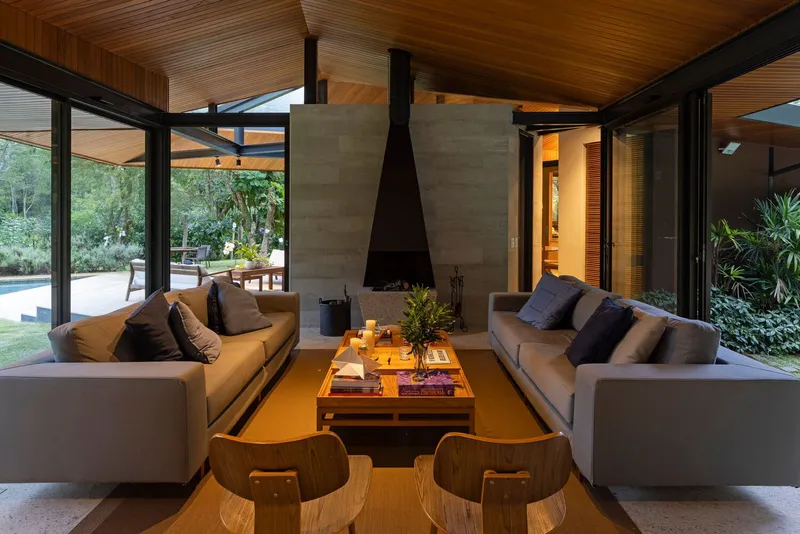
Innovative Structural System and Material Selection:
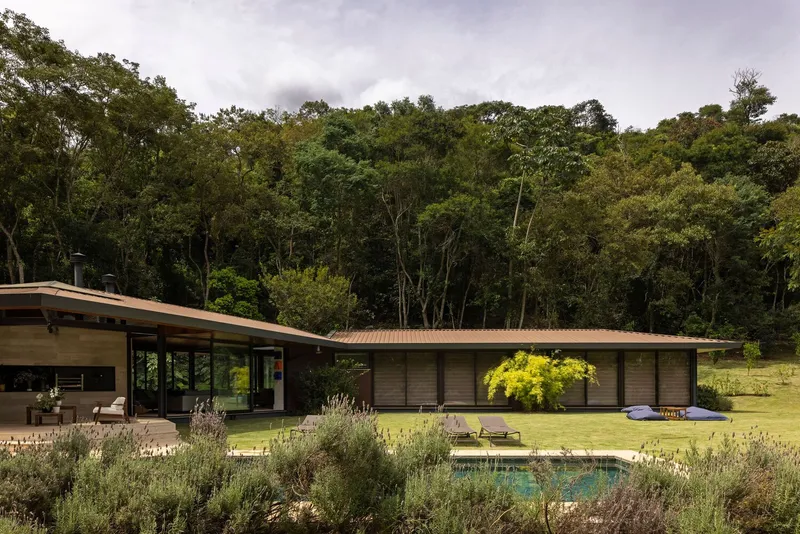
To accelerate construction and allow for easy adaptation in stages, the architects opted for a lightweight metal structure. The absence of slabs and the use of aluminum sandwich roof tiles contributed to a faster, more efficient building process. These materials ensured thermal and acoustic comfort while maintaining the overall lightness of the architectural form. Additionally, the roof’s twisted inclination varied only in ridge heights, creating a visually dynamic and well-balanced structure.
Flood-Resilient and Elevated Design:
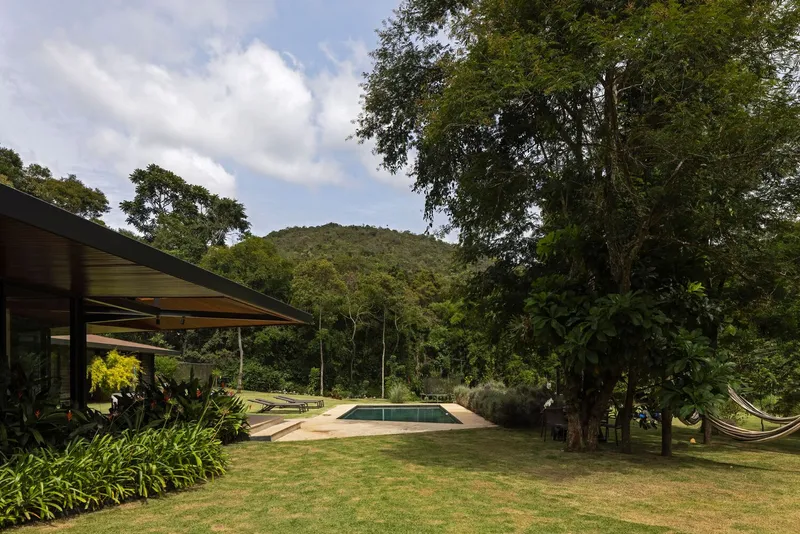
Given the site’s history of minor flooding, the house was raised 35 cm above the ground using a metal structure supported by concrete footings. This elevated design not only protected the residence from potential water damage but also highlighted the structure, giving it a distinct, floating aesthetic. The metal belt running along the perimeter added to the visual appeal while serving as a functional seating space.
Natural Warmth and Interior Harmony:
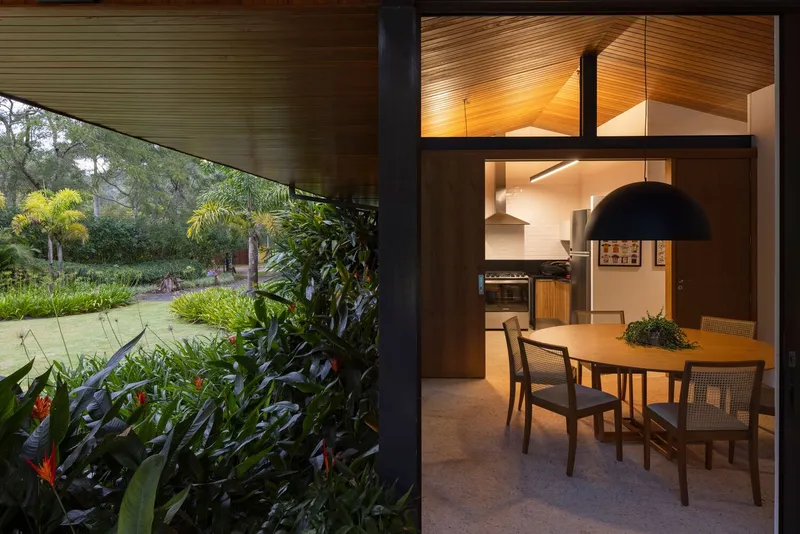
To create a warm and cozy ambiance, the architects maintained the natural slope of the roof, which was clad with peroba wood paneling throughout the main living spaces. This design choice provided a strong sense of continuity and natural warmth. In contrast, the service areas and bathrooms utilized cost-effective drywall solutions. Sliding aluminum frames with large glass panels were incorporated in both the social and intimate zones, allowing seamless indoor-outdoor transitions and transforming all rooms into potential balconies.
Future-Proof and Adaptable Design:
The design accommodates future expansions, including the installation of sliding brises for added shading in the bedroom block and a pergola to extend the living area into the backyard. These enhancements aim to create a seamless connection between the indoor and outdoor environments while providing adaptability to the family’s evolving needs.
All Photographs are works of Leonardo Finotti


Popular Articles
Popular articles from the community


Cube Design Draws an Ecological Corridor Between Two Shenzhen Hills with the Nankai Building
Beside Shenzhen's container docks, the Nankai Building pairs stacked balconies with a climbing green screen to connect two hillsides across its height.

ETEH Reworks the Shared Spaces of São Domingos School in Brazil Around Timber, Color and Hanging Plants
At São Domingos School in Brazil, 436 m² of hall, refectory and library are recast with timber joinery, a yellow and blue code and trailing greenery.

FCC Arquitectura Expands a Portuguese Granite House with a Board-Marked Concrete Wing
In Portugal, JV House pairs a cleaned-up whitewashed and granite dwelling with a timber-shuttered concrete extension, courtyards and a garden pool.


The Amber Palace Opera: A Geological Fiction Surfaces on Tallinn's Baltic Waterfront
Pierre Brillard reimagines a Baltic legend as a public landscape, opera house, and waterfront promenade rooted in Tallinn's coastal identity.

Similar Reads
You might also enjoy these articles


Hodi-Mandai Geram
Project Function: Preservation and revitalization of the Intangible heritage and socio-spatial identity of the Hodi by Housing, Cultural Memory Center, Sacred Grove, landscape, local tourism economy


Olio Towers: A Mid-Rise for Performers That Fuses Housing, Rehearsal, and Stage
Located blocks from Houston's Theater District, this modular tower stacks living units around a central performance atrium.

Oasis: Modular Green Housing Carved into Dhaka's Urban Fabric
A shortlisted Plugin Housing entry reclaims unauthorized settlements in Dhaka with stepped concrete volumes, green roofs, and ventilation-driven design.

Black Hole: A Floating Megastructure for the Post-Physical Era
Emiliano Mazzarotto envisions a spherical, self-scaling arena where e-sports, digital hotels, and holographic stadiums replace traditional public space.

Explore Architecture Competitions
Discover active competitions in this discipline

Challenge to reimagine the Iron Throne

Photograph architecture without architects

Illustrate the lost glory of Angkor Wat - Render Challenge

Design challenge to reuse E-waste
Comments (0)
Please login or sign up to add comments
No comments yet. Be the first to comment!