

ZIIN Beijing Store by atelier tao+c – Transforming Industrial Heritage into Modern Retail Experience
ZIIN Beijing Store by atelier tao+c transforms a 1960s warehouse into a modern, adaptive furniture showroom blending industrial heritage with contemporary design.


Located in the vibrant Langyuan Station area of Beijing, the ZIIN Beijing Store, designed by atelier tao+c, is a striking example of adaptive reuse architecture. Originally an old textile warehouse built in the 1960s, this historic brick structure with its pitched roof has been reimagined as a contemporary showroom for the emerging furniture brand ZIIN. The project carefully balances the industrial heritage of the site with modern retail functions, creating a dynamic interaction between architecture, objects, and visitors.

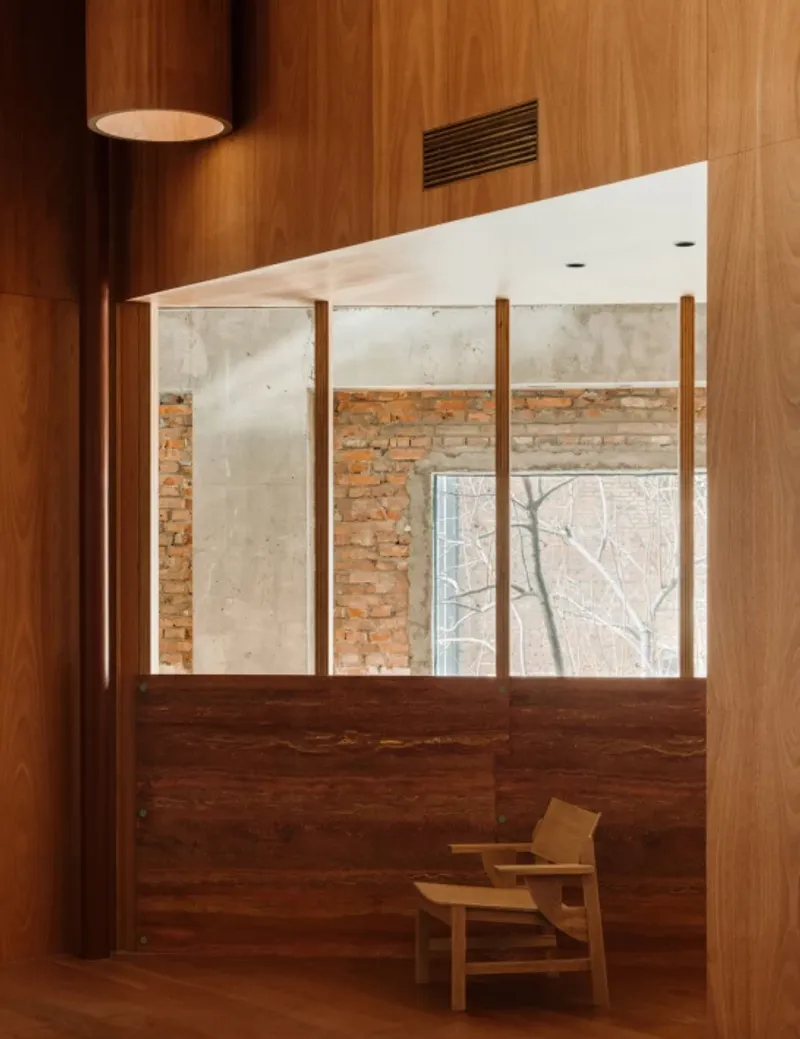
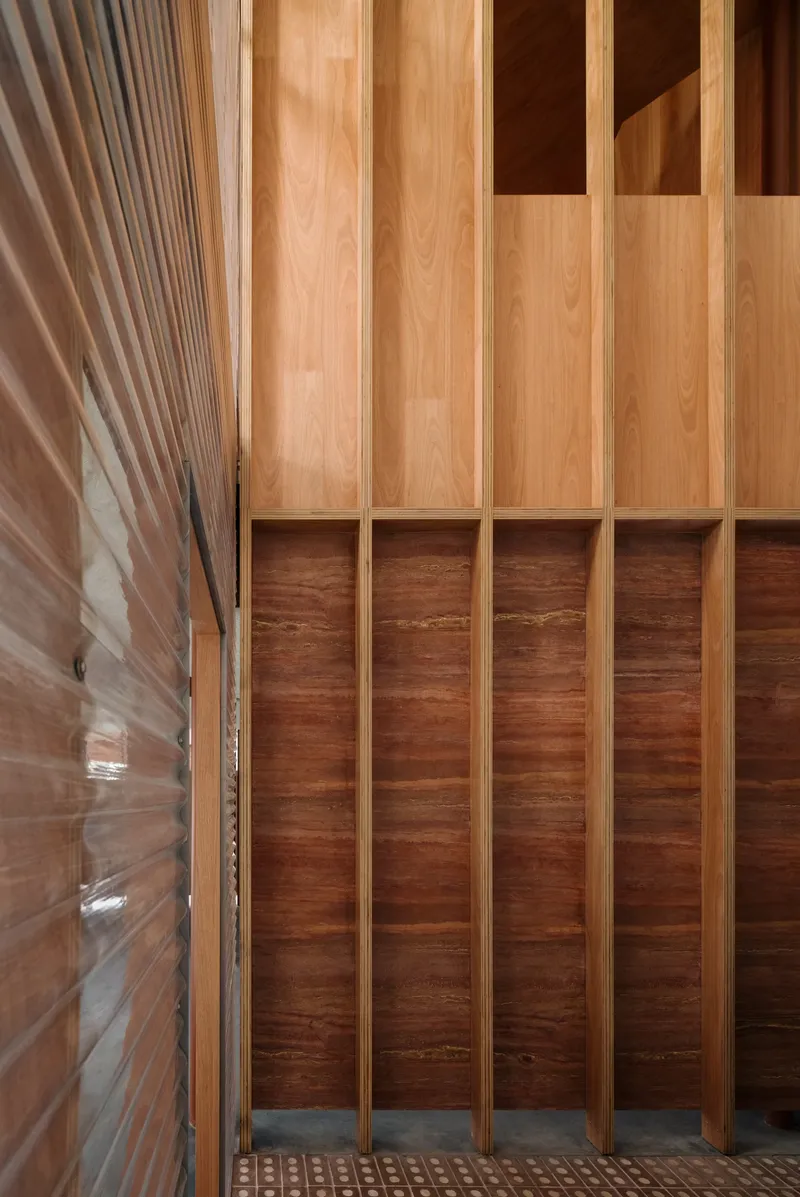
At the heart of the design are two interlaced square frameworks, rotated deliberately at 45 degrees, forming a “house within a house” concept. This spatial strategy establishes a new circulation path, generating visual depth and a unique experiential journey for visitors. One framework is transparent, clad with corrugated polycarbonate panels, allowing natural sunlight to filter into the interior, while the other framework is wrapped in warm timber panels. The resulting contrast between transparency and solidity emphasizes the dialogue between old and new, interior and exterior.
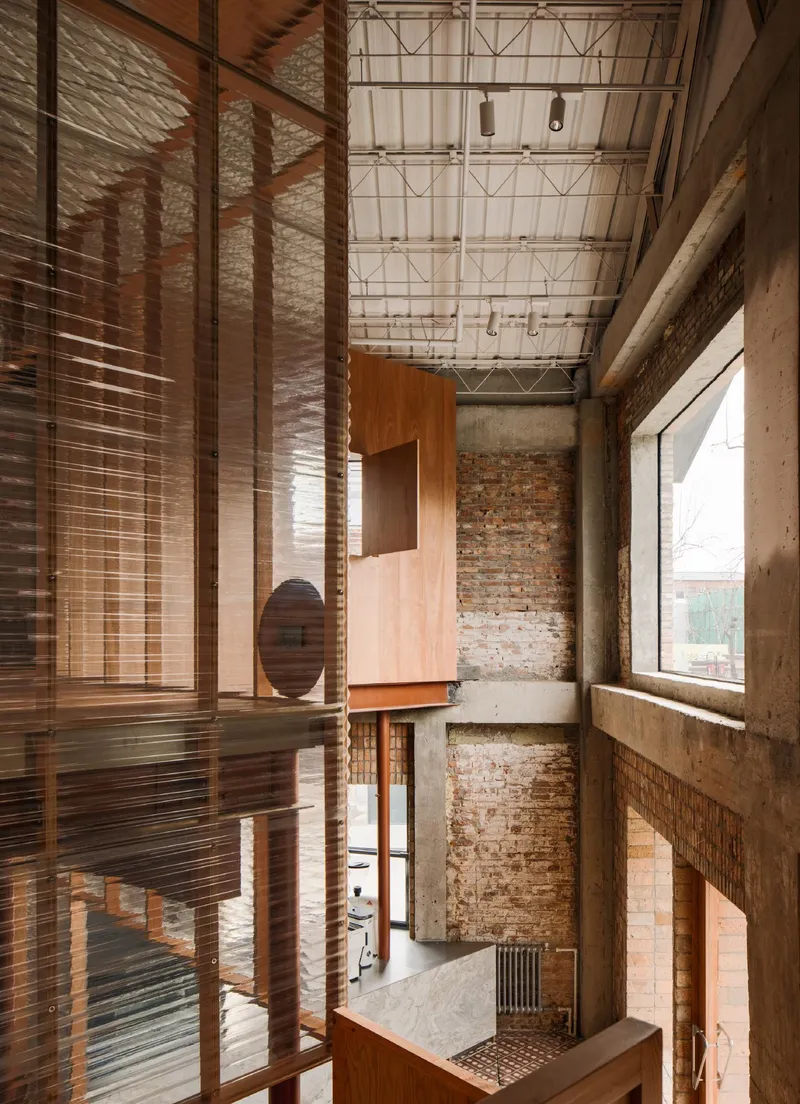
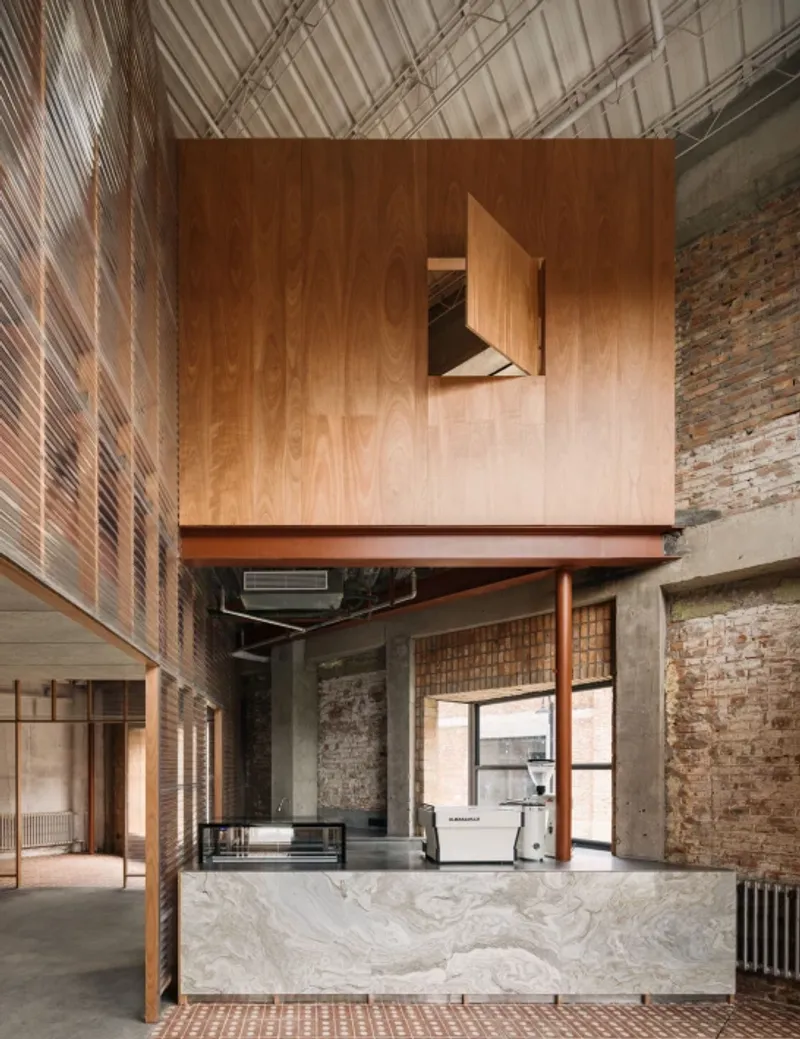
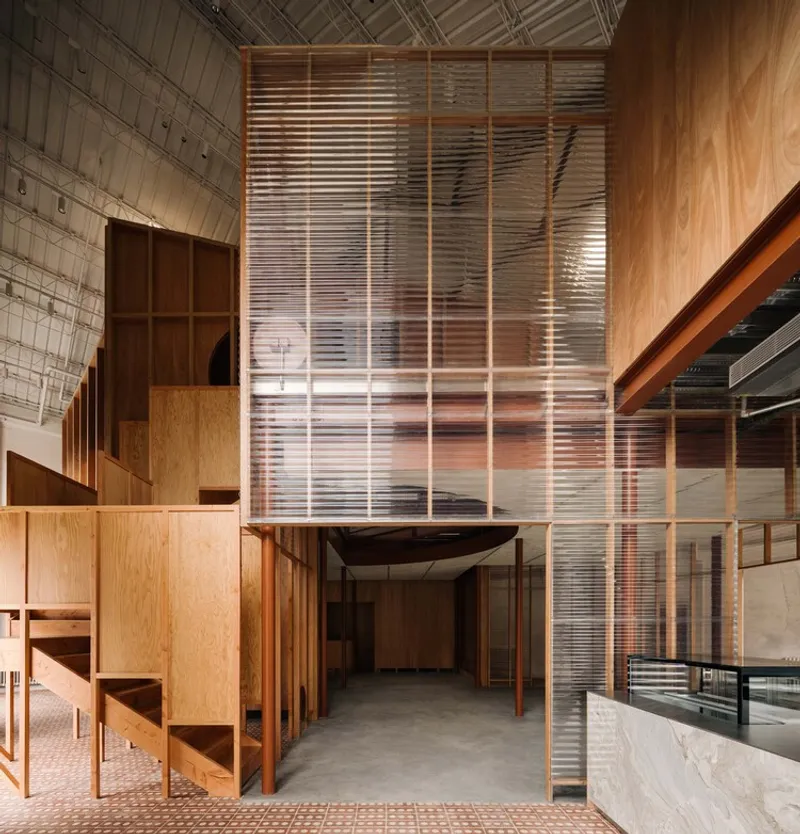
The interior layout follows a structured yet flexible sequence, with homogeneous rooms aligned along identical columns. This arrangement accommodates diverse activities—from curated events to spontaneous gatherings—offering multiple possibilities for exhibition and display. The negative space between the new frameworks and existing brick walls introduces a semi-interior, semi-exterior experience, extending the architectural narrative throughout the store.
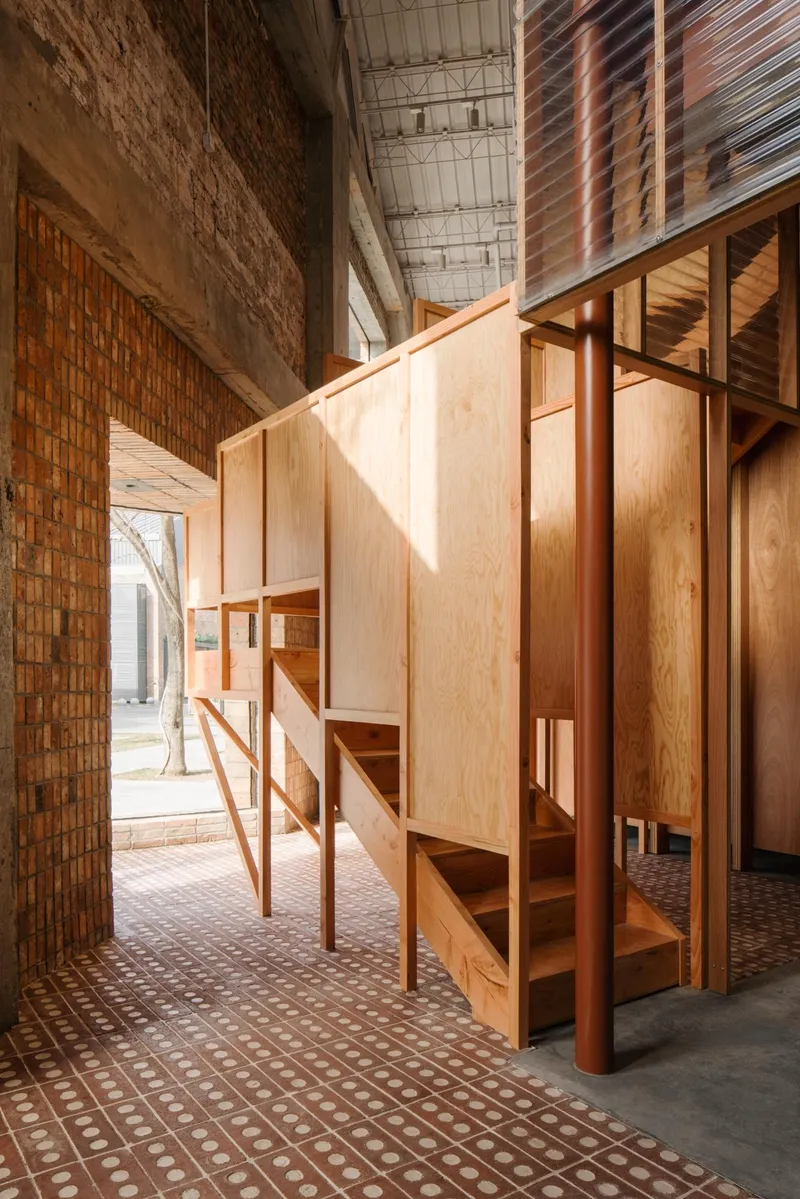
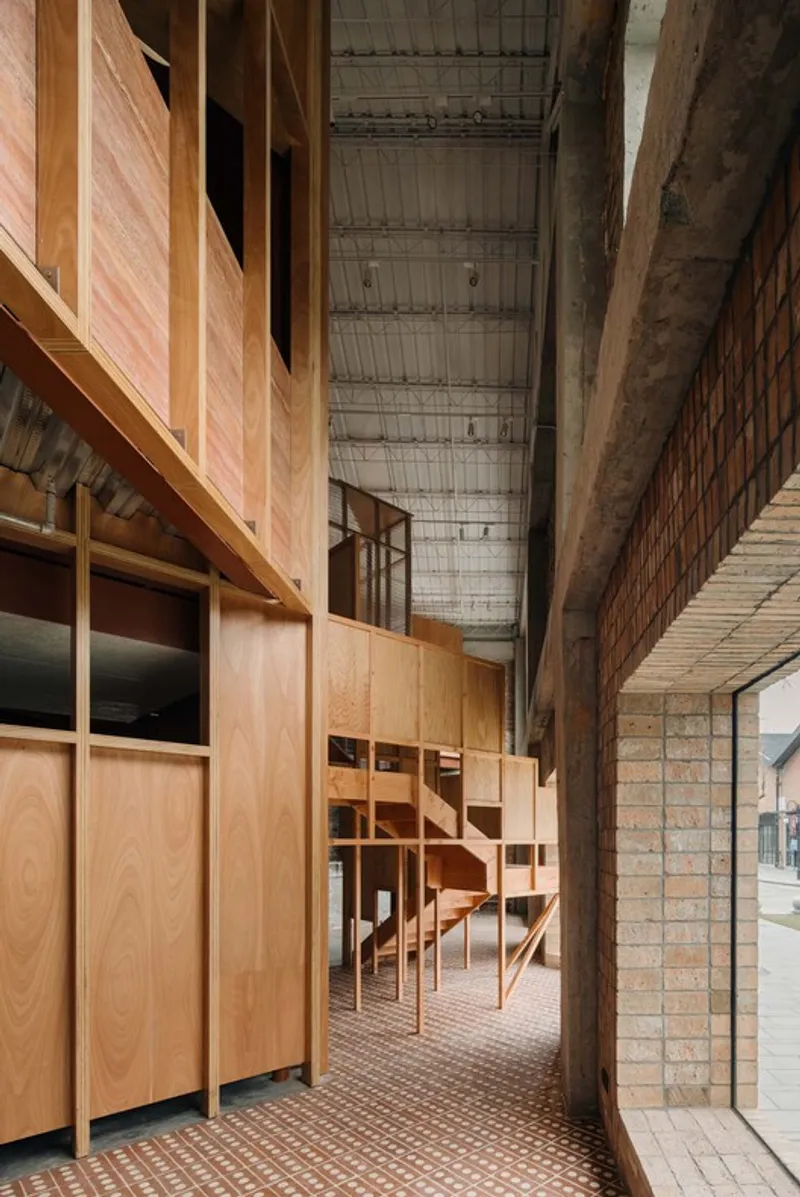

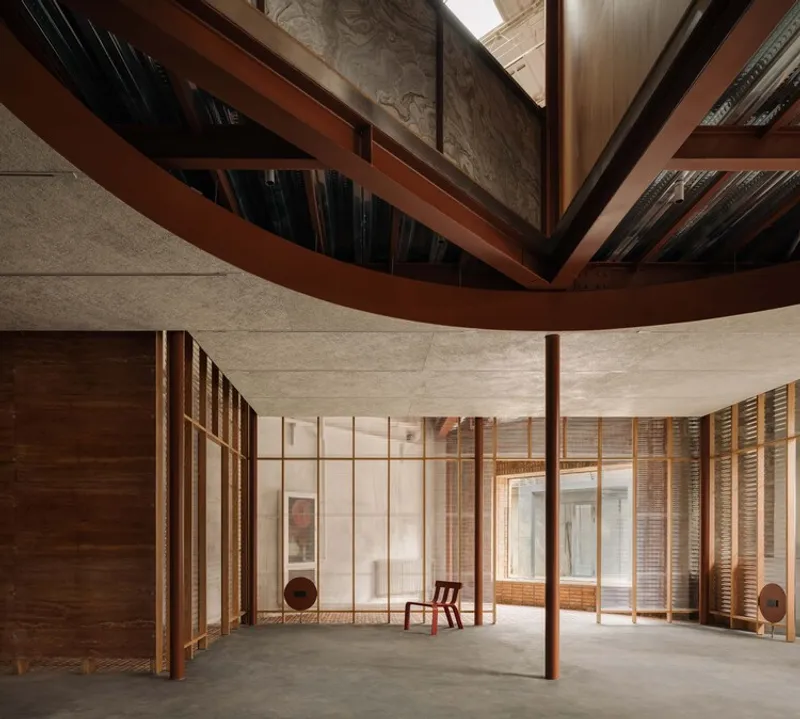
On the mezzanine level, a triangular balcony, pergolas, and staircase are thoughtfully integrated into the circulation flow, creating unexpected spatial moments. The staircase, housed in a constrained area, expands visually with a triangular glass enclosure, highlighting the tension and harmony between architectural boundaries and interior components.


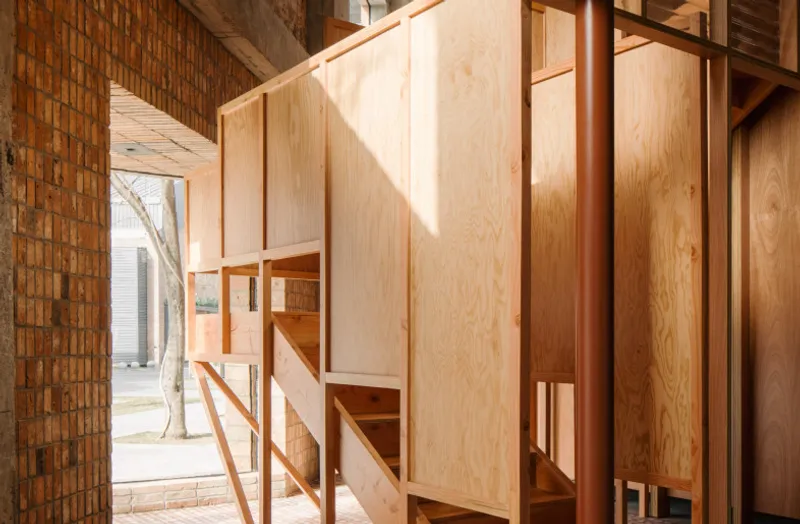
Materiality plays a central role in atelier tao+c’s design philosophy. Exposed steel beams, timber frames, brick walls, and layered substructures allow visitors to witness the building’s construction process. Every component, from ducts and piping layers to steel floor decks and I-beams, is purposefully revealed, narrating the story of how the space was assembled. This approach celebrates the authenticity of industrial materials, eliminating hierarchies while projecting warmth and visual interest.
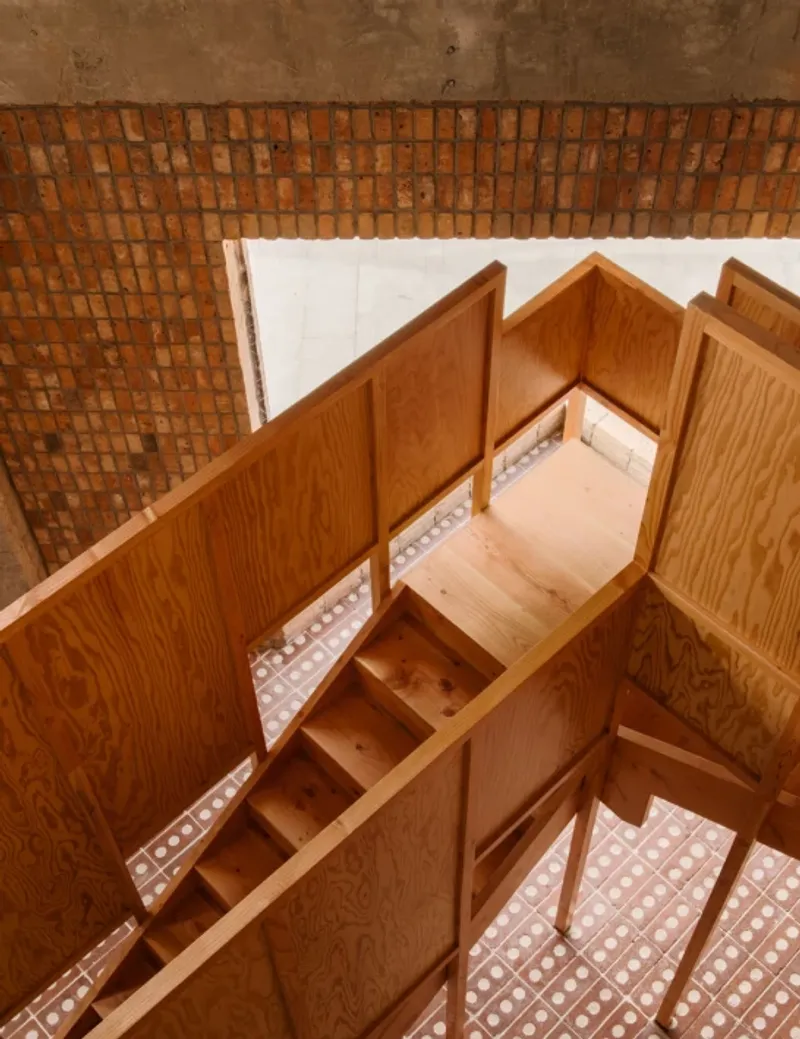
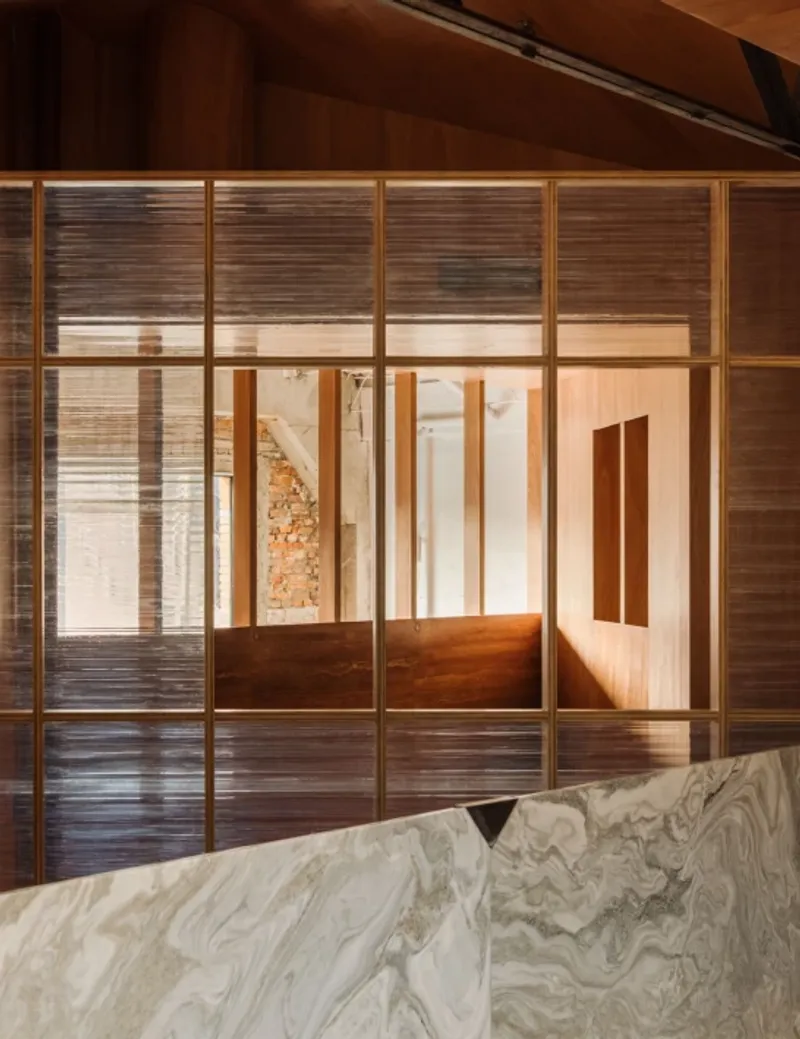
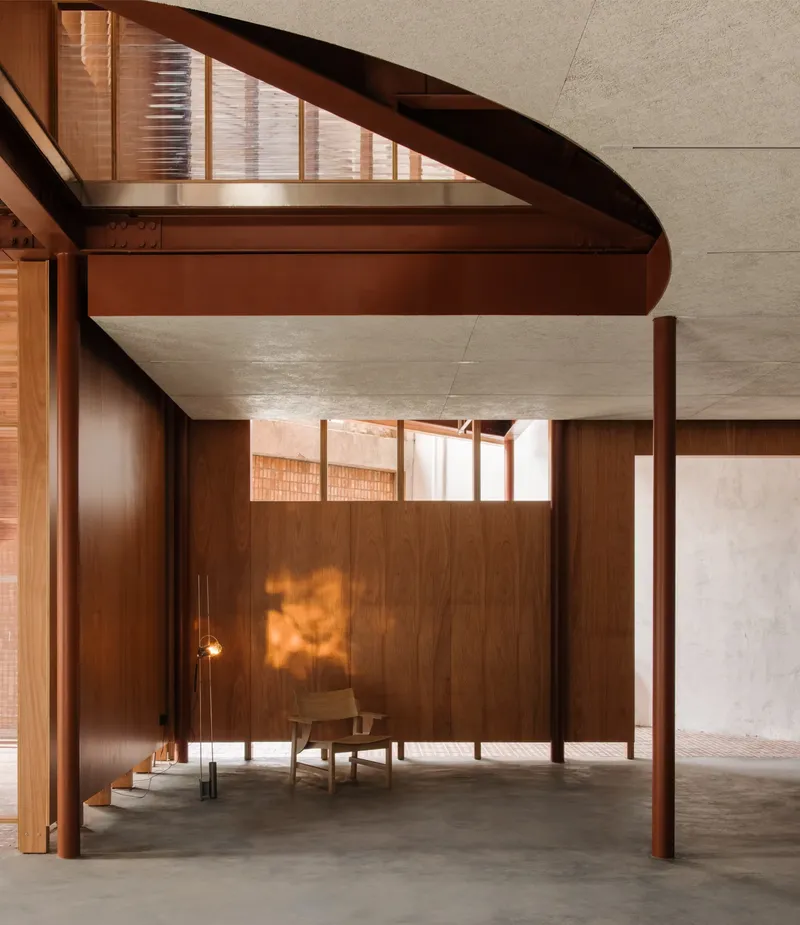
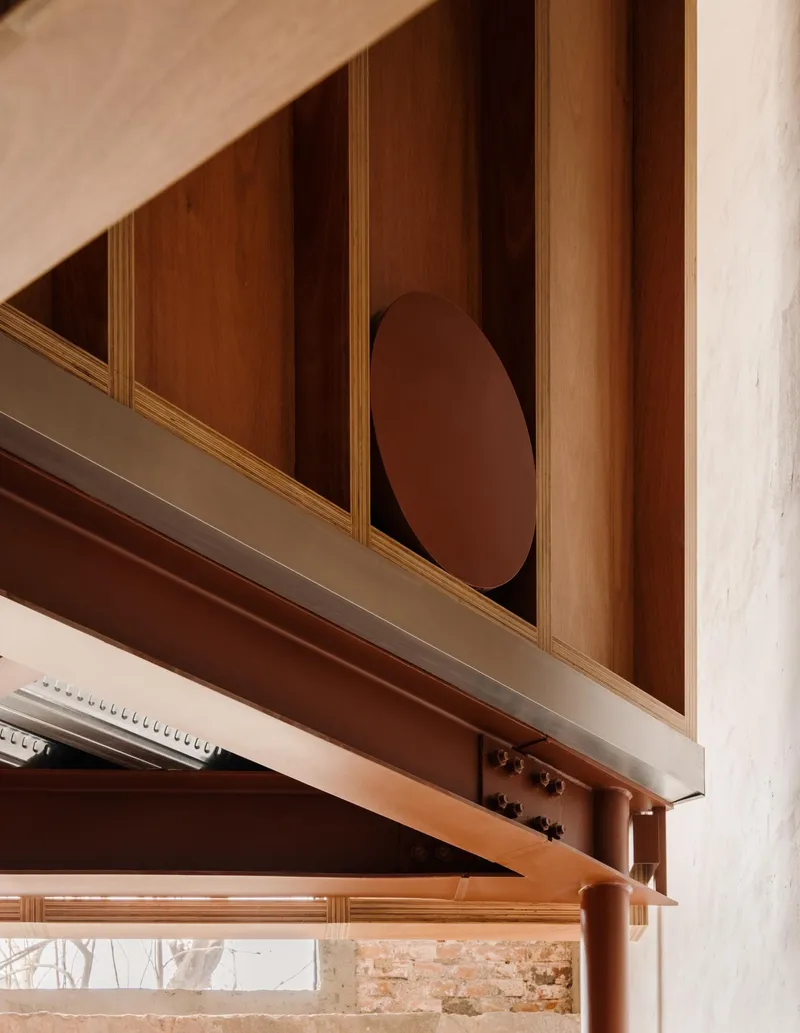
By using ordinary construction materials—standard steel, timber, and bricks—the design achieves both cost efficiency and aesthetic richness. The juxtaposition of these elements on the façade and within the interior highlights craftsmanship and material texture, embodying a modern interpretation of industrial reuse. The ZIIN Beijing Store exemplifies a sustainable approach to architecture, merging functionality, narrative, and cultural continuity, making it a landmark in adaptive retail design.
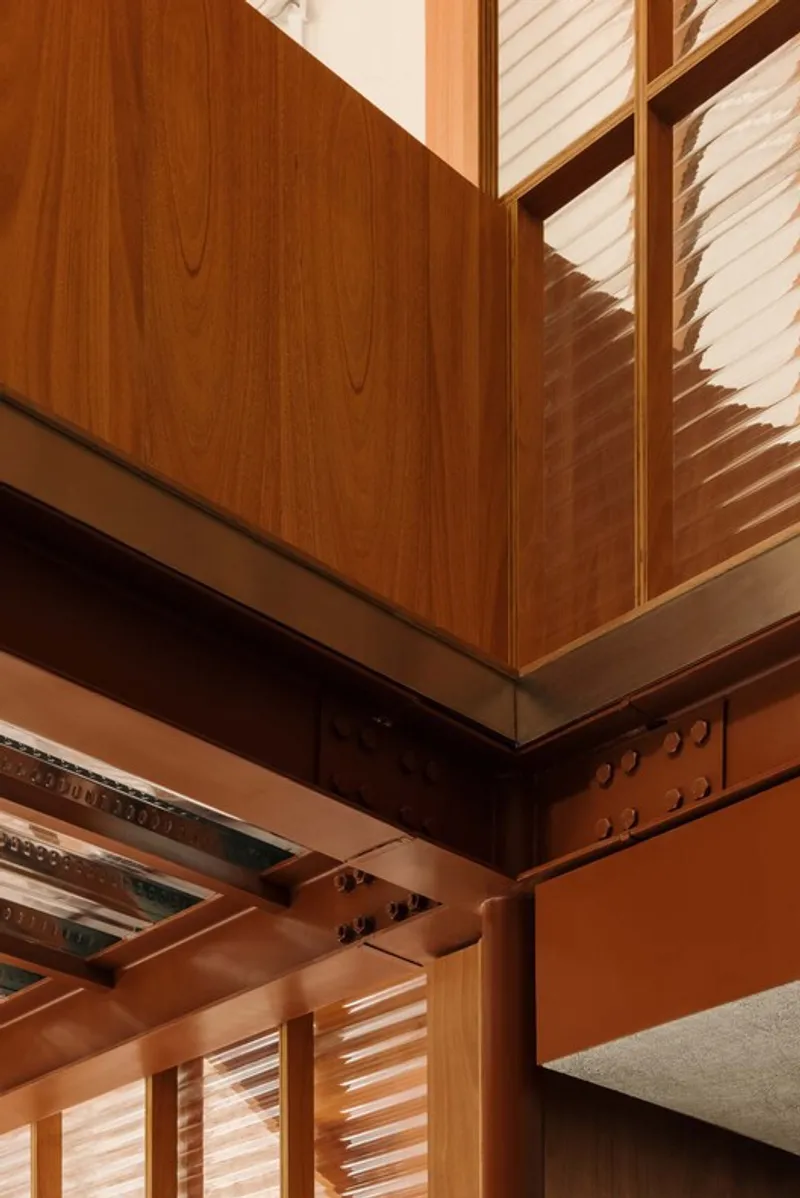
All the photographs are works of Wen Studio


Popular Articles
Popular articles from the community


David Ortega Stacks a Two-Story Mexico City Penthouse Around a Steel Stair and a Pergola-Shaded Roof Terrace
In Colonia Roma, a 300 m² penthouse uses oak joinery, a planted steel stair and a slatted roof pergola to make a new-build apartment feel like a house.

U.GA Architects Wraps an Oval Rooftop Pool in Curved Board-Formed Concrete on Busan's Jeollidan-gil
In Busan's Jeonpo-dong, a 454 m² mixed-use block stacks a neighborhood facility, guest rooms and an oval rooftop pool inside spiraling concrete walls.

LT2A and OPEN Architectes Thread a Brick and Glass High School Through a Wooded Belgian Campus
In Braine-l'Alleud, a 3,000 m² wing for Collège Cardinal Mercier pairs pale brick with a glazed colonnade, deferring to a small chapel and a dense wood.

GROUP A Strips a 1969 Rotterdam Harbor Headquarters to Its Frame and Wraps It in Timber Louvers
In Rotterdam's M4H harbor district, Ferro Offices reuses a 1969 frame, adds one timber storey and reaches BREEAM-NL Outstanding.

Similar Reads
You might also enjoy these articles


Hodi-Mandai Geram
Project Function: Preservation and revitalization of the Intangible heritage and socio-spatial identity of the Hodi by Housing, Cultural Memory Center, Sacred Grove, landscape, local tourism economy


Olio Towers: A Mid-Rise for Performers That Fuses Housing, Rehearsal, and Stage
Located blocks from Houston's Theater District, this modular tower stacks living units around a central performance atrium.

Oasis: Modular Green Housing Carved into Dhaka's Urban Fabric
A shortlisted Plugin Housing entry reclaims unauthorized settlements in Dhaka with stepped concrete volumes, green roofs, and ventilation-driven design.

Black Hole: A Floating Megastructure for the Post-Physical Era
Emiliano Mazzarotto envisions a spherical, self-scaling arena where e-sports, digital hotels, and holographic stadiums replace traditional public space.

Explore Industrial Building Competitions
Discover active competitions in this discipline

Challenge to reimagine the Iron Throne

Photograph architecture without architects

Illustrate the lost glory of Angkor Wat - Render Challenge

Design challenge to reuse E-waste
Comments (0)
Please login or sign up to add comments
No comments yet. Be the first to comment!