

ZOLAND·Emei Resort by Studio J. Bridgland
A boutique mountain resort in Emeishan where restrained architecture, local materials, and forest landscapes create a serene retreat for slow living.


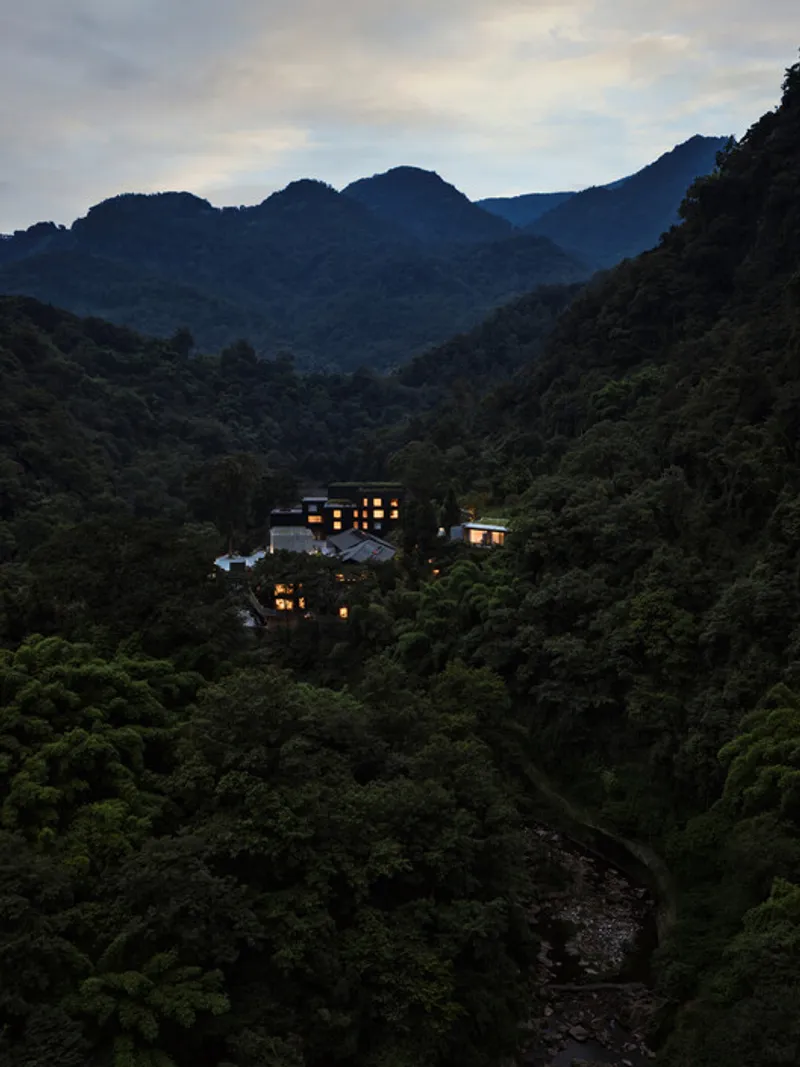
Nestled within the forested foothills of Emeishan, near Leshan in Sichuan Province, ZOLAND·Emei Resort by Studio J. Bridgland (SJB) is a boutique mountain retreat shaped by stillness, restraint, and a profound respect for landscape. Completed in 2025 with a built area of 2,900 m², the resort transforms a collection of dilapidated structures into a contemplative sanctuary where architecture dissolves into terrain, and time itself seems to slow.
Architectural Quietude and Mountain Ritual in the Forests of Emeishan
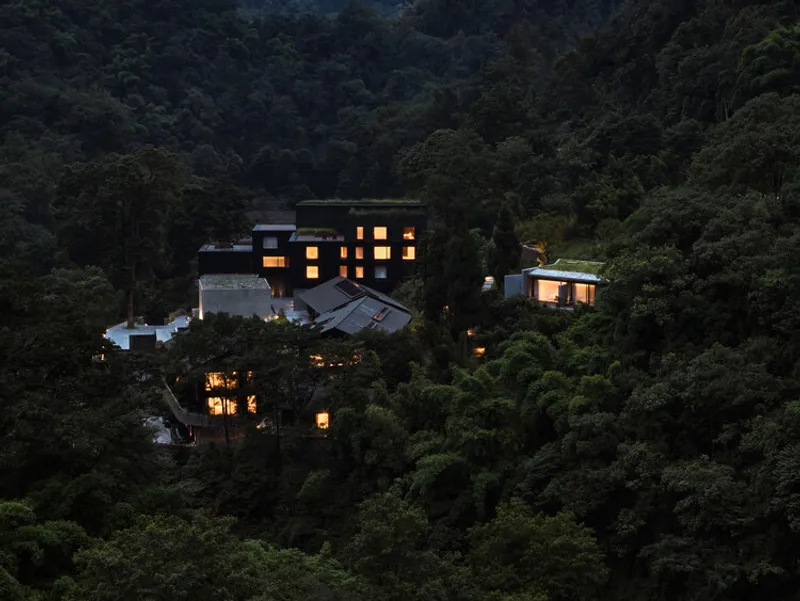
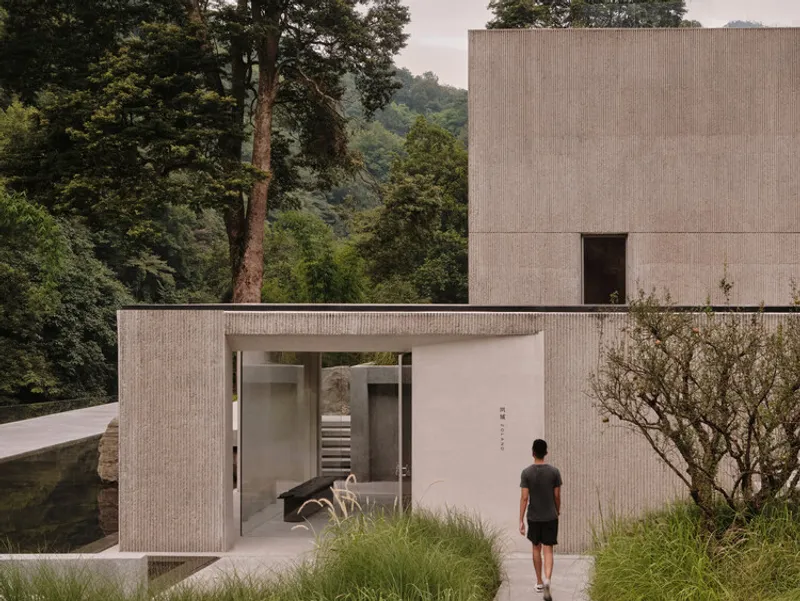
Rather than competing with the dramatic presence of Emei Mountain, one of China’s most spiritually significant landscapes, the project adopts a philosophy of architectural quietude. Buildings recede, materials soften, and spatial sequences unfold gradually, inviting guests into a renewed dialogue with nature and with themselves.
A Landscape-First Approach
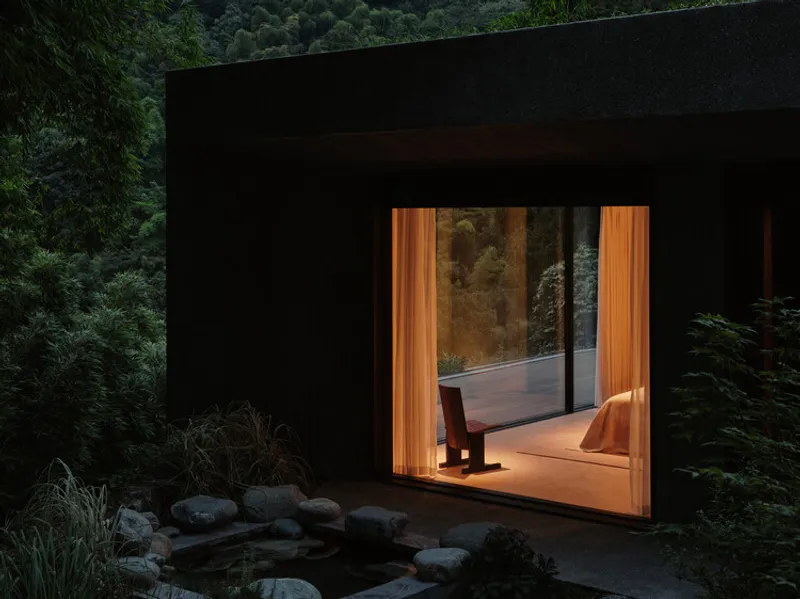
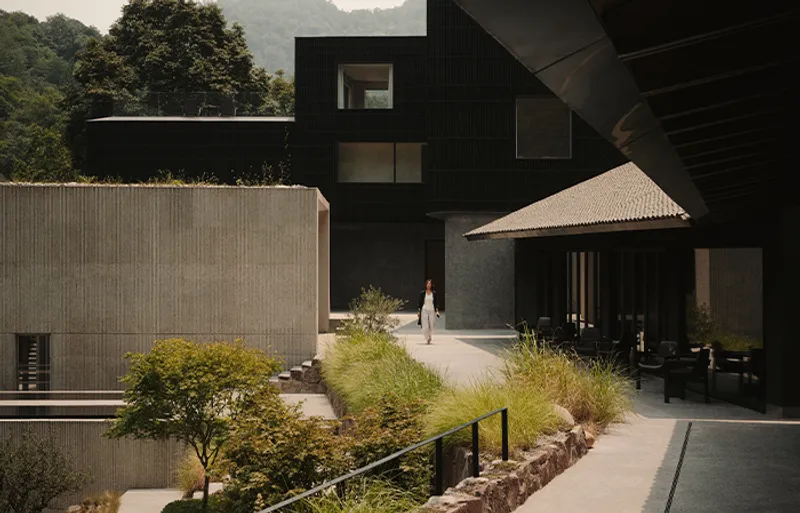
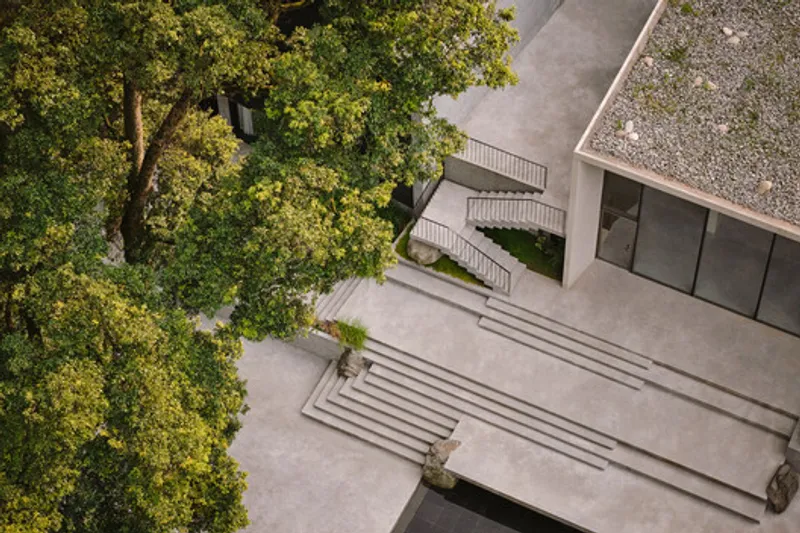
From the outset, the project was guided by a landscape-led strategy. Existing structures on site were not erased but carefully reworked, allowing the resort to emerge organically from its setting. Buildings are arranged in a staggered, village-like composition, echoing the stone settlements historically embedded in Emei’s hillsides.
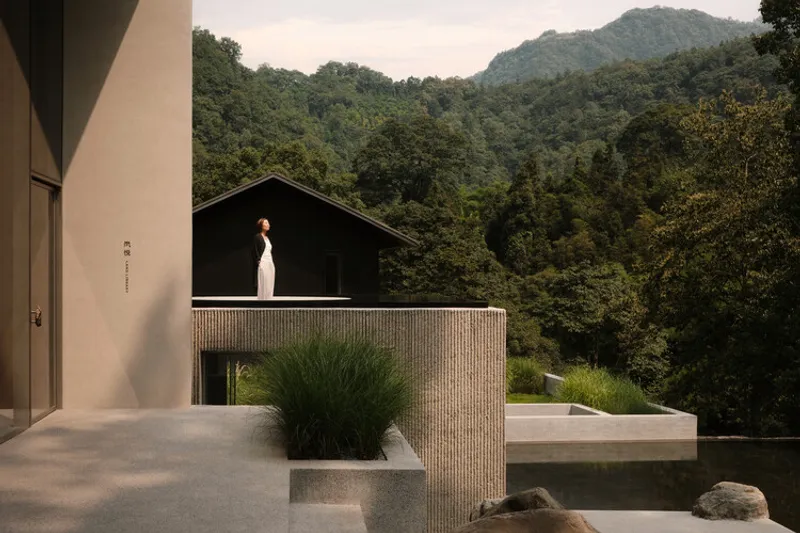
This clustering strategy reduces visual impact, follows the natural contours of the land, and creates a rhythm of arrival, pause, and retreat. Circulation paths weave gently between volumes, reinforcing the feeling of moving through a mountain village rather than a conventional hotel complex.
Reinterpreting Tradition Through Contemporary Form
ZOLAND·Emei draws inspiration from regional architectural heritage without resorting to literal replication. Traditional pitched roofs and deep eaves, long associated with mountain architecture in Sichuan, are reinterpreted with contemporary proportions and detailing.
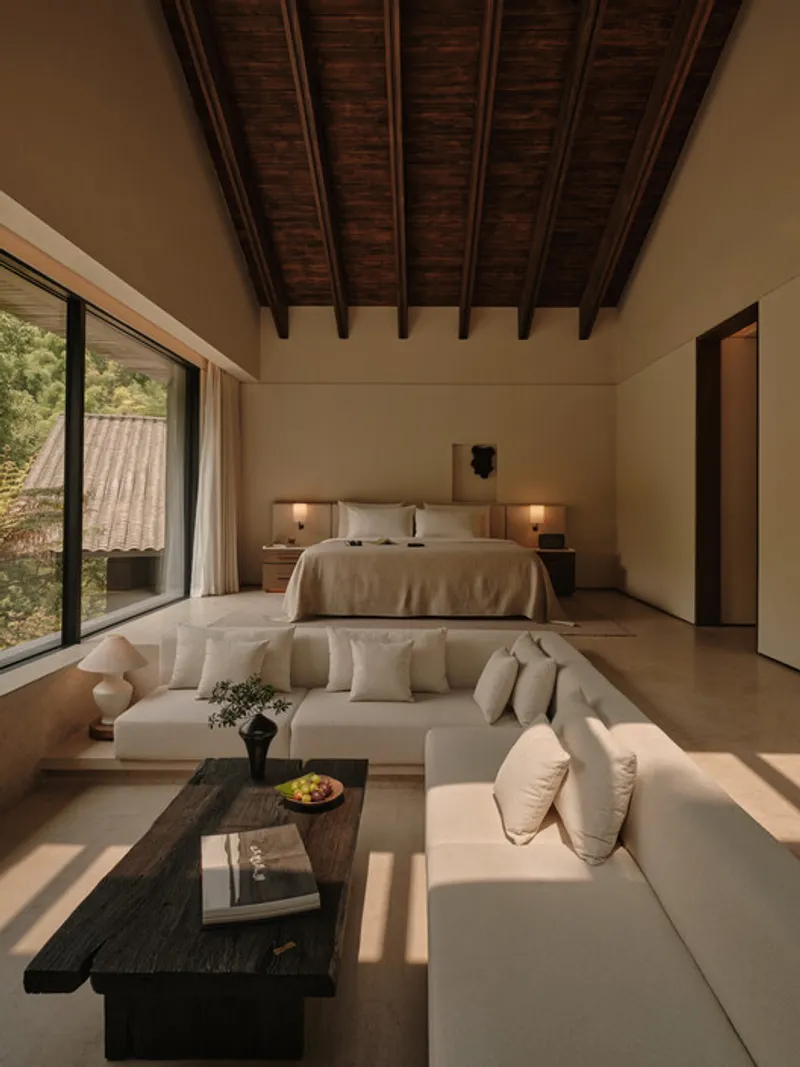
The result is an architecture that feels familiar yet unmistakably modern. Past and present are not contrasted but quietly aligned, allowing cultural memory to surface through form, scale, and material rather than ornament.
Material Authenticity and Tactile Permanence
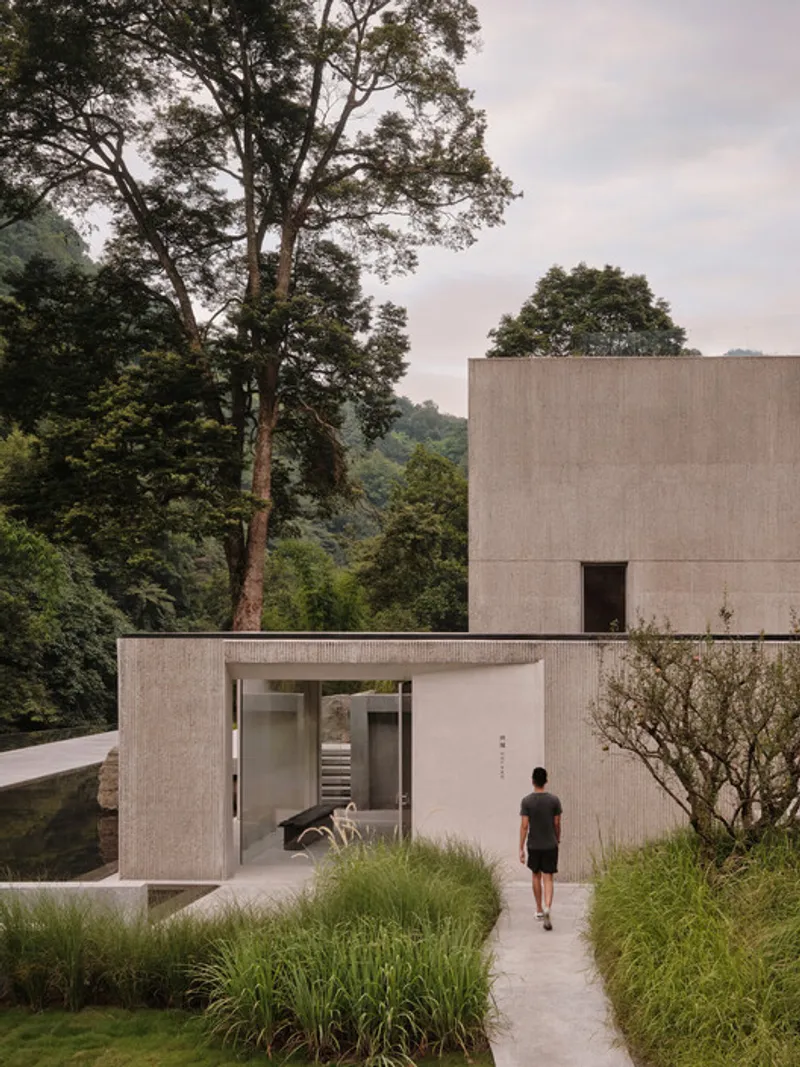
Material selection plays a central role in establishing the resort’s calm, grounded atmosphere. At the entrance, visitors are met by façades formed in hand-chiseled textured concrete. The rough tactility of this surface anchors the architecture in a sense of permanence and craftsmanship, setting a contemplative tone from the first encounter.
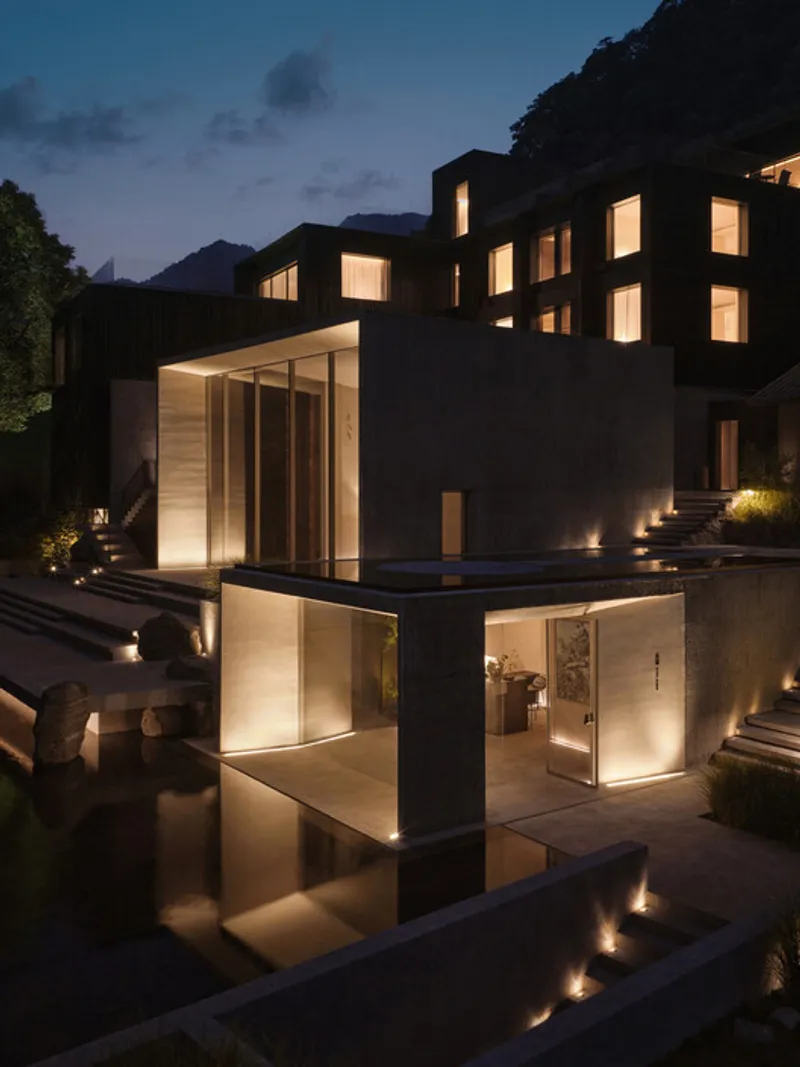
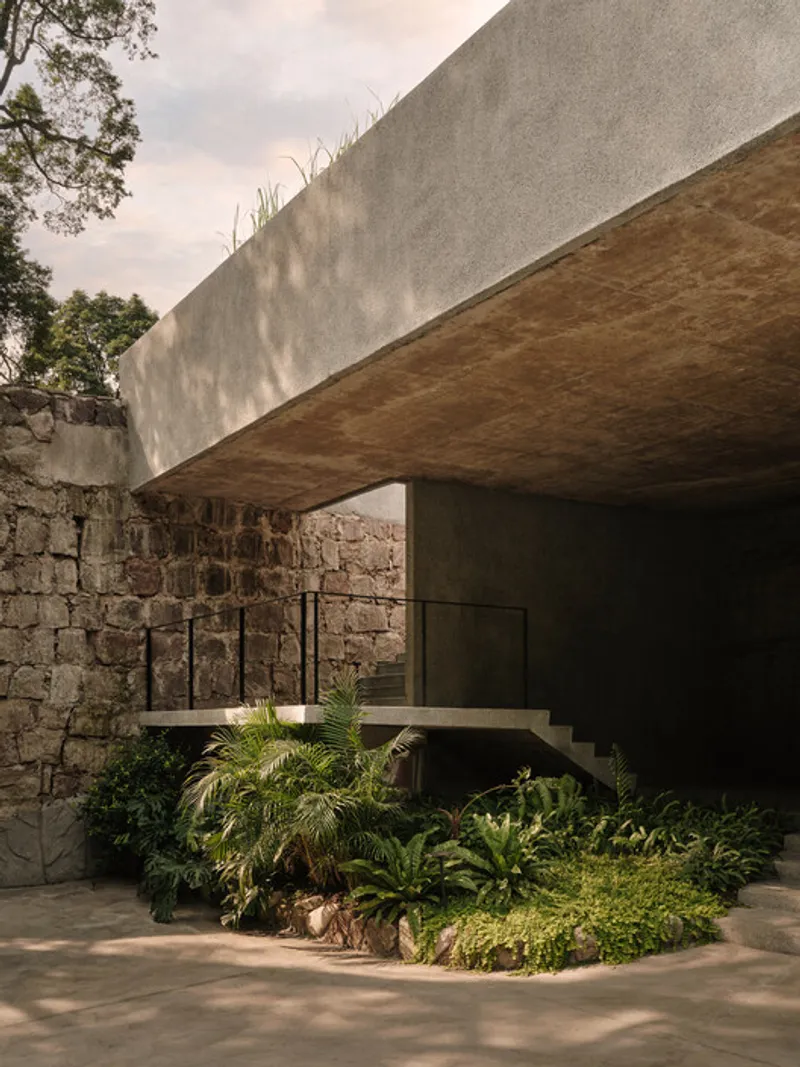
Throughout the resort, materials are used honestly and sparingly. Schist stone sourced from Emei Mountain, traditional Leshan grey roof tiles, warm cedar wood, and washed stone finishes create a restrained palette that resonates with the surrounding geology and vegetation.
These materials are not decorative; they are experiential. Their textures, weight, and aging processes contribute to the resort’s atmosphere of timelessness.
The Courtyard as Spiritual Core
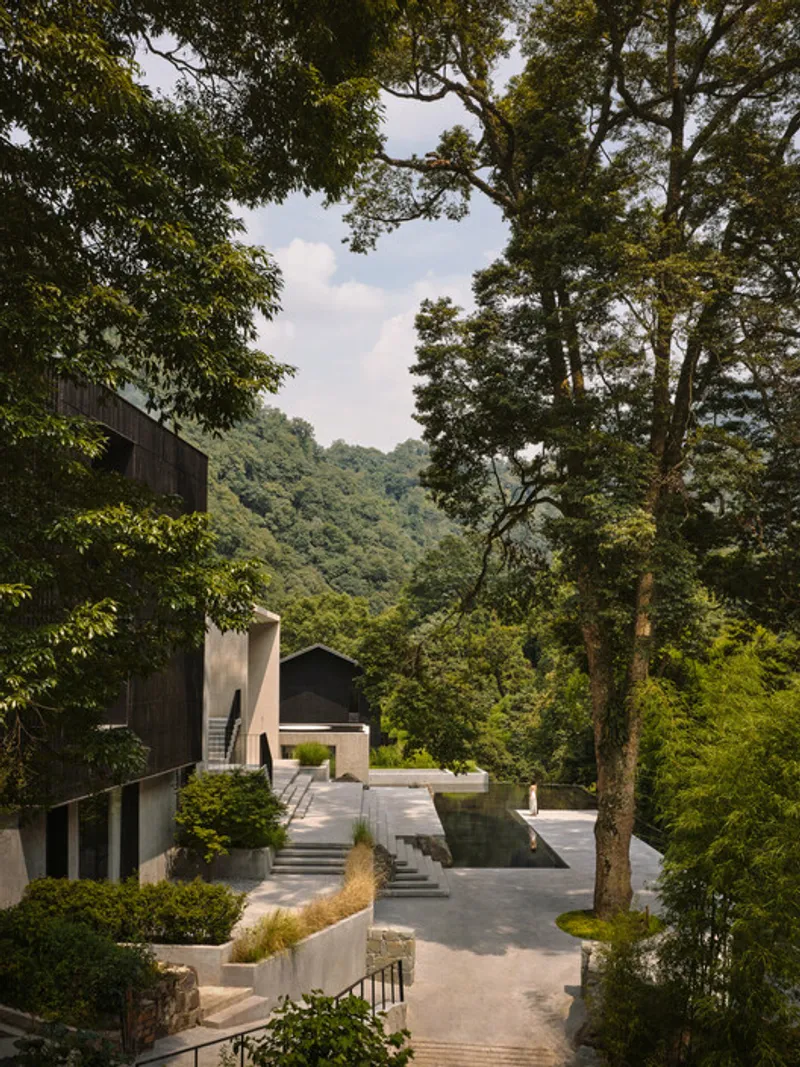
At the heart of ZOLAND·Emei lies a central courtyard, functioning as the social and spiritual core of the resort. This outward-looking space opens toward the mountain landscape, framing views and anchoring the resort in its natural context.
At its center stands an ancient Zhennan tree, encircled by a shallow reflecting pool. As the oldest and tallest tree in the valley, it becomes a living monument, a silent guardian connecting the present moment with deep ecological and cultural time.
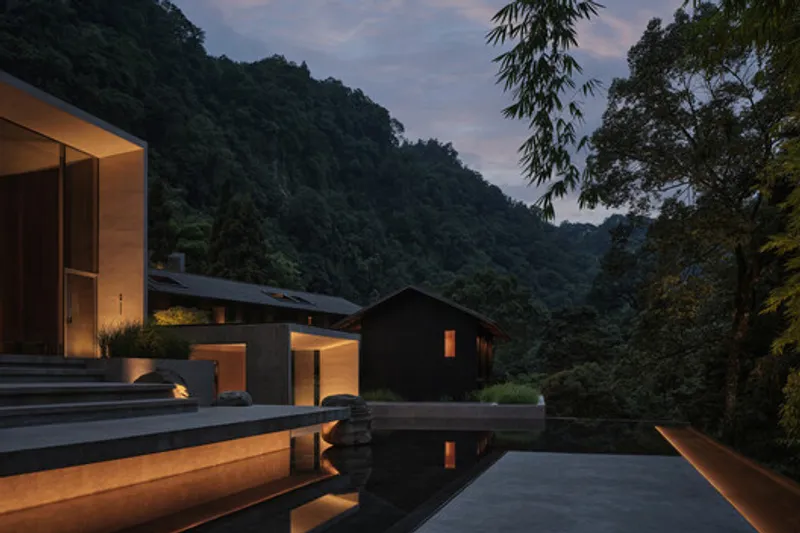
Surrounding spaces are defined by floor-to-ceiling glazing, dissolving boundaries between interior and exterior. Architecture here does not enclose; it frames and reveals, fostering stillness, openness, and awareness of the forest beyond.
Dining as a Ritual of Place
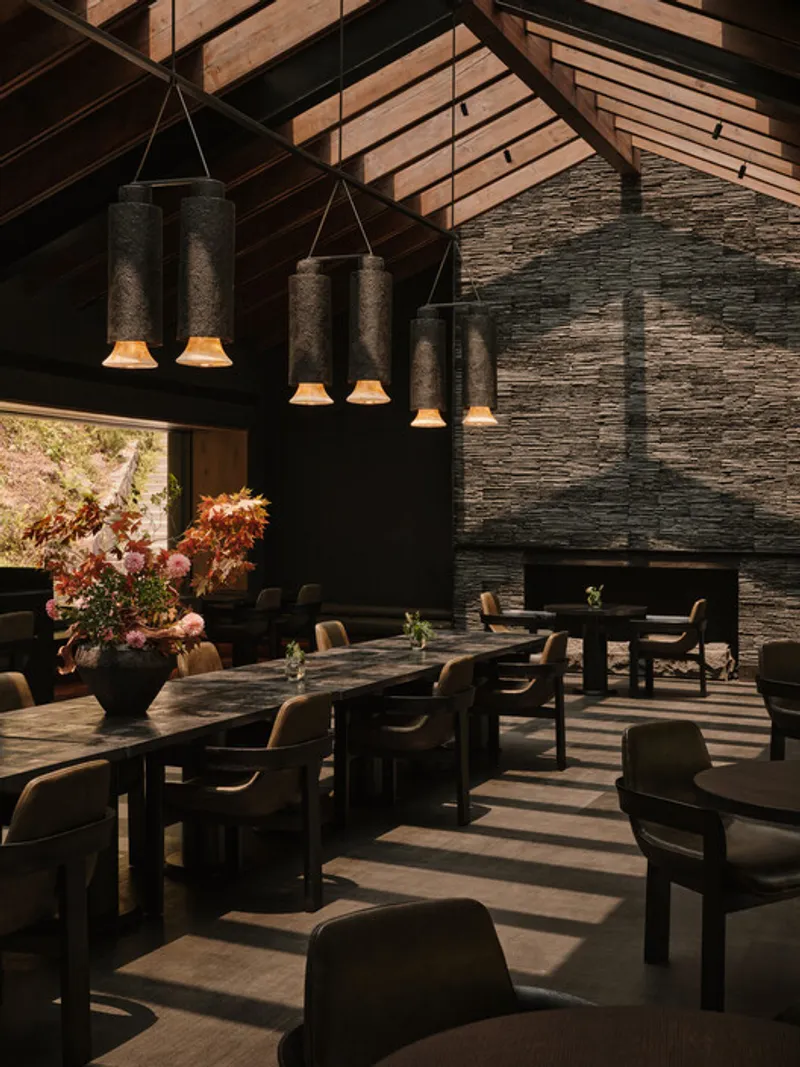
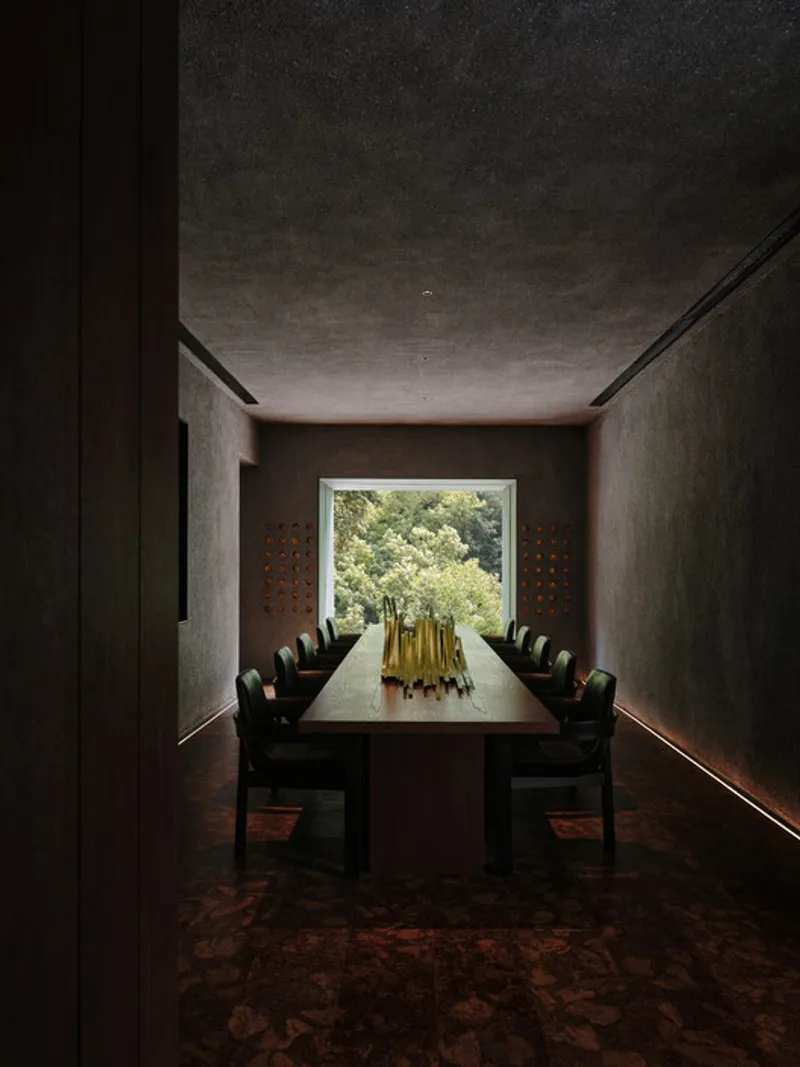
The dining hall exemplifies the project’s synthesis of craftsmanship, structure, and landscape. Externally, its roof is clad in traditional grey tiles, grounding it within regional building traditions. Internally, a rhythmic cedar framework spans the ceiling, introducing warmth, scale, and a subtle sense of ceremony.
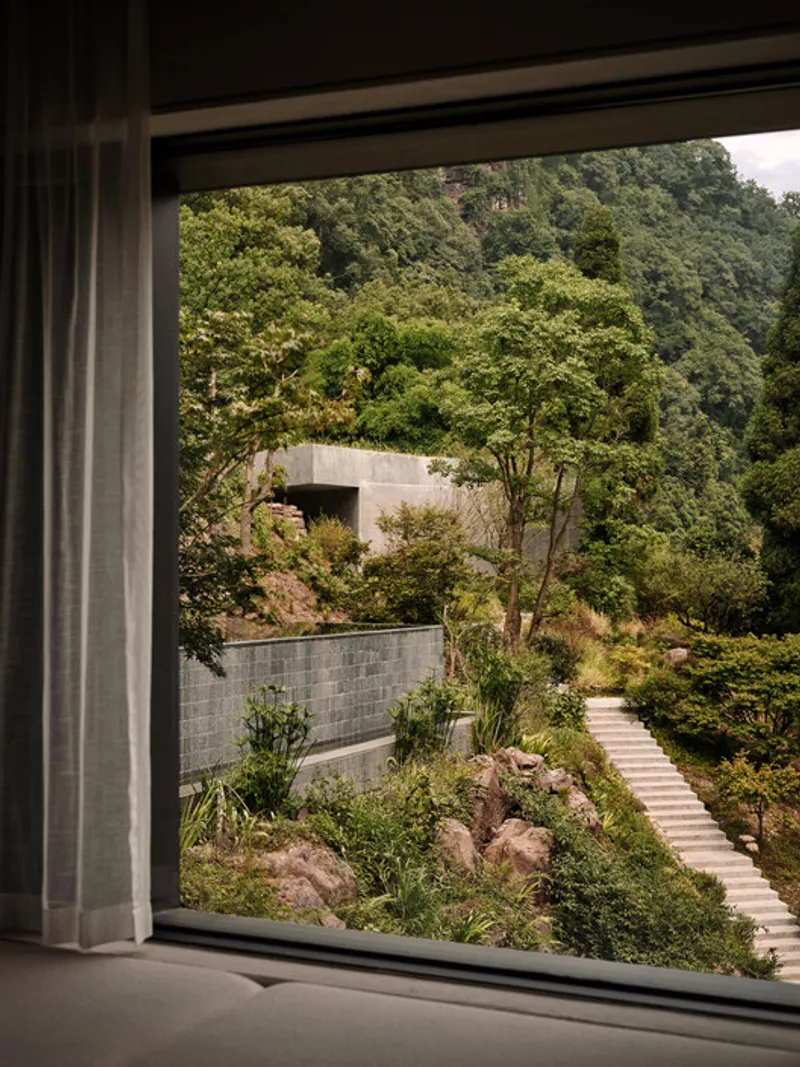
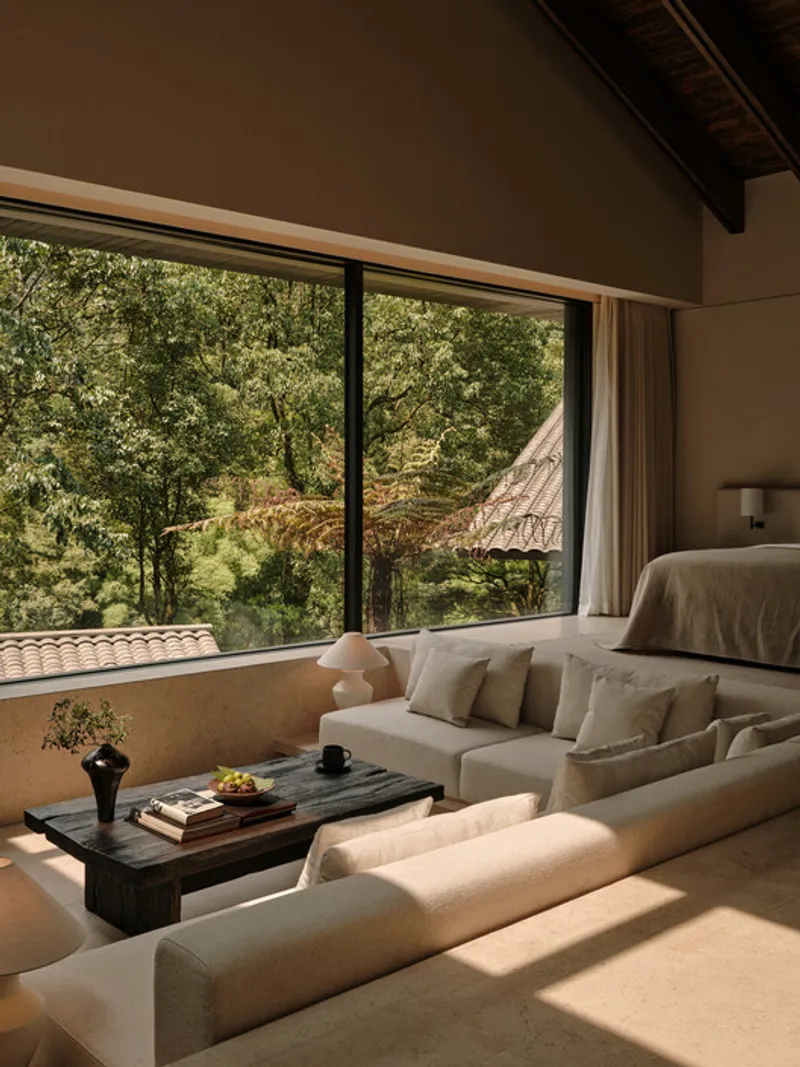
Walls of locally sourced schist stone root the space physically and symbolically in Emei Mountain. Dining becomes more than a functional activity: it is experienced as a ritual embedded within material, memory, and place.
Architecture That Disappears Into the Land
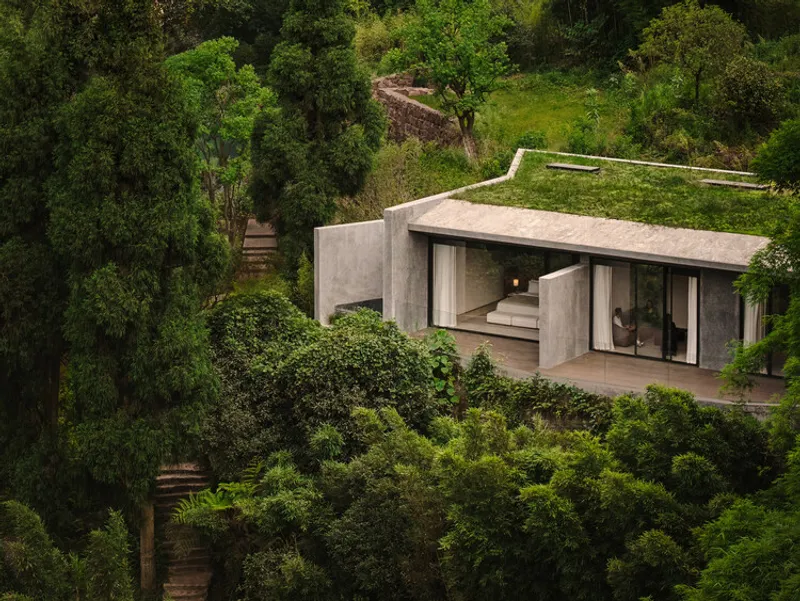
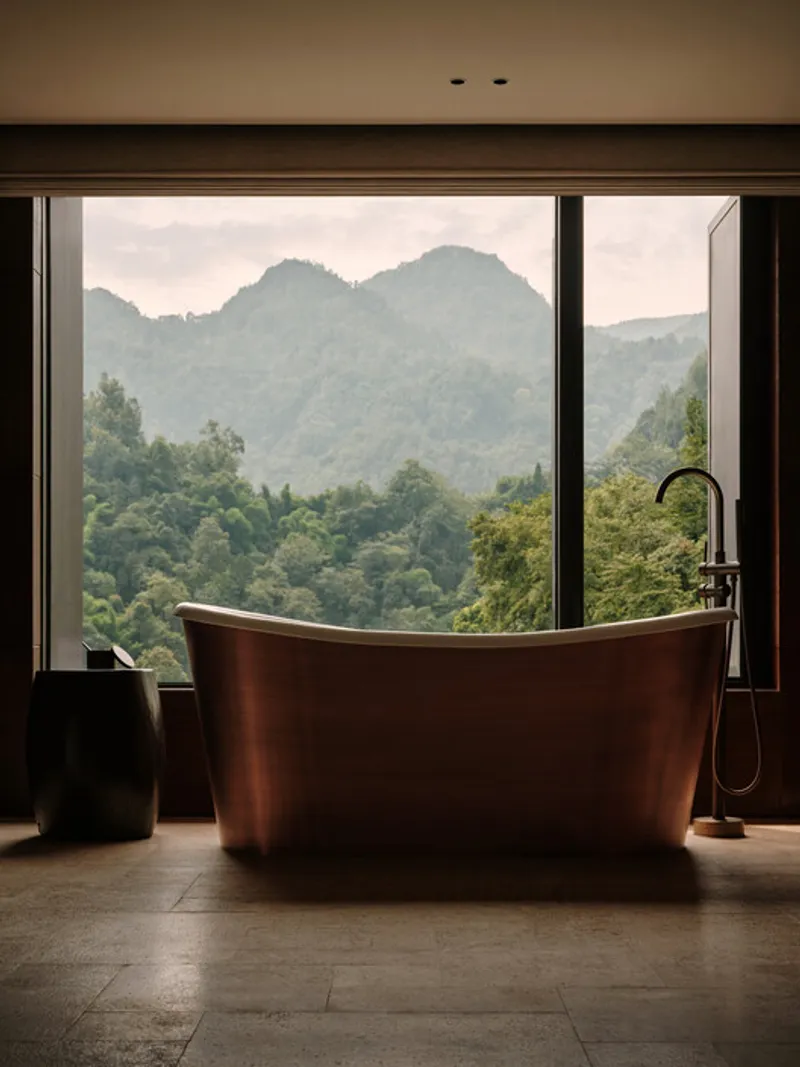
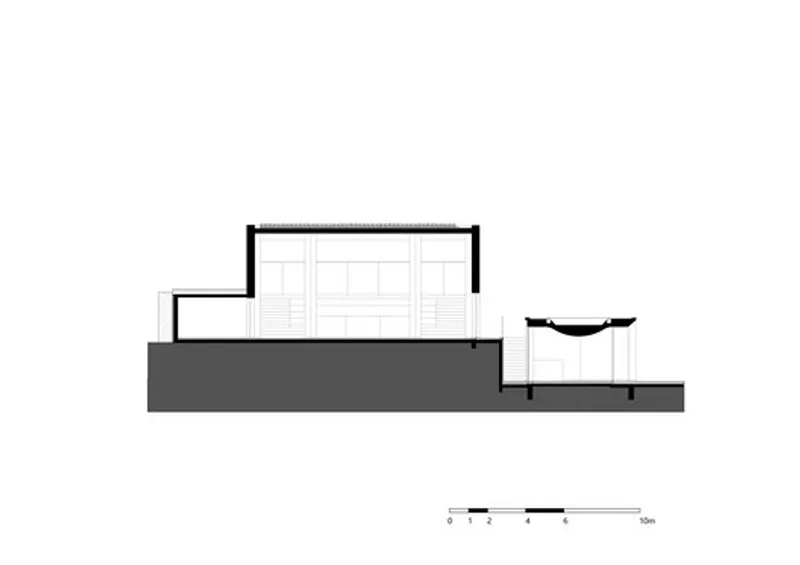
At the highest point of the site, a washed stone-clad structure houses guest suites discreetly tucked beneath a lifted green landscape. From the exterior, the building is almost invisible, merging with terrain and vegetation. From within, expansive glazing frames serene mountain vistas, creating an immersive relationship with the forest canopy.
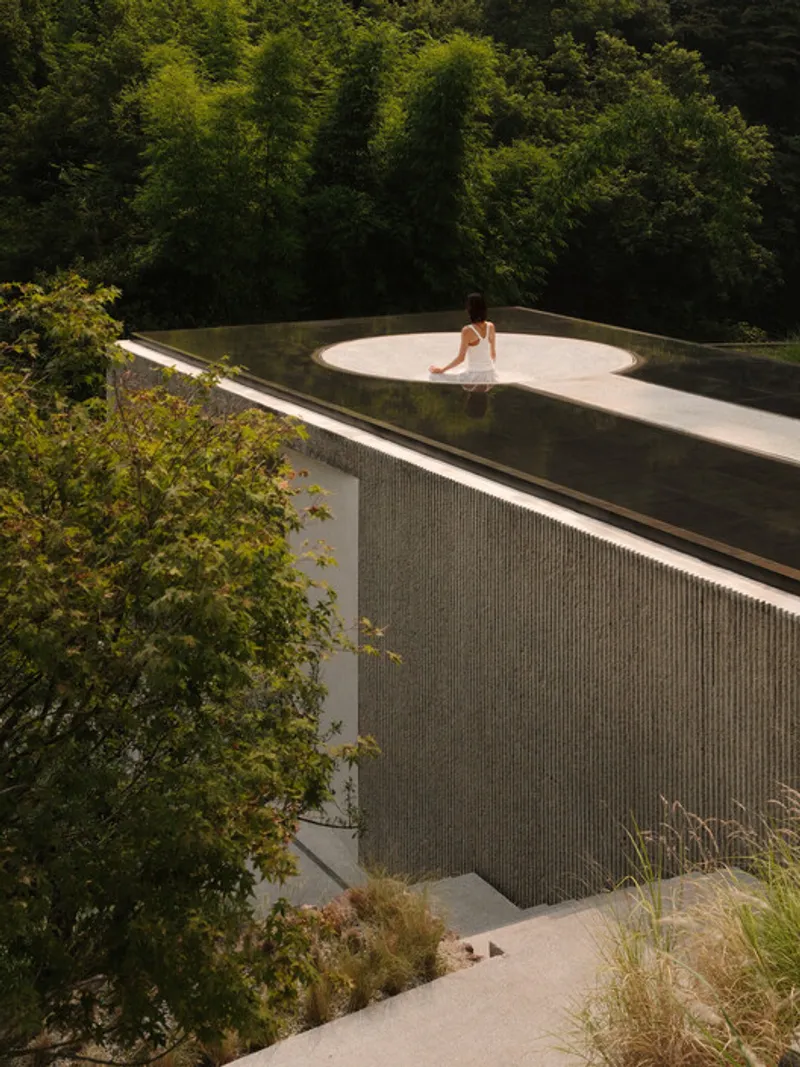
This strategy reflects the resort’s guiding principle: architecture should support experience without asserting dominance. Guests are sheltered, yet continuously aware of weather, light, and seasonal change.
Intimate Interiors and Mountain Bathing
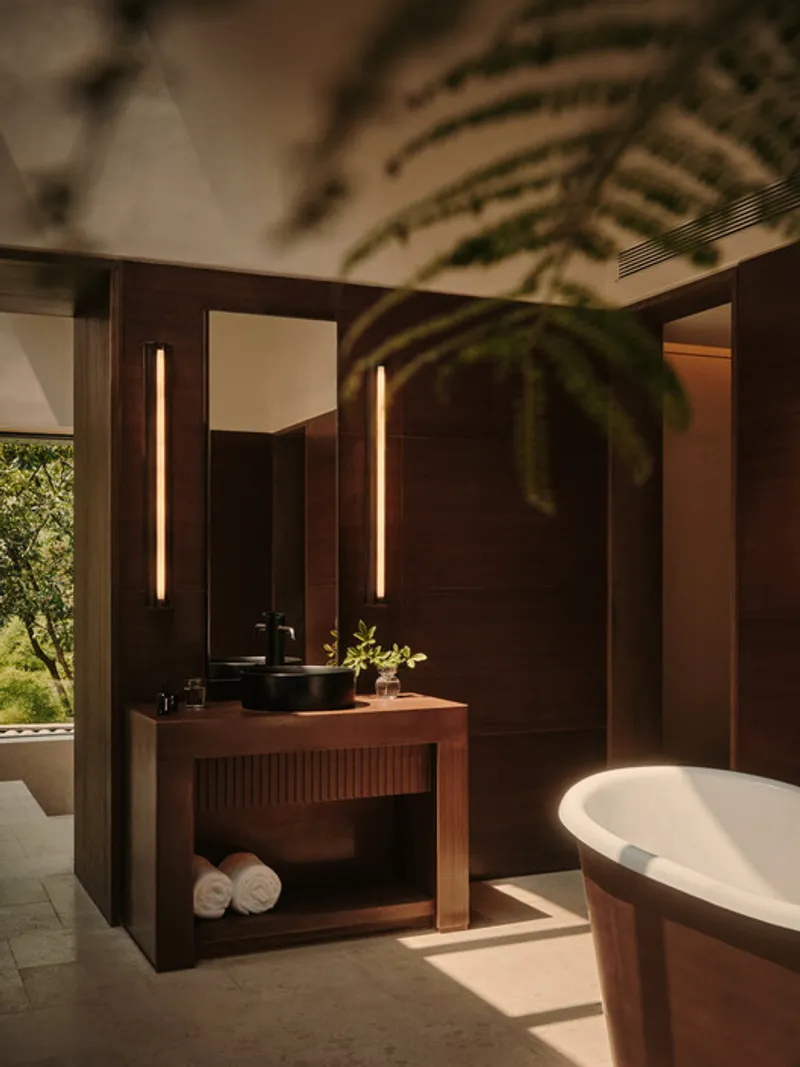
Inside the guest suites, the design language remains calm and tactile. Living spaces are composed of soft tones, natural textures, and carefully controlled light. Bathrooms feature deep red local stone, introducing a sensual, earthy quality that reinforces the connection to land.
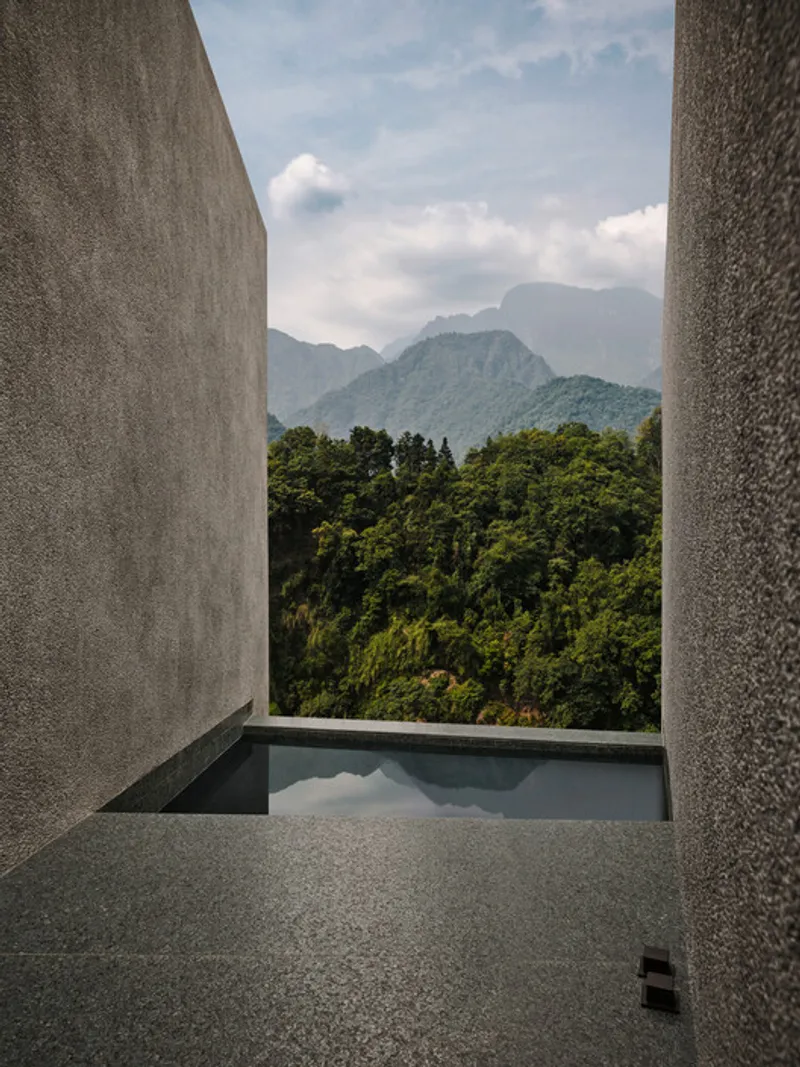
The bathing experience extends outdoors, where a stone pool merges seamlessly with the mountain terrain. Finished in washed stone and green granite, the pool blurs the threshold between architecture and landscape, enveloping guests in sound, texture, and temperature, an intimate immersion in nature rather than a visual spectacle.
Slow Time as Design Philosophy
At ZOLAND·Emei, architecture is guided by the idea of slow time: a deliberate retreat from distraction, urgency, and overstimulation. Spatial sequences are unhurried, views are framed rather than revealed all at once, and materials invite touch rather than command attention.
This slowness is not nostalgic; it is intentional. In an era of accelerated travel and image-driven hospitality, the resort proposes an alternative model: one rooted in presence, awareness, and quiet continuity.
Hospitality as Inner Landscape
ZOLAND·Emei is not designed as a destination to be consumed quickly. It is a place to inhabit, to linger, and to listen: to wind through trees, water in stone, and one’s own rhythm of breath.
Through landscape-led planning, restrained materiality, and an architectural language of calm, Studio J. Bridgland has created more than a hotel. ZOLAND·Emei is a mountain retreat where architecture becomes a medium for reflection, and where the boundary between the inner and outer worlds gently dissolves.
All the Photographs are works of Jonathan Leijonhufvud


Popular Articles
Popular articles from the community


longwave studio Reorganizes a 112 m² Tainan Apartment Around the Daily Routines of a Family and Two Cats
In Tainan, Taiwan, birch plywood, rust-red furniture and a freestanding plaster wall link arrival, storage, work and family life in one apartment.

David Macias Steps a Doorless Stone and Plaster House Down a Tropical Colombian Hillside
In the humid hills of Colombia, Threshold House replaces the front door with an open void and terraces its 850 m² down the slope instead of fighting it.

Cube Design Draws an Ecological Corridor Between Two Shenzhen Hills with the Nankai Building
Beside Shenzhen's container docks, the Nankai Building pairs stacked balconies with a climbing green screen to connect two hillsides across its height.

GROUP A Strips a 1969 Rotterdam Harbor Headquarters to Its Frame and Wraps It in Timber Louvers
In Rotterdam's M4H harbor district, Ferro Offices reuses a 1969 frame, adds one timber storey and reaches BREEAM-NL Outstanding.

Similar Reads
You might also enjoy these articles


Hodi-Mandai Geram
Project Function: Preservation and revitalization of the Intangible heritage and socio-spatial identity of the Hodi by Housing, Cultural Memory Center, Sacred Grove, landscape, local tourism economy


Olio Towers: A Mid-Rise for Performers That Fuses Housing, Rehearsal, and Stage
Located blocks from Houston's Theater District, this modular tower stacks living units around a central performance atrium.

Oasis: Modular Green Housing Carved into Dhaka's Urban Fabric
A shortlisted Plugin Housing entry reclaims unauthorized settlements in Dhaka with stepped concrete volumes, green roofs, and ventilation-driven design.

Black Hole: A Floating Megastructure for the Post-Physical Era
Emiliano Mazzarotto envisions a spherical, self-scaling arena where e-sports, digital hotels, and holographic stadiums replace traditional public space.

Explore Hospitality Building Competitions
Discover active competitions in this discipline

Challenge to reimagine the Iron Throne

Photograph architecture without architects

Illustrate the lost glory of Angkor Wat - Render Challenge

Design challenge to reuse E-waste
Comments (0)
Please login or sign up to add comments
No comments yet. Be the first to comment!