
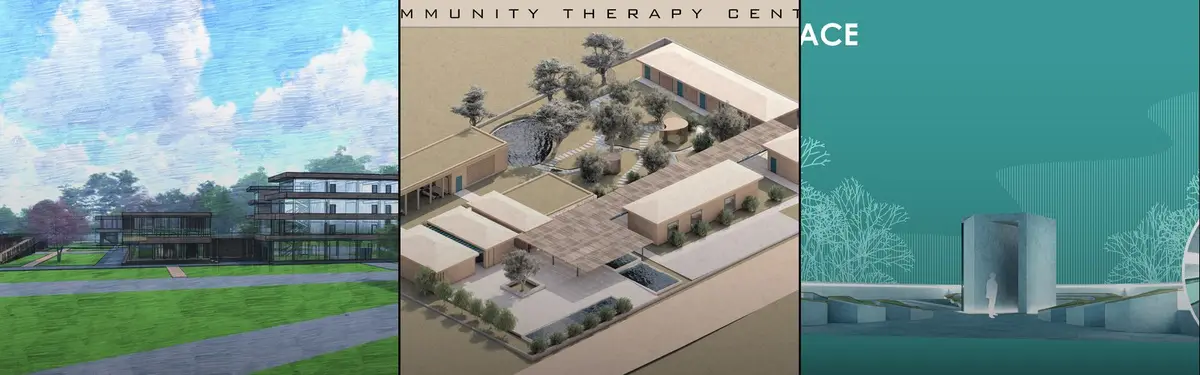


Meditation Space
Designing spaces that support contemplation, mindfulness, and inner peace through architecture and spatial experience.
A meditation space is a room, building or garden designed to help people become quiet, attend to the breath or the mind, and stay with that attention for a while. Its architecture works mostly by subtraction: it holds back noise, clutter and distraction, and gives careful shape to the few things left, such as light, material, sound and the path in.
What is a meditation space?
The term covers a wide range. At one end are dedicated halls for a practice, such as a Zen zendo or the hall of a vipassana centre, where people sit together for hours or days. At the other are small rooms of quiet in hospitals, airports, universities and offices, open to anyone of any faith or none. Between them sit retreats, garden pavilions, tea houses and chapels built for contemplation rather than for a liturgy.
A meditation space overlaps with religious buildings, but it is not the same thing. A church, mosque or temple is organised around a congregation, a ritual and its symbols. A meditation space is organised around a single person's attention, even when many people share it, and it often removes symbols on purpose. It also overlaps with experiential architecture, which uses light, sound and sequence to create strong sensations. The difference is the goal: meditation spaces aim to calm the senses rather than stimulate them, and a successful one is often hard to photograph because so little happens in it.
For a designer, the brief is unusually abstract. There is rarely a list of rooms, only a state of mind to support. That makes the basic tools of architecture (enclosure, threshold, daylight, proportion and material) carry almost all the weight.
A short history of meditation spaces
Many traditions built rooms for sitting still long before modern architecture. In Zen Buddhism, the zendō is a meditation hall where zazen, sitting meditation, is practised; a full temple typically has at least one alongside its main hall, though any place where people practise Zen can be called a zendō. The hall at Tōfuku-ji in Kyoto is a well known historic example.

The twentieth century added a new kind of room: one for silence that belongs to no single faith. At the United Nations headquarters in New York, Dag Hammarskjöld personally planned the Meditation Room, reopened in 1957, with benches instead of chairs and a block of iron ore lit by a single beam as its only symbol, as the UN library's account of "A Room of Quiet" records.
"We all have within us a center of stillness surrounded by silence."
Dag Hammarskjöld, text for visitors to the UN Meditation Room (1957)
In Houston, John and Dominique de Menil commissioned Mark Rothko in 1964 to create a meditative space filled with his paintings. The Rothko Chapel, completed in 1971, is a non-denominational chapel whose plan, an octagon inscribed in a Greek cross, was largely shaped by the artist after disputes with Philip Johnson and work with Howard Barnstone and Eugene Aubry. Inside, fourteen dark paintings line the walls.

Later landmarks include Tadao Ando's Meditation Space at UNESCO in Paris, completed in 1995, the year he received the Pritzker Prize. Since the late 1980s, according to the Wikipedia overview of multifaith spaces, quiet rooms for people of differing beliefs, or none, have spread through hospitals, universities and airports.
Key principles of meditation space design
Threshold and sequence
Few people can step from a busy street straight into stillness. Good meditation spaces stage the arrival: a gate, a narrowing, a turn, a change of floor or light, a place to leave shoes or bags. The sequence slows the body before the room asks the mind to slow down.

INTROVERSE, a project for a park in Beijing, makes this its whole idea: a spiral form evokes the journey a person makes toward the central space. Facing Nature by Lucy Bambers and Jay Patel begins with a threshold where visitors deposit material things before an underground route leads past circular courtyards to meditation pods.
Light
Light is the most powerful material in a quiet room. Controlled daylight from above or from one side gives the eye something slow to follow, and it changes with the hours without any noise. Ando built a career on this, and his Pritzker profile records his reasoning.
Silence and acoustics
Silence is a rule in many practices. On the ten-day vipassana courses run by dhamma.org centres, students keep Noble Silence, described as silence of body, speech and mind, from the start of the course until the morning of the last full day. Architecture supports this with thick walls, earth cover, buffer rooms, soft floors and a distance from roads. SHIELD, an Editor's Choice entry in the Faith competition, sets up two contrasting levels: a lower one isolated from noise and protected from the city, and an upper green roof that opens the view to the park.
Material and scale
Natural, unfinished materials (timber, earth, stone, plaster, concrete) hold light softly and age without drawing attention. Scale matters as much: a meditation room is usually intimate, sized to a person or a small group, with a ceiling high enough to breathe but not so high that it turns into a spectacle.

MUSE (ミューズ) states this principle directly: a place of meditation where the construction is mitigated by sensory inputs and close attention to human scale.
Nature and emptiness
Many projects borrow a tree, a pool or a framed piece of sky as the single object of attention. Others go further and make emptiness itself the subject, as Hammarskjöld did when he quoted the saying that the sense of a vessel is not in its shell but in the void.
Meditation spaces on uni.xyz
The uni.xyz community has explored meditation spaces mostly through competitions such as Faith, Pause and Solace, and through journals on built retreats. The work ranges from a single pod to whole landscapes.
Mellow by Samhita Shyam, Sanya Kakkar, Sanjana SachinSapre and Adviti Damodar is the most liked project in this topic and an Editor's Choice in the Solace competition. It is a reading pod that also serves for sleeping, working and meditation, and it represents the moment of stepping out of a busy routine into solitude and calm.

INTROVERSE, an Editor's Choice in the Faith competition, creates a secluded space in a Beijing park that shields people from the busy city and invites each person to find their own expression of faith. ISOLATION MOMENTUM by Isidora Mejias and Anais Haddad, another Editor's Choice in the same competition, starts from the observation that faith is not fundamental for everyone, and offers several different settings in the park where each visitor can escape in their own way.
Sunyata by aos8510, a shortlisted entry in the Pause competition, removes the centre of a plain rectangular volume to leave a circular courtyard, turning the Buddhist idea of emptiness into a room you can walk through. Its uni.xyz journal notes that it avoids monumental gestures and overt religious symbols and relies instead on proportion, daylight, planting and controlled views.

The journals add built examples. The Folly by Tarek Shamma in Melides, Portugal, is a 130 square metre concrete pavilion with no program beyond contemplation and meditation, made from a client brief that asked for exactly that. Mahamudra Hall by ABARI, about an hour from Kathmandu, is a 600 square metre meditation hall whose six-tiered roof of local bamboo rises 16 metres.

RESP Studio's meditation retreat near Quanzhou turns a decommissioned bus station into tea houses, a vegetarian restaurant and contemplative rooms that act as a threshold between the road and an ancestral hall dating to the Northern Song Dynasty. At the smallest scale, the Tea House Pavilion by Grau Architects in Český Těšín seats six people in 9 square metres beside a reservoir, and guests bow under a low beam to enter.
Challenges and future directions
The hardest brief is the shared quiet room. A space for every faith and none must avoid favouring any tradition, and the easy answer is a bland box. The architect Andrew Crompton, quoted in the multifaith space overview, sums up the common result.
"A windowless white room with a few religious texts on a shelf and the paraphernalia of religion, when not actually in use, kept out of sight in boxes."
Better answers use the tools above: daylight, a considered threshold, good acoustics, a view of a tree or the sky, and storage that makes the room easy to set up for different practices, including floor sitting, chairs and space for prayer mats.

Cities bring their own problems: noise, lack of space and the cost of land. Small pavilions in parks, rooftop gardens and pods inside offices are partial answers, and competition entries such as PAUSE in the Garden of water lilies, a winning entry in the Pause competition, invite everyone to become one with nature in a garden. Accessibility is often forgotten in rooms built for sitting on the floor, and a space meant to calm people must also work for wheelchair users, older visitors and people with sensory sensitivities. Finally, the language of mindfulness is easy to borrow for marketing; the real test is whether a room is genuinely quiet, well lit and calm to be in.
Meditation spaces for students and designers
A meditation space suits a short design studio or a thesis because the program is small and the experience is everything. Strong angles include a quiet room inside a hospital or airport, a retreat built from local materials, a garden pavilion for a dense neighbourhood, or the reuse of a leftover urban building, as RESP Studio did with its bus station. Test ideas in section and with physical models in daylight, because light and sound are hard to judge on screen.
Related topics on uni.xyz include meditation centres, sacred space and healing architecture, and new briefs appear regularly on uni.xyz competitions.
Frequently asked questions
What makes a good meditation space?
A good meditation space is quiet, softly and steadily lit, comfortable to sit in for a long time and free of visual clutter. It usually has a clear threshold that separates it from busy surroundings, natural materials and a scale close to the human body. A single focus, such as a window onto a tree or a patch of sky, often helps.
What is a zendo?
A zendō is a Japanese meditation hall where zazen, or sitting meditation, is practised in Zen Buddhism. A full Zen temple usually has at least one zendō beside its main hall, but any place where people gather to practise Zen can be called a zendō.
What is a multifaith or quiet room?
A multifaith space is a quiet room set aside in a busy public place, such as a hospital, university or airport, where people of any belief or none can spend time in contemplation or prayer. Most are small and largely unadorned so that they can be adapted to different practices.
Why is the Rothko Chapel important for meditation spaces?
The Rothko Chapel in Houston, completed in 1971, was commissioned as a meditative space and became a non-denominational chapel described as open to all religions and belonging to none. It showed that a modern room built around fourteen dark paintings could serve contemplation without belonging to a single religion.
References and further reading
- "A Room of Quiet": The Meditation Room, United Nations Headquarters, United Nations Dag Hammarskjöld Library
- Tadao Ando, 1995 Laureate, The Pritzker Architecture Prize
- The Code of Discipline, Vipassana Meditation (dhamma.org)
- Tadao Ando, Wikipedia
- Rothko Chapel, Wikipedia
- Zendō, Wikipedia
- Multifaith space, Wikipedia


Popular projects
View all 49 projects


Latest journals
View all 44 journals
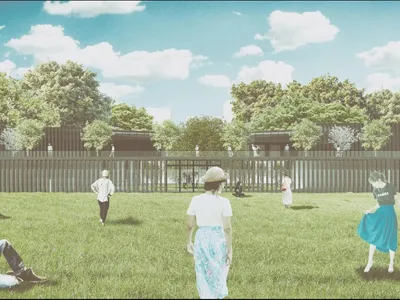
Sunyata: A Meditation Center That Builds Its Calm Around a Circular Void
A shortlisted Pause entry that carves a circular courtyard from a simple site-derived mass, turning Buddhist emptiness into a space you can walk through.

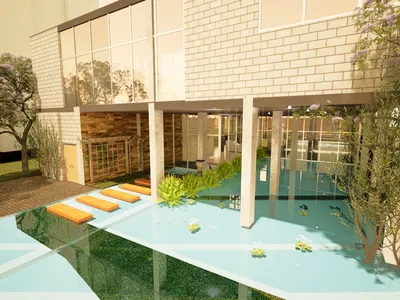
Layers of Healing Through Three Levels
Layers of Healing Through Three Levels
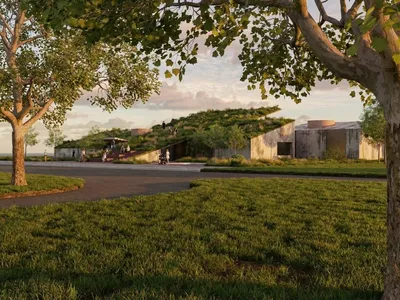

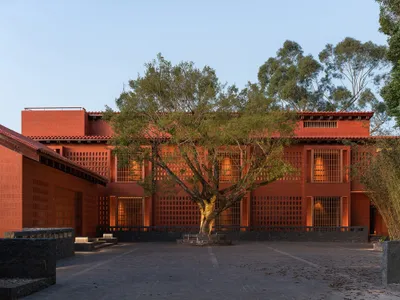
RESP Studio Wraps a Meditation Retreat in Red Tile and Mist on a Thousand-Year-Old Mountain
A decommissioned bus station in Quanzhou becomes a contemplative retreat woven into forest, stone, and Song Dynasty heritage.


