

Moontrip
Architectural and spatial design projects exploring lunar themes, immersive learning environments, and cosmic experiences.

Moonchild
Architecture that inspires new generations to make them want to explore the moon and be an astronaut


MOONTRIP Interactive Space Education Center
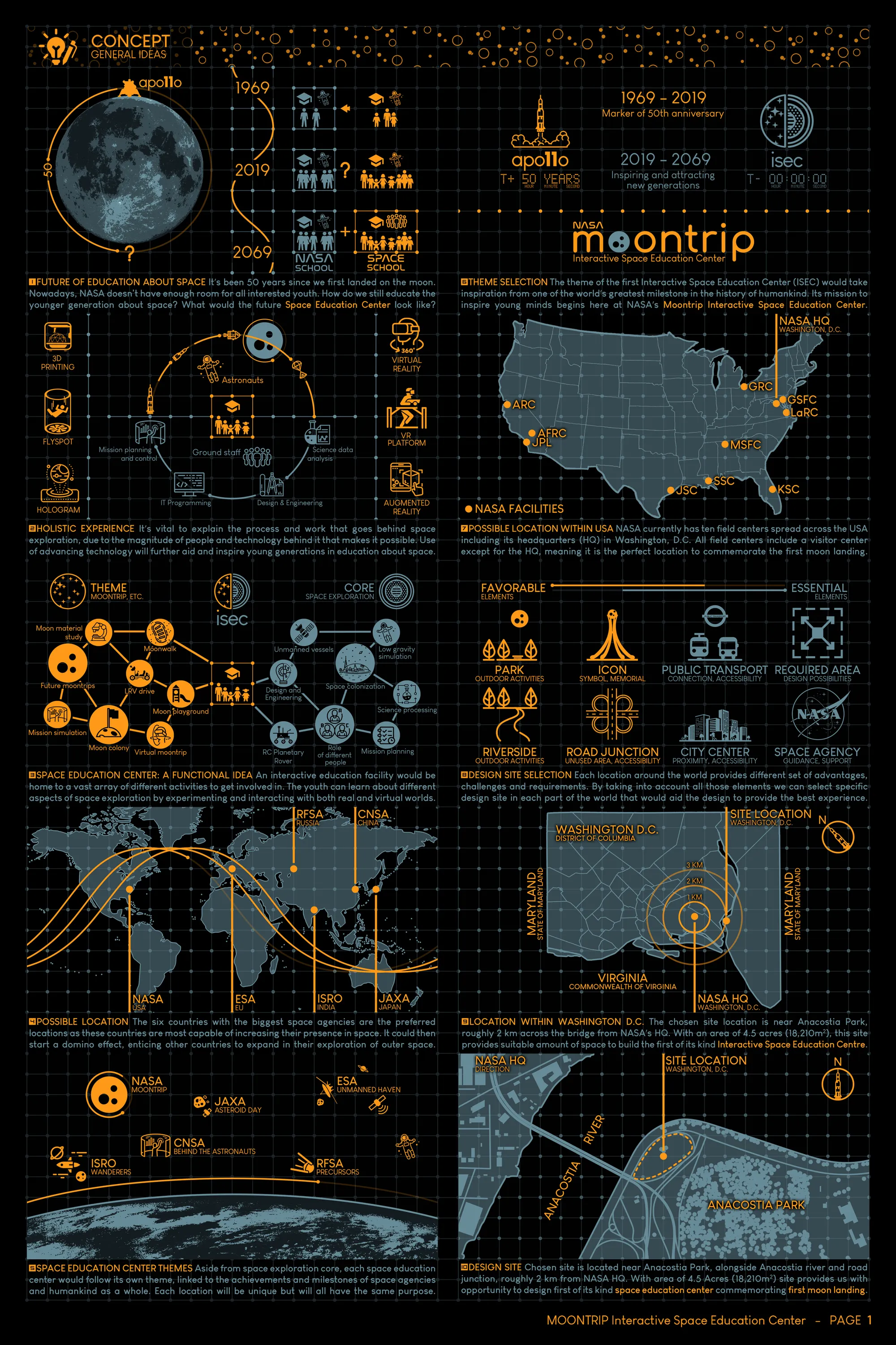
It's been 50 years since we first landed on the Moon. What would the future of space education look like in the next 50 years? Interactive environment, taking advantage of rapidly developing technologies to inspire and educate young generations about space exploration, role of different people, but also commemorate great milestone of humankind - first ever l

Wonderfully experiential.

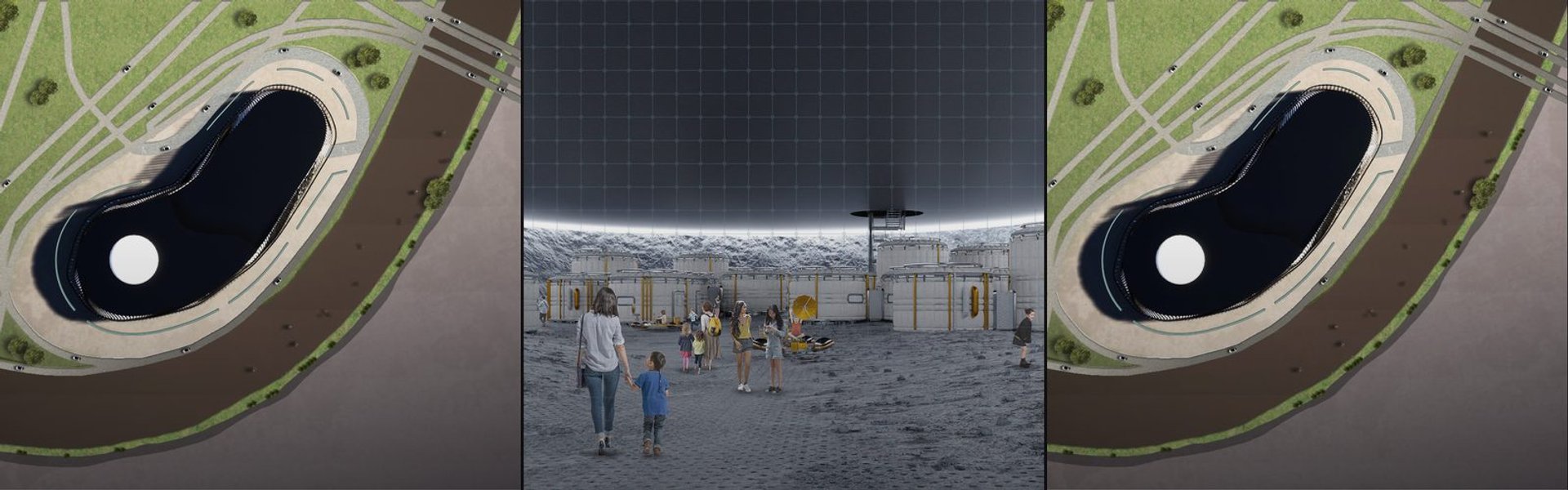
I am extremely pleased with the attention to detail in creating a complete story and encapsulated aesthetic in this presentation. It's immediately obvious how the building concept was arrived at, how that concept is something intellectually accessible to the public, how it is a celebration of lunar landings, and how it is forward-looking toward inspiring future generations. I especially appreciate dividing the building into multiple levels that can occupy the same space but exist tonally independent of one another. A simulacrum of the lunar surface, rendered large, is a perfect environment for enticing a child's imagination, especially when supplied with the visual props of habitat modules. A minor critique however is that the modules are unlikely to be large enough in the as-presented planform for many of activities planned for them. I would love to see if this concept could be taken further to create a similar space to the lunar surface focused instead on orbital habitats. Achieving a generative concept that leads the imagination towards a conversation full of new ideas is difficult and uncommon, and this presentation does it.
Moon Trip Centre
From the eternal rotation of planets around the sun, to the gravitational orbit of space crafts and space stations, a circle's infinite nature represents life and exploration. This project draws its form from the idea that the study of circles has inspired the advancement of geometry, astronomy, and calculus, evoking the will to learn and explore.
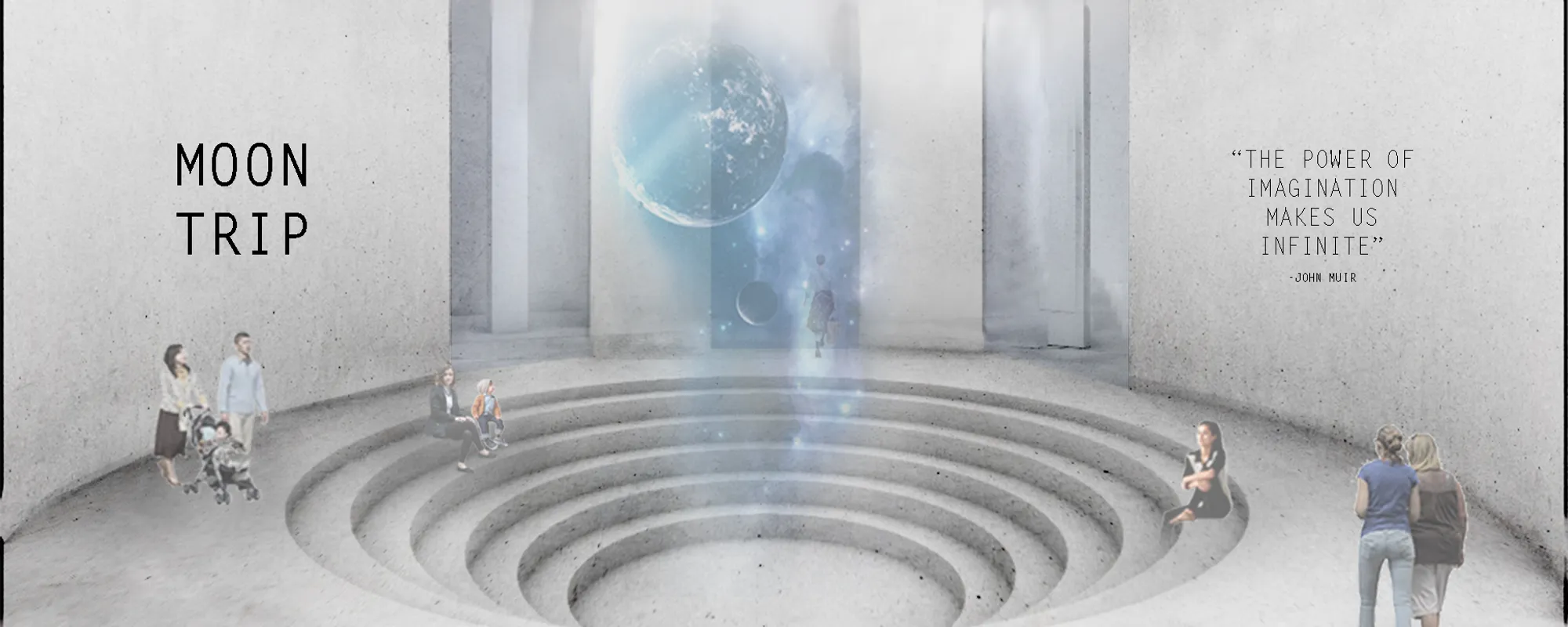
The juxtaposition of the circles (and ellipses) is a great concept. The strength of such a formal presentation suggests thoughtful use circle as a representation of something that is not described. I would have enjoyed more insight into the choice of circle(s) and the deeper relationships.

It is simple form of architecture in my personal opinion. We wished to see more symbolic form from the Moon exploration. However, we could see very serious consideration on various experiences and programmes for different age groups, for exemple, air training simulation, Mars rover pavilion and Moon walk zone. Those interactive and physical experiences reinforce our imagination above the visual experience. I think, it would be worth to upgrade the Moon walk zone to Moon-Mars walk zone where the users feel different gravities. ( It shouldn’t call zero gravity chair because there is a 1/6 gravity on the Moon ) ;) Very nice work!

Moontrip Pantheon: A Lunar Temple Reimagined as Immersive Learning Complex
Blending golden ratio geometry with interactive science halls, a circular campus transforms space exploration into spatial narrative.


Moonchild: Mirror Facades and Lunar Illusions Shape a Children's Space Museum
Curved mirrored surfaces angled at 15 degrees create a shifting facade that simulates the Moon's orbit for young explorers.

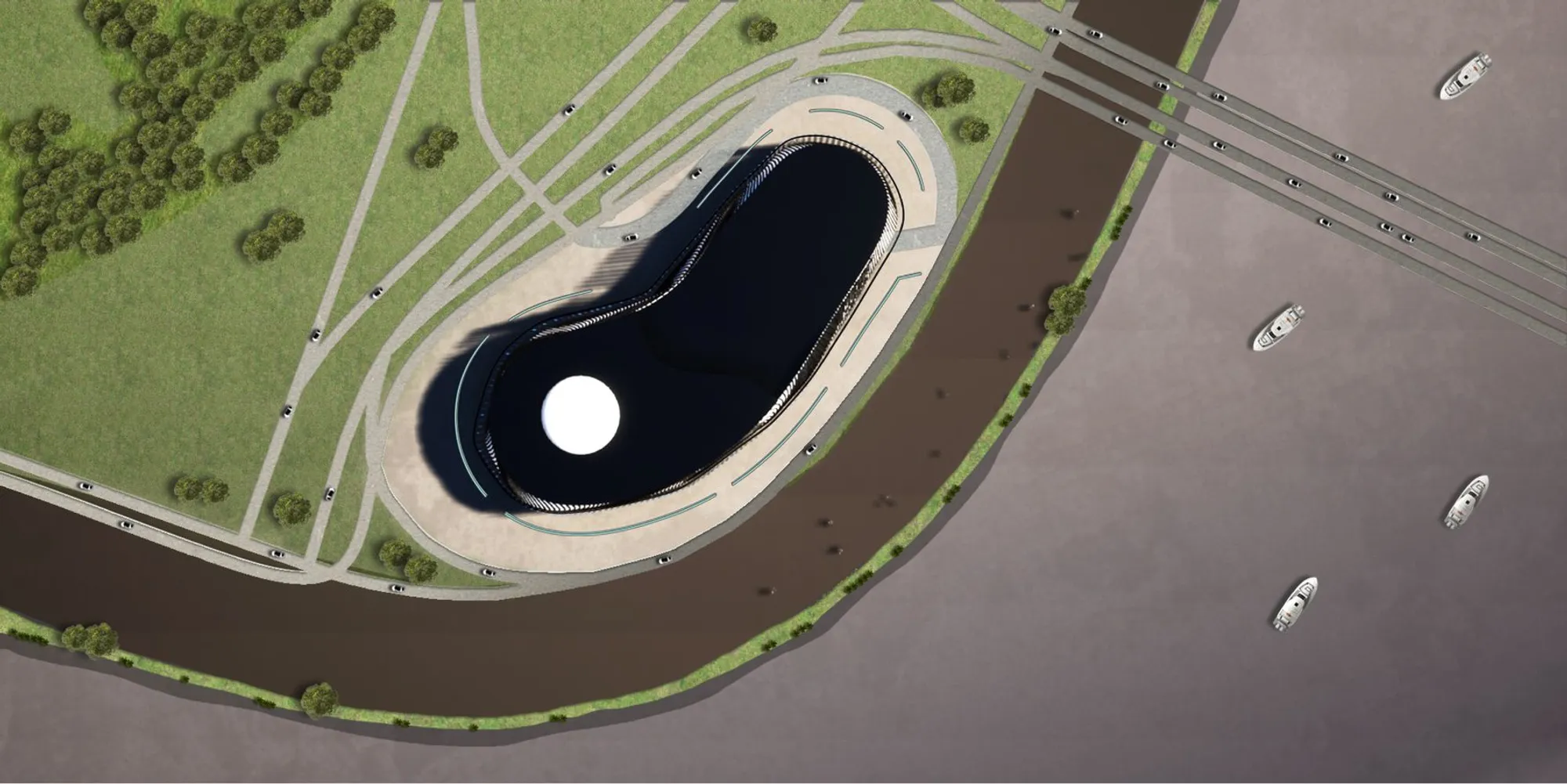

Exploring the Moon's Magic: The Thrill of Space Tourism Right Here on Earth
Experience the Beauty and Adventure of the Moon Without Leaving the Planet


Moon Trip Centre: Circular Geometry as a Gateway to Cosmic Experience
A shortlisted competition entry translates orbital mechanics into radial architecture, turning visitors into active participants in space exploration.

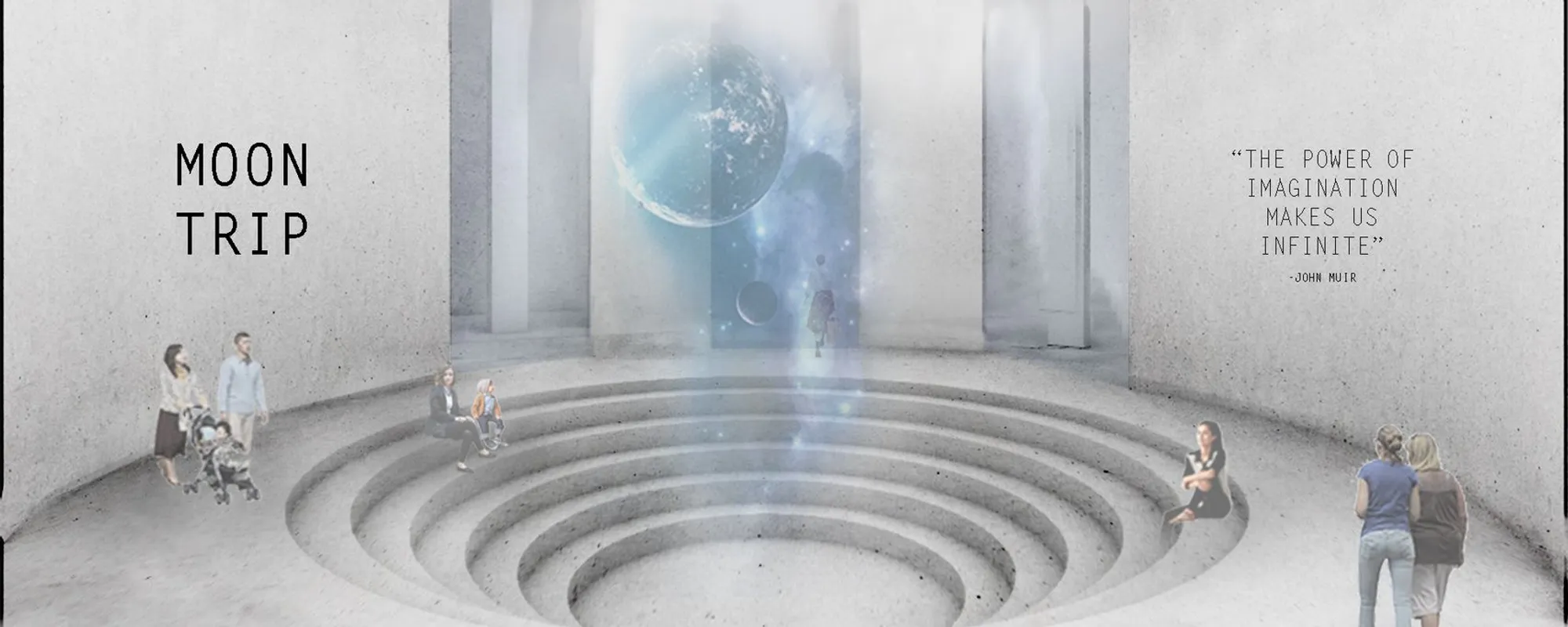
Through History: A Moontrip Media Space Where Architecture Never Sits Still
Vitali Matevosian's shortlisted Moontrip entry fuses cylindrical time-loop forms with VR, holograms, and projection mapping into a single adaptive campus.

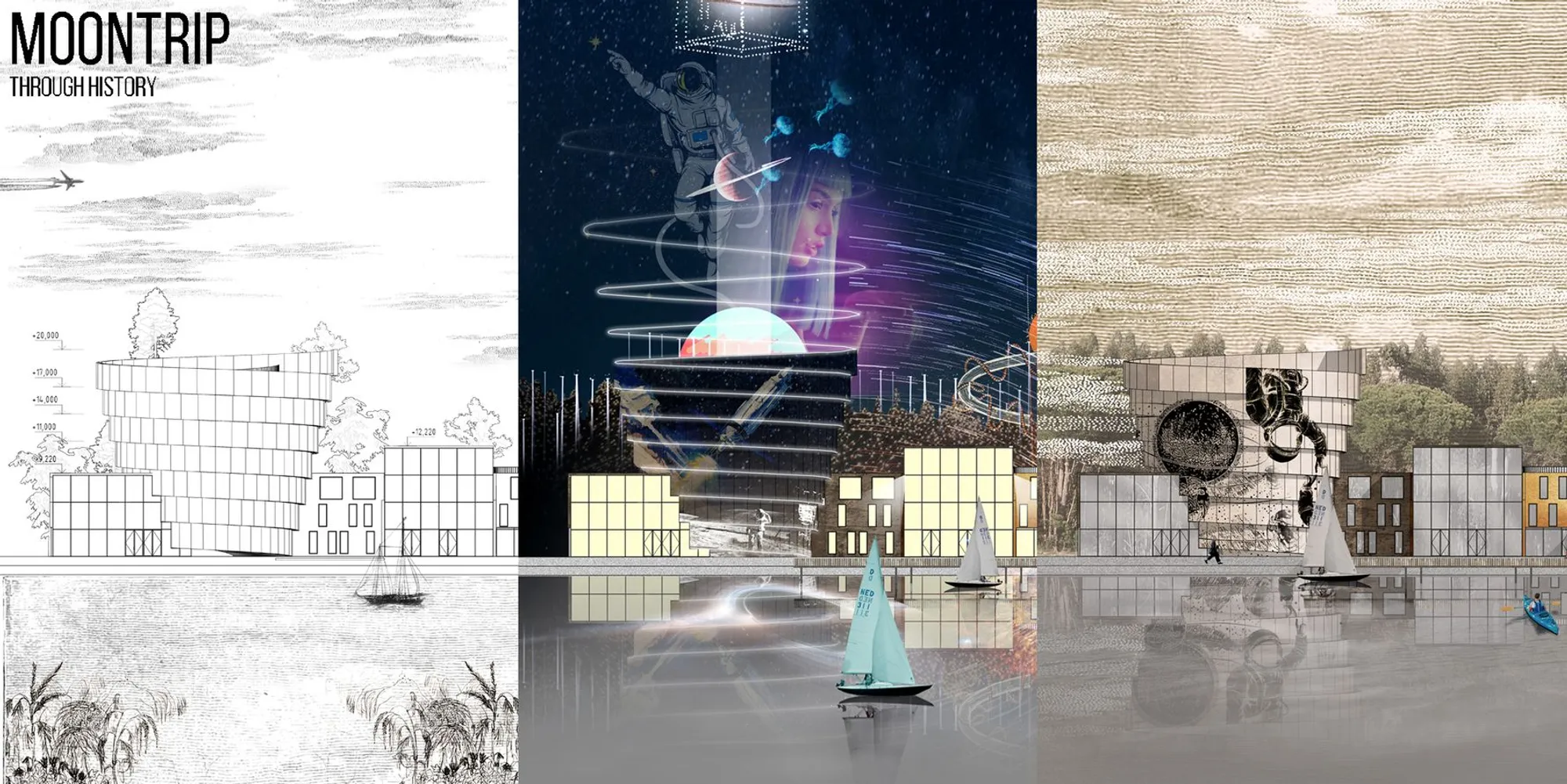

Launch pad from the moon: Journey into the unknown
That is one small step for man, one giant leap for mankind. (Neil Armstrong)

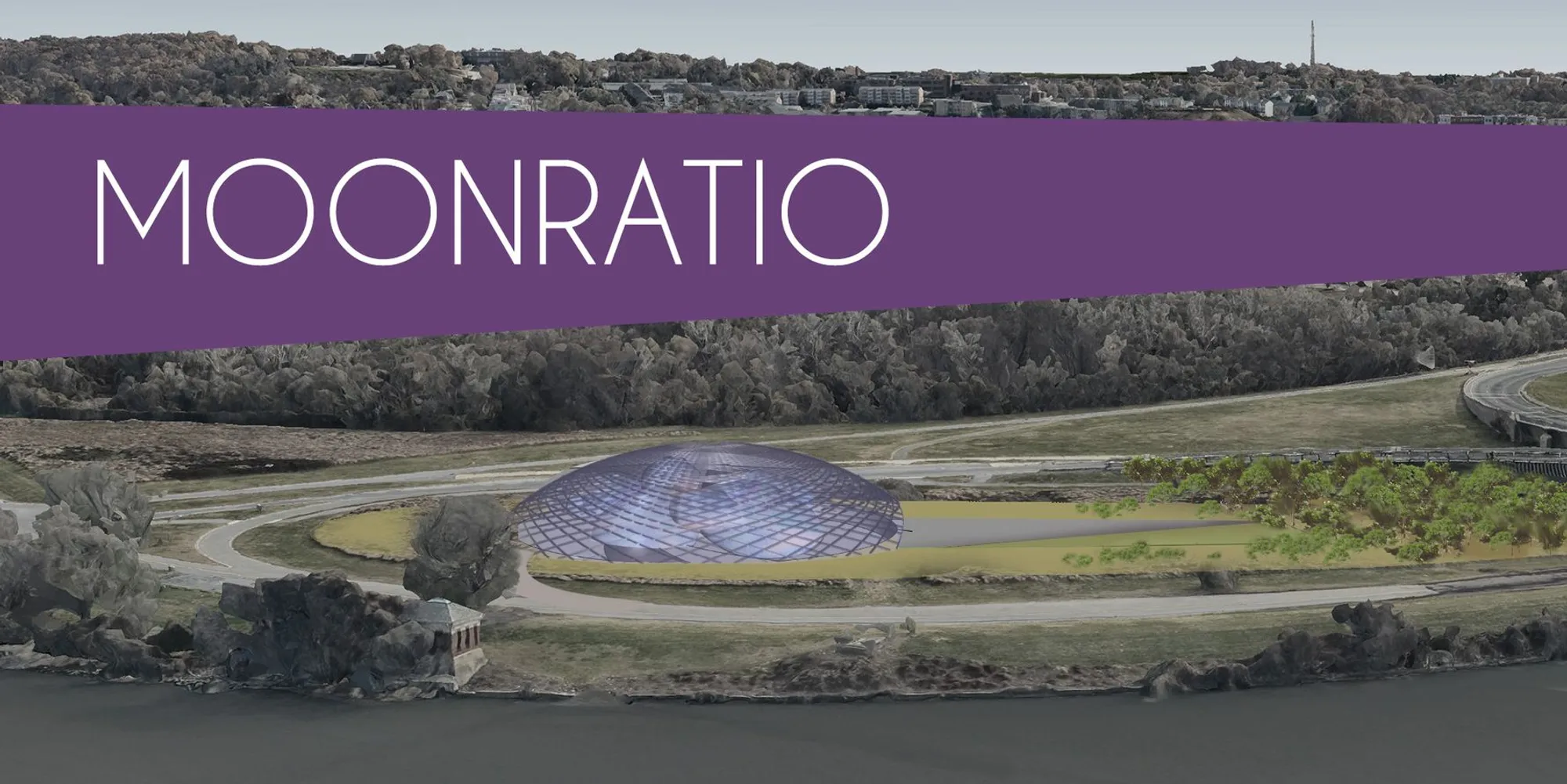
MoonRatio: A Spiraling Dome Where Children Learn to Reach for the Moon
A shortlisted Moontrip 2019 entry plants a golden-ratio dome on a riverbank, turning lunar exploration into tactile education for kids.

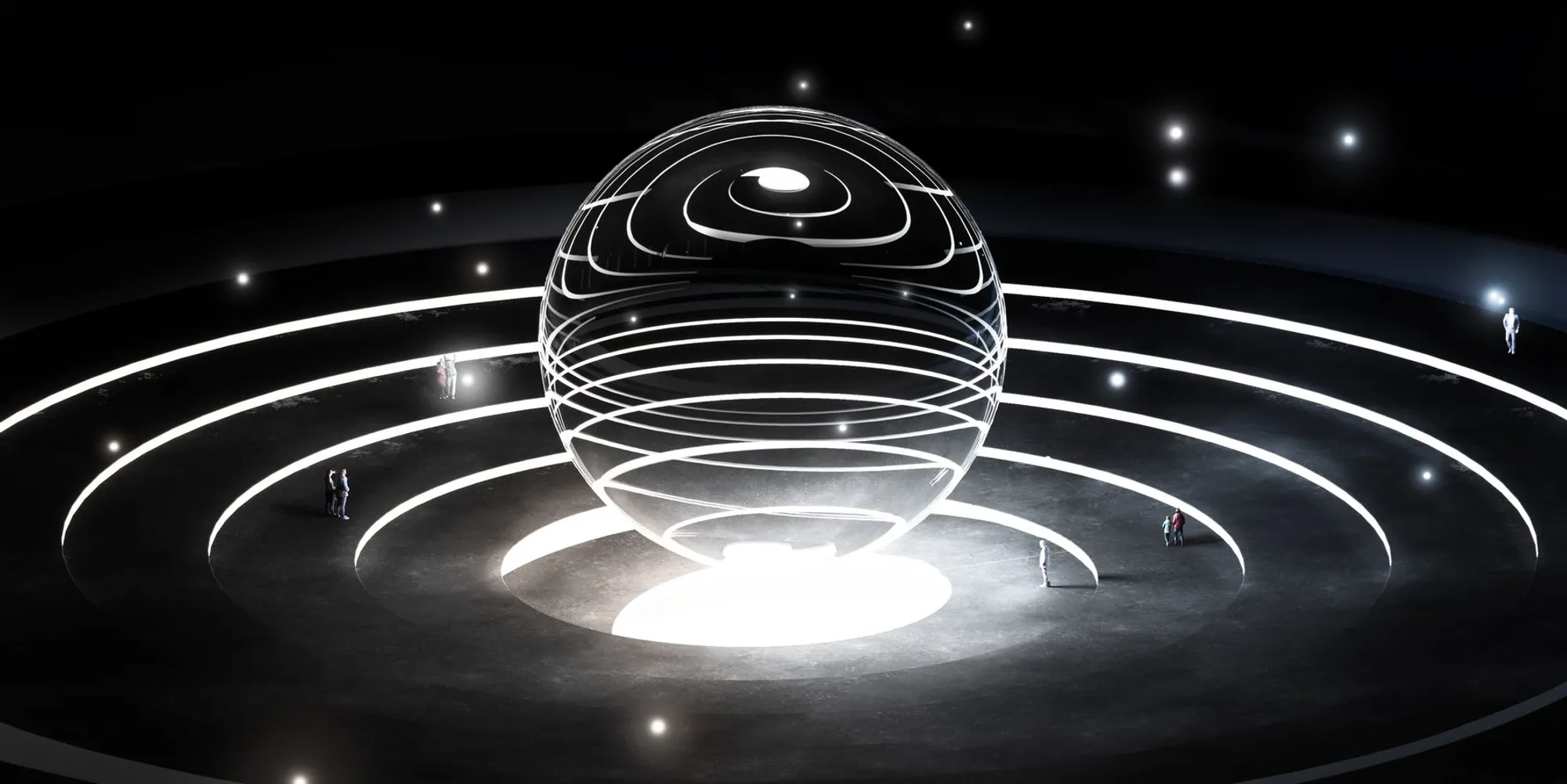
Spacetrip: An Underground Descent That Simulates a Journey Through the Solar System
A spiral subterranean structure organizes four planetary levels around a glowing glass sphere to bring cosmic scale down to Earth.

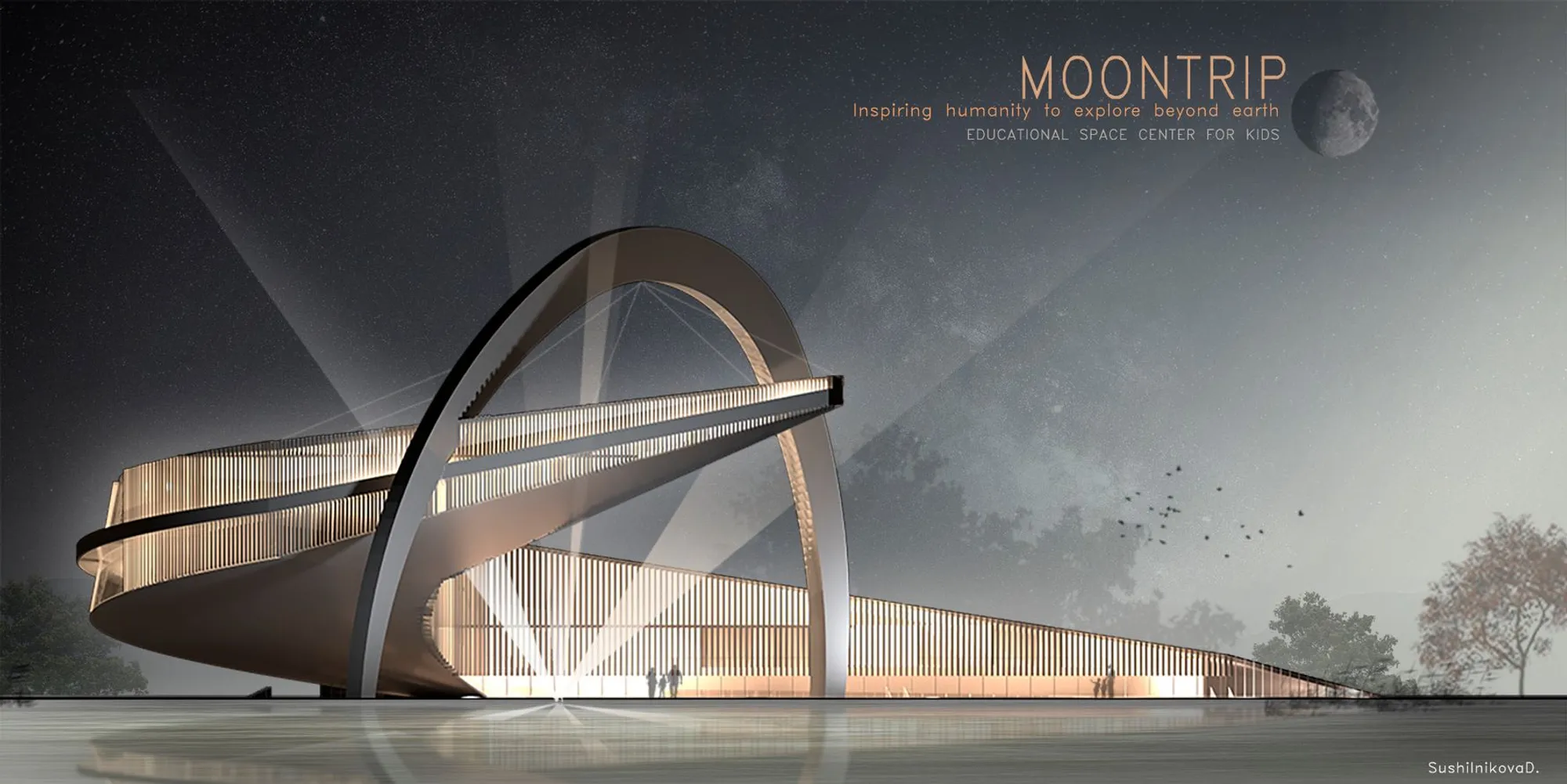
Moontrip: A Cable-Stayed Museum That Teaches Children Through Structure
Dora Sushilnikova's shortlisted entry reimagines the museum as a cantilevered learning landscape anchored by a concrete pylon and NASA-inspired forms.

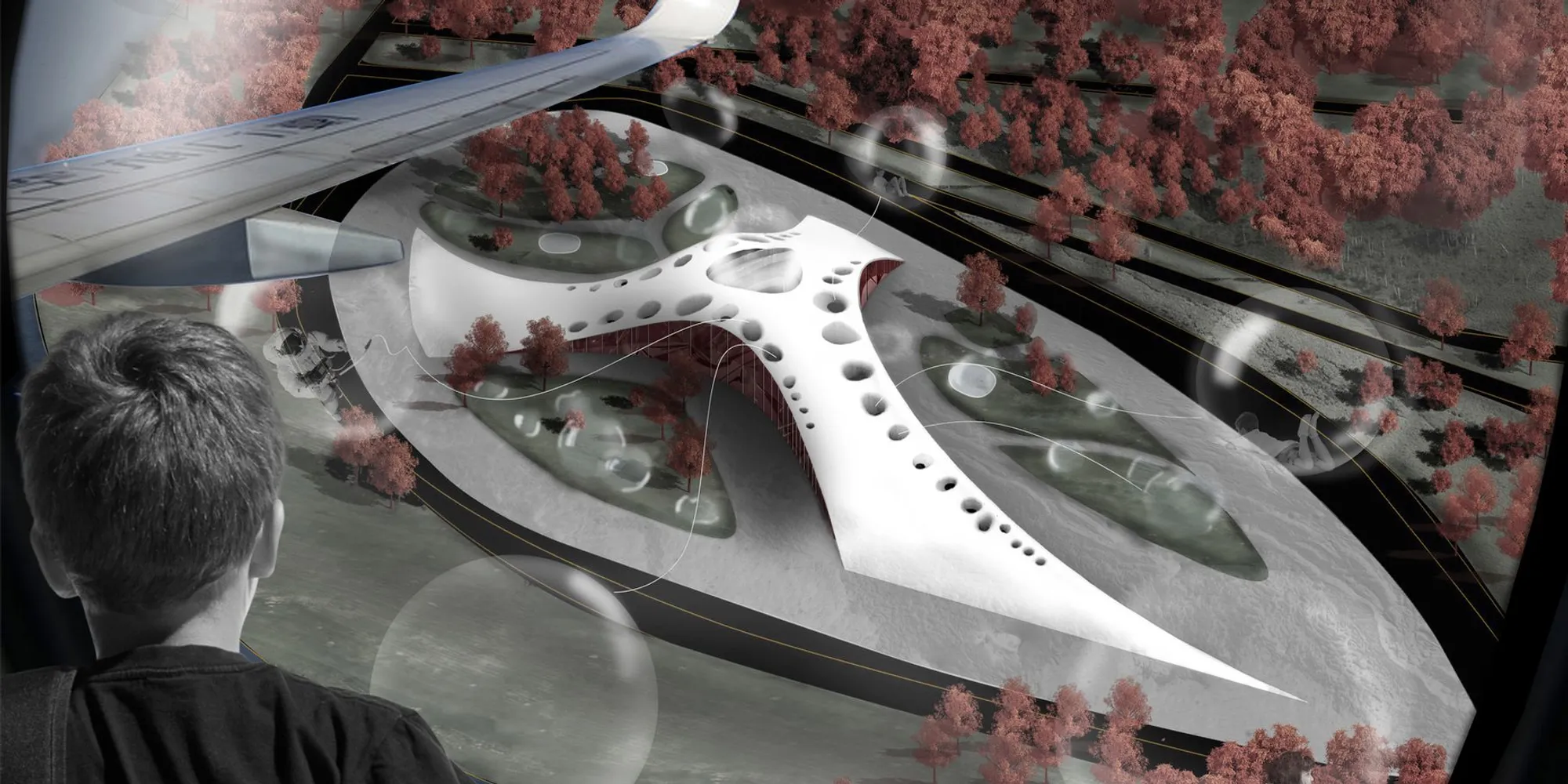
Moontrip: Floating Bubbles and Subterranean Caves Bring Space Exploration to Children
The Air Bubble Space Center merges floating capsules, cave-like undergrounds, and 3D-printed structures into an immersive launchpad for young explorers.

Space Exploration and Learning Center
Let's go on a 'Moontrip'

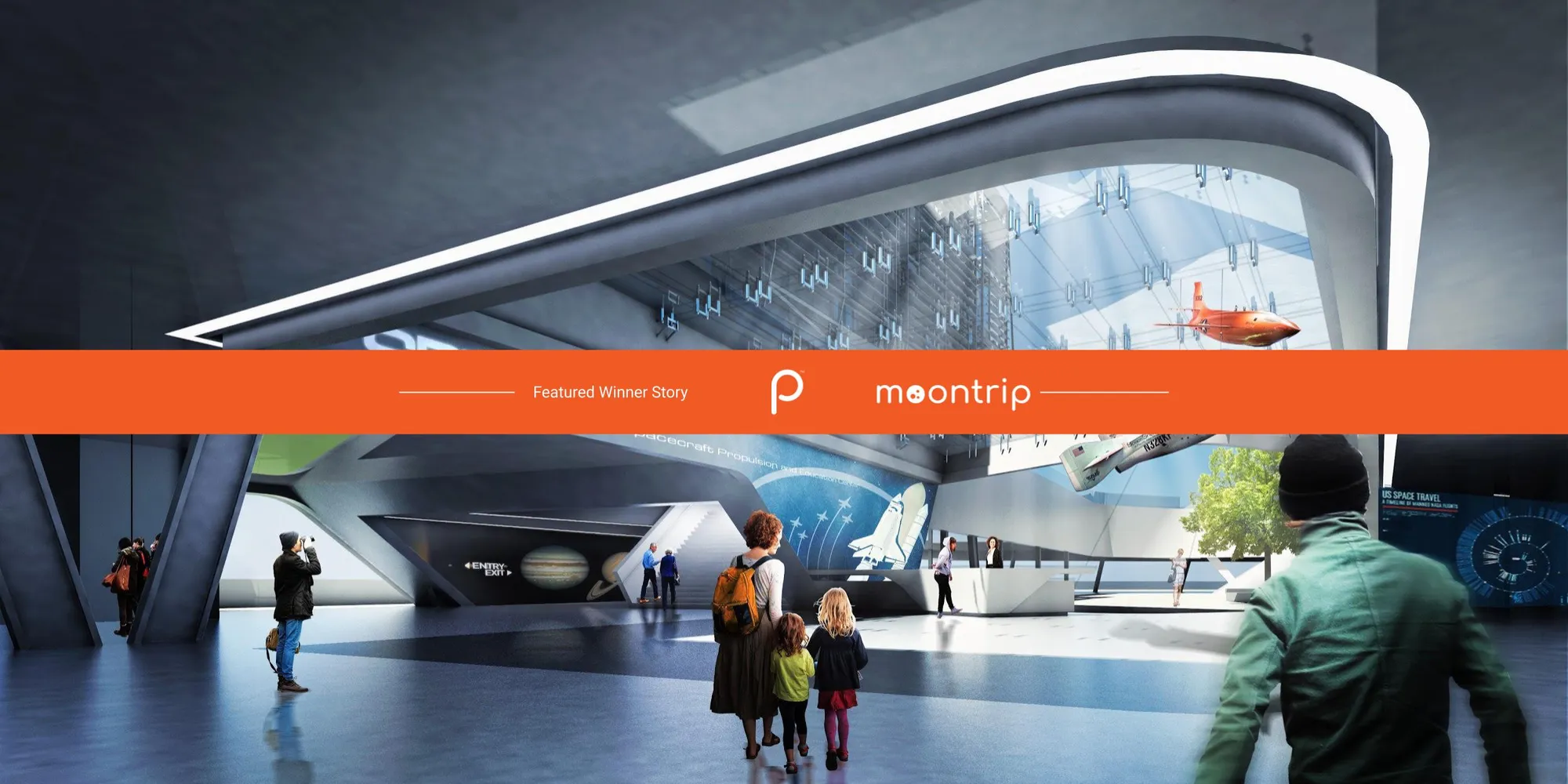
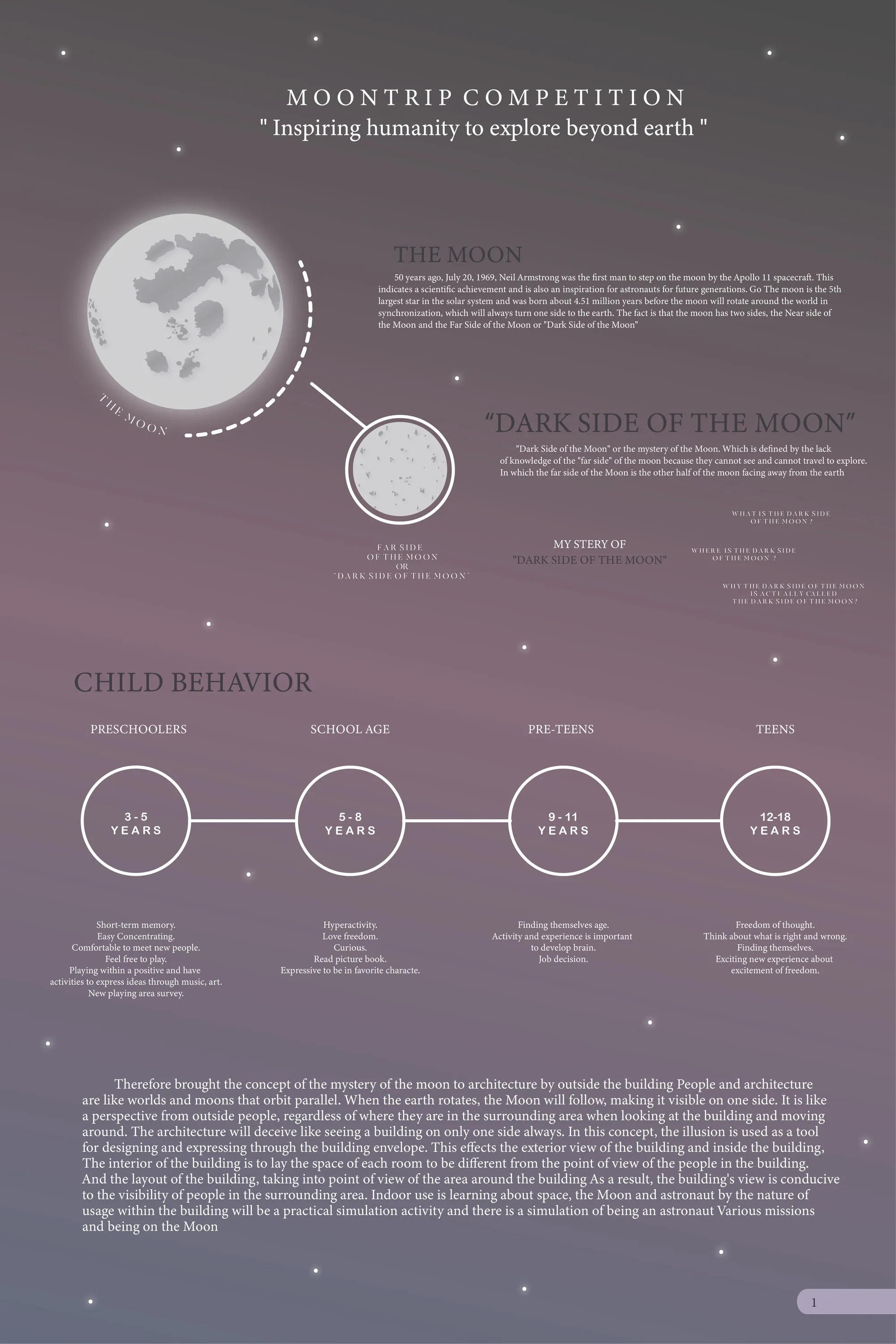
The design concept connection to child behavior is extremely thoughtful, however it feels unresolved in the final presentation.
The presentation would have benefited from a few more choice cross-sections or renderings of pedestrian views. Considering the exciting interplay of curve and line along the exterior shell and circulation of the building, it was not obvious enough the first time I scanned over the design. The dedicated section on the design process added meaningful contest but could have been greatly abbreviated to make space for more visuals dedicated to product of that process. Despite the planform, I'm left strongly wanting to know what the interior of the building looks like and whether it harmonizes with the exterior.
Excellent idea