
Social Design
Design approaches that address social issues and improve community wellbeing through spatial and architectural interventions.

LUKKO
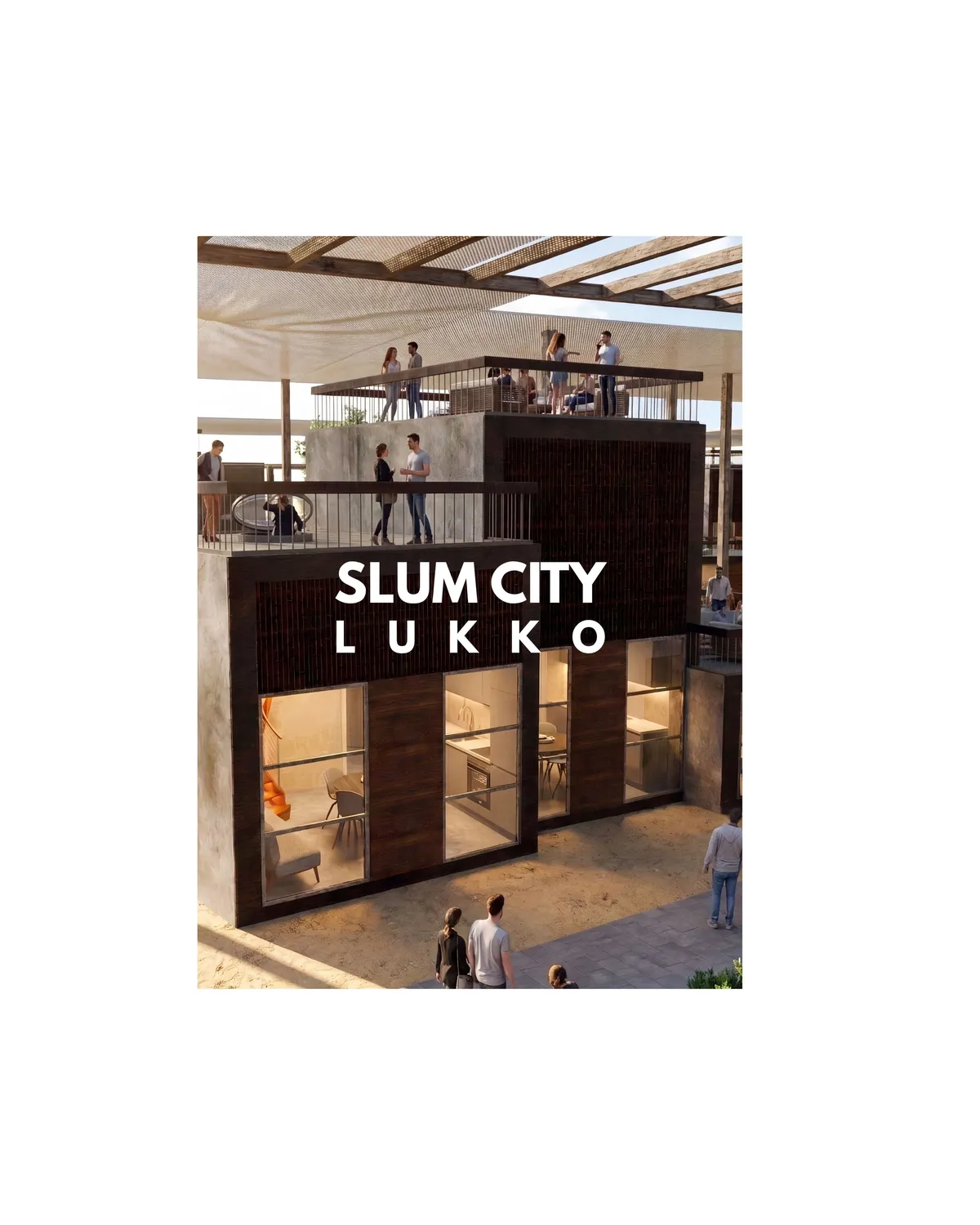
LUKKO reimagines informal settlements as vibrant neighborhoods where social interaction, economic opportunity, and everyday life coexist. Instead of isolated housing blocks, the proposal creates a human-centered environment organized around shared public spaces.

Ethnic Solidarities and the culture of commons
The aim of the design was to rework the form of the commons to develop newer aesthetics in continuation of the older type and cultural habitations of the community.


You are a member of our family
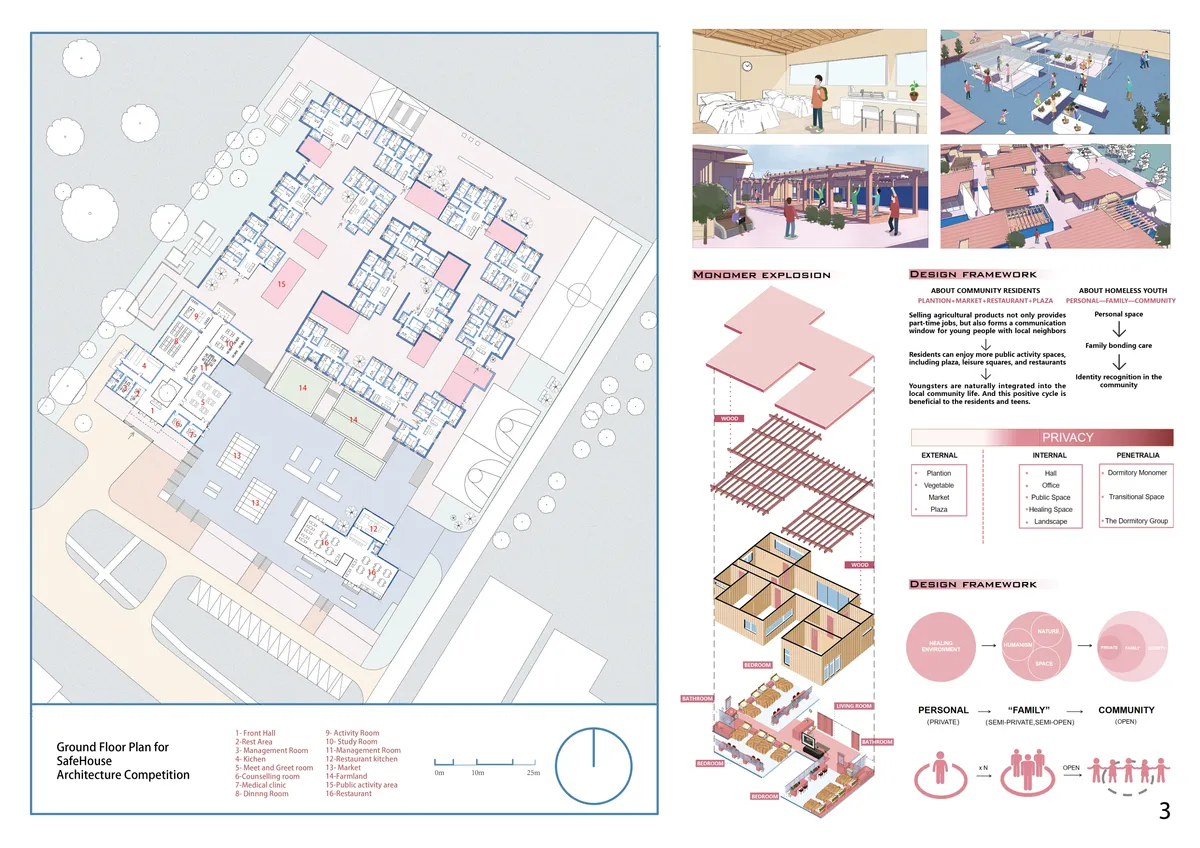
Facing so many homeless students, we hope to design shelter which not only materially, but also spiritually, heals the trauma of keens. The concept of design is respect and equality. Using the modle of family-like concept design internal spaced ,and the model of plantation + plaza + restaurant to outside. They forms positive cycles of keens and society.


Community-Led Housing
Community Led Housing in Bangladesh reimagines formal housing through participatory and problem centric design. By engaging residents in co creation, the project addresses contextual challenges across spatial, social and environmental dimensions while fostering adaptability and collective identity. It envisions housing not only as shelter but as a resilient platform for cultural expression, social cohesion and sustainable urban living.





Collaborative Health: A Social Housing Manifesto
This projecuses diversity and efficiency to create a cohesive living and working community. We believe that the premise of diversity and efficiency is health. Therefore, we set up a variety of sports spaces and ecological spaces to help residents achieve a healthy life.
Circular Living Morocco
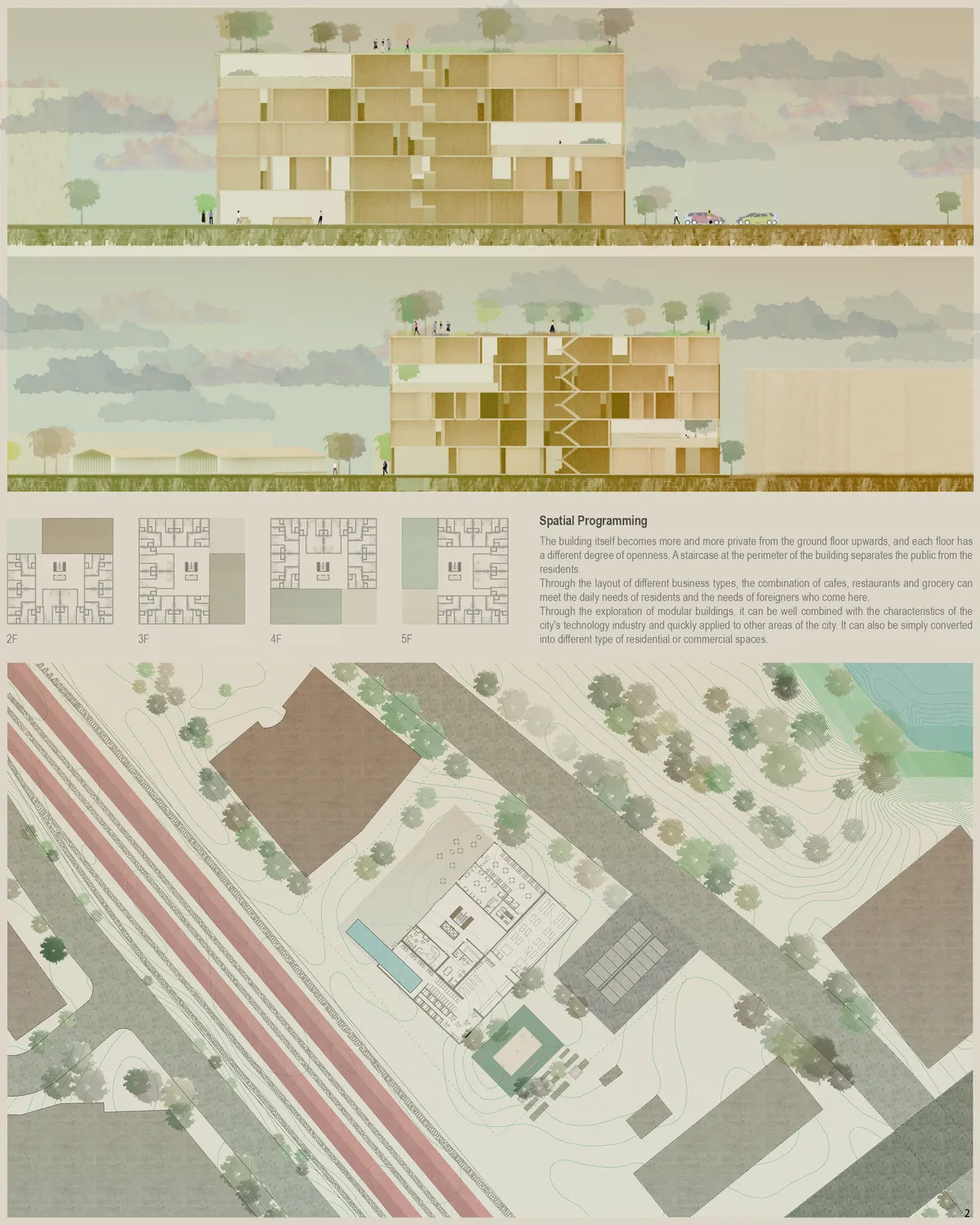
Circular Living Morocco is a complex that was built in the city center. Its main goal is to connect society, to include older people in the daily life of the city. We have designed paths that will be used by city residents every day and intersect the building and also private outdoor spaces where only the inhabitants of this complex can go.


Street Children Rehabilitation Center: A Brick Campus That Eases Children From Street to Safety
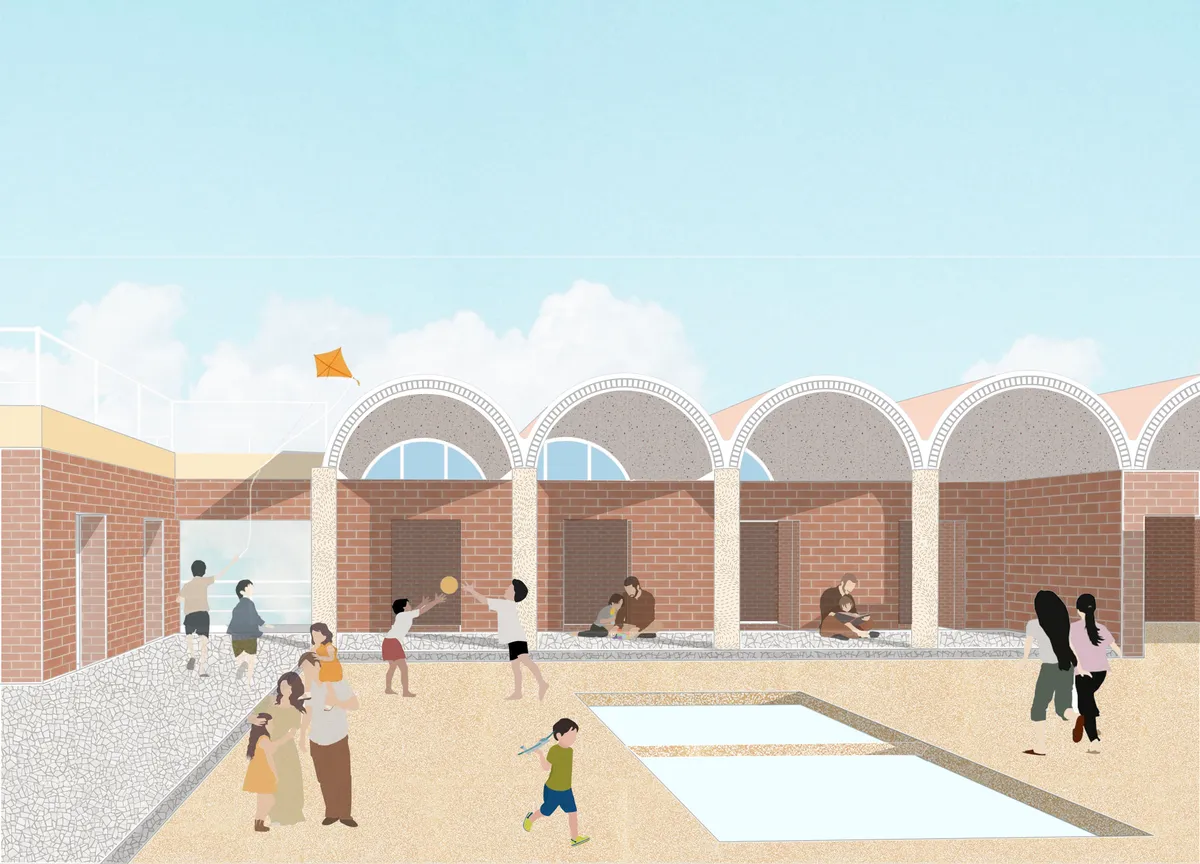
A low-rise courtyard campus where learning streets, uthans and shaded verandahs stage a gradual passage from street into protective, family-scale life.



The School of Social Development by studio berardi miglio
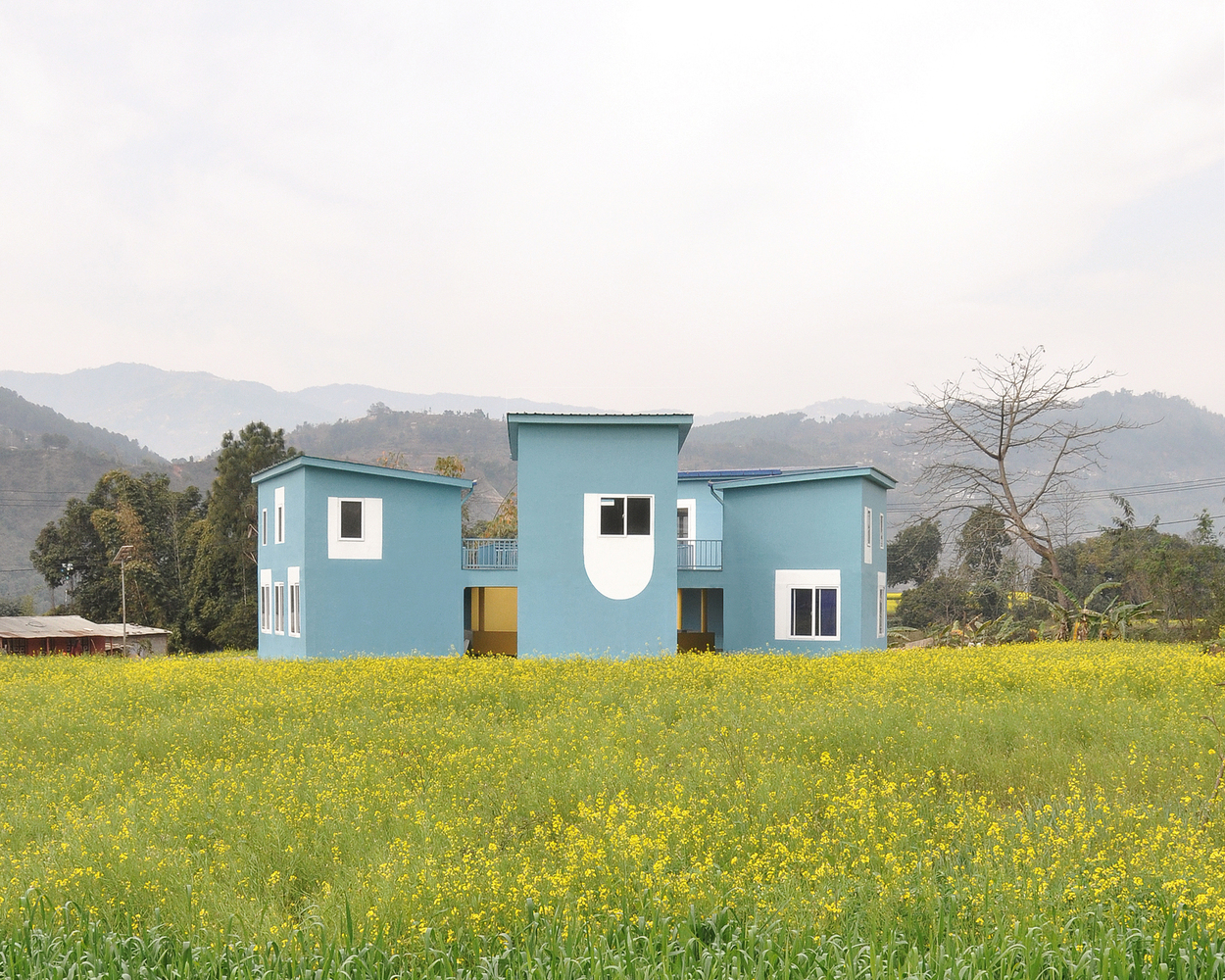
A community-centered school in rural Nepal, combining education, volunteer housing, and social spaces through simple, sustainable design by studio berardi miglio.


Summarry of Design Implementation
The research inquiry delved into the prospect of how a community sensitive design approach can result in reducing social exclusion.

Design Process
This project proposes a community-sensitive design that can be adaptable to their future growth and help reduce social exclusion. It explores the impact housing can have in reducing social exclusion.

Our Infinite Consequence: Mirrored Voids That Force a City to Look at Itself
A vertical installation of reflective surfaces and helicoidal stairs reframes urban disconnection as a spatial problem with an architectural answer.

A Flood-Resilient Neighborhood in Lisbon That Stores Water Beneath Its Streets
Underground water chambers, elevated courtyards, and permeable urban fabric turn flooding from threat into resource in this Lisbon proposal.

STRING: A Youth Centre in Bonela That Folds Into Its Slope and Lets Ramps Bind a Community
A shortlisted Hood entry where a stair-free sequence of ramps, sunken courts and community-planted trees ties every age group in Bonela into one thread.

Social Core: One Room That Makes Co-Living Work
An L-shaped co-living building in Moscow with a double-height timber atrium at its centre, where one extraordinary shared room replaces a corridor.


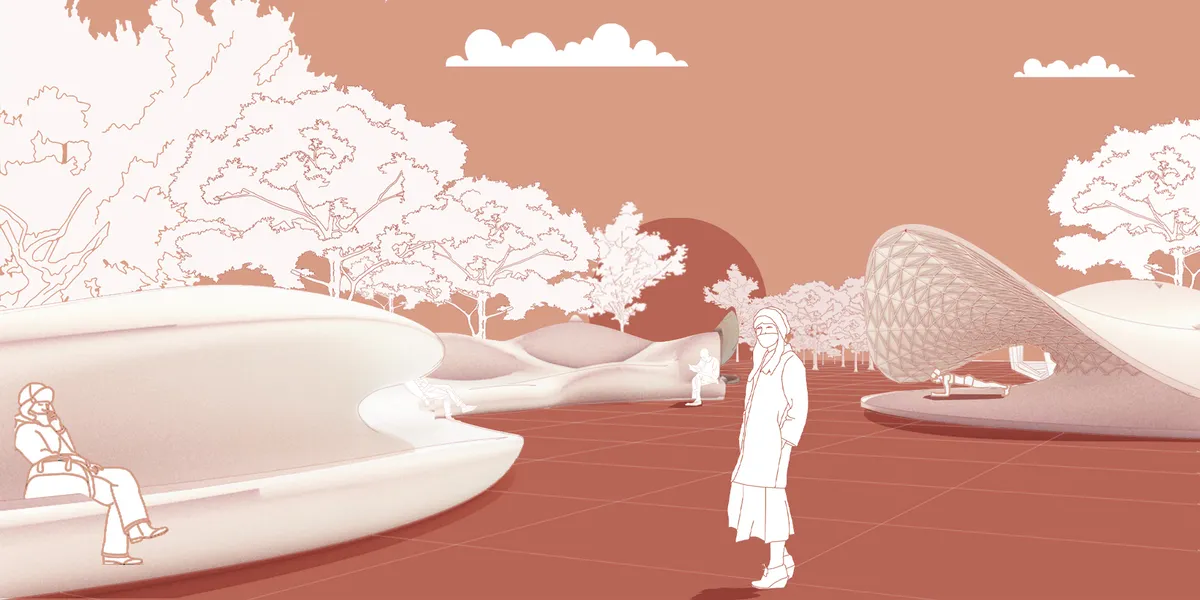
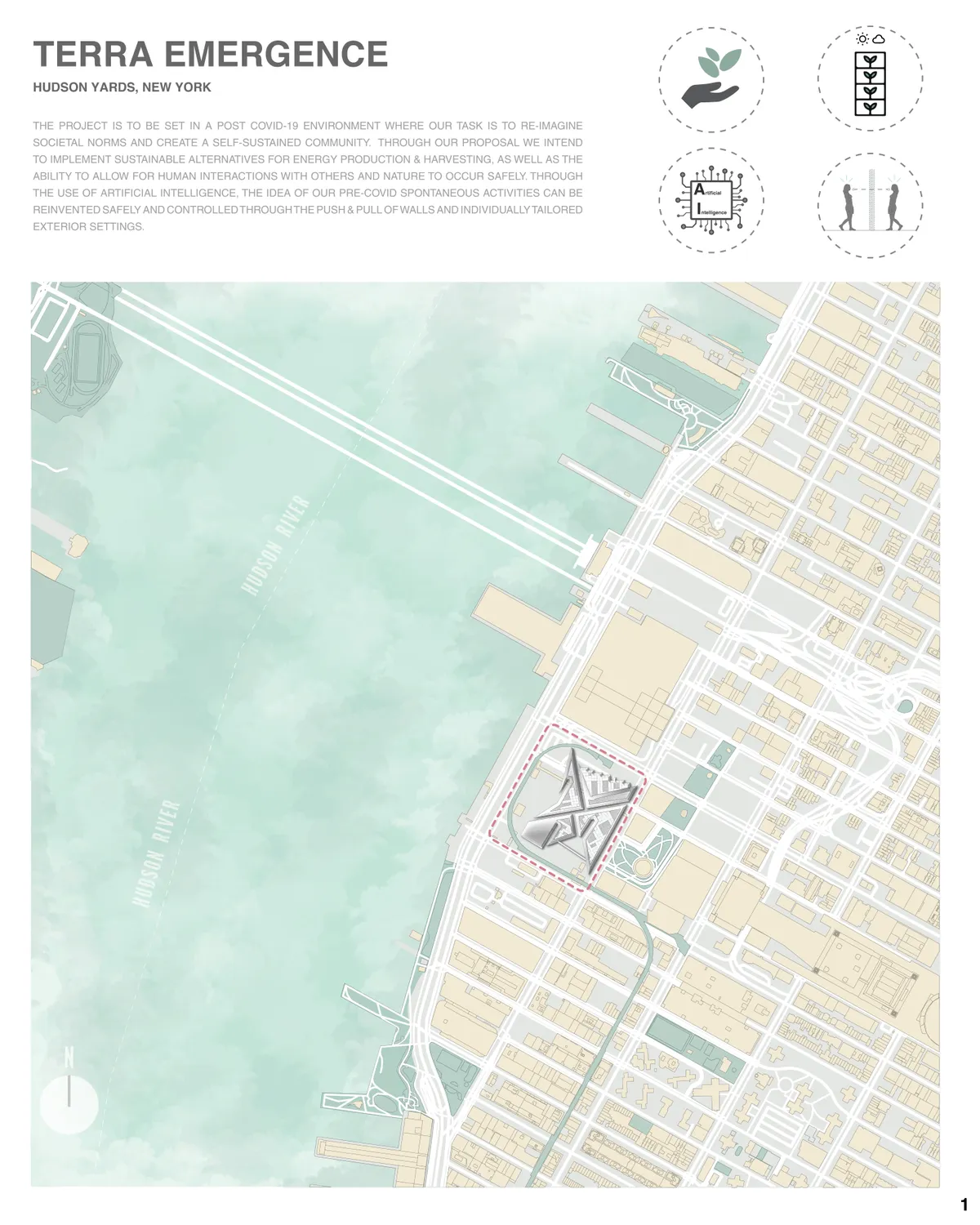
TERRA EMERGENCE
Ai Solutions and Environmentally based decisions Joining to Reinvent Societal Norms.

Surprising. I loved it too much...!!
The best ❤️

👌🏽👌🏽🙏🏽


Passive Culture Center in Marrakech
Adopting identity and promoting sustainable approaches


De-commodifying People: A Transgressive Approach to Social Housing in Mumbai
The concept of housing, both in design and implementation, appears stagnant in modern urban environments. Housing complexes and buildings lack uniqueness and contextual appropriateness. The notion of social housing has become muddled, with private developers prioritizing profit over the fundamental idea of housing as a basic human right. Current housing development processes often exhibit standardization and neglect a human-centric approach. Frequently, housing patterns follow a copy-paste model, disregarding socio-cultural factors, local context, climate, and resident needs. Cities like Mumbai, which are continually developing, face challenges due to a "Number War," where social and affordable housing become entangled with profit-driven motives, resulting in subpar living conditions and the proliferation of slums. The role of architects has diminished, constrained by regulations, and focused on meeting numerical objectives rather than contributing meaningfully to urban development. A transformative approach is urgently needed, encouraging architects to transcend established norms and adopt innovative practices. This study aims to identify the limitations faced by architects in housing, understand the current housing landscape, and explore the historical evolution of housing in Mumbai. It also seeks to examine the state of social housing in the city, identifying inadequacies for residents and the overall urban environment. Ultimately, the study aims to develop a design framework that empowers architects to challenge the status quo. The thesis proposes reimagining social housing in Mumbai as a vital urban element that integrates seamlessly with the city's character and adds value to its context. The central goal is to create a prototype framework for slum redevelopment in Mumbai, considering transportation, infrastructure, and sustainability. This prototype will assess the economic viability of such initiatives in fostering sustainable and inclusive urban growth. The study emphasizes that architects can be influential advocates capable of instigating social change, not just creators of form and aesthetics.


An intersting piece of sculptural urban furniture. It would be good to learn a little more about the internal structure, how it is meant to be put together and what kind of finishing it will have. That would help us get a better idea of the final piece.