

Urban Resilience
Design and architecture strategies for building cities that withstand environmental, social, and economic challenges.


Rethinking Resilience
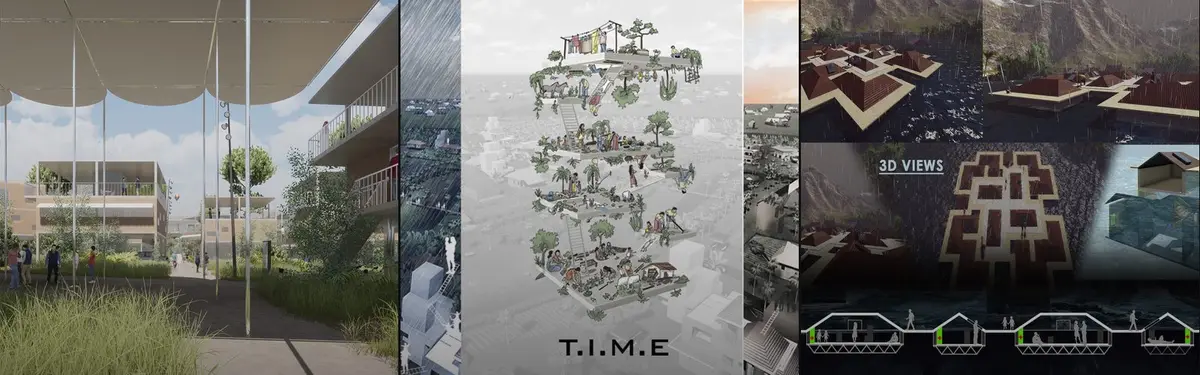
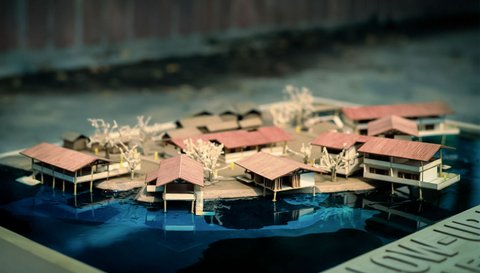
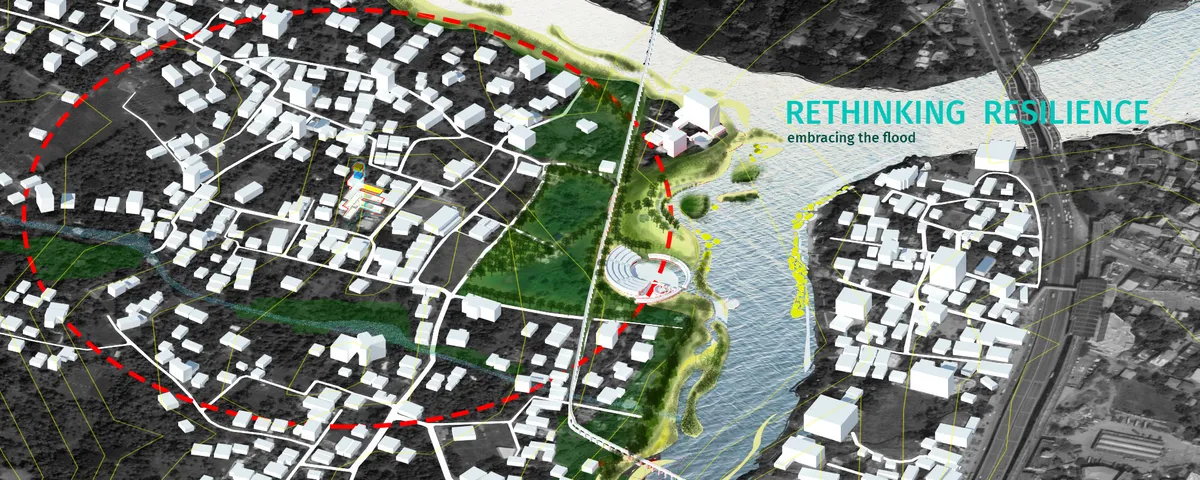
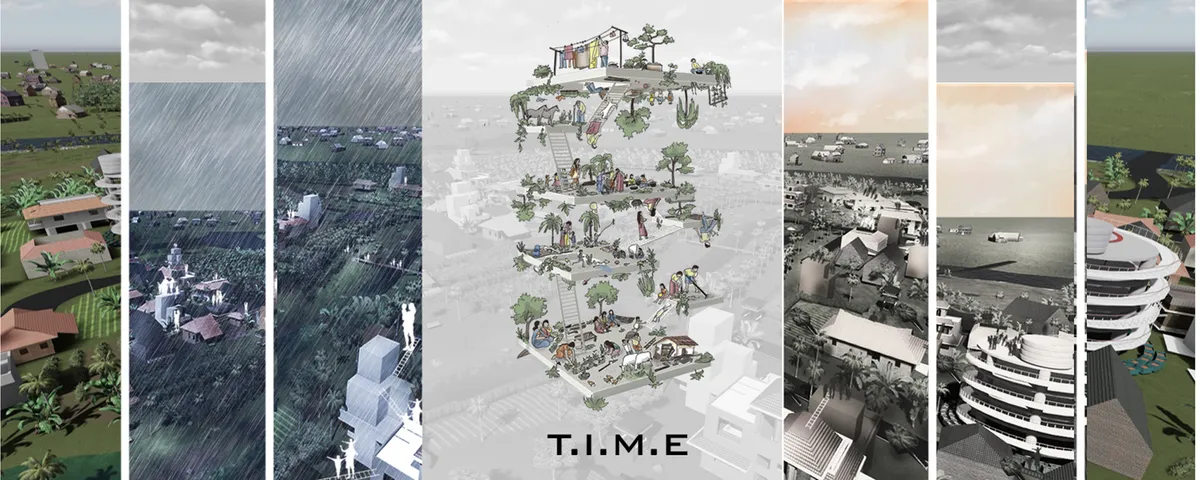
The project embraces flood as a natural phenomena as the premise to imagine the possibility of secure human habitation. With this as the central idea, the project defines resilience to be two fold- 1.to be prepared before flood. 2. sustenance and recuperating post flood scenario. In its execution, the project encapsulates this idea at three distinct scales.

THE FLOOD RESILIENT COMMUNITY
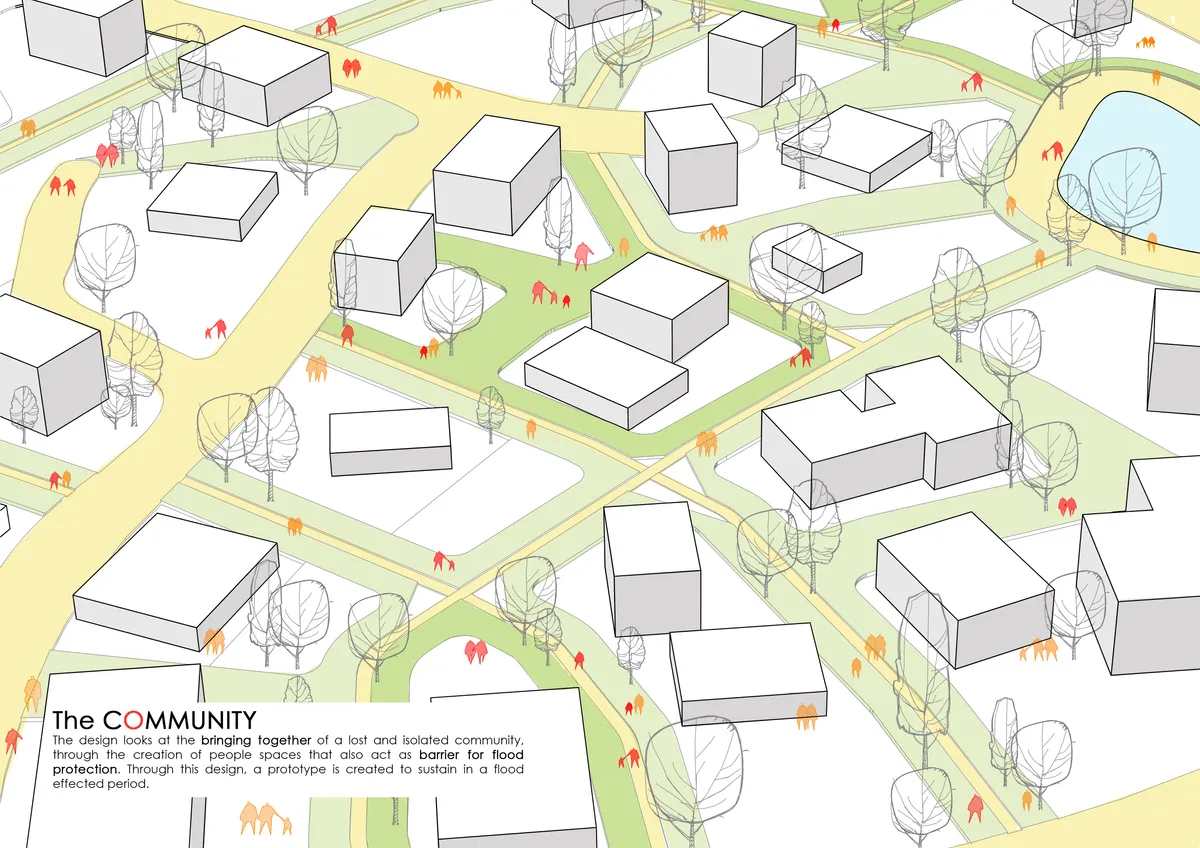
A design for a 100 home community that is affected by the floods, but needs to get back on their own to a better future. A design that looks into flood resilient societies, community development as a drive to healthy societies, and individual dwelling upgrading.


T.I.M.E. HEALS
Habitat when tarnished disrupts lifestyle causing emotional, mental and financial losses which creates scars forever. So, it is necessary to heal from the beginning by converting the exhausting period of struggle into a motivating environment with interactive neighbourhood. Our system unites the community by various incremental measure at different levels.

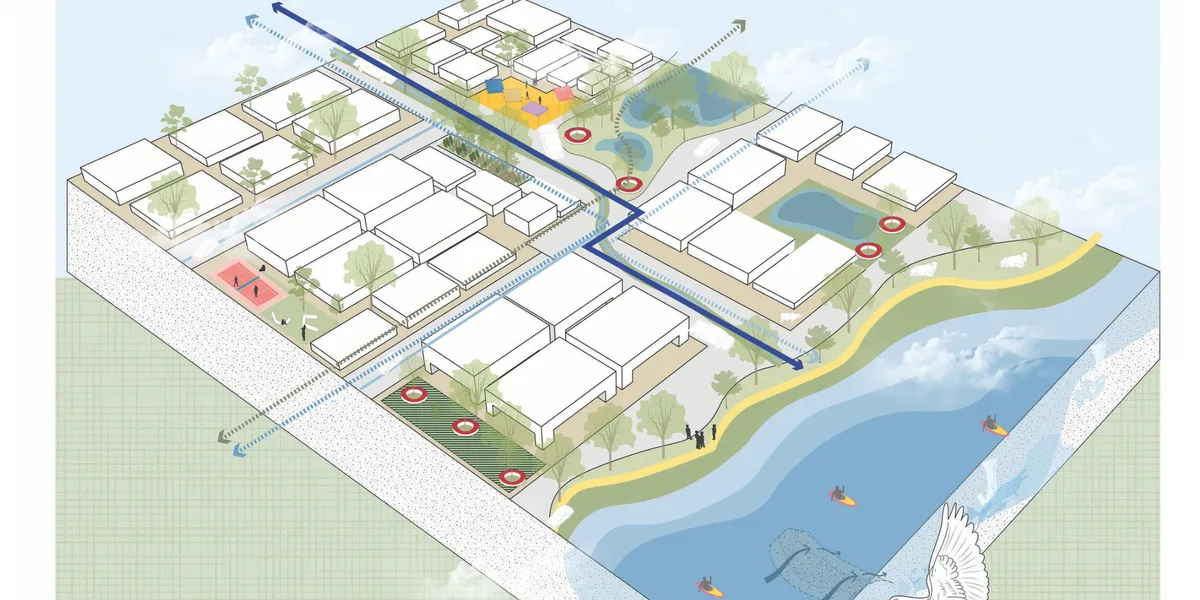

From Fragility to Resilience: An Integrated Approach to Coastal Settlement on Kutubdia Island
This thesis focuses on Kutubdia Island, where climate change is already causing severe land loss, displacement, and livelihood insecurity. Recognizing that relocation is not feasible for many residents, the study explores how architecture can support resilient, adaptive, and sustainable communities while preserving local livelihoods and social ties.
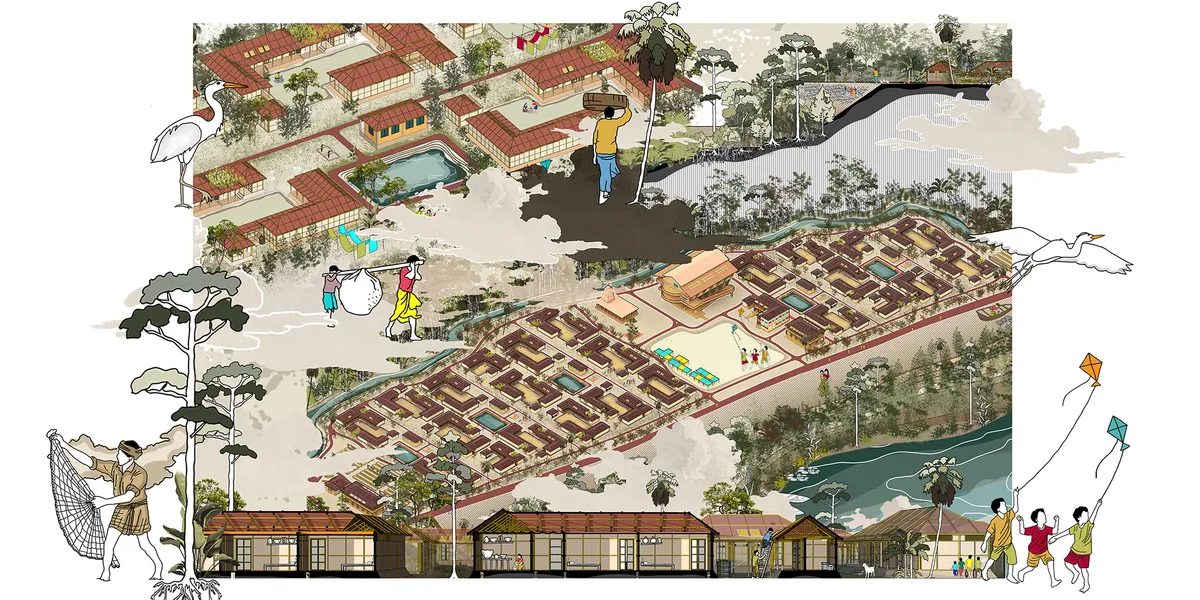


Moscow Metro Shelter: Turning the Underground Network into a City That Keeps Everyday Life Running
Three designers recast Moscow's deep metro stations as linked habitat nodes, arguing that survival architecture must protect routine, not just bodies.


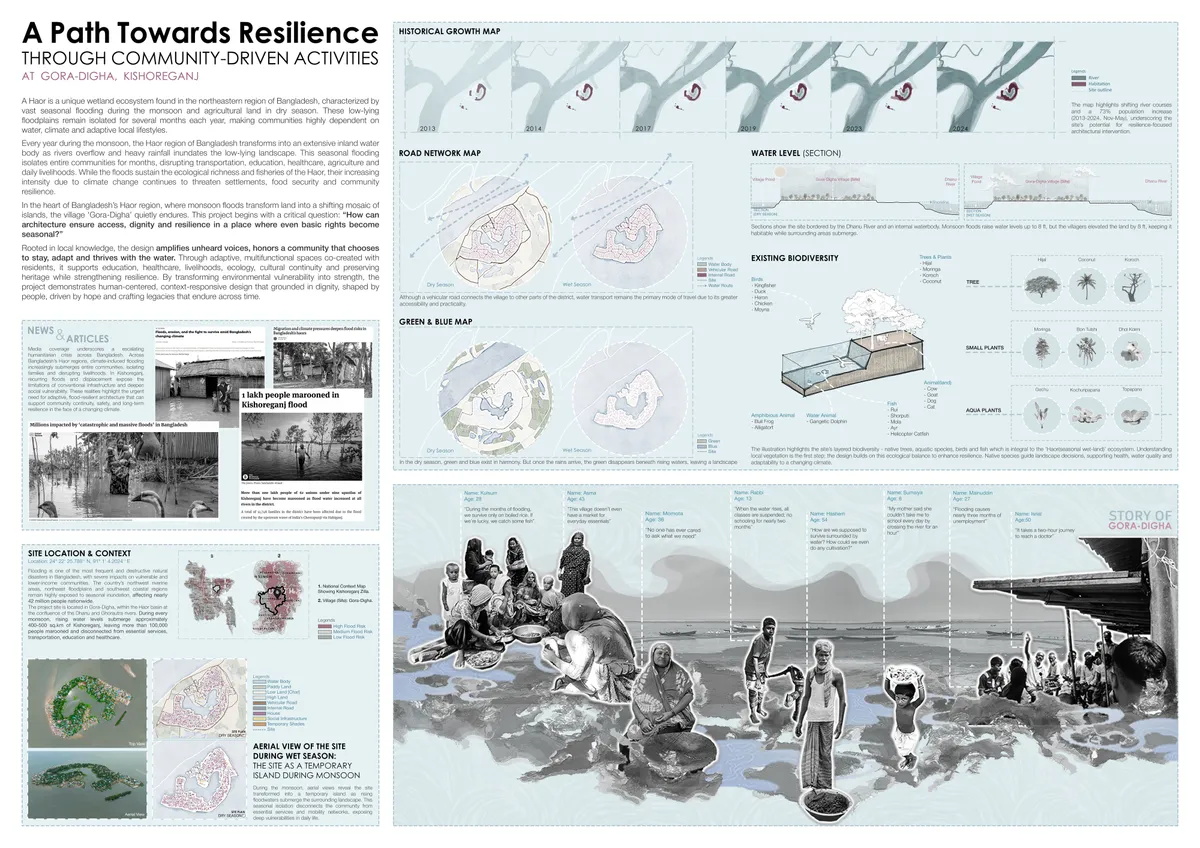
A Path Towards Resilience Through Community-Driven Activities at Gora-Digha, Kishoreganj
In the ‘Haor’(Seasonal wetlands), where the ground disappears each monsoon, permanence is an illusion. This project imagines architecture not as a defense against water but as an instrument of continuity, an adaptive civic landscape that allows communities to gather, endure and sustain dignity amid recurring cycles of flood and retreat.

"Transition In Need, Reconnecting Fragmented Urban Ecology", Domino Effect & Urban Rhythms
Abstract:
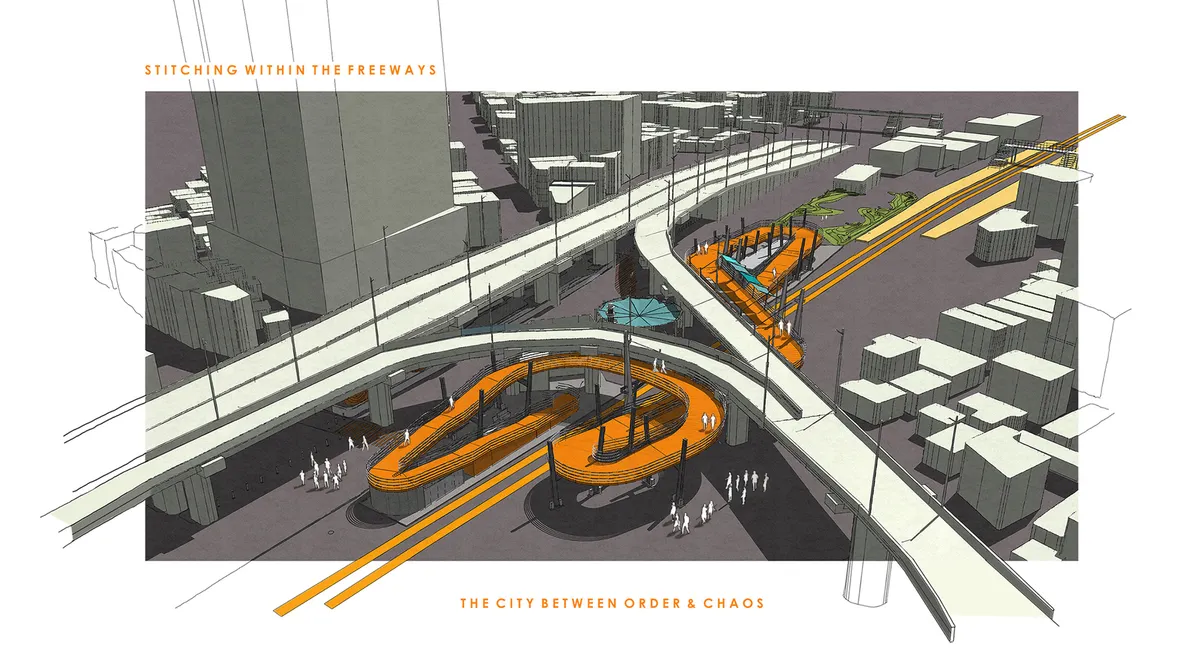

A thoughtful and socially engaged urban thesis that recognizes informal activity as an asset rather than a problem. Further architectural and implementation development could make the connective strategy even more powerful.
Thanks alot sir, glad you noticed and yes I agree that further tweakings can strengthen the connective path.

Amazing 👏

GREAT WORK 👍

Urban Continuum:An alternative learning ecosystem
Education has increasingly become detached from the lived realities of the city. Urban Continuum proposes an alternative model in which learning is embedded within the rhythms of everyday urban life. Instead of concentrating education inside institutional boundaries, the project distributes learning across existing neighbourhood spaces, creating an interconn
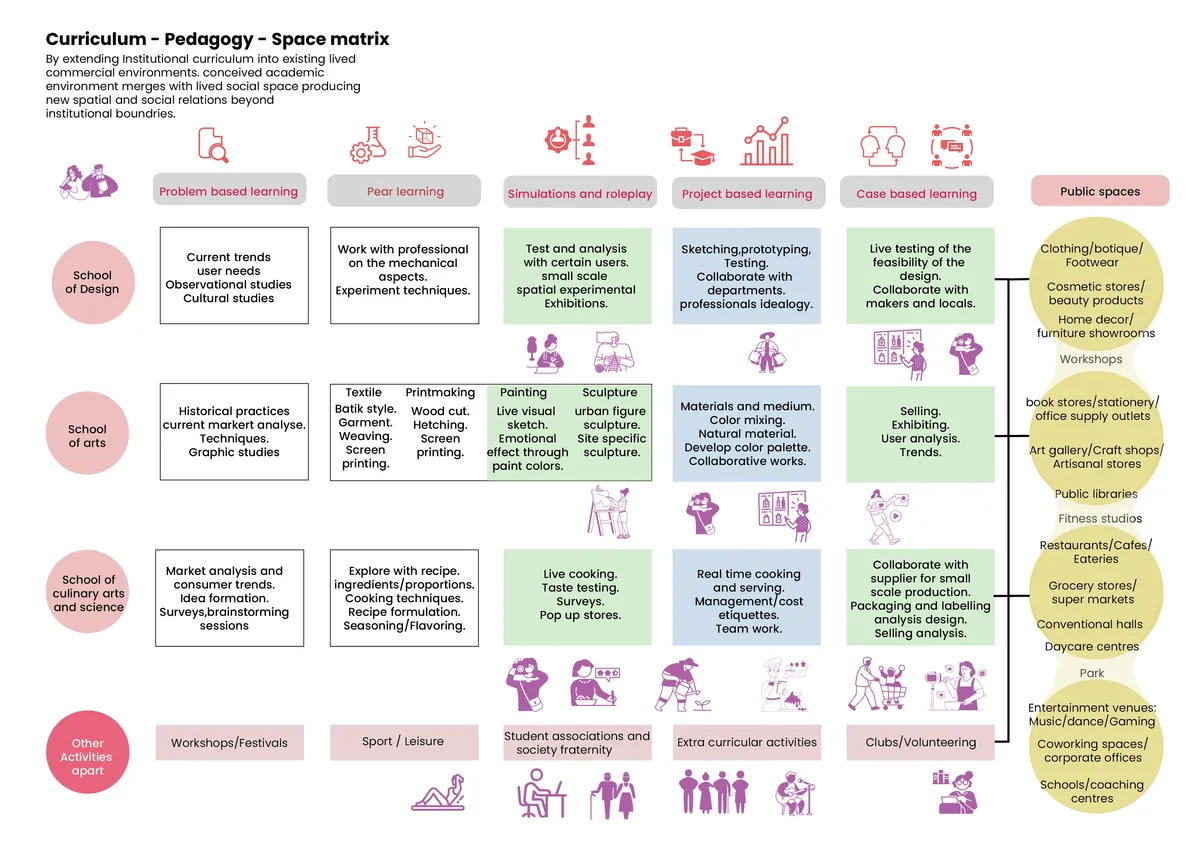
A thoughtful and original approach that expands learning into everyday urban life. Further exploring how this model can operate across different public spaces could strengthen its potential and impact.
Thank you so much for the thoughtful feedback. The project grew from questioning the mono-functional nature of urban spaces and eventually led me to explore learning as something that could connect people, genetations and everyday civic life beyond the conventional campus. Your suggestion to test this model across different public spaces is something i'd really like to explore further, particularly how different urban contexts could create different opportunities for learning and collective information.

Fostering Coexistence: Revitalizing Coastal Communities and Ecological Restoration
This project presents a regenerative model for climate-responsive coastal development, integrating wetland filtration, mangrove restoration, circular waste management, and community-led livelihoods. By positioning architecture as a catalyst for ecological restoration, it strengthens biodiversity, enhances resilience, and reconnects people with nature.
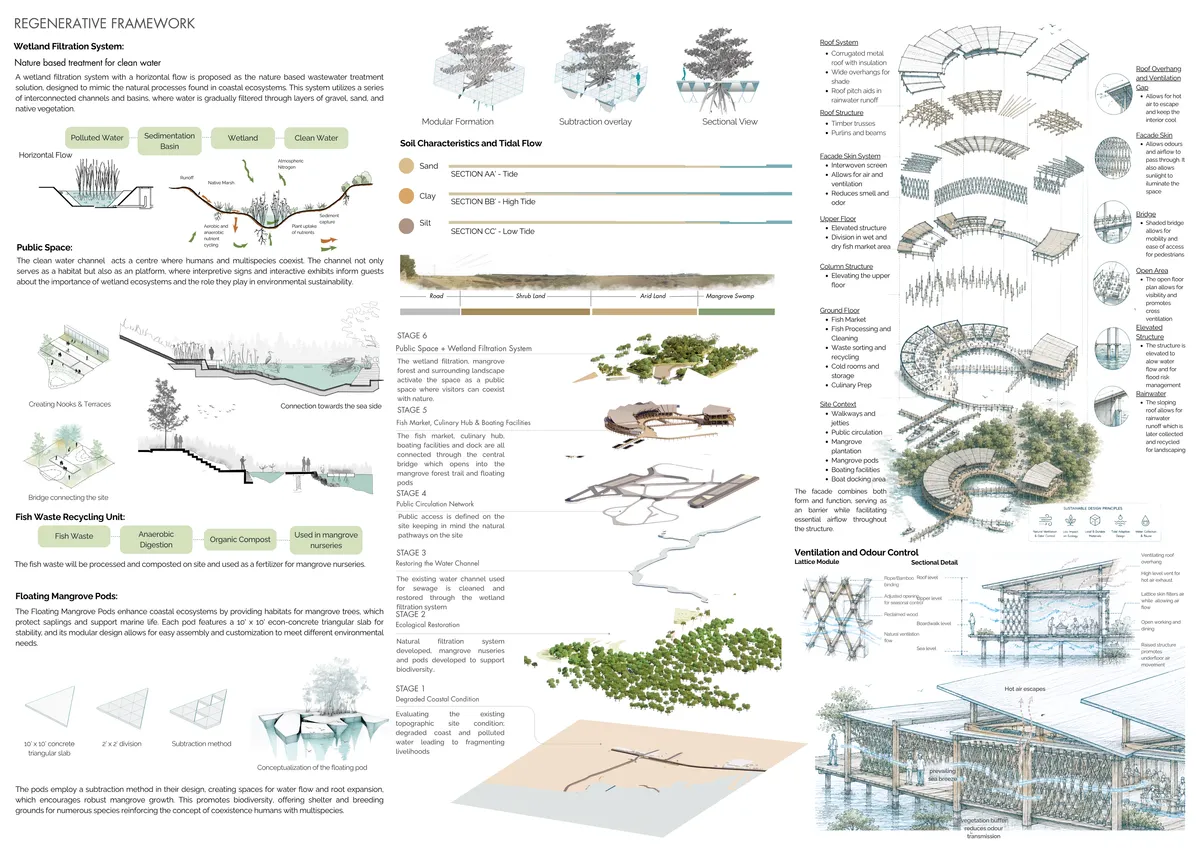
A strong and well-researched regenerative proposal that successfully connects ecological restoration with community livelihoods and public space. Its greatest strength is the systemic relationship between water, mangroves, waste, fisheries and architecture. Further technical validation and a sharper architectural synthesis would strengthen the project considerably

The project demonstrates a well-conducted site analysis and a thorough study of the surrounding context. However, the plan resolution is low, which affects its clarity and readability. Overall, it is a good project that successfully integrates architectural design with urban design.
'Toolkit' of Self-Resilience: A Modular Play Frame That Gives Agency Back to Children in Kutupalong
A 2 x 2 x 2 meter kit of columns, beams, joints and soft mats lets families in Kutupalong assemble their own spaces for play, learning and rest.

RESILE-UBUNTU: Circular Courtyard Neighborhoods for Widows and Children in Kandahar
A shortlisted Resile entry that layers home, courtyard, cluster and commons so that safety and shared daily life can rebuild a community together.


COASTAL CONFLUENCE : SUBSTITING STORY OF SALT SILENCE AND SURVIVAL
In the shifting tides of our time, where urban expansion often overpowers the gentle rhythms of nature, Coastal Confluence proposes an integrated approach to ecological restoration and sustainable development in the fragile Thane Creek region of Navi Mumbai. This thesis explores the vital role of mangrove ecosystems in mitigating coastal erosion, preserving biodiversity, and fostering community resilience, telling a story of healing, coexistence, and renewal.


Nice concept and creative design

Amazing work!
Nice conceptualization and presentation
Resile: A Clay Village Where Independence Does Not Mean Isolation
A settlement of 20 clay buildings for families affected by conflict, where shared courtyards and bridges keep independence from becoming isolation.


Mediating resilience and livelihood through community architecture Regional center for Oceanography
Integrated Centre for Coastal Interpretation, Research and Resilience integrates marine research, public interpretation, community development, and disaster resilience. Community spaces are designed to convert into emergency response and relief facilities during disasters, ensuring adaptability and long-term coastal resilience.
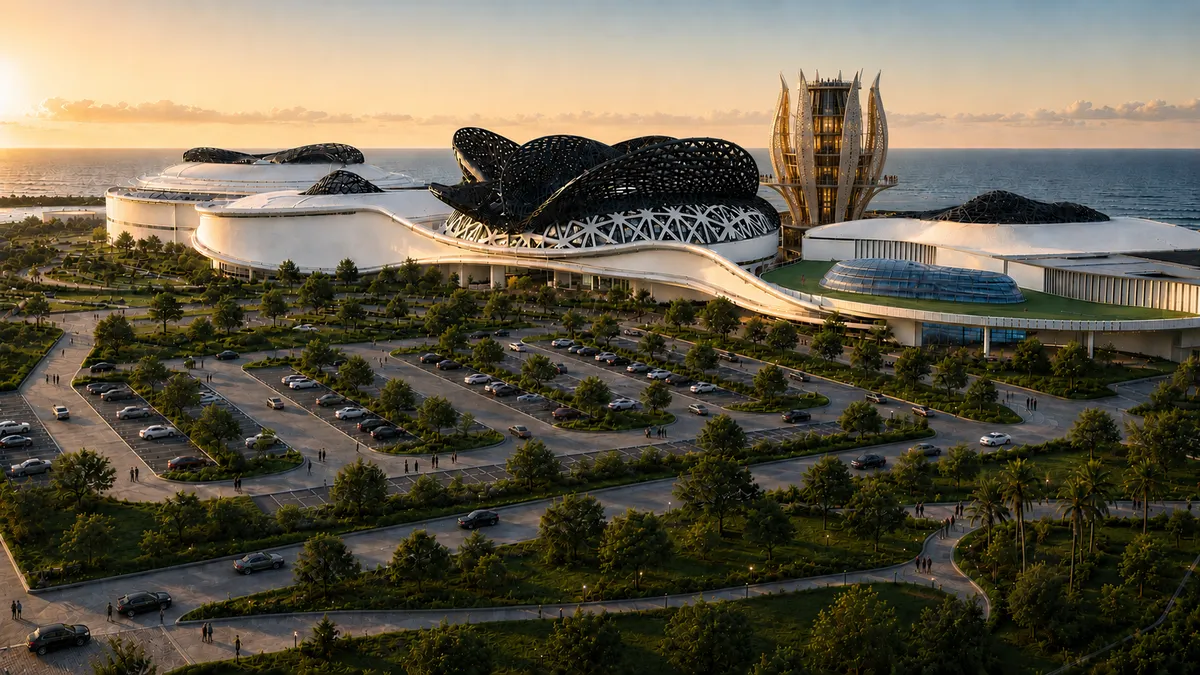


HELAXIS: A Design Proposal of a Multi-Thematic Regional Disaster Agency Complex in Region VIII
Disaster Risk, Reduction, and Management (DRRM); prototype development; resilient architecture; simulation; thematic areas

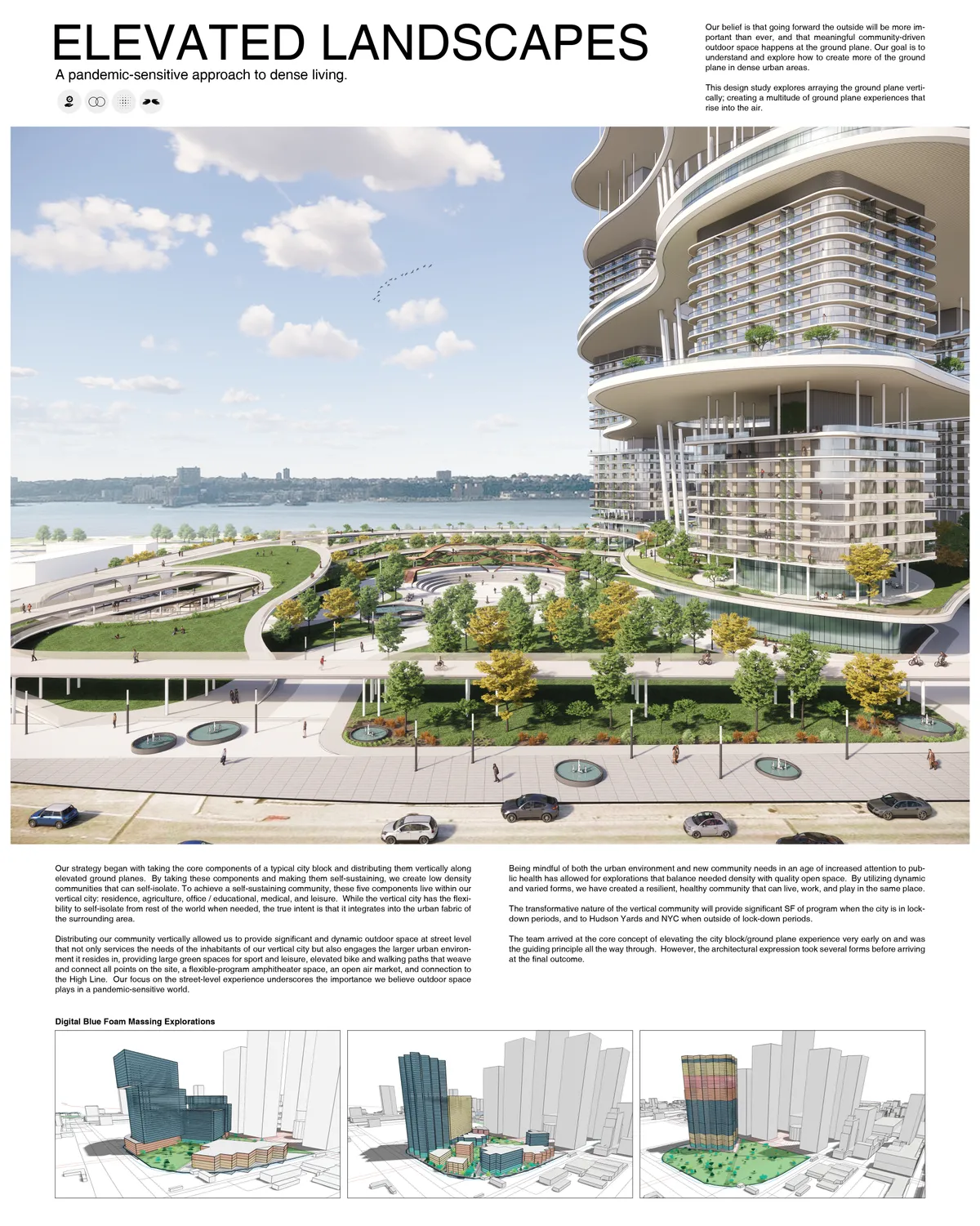
The end of expansionary urban planning
The article shows that the future of urban planning lies in transforming existing spaces rather than expanding cities, in order to address ecological, economic, and territorial challenges.



A manual for Kerala
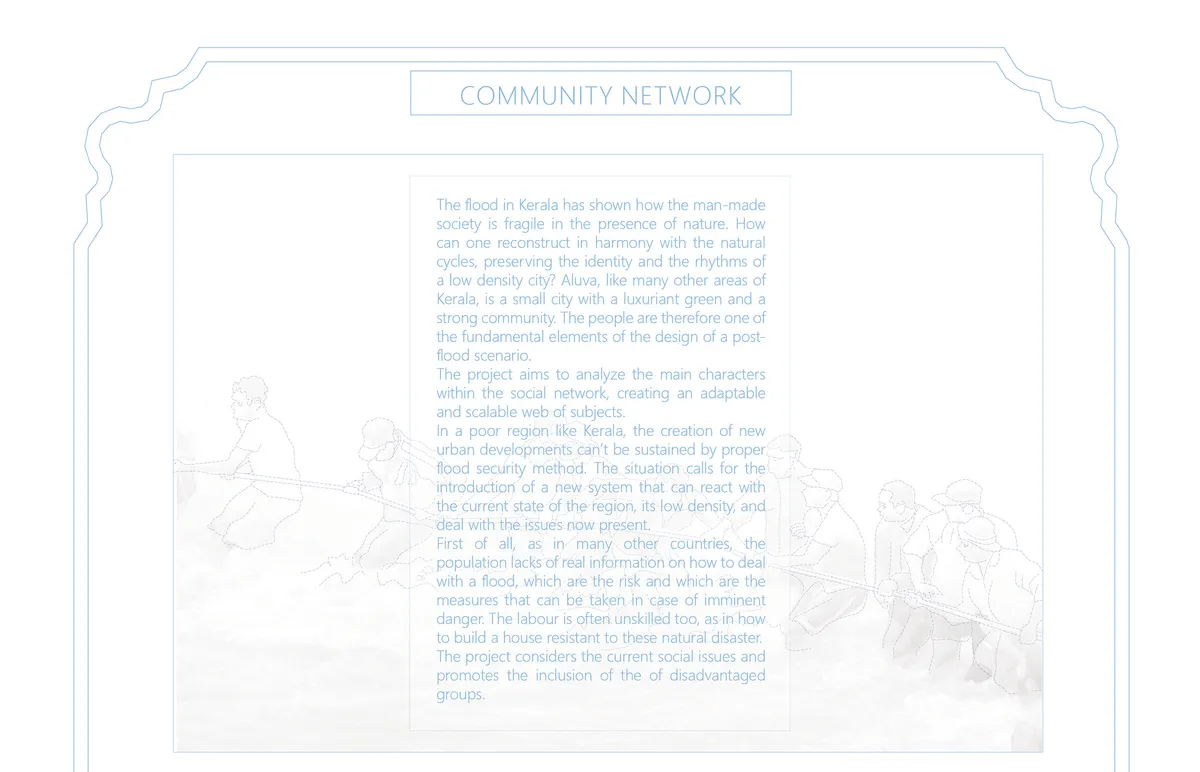
The project aims to analyze the main characters within the social network, creating an adaptable and scalable web of subjects.


A strong, context-sensitive thesis that thoughtfully addresses seasonal flooding through community-driven and adaptable architecture. Further development of the architectural drawings and flood-response details could strengthen the promising concept and its practical impact.
Such a wonderful way of seeing, thinking and responding to one's surroundings. This project is truly thoughtful and deeply connected to it’s context. Bravo for the effort and dedication behind it!