

Adaptive reuse, a prototype for the new norms of sustainability.
An ode to sustainable living.

We the humans are rapidly seeking opportunities, we gain interest as well as lose interest in a spur of a moment. Brownfields are a part of this human behaviour that has caused this switch, we kept abandoning cities while counter developing another city, thus the emergence of satellite towns. Urban sprawls just kept on increasing so does the congestion in those cities, and we the humans still kept on looking for better opportunities went in search of those in megacities. Most of the problem arises because of lack of employment, travelling distance to the works place etc. But even though the issue persists, the employment aspects could be still be covered due to globalisation.
Thus these abandoned cities/towns or even buildings could be reused. The most efficient way to have sustainable living is on the principles of the 3 Rs’ –reduce, reuse and recycle. On the account of this adaptive reuse could be thought to be a prototype for the notion. A living; community is created /developed with the experiences that lingered around it, this space is a creation of a memory or experiences that are associated with it. We define spaces according to our comfort rather than a designed space the architect in each human being creates a perception of the space around them, about how the space should be. The main constant in the process would be changed, the idea of the space change, the experiences would be gained. What remains in the process would be our memories associated with it.
With this new notion of sustainability, recycling and prefabrication allow us to manipulate humans with that notion of the five senses in them. Creation of engaging space by inducing activity in an abandoned space would thus evoke a memory within them/ or maybe intangibly been created within them cause of past experience.
Adaptive reuse could be thought to be a tool that would mend the problems of that society is now facing such that of the urban sprawl, unavailability of construction sites and overgrowth of the cities. This would be a smart utilization of the existing resources that is available.
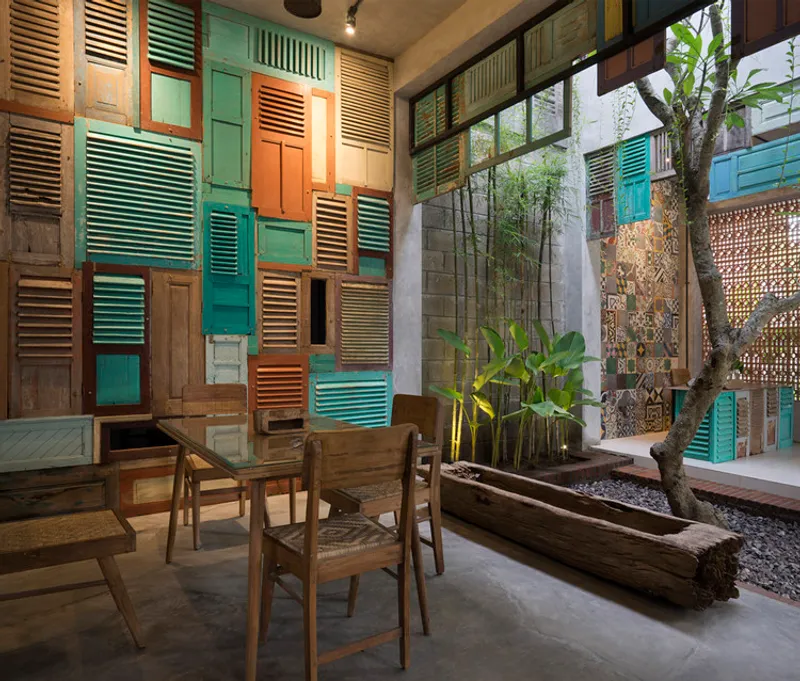
Recycling the materials is also another practice of sustainability that have been adopted. A simple example that could be cited for the recycling of the materials to be used is demonstrated by Ar. Andy Rahman, one among his projects he has used windows of various old buildings that were collected and being used as a wall. Thus, in turn, the age of the building would get over but still, the building materials could be used as a component in another
As Ar. Laurie baker has once said a building life is that of the lives of that of the users
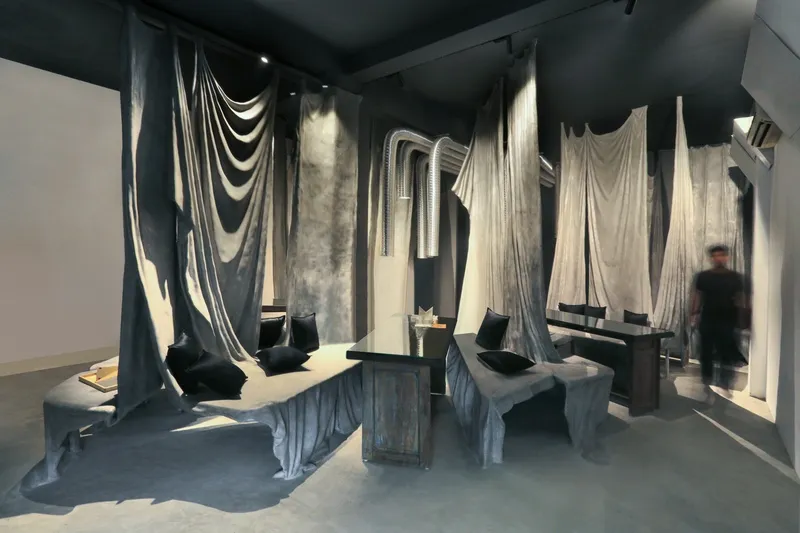
An Indian architect named Ar. Vinu Daniel may be coined to be the pioneers of sustainability. One of his cafes has used cloth that has been used as a reinforcement dipped in the concrete that would acquire a particular shape as furniture. His ongoing project also includes the use of old toys as one of the components in his design.
Even in foundation these days some are using used tyres that would be acting as a flexible way against certain calamities.
Adaptive reuse, the term may not be familiar to us but is been practised for the past two decades or so. Mainly the historic buildings such as palaces and other places of historical importance would either be turned into an office or a museum. Thus similar old towns, industrial development, or industries could help in reviving the livelihood of the people, betterment the lifestyle of the people and contributes to a unique urbanisation pattern. The very such example is that of “the tress”, a project of Godrej group, the abandoned land of old factory precincts into a township, the factory has been converted into an office space by studio lotus an architectural firm. The incorporation of the existing structures into the design how they have tackled issues have been clearly been demarcated.

Thus creating a highly active space is an important factor while assigning the role of the reuse in the building. The conversion of the building uses should be done in such a manner such it could be socially acceptable to the user groups and feasible. Many of the authorities all over the world have contributed to such a cause and have taken initiatives as well as subsidies.
Thus in adaptive reuse could be thought to be a prototype for the new notions of sustainability. The big challenge in the formal analysis of adaptive reuse architecture is the need to consider both the original building with its original use and physical structure and the transformed building with its new use and new physical structure. The mass, the size, the rhythm and the form of the existing building all provide opportunities for balance or counterpoints. Thus careful analysis should be applied in the process of allocation.
Rather than mimicking the traditional construction types, the building should be in such a manner that itself would represent that of the time in which the building is constructed, as it is for now and after rather than what the building is suited for.
The land that was abandoned for almost a decade and would become illicit the structure when become an active space would create a sense of community .
As Winston Churchill has once said, "We shape our buildings; thereafter they shape us." The psychological changes that a good infrastructure that provides the basic necessities could have a greater impact and thus would in turn resolve the unresolved problems the state faces.
Thus focus on reviving the livelihood of the neighbourhood, providing a sustainable living environment, thus the abandoned sites would be a physical entity that could act as a driving force of revitalization.

Popular Articles
Popular articles from the community


FCC Arquitectura Expands a Portuguese Granite House with a Board-Marked Concrete Wing
In Portugal, JV House pairs a cleaned-up whitewashed and granite dwelling with a timber-shuttered concrete extension, courtyards and a garden pool.

David Ortega Stacks a Two-Story Mexico City Penthouse Around a Steel Stair and a Pergola-Shaded Roof Terrace
In Colonia Roma, a 300 m² penthouse uses oak joinery, a planted steel stair and a slatted roof pergola to make a new-build apartment feel like a house.


Singing Woman: An Opera House That Performs Before the Curtain Rises
Ovidiu Cristian Pavel's conceptual opera house translates Estonia's choral identity into a sculpted waterfront landmark facing the Baltic Sea.

ETEH Reworks the Shared Spaces of São Domingos School in Brazil Around Timber, Color and Hanging Plants
At São Domingos School in Brazil, 436 m² of hall, refectory and library are recast with timber joinery, a yellow and blue code and trailing greenery.

Similar Reads
You might also enjoy these articles

Vereda Arquitetos Renovates a 40-Square-Meter Apartment Inside Niemeyer's Copan Building
A compact unit in São Paulo's most iconic residential tower gets a material overhaul that pairs exposed concrete with bold blue Formica.

Shakur's House: Exposed Brick as an Interior Organiser in a 168 m² Mashhad Residence
Brick moves indoors in this Mashhad residence, where masonry walls, glass partitions and teal planes sequence a compact home without closing it off.

Day and Night Park: A Time-Based Urban Newsstand in Beijing
A temporary urban newsstand in Beijing blending travel, light, and reading through poetic colors, compact form, and community-focused design.

Modernist Patio Renovation in El Masnou, Barcelona by Oliver Segura Arquitectura + Cebrià Arquitectura
Modernist patio renovation blending tradition and innovation with a movable pool, leveled floors, and Catalan materials in El Masnou.

Comments (0)
Please login or sign up to add comments
No comments yet. Be the first to comment!