
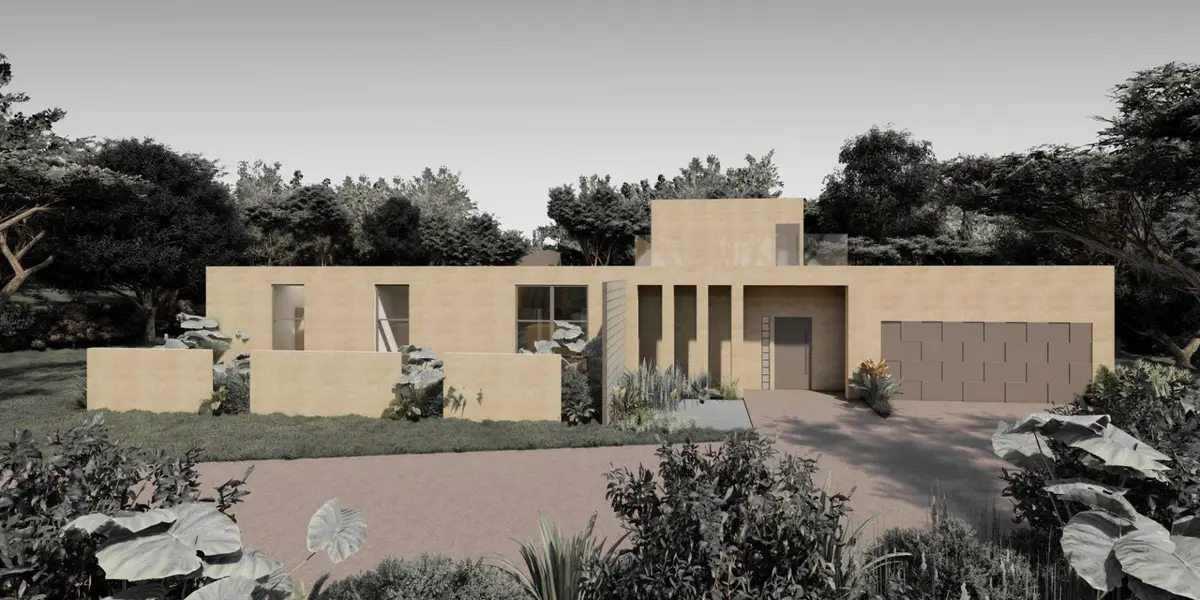
Designers rise up to the challenge by building homes using squares and squares only.
Results for ‘ Squared Up’ - housing design competition


Curves add a touch of excitement to anything static, but when it comes to functionality; straight elements are a crucial part of structures that are made anywhere.
Most buildings in ancient times used right angles in resonance with stable structures and were the only possible approach with the technology available back then.
Right angles have been attributed to efficiency in every aspect of our planet and this universe, right from laws of physics to human skeletal structures.
With times and technology shifting to curves as an aesthetic (Eg. Parametric Architecture), the power of rectilinear forms is overlooked with attribution to budget and mundaneness.
What if squares are all we had? What if the only option to deliver a concept space for you was only rectilinear?
The qualm of using rectilinear forms usually comes into the spotlight when we look at generic urban environments at large. It creates this uneasiness of delivering average forms in the name of functionality.
When we look at the flip side, parametricism or deconstructivism on the converse can dominate the function as well while implemented to serve the spaces – hence the bias is not entirely accurate.
The exercise is focused on getting back to the basics, what if - all we had a single shape to design our buildings on? What if this shape’s positives and negatives were balanced out to make things work spatially and architecturally?
The challenge here was to constructing every element of a house to just one shape, a Square.
How would you as a designer interpret the qualities of the form in the physical realm of geometries translated into real forms?
How will the shape limitations help you shape a new experience through this form of limitation?
Design a villa that is all squares right from the furniture to windows. The square shape can be embodied in at least in 2D to carve out the architectural concept. The forms necessarily do not require to be cubic and can take liberty in locking only two-dimensional square embodiment.
The minimum requirements for the house must be three bedrooms, one kitchen and dining space, one living area, and a swimming pool. Filleting edges are permitted.
The site for this project is located in the Encino precinct of Los Angeles, CA. The site is located amidst several other villas and recreational properties.
The design outcome is expected to take into account the presence of other villas and locations next to the site to arrive at the views and privacy.
The jury for the competition consisted of esteemed designers, professionals, and academicians from around the world. The Lead Jurors for the competitions were as follows:
Eric Logan, Principal, CLB Architects, United States
Tolya Stonorov & Otto Stonorov, Principals, STONOROV WORKSHOP, United States
Juan Saez Pedraja, Principal, Saez Pedraja, United States
Robert M. Gurney, Owner / Principal, Robert Gurney Architect, United States

Some of the Best of competition projects are:
Winning Project: Flexible Square
By: Genc Blakaj
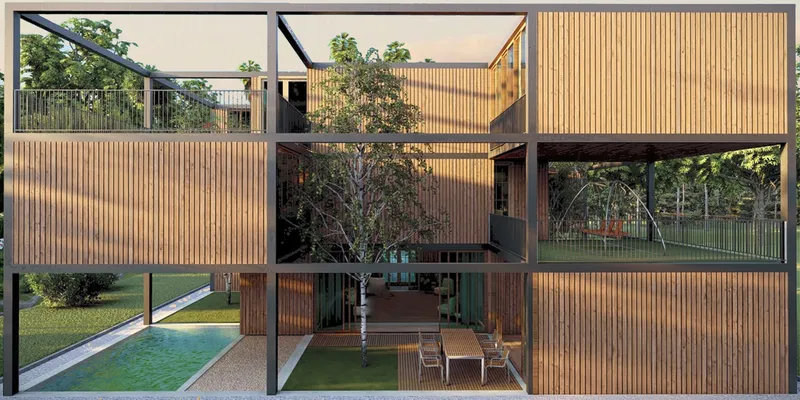
Fig: 1 Cover image
Description: During our lives, we experience many changes, so it is often necessary that the spaces we use also change. The house is one of those spaces that we usually buy/build once in a lifetime and use it forever, but due to the fact that the family changes over the years, modular houses which are flexible depending on our requirements are very necessary nowadays.
--------------------
Editor’s Choice: The Ascent
By: Jeffery Li

Fig: 2 Floor plan, interior, and exterior view
Description: The Ascent is a modernistic cubicle-style three-story house with a semi-basement garage and a swimming pool. The concept behind the Ascent is its connectivity to its surroundings and nature. Given that the site overlooks the city, the building consists of curtain walls expanding from slab to glass to provide the user a clear full view of the scenery.
--------------------
Editor’s Choice: Squared Up
By: Vikram Ghattora
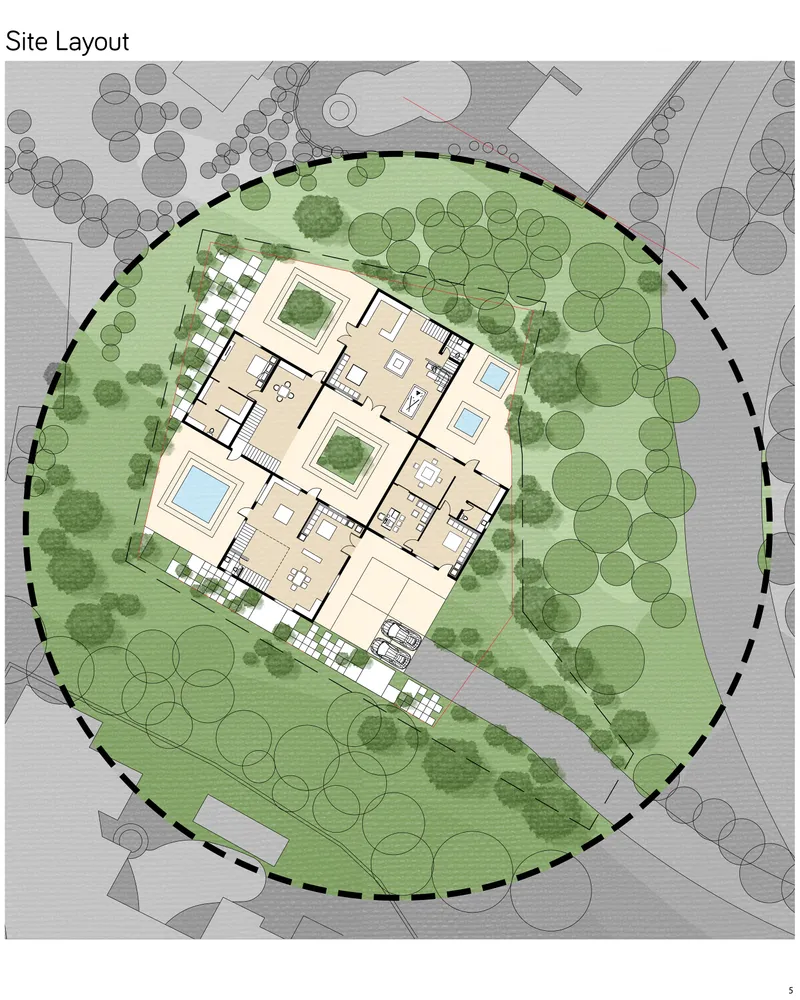
Fig: 3 Site layout
Description: The brief of the competition was what if - all we had a single shape to design our buildings on? What if this shape’s positives and negatives were balanced out to make things work spatially and architecturally? The challenge here would be constructing every element of a house to just one shape, a Square.
--------------------
Editor’s Choice: SQUANGLE
By: Marta Kloch

Fig: 4 Floor plan, Section plan, and interior view
Description: SQUANGLE is the project of Willa, which is based on the creation of living space by squares. One of the main assumptions is to create a comfortable space for a family, which fully uses the existing resources of the landscape and nature. Future inhabitants of SQUANGLE is a family of five persons which consist of father, mother, and 3 children.

Follow us on social media: Facebook | Instagram | LinkedIn | Twitter | Youtube
References (3)


Popular Articles
Popular articles from the community


Tsunami Convergenics: Turning Catastrophic Ocean Forces into Underwater Housing Infrastructure
A speculative underwater settlement off the coast of Onagawa, Japan, treats tsunamis and typhoons as energy sources rather than threats.

Faces of the Soviet Avant-Garde: Turning Moscow's Street Names into an Open-Air Museum
A network of sculptural installations across a Moscow residential district transforms forgotten architect names into spatial encounters with cultural memor

Singing Woman: Contemporary Architecture Inspired by Estonia’s Voice and the Sea
Singing Woman turns Estonia’s song culture into flowing opera house architecture, blending public life, landscape, sea, and national memory.

The Amber Palace Opera: A Geological Fiction Surfaces on Tallinn's Baltic Waterfront
Pierre Brillard reimagines a Baltic legend as a public landscape, opera house, and waterfront promenade rooted in Tallinn's coastal identity.

Similar Reads
You might also enjoy these articles
The Amber Palace Opera: A Geological Fiction Surfaces on Tallinn's Baltic Waterfront
Pierre Brillard reimagines a Baltic legend as a public landscape, opera house, and waterfront promenade rooted in Tallinn's coastal identity.
Dynamic Modules Shelter: A Telescopic Ring for Mountain Pilgrimage
A circular modular framework of steel, bamboo, and fabric grows vertically with demand, wrapping communal ground in adaptable shelter.
Singing Woman: Contemporary Architecture Inspired by Estonia’s Voice and the Sea
Singing Woman turns Estonia’s song culture into flowing opera house architecture, blending public life, landscape, sea, and national memory.
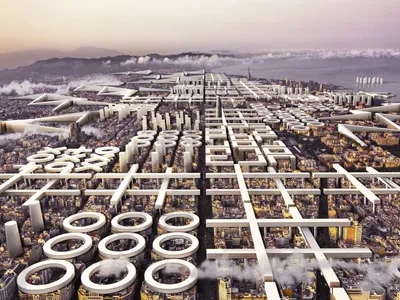
HYPERBLOCK: Flexible Urban Design for Barcelona’s Future City
HYPERBLOCK reimagines Barcelona as flexible urban design, layering density, daylight, public space and adaptable housing above Cerdà’s grid.

Comments (0)
Please login or sign up to add comments
No comments yet. Be the first to comment!