
Discovering Sustainable Architecture in Sports Arenas: The University of Idaho Central Credit Union Arena
Explore the University of Idaho Central Credit Union Arena's innovative sustainable design in sports architecture, showcasing mass timber and natural elements.


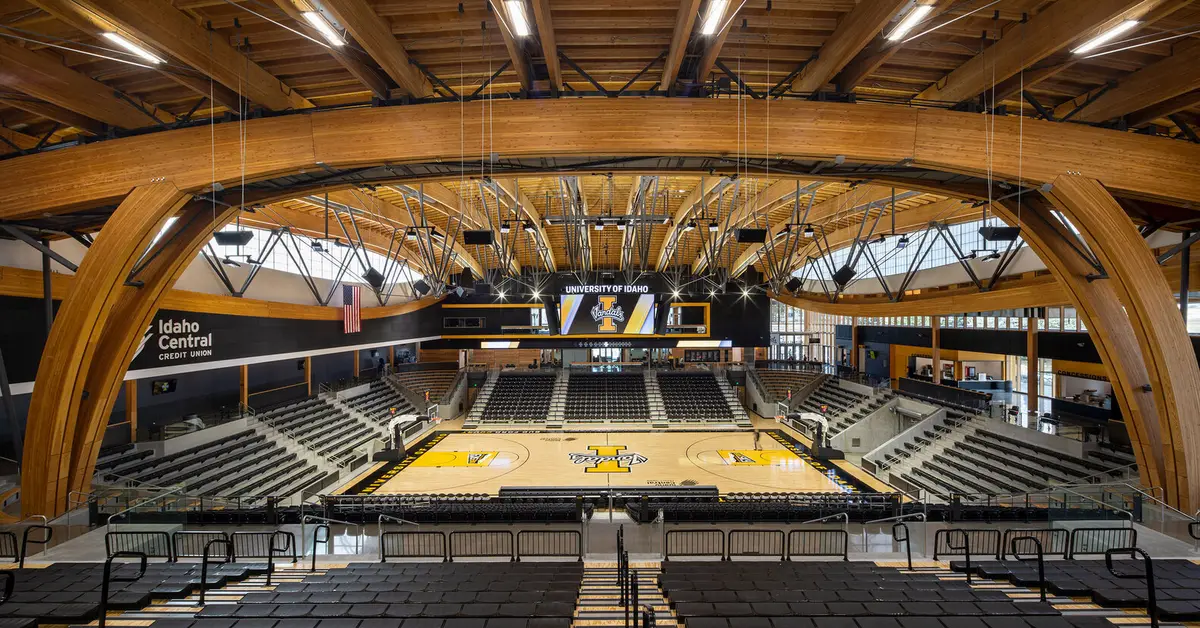
The University of Idaho Central Credit Union Arena, designed by Opsis Architecture, is a prime example of how sustainable practices can be integrated into sports facilities. This 4,000-seat multi-use arena is not just a venue for the university's basketball program but also a hub for various community events. This article explores the sustainable architecture of this arena and its significance in the realm of modern sports facilities.

The Role of Sustainable Materials in the Arena's Construction
Mass Timber: A Cornerstone of Sustainability
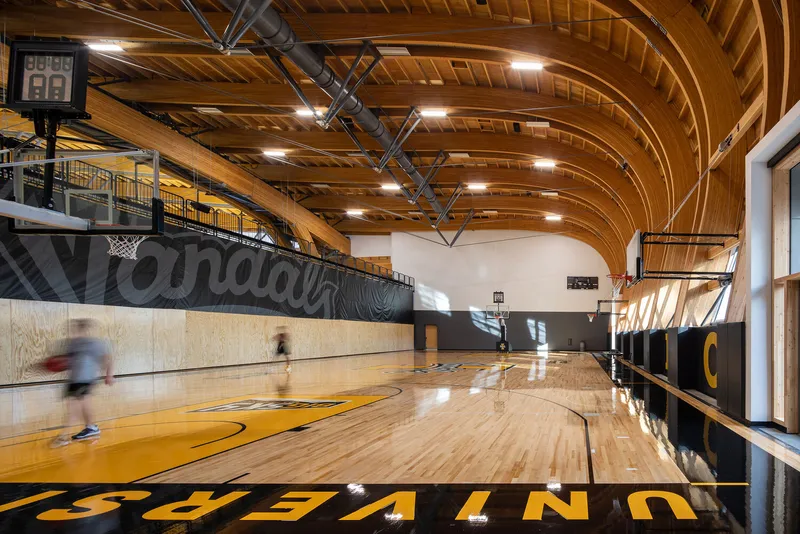
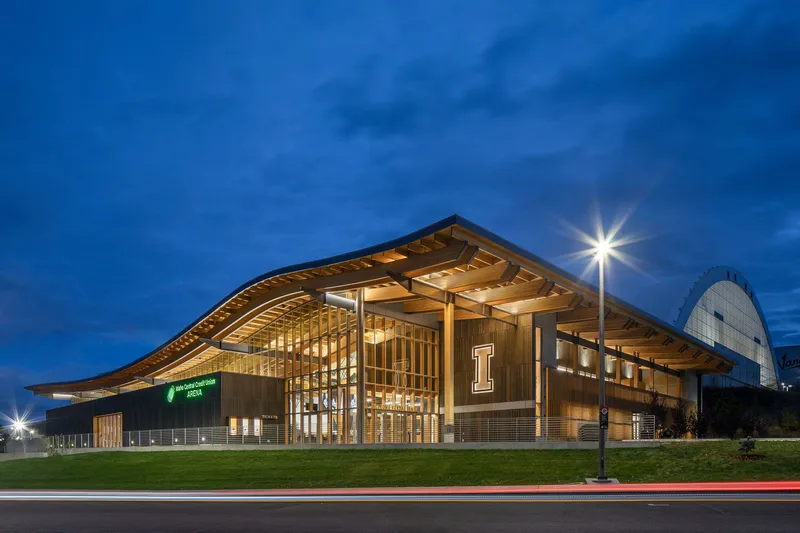
At the heart of the arena’s design is its use of mass timber, which significantly deviates from the traditional steel and concrete construction typical of sports arenas. The choice of glue-laminated timber and dowel-laminated timber for long-span trusses not only showcases the potential of locally sourced materials but also emphasizes a reduced carbon footprint.
Benefits of Natural Light
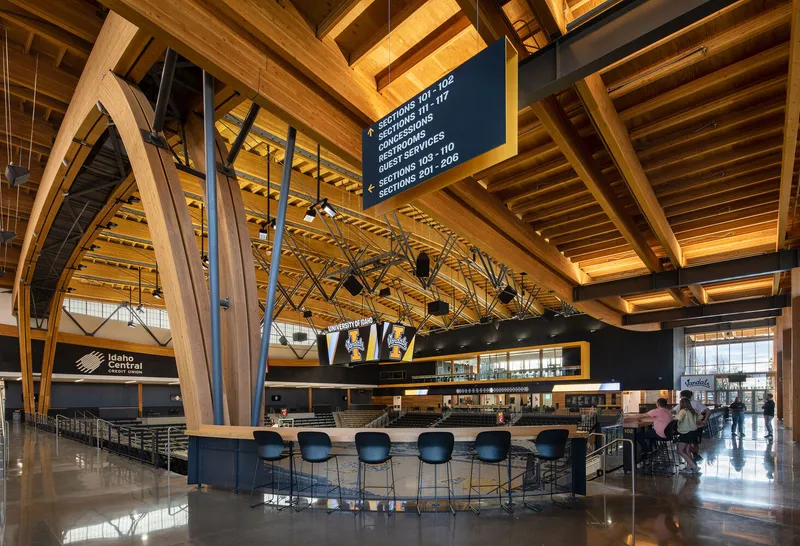
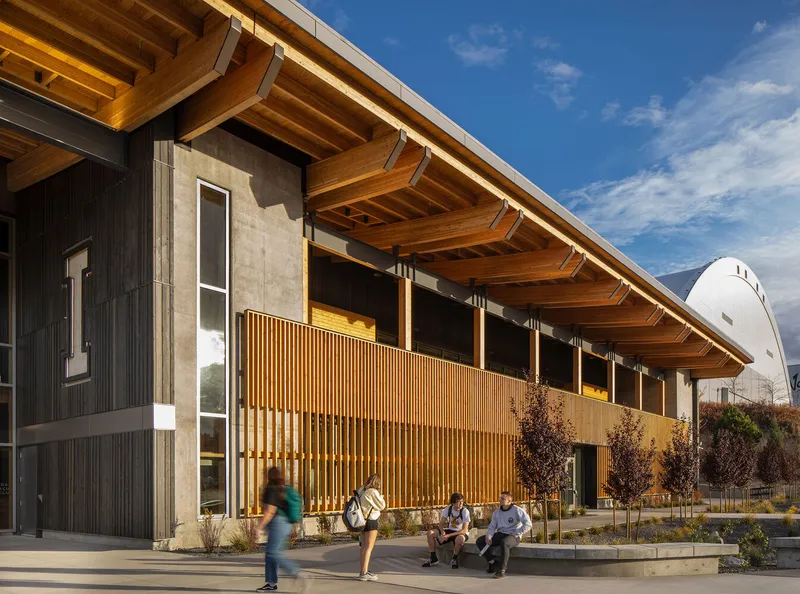
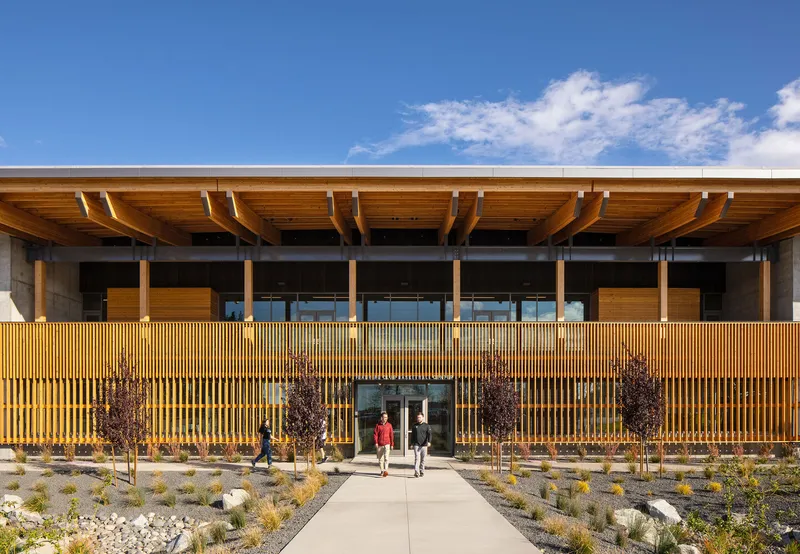
The strategic use of natural light through translucent glazing and a fully glazed wood curtain wall enhances the arena’s energy efficiency. This design choice minimizes artificial lighting during the day, which contributes to lower energy consumption and a deeper connection with the arena's surroundings.

Design Inspired by Local Landscape
Reflecting the Palouse Region
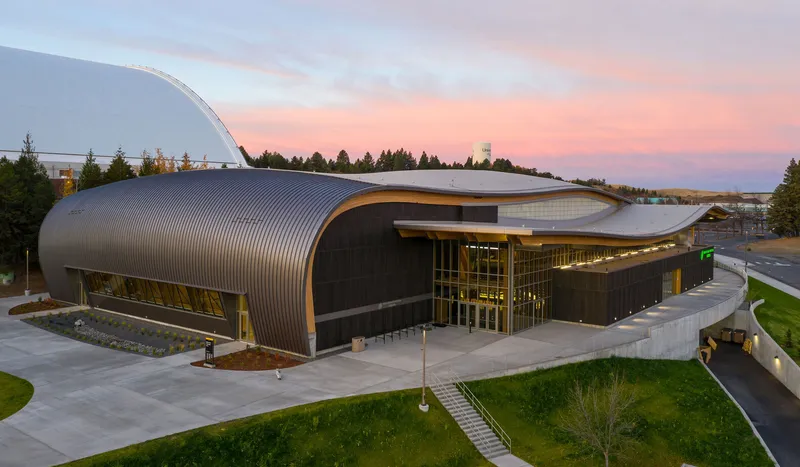
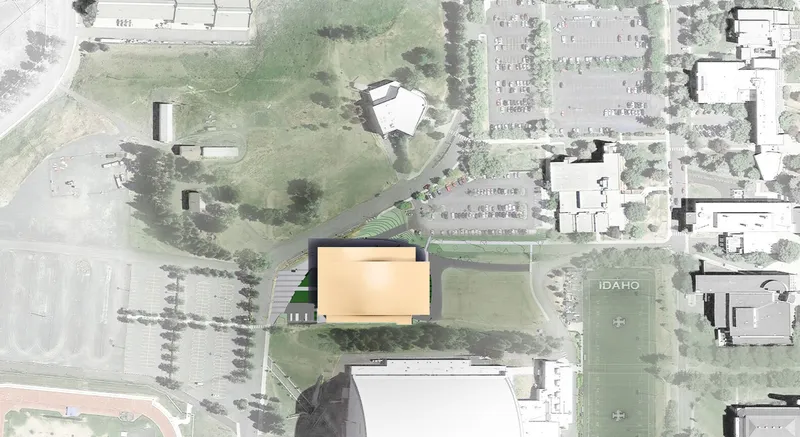
The architectural design of the Idaho Central Credit Union Arena draws inspiration from the undulating forms of the nearby Palouse region, shaped by historic Missoula floods. The overlapping contoured roof forms mimic the rolling hills, blending the structure seamlessly with its environment.

Integrating Historical Elements
The exterior features charcoal-stained cedar walls that echo the textures of early homestead structures in the region, creating a visual connection between the new and the historical aspects of the locale.


Innovation in Structural and Mechanical Integration
Advanced Engineering Techniques
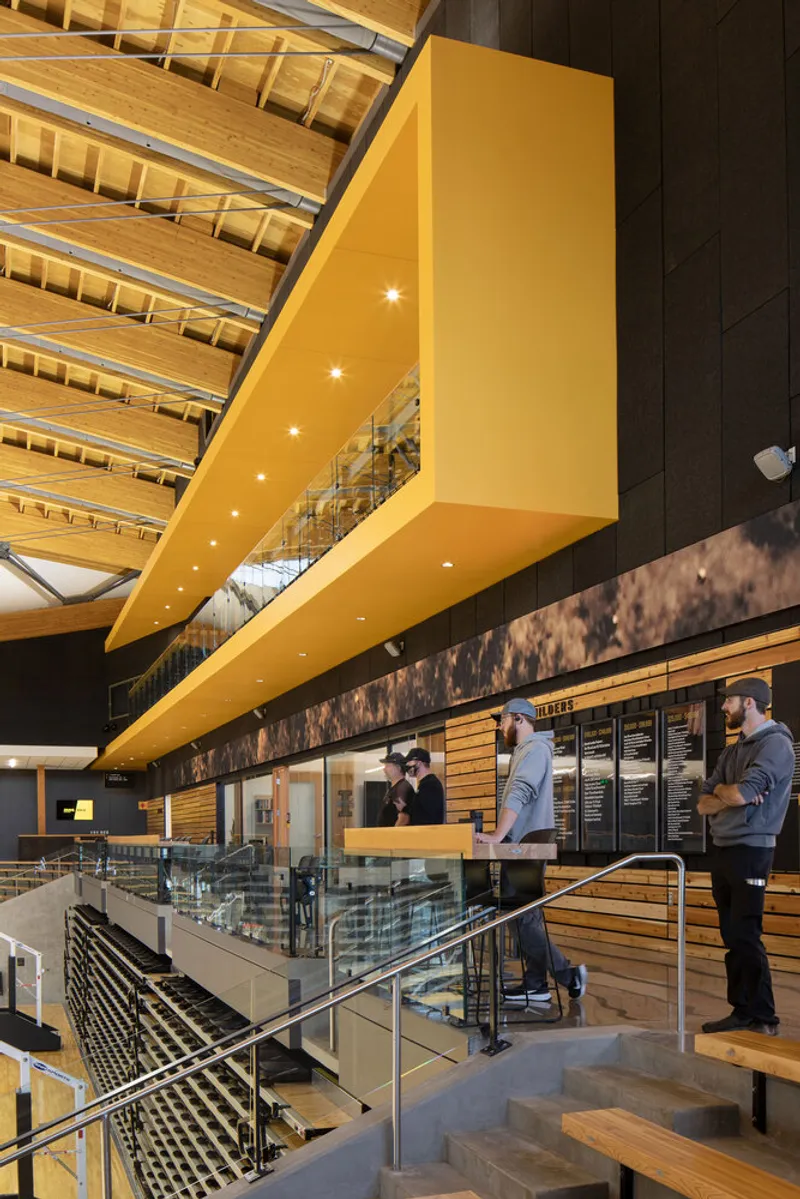
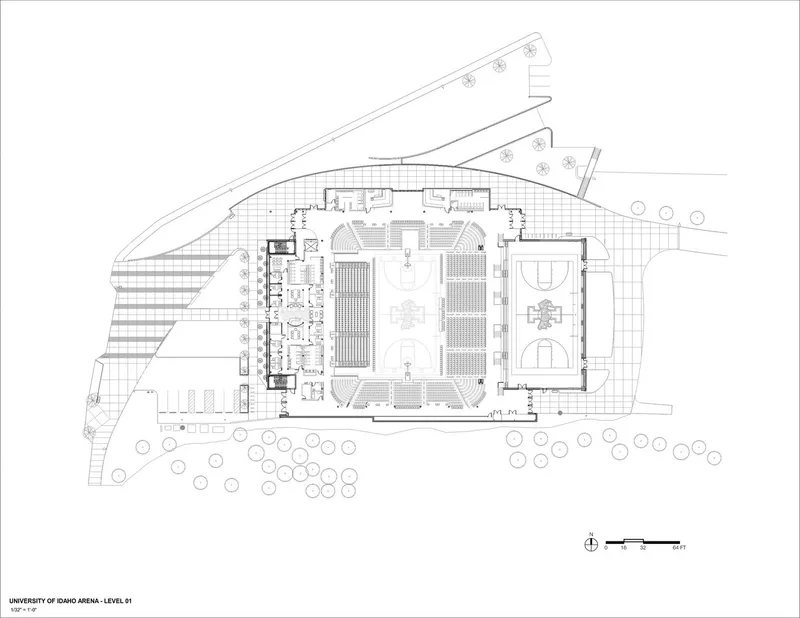
The arena’s structure uses a sophisticated truss system that accommodates mechanical and electrical systems within its interstitial spaces, cleverly concealing them and maintaining aesthetic integrity. This "utility highway" demonstrates an innovative approach to architectural challenges.

Spectator Experience and Facility Utility
The design extends beyond aesthetics and functionality to enhance the spectator experience. The open spaces, panoramic views from the Vandal terrace, and the integration of utilities demonstrate how the arena is crafted not just as a sports venue but as a community focal point.

The Future of Sports Arena Architecture
The University of Idaho Central Credit Union Arena is a beacon of sustainable architecture in sports arenas. Its design revolutionizes how sports facilities can contribute to environmental stewardship while serving their communities. As we look towards the future, the principles seen in the University of Idaho arena serve as a model for others to follow, combining functionality, sustainability, and aesthetic value.

All photographs are work of Lara Swimmer


Popular Articles
Popular articles from the community


ALGAL REALM: A Bio-Integrated Lunar Habitat Design for Life Beyond Earth
ALGAL REALM reimagines lunar habitat design with algae-powered life support, 3D-printed regolith, and vertical living for a lunar future.

Lunar Spiral: Space Architecture Shaped by the Mathematics of the Universe
Lunar Spiral reimagines space architecture through Fibonacci geometry, lunar regolith, levitating habitats, and self-sustaining Moon living.

Little Red Riding Hood: Architectural Design as a Journey Through Fear, Light, and Storytelling
Little Red Riding Hood reimagines the fairy tale through architectural design shaped by fear, light, scale, memory, uncertainty, and choice.

Co-life: Sustainable Architecture for Age-Friendly Community Living
Co-life reimagines sustainable architecture for seniors through courtyards, rammed earth, shared gardens, and spaces designed for belonging.

Similar Reads
You might also enjoy these articles


Hodi-Mandai Geram
Project Function: Preservation and revitalization of the Intangible heritage and socio-spatial identity of the Hodi by Housing, Cultural Memory Center, Sacred Grove, landscape, local tourism economy


Olio Towers: A Mid-Rise for Performers That Fuses Housing, Rehearsal, and Stage
Located blocks from Houston's Theater District, this modular tower stacks living units around a central performance atrium.

Oasis: Modular Green Housing Carved into Dhaka's Urban Fabric
A shortlisted Plugin Housing entry reclaims unauthorized settlements in Dhaka with stepped concrete volumes, green roofs, and ventilation-driven design.

Black Hole: A Floating Megastructure for the Post-Physical Era
Emiliano Mazzarotto envisions a spherical, self-scaling arena where e-sports, digital hotels, and holographic stadiums replace traditional public space.

Explore Educational Building Competitions
Discover active competitions in this discipline

Challenge to design public laboratory

Challenge to reimagine the Iron Throne

Photograph architecture without architects

Illustrate the lost glory of Angkor Wat - Render Challenge
Comments (0)
Please login or sign up to add comments
No comments yet. Be the first to comment!