
INTERFACE: A Mixed Reality Athenaeum Where Architecture Becomes a Living Digital Layer
Floating platforms on water host holographic overlays through Hololens devices, turning unfinished volumes into full-scale design laboratories.

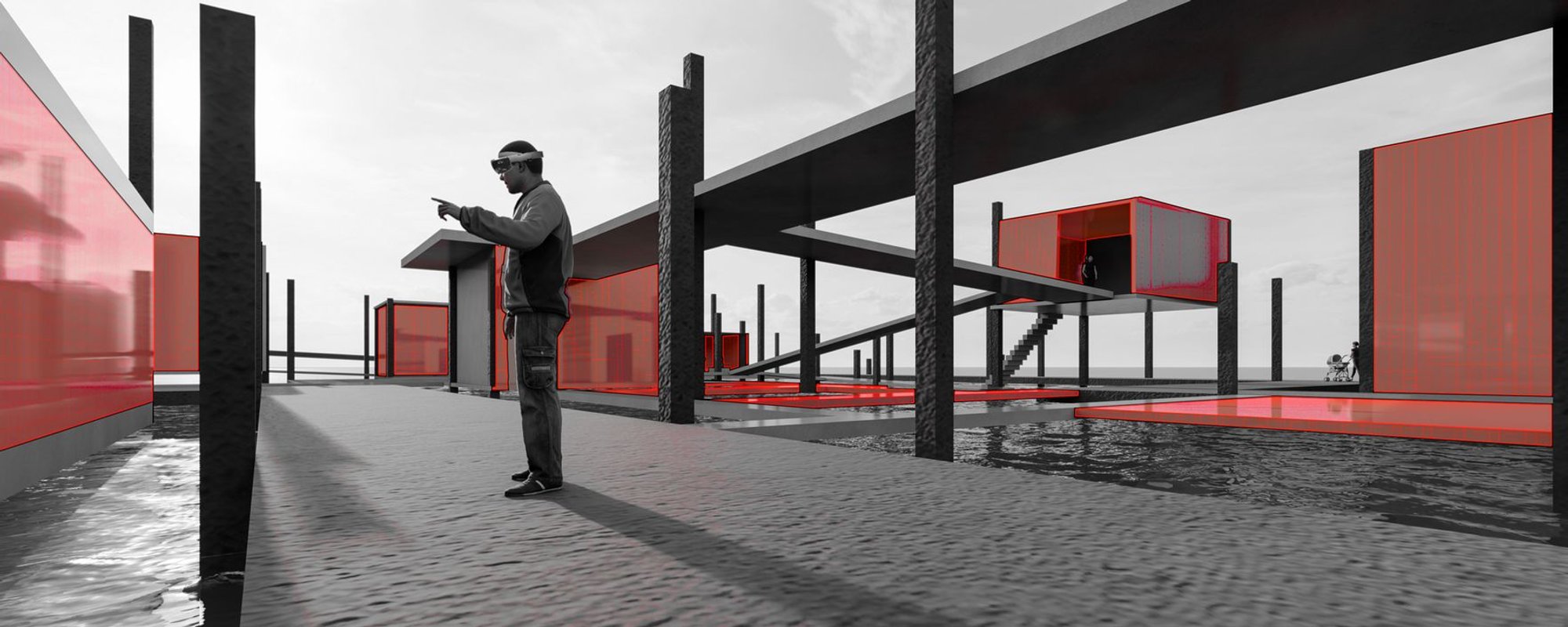
What if a building refused to be finished, not out of neglect, but by design? INTERFACE takes that provocation literally: a collection of minimal, deliberately incomplete volumes hovering above a reflective water surface, waiting for visitors equipped with Hololens mixed-reality headsets to overlay holographic architectural elements and complete the space themselves. The result is an athenaeum where no two visitors experience the same building, where walls shift, facades materialize, and entire structural systems appear and dissolve according to the program each participant selects.
Designed by İshak Şimşek and published on uni.xyz, INTERFACE proposes a new model for architectural education, one that replaces drawings and tabletop models with full-scale, real-time spatial experiences. Set on a calm water plane, the project's monochromatic landscape is punctuated by bright red translucent volumes that signal the negotiation between what is physically built and what exists only as digital projection. The site itself becomes a datum: a still, horizontal mirror that amplifies the ambiguity between real structure and virtual extension.
Floating Modules on a Reflective Datum
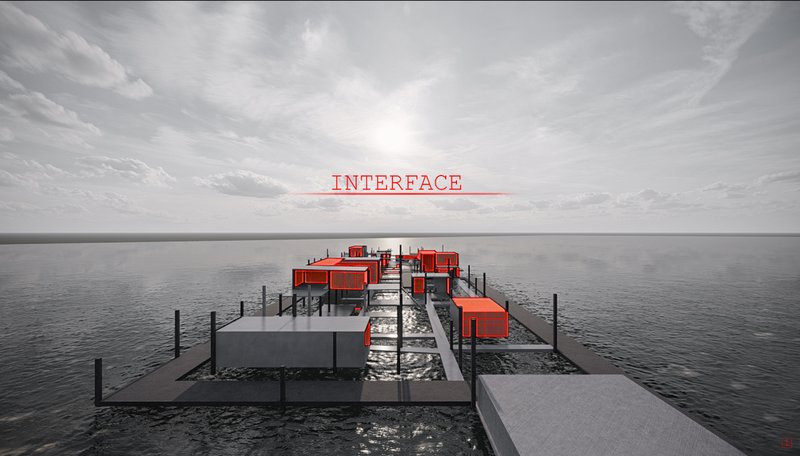
From above, the athenaeum reads as a constellation of lightweight modules elevated on stilts above the water, connected by a network of walkways and open platforms. The aerial view reveals the organizational logic: dispersed pavilions linked by circulation paths that allow both program participants and the general public to move through the installation. Public walkways thread between dedicated zones, ensuring the project functions as an open spatial experience rather than a sealed institutional box.
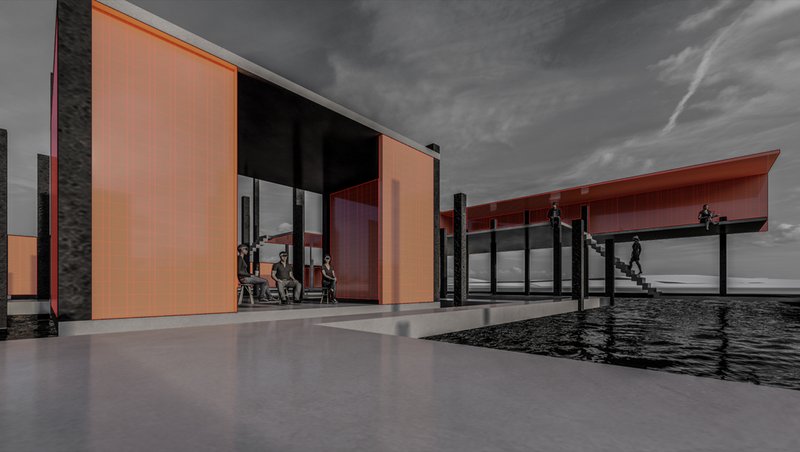
At the covered waterfront terrace, the interplay of physical and augmented architecture becomes tangible. Orange-paneled volumes frame seated figures beneath a heavy sky, creating an atmosphere of anticipation. These are the Hololens distribution zones and virtual-real interface spaces where visitors receive their headsets, get oriented, and begin to see holographic architectural elements layered over the raw, unfinished structures. The rawness is intentional: every exposed surface is an invitation for digital reinterpretation.
Unfinished by Intention: Architecture That Demands Participation
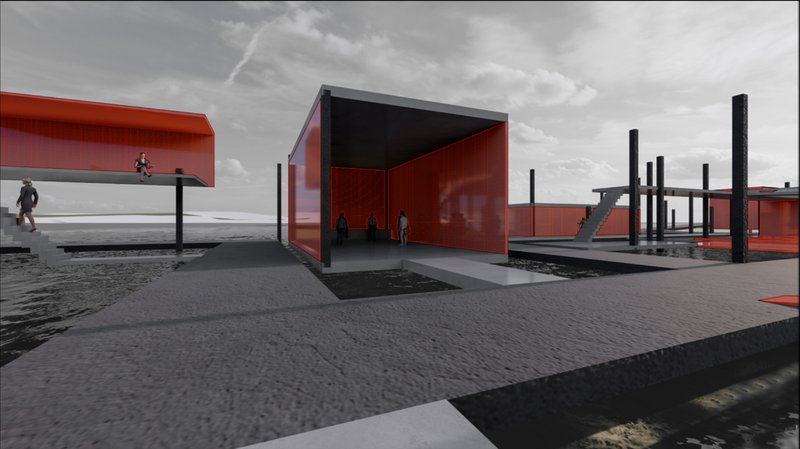
The open-sided pavilion with red interior walls and a concrete deck captures the project's conceptual core. Physical structure here is reduced to its minimum viable presence: a platform, a roof plane, a few colored surfaces. Everything else is left to the holographic layer. Mixed-reality technology enables full-scale projections of architectural elements, interactive spatial modifications through gesture-based Hololens controls, and collaborative design sessions where multiple users see and modify the same holograms simultaneously. The building becomes, in Şimşek's framing, a living instrument for imagination.
For architectural pedagogy, the implications are significant. Rather than relying solely on drawings and theoretical discussions, learners can test design decisions at full scale and in direct relation to physical context. Virtual-to-real comparisons become instantaneous: move a wall holographically, then observe how light, circulation, and spatial proportion change around you. The hologram design zones are designated precisely for this kind of iterative, embodied learning, strengthening spatial perception as a skill rather than treating it as an abstraction.
A Landscape of Negotiation at Dusk
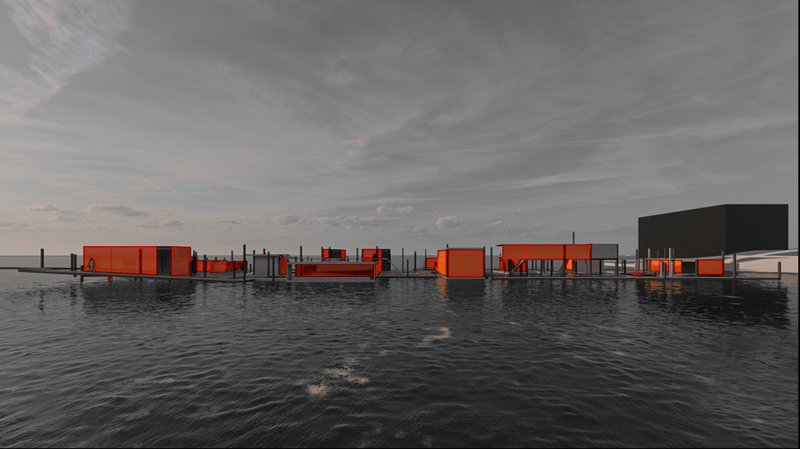
The wide dusk view across the still water reveals the full territorial ambition of INTERFACE. Dispersed orange and grey pavilions on stilted platforms stretch across the site, their reflections doubling the composition into a symmetrical field. The color coding is deliberate: the bright red and orange translucent volumes mark the zones of digital activation, while the grey concrete elements serve as neutral anchors. Together, they produce a striking visual identity, a monochromatic waterscape interrupted by concentrated bursts of chromatic intensity that symbolize the threshold between physical and virtual.
At this scale, the project reads less like a single building and more like an inhabitable landscape. The dispersal strategy resists the idea of a monolithic institution. Instead, it distributes program across the water surface, allowing visitors to drift between nodes of activity. The walkways connecting the modules are themselves spatial experiences, framing views, compressing and expanding sequences, and placing visitors in direct contact with the reflective datum below their feet.
Why This Project Matters
INTERFACE asks a question that architecture increasingly needs to confront: what is a building when digital layers can transform its identity in real time? Şimşek's answer is not a gadget-laden tech demo but a carefully considered spatial proposition. The unfinished volumes, the water site, the color strategy, the distributed plan all serve a single argument: that architecture can be both a fixed physical framework and a mutable, participatory experience. The Hololens technology is the mechanism, but the architecture does the heavy conceptual lifting.
For architectural education, the project offers a concrete alternative to the studio desk. By enabling learners to construct, modify, and inhabit their designs at full scale and in collaboration with others, INTERFACE collapses the distance between conception and experience. It does not replace the discipline of drawing or model-making; it extends them into the body and the eye. That extension, from the page to the spatial field, is where the real pedagogical power of this proposal lies.
View the Full Project
About the Designers
Designer: İshak Şimşek
Enter a Design Competition on uni.xyz
uni.xyz runs architecture and design competitions year-round that reward proposals with spatial conviction and real site intelligence.
Project credits: Interface by İshak Şimşek.



Popular Articles
Popular articles from the community

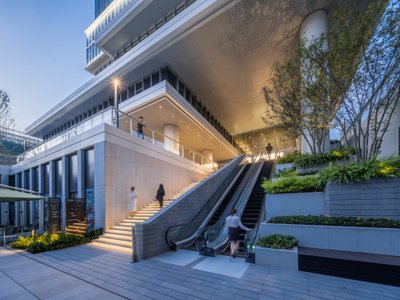
Superimpose Architecture Splits a Hangzhou Transit Hub into Valley and Cloud
A 72,000-square-meter mixed-use TOD complex near Alibaba's campus pairs human-scaled green terraces with serene tower volumes.
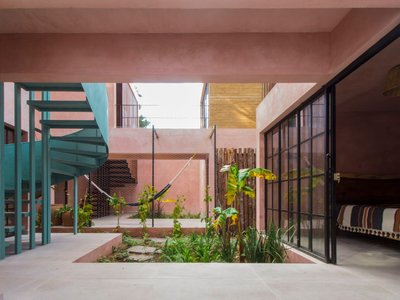
Apaloosa Builds a Forest-Edge Retreat from Compacted Earth and Pink Stucco in Chiapas
Villa Luciérnagas in San Cristóbal de las Casas pairs local earth block construction with rainwater systems and solar energy for Airbnb-ready living.
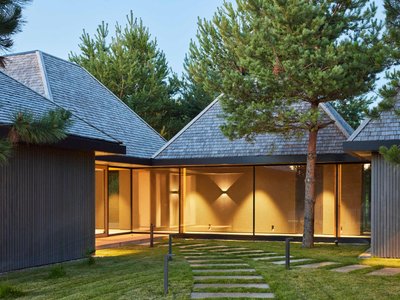
HEIMA Architects Scatters Four Oak-Shingled Pavilions Among the Pines of Northern Lithuania
A 150-square-meter guest house on a Lithuanian hilltop splits into four volumes to preserve every tree on the site.
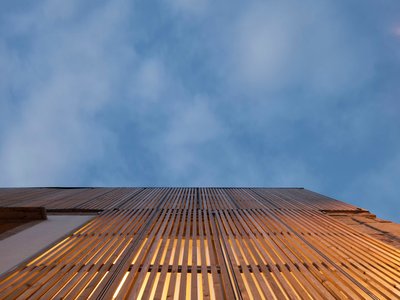
LIQE arquitectura Wraps a Vigo Old Town Housing Reform in Folding Pine Screens
Perched between castle walls and the historic center, a timber-clad renovation filters estuary light through autoclave-treated slats.

Similar Reads
You might also enjoy these articles

Koala Village: A Wildlife Rehabilitation Architecture Project Designed for Koala Conservation
A forest-inspired wildlife rehabilitation architecture project creating a safe, sustainable habitat for koalas and ecological recovery.
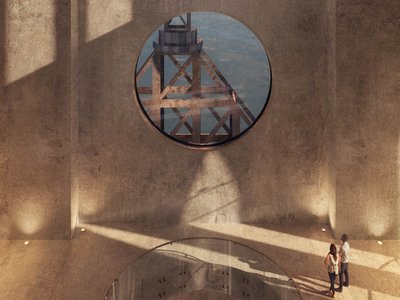
Of Water & Spirit: Reimagining an Offshore Oil Rig Through Adaptive Reuse Architecture
Transforming an abandoned offshore oil rig into a museum of water, memory, and renewal through adaptive reuse architecture.
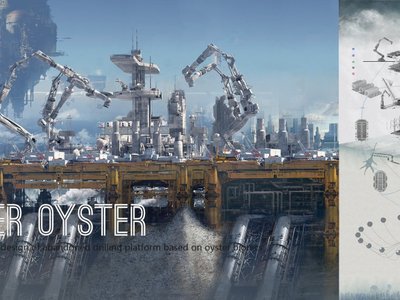
Cyber Oyster: A Visionary Adaptive Reuse Architecture Project Transforming Abandoned Oil Rigs Through Oyster Bionics
An adaptive reuse architecture concept transforming abandoned offshore oil platforms into self-healing marine ecosystems inspired by oyster bionics.
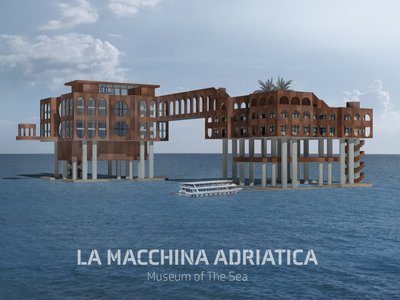
La Macchina Adriatica by Adriana Jul Camargo
An adaptive reuse architecture project transforming abandoned Adriatic oil rigs into a floating museum, research hub, and living sea observatory.


Explore Educational Building Competitions
Discover active competitions in this discipline




The International Standard for Design Portfolios


The Global Benchmark for Architecture Dissertation Awards


The Global Benchmark for Graduation Excellence


Challenge to design public laboratory
Comments (0)
Please login or sign up to add comments
No comments yet. Be the first to comment!