
Kaiser Shen Haus Hoinka: Unleashing Creativity in Atelier Marvel
Can the Atelier Kaiser Shen Haus Hoinka revolutionize the world of artistic expression?
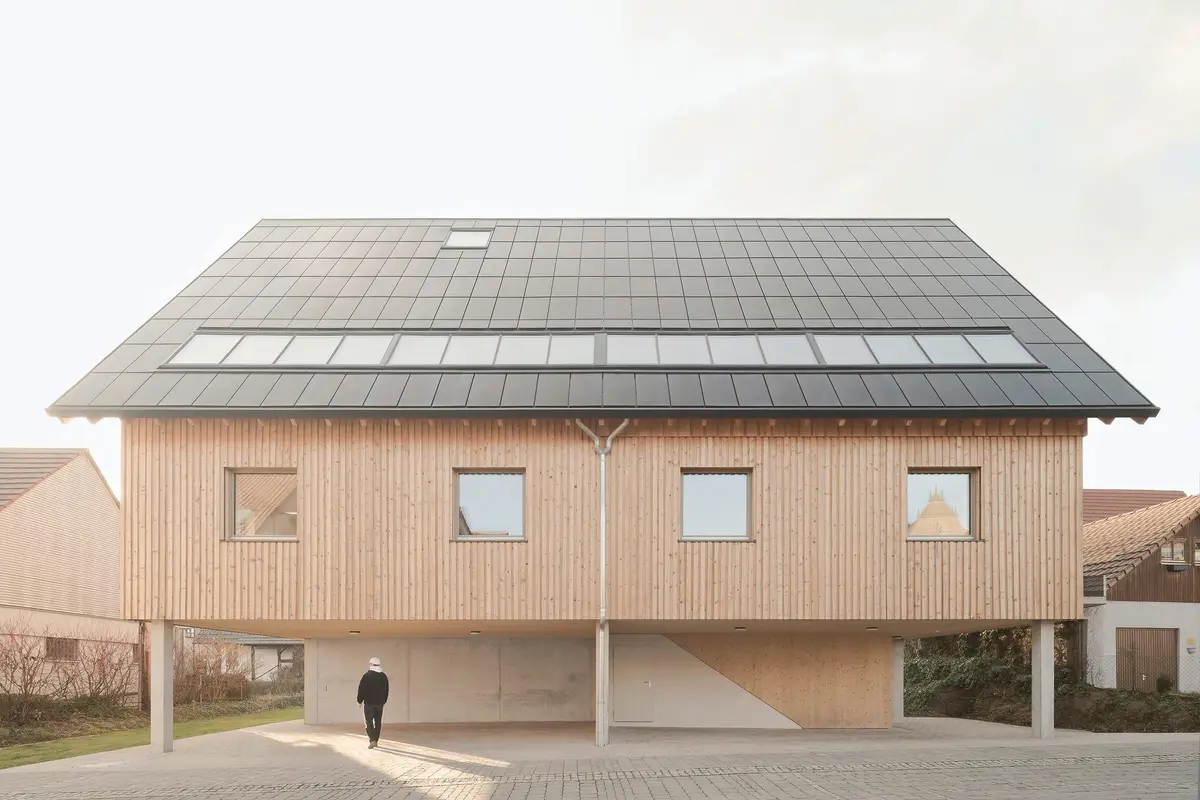
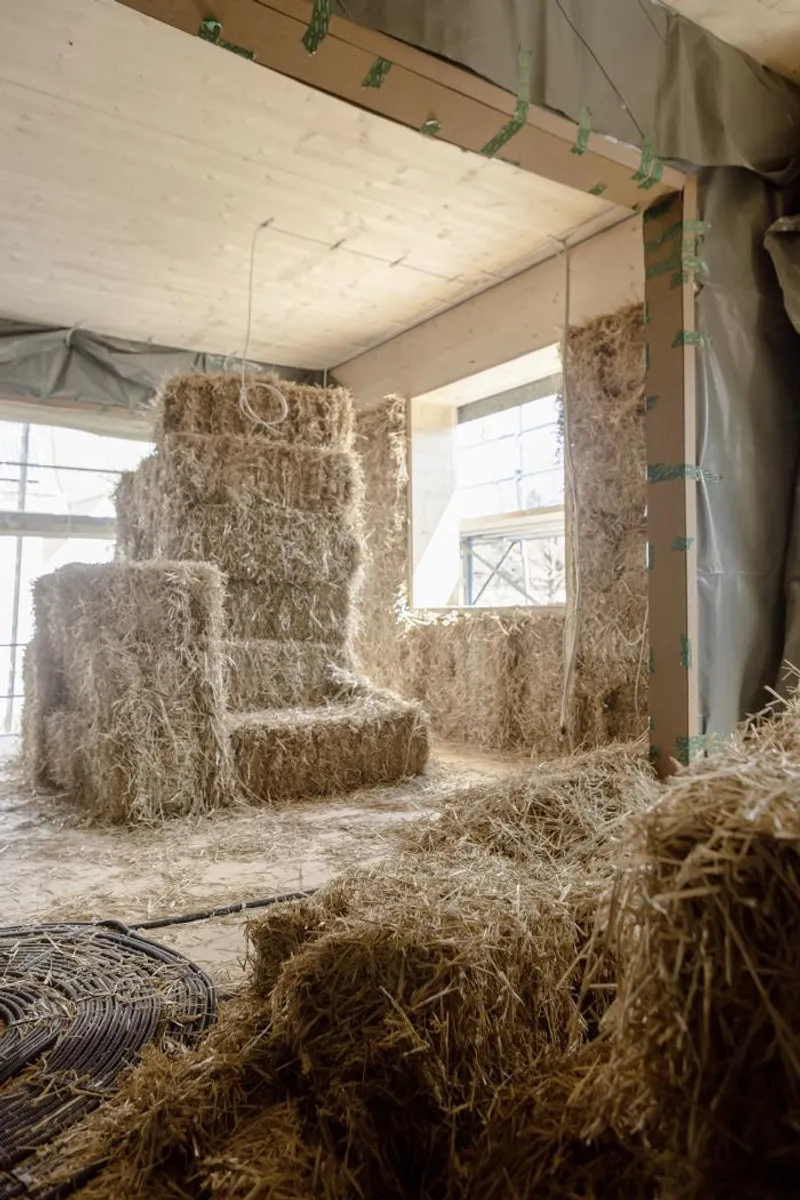
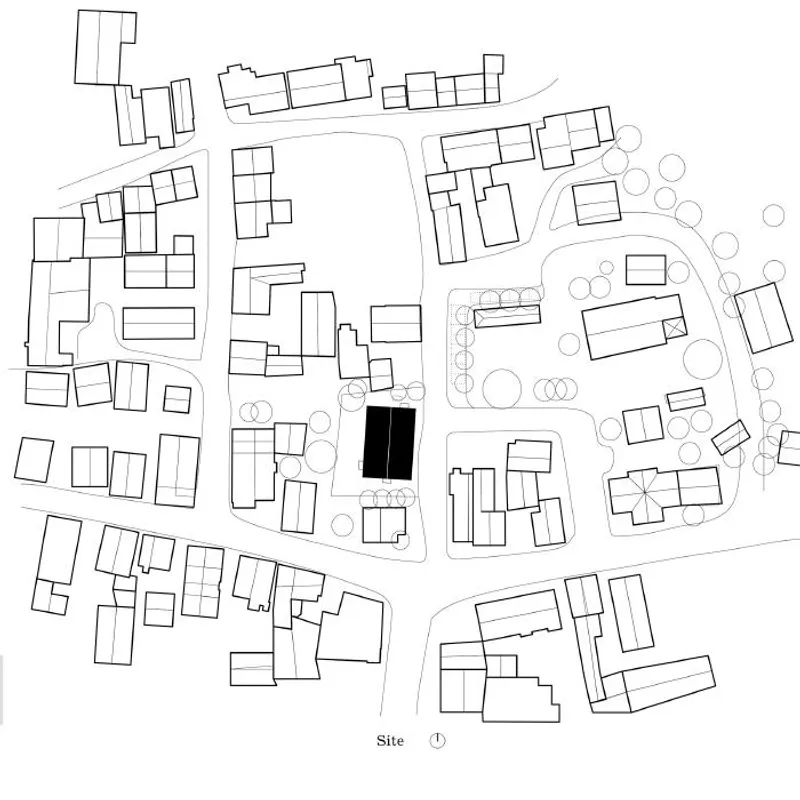
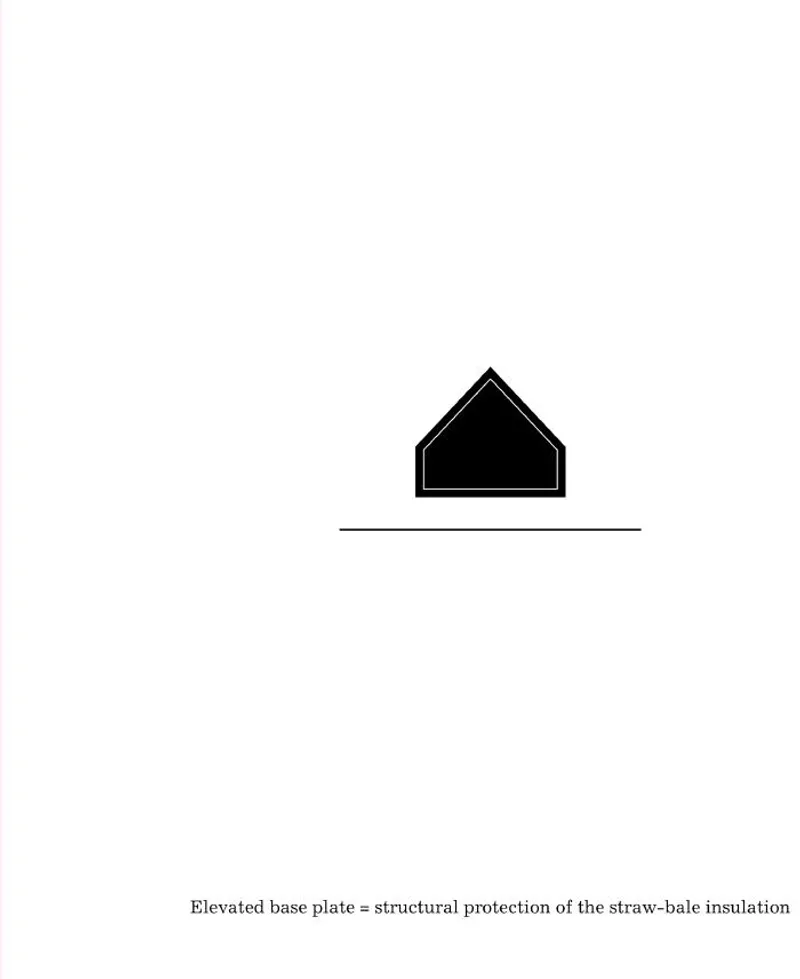
Pfaffenhofen is a small village near Heilbronn, characterized by an idyllic setting with a church and half-timbered houses dating from the 16th and 17th centuries. To identify the village centre, a residential building was built with a cubature typical for the region, and extraordinary in several respects. The client wanted to use natural and renewable raw materials that could be re-introduced into the natural cycle. Straw bales were used as a thermal envelope for floors, ceilings, roofs and walls, a practice that has been in use since the late 19th century and is now making a comeback due to its renewable and recyclable nature, as well as its local availability. The bales were pressed into a wooden framework to a thickness of 36.5 cm, with any excess trimmed off using hedge cutters. The goal for Haus Hoinka was to realize all six facades using this straw bale construction method. To protect the straw bales in the floor slab from water, the house was raised by an entire floor, eliminating the need for elaborate sealing.
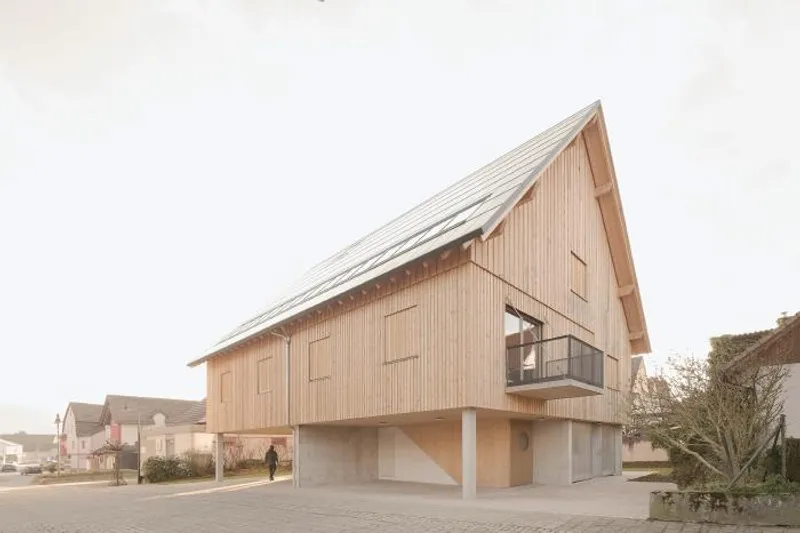
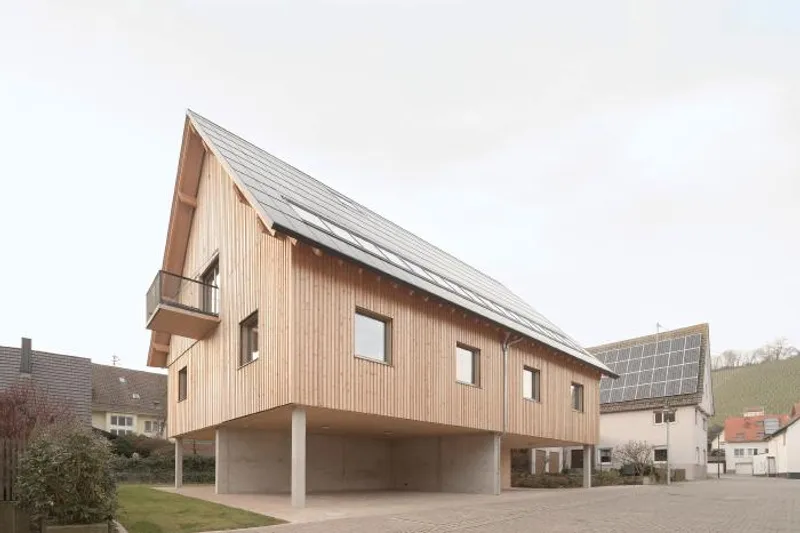
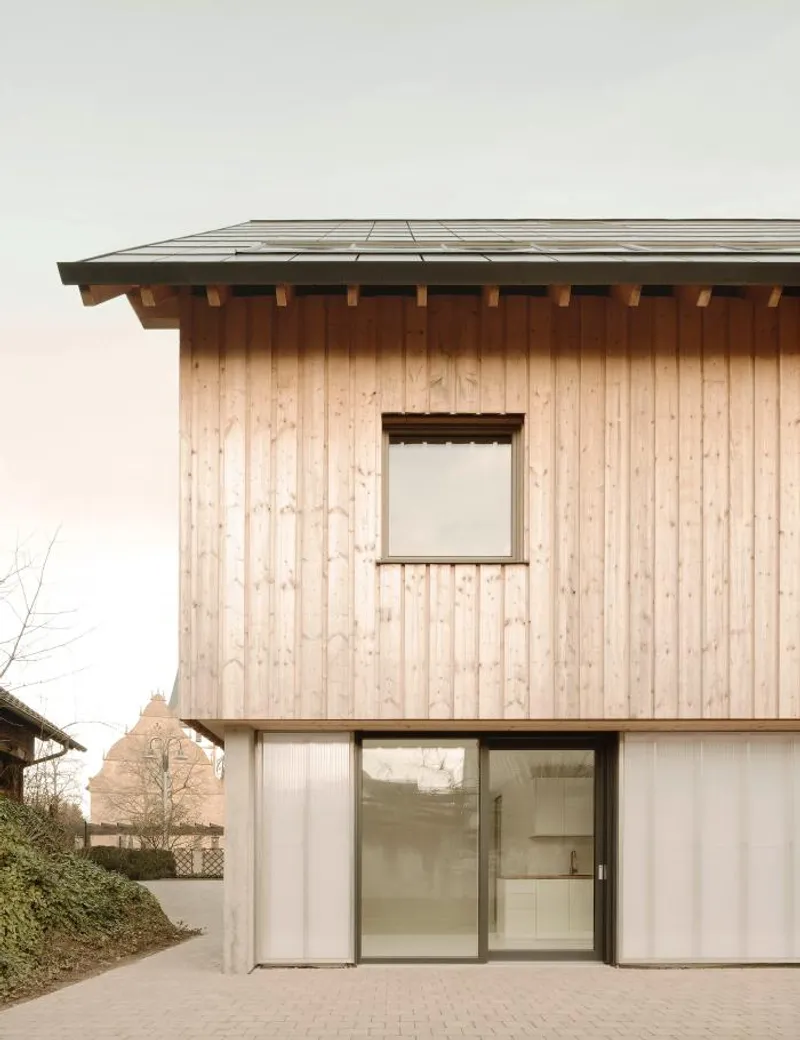
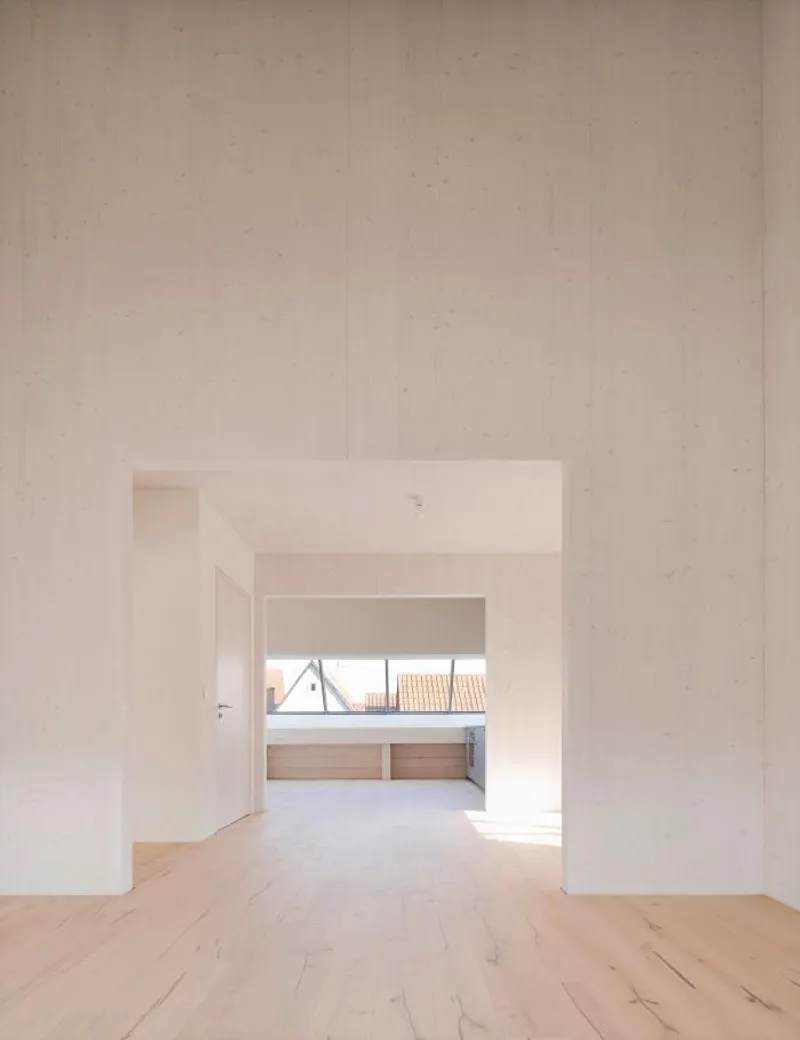
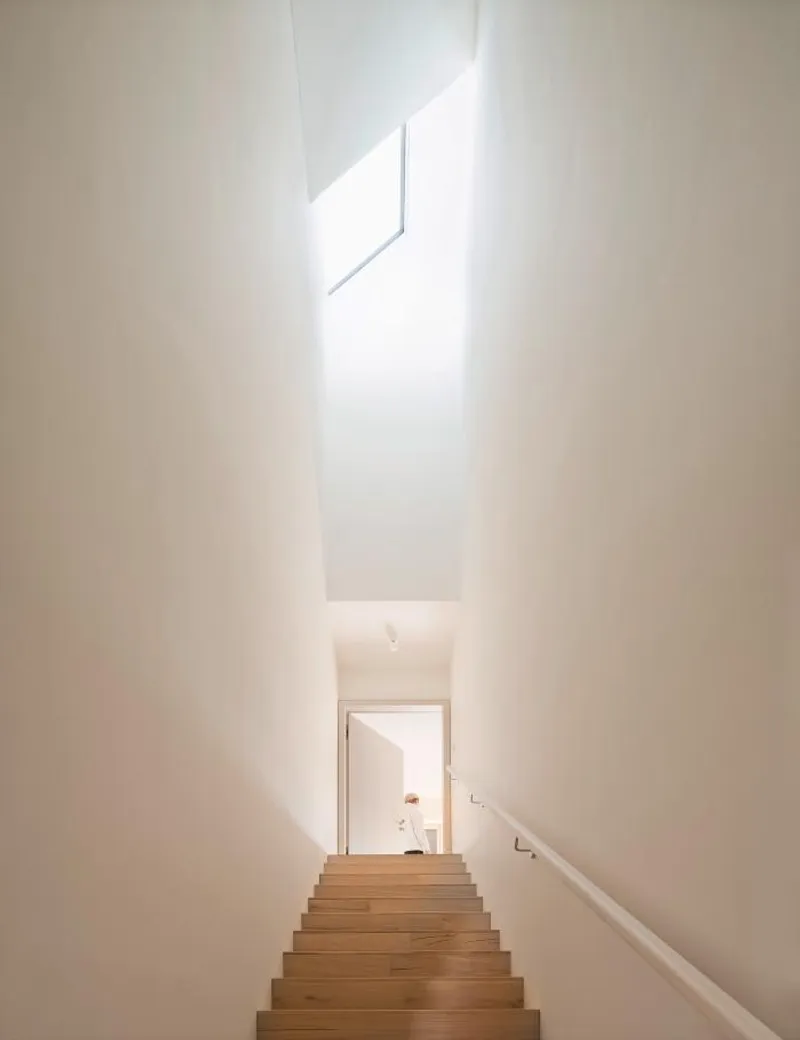
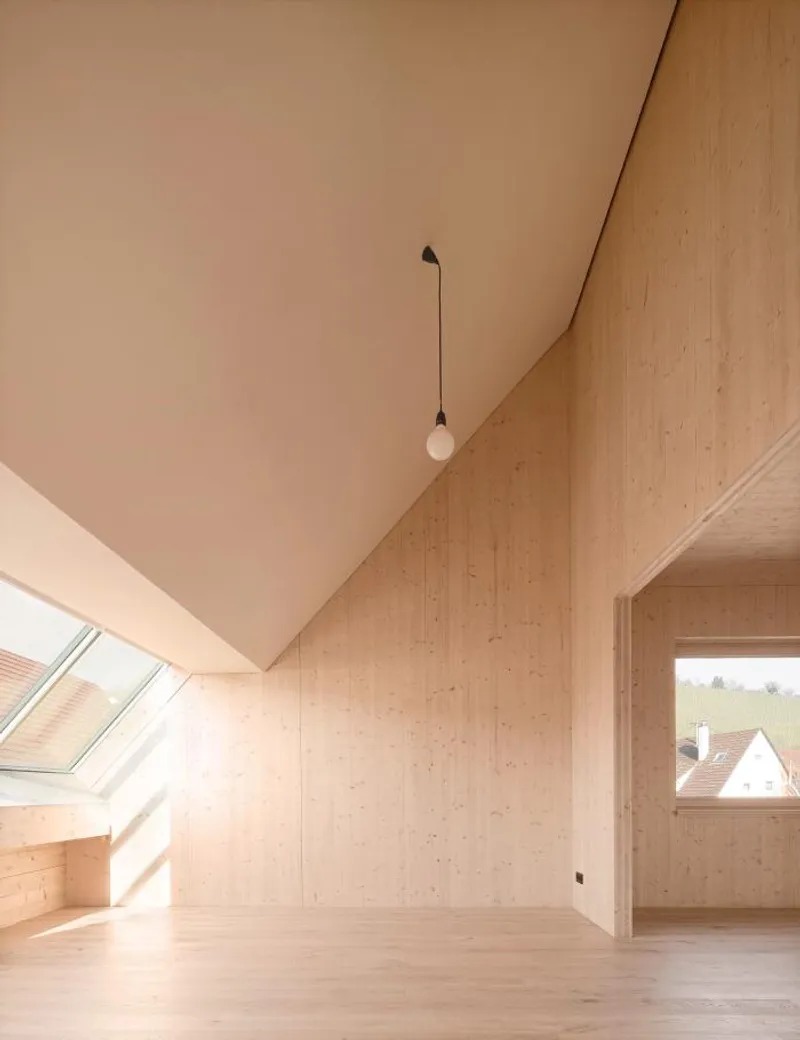
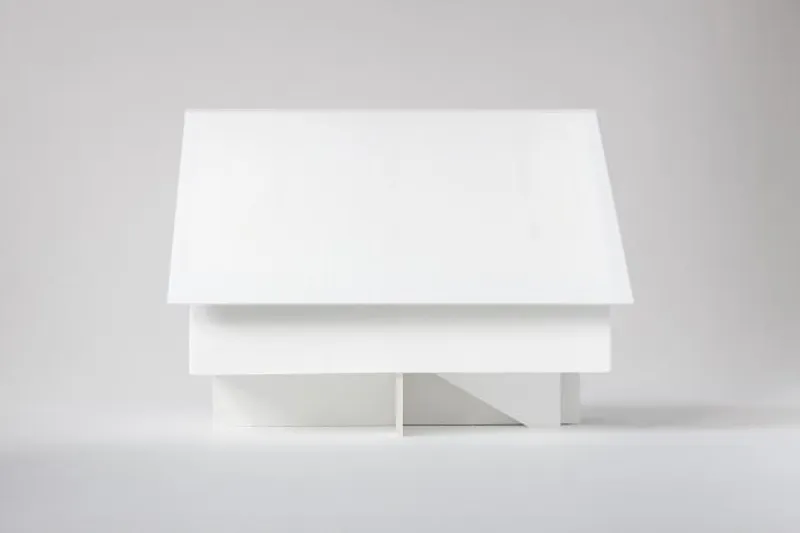
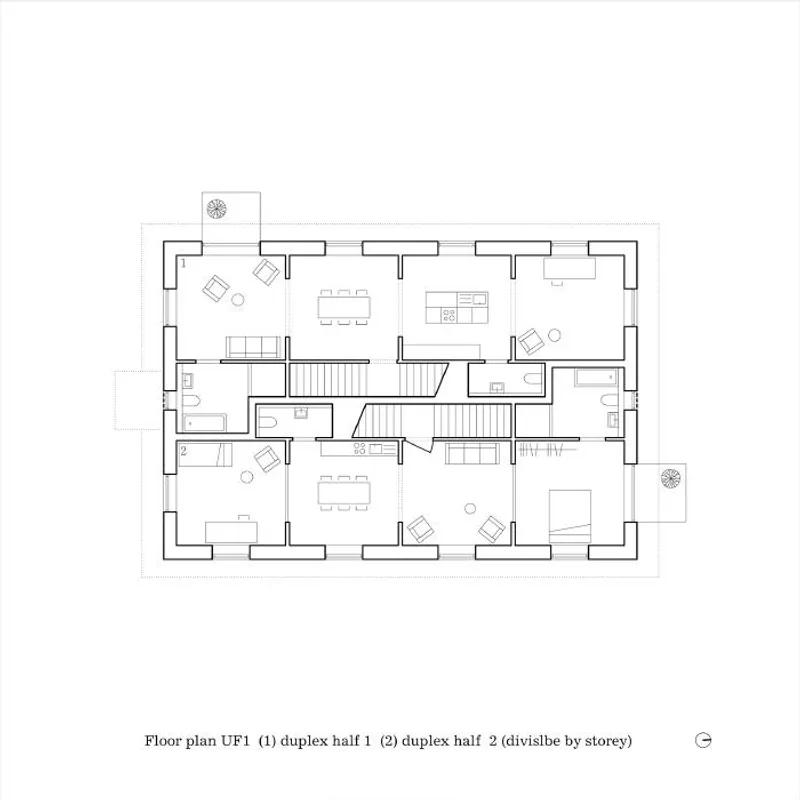
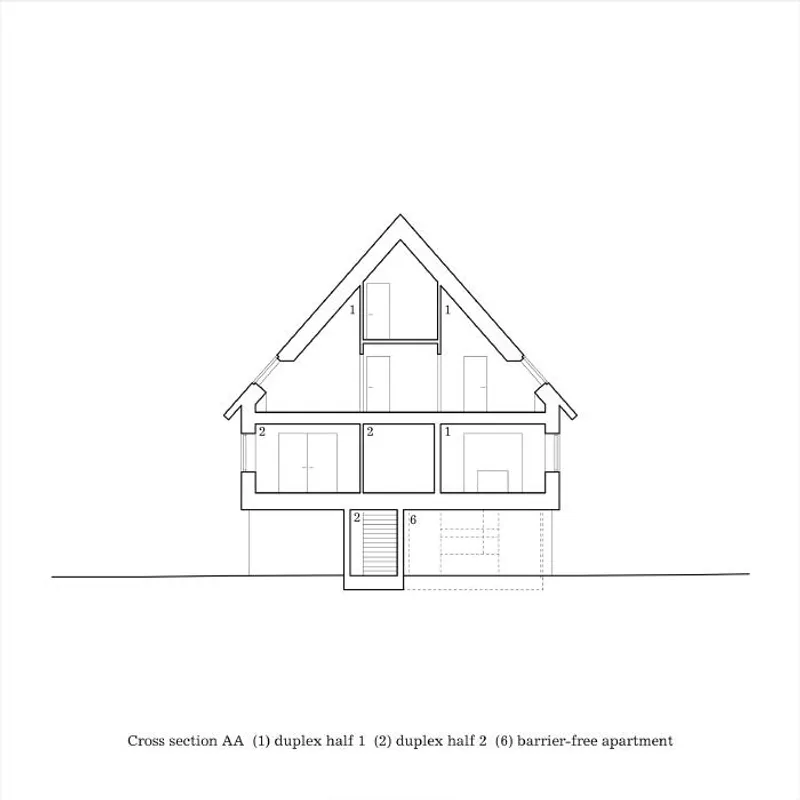
Haus Hoinka is a compact house that rests on a concrete cross and four supports. When the wooden shutters are closed, it creates the impression of an elevated wooden monolith, which stands in stark contrast to the open garden level. The house subtly adopts the grain and roof shape of its setting, and its staggered structure - comprising a stone base and cantilevered wooden building - engages in a direct dialogue with the half-timbered houses in the centre of the village. The simple basic form conceals a complex nested semi-detached house, in which the two residential units are each connected to the garden level via a single flight of stairs. This means that the entrance doors to the apartments are each located on the ground floor. From each apartment, views extend east to the church square, west to the garden, north to the vineyards, and south over the roofs of the village into the distance. On the first floor, the house is divided lengthwise, and on the second, crosswise. This division is also legible in the interior, with the structure of spruce wood and the loam in the apartment facing the centre of the village painted white, while they were left untreated in the one facing the garden. The silver fir facade also subtly reflects this division, with the widths of the planks in the board and batten cladding varying slightly in the two halves of the house. On the ground floor, the elevation required for structural reasons is achieved by means of a concrete cross and four corner supports. This creates four open spaces that can be used in a variety of ways by the occupants, such as a charging station for an e-car, a workshop, or an outdoor kitchen.
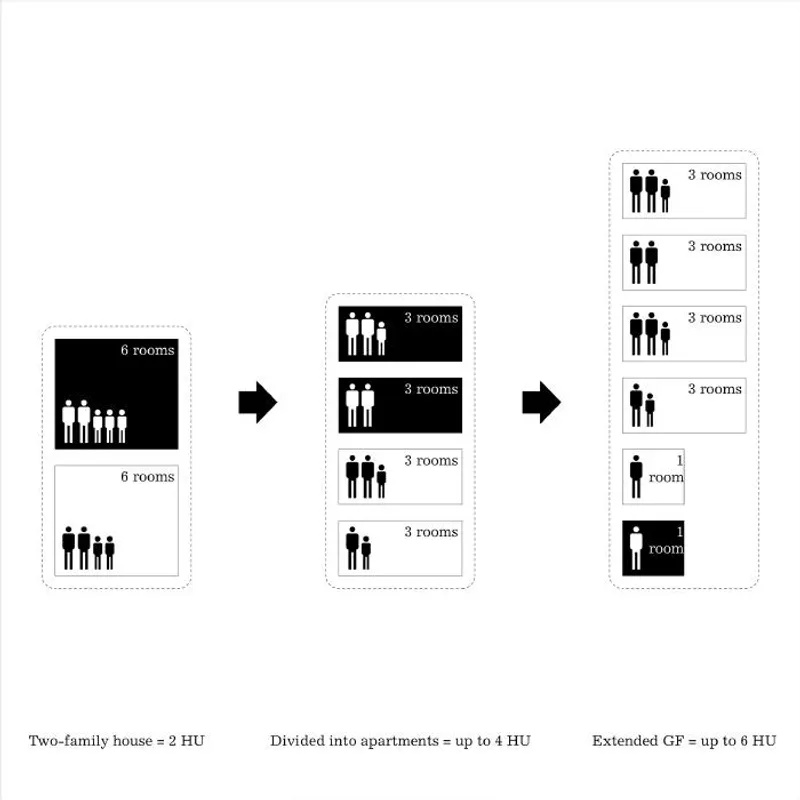
The Cite Verticale in Casablanca inspired the architects to adopt an approach that leaves the use of a building in part to its occupants. Atelier Shen regards further building by the residents of this development as highly enriching. On each of the floors, eight almost square rooms measuring roughly 4 x 4 meters are arranged. These rooms can be used alternatively as kitchens, bedrooms, living or dining rooms, allowing for flexibility of use without the need for major alterations. The facade features identically shaped windows, with balcony doors interrupting the uniformity. In the attic, wide ribbon windows were installed, further emphasizing the equal value attached to all the rooms. This allows for different apartment configurations in the house, with the two residential units of the semi-detached house able to be divided floor by floor. This flexibility of use can respond to changing family circumstances, such as when the children move out and the parents can live on one floor while subletting the other as a separate unit.
At Haus Hoinka, emphasis was placed on the use of simple and ecological materials. To ensure an optimal ecological balance, all materials used were carefully selected and recorded in a database for sustainable building products developed by the client. The house was designed to generate electricity from solar modules integrated into the roof, producing a total of 30,000 kWh of electricity per year, exceeding the projected required consumption by 6,000 kWh. A 10 kWh daytime electricity storage system was also installed to ensure that the electricity generated during the day remains available in the evening and at night. Heating is provided by a heat pump and a ceiling panel heating system. The house meets the KfW 40 Plus Efficiency House and the Efficiency House Plus Standard, demonstrating a negative annual primary energy requirement and a negative annual total energy requirement. Compared to a new conventional semi-detached house of the same size, 95% of CO2 has been saved. The building also stores around 100 tons of CO2 in the 140 cubic meters of wood used. Haus Hoinka demonstrates how residential construction in rural areas can be rethought, achieving a higher density for the village centre through sustainable building construction and simple materials that can be separately recycled. The building offers an extremely flexible floor plan that allows for various constellations of people living together, making future changes possible and enriching the house.















Architects: Atelier Kaiser Shen
Area: 521 m²
Year: 2023
Photographs : Brigida González
Manufacturers: JUNG, Baier GmbH Slidetec, Carl Hansen, Ennogie GmbH, Fensterbau Schneider GmbH, GSL.GLASOLUX GmbH, Herzog & de Meuron, Karcher Design GmbH, Kunststoff-Vertrieb Nuding GmbH, Mawa Design, NUD, Roma, Thonet, Villeroy & Boch, WEM
Estructural Engineering: F2K Ingenieure GmbH
Lighting Planning: Silvia Barbosa Kaiser
Timberwork: Heyd GmbH Zimmerei - Holzbau
Electrician: DTC GmbH
Products used in this Project

Popular Articles
Popular articles from the community

ALGAL REALM: A Bio-Integrated Lunar Habitat Design for Life Beyond Earth
ALGAL REALM reimagines lunar habitat design with algae-powered life support, 3D-printed regolith, and vertical living for a lunar future.

Play: Fragments of Their World
Familiar architecture becomes modular playground design, creating safe spaces where displaced children can learn, connect, imagine and play.

Little Red Riding Hood: Architectural Design as a Journey Through Fear, Light, and Storytelling
Little Red Riding Hood reimagines the fairy tale through architectural design shaped by fear, light, scale, memory, uncertainty, and choice.

Co-life: Sustainable Architecture for Age-Friendly Community Living
Co-life reimagines sustainable architecture for seniors through courtyards, rammed earth, shared gardens, and spaces designed for belonging.

Similar Reads
You might also enjoy these articles
116 Rokeby Building, Collingwood
Sustainable Collingwood office building featuring double-skin façade, natural ventilation, rooftop amenities, and carbon-neutral design focused on wellbeing and longevity.
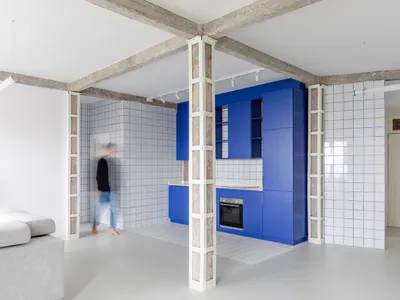
Contemporary Apartment Renovation in Spain: RV House by BIAN Opens Up to the Sea
A minimalist 1930s apartment in Santander is transformed into a flexible, sea-facing home through contemporary Spanish renovation.
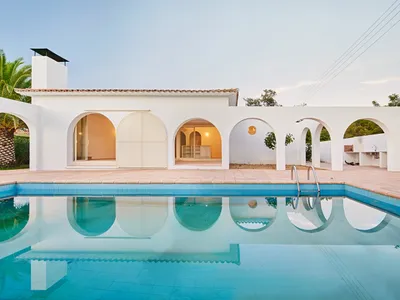
3 Marías House: A Contemporary Mediterranean Courtyard Retreat by Bajet Giramé + Burckhardt
Mediterranean courtyard home blending traditional architecture with modern design, terracotta flooring, flexible interiors, sustainable climate strategies, and garden integration.
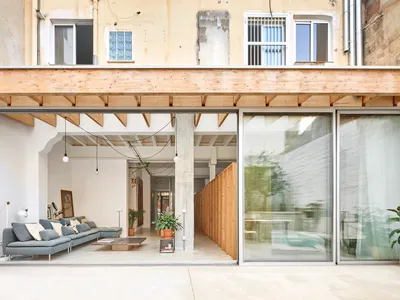
NZ10 Apartment by auba studio: Adaptive Reuse in Palma de Mallorca
Adaptive reuse apartment transforms bakery into light-filled home with patios, privacy layers, and wood interiors enhancing urban living experience.

Explore New Bauhaus Competitions
Discover active competitions in this discipline


Challenge to reimagine the Iron Throne

Photograph architecture without architects

Illustrate the lost glory of Angkor Wat - Render Challenge

Design challenge to reuse E-waste
Comments (0)
Please login or sign up to add comments
No comments yet. Be the first to comment!