
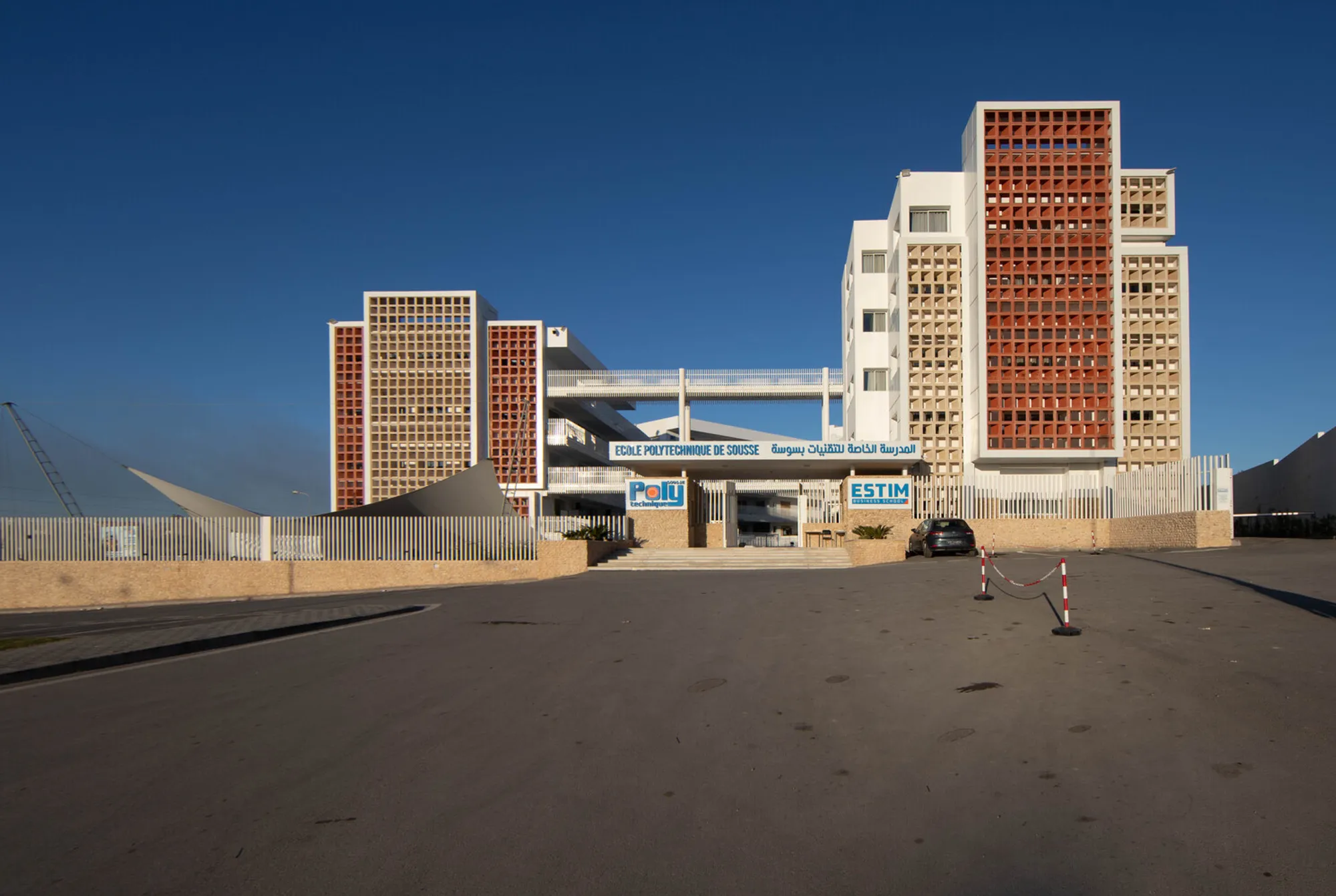
Modern Educational Architecture in Tunisia: The Polytechnic School of Sousse
This article showcases the Polytechnic School of Sousse, a pinnacle of modern educational architecture in Tunisia, blending tradition with contemporary design.


In the vibrant urban landscape of Sousse, Tunisia, the Polytechnic School of Sousse emerges as a landmark of modern educational architecture in Tunisia. Designed by Atelier Façila - architectures & paysages, this institution marries the rich historical context of its location with the demands of contemporary educational facilities, setting a new standard for architectural excellence in the region.
Harmonious Design and Integration
Blending Tradition with Innovation
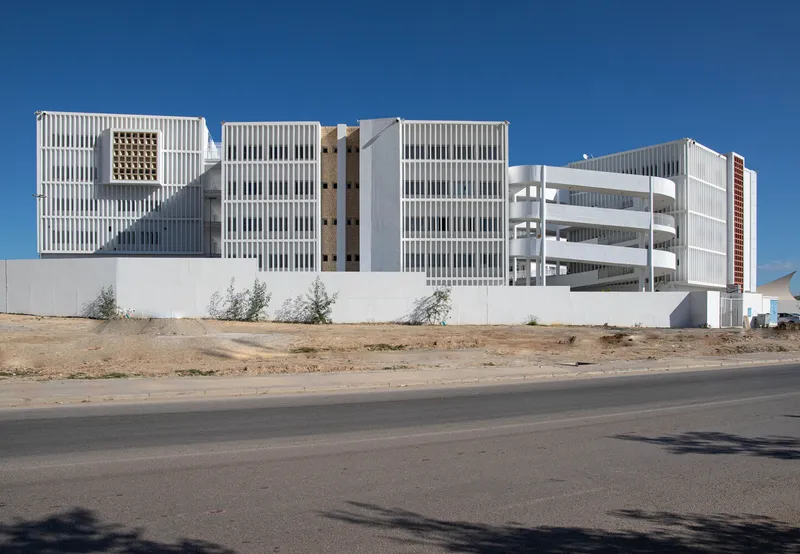
At the heart of the Polytechnic School of Sousse's design philosophy is a deep respect for the geographical and urban context of Tunisia. This is manifested in the central patio, reminiscent of the grand Tunisian medersas, serving not only as a communal space for social and academic interaction but also as a nod to the country's architectural heritage.


A Multidisciplinary Approach to Education
The campus, accommodating up to 3000 students, symbolizes the fusion of engineering and architectural disciplines through its thoughtful spatial organization and the strategic use of a connecting footbridge. This not only fosters interdisciplinary collaboration but also mirrors the modern educational architecture in Tunisia that promotes cohesive learning environments.


Architectural Features and Materials
Sustainable Use of Local Materials
The facades of the Polytechnic School are adorned with terracotta textures, drawing inspiration from the nearby brickworks of Kalaa Sghira. This choice reflects a commitment to sustainable architecture, utilizing local materials that resonate with the surrounding environment while providing functional benefits, such as regulating sunlight through intricately designed claustras.


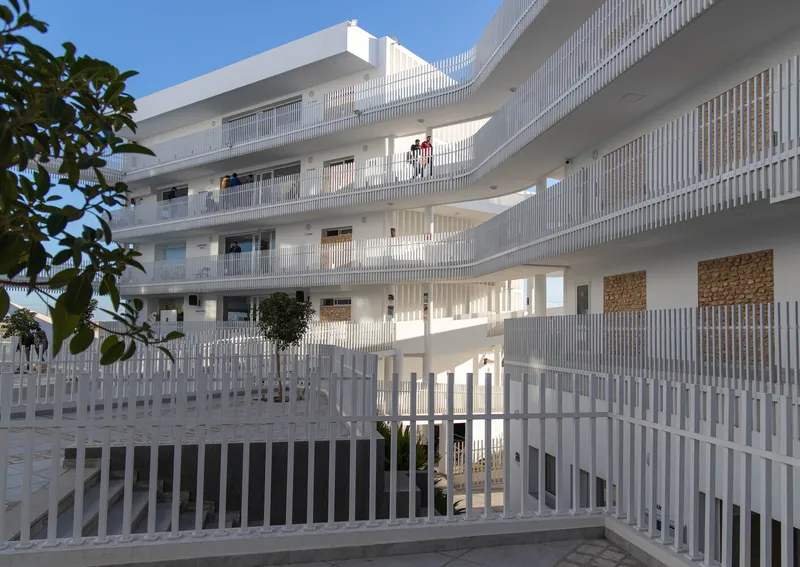

Innovative Light and Shadow Play
The East and South facades feature claustras that not only serve as a shield against the intense Tunisian sun but also create dynamic patterns of light and shadow within the campus. This design element exemplifies how modern educational architecture in Tunisia can achieve a balance between aesthetic appeal and environmental responsiveness.

A Model for Future Development
The Polytechnic School of Sousse stands as a beacon of innovation in modern educational architecture in Tunisia. Through its integration of traditional elements, commitment to sustainability, and forward-thinking design, the project represents a significant step forward in the development of educational infrastructure within the country and beyond. It is a testament to how architectural heritage and modern demands can be woven together to create spaces that are not only functional but also deeply rooted in the local culture and history.


All photographs are work of Adel Hidar (AH)




Popular Articles
Popular articles from the community


The Musturak Paradise: Senior Living Architecture for a Connected Future in Temara, Morocco
The Musturak Paradise reimagines senior living architecture in Temara via private homes, social spaces, culture, community, and shared care.

Hill & Cross Opera: Sculptural Opera House Architecture Shaped by Tallinn’s Landscape and Identity
Hill & Cross Opera reimagines opera house architecture in Tallinn through its sculptural hill, civic plaza, glass wave and a luminous cross.

Conexión: Biophilic Design Reimagines High-Rise Living in Hong Kong
Conexión reimagines high-rise living in Hong Kong through biophilic design, green facades, shared spaces, daylight, water and nature within.

Lunar Spiral: Space Architecture Shaped by the Mathematics of the Universe
Lunar Spiral reimagines space architecture through Fibonacci geometry, lunar regolith, levitating habitats, and self-sustaining Moon living.


Similar Reads
You might also enjoy these articles


Hodi-Mandai Geram
Project Function: Preservation and revitalization of the Intangible heritage and socio-spatial identity of the Hodi by Housing, Cultural Memory Center, Sacred Grove, landscape, local tourism economy


Olio Towers: A Mid-Rise for Performers That Fuses Housing, Rehearsal, and Stage
Located blocks from Houston's Theater District, this modular tower stacks living units around a central performance atrium.

Oasis: Modular Green Housing Carved into Dhaka's Urban Fabric
A shortlisted Plugin Housing entry reclaims unauthorized settlements in Dhaka with stepped concrete volumes, green roofs, and ventilation-driven design.

Black Hole: A Floating Megastructure for the Post-Physical Era
Emiliano Mazzarotto envisions a spherical, self-scaling arena where e-sports, digital hotels, and holographic stadiums replace traditional public space.
Explore Educational Building Competitions
Discover active competitions in this discipline



Challenge to design public laboratory


Challenge to reimagine the Iron Throne


Photograph architecture without architects


Illustrate the lost glory of Angkor Wat - Render Challenge
Comments (0)
Please login or sign up to add comments
No comments yet. Be the first to comment!