Project of the Marine Institute in Norway.
see through

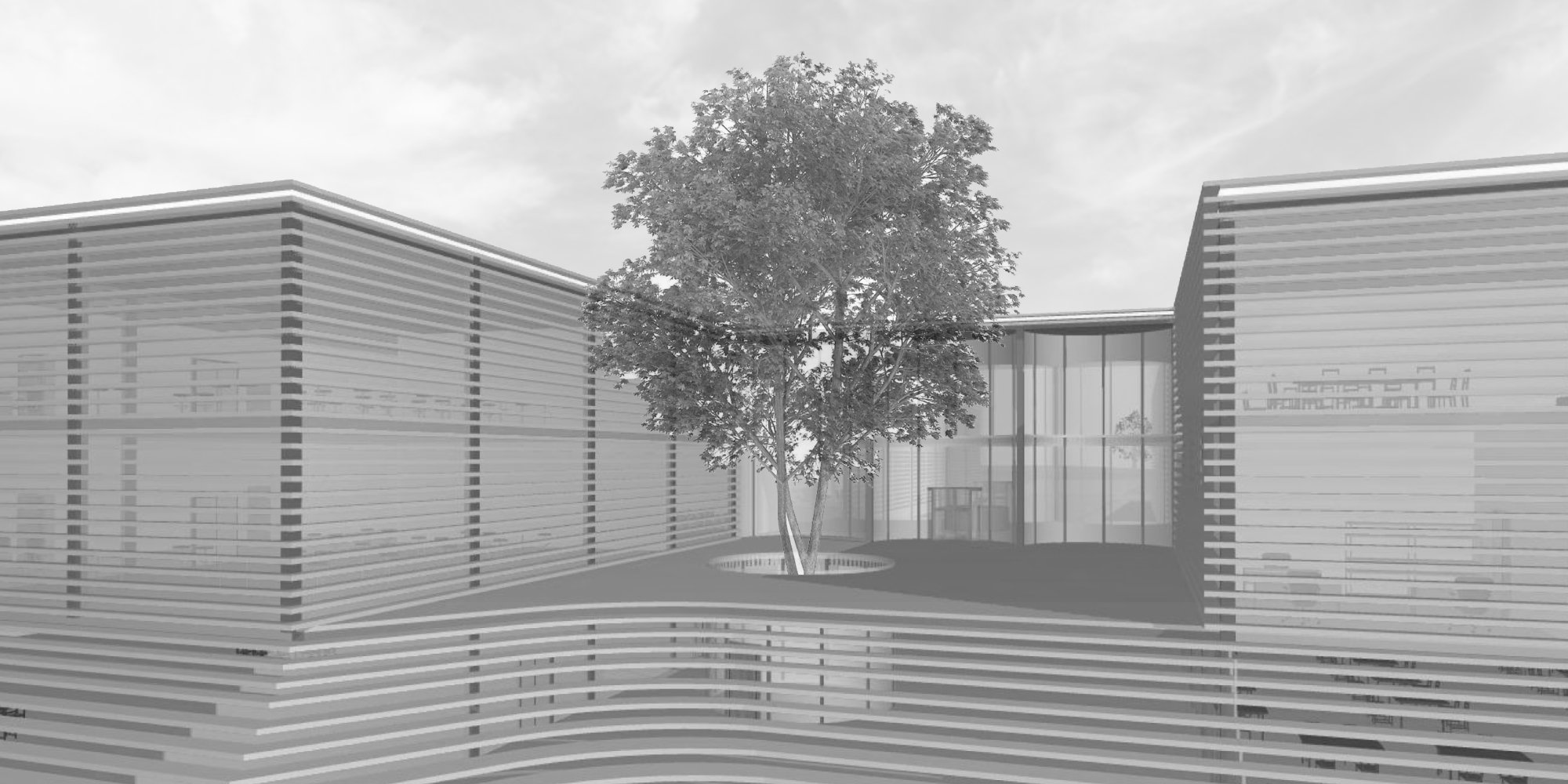
The concept of the Marine Institute is located in the norwegian city Fredrikstad, next to the Old Town surrounded by historic fortifications. The main function of the designed object is a research centre with an educational area, which enables developing scientific activity and gaining knowledge about hydrology. It is crucial to draw users’ attention to the causes and effects of climate changes and item water pollution, what has a direct impact on the environmental decay.
The key assumption of the project was the water inspiration, visible in the form and material solutions, as well as a comfortable and efficient combination of all implemented facilities. It was also significant to integrate the object with the vicinity and take advantage of the attractive location around the historic part of the city.
To keep the balance with the surroundings, the design idea makes use of the natural landform to hide the building cubature and to create public areas with wonderful views. Moreover, the main parts of the complex are separated to organize the space, so in that the landscape is exposed and water can smoothly connect with the building.

Popular Articles
Popular articles from the community
Co-Life: Senior Housing Design That Reconnects Older Adults With the City
Co-Life reimagines senior housing design through healing gardens, shared streets, workshops, and a sustainable community across generations.
EW PARK: Sustainable Architecture Reimagines the Future of Urban Parking
EW PARK reimagines city parking as a modular wooden tower combining automation, solar energy, electric mobility, and adaptable urban design.
Conexión: Biophilic Design Reimagines High-Rise Living in Hong Kong
Conexión reimagines high-rise living in Hong Kong through biophilic design, green facades, shared spaces, daylight, water and nature within.
Riyadh For All: Intergenerational Urban Design for Active Aging in Rabat
Riyadh For All reimagines urban design in Rabat with intergenerational co-living, adaptive courtyards, and Moroccan cultural exchange today.
Similar Reads
You might also enjoy these articles
The Rhythm of Seasons
A Farmers' Market Connecting Nature and the City
LIVING LEDGES
A living place
More Than a Building-Designing a Living System
Base Beyond
DESERT COMPOUND ARID: TOURISM OF ABSENCE AND ABUNDANCE
Comments (0)
Please login or sign up to add comments
No comments yet. Be the first to comment!