
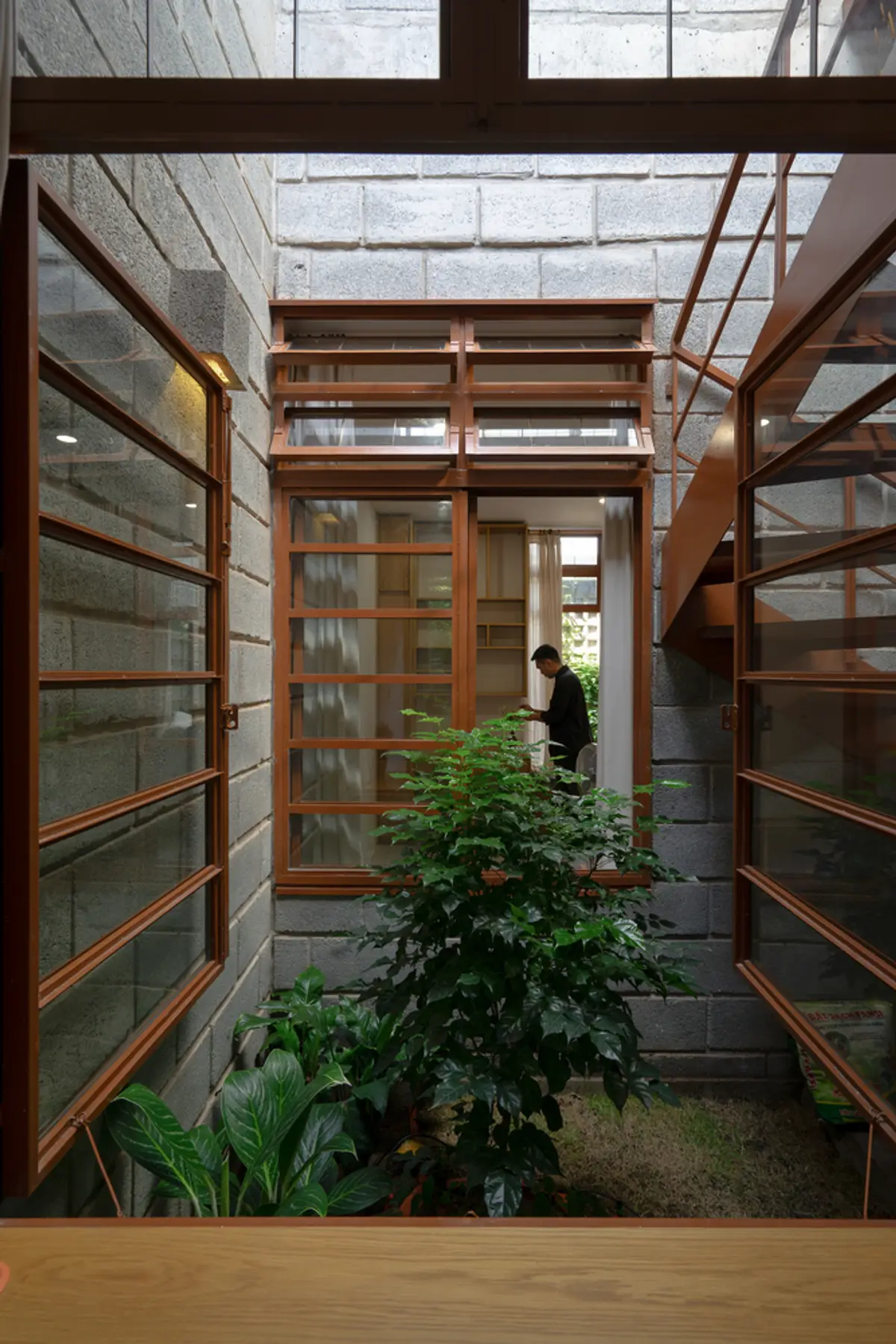
Tad.atelier Builds a 90 m² Breathing House Near a Vietnamese Industrial Zone
In Binh Duong, a family of three lives between concrete block walls, planted courtyards, and rooftop gardens designed for sufficiency.


Industrial parks in Vietnam tend to produce residential neighborhoods that are fast, formulaic, and indifferent to climate. The House in Binh Duong, designed by Tad.atelier, is a quiet rebuttal to that pattern. Completed in 2024 for a family of three, the 90 m² house sits in a new residential area bordering an industrial zone, yet it feels like a different world: a linear arrangement of rooms punctuated by planted courtyards, wrapped in perforated concrete block walls, and topped by a rooftop terrace thick with trees and vegetable beds.
What makes the project worth studying is not its green ambition in the abstract but the specificity of how that ambition plays out at such a tight scale. The family practices vegetarianism and meditation, and the house is calibrated to those rhythms. Buffer spaces with high ceilings drive cross-ventilation and stack ventilation, shielding the interior from the harsh western sun. A surrounding garden doubles as a food source. Local craftsmen built it with locally available materials and straightforward techniques. The result is a house that runs on almost nothing and asks for almost nothing, which turns out to be exactly enough.
A Concrete Block Shell That Breathes

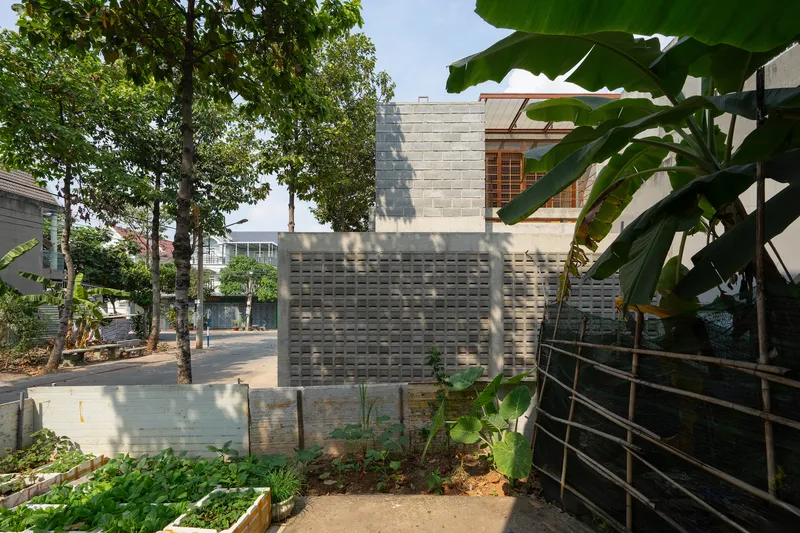

From the street, the house reads as a modest concrete block volume, its perforated walls filtering light and air before either reaches the interior. Banana trees and vegetable rows push right up against the facade, collapsing the distance between domestic architecture and productive landscape. The material palette is deliberately limited: concrete masonry units, timber framing, and planting. No cladding, no finish coats, no pretense.
The perforated block walls do serious environmental work. They act as a thermal buffer, breaking the force of direct sun on the west-facing elevation while allowing breeze to pass through. The openings also scatter light into courtyards and corridors, eliminating the need for artificial lighting during daytime hours. It is a strategy rooted in vernacular logic rather than imported technology, and its effectiveness is visible in every photograph: the interiors glow rather than glare.
Courtyards as Climate Machines
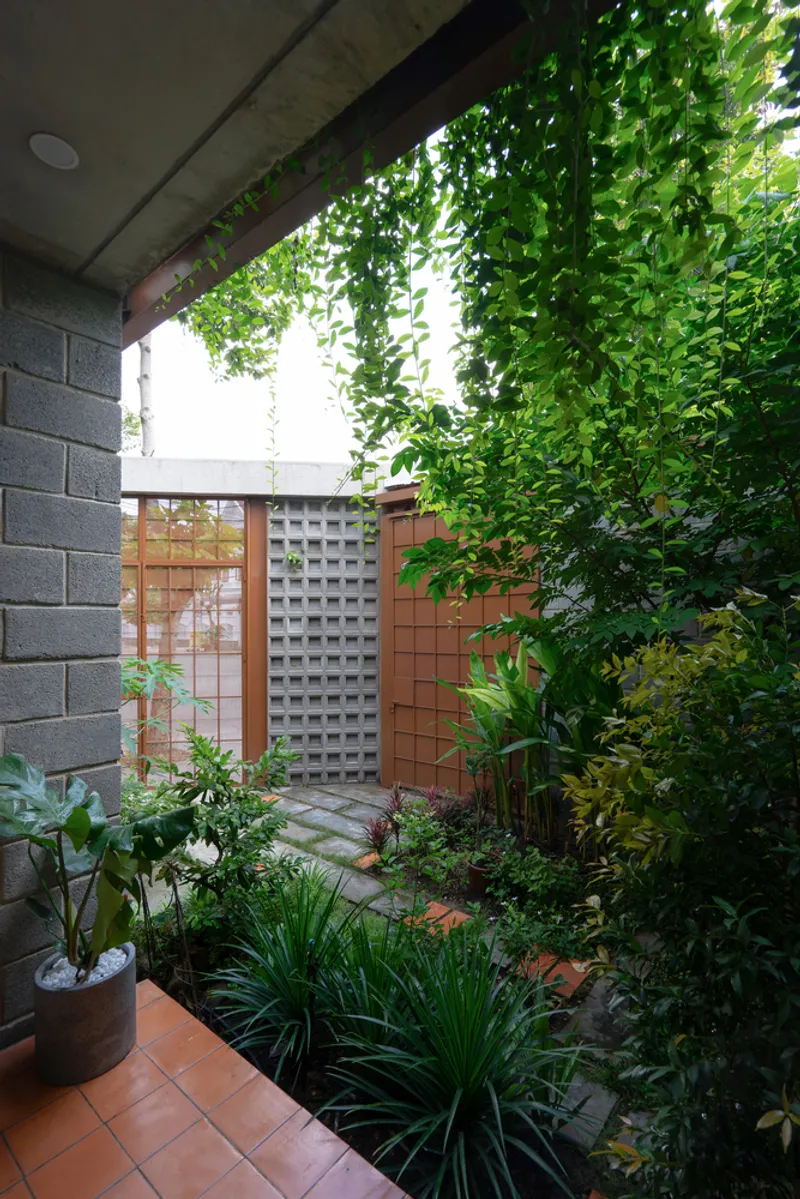
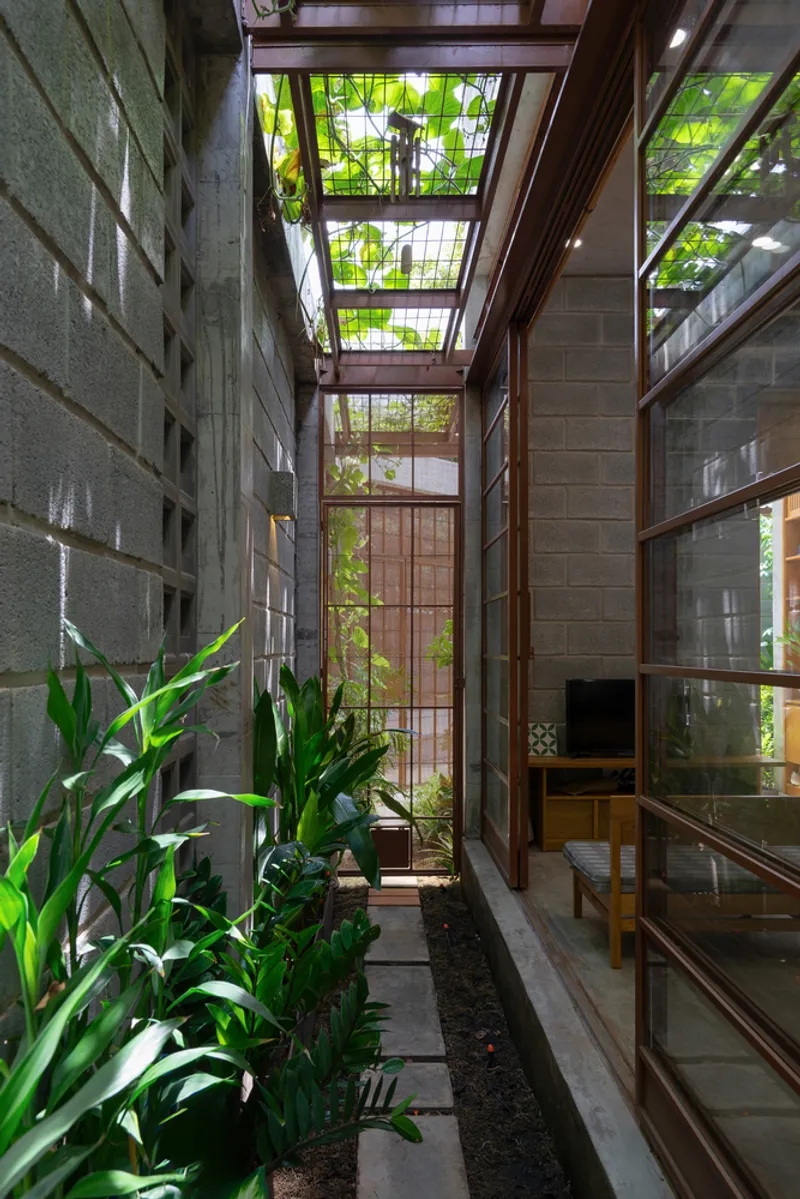

The house minimizes its built footprint to carve out space for a series of narrow courtyards that run alongside the main volume. These are not decorative voids. They are the engine of the house's passive climate strategy, channeling cooler air at ground level upward through double-height spaces, creating a stack effect that keeps the interior comfortable without mechanical cooling. Climbing vines overhead add a layer of evaporative cooling and shade.
Each courtyard has a slightly different character. Some are paved with stepping stones through dense groundcover; others are tight slots of greenery visible through gridded doors. The planted beds at ground level also serve as micro-gardens, contributing to the family's goal of partial food self-sufficiency. In a neighborhood dominated by sealed surfaces and air-conditioned boxes, these slender green corridors are a provocation: proof that even 90 m² can accommodate genuine biodiversity.
Double-Height Rooms and the Logic of the Section
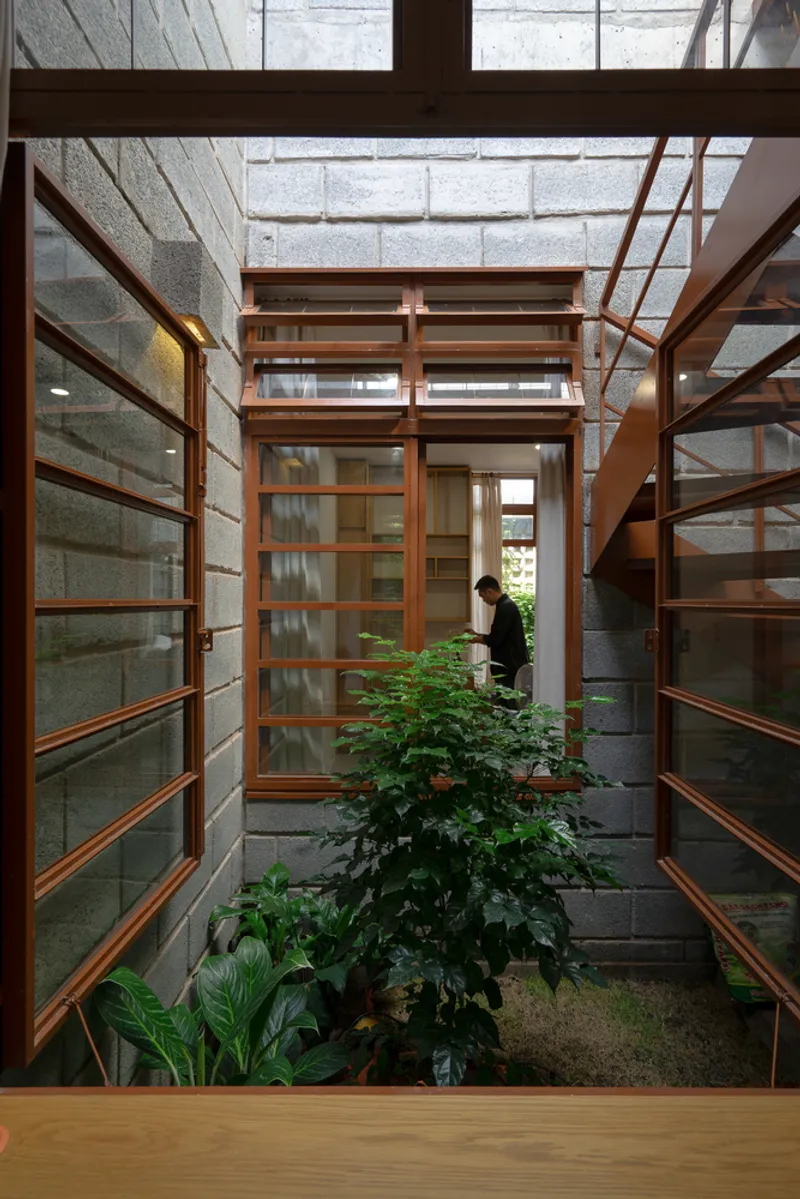
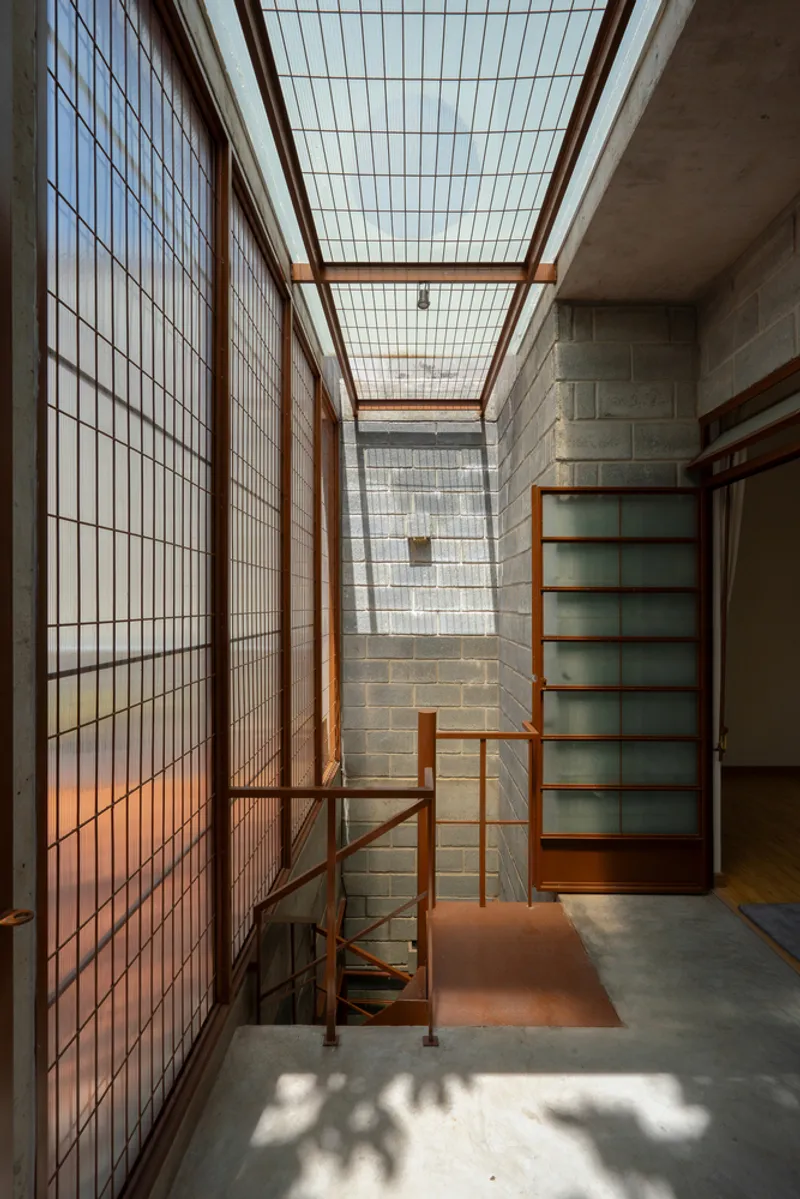

Tad.atelier's most effective spatial move is vertical. The house deploys double-height volumes at key points along its linear spine, pairing them with timber-framed glass ceilings and translucent block skylights. These tall rooms are where stack ventilation does its strongest work: warm air rises and escapes through high-level openings, drawing fresh air in through the courtyards below. The result is an interior hallway that feels disproportionately generous for a house this small.
A single timber staircase connects the levels, its open risers allowing air and light to pass through. Pendant lights hang in the tall voids, establishing a domestic scale within what could otherwise feel like a passage. The planted tree at ground level in one of the double-height spaces is a simple gesture that fundamentally alters the room's atmosphere, turning a circulation zone into a place you would actually want to sit.
Living Simply on the Ground Floor
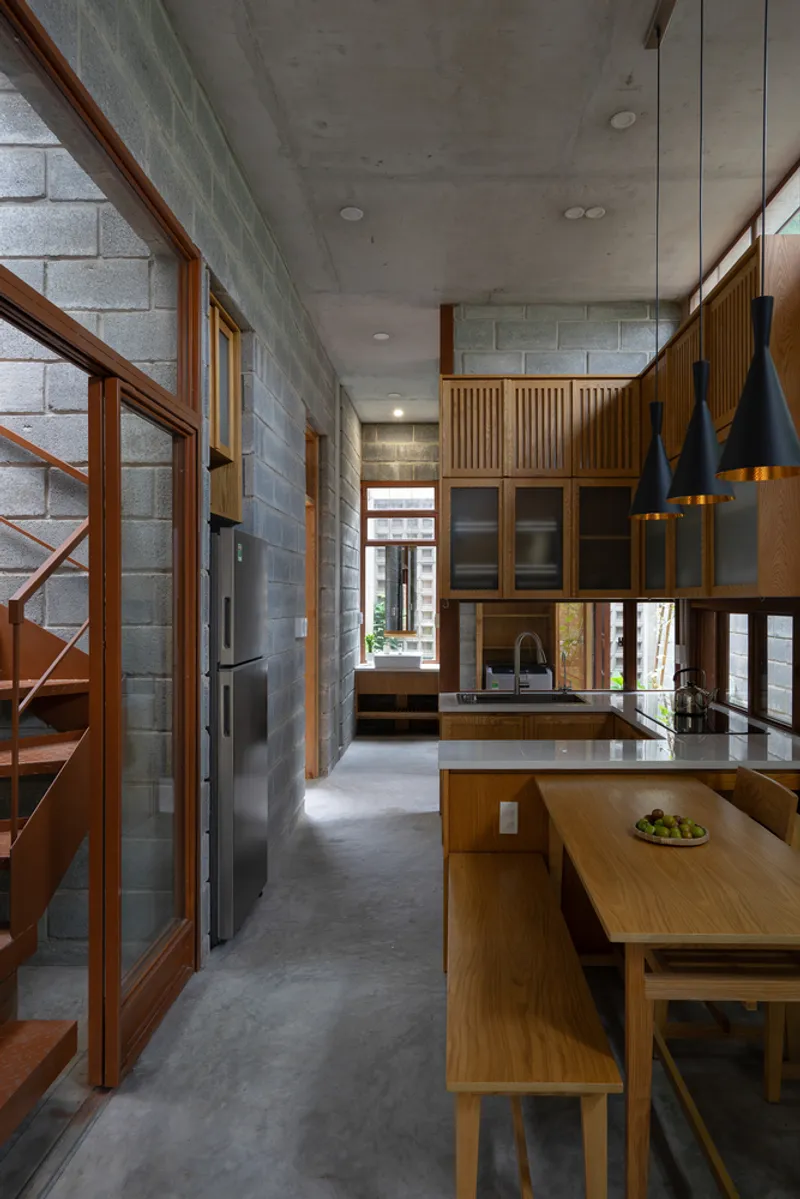
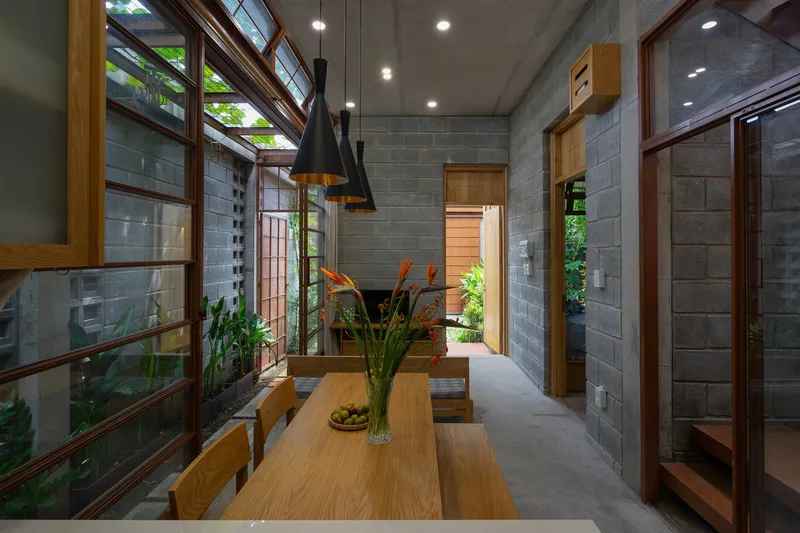
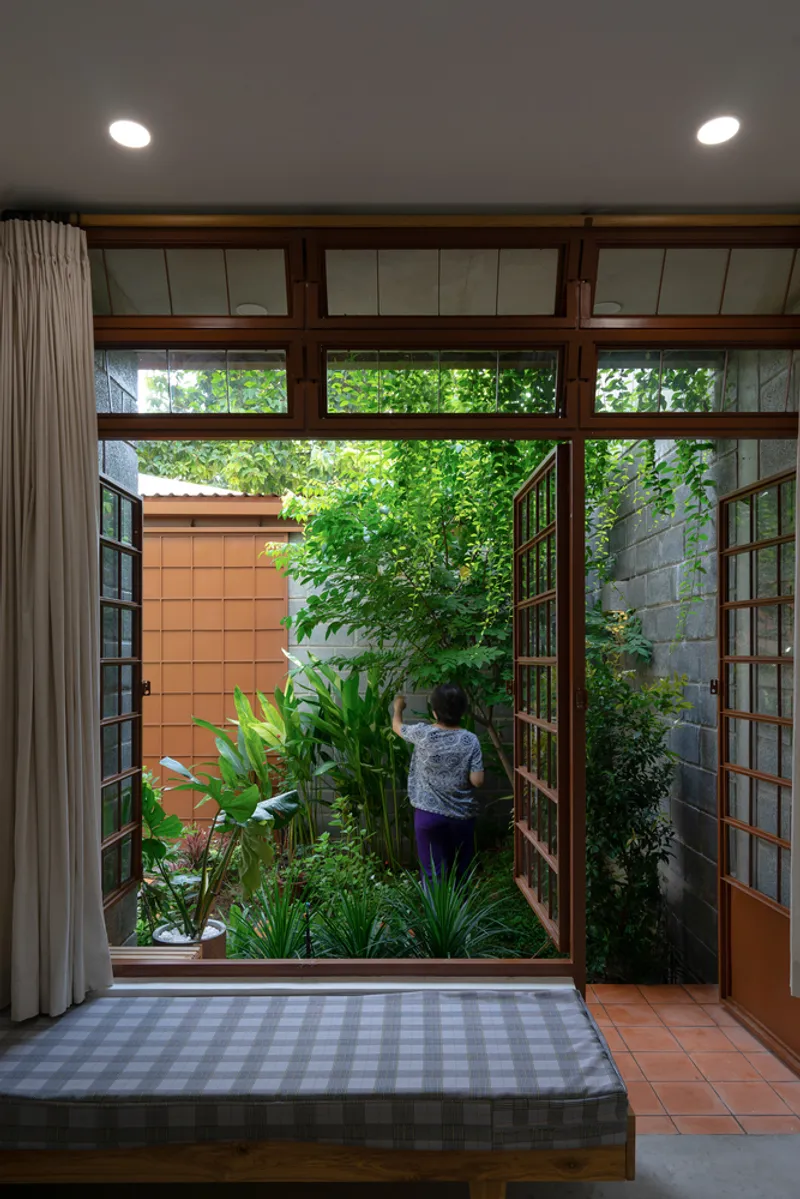
The ground floor houses an open-plan kitchen and living area, where exposed concrete block walls and a simple ceiling create a room that is honest about its construction. There is nothing concealed. Timber-framed windows open onto the courtyards, and clerestory openings above filter daylight through exterior foliage, wrapping the dining area in a soft green light that shifts throughout the day.
A child stands among the courtyard greenery in one view, and that image captures the house's ambition more clearly than any diagram. The boundary between inside and outside is not blurred in some poetic sense; it is literally just a timber-framed doorway with no threshold. The house is designed around the family's vegetarian lifestyle and spiritual practice, and the spatial continuity between kitchen, garden, and meditation space reflects a daily routine in which cooking, growing, and contemplating are not separate activities.
The Rooftop as Productive Landscape


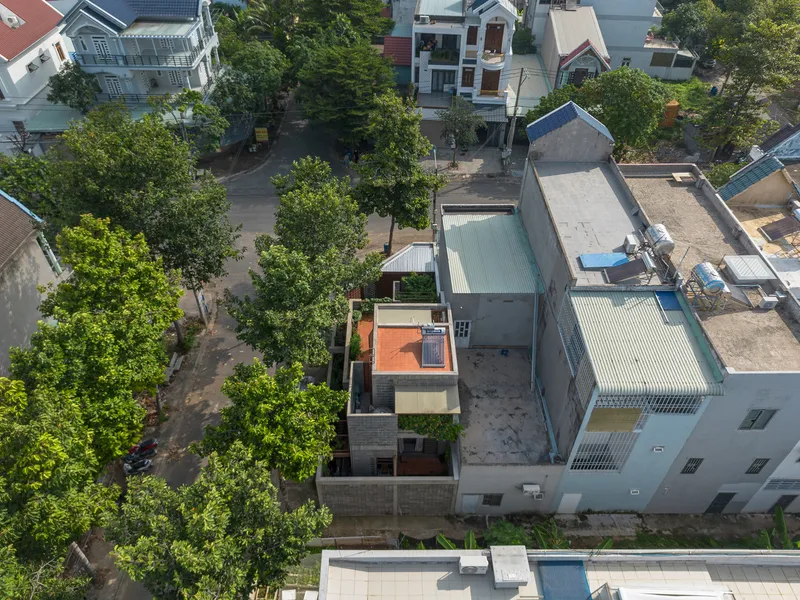
The upper level opens onto a rooftop terrace that is less an amenity than a second garden. Planted beds hold established trees, and the aerial view reveals an orange terrace surface nestled among the dense canopy of street trees below. A metal railing and gridded screen wall define the edge without blocking airflow. The terrace effectively doubles the house's green area, compensating for the tight lot by stacking landscape vertically.
From above, the house nearly disappears into its neighborhood's tree cover, which is precisely the point. Tad.atelier has designed a building that wants to be absorbed by its context rather than standing apart from it. The rooftop garden also provides additional thermal mass and insulation, keeping the rooms below cooler during Binh Duong's intense afternoons.
Plans and Drawings
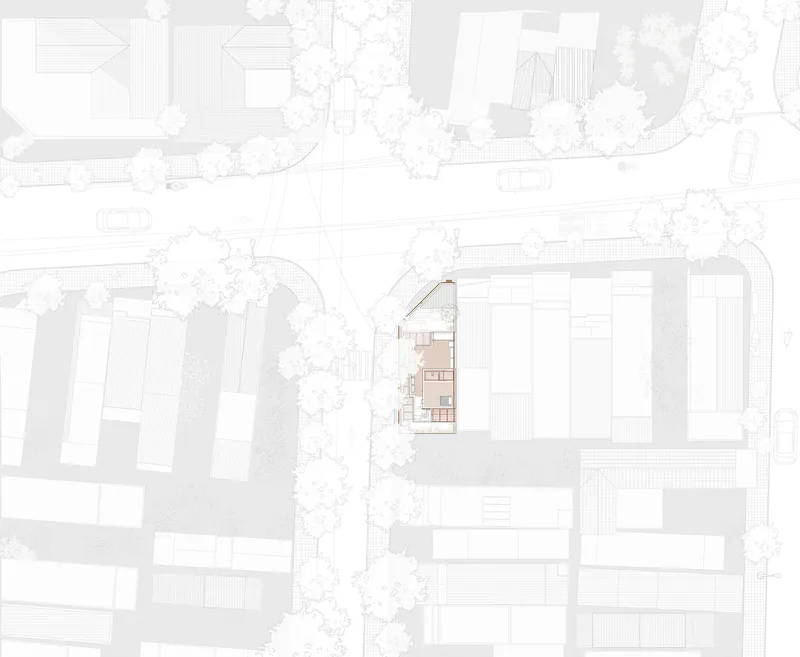


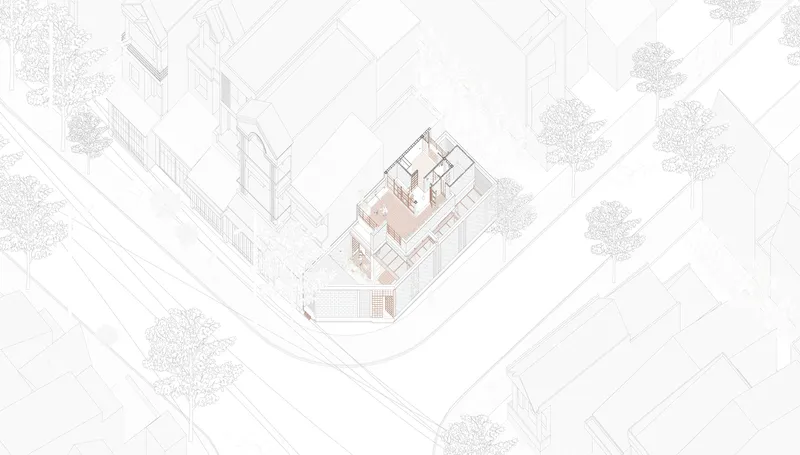

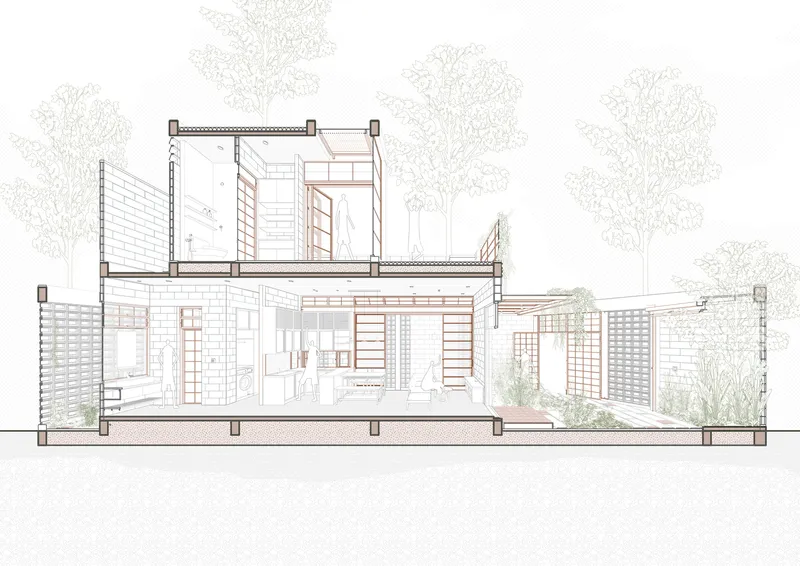

The site plan and floor plans confirm what the photographs suggest: the house is organized as a narrow linear spine with rooms arrayed along one side and courtyards along the other. The ground floor plan shows a clear sequence of enclosed rooms alternating with planted voids, while the upper floor surrenders most of its area to the rooftop terrace and surrounding planting zones. The axonometric drawings are particularly revealing, showing how the stepped volumes create the high ceilings that drive natural ventilation.
The two section drawings cut through the house's most important spatial relationships: the double-height staircase void, the louvered screens controlling light and air, and the planted courtyard with its mature trees reaching up toward the roof. Together, these drawings make the case that the house's environmental performance is not achieved through gadgetry but through careful sectional design. Every vertical dimension has been calibrated to move air, admit light, or support a canopy.
Why This Project Matters
Vietnam is urbanizing at a speed that leaves little room for architectural reflection, and the residential zones around industrial parks are among the most formulaic environments the country produces. The House in Binh Duong matters because it demonstrates that sustainability at this scale does not require imported technology, expensive consultants, or complex systems. It requires a clear reading of climate, a willingness to shrink the footprint, and trust in local labor and materials. The house costs less, consumes less, and offers more spatial richness than its neighbors, all within 90 m².
Tad.atelier has produced a model that could be replicated across similar contexts throughout southern Vietnam, and that replicability is the most radical thing about it. The house is not a showcase; it is a template. Its principles (buffer zones for ventilation, productive gardens for food, high ceilings for stack effect, local materials for economy) are transferable to any narrow lot in any hot-humid industrial suburb. If even a fraction of the housing built around Vietnam's industrial zones adopted this approach, the cumulative environmental impact would be enormous.
House in Binh Duong by Tad.atelier. Binh Duong, Vietnam. 90 m². Completed 2024. Photography by Tad.atelier.
About the Studio
Share Your Own Work on uni.xyz
If projects like this are the kind of work you want to make, uni.xyz is a place to publish your own, find collaborators, and enter design competitions.


Popular Articles
Popular articles from the community


The Ocean Hive: Sustainable Architecture for a Self-Sufficient Civilization at Sea
The Ocean Hive imagines sustainable architecture at sea, where modular habitats, algae, wave power and ocean waste sustain a growing colony.

The Musturak Paradise: Senior Living Architecture for a Connected Future in Temara, Morocco
The Musturak Paradise reimagines senior living architecture in Temara via private homes, social spaces, culture, community, and shared care.

Co-life: Sustainable Architecture for Age-Friendly Community Living
Co-life reimagines sustainable architecture for seniors through courtyards, rammed earth, shared gardens, and spaces designed for belonging.

Hill & Cross Opera: Sculptural Opera House Architecture Shaped by Tallinn’s Landscape and Identity
Hill & Cross Opera reimagines opera house architecture in Tallinn through its sculptural hill, civic plaza, glass wave and a luminous cross.

Similar Reads
You might also enjoy these articles

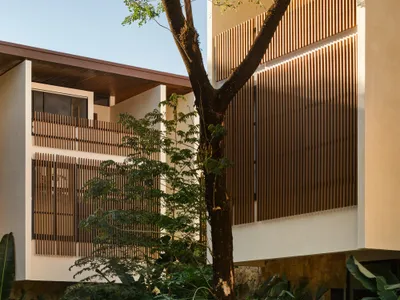
FAMM Arquitectura Organizes Ten Villas Around Courtyards and Jungle in Nosara, Costa Rica
El Molino pairs two elongated volumes with deep overhangs and timber louvers to build a compact coastal community five minutes from the beach.
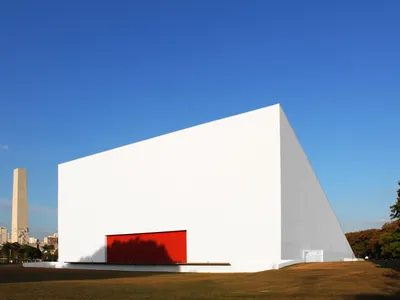
Oscar Niemeyer's Ibirapuera Park Pavilions Define São Paulo's Cultural Identity in Concrete and Curve
A constellation of modernist volumes set within São Paulo's most important urban park, conceived for the city's 400th anniversary in 1954.
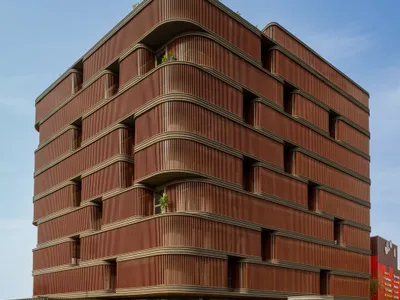
Sanjay Puri Architects Wraps a Jaipur Office Tower in Capsule-Shaped Green Buffers
A nine-level climate-responsive workplace near Jaipur Airport uses stacked planter terraces and aluminium screens to fight 40°C heat.
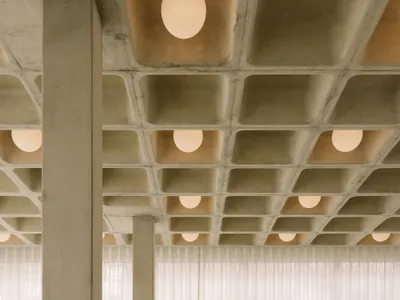
RHO Converts a Berlin Spree-Side Industrial Courtyard into Enkime's 1,000 m² Agency Headquarters
A social media agency's new home in Charlottenburg trades glossy branding for concrete waffle ceilings, glazed tile, and sheer curtains.

Explore Architecture Competitions
Discover active competitions in this discipline

Challenge to reimagine the Iron Throne

Photograph architecture without architects

Illustrate the lost glory of Angkor Wat - Render Challenge

Design challenge to reuse E-waste
Comments (0)
Please login or sign up to add comments
No comments yet. Be the first to comment!