
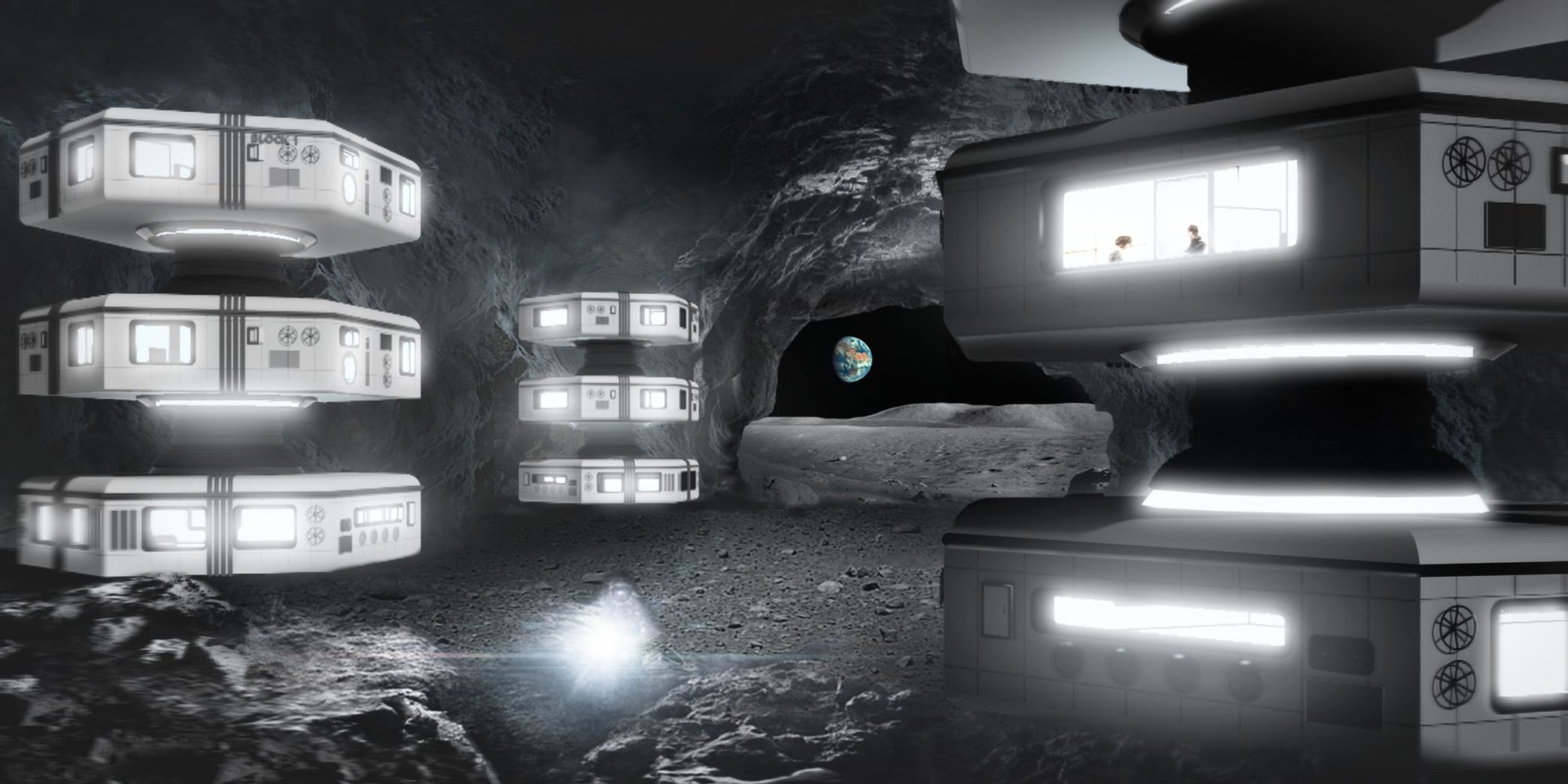
The Mechanical Hive: Redefining Lunar Architecture for a Sustainable Future
Explore The Mechanical Hive: pioneering lunar architecture for sustainable, permanent human presence on the moon.

In the ever-expanding frontier of space exploration, the vision of establishing a permanent human presence on the moon has captured imaginations worldwide. The Mechanical Hive Lunar Base, a pioneering concept created by Jonathan Kholi and Aarya Limbani, represents a significant leap towards this ambition. Shortlisted entry in the Moon Base 2124 competition, this innovative design combines structural resilience with sustainability, marking a crucial step in lunar architecture. This article delves into the details of The Mechanical Hive, exploring its conception, design, and potential impact on the future of lunar colonization.
Inspiration
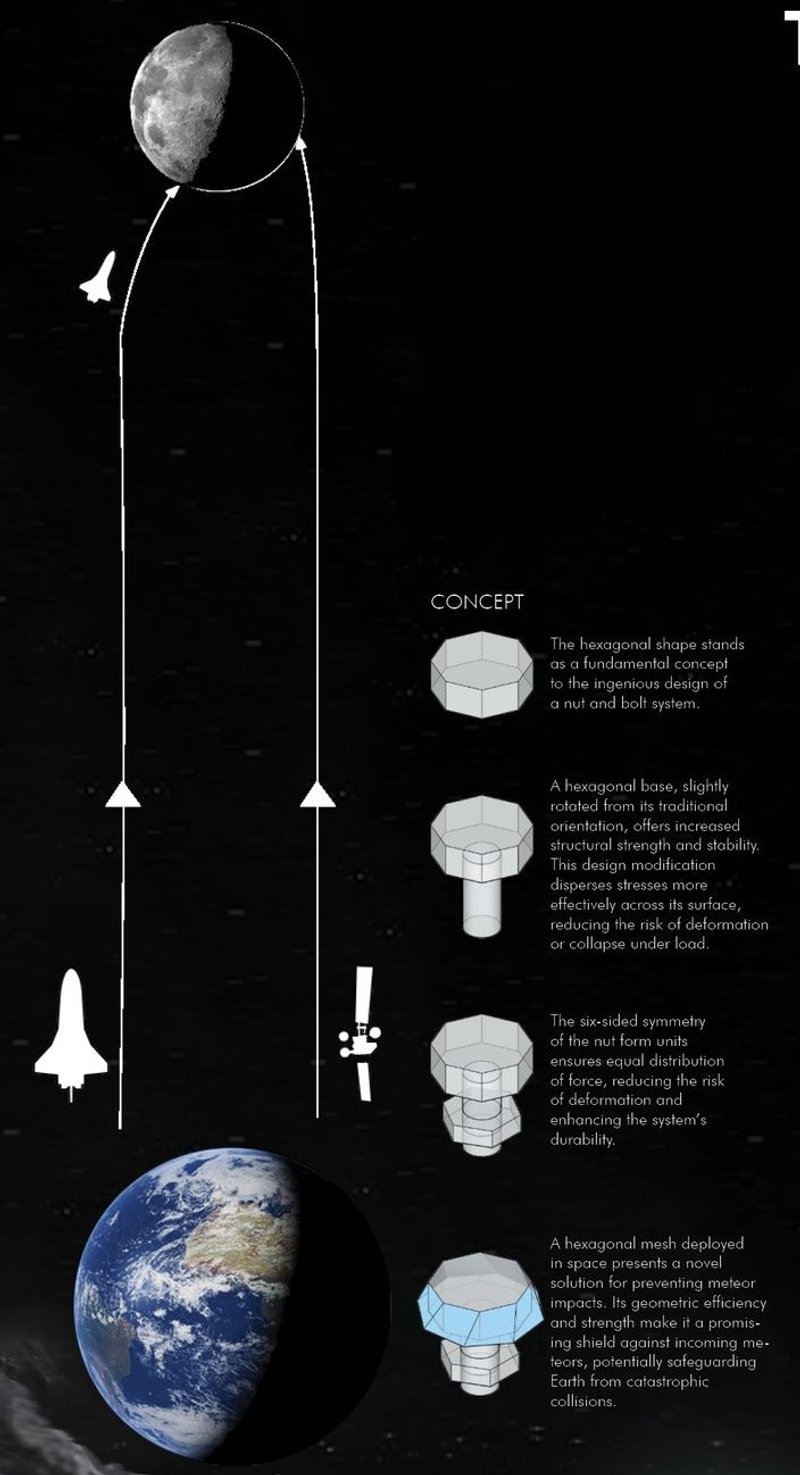
The Mechanical Hive is inspired by the geometric efficiency of nuts and bolts, specifically leveraging the hexagonal shape for its structural stability. This shape is not just an aesthetic choice but a fundamental element of the design, providing remarkable advantages in terms of strength and efficiency. The hexagonal modules, slightly rotated from their traditional orientation, offer increased structural strength and stability, effectively dispersing stress across their surfaces. This reduces the risk of deformation or collapse under the harsh conditions of the lunar environment.
Landing and Initial Construction
The journey to establishing The Mechanical Hive begins with a precise and controlled landing on the moon's surface. A rocket, departing from Earth, navigates the vast emptiness of space before executing a controlled descent onto the lunar terrain. This historic moment is marked by the rocket's engines casting a soft glow over the desolate landscape, symbolizing a significant leap in mankind's exploration ambitions.
Once on the moon, the construction of the base utilizes advanced 3D printing technology. This method is not only fast but also visionary, offering key benefits such as using lunar regolith (moon dust) as a raw material. This approach minimizes the need to transport heavy construction materials from Earth, promoting sustainability and efficiency. The 3D printers can manufacture and assemble parts quickly, adapting to unforeseen challenges and building facilities efficiently.
Structural Design and Sustainability
The hexagonal design of The Mechanical Hive is central to its structural integrity. Each module's six-sided symmetry ensures an equal distribution of force, reducing the risk of deformation. This design choice enhances the system's durability, making it resilient against the moon's extreme conditions.
Additionally, a hexagonal mesh deployed in space presents a novel solution for preventing meteor impacts. Its geometric efficiency and strength make it a promising shield against incoming meteors, potentially safeguarding Earth from catastrophic collisions. This innovative concept underscores the power of geometry in planetary protection.
Energy Generation and Life Support Systems
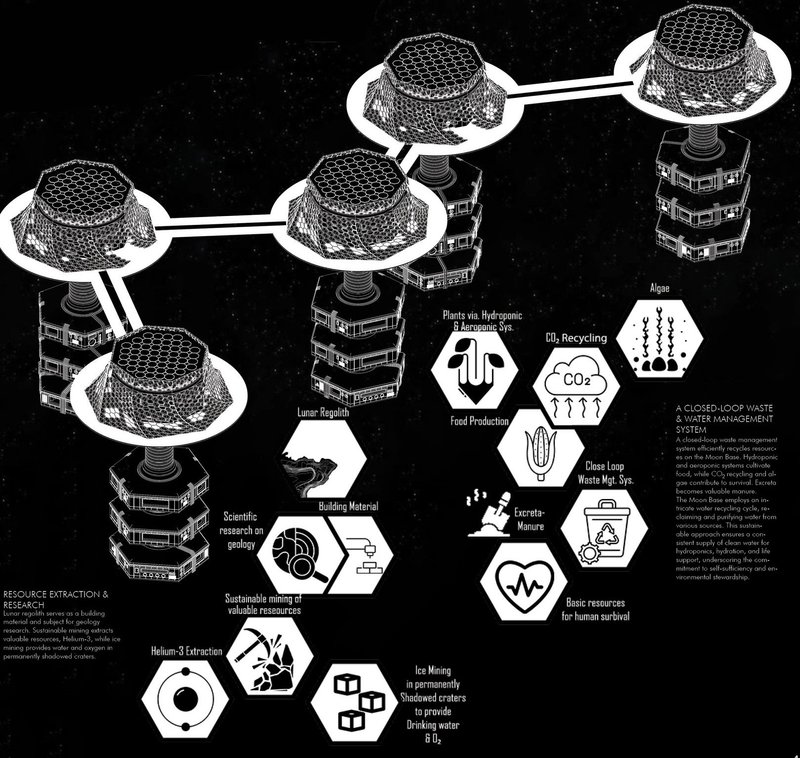
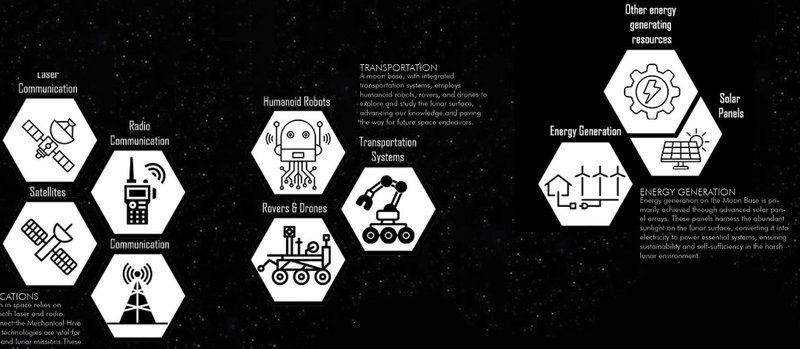
Sustainability is a core principle of The Mechanical Hive. Energy generation on the base is primarily achieved through advanced solar panel arrays, which harness the abundant sunlight on the lunar surface. This solar energy is converted into electricity, powering essential systems and ensuring sustainability and self-sufficiency in the harsh lunar environment.
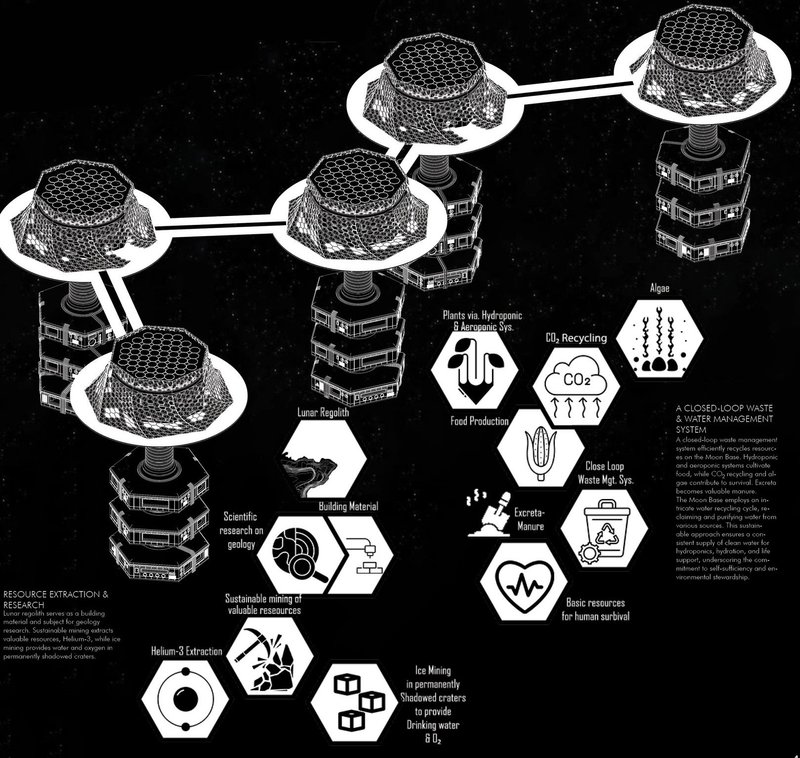
The life support systems are designed to efficiently recycle resources. Hydroponic and aeroponic systems cultivate food, while CO2 recycling and algae contribute to survival. Waste management systems ensure that excreta is converted into valuable manure, and an intricate water recycling cycle reclaims and purifies water from various sources. This sustainable approach ensures a consistent supply of clean water for hydroponics, hydration, and life support, underscoring the commitment to self-sufficiency and environmental stewardship.
Phases of Development
The development of The Mechanical Hive is divided into five distinct phases:
Landing: The lunar module gracefully lands on the moon's surface, marking the beginning of the construction process..
3D Printing: Using 3D printing technology, the base's primary structures are built using lunar regolith, minimizing the need for Earth-sourced materials..
Excavation Work: A team of lunar scientists and engineers evaluates the chosen excavation site for safety, accessibility, and resource availability, ensuring it meets the mission’s goals..
Addition of Units: New units are seamlessly integrated with the existing core infrastructure, including power, data, and life support systems, establishing safe passages for astronauts..
Expansion and Colonization: The project continues to add new units and modules to the lunar base to meet the needs of the growing population. These structures include habitats, research facilities, education and training centers, and agricultural and energy production methods.
Site Selection and Location
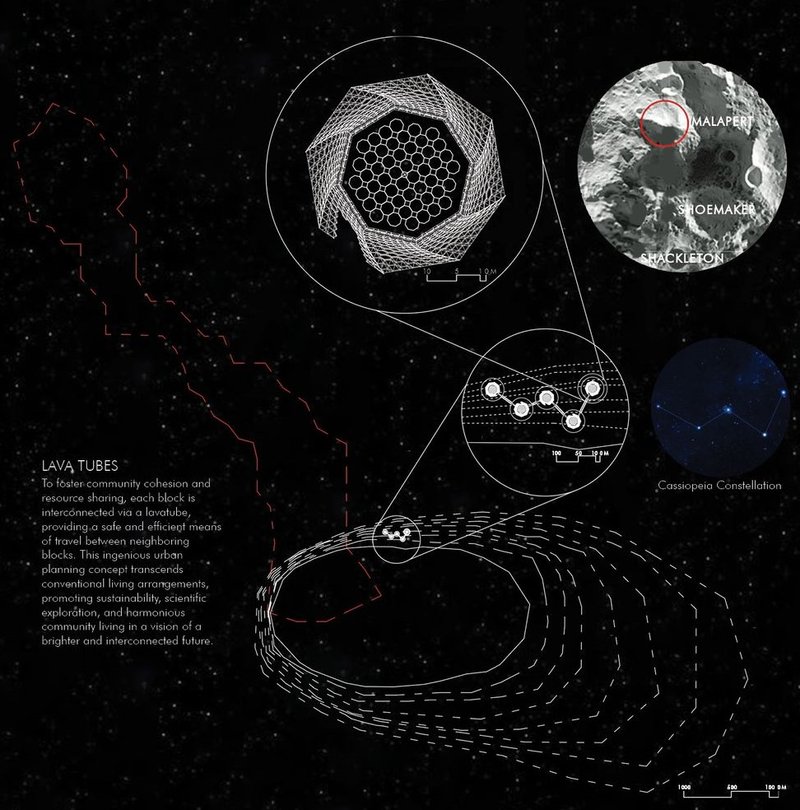
Selecting an appropriate site for The Mechanical Hive is crucial for its success. The base is strategically located near the Shackleton Crater at the lunar south pole. This location is advantageous due to its near-constant sunlight, which is essential for solar power generation. The Shackleton Crater's deep shadows may also contain valuable concentrations of hydrogen and other volatiles, providing critical resources for the base.
Additionally, the proximity to lunar lava tubes offers a unique opportunity for future expansion and protection from meteor impacts. These natural formations can serve as natural shelters, reducing the need for extensive construction while providing a safe and stable environment for lunar habitats.
Integration of Advanced Technologies
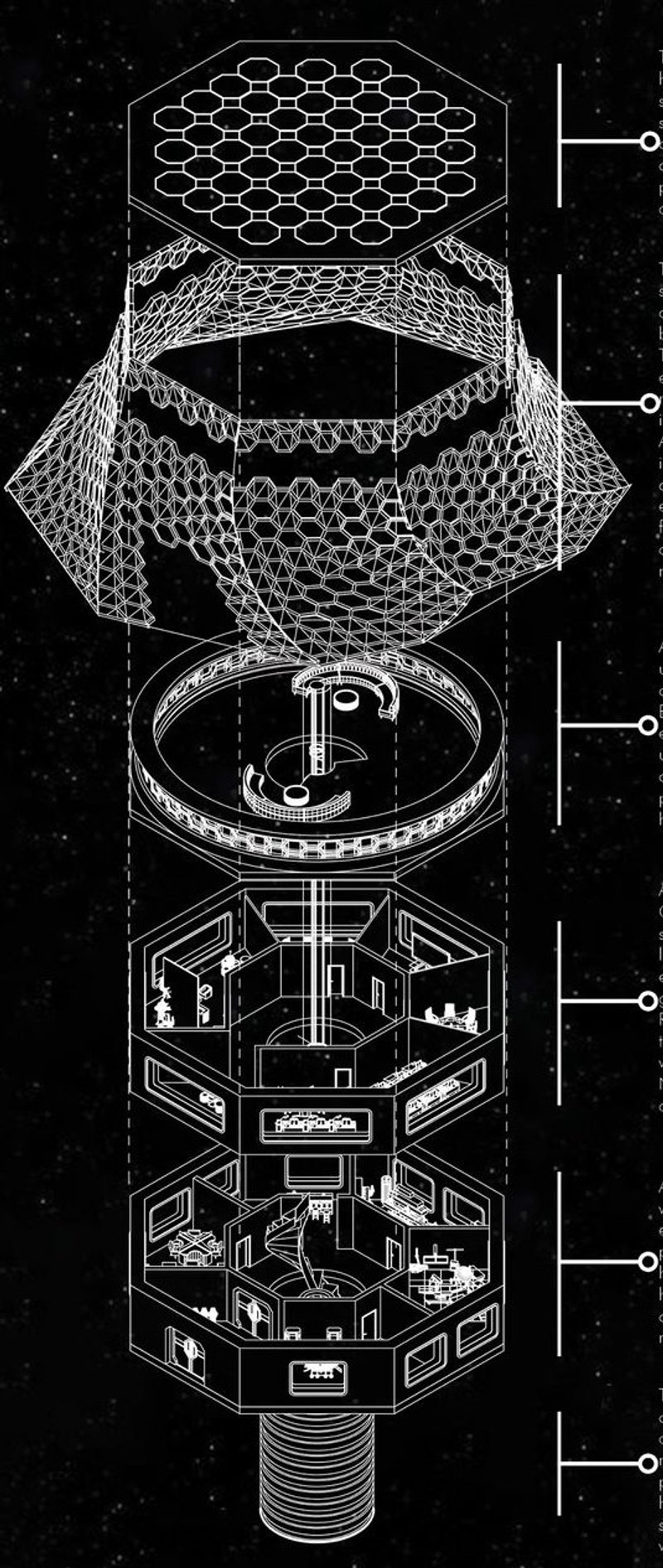
The Mechanical Hive integrates several advanced technologies to enhance its functionality and sustainability. Solar panels on the roof of the buildings capture the sun's energy, providing vital power for life support systems, lighting, and scientific equipment. The inclusion of a hexagonal mesh structure not only adds a distinctive architectural element but also enhances structural strength by distributing loads evenly.
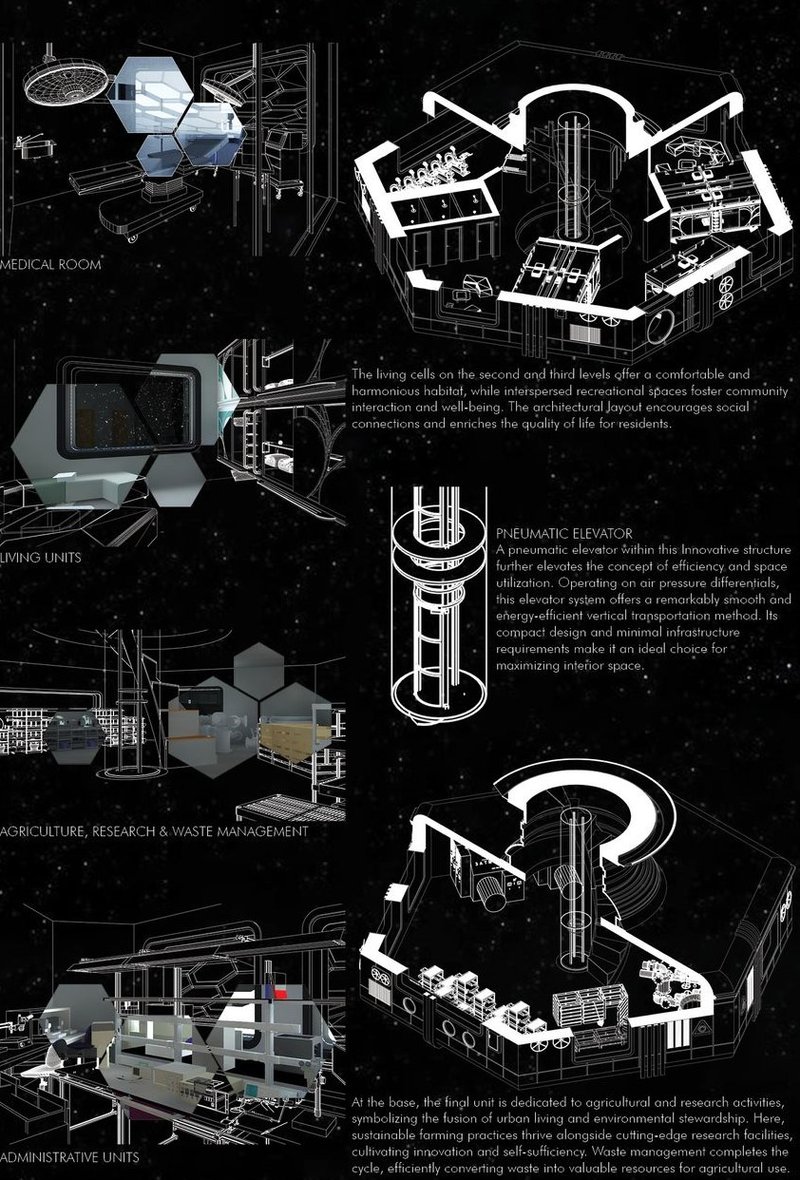
A pneumatic elevator system within the structure offers an energy-efficient method of vertical transportation, maximizing interior space. This innovative approach ensures smooth and efficient movement between different levels of the base, promoting operational efficiency.
Medical and Administrative Facilities
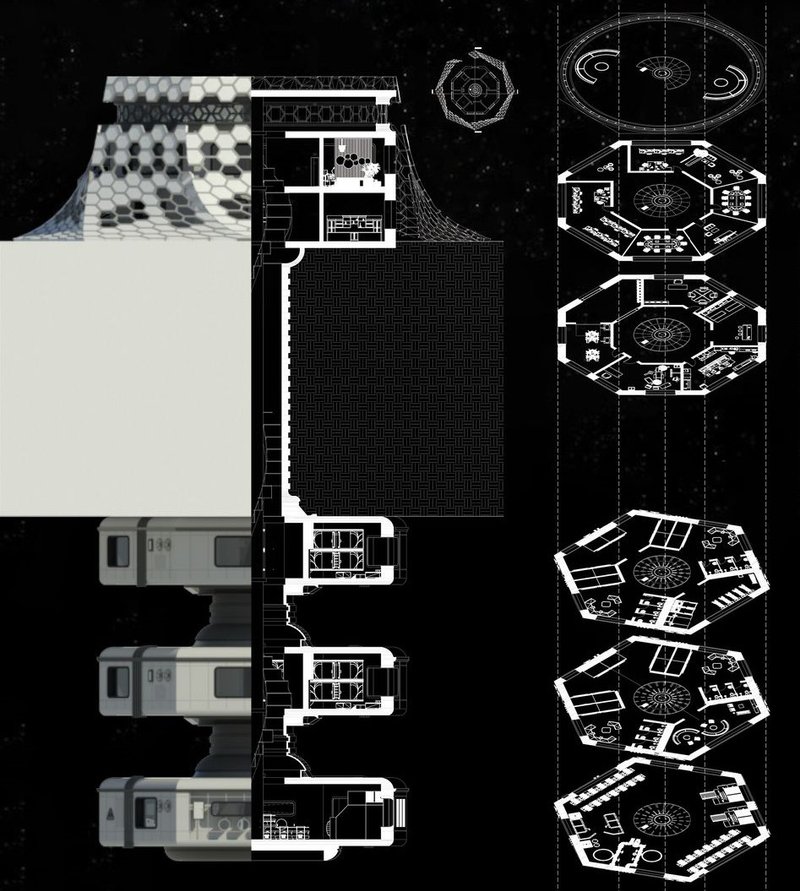
The base includes comprehensive medical and administrative facilities to support the well-being of its inhabitants. A dedicated medical room offers immediate medical intervention, ensuring the health and safety of the occupants. The administrative units house communication control rooms, ensuring seamless and reliable communication links with both internal and external entities. These facilities play a crucial role in maintaining the functionality and cohesion of the lunar community.
Living and Recreational Spaces
The living quarters in The Mechanical Hive are designed to provide comfort and foster a sense of community among the inhabitants. The second and third levels offer spacious living cells with interspersed recreational spaces. These areas encourage social interaction and well-being, creating a harmonious and enriching environment for the residents.
Additionally, a lunar habitat observatory offers unique opportunities for astronomical observation and scientific research, bridging the gap between lunar exploration and the secrets of the universe. This facility advances our understanding of the cosmos and fosters a closer relationship between humanity and the stars.
Future Prospects and Expansion
The Mechanical Hive is not just a static installation but a dynamic and expandable base. Future plans include the addition of new units and modules to accommodate a growing population. These structures will encompass habitats, research facilities, education and training centers, international cooperation hubs, and agricultural and energy production methods. This continuous expansion ensures that the base remains adaptable and capable of meeting the evolving needs of its inhabitants.
The Mechanical Hive represents a groundbreaking achievement in lunar architecture, combining innovative design, sustainability, and functionality. Its hexagonal structural stability, efficient resource management, and advanced technologies make it a promising model for future lunar colonies. As humanity ventures further into space, The Mechanical Hive stands as a testament to our ingenuity and determination to thrive in the most challenging environments. This lunar base not only paves the way for sustained lunar exploration but also serves as a gateway to deeper space exploration, heralding a new era in human spaceflight.




Popular Articles
Popular articles from the community

20 Most Popular Furniture Design Projects of 2025
Modular street systems, parametric benches, and insect hotels: the furniture design projects that captivated architects on uni.xyz in 2025.

H&P Architects Stack a Vertical River of Brick and Greenery in Hanoi
A perforated terracotta tower in Dong Anh channels water, light, and air through eight staggered levels of domestic life.

Biophilic Architecture and Regenerative Stadium Design: Biophilia Lagos by Rachel George
A regenerative stadium in Lagos transforms landfill into a living ecosystem through biophilic architecture, waste reuse, and environmental healing.
20 Most Popular Office Building Projects of 2025
From biophilic workspaces in India to net-positive energy offices in New Delhi, 20 office building projects that defined architecture in 2025.


Similar Reads
You might also enjoy these articles
317studio Turns an 87 m² Classroom into a Forest Clearing for Scouts in New Taipei City
A rope canopy, student-made specimens, and campfire geometry replace rows of desks in this Scouting classroom in Xizhi District.
24 7 Arquitetura Builds a Timber Pavilion as a Family's First Act on a 5,000 m² Brazilian Plot
In Jaguariúna, a prefabricated glulam house nestles among mature trees as the opening move of a larger residential masterplan.
1+1>2 Architects Build a School from 900 Blocks of Hmong Stone on Vietnam's Rocky Plateau
On a barren valley in Ha Giang province, a community quarried its own stone to raise a kindergarten and primary school rooted in Hmong identity.
100A Associates Builds a Volcanic Stone Retreat on Jeju Island Rooted in Ritual and Restraint
Watarstay [Wa:Tar] in Bongseong-ri channels Jeju's basalt, reed, and hemp into a 150 m² hospitality space shaped by contemplation.


Explore Space Architecture Competitions
Discover active competitions in this discipline




The Global Benchmark for Architecture Dissertation Awards


The Global Benchmark for Graduation Excellence


Design challenge to reuse E-waste
Comments (0)
Please login or sign up to add comments
No comments yet. Be the first to comment!