
Top 10 Residential Projects of the Year 2024
Global Living Redefined: 10 Residential & Mixed-Use Projects Shaping the Future.

Contemporary residential architecture is undergoing a renaissance, blending innovative design with contextual sensitivity and multifaceted functionality. From mixed-use urban complexes that foster community to luxurious private homes that harmonize with nature, architects are pushing boundaries to create dwellings that are sustainable, contextually responsive, and enriching for occupants. Common themes include integrating residential spaces with retail or work areas, incorporating green features and social spaces, and drawing on local culture or landscape for inspiration. The following Top 10 Residential Buildings of the Year exemplify these trends, offering insightful case studies in cutting-edge home design and development.
1. The Wessel Quarter – Asker, Norway
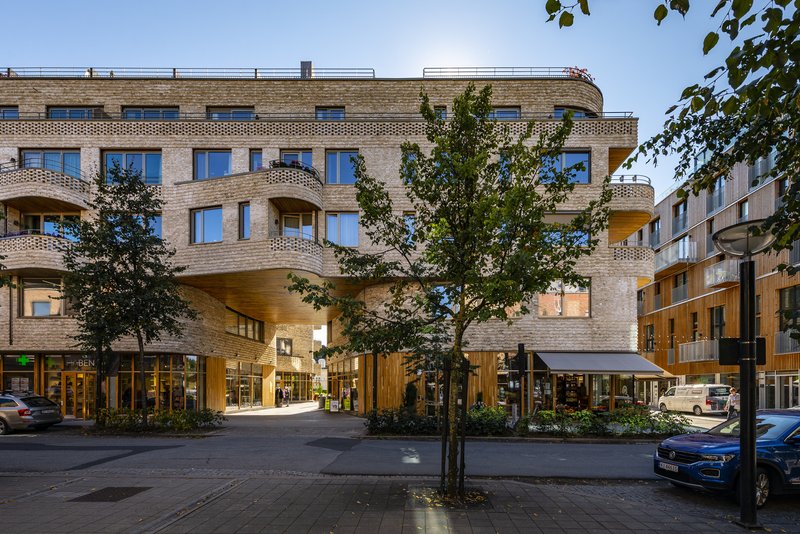
Located in the center of Asker, a suburb of Oslo, The Wessel Quarter is a mixed-use residential development that revitalizes a once-fragmented city block. It combines housing with retail and offices to form a cohesive mini-community next to the town’s train station, on the last undeveloped parcel in Asker’s core. The design respects its urban context: the outer facades align with surrounding building heights and streets, while the block's interior features a softer, undulating façade that maximizes sunlight and views for residents. This undulating inner form allows for a variety of apartment types and a roof garden atop the 7-story central volume. The project demonstrates an innovative approach to density – The Wessel Quarter “redefines a clear city block by integrating public paths and sightlines through the site, maintaining connectivity with the town fabric. As a result, it not only provides new homes and amenities but also enhances the civic realm. The Wessel Quarter’s blend of rectilinear street-facing facades and curvilinear inner courtyards exemplifies how modern residential design can be both contextually fitting and creatively optimized for light, landscape, and community.
2. The Fillome Building – Seoul, South Korea
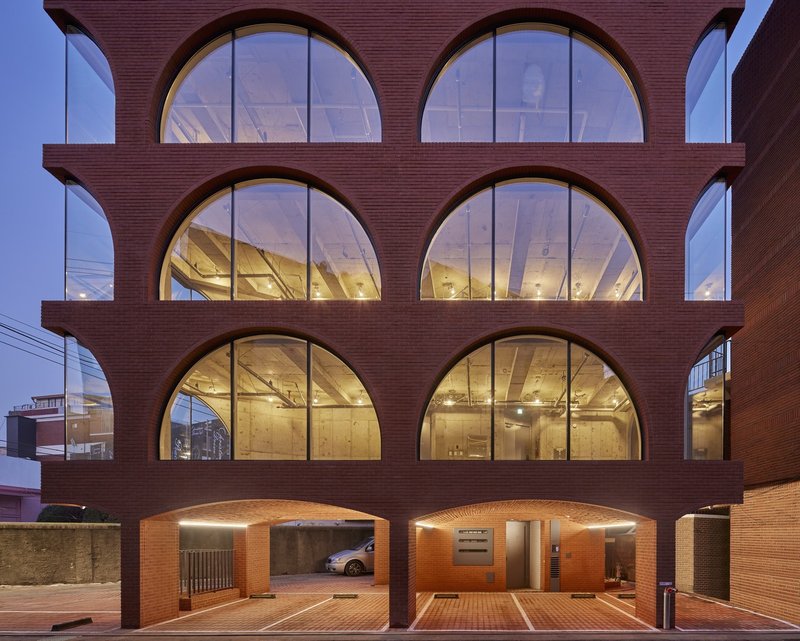
A landmark project in Seoul’s trendy Seongsu-dong district, The Fillome Building reimagines the mixed-use residential tower for a dense urban environment. Built on a narrow triangular site that was once a derelict lot behind a factory, this project had to satisfy a demanding program: 400% floor-area ratio, ground-floor retail, and multi-generational housing for the family owners, all while respecting the “essence of Seongsu-dong”. The architects responded with a bold yet contextually rooted design. A open ground level features a pilotis (stilts) structure for parking, but unlike typical towers, here the pilotis take the form of two grand brick arches that support the 7-story building above. These archways create a new semi-public space – an arcade that connects the main road to a back street – enlivening the pedestrian experience and stitching the building into the neighborhood fabric. Above, the building’s uses are stacked and intertwined: rental commercial space and studio apartments mix with the family’s own residence, all unified by the contemporary red-brick façade which echoes the local industrial heritage.
In stylistic terms, The Fillome Building “is also a mixture of commercial and residential spaces, with a variety of housing types, including studio apartments and [the] housing of the building owner”. By simplifying the facade’s complexity through a consistent arch motif and material palette, the design avoids the visual chaos of its surroundings. This innovative integration of structure, form, and function sets The Fillome Building apart as a model of urban redevelopment – one that demonstrates how high-density housing can be both culturally resonant and community-oriented in a fast-evolving cityscape.
3. Michiyama House and Store – Shirakawa, Japan
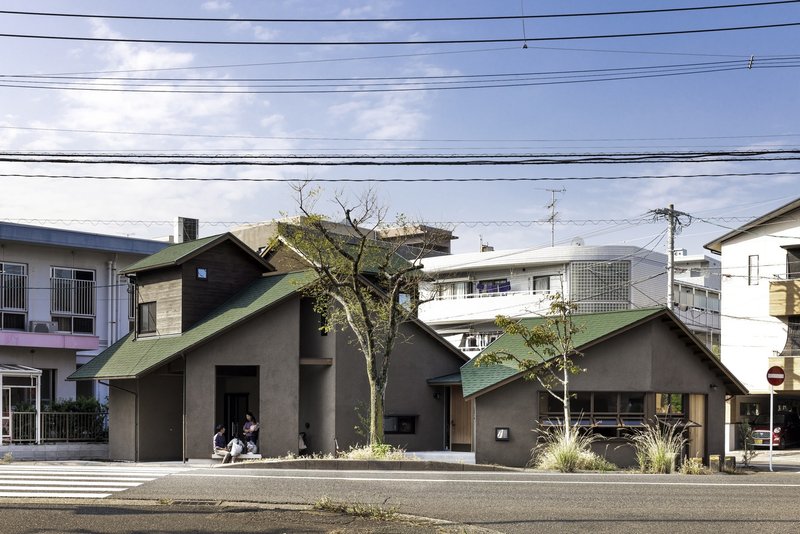
The Michiyama House and Store in rural Japan exemplifies a clever fusion of private home and public storefront on a small triangular plot. The client requested a house with a rentable shop space on a site that faces a main street on one side and a residential zone on the other. This dual use posed a challenge: how to give the shop a street presence without compromising the family’s privacy. The architects’ solution was to reconceptualize the building as “a series of roofs, large and small, dispersed throughout” the structure. Instead of a single recognizable shopfront, multiple pitched roof forms cover different parts of the program, blurring the line between the commercial and residential portions. These overlapping roofs hide the true function of each part of the building, so one cannot immediately tell where the store ends and the home begins – an approach that successfully protects privacy while still inviting visitors.
The complexity of the roofs creates an ever-changing appearance: as one moves around, the building’s form shifts, making it “difficult to imagine the layout of the house” and thus shielding the living areas. At the same time, the charming pitched roofs (a nod to traditional vernacular architecture) give the project a friendly, familiar presence in the neighborhood. Notably, the design is also forward-looking: it was conceived during the COVID-19 era with an eye toward future flexibility, ensuring parts of the residence or shop could adapt to other community uses if needed. In summary, Michiyama House and Store is an innovative case study in small-scale mixed-use design – one that balances openness and seclusion through architectural form, and shows how a family home can quietly enrich a streetscape.
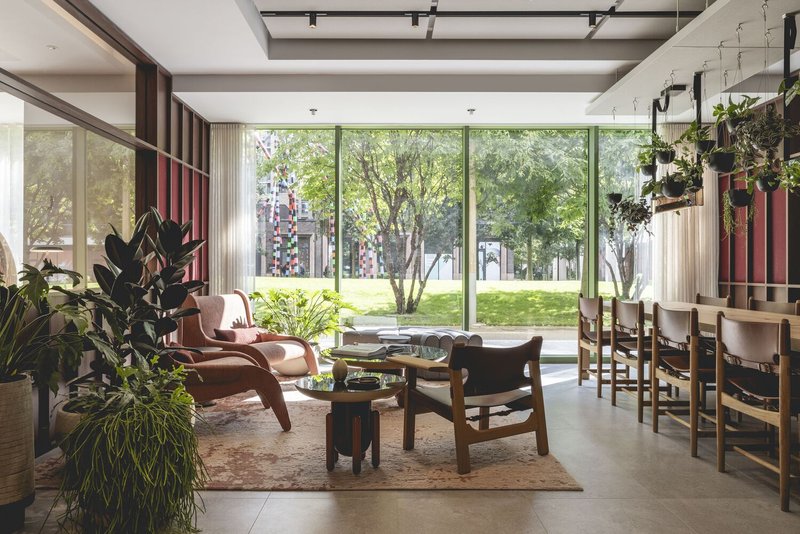
4. Capella Building – London, UK
Capella is a 14-story apartment building that stands as a milestone in London’s King’s Cross redevelopment. As the final residential building completed in a two-decade masterplan, Capella had the task of both blending in with an “architecturally eclectic collection” of neighboring buildings and asserting its own identity. The project provides an inclusive mix of 176 apartments comprising 120 market-rate and 56 affordable (socially rented) units in one building. On the ground floor, it also houses three retail units and shared tenant amenities, activating the street and park edges. Allies and Morrison’s design gives Capella a distinctive facade without resorting to pastiche, using “three key materials, cream and green,” to create a fresh but contextual expression. Cream-toned brickwork, light-green textured concrete panels, and crisp white balconies compose the elevations, which “nod to the light elevational tone of the Luma building diagonally opposite” while counterbalancing the predominately darker buildings around the park.
This careful material strategy results in a building that feels at once unique and harmoniously tied to its setting. Inside, Capella offers a wide variety of apartment types (from studios to four-bedroom duplexes) to foster a diverse community, and many units enjoy views of or access to the adjacent Lewis Cubitt Park. The completion of Capella is significant not just for King’s Cross but for urban housing in general: it exemplifies how mixed-tenure housing can be seamlessly integrated into high-profile developments, achieving both social inclusion and design excellence. The building’s success underscores the value of long-term planning – it is “an important milestone” in the transformation of King’s Cross, proving that bold contemporary architecture can also deliver on community needs.
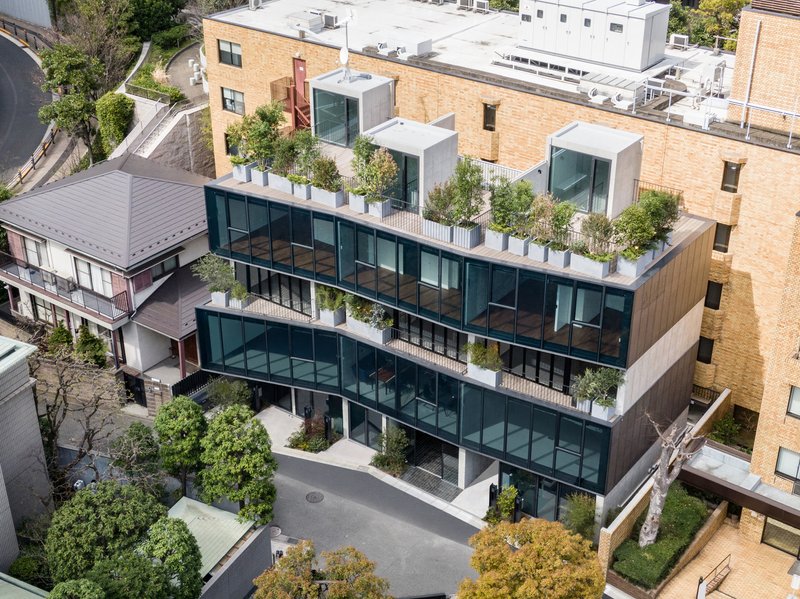
5. AUBE Toranomon – Tokyo, Japan
In the heart of Tokyo’s Minato ward, AUBE Toranomon is a forward-thinking residential tower that redefines urban rental living. Situated amid an area of rapid high-rise development, yet adjacent to many older low-rise structures, the building mediates between scales. The design intent was to accommodate “various types of lifestyles in this rental residential building” and to “create a harmonious social connection between the residents and the city.” In practice, this means AUBE Toranomon offers units with flexible layouts and features that encourage interaction and openness. Balconies and windows are positioned to engage views of the city, and at street level the architecture is welcoming, avoiding a harsh divide between inside and outside. Notably, although the project began before the pandemic, it anticipated lifestyle shifts such as working from home.
The architect, Tatehito Sakurai (ETHNOS), integrated a series of small commercial spaces called “Escalier” into the design – essentially communal work lounges or shops woven through the lower levels. These shared spaces provide a buffer between private apartments and the city, allowing residents to work, socialize, or shop close to home and thereby knitting the building into the urban life around it. The result is that AUBE Toranomon not only delivers highly efficient modern apartments, but also functions as a vertical micro-community. Its façade is a crisp, contemporary play of materials that aligns with Tokyo’s modern aesthetic, yet its true innovation lies in the social design. By encouraging new live-work patterns and neighborhood engagement within a dense city block, AUBE Toranomon represents a new generation of residential architecture focused on community and adaptability in the face of changing urban lifestyles.
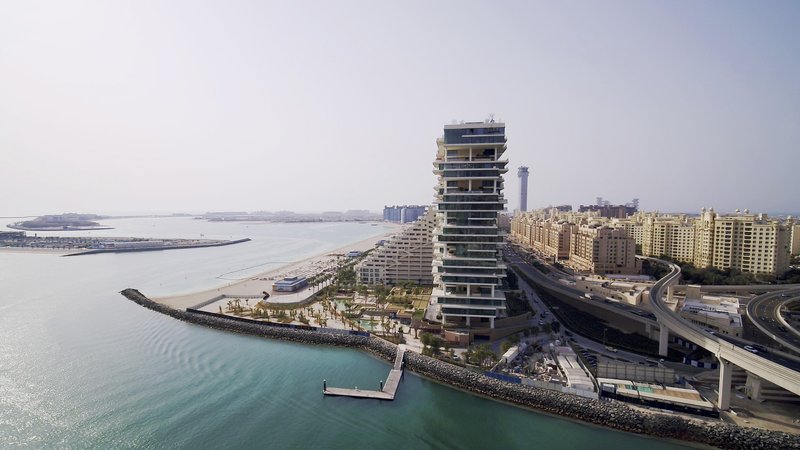
6. One at Palm Jumeirah – Dubai, UAE
The One at Palm Jumeirah is a superlative example of ultra-luxury residential design, heralded as “Dubai’s most expensive” apartment tower. Rising 105 meters at the gateway to the Palm Jumeirah artificial island, this tower contains 90 exclusive residences designed to offer villa-like amenities in a vertical format. Each apartment is thoughtfully arranged to have an unobstructed, panoramic view of the Arabian Gulf – a feat achieved by pushing and pulling the floor plates so that generous private terraces accompany every unit. This staggering of volumes creates a striking silhouette and ensures that outdoor living spaces (gardens, pools, and lounges) are integral to each home. Inside, the luxury is no less impressive: double-height and even triple-height spaces appear in various units, providing dramatic interiors filled with light and grandeur. High-profile design firms were involved in the interiors and landscaping (including Japan’s Super Potato studio and designer Vladimir Djurovic), resulting in bespoke finishes and lush sky gardens that set a new bar for opulence.
Structurally and aesthetically, the tower is an architectural marvel by SOMA Architects – its design concept of interlocking floors gives it a dynamic, shifting form that distinguishes it on Dubai’s skyline. One at Palm Jumeirah is more than just a collection of apartments; it’s conceived as a statement of modern luxury living, where residents have the benefits of a private estate (space, greenery, privacy) combined with the services and convenience of a high-end condominium. The project illustrates how cutting-edge engineering and design can deliver an unprecedented level of comfort: for example, the building’s cascading terraces and voids not only grant privacy but also create a sculptural facade that is both iconic and functional. In doing so, One at Palm has set a benchmark in the industry, embodying the idea that high-rise residences can provide an “unmatched exclusivity” that was once thought possible only in ground-level estates.
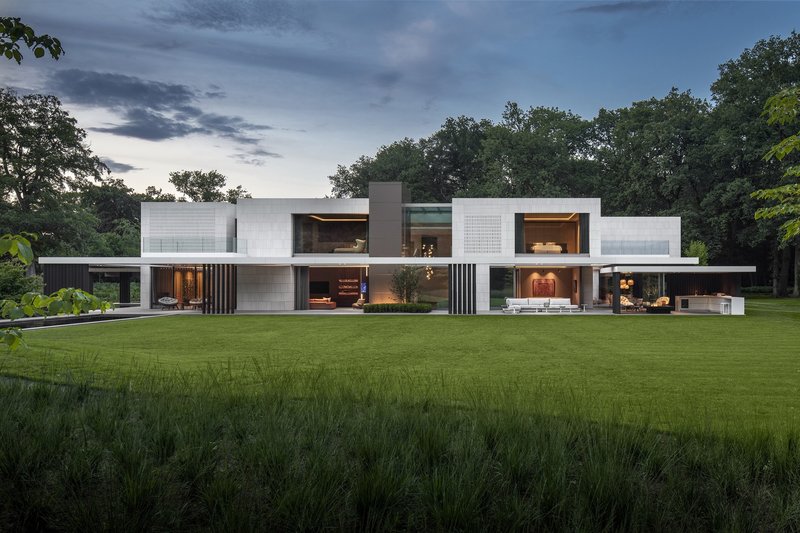
7. Flanders House – Flanders, Belgium
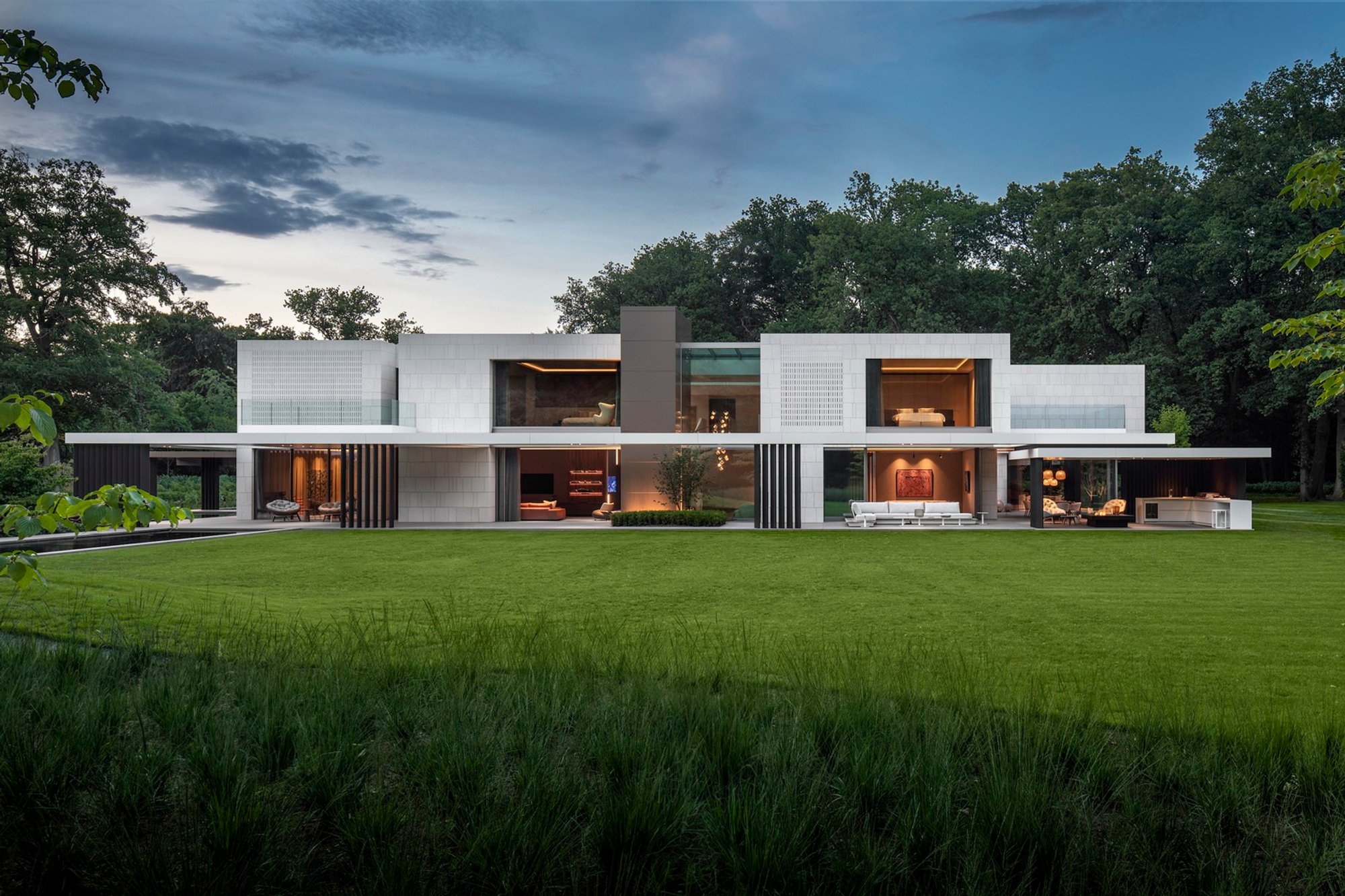
Set on a large wooded plot in the Flanders region, Flanders House by SAOTA is a tour-de-force of contemporary residential architecture in a rural context. The design brief presented an opportunity: the site’s size and natural beauty allowed the creation of “a distinctive contemporary architectural object in the landscape” that could still feel like a warm, livable home. SAOTA responded by composing the house as a series of bold geometric forms carefully integrated with the environment. The estate’s master plan comprises a main house positioned atop a subterranean garage and a separate pool pavilion (which includes a home office), linked together by landscaped courtyards, koi ponds, and a swimming pool. This arrangement breaks up the massing and weaves the residence into the landscape, so that water and garden elements become part of the daily experience. Architecturally, Flanders House strikes a balance between solidity and openness: the exterior features solid cubic volumes interspersed with glazed voids, unified by a slender roof canopy that wraps around three sides to form generous covered terraces.
Slender clustered columns support this canopy and double as sculptural screens, filtering light and views for the interiors. The facade’s aesthetic is actually an “expression of the interior layout” – the placement of windows and voids corresponds to living spaces inside, which were designed for the client’s lifestyle of outward-looking, nature-engaged living. Interior spaces flow seamlessly to outdoor areas, emphasizing an indoor-outdoor living ethos. Despite its striking modern form, the house exudes warmth through natural materials and the constant presence of the verdant outdoors. Flanders House thus redefines luxury residential architecture by proving that a house can be simultaneously a sculptural landmark and a deeply contextual, inviting home. It engages meaningfully with its surroundings, as evidenced by the way the architecture frames views of the forest and incorporates elements like water and courtyards to blur the line between built and natural.
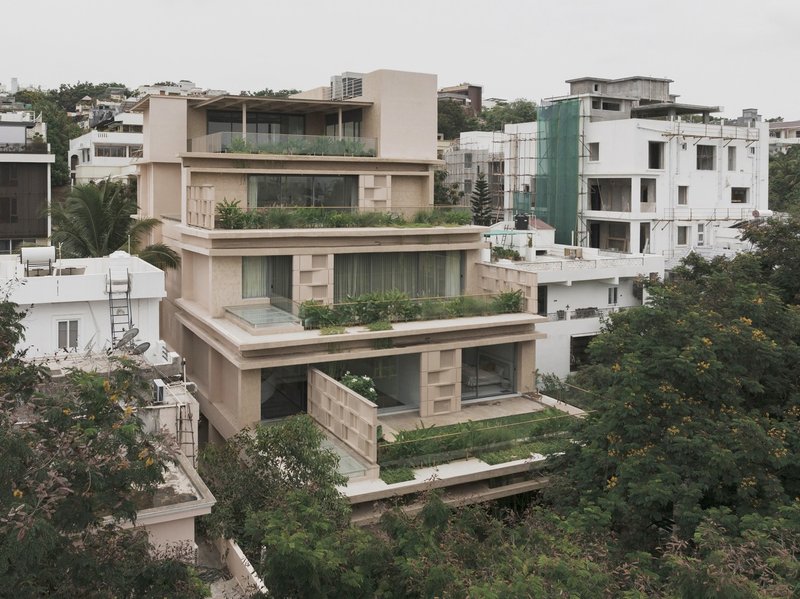
8. Jubilee Terraces Residence – Hyderabad, India
The Jubilee Terraces Residence is a seven-level private home that stands out amid the affluent Jubilee Hills neighborhood of Hyderabad for its innovative approach to climate and context. In a locale notorious for its “large, opulent residences” that often serve as status symbols rather than responsive designs, this project by Spacefiction Studio takes a different path. The design embraces the steeply sloping, 160-foot long site and the presence of mature trees to create what the architects call a “house of cascading landscapes.” The building’s form steps back gradually as it rises, creating a series of north-facing terraces that evoke the rhythm of terraced fields. Each of the upper five floors is set back from the one below it, and these terraces are heavily landscaped, resulting in layers of greenery that cascade down the structure. This strategy not only provides every level with garden spaces and outdoor living areas, but also ensures that each terrace shades the one beneath it, a natural way to mitigate heat in the Indian sun.
On the lower levels, the house features dramatic volumes for recreation – notably a double-height indoor swimming pool atrium at the core, and a grand foyer capped by an overhanging garden with skylights. The foyer’s garden visually links to the outdoor trees, while the skylights pour sunlight into the interior, creating a play of light and shadow along a sinuous feature staircase. Throughout the house, marble finishes and contemporary design elements are balanced by the abundant presence of nature, giving residents the feel of a tranquil oasis in the middle of a dense city.
By designing the residence to respond to the sloping topography and to incorporate natural elements at every floor, the architects achieved a building that is not only striking in silhouette but also context-sensitive and climate-sensitive – a rarity in this high-end enclave. The Jubilee Terraces Residence demonstrates how luxury can coincide with sustainability: the house’s terraced form and integrated landscaping moderate the microclimate and create secluded outdoor experiences, all while adding a distinct architectural character to the neighborhood.
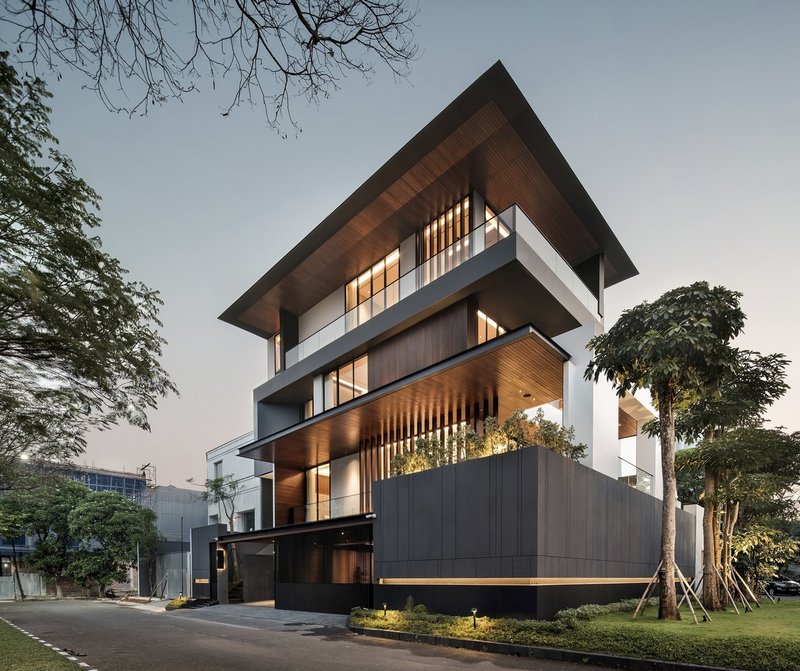
9. R+J House – Jakarta, Indonesia
R+J House is an inventive private residence that blurs the boundary between a home and an art gallery. Located at a quiet, green corner of a Jakarta gated community, the site offered a calm natural backdrop – a rarity in the dense city – which the design takes full advantage of. The young clients, avid collectors of contemporary art, gave the architects (DP+HS Architects) a unique brief: to create living spaces that could showcase their art collection as an integral part of the architecture. In response, R+J House was conceived with a “museum-like” spatial experience in mind, organized through a multi-level interconnected plan (inspired by Adolf Loos’s raumplan concept). Rather than flat, conventional floor plates, each room or area is set at a slightly different level, flowing into the next in a continuous sequence around a central atrium.
This allows for fluid movement “between spaces” and creates sightlines that reveal curated views of art pieces from various vantage points. Sculptures and paintings are strategically placed so that as one moves through the house, unexpected compositions of art, architecture, and the lush outdoors come into view. A dramatic open staircase occupies the atrium, becoming a focal piece of architecture itself – it encourages upward and downward glimpses of the home’s different levels and the artworks on display, almost like a gallery circulation route. Despite this gallery-like organization, the house remains comfortable and intimate for family living. Natural light filters down from above, and the open core helps ventilate the interiors in the tropical climate.
Surrounding trees and a green open area adjacent to the site also extend a sense of nature into the space, balancing the emphasis on art with a connection to outdoors. In R+J House, the integration of distinctive art objects was “taken seriously to be incorporated into the overall spaces and architecture” – a guiding principle that has yielded a truly bespoke residence. This project is a testament to how residential architecture can be tailored to personal passions: it delivers a unique environment where everyday life is enriched by art at every turn, without sacrificing the feeling of home.
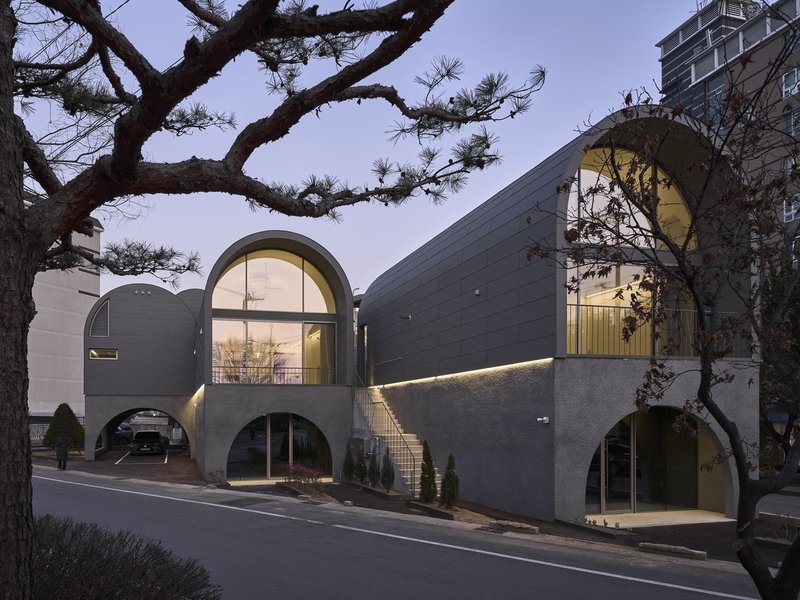
10. Round Roofs Residence – Mungyeong, South Korea
At the entrance of a small city in Korea sits the Round Roofs Residence, a mixed-use complex that fuses traditional inspiration with modern design. The project’s philosophy harks back to an old East Asian saying: “The sky is round and the ground is angular.” This idea – historically evident in the curved eaves of Korean hanok roofs – became a design mantra for the architects, Todot Architects and Partners. Rather than simply imitating the curved roof form, they embraced its spirit to give the building a distinct identity. The site itself was a challenging triangular plot, like a traffic island, positioned in front of Mungyeong City Hall and adjacent to a park. For years it lay abandoned, despite its prominence.
The Round Roofs Residence transforms it into a lively place by introducing ground-level retail and upper-level housing, organized in a way that invites the public in. The building mass is broken into staggered volumes radiating from the plot’s sharpest corner, creating vault-like passages and small courtyards between them. This design generates an arcade – a sequence of interstitial spaces that draw pedestrians off the sidewalk and into a mini plaza lined with shops. The circulation through the site is slowed and made experiential, encouraging visitors to linger and explore, which in turn enlivens the retail. Above, the residential portion is crowned with the namesake round roofs: a series of barrel vaults that smoothly unite vertical walls and rooflines.
These curved roofs are not just formal gestures; they create uplifting interior spaces for residents and echo the “round sky” concept, aiming to “provide coziness to residents while looking at the round sky.” From the exterior, the repetitive arches of the roof vaults become the building’s façade motif, a modern interpretation of traditional curvature that is both familiar and fresh. In effect, Round Roofs Residence takes an underutilized plot and turns it into a communal asset, all through a design that bridges old and new. By weaving together a public shopping arcade with multi-family living and by rooting its aesthetics in cultural philosophy, the project achieves a rare harmony. It demonstrates how innovative residential architecture can also activate urban space and celebrate heritage: a slow, thoughtful journey through arches and angles that reconnects a community with its local.
These ten projects, spanning diverse contexts and scales, collectively illustrate the evolving paradigms of residential architecture today. A clear trend is the dissolution of boundaries – between living, working, and communal spaces, between indoors and outdoors, and between contemporary form and historical context. Whether it’s a multi-use urban block in Norway fostering community interaction, a mixed-use tower in Seoul weaving local character into a modern silhouette, or a private villa in Belgium merging boldly with the landscape, each example shows a polished, analytical approach to design that elevates quality of life. Sustainability and contextual harmony emerge as key priorities: we see buildings like Jubilee Terraces incorporating greenery and passive climate design, and projects like Round Roofs Residence drawing from cultural wisdom to inform form and function. Innovation is also a common thread – from structural ingenuity (e.g. arch-supported pilotis and cascading terraces) to programmatic creativity (homes that double as galleries or adapt to new work-life patterns).
Importantly, these cutting-edge designs do more than house people; they influence the broader industry by setting new benchmarks. They inspire architects and developers to think beyond convention, proving that residential buildings can be both beautiful and impactful – shaping neighborhoods, honoring traditions, and meeting the evolving needs of society. In summary, the Top 10 Residential Buildings of the Year are not only exemplary works in their own right, but also signposts pointing towards a more integrated, sustainable, and human-centric future in residential design. Each stands as a testament to architecture’s power to innovate and enrich the way we live




Popular Articles
Popular articles from the community


The Ken Roberts Memorial Delineation Competition (Krob)
As the most senior architectural drawing competition currently in operation anywhere in the world, it draws hundreds of entries each year, awarding the very best submissions in a series of medium-based categories.

Split House: A Compact Urban Home Blending Privacy, Light, and Flexible Living in Japan
Compact Japanese home featuring DOMA space, flexible café potential, passive lighting, privacy zoning, and sustainable urban living design.
Fifth NRE Jazz Club – De Bever Architecten: Eindhoven’s Revitalized Cultural Hub
Historic gas factory transformed into Fifth NRE Jazz Club blending modern sustainability, jazz culture, dining, and heritage architecture seamlessly.
Atelier Macri Concept Store Interior Design by CASE-REAL
Atelier Macri store features a "ko" counter, walnut wood details, cork displays, blending retail, gallery, and seamless customer experiences.


Similar Reads
You might also enjoy these articles
Split House: A Compact Urban Home Blending Privacy, Light, and Flexible Living in Japan
Compact Japanese home featuring DOMA space, flexible café potential, passive lighting, privacy zoning, and sustainable urban living design.
Colour Burst House by LIJO RENY Architects: A Tropical Home Designed Around Rain, Light, and Courtyard Living
A vibrant tropical home with courtyards, rain-focused design, passive cooling, and seamless indoor-outdoor living in contemporary Indian architecture.
Fifth NRE Jazz Club – De Bever Architecten: Eindhoven’s Revitalized Cultural Hub
Historic gas factory transformed into Fifth NRE Jazz Club blending modern sustainability, jazz culture, dining, and heritage architecture seamlessly.
Three Summits Residence by NÓS: A Multigenerational Mountain Retreat Rooted in Landscape and Architectural Primitivism
Multigenerational mountain residence in Vermont featuring three pavilions, granite bases, dramatic roofs, and seamless integration with forested landscape.

Explore Architecture Competitions
Discover active competitions in this discipline




The International Standard for Design Portfolios


The Global Benchmark for Architecture Dissertation Awards


The Global Benchmark for Graduation Excellence

Challenge to design mud housing for contemporary communities
Comments (0)
Please login or sign up to add comments
No comments yet. Be the first to comment!