
Urban Development of the University of Chicago
NEW RAVA AND LOGAN CENTER for the arts
Episode 1: Secrets
We were in Chicago looking to create an identity. But we did not know what to look for in Chicago, a city that has been home to thousands of people from the past to the present and into the future. People who were Chicago's regular guests and brought with them tears, smiles, loneliness, nostalgia, and the identity and culture of their homeland.
A place full of things, how can we look for something?
What secrets does Chicago really have inside?
Episode 2: Creating Identity, Maintaining the Atmosphere of Existence
We witnessed births and deaths in Chicago as we sought to create an identity. The beginning of identity in Chicago to this day has been associated with the death of its former identity and sometimes the new identity dies and the previous identity is reborn and continues like this cycle.
We were not looking for the past in Chicago, we were not looking for an identity death to create our identity. We were not even looking for the superiority of one thing over another. To create our identity, we tried to keep the existing identity alive and to continue and expand its path while doing something new.
Episode 3: Emotions within man, emotions of the city
We went to the world of history in Chicago. We saw history as a cycle that never ends. Today is a history for tomorrow. And tomorrow is a historical day for itself. Something that never ends. Can we forget the old days as we enter a new day or a new month or a new year? It never can be. In fact, every moment and every second of history is like the movement of water as it flows.The natures that existed in Chicago but suddenly disappeared as if they never existed.
Were they forgotten? They were never forgotten
the project goal
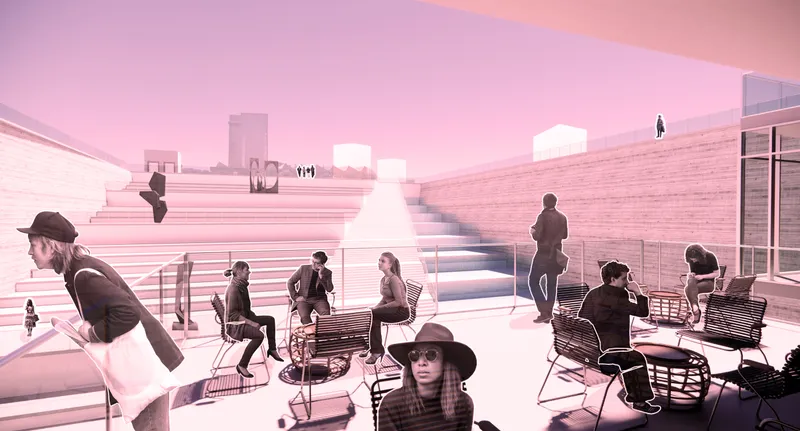
In this project, we tried to deal with the feelings of human beings throughout history in the city of Chicago, in addition to the five senses within human beings. The emotions that the people of Chicago experienced throughout the history of Chicago, and in fact it can be said that arousing the emotions of the people of Chicago is an art that we wanted to create.
First, we identified the strategic points and potential of the site, and after studying the detailed plan of the University of Chicago, we found that our site is located in the University of Chicago Urban Development Plan from the southwest and also southeast of WASHINGTON SQUARE PARK.
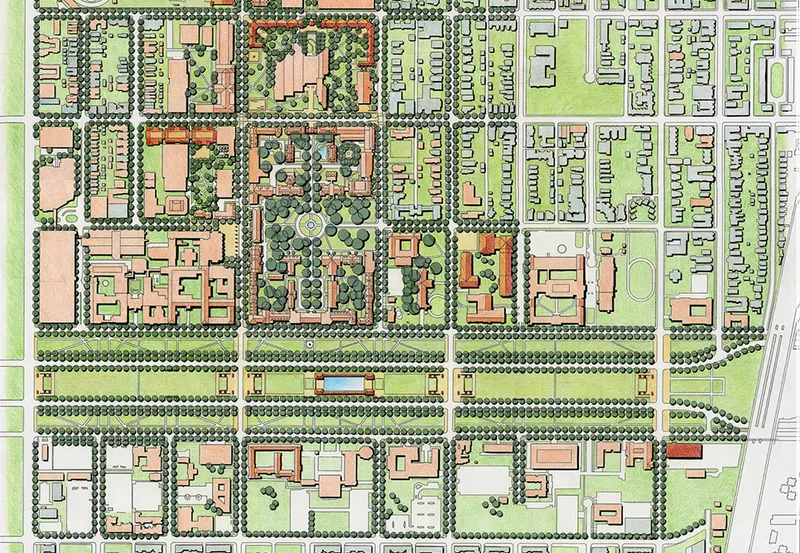
The University of Chicago master plan outlines $500 million of near-term and long-term campus improvements, all carefully integrated with its historic Gothic Revival campus.
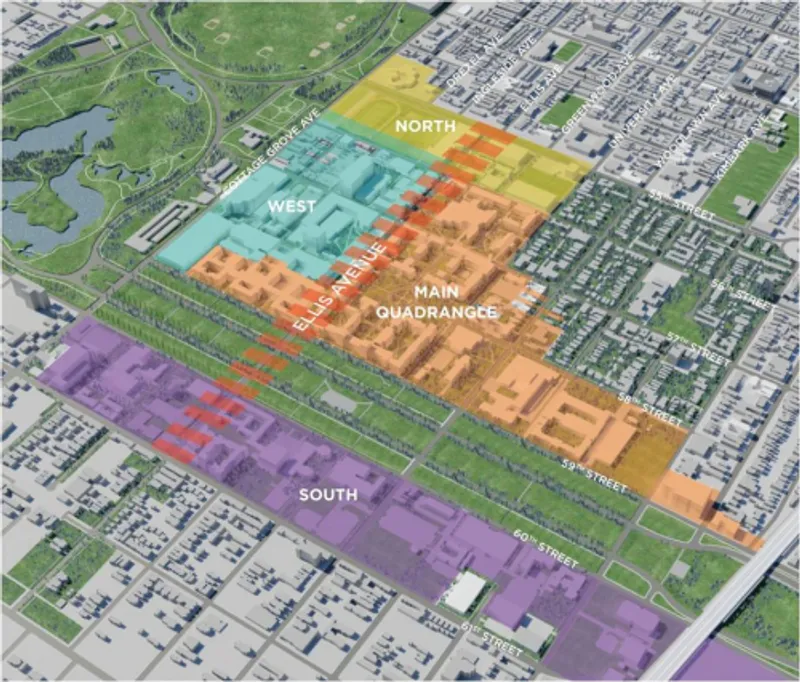
By studying the history of the formation of the university, we realized the different historical periods of the university. Historical periods, each with its own identity and characteristics, led to the formation of diverse architectural styles in the University of Chicago architecture over the years. We tried to use the maximum potential of the land to be able to create a work of art that continues the path of expansion of the University of Chicago. We found that a number of new buildings were actually built to complement the building next to them, actually contributing to the identity and function of the building on the site.
Development of the University of Chicago
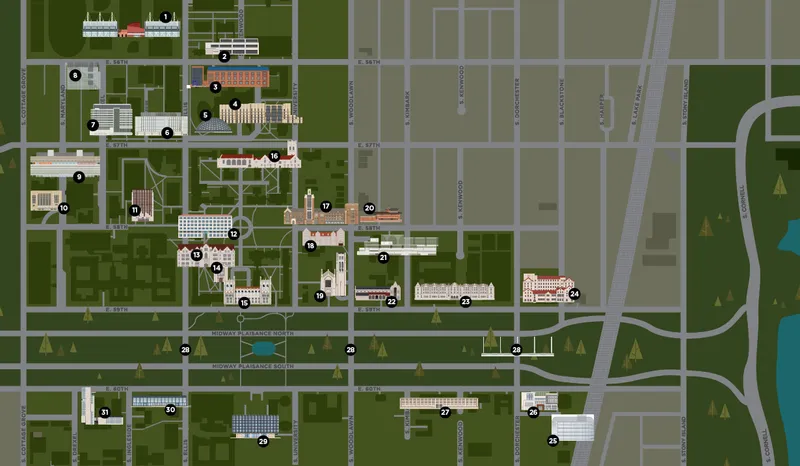
We also tried to continue the current identity of the site in our design path, in this way we studied the Logan Art Building and tried to design a new building for the urban development of the current Logan building.
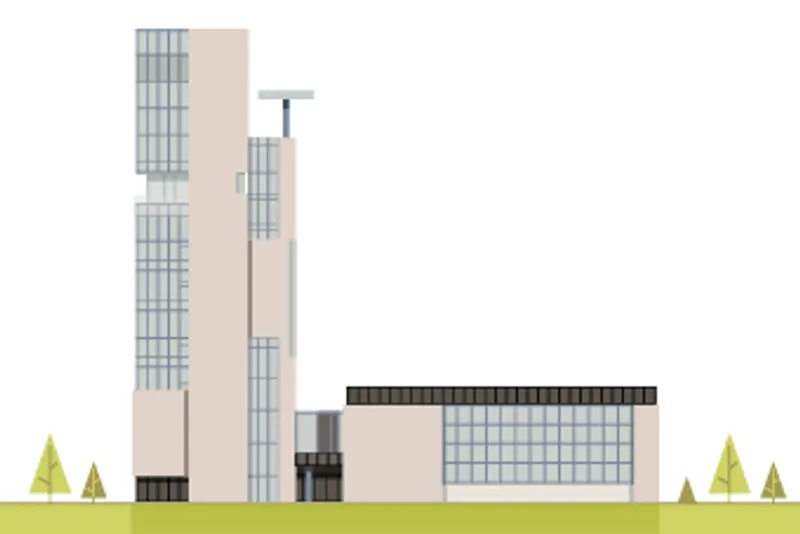
Reva and David Logan Center for the Arts
By identifying the obstacles to the University of Chicago's main building development plan in the site maps, as well as identifying the axes that lead to our site from the Logan Center building and the University of Chicago main campus, as well as Washington Park.
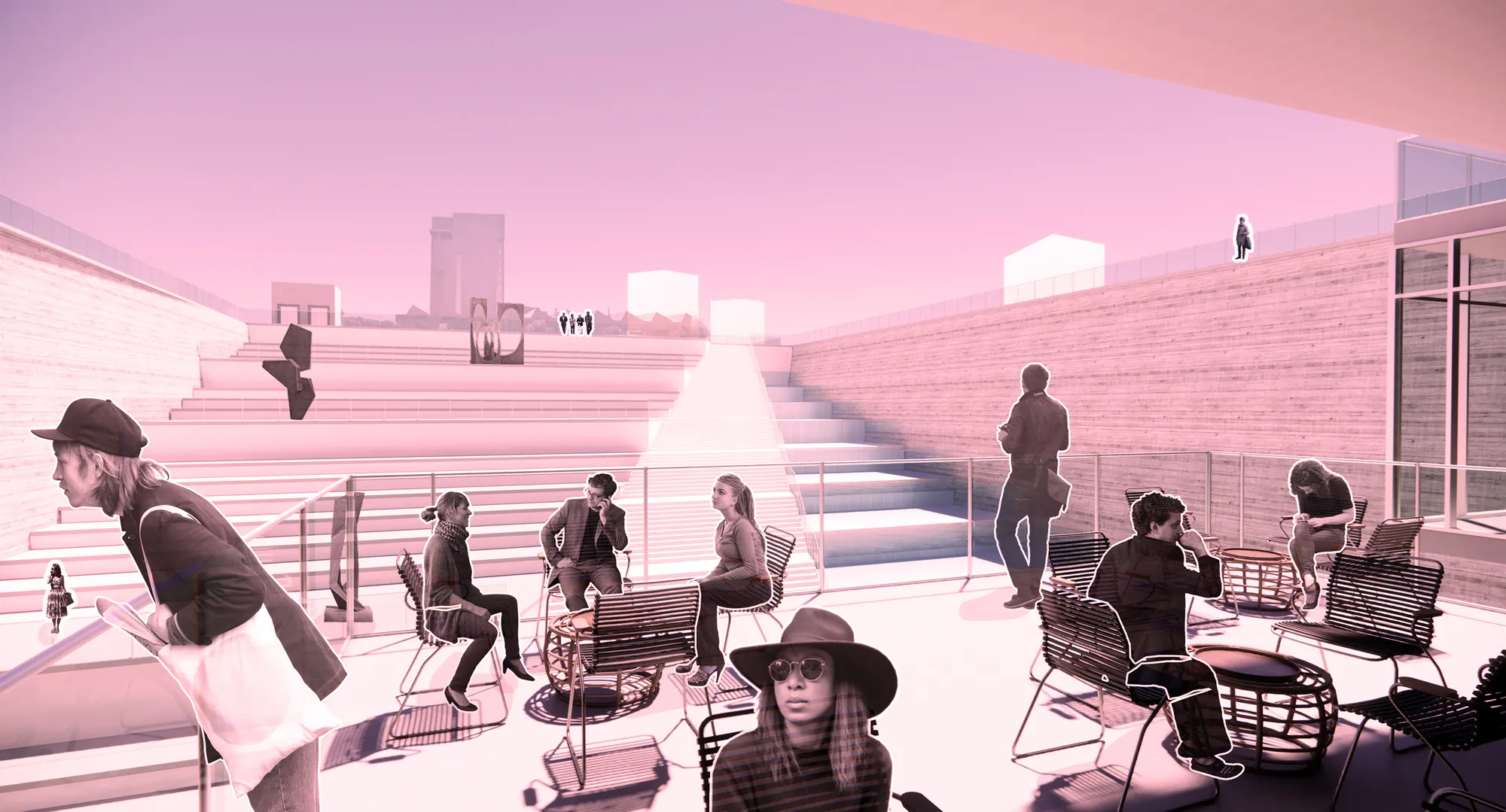
We designed the entrance to an urban plaza to create a new identity in the heart of the existing identity by maximizing human connection with the urban environment and the architectural effect itself.
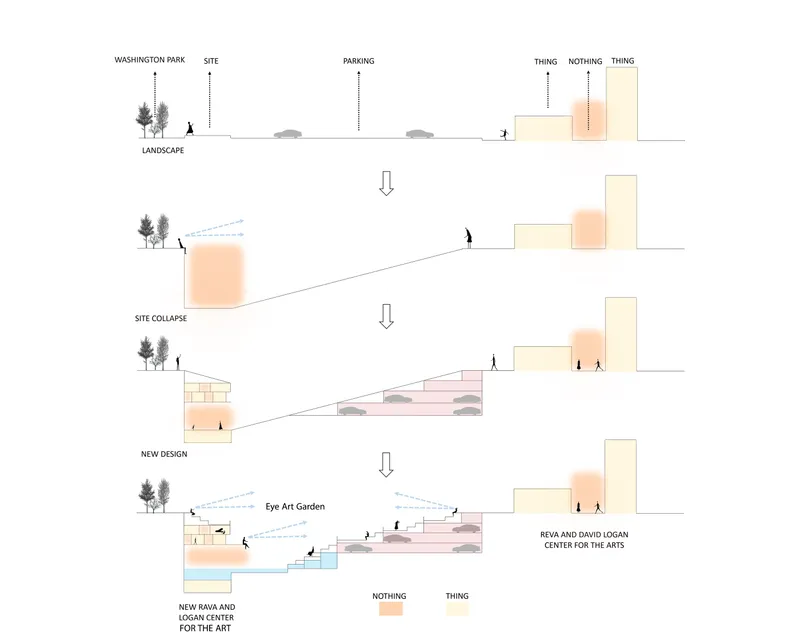
We used the Logan building to design the new Logan building. We went underground to propose an alternative parking plan so that we could maximize the connection between the new Logan building and the current Logan art building, as well as welcome people into the new world.
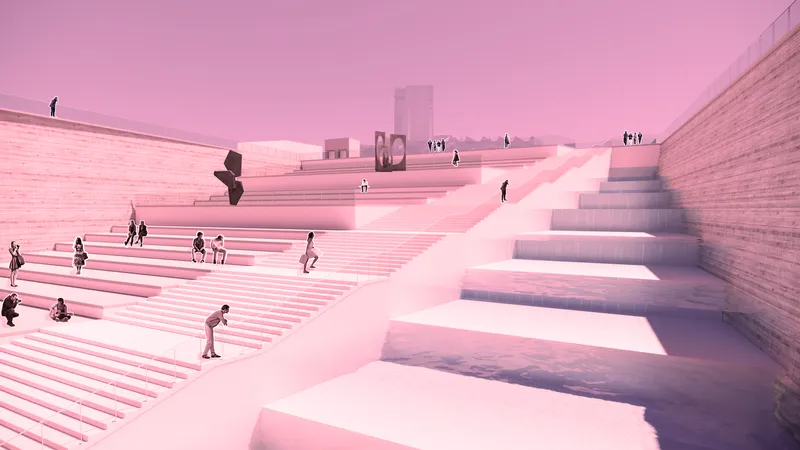
Imagining approaching the end of the garden of art by passing through the path of the urban plaza, one enters a new world that experiences the feeling of suspension in the architectural space, while on the way to the plaza, visual and sensory sequences are internal. He can see a variety in front and behind him. The open space of the plaza, which is in line with the movement of water, is a place for open exhibitions, open amphitheaters, urban open spaces for friendly gatherings. This urban plaza leads to a semi-enclosed pavilion where people experience the sense of smell with the help of local fragrant flowers as well as the touch by touching pool water and the sense of hearing by hearing running water.
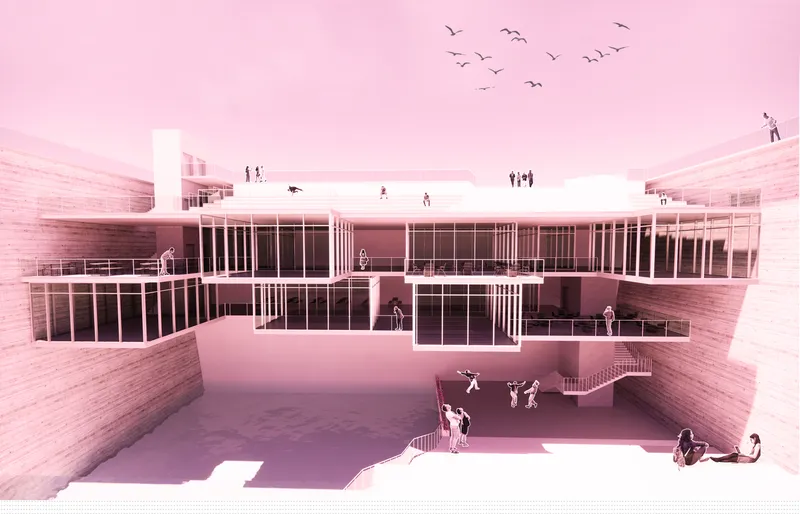
The semi-open pavilion is a place for concerts and shows, as well as a place to enter the new building of the Logan Art Center via vertical access. Which eventually leads to the viewing area, which is called the eye of the new Logan building, and to the basement of the complex, which is the amphitheater.
References (6)

Popular Articles
Popular articles from the community


Co-life: Sustainable Architecture for Age-Friendly Community Living
Co-life reimagines sustainable architecture for seniors through courtyards, rammed earth, shared gardens, and spaces designed for belonging.

Play: Fragments of Their World
Familiar architecture becomes modular playground design, creating safe spaces where displaced children can learn, connect, imagine and play.

The Earth Pod: 3D Printed Homes for Resilient Refugee Communities
The Earth Pod reimagines refugee housing through 3D printed homes made from clay, combining resilience, self-sufficiency, and rapid shelter.

The Ocean Hive: Sustainable Architecture for a Self-Sufficient Civilization at Sea
The Ocean Hive imagines sustainable architecture at sea, where modular habitats, algae, wave power and ocean waste sustain a growing colony.

Similar Reads
You might also enjoy these articles

Day and Night Park: A Time-Based Urban Newsstand in Beijing
A temporary urban newsstand in Beijing blending travel, light, and reading through poetic colors, compact form, and community-focused design.

Modernist Patio Renovation in El Masnou, Barcelona by Oliver Segura Arquitectura + Cebrià Arquitectura
Modernist patio renovation blending tradition and innovation with a movable pool, leveled floors, and Catalan materials in El Masnou.

Alto Residencial Coop: Cooperative Housing Development in Santiago de Compostela by Carbajo Barrios Arquitectos
A linear cooperative housing complex blending white volumes and perforated metal façades, enhancing community living, natural light, privacy, and urban integration.
Vil Genis School by BPA ARCHITECTURE – Massy, France
Vil Genis School in Massy, France, features sustainable design, south-facing classrooms, community integration, accessible spaces, and modern educational architecture.

Comments (1)
Please login or sign up to add comments
perfect!