
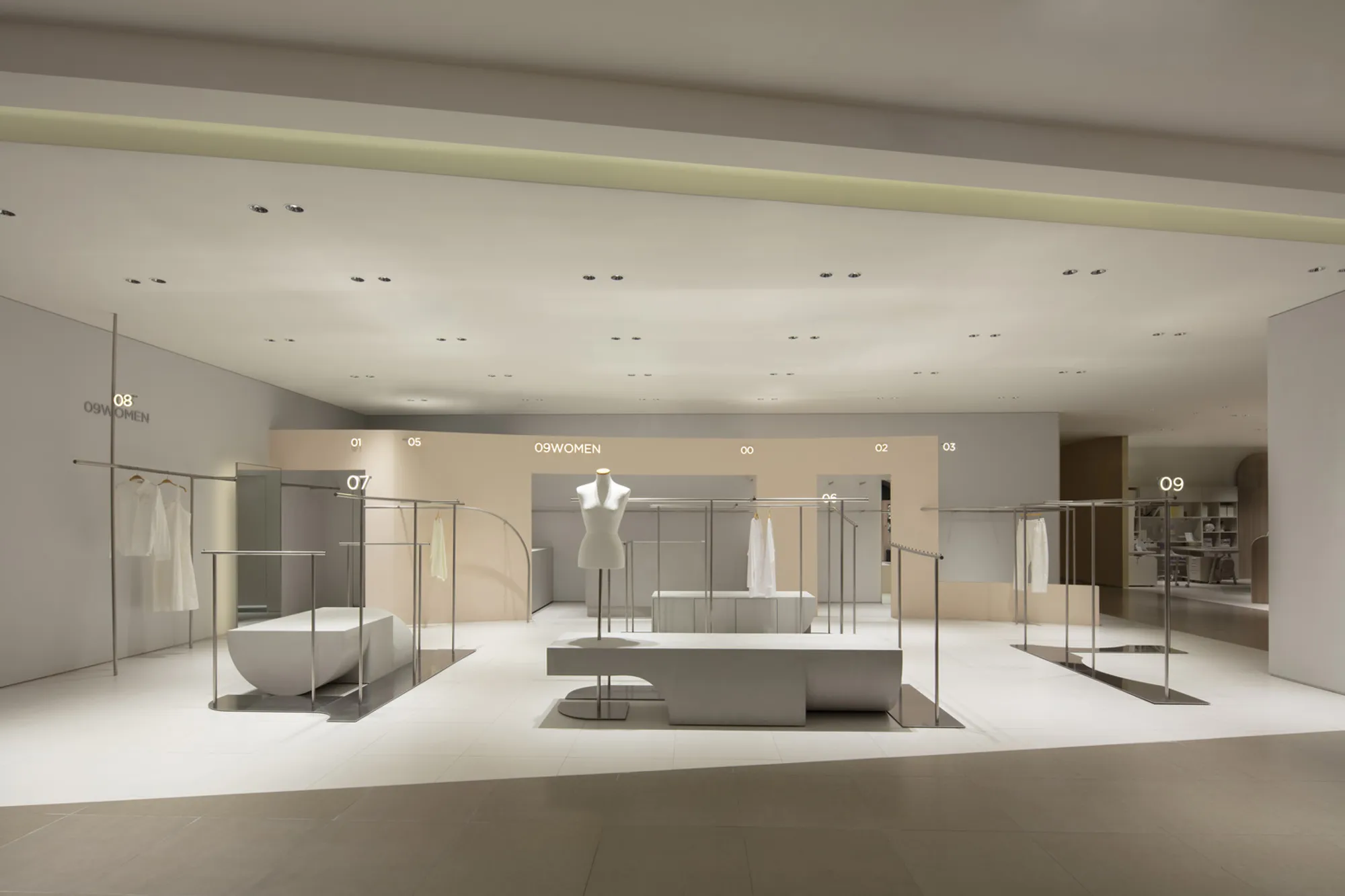
SUBTEXT Encodes Ten Identities into an 80-Square-Meter Clothing Store in Suwon
09WOMEN's flagship retail space in South Korea translates a numeral-based brand philosophy into curved steel fixtures and skin-tone surfaces.


Most inclusive retail branding stays on the surface: a tagline, a campaign, a broader range of sizes on the rack. At the 09WOMEN Suwon Store, Seoul-based studio SUBTEXT took the less obvious route of embedding the brand's core idea directly into the architecture. The concept is deceptively simple: the digits 0 through 9 each represent a distinct style and identity, and those numerals become the literal formal vocabulary of the store. Curves derived from number shapes appear in clothing rails, wall niches, and illuminated signage, turning an 80-square-meter retail box in Suwon-si into a space that reads like a typographic landscape.
What makes this project worth studying is the discipline of that single move. Rather than layering on separate gestures for inclusivity, wayfinding, and merchandise display, SUBTEXT collapsed all three into one system: the curved numeral. The result is a small store that feels conceptually coherent without ever becoming heavy-handed. A neutral beige palette, meant to echo the breadth of human skin tones, keeps the material world quiet enough for the steel curves to do the talking.
Numbers as Architecture
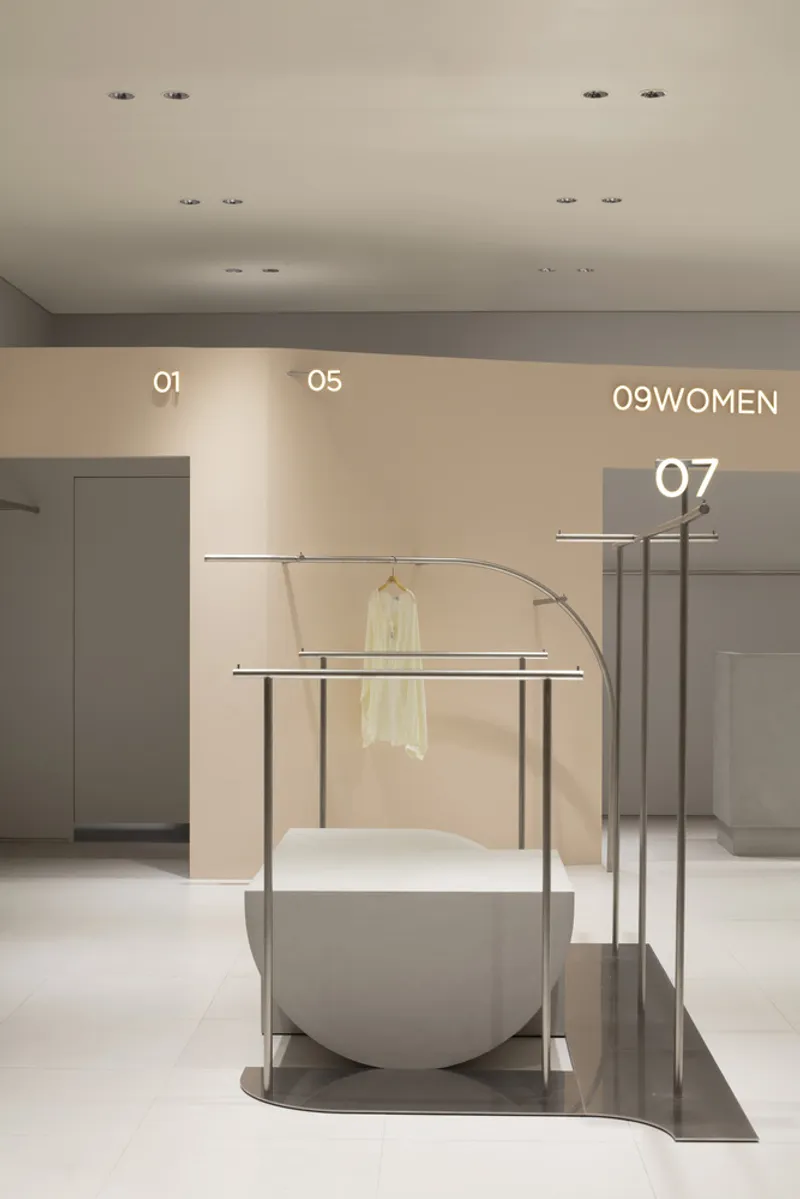
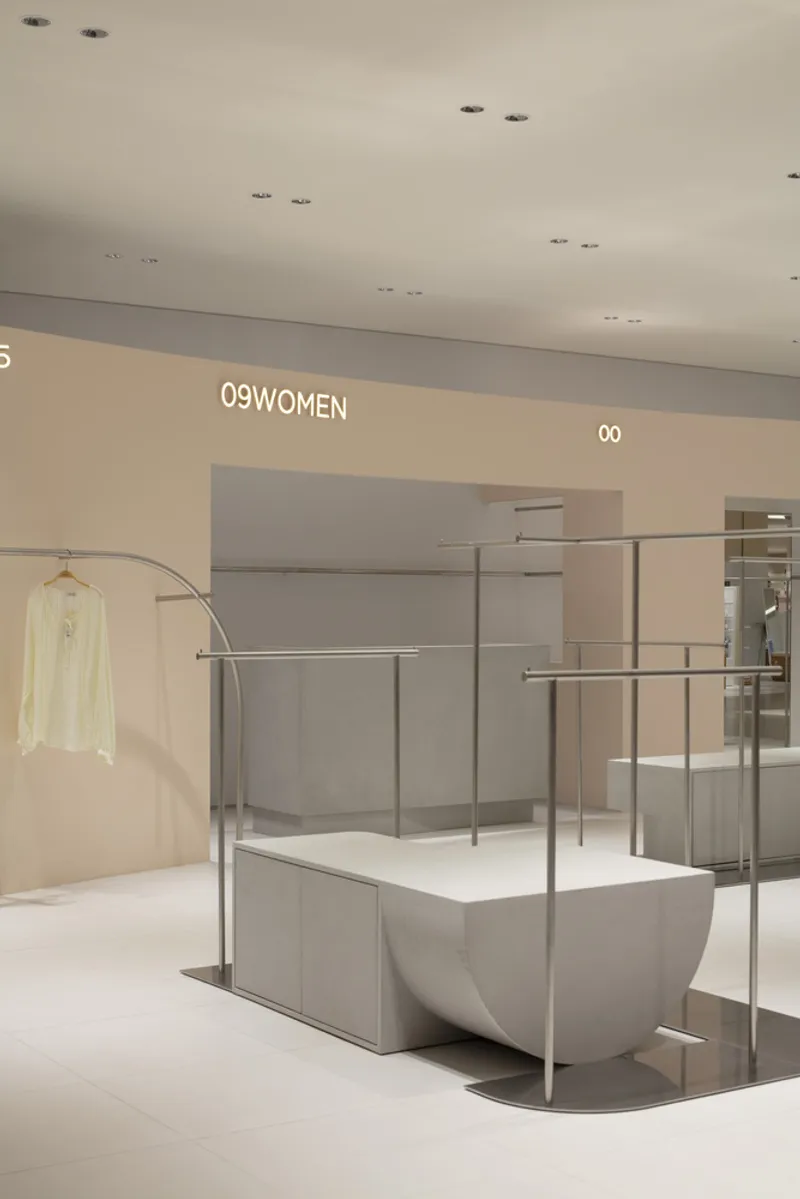
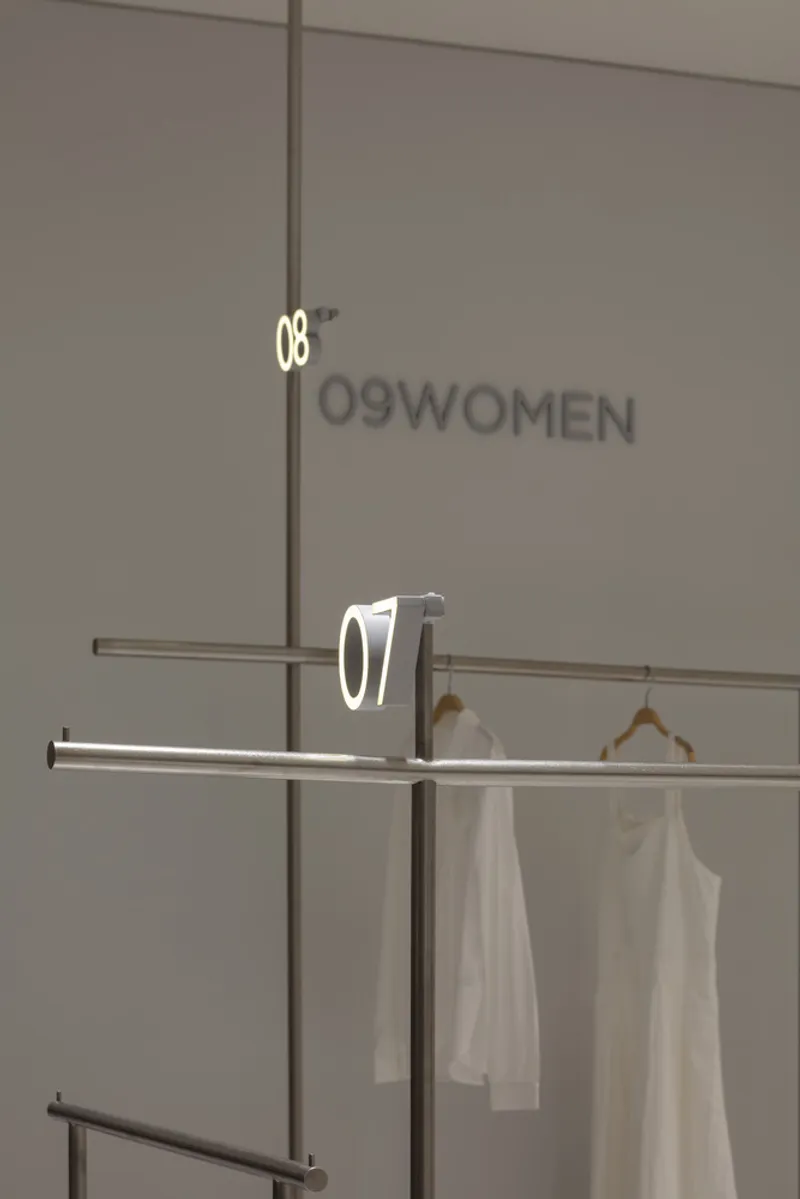
The numbered signage is not decorative overlay. Each illuminated digit marks a zone within the store, and the curves of those digits extend into the steel rails and arched fixtures that hold the garments. An arched clothing rack near a wall alcove mirrors the rounded stroke of the number beside it, so wayfinding and display merge into a single gesture. You navigate the store by reading its furniture.
This typographic strategy gives the tiny footprint unexpected variety. Each numbered zone has a slightly different curvature profile, preventing the repetitive rhythm that plagues many small retail interiors. The effect is cumulative: as you move through the space, the shifting arcs create a sense of progression rather than a loop.
Steel and Concrete Fixtures
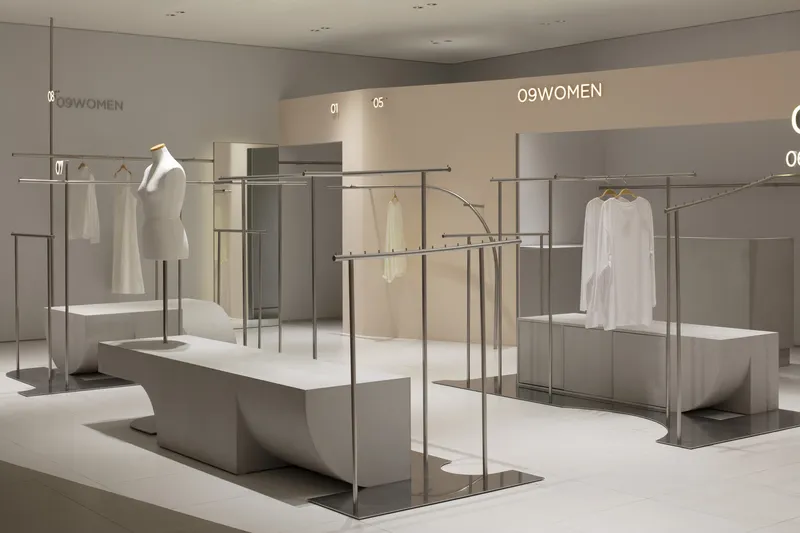
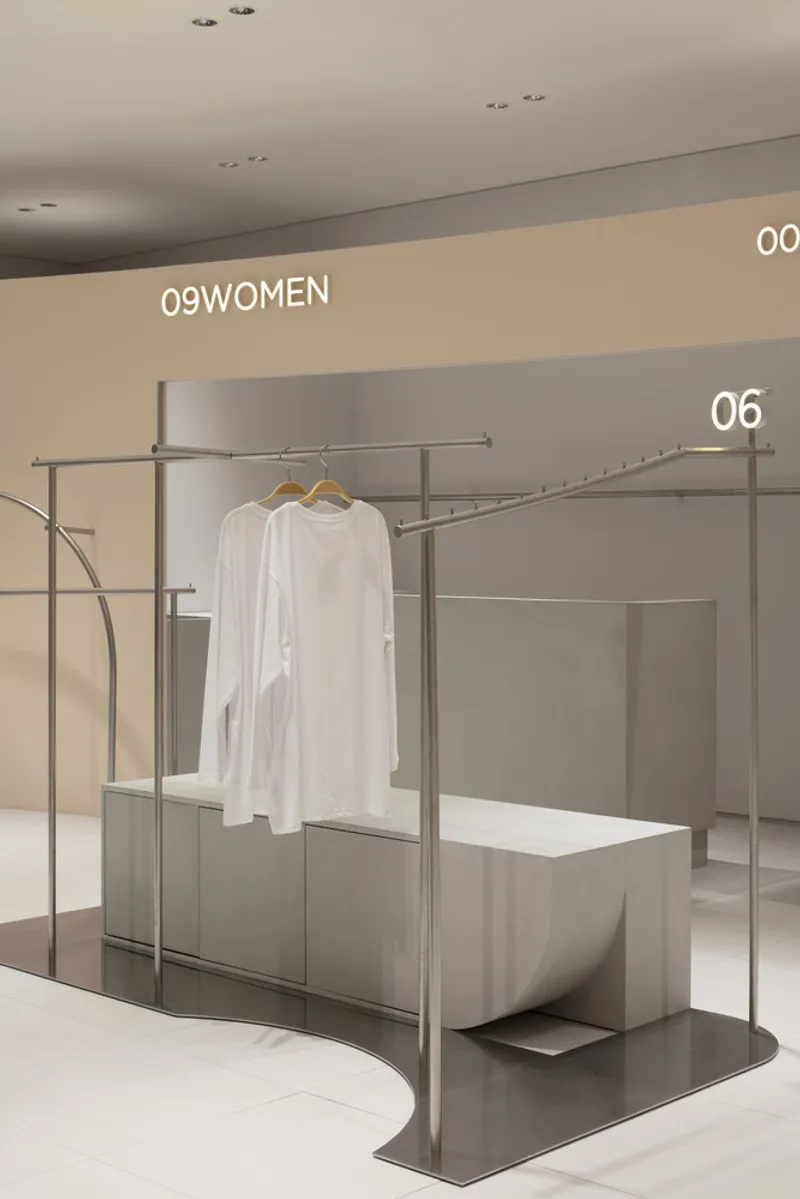
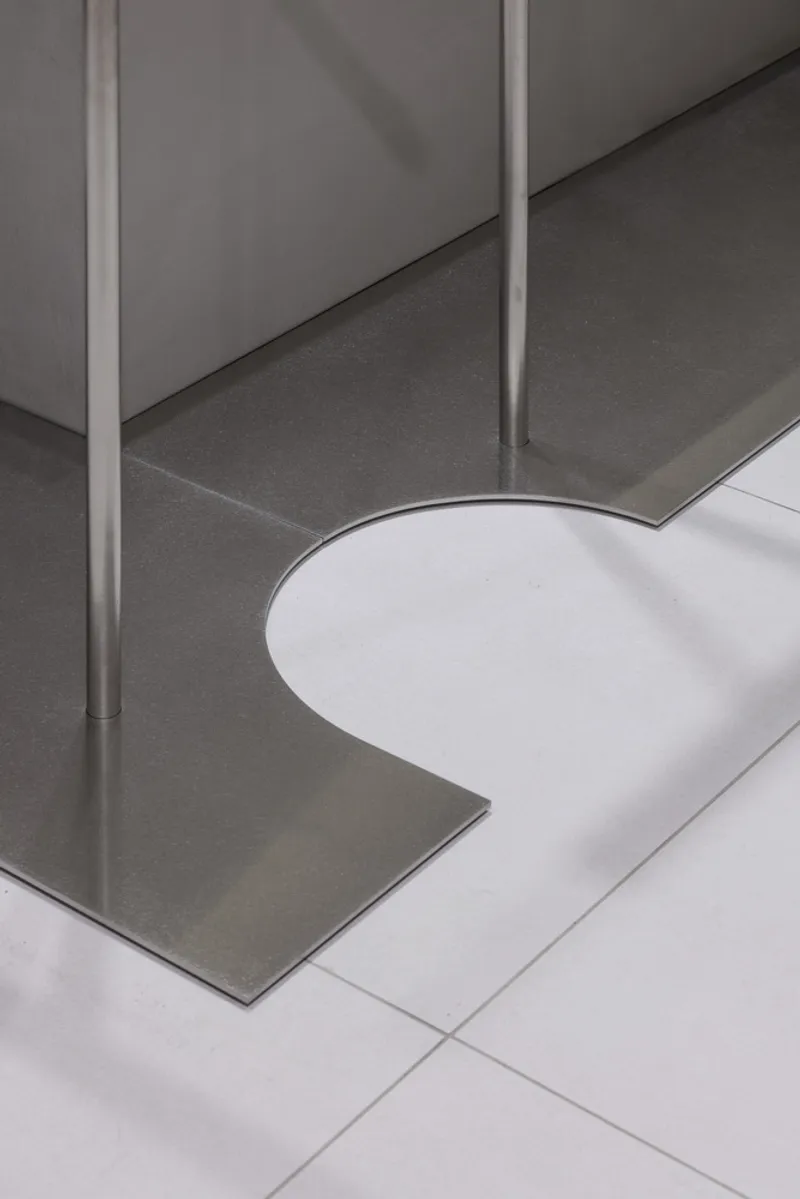
The freestanding display units are a highlight. Tubular steel frames sit on concrete plinths, giving the garment rails a sculptural weight that most fast-fashion interiors avoid. The concrete bases anchor the curving steel without competing with it, and the exposed junction between pole and plinth is handled with just enough care to reward a closer look.
There is a deliberate contrast at work: the soft curves of the rails against the blunt mass of the concrete, the polished steel against the matte mineral surface. That tension keeps the fixtures from feeling precious. They read as objects designed for daily use, not gallery pieces, which is exactly right for a store that wants to feel welcoming rather than rarefied.
The Beige Field
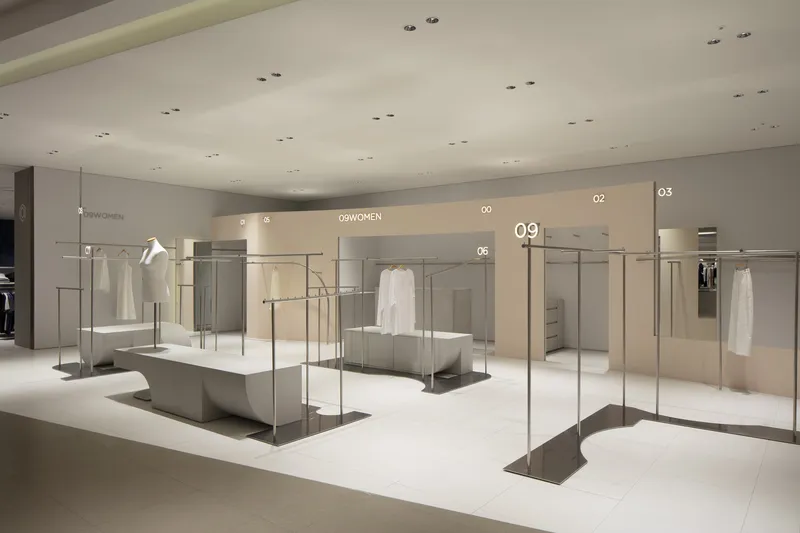
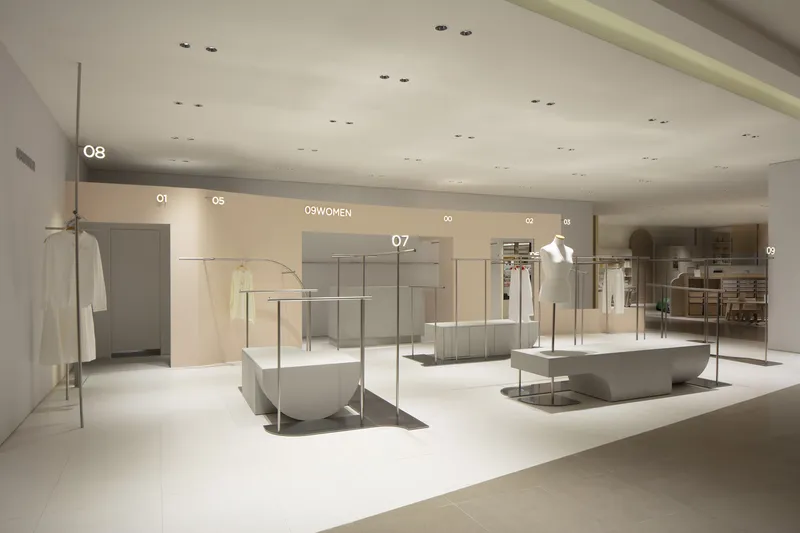
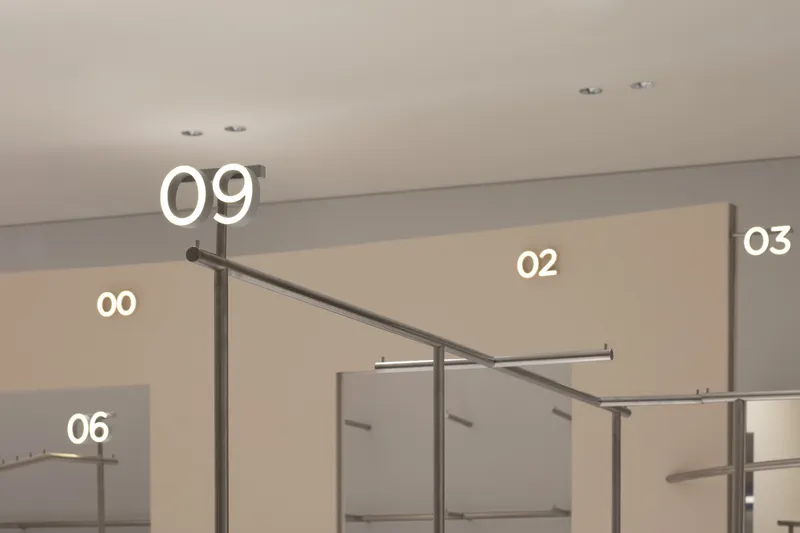
SUBTEXT's color decision is the project's quietest and perhaps most consequential move. Every wall, ceiling plane, and floor tile sits within a narrow band of warm beige. The studio frames this as a reference to the spectrum of skin tones, a reading that holds up spatially: the monochrome backdrop refuses to privilege any single hue, creating a visual neutrality that lets both the garments and the customers stand out.
Recessed cove lighting along the ceiling perimeter washes the beige surfaces evenly, eliminating the harsh shadows that can make fitting rooms punishing. The lighting is practical, but it also reinforces the palette's intent: softness without blandness, warmth without theatrics.
Display Wall and Alcoves
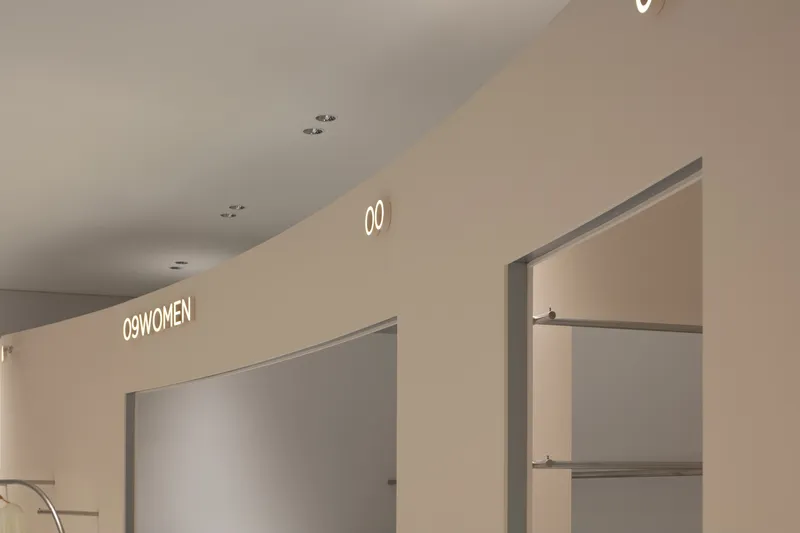
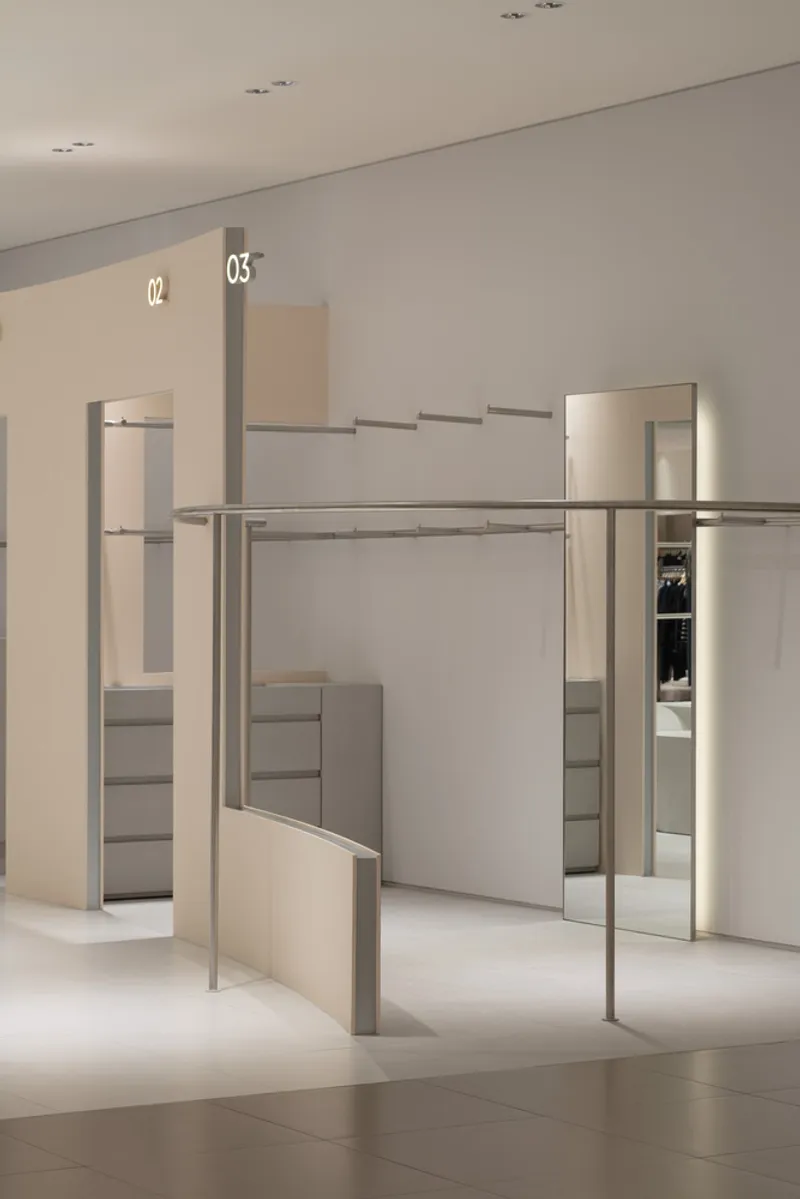
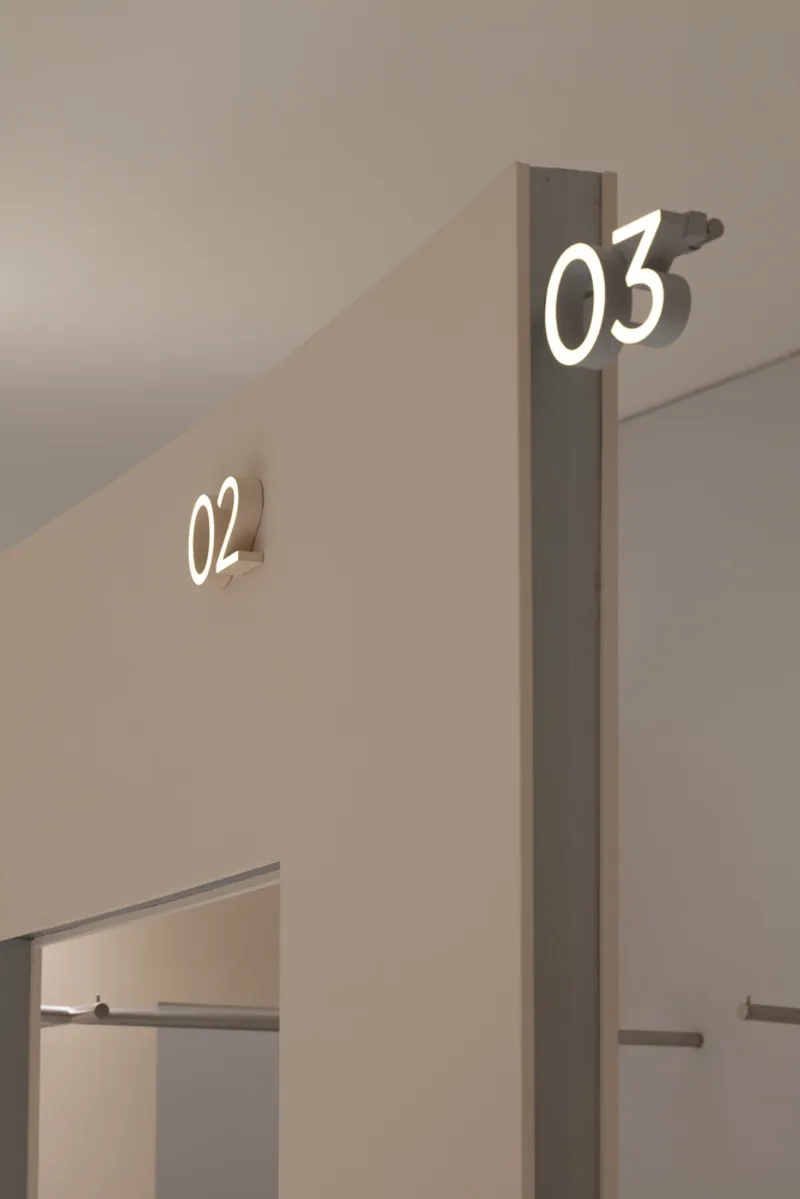
The front wall is organized as a series of recessed niches, each fitted with horizontal shelves and topped by illuminated numeral signage. The alcoves give individual products a framed, gallery-like presence while keeping the overall wall plane clean. Freestanding metal racks in front of the wall panels create a layered depth that makes the narrow sales floor feel wider than its actual dimensions.
Numbered department signage does double duty: it brands each niche and acts as the primary navigational system. Customers can orient themselves by number rather than by product category, which reinforces the brand's identity model at every transaction.
Central Islands and Circulation
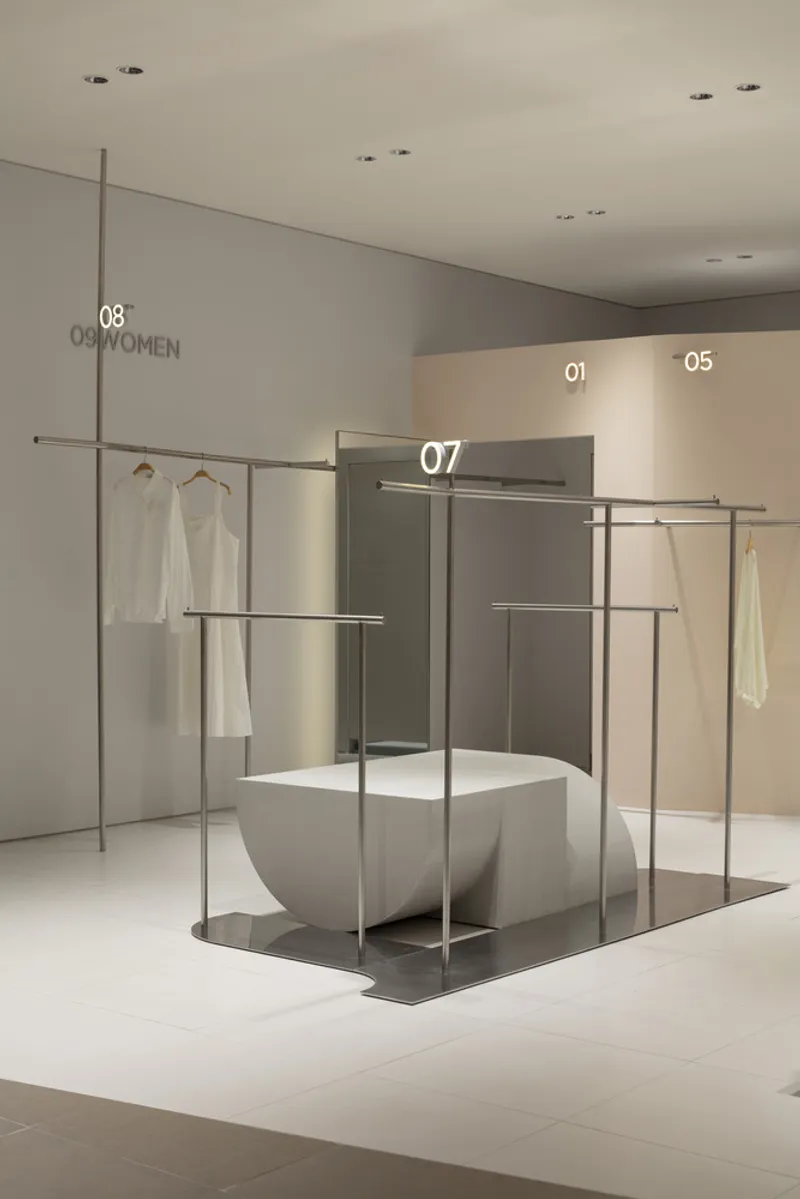
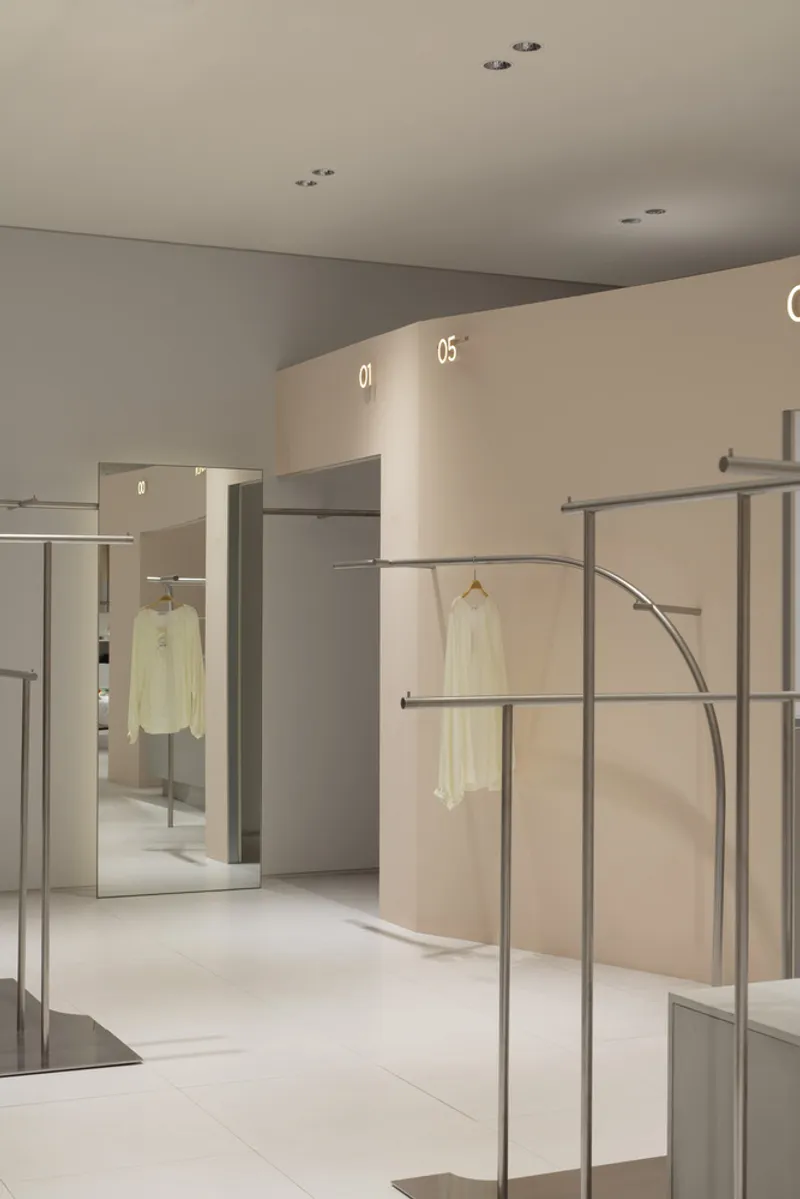
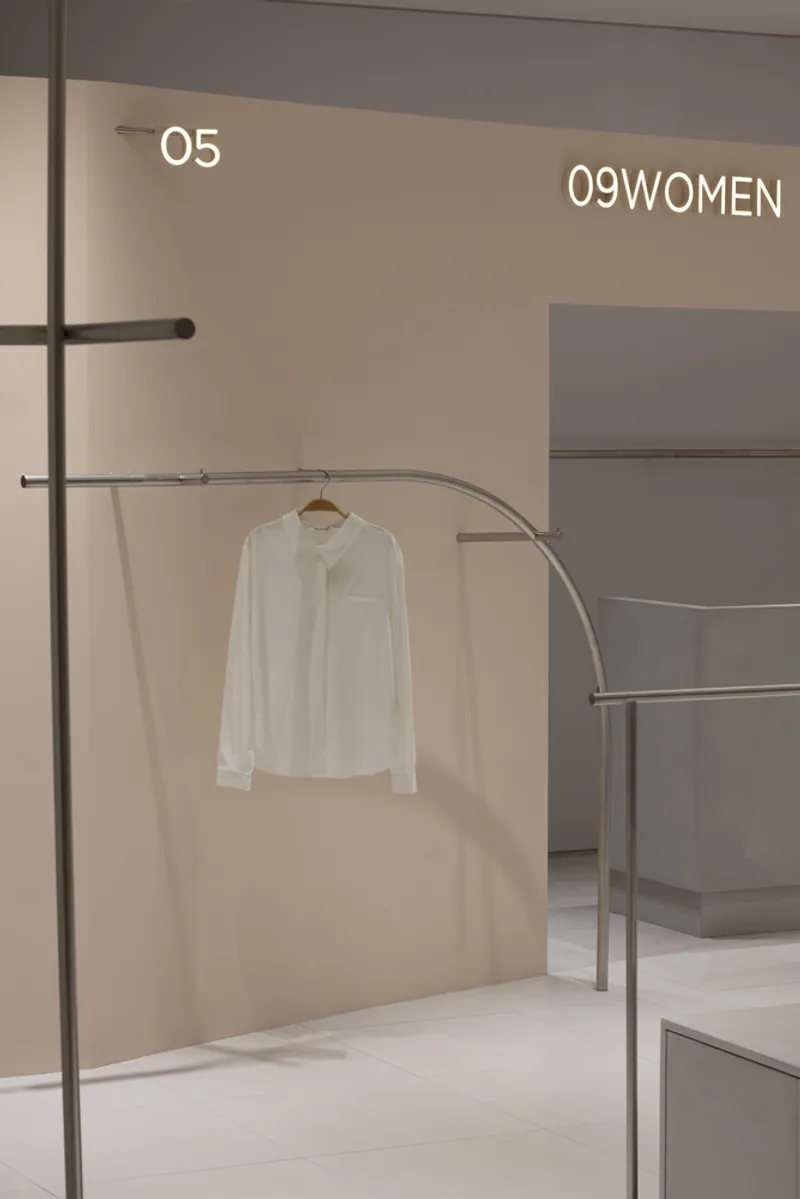
Glass-edged platforms and white sculptural seating elements occupy the center of the floor, creating display islands that shoppers circulate around. The arched steel rails frame views through to the back of the store, layering transparency into what could easily have been an opaque, overstuffed interior. A single white shirt hanging on a curved rail under soft ambient light becomes an almost photographic composition, proof that restraint in merchandising density can carry more visual weight than abundance.
Fitting Rooms and the Back Zone
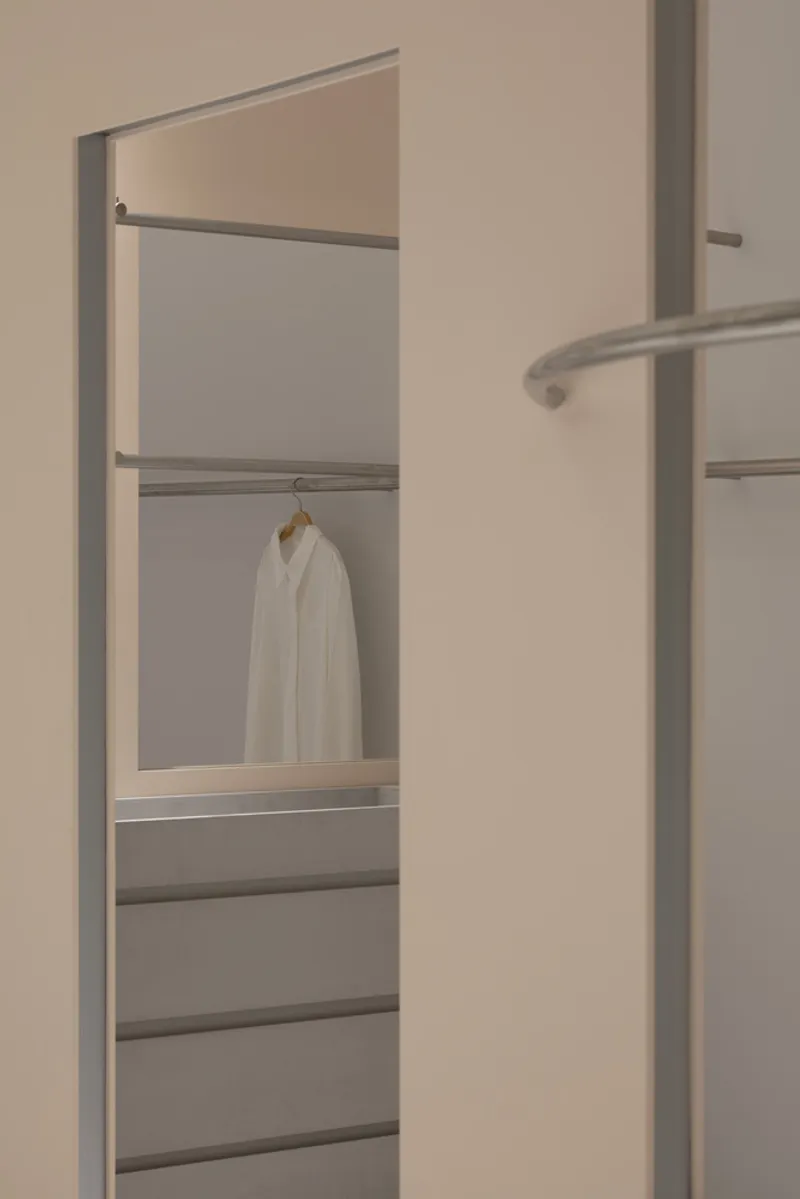
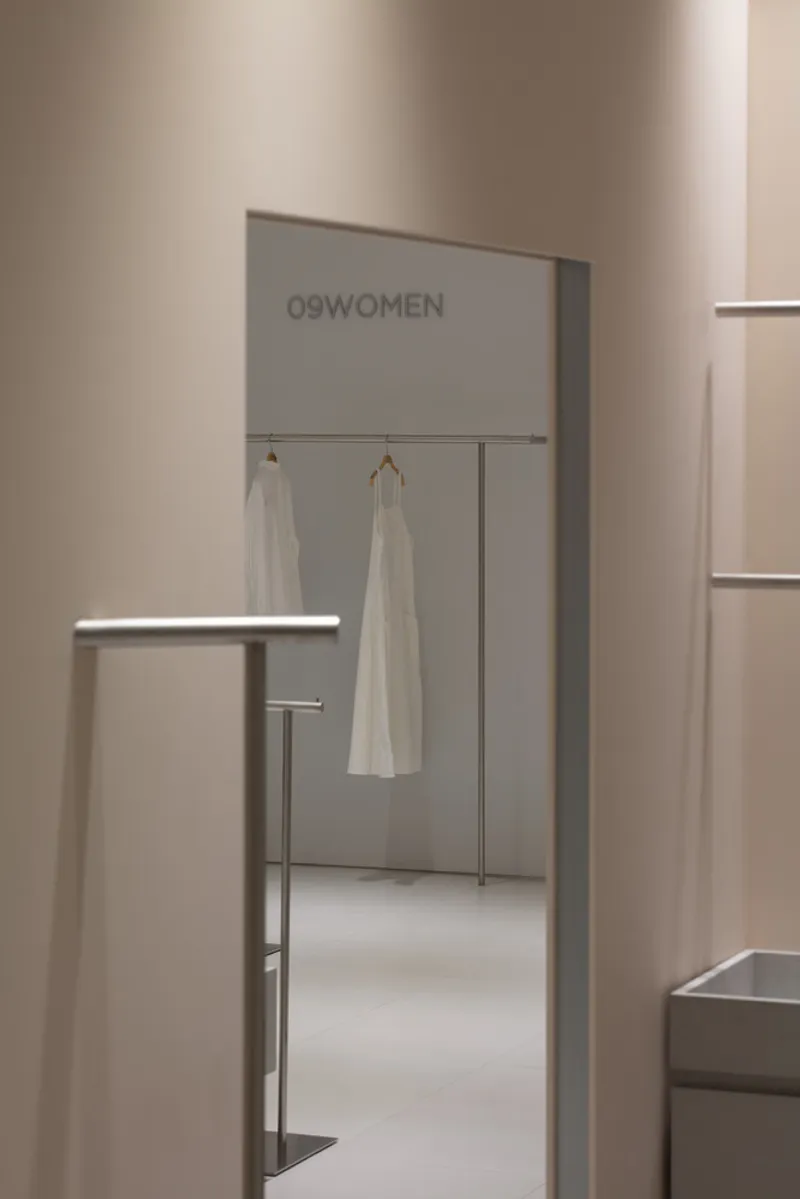
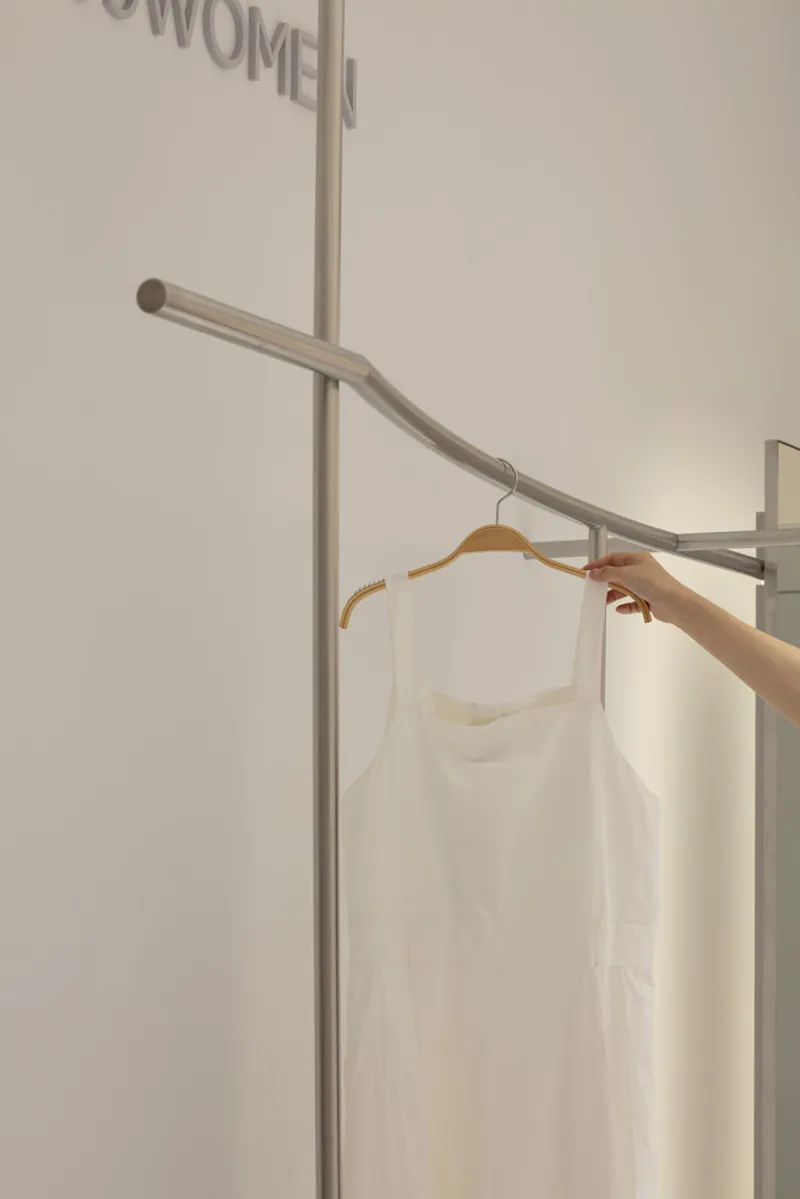
The rear of the store houses the counter, fitting rooms, and an innerwear section separated by a curved partition. Doorways are sized generously and framed simply, avoiding the claustrophobic threshold that characterizes many small-format fitting areas. Through each opening, tiered metal rails and horizontal shelving remain visible, so the back zone never feels like a service afterthought.
A hand reaching for a garment beneath illuminated signage captures the store's essential promise: the merchandise is always within easy reach, always clearly identified, always presented without fuss. That accessibility is a spatial expression of the brand's inclusive philosophy, not a slogan printed on the wall but a condition built into the architecture.
Plans and Drawings
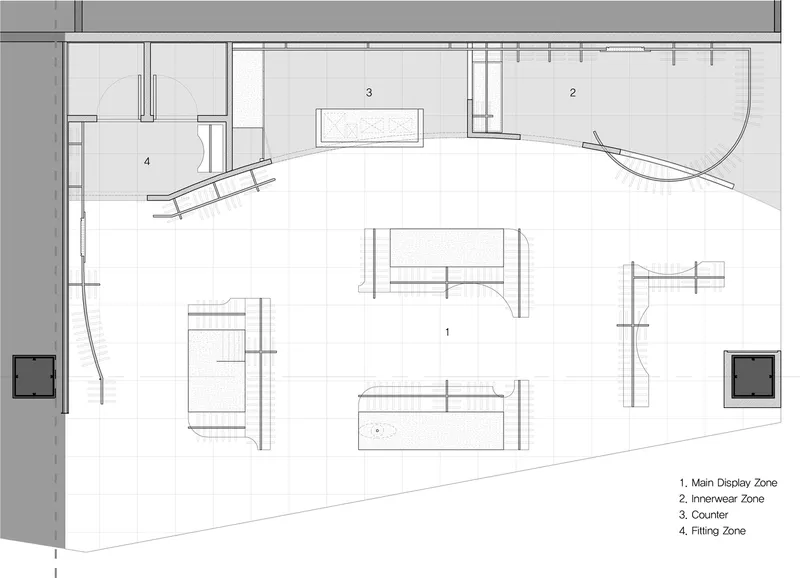
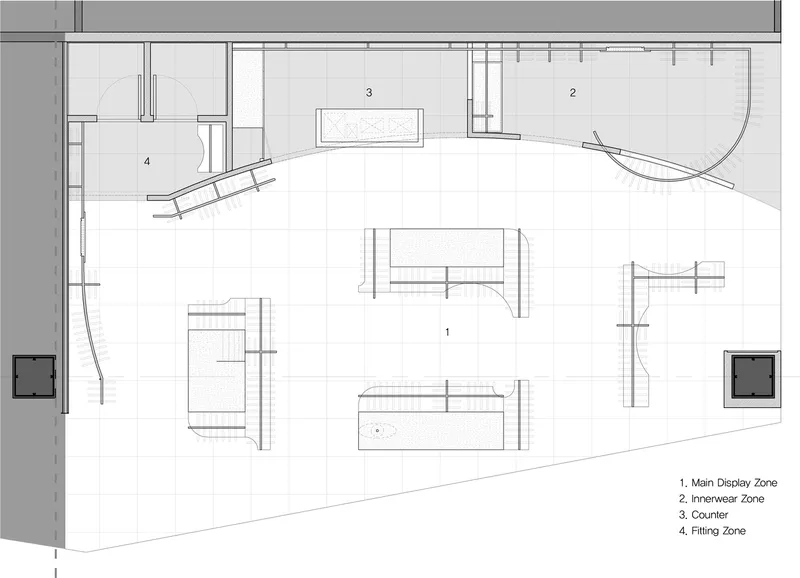
The floor plan reveals how tightly the 80 square meters are organized. A central display area occupies the bulk of the footprint, flanked by perimeter display walls and anchored at the rear by the curved innerwear section and fitting rooms. The curve that defines the back partition is the plan's strongest formal gesture, separating public and semi-private zones without erecting a hard boundary. Circulation flows naturally around the central islands and through the numbered alcoves, confirming that the spatial sequence experienced on foot was carefully orchestrated in plan.
Why This Project Matters
Retail design is often judged by its ability to maximize sales per square meter, and by that metric alone the 09WOMEN Suwon Store succeeds: every surface works, nothing is wasted, and the brand identity is legible at every scale from the storefront to the hanger detail. But the more interesting achievement is conceptual. SUBTEXT found a way to make inclusivity structural rather than cosmetic, embedding the idea into the geometry of the fixtures, the neutrality of the palette, and the open circulation of the plan.
In a market saturated with flagship stores that rely on spectacle, this project argues for coherence. One idea, executed consistently across 80 square meters, can carry more conviction than a hundred decorative gestures. The numeral system is playful enough to avoid solemnity and rigorous enough to hold the design together. It is a small store with a clear thesis, and that clarity is what makes it worth remembering.
09WOMEN Suwon Store by SUBTEXT, Suwon-si, South Korea. 80 m², completed 2024. Photography by Ki-Woong Hong.
About the Studio
Share Your Own Work on uni.xyz
If projects like this are the kind of work you want to make, uni.xyz is a place to publish your own, find collaborators, and enter design competitions.




Popular Articles
Popular articles from the community


Lunar Spiral: Space Architecture Shaped by the Mathematics of the Universe
Lunar Spiral reimagines space architecture through Fibonacci geometry, lunar regolith, levitating habitats, and self-sustaining Moon living.

Play: Fragments of Their World
Familiar architecture becomes modular playground design, creating safe spaces where displaced children can learn, connect, imagine and play.

The Musturak Paradise: Senior Living Architecture for a Connected Future in Temara, Morocco
The Musturak Paradise reimagines senior living architecture in Temara via private homes, social spaces, culture, community, and shared care.

Co-Life: Senior Housing Design That Reconnects Older Adults With the City
Co-Life reimagines senior housing design through healing gardens, shared streets, workshops, and a sustainable community across generations.


Similar Reads
You might also enjoy these articles


Hodi-Mandai Geram
Project Function: Preservation and revitalization of the Intangible heritage and socio-spatial identity of the Hodi by Housing, Cultural Memory Center, Sacred Grove, landscape, local tourism economy


Olio Towers: A Mid-Rise for Performers That Fuses Housing, Rehearsal, and Stage
Located blocks from Houston's Theater District, this modular tower stacks living units around a central performance atrium.

Oasis: Modular Green Housing Carved into Dhaka's Urban Fabric
A shortlisted Plugin Housing entry reclaims unauthorized settlements in Dhaka with stepped concrete volumes, green roofs, and ventilation-driven design.

Black Hole: A Floating Megastructure for the Post-Physical Era
Emiliano Mazzarotto envisions a spherical, self-scaling arena where e-sports, digital hotels, and holographic stadiums replace traditional public space.


Explore Architecture Competitions
Discover active competitions in this discipline



Challenge to reimagine the Iron Throne


Photograph architecture without architects


Illustrate the lost glory of Angkor Wat - Render Challenge


Design challenge to reuse E-waste
Comments (0)
Please login or sign up to add comments
No comments yet. Be the first to comment!