

2102CON Local Renovation by Terrario Arquitectura: Transforming Urban Constraints into Multifunctional Living in Madrid
A smart interior renovation in Madrid by Terrario Arquitectura, transforming an unused space into a multifunctional, flexible home extension.


Located in the heart of Madrid, 2102CON Local Renovation by Terrario Arquitectura is a compelling example of how architectural creativity can transform limitations into opportunities. This 80-square-meter interior renovation project responds to the growing need for flexible and adaptable living spaces in dense urban settings. Designed by architects Luis Bernardo Vaamonde, Ana Méndez Garzo, and Ignacio Burgos González, the project reimagines an underutilized urban premise as a dynamic extension of a private residence, tailored for modern, multifunctional living.
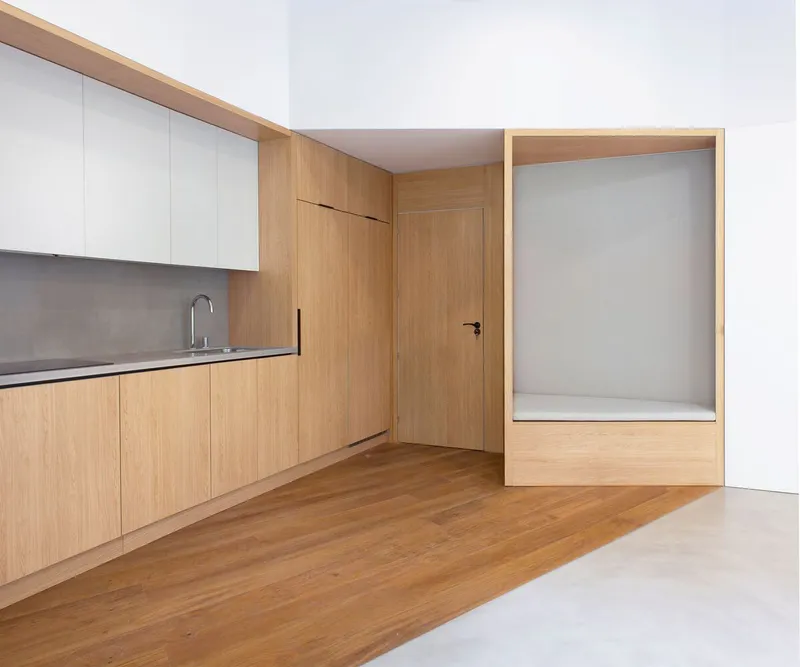
Urban Expansion through Interior Renovation
Due to strict zoning and site constraints, the original residence could not expand beyond its existing structure. Yet the client required additional spaces to meet evolving lifestyle needs—ranging from a home office for teleworking to a library, game room, storage, and even a space for social gatherings. The answer came in the form of acquiring an adjacent locale, which allowed for the redistribution of the residential program into a clearly defined, purpose-driven annex.
The resulting renovation is a thoughtful architectural intervention that strategically relocates the "extra" functions of the home—those that enrich daily life but are not essential to its core. This spatial distinction allows the main residence to remain streamlined and serene, while the annex becomes a lively, flexible zone that adapts to a variety of uses.
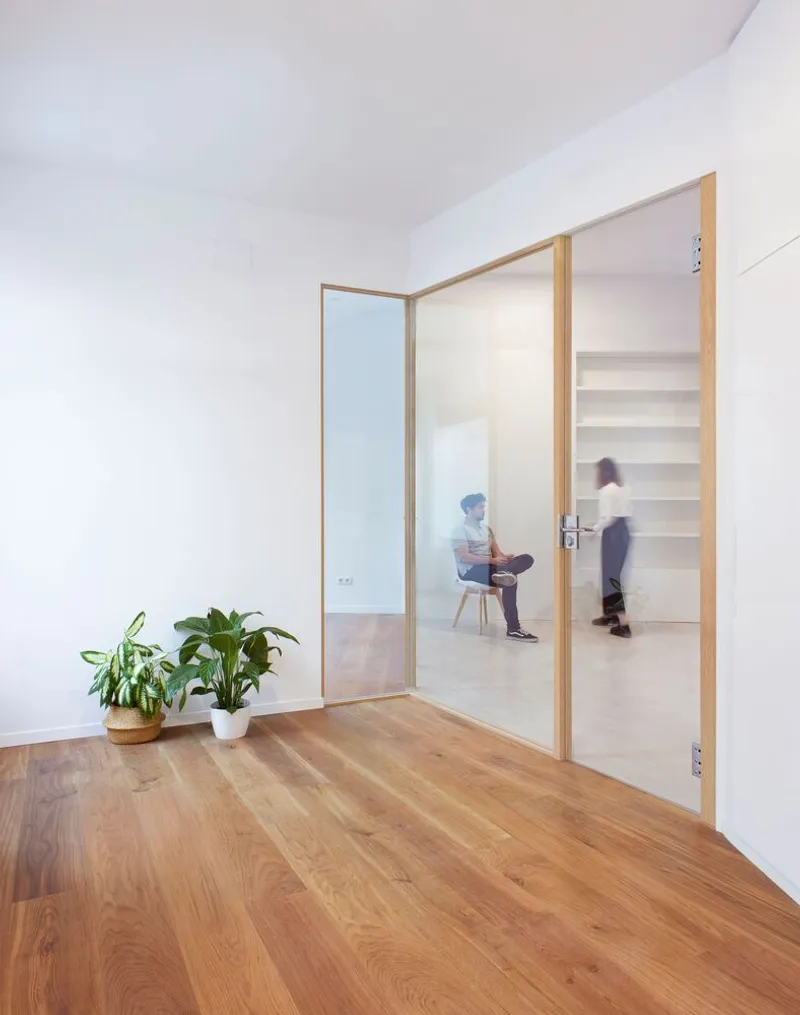
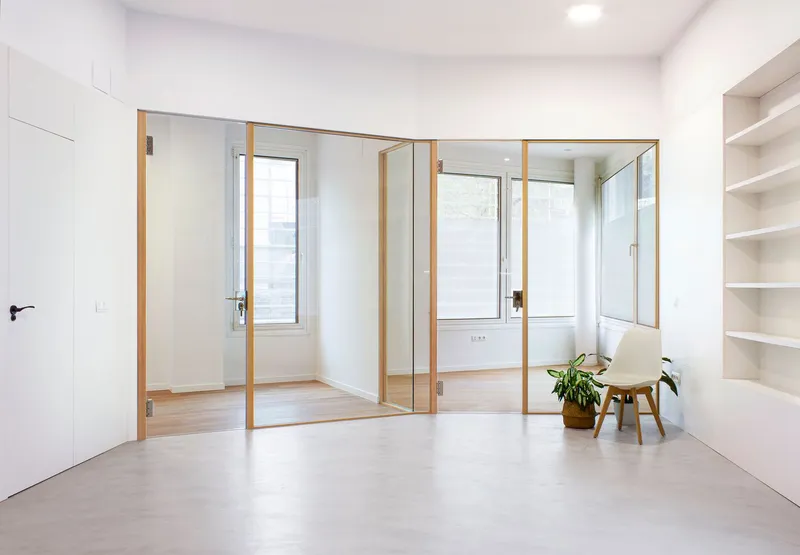
Programmatic Precision and Material Clarity
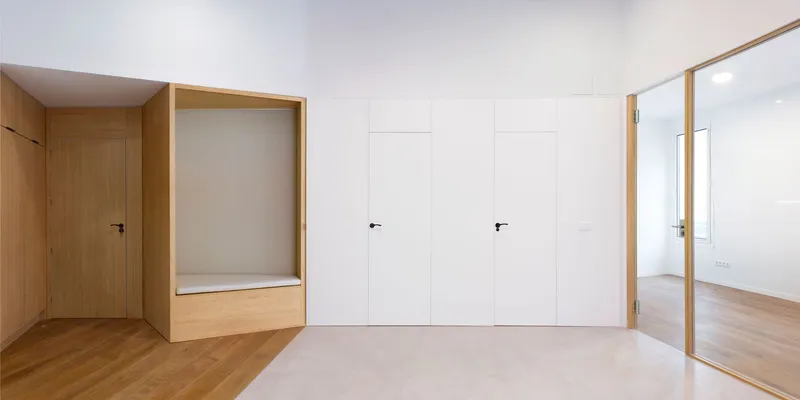
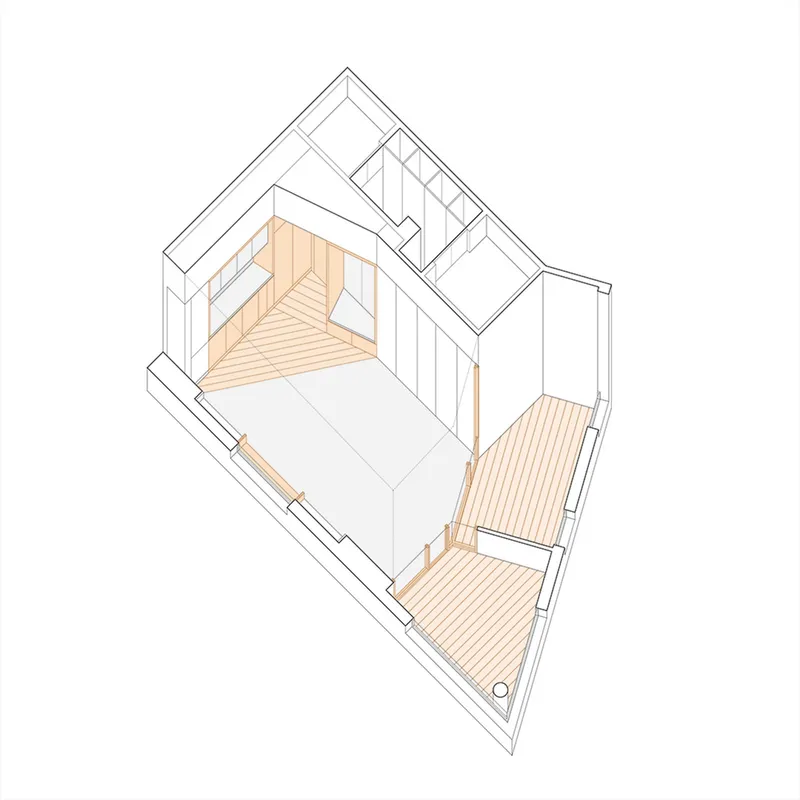
Spread across 861 square feet, the newly integrated space embraces the irregularity of its perimeter. Rather than forcing uniformity, Terrario Arquitectura celebrates these spatial quirks by arranging compact programmatic elements—such as the bathroom, storage room, and kitchen—along the edges. This allows the central area to remain open and fluid, functioning as a multi-use room capable of hosting meetings, parties, or family activities.
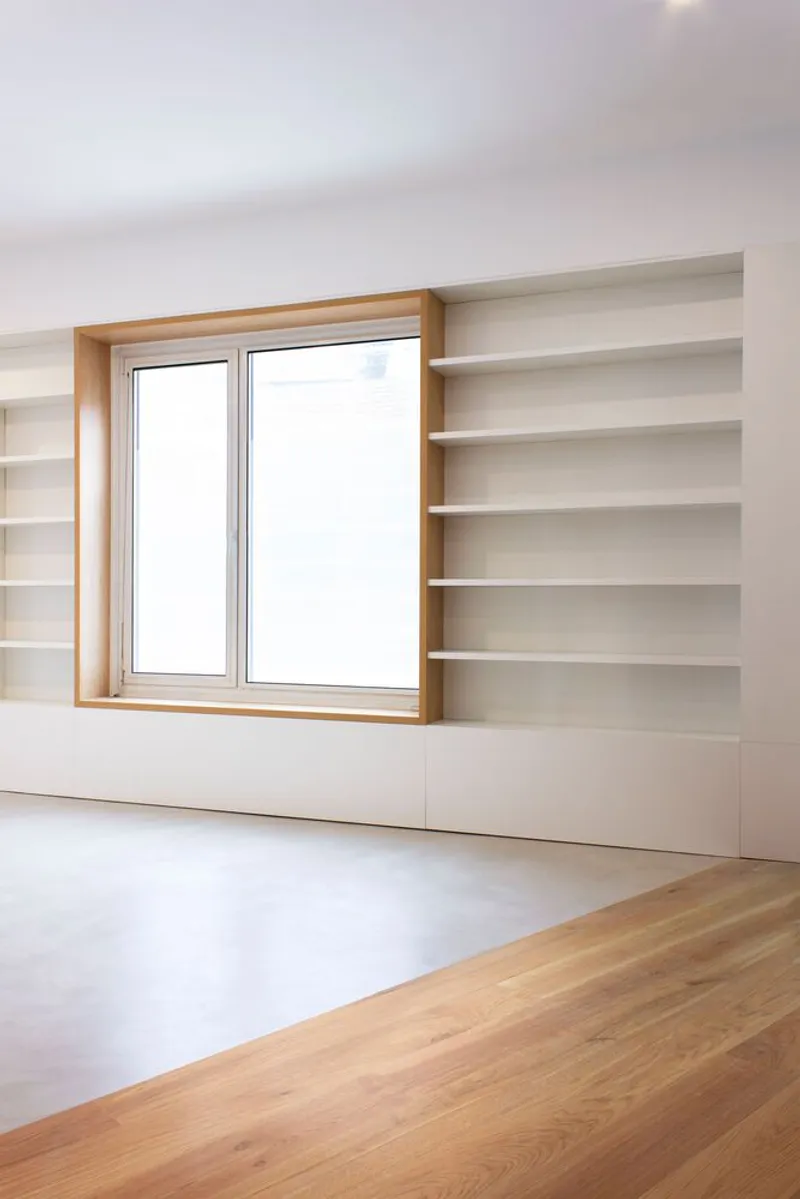
Material choices play a significant role in defining the function and character of each area. Warm wood finishes articulate the kitchen zone, offering a tactile contrast to the clean geometry of the space. In contrast, glass partitions delineate the home office, balancing privacy with visual continuity and daylight penetration. Hidden storage areas are seamlessly integrated behind paneled doors, maintaining the minimalist aesthetic while maximizing functionality.
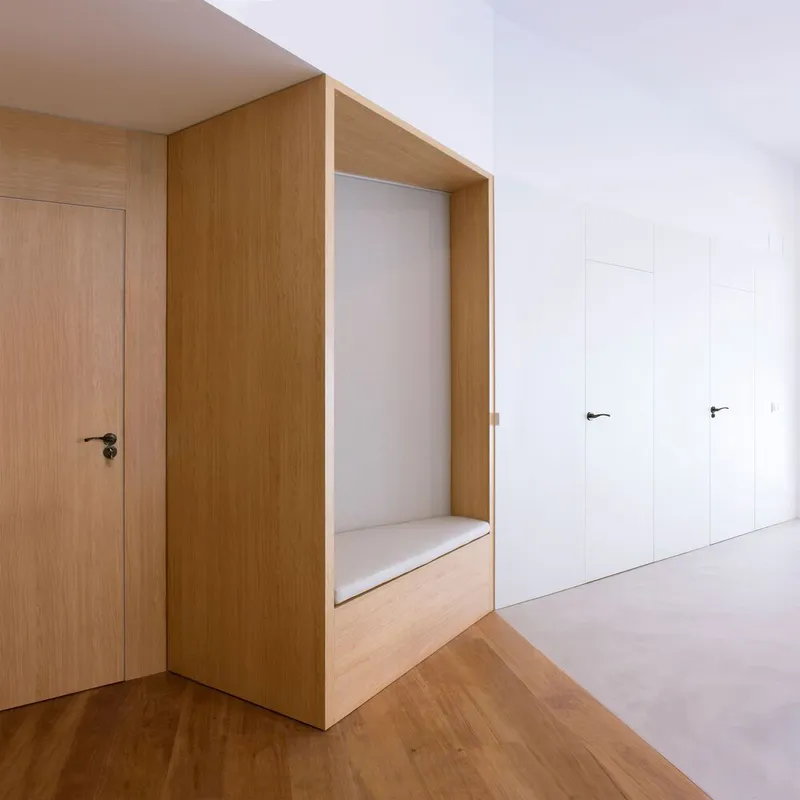
A Model for Adaptive Urban Living
This project stands as a case study in adaptive reuse and compact living, especially within cities where space is limited and building outward is no longer an option. By utilizing an adjacent commercial unit to enhance residential life, 2102CON explores new possibilities in urban densification without sacrificing comfort or design integrity.
The intervention is not merely an architectural solution, but a reflection of changing societal needs—flexibility, remote work, and multifunctional domestic spaces. It also underscores the importance of nuanced material use, spatial zoning, and light in creating environments that are both efficient and emotionally enriching.
All Photographs are works of Terrario Arquitectura


Popular Articles
Popular articles from the community


GROUP A Strips a 1969 Rotterdam Harbor Headquarters to Its Frame and Wraps It in Timber Louvers
In Rotterdam's M4H harbor district, Ferro Offices reuses a 1969 frame, adds one timber storey and reaches BREEAM-NL Outstanding.

longwave studio Reorganizes a 112 m² Tainan Apartment Around the Daily Routines of a Family and Two Cats
In Tainan, Taiwan, birch plywood, rust-red furniture and a freestanding plaster wall link arrival, storage, work and family life in one apartment.

U.GA Architects Wraps an Oval Rooftop Pool in Curved Board-Formed Concrete on Busan's Jeollidan-gil
In Busan's Jeonpo-dong, a 454 m² mixed-use block stacks a neighborhood facility, guest rooms and an oval rooftop pool inside spiraling concrete walls.

David Macias Steps a Doorless Stone and Plaster House Down a Tropical Colombian Hillside
In the humid hills of Colombia, Threshold House replaces the front door with an open void and terraces its 850 m² down the slope instead of fighting it.

Similar Reads
You might also enjoy these articles


Hodi-Mandai Geram
Project Function: Preservation and revitalization of the Intangible heritage and socio-spatial identity of the Hodi by Housing, Cultural Memory Center, Sacred Grove, landscape, local tourism economy


Olio Towers: A Mid-Rise for Performers That Fuses Housing, Rehearsal, and Stage
Located blocks from Houston's Theater District, this modular tower stacks living units around a central performance atrium.

Oasis: Modular Green Housing Carved into Dhaka's Urban Fabric
A shortlisted Plugin Housing entry reclaims unauthorized settlements in Dhaka with stepped concrete volumes, green roofs, and ventilation-driven design.

Black Hole: A Floating Megastructure for the Post-Physical Era
Emiliano Mazzarotto envisions a spherical, self-scaling arena where e-sports, digital hotels, and holographic stadiums replace traditional public space.

Explore 2X1 Architects Competitions
Discover active competitions in this discipline

Challenge to reimagine the Iron Throne

Photograph architecture without architects

Illustrate the lost glory of Angkor Wat - Render Challenge

Design challenge to reuse E-waste
Comments (0)
Please login or sign up to add comments
No comments yet. Be the first to comment!