
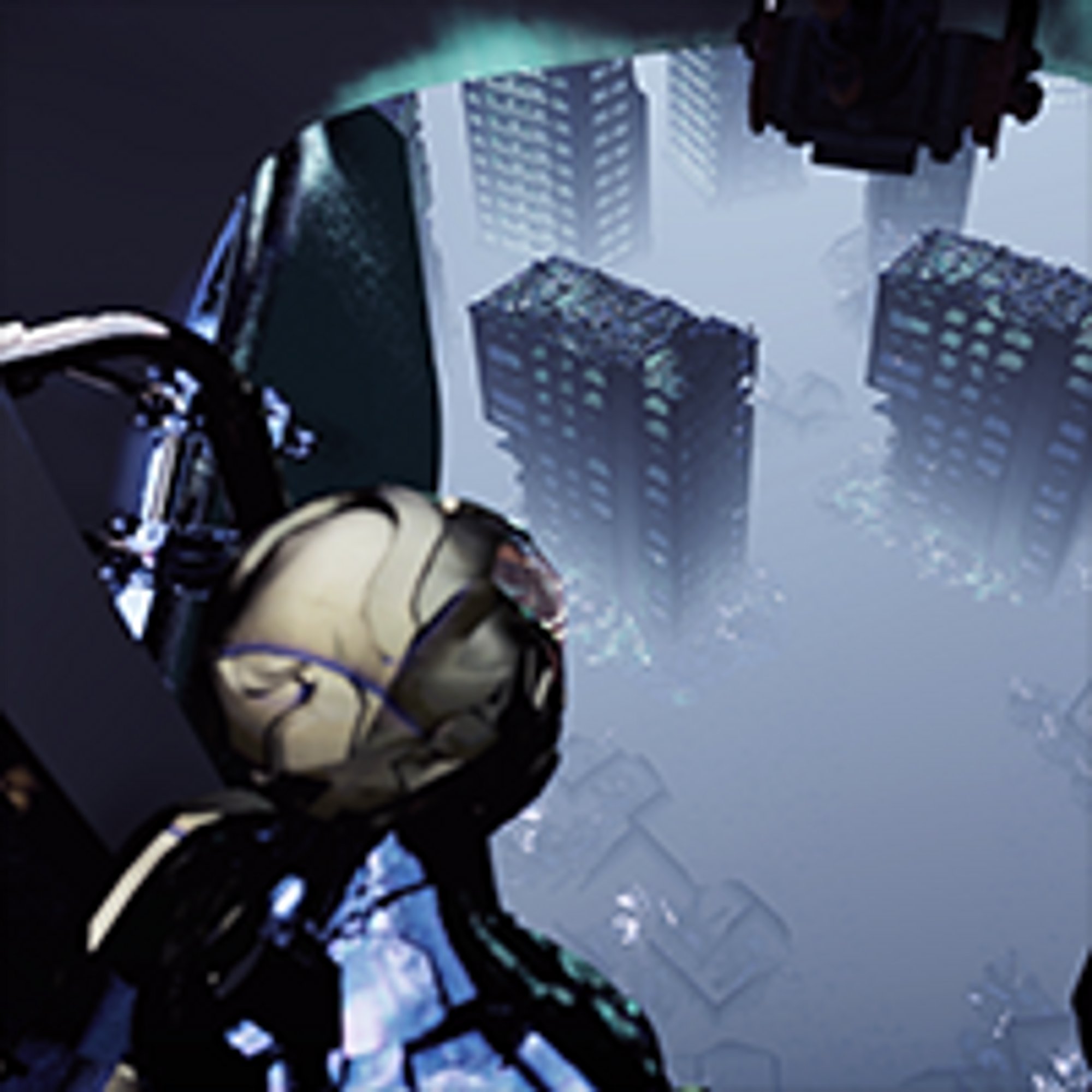
2121: A SKY NOMADS
When disaster come, will you sacrifice yourself to save other or run away?

What was the concept behind the project?
2121: A Sky Nomad is a science fiction story taking place in the Post-Apocalyptic Era. Most of the survivors lived in the underground city. They all hoped for normalcy one day which was described as life back on ground. The aircraft, WC-260 Hercules, is a movable DNA storage and seed laboratory. It backs up all DNA records for all species. Like the Book of Genesis, Noah built a gigantic ark to save all species on Earth. Hercules also can genetically modify species and plants to adapt to climate catastrophes. The engineers, who lived their entire lives on the aircraft, have sacrificed themselves to rebuild the Earth's atmospheric oxygen level. They not only suffer the exposure of the high radiation-contaminated environment, but they also need to handle different kinds of accidental emergencies. This is a story of salvation; this is a story of sacrifice.
How was a specific objective attempted to be met?
The mission of WC-260 Hercules is not only to rebuild the atmosphere's oxygen level but also to provide all the fundamental needs of human beings within 10 SQ.MT. The interior space functions as all primary facilities of a family house including a kitchen, bathroom, workshop, production line, and bedroom. These spaces are all miniaturized into surfaces and human-scale equipment. Moreover, the aircraft performs as a hyper self-sufficient, nomadic machine. The ship's production line manufactures seed bombs that can efficiently spread seeds through the sky. Each seed is a genetically modified plant. It combines and synergizes with three plants' DNA such as corn, soy, and mushroom. In return, super foods are produced. These seeds require 30 days to grow into a plant. They create a huge amount of oxygen and also absorb radiation. Once they are harvested, they will transfer into the ship's seed container. They will be processed into food and the fuel for the engine. The plant scrap will be the primary source when manufacturing seed bombs. Therefore, the nomadic cycle is supported as the aircraft continues to fly and spread seed bombs while collecting crop material.
What/ how were the materials chosen?
The shell of the aircraft consists of two materials: silica-based thermal insulation and graphene. The silica material is used to stabilize the temperature of the inner structure while the graphene is used in the panel system that can block 99 percent of cosmic radiation. Most of the components of the inner structure are used for aerospace-grade titanium and aluminum alloys. They are durable and lightweight material for airframes like the shuttle orbiter. The work suit adopts the spacesuit's technology. It is composed of a pressure bladder of urethane-coated nylon, a restraining layer of Dacron, and an outer thermal garment composed of neoprene-coated nylon. It also has three layers of aluminized Mylar to reflect radiation. All equipment used is carbon fiber and aluminum alloy that can dramatically reduce the weight of the aircraft.
Which methods of design investigation?
The approach to design within this project includes creating a precise machine. It combines the most advanced military and sci-fi technology. The aircraft is powered up by an afterburning turbofan engine, which is referenced from the F-35 stealth fighters' engine, Pratt & Whitney F135. It allows the aircraft to achieve vertical landing and horizontal rotation. The seed production line was modified from the modern artillery shell production line. This can support mass-produced seed bombs. All the parts and equipment required for the apocalyptic story are miniaturized and can perfectly fit into a human body.
How will the project transform with the passing time?
Since the process of geomagnetic reversal requires several hundred years to complete, it takes more than four generations to increase the oxygen level to become habitable. Every engineer only has a 60-year-old life cycle because of exposure to a highly contaminated environment. When they are 59 years old, these engineers will store their memory in the incubator which breeds and educates the next generation of engineers. When the young engineers exit the incubator, they acquire all skills from their fathers. This life cycle allows the aircraft to operate for more than hundreds of years.




Popular Articles
Popular articles from the community

HCCH Studio Wraps a Shanghai High-Rise Office in Curved Walls of Translucent Glass
A 1,000 square meter fit-out in Lujiazui replaces the typical tech-office palette with layered glass, micro-cement, and quiet rigor.
Fausto Terán and Toro Fuse Japanese Craft with Mexican Tradition in a Lakeside Retreat
Nakamura House pairs Shou-Sugi-Ban charred pine with handmade clay tile at the foot of Atlangatepec Lagoon in Mexico.
RDTH architekti Rips Out Nearly Every Wall in a Prague Apartment and Replaces Them with Furniture
A 101-square-meter post-war flat in Prague trades rigid partitions for a single rotated furniture block, curtains, and glass concrete.
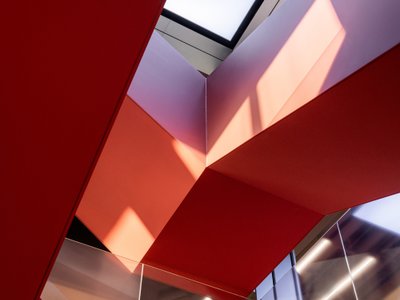
Ippolito Fleitz Group Identity Architects Turn Eight Floors in Shanghai into a Vertical Creative City
Publicis Groupe's new headquarters in Xintiandi reimagines the office as a courtyard-driven urban landscape stacked across eight floors.

Similar Reads
You might also enjoy these articles

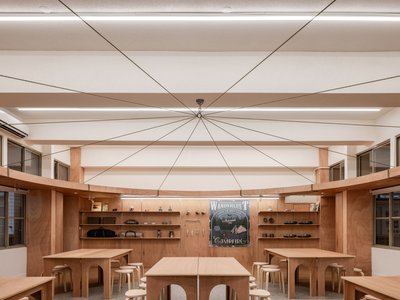
317studio Turns an 87 m² Classroom into a Forest Clearing for Scouts in New Taipei City
A rope canopy, student-made specimens, and campfire geometry replace rows of desks in this Scouting classroom in Xizhi District.
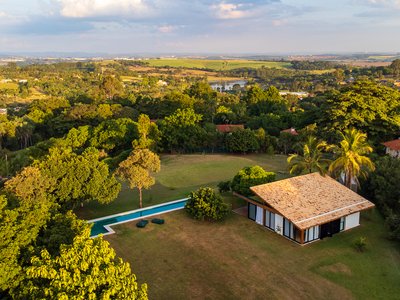
24 7 Arquitetura Builds a Timber Pavilion as a Family's First Act on a 5,000 m² Brazilian Plot
In Jaguariúna, a prefabricated glulam house nestles among mature trees as the opening move of a larger residential masterplan.
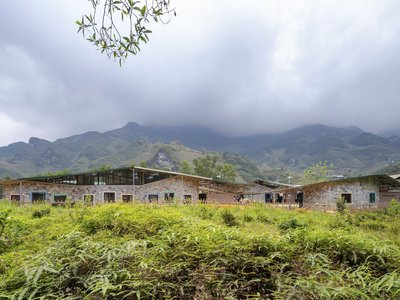
1+1>2 Architects Build a School from 900 Blocks of Hmong Stone on Vietnam's Rocky Plateau
On a barren valley in Ha Giang province, a community quarried its own stone to raise a kindergarten and primary school rooted in Hmong identity.
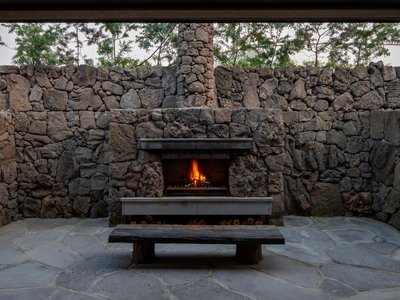
100A Associates Builds a Volcanic Stone Retreat on Jeju Island Rooted in Ritual and Restraint
Watarstay [Wa:Tar] in Bongseong-ri channels Jeju's basalt, reed, and hemp into a 150 m² hospitality space shaped by contemplation.

Explore Extreme Architecture Competitions
Discover active competitions in this discipline




The Global Benchmark for Architecture Dissertation Awards


The Global Benchmark for Graduation Excellence

Challenge to design a shop stop sunk in the city
Comments (0)
Please login or sign up to add comments
No comments yet. Be the first to comment!